Contents:
How to choose a trip through Chüy Region
Chüy is a straightforward introduction to Kyrgyzstan because most trips begin in Bishkek and need no domestic flight. A single day can cover a mountain gorge or a medieval city site. Two or three days add a village overnight, a horse ride and a journey farther into the valley.
The most common planning mistake is squeezing Burana, Ala-Archa and Chon-Kemin into the same day. They lie in different directions. Choose one main objective, add only a genuinely nearby stop and keep room for traffic, a delayed car and fast-changing mountain weather.
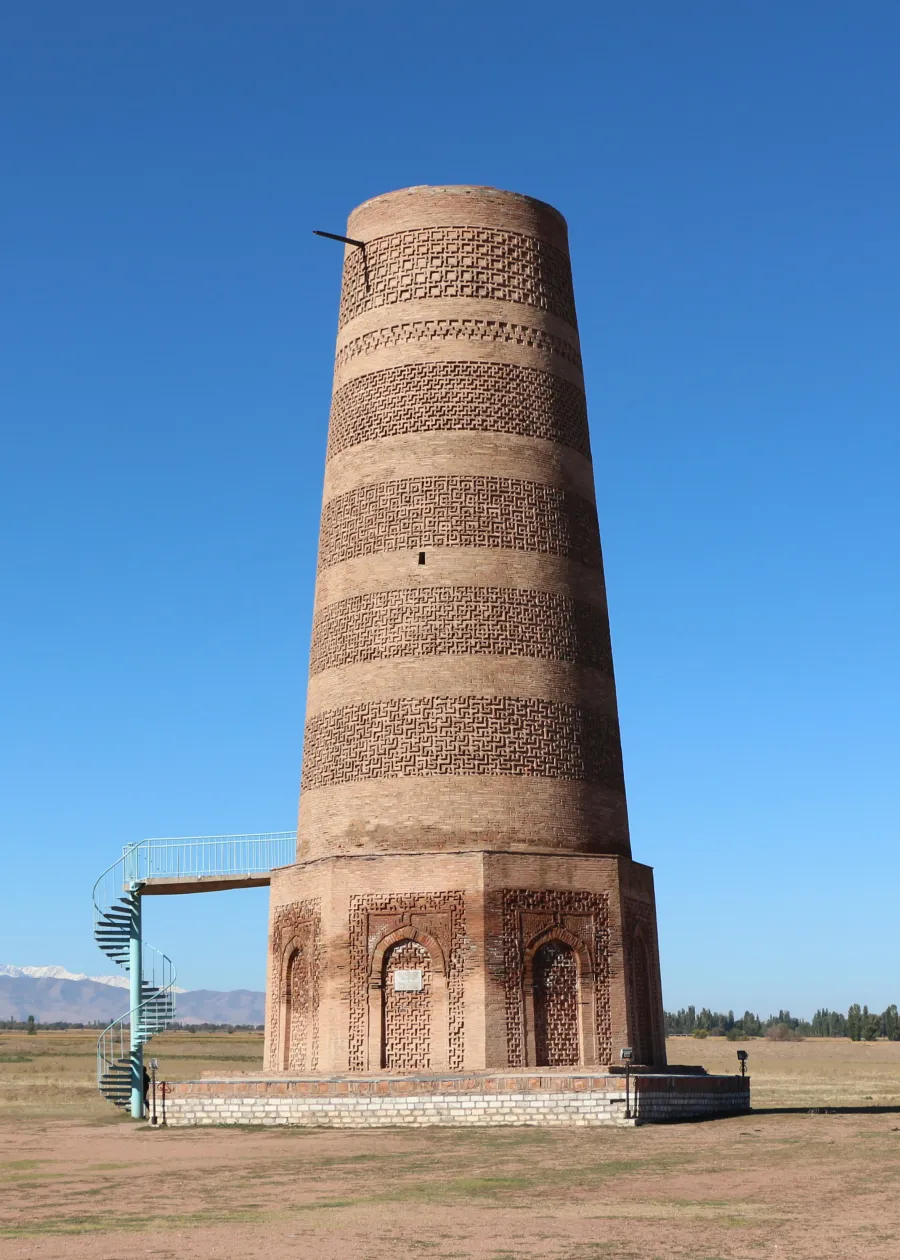 1/4. Burana and medieval Balasagun Photo: Bernard Gagnon, Wikimedia Commons, CC0 1.0; edited for this site.
 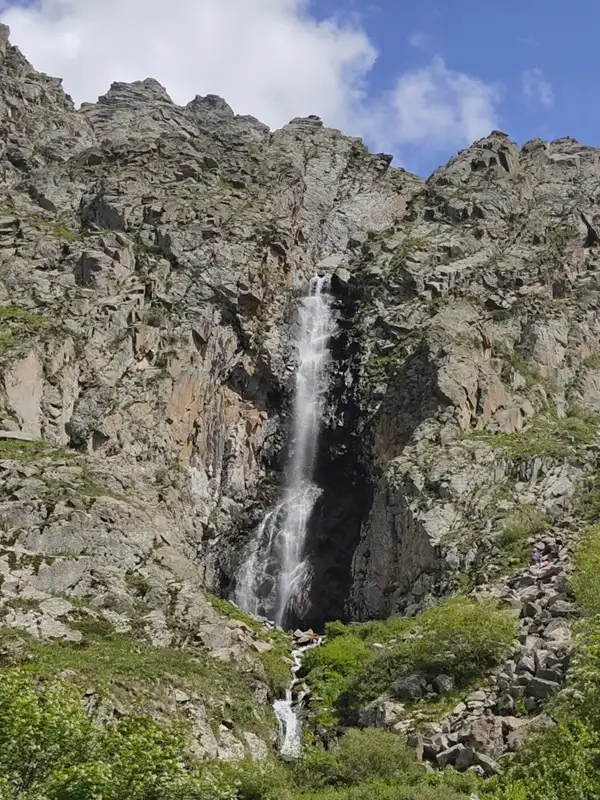 2/4. Ak-Sai waterfall in Ala-Archa
 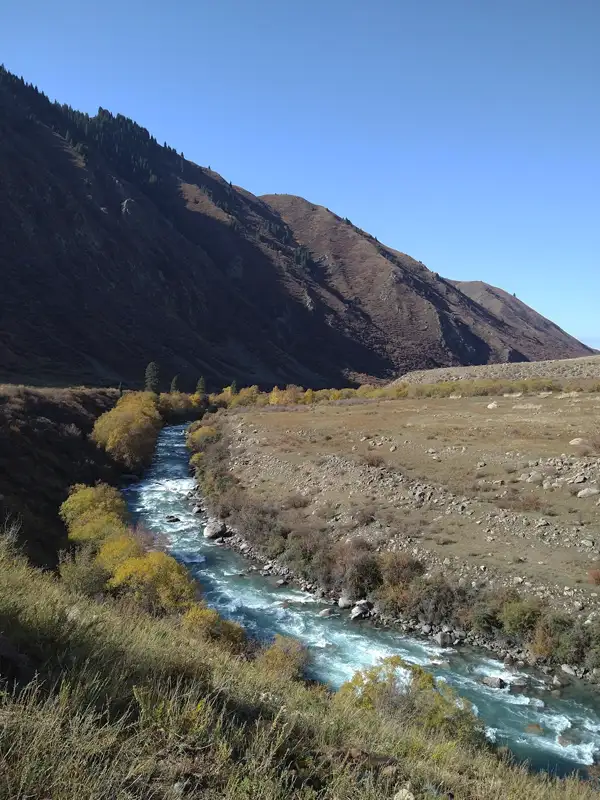 3/4. River and autumn slopes in Chon-Kemin
 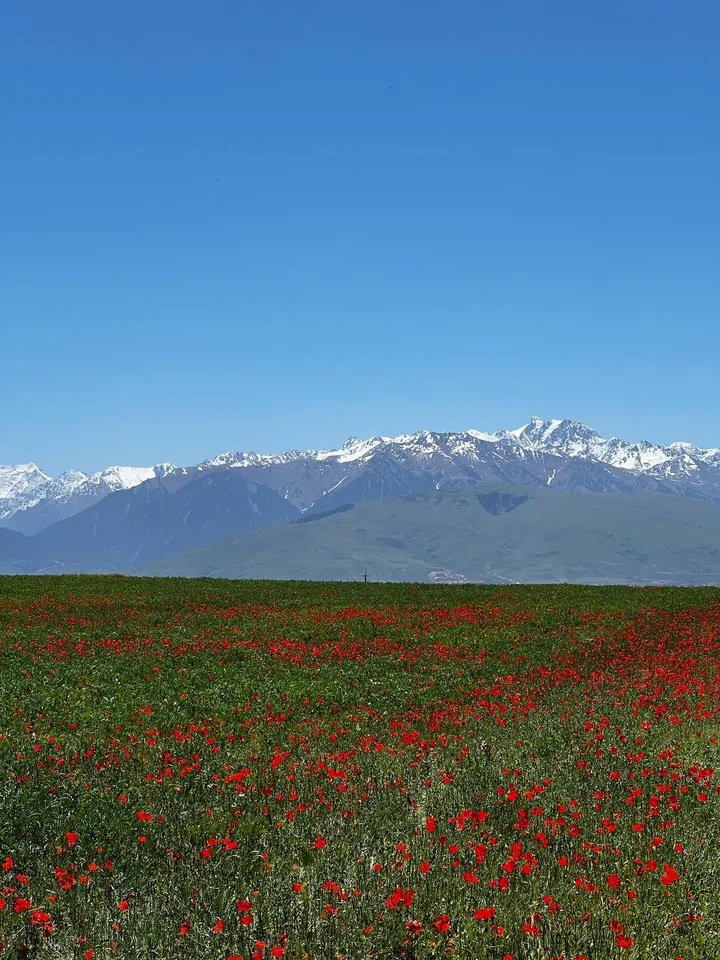 4/4. The brief poppy season
 Bishkek and the region: the capital is Chüy Region's administrative centre but is not part of the region and is counted separately. For travellers, Bishkek remains the main base, transport hub and place with the broadest range of accommodation and food.
The main destinations and what makes each worth a visit
Ala-Archa: the clearest first mountain outing
Ala-Archa lies roughly 40 kilometres from central Bishkek. The park offers a gentle valley walk, a climb to Ak-Sai waterfall and the demanding approach to Ratsek Hut. These are three different levels of outing, not consecutive stops on one easy walk.
Give the park a full day on a first visit. Closed shoes, water, a rain layer and warm clothing are useful even in summer. Check the current entry arrangements, fees and internal transport before leaving, as the park changes its access system and old advice soon becomes unreliable.
Burana and Tokmok: history, a bazaar and a useful base
Burana Tower stands within the site of Balasagun, part of the UNESCO World Heritage property covering the Silk Roads' Chang'an-Tianshan Corridor. The complex contains the minaret, a small museum, balbal stones and the earthworks of the former city. Allow 1.5 to 2 hours there, excluding travel.
After Burana, continue to Tokmok for lunch, supplies at the bazaar or an overnight before Kegety. The tower's internal staircase is narrow, steep and dark, so it is unsuitable for some visitors and access depends on the museum's current operation.
Kegety: a separate day for the gorge and waterfall
Kegety Gorge begins about 20 kilometres from Tokmok. The flat valley quickly gives way to rock walls, conifer patches and a waterfall. Public transport reaches the village but does not complete the journey inside the gorge. Find out in advance how far an ordinary car can go and where your walk actually starts.
Do not combine Kegety with a long Burana visit on a short winter day. Rain makes unpaved sections and the rocks near the waterfall harder, while mobile coverage is intermittent. The hike to Kel-Tor Lake needs a separate full day and an early start; it is not a short extension of the waterfall walk.
Chunkurchak, Alamedin and Kara-Bulak: short trips south of the capital
Choose Chunkurchak for green slopes, Pigeon Waterfall, the suspension bridge, restaurants and mountain resorts. Roadworks continued on the Arashan-Chunkurchak road in 2026 after its first asphalt layer was laid, so even the improved approach needs a fresh check.
Alamedin better suits walkers who want to follow the river and, with suitable preparation, continue to Teke-Tor waterfall. For a more organised stay with accommodation, food and pre-arranged activities, consider Kara-Bulak. Pick one gorge for the day.
Chon-Kemin: an overnight, home cooking and horse routes
Chon-Kemin lies beyond the usual day-trip radius and works better over two days. Arrive at a guesthouse chosen in advance, order dinner and arrange a short walk or guided horse ride. The Kemin district administration describes May to October as the main season and highlights one-to-two-day visits.
The high lakes and passes belong to multi-day routes. They require a guide, navigation, camping equipment and, in some cases, registration or a border permit. Do not plan them from a photograph taken on a day tour through the lower valley.
Boom, Konorchek and the distant west
Boom Gorge is the eastern exit from the Chüy Valley towards Issyk-Kul. It combines naturally with a hike into Konorchek Canyons, but only with an early start and dry weather. The red canyons are exposed to the sun, and their narrow channels are dangerous during flash floods after heavy rain.
Do not combine three different Kemin District trips. For skiing at Orlovka ski base, check which slopes and lifts are open, while Ak-Tyuz ski base requires direct confirmation before departure. The industrial valley of Ak-Tyuz is a separate heritage outing: old mines and tailings sites are not a fallback walk when a lift is closed.
Too-Ashuu Pass and the Suusamyr Valley lie in the opposite direction and need their own road day. In winter, check the pass and any traffic restrictions before setting out. Our guide to Too-Ashuu ski base explains why the high road cannot be treated as an ordinary suburban drive.
In spring, the permanent sights are joined by the poppy fields near Gornaya Maevka. Flowering lasts only a few weeks and changes each year. Look for photographs taken in the previous few days, obtain permission before entering private land and never make a new path through the flowers.
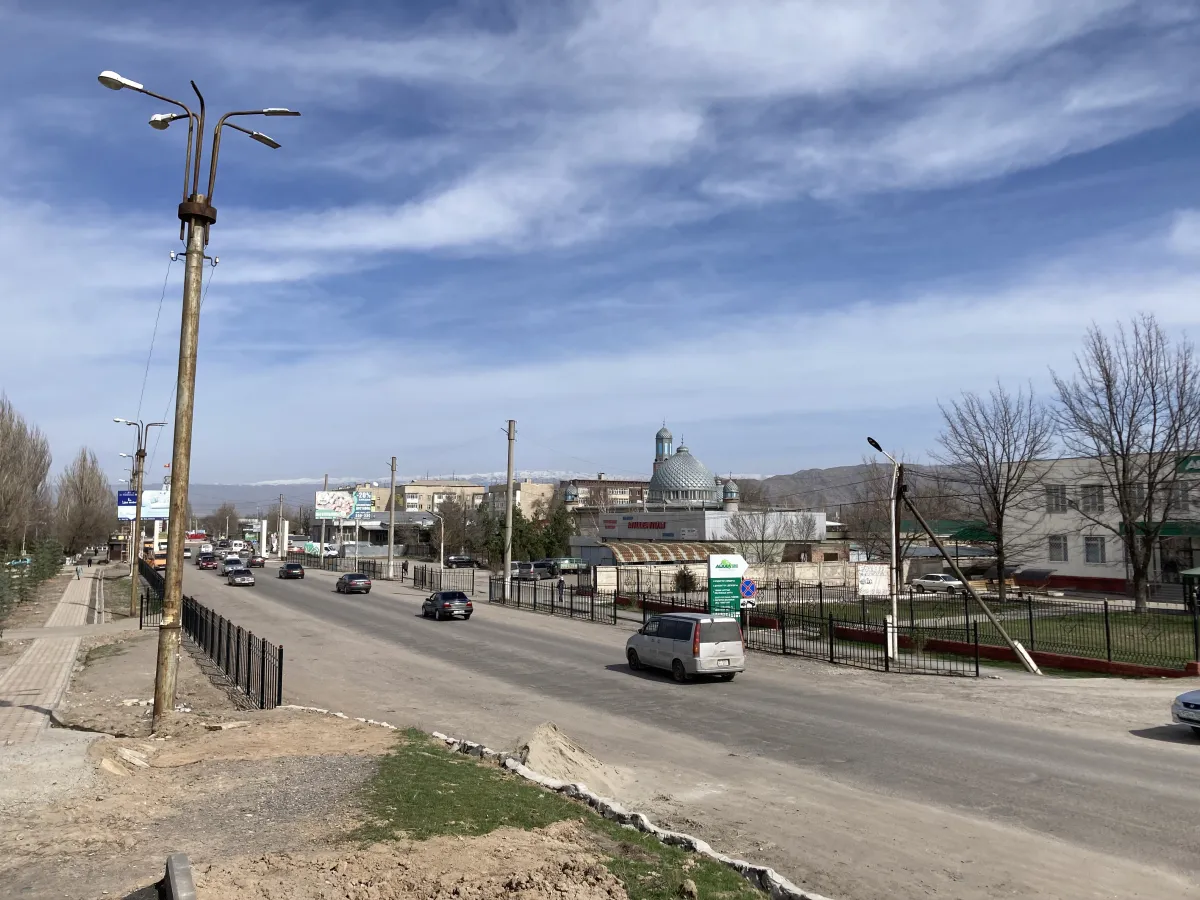 1/4. Tokmok as an eastern valley base Photo: TheDraperyFalls, Wikimedia Commons, CC BY-SA 4.0; edited for this site.
 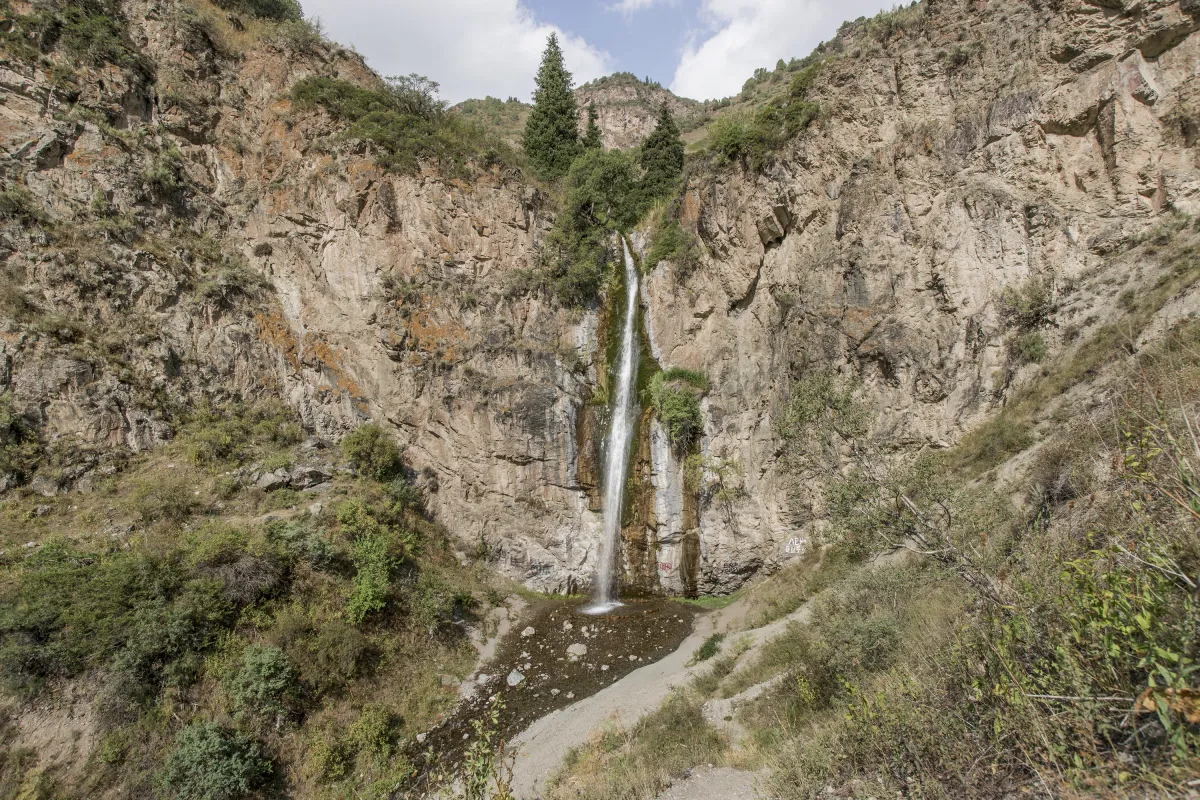 2/4. Kegety waterfall Photo: Vilya Shoni, Wikimedia Commons, CC BY-SA 4.0; edited for this site.
 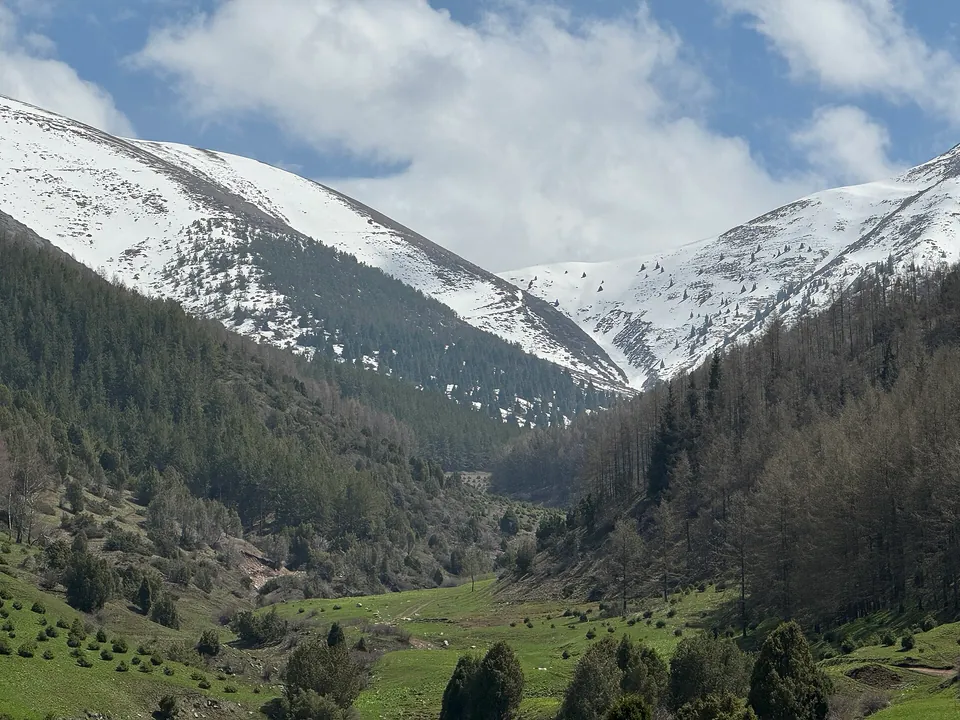 3/4. Spring in upper Chunkurchak Valley Photo: Timjusup, Wikimedia Commons, CC BY-SA 4.0; edited for this site.
 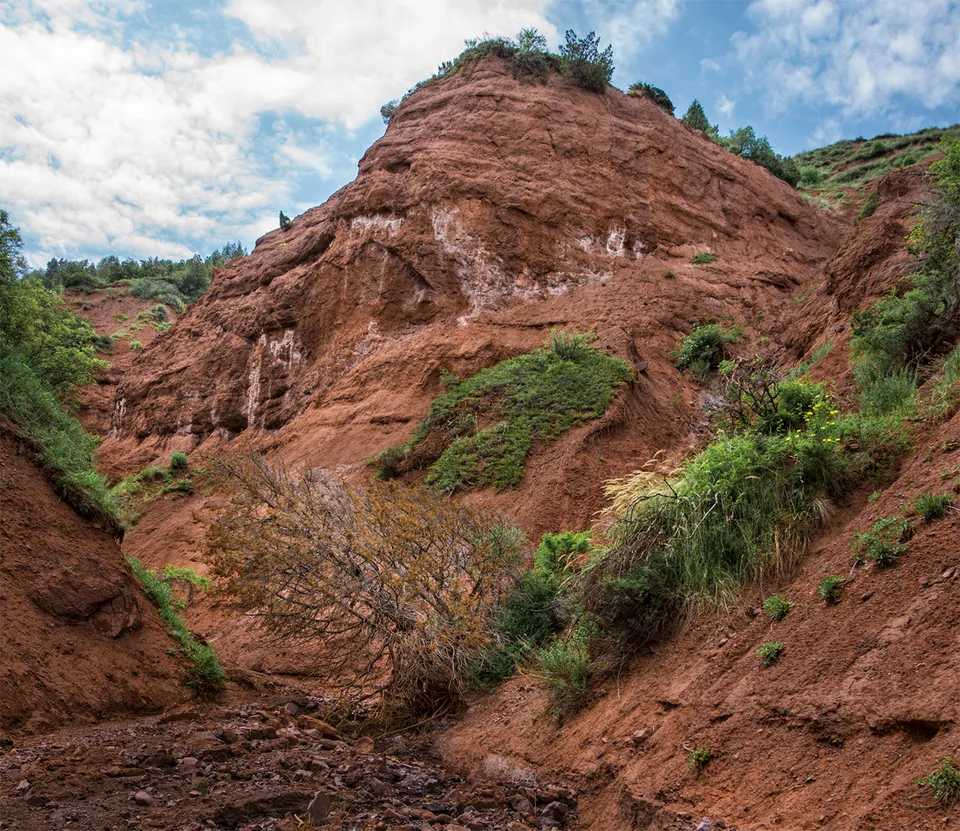 4/4. Chunkurchak red rock Photo: Vilya Shoni, Wikimedia Commons, CC BY-SA 4.0; edited for this site.
 Where to stay
Bishkek. This is the best base for Ala-Archa, Chunkurchak, Alamedin and Burana if you are happy to return to the city each evening. It is easier to find an early driver, buy equipment and choose accommodation for any budget. Several radial day trips do not require a daily hotel change.
Tokmok. Stay here before an early Burana visit, a full day in Kegety or an onward journey east. The centre is convenient for the bazaar and cafes. Roadside accommodation suits drivers but can leave you away from town life.
Chon-Kemin. A family guesthouse becomes part of the experience, as hosts usually arrange meals and can help organise activities. Before booking, confirm the exact village, shower and heating for the season, horse availability, the guide's language and the payment method.
Chunkurchak and nearby resorts. An overnight makes sense for a quiet mountain evening, an on-site restaurant or winter skiing. The waterfall, bridge, ski base and individual resorts occupy different parts of the wider valley. Save the coordinates of your actual accommodation.
Where and what to eat
Bishkek has the broadest choice, so it is the easiest place to buy water and snacks before an early start. For an introduction to local food, try lagman, manty and samsa, but do not force every dish into one crowded day.
Tokmok's bazaar is more useful than a random roadside stop. In the morning it is easy to collect fruit, flatbread, dairy products and water. In a cafe, ask what is actually being cooked. Some dishes appear only around lunch or sell out before evening.
In Chon-Kemin, order breakfast and a home-cooked dinner with your room. This is more reliable than searching for a separate restaurant after dark. If you avoid meat, dairy or gluten, tell the hosts in advance and list specific ingredients instead of giving only the name of a diet.
Food in Chunkurchak and Kara-Bulak is often tied to a particular resort. A restaurant table, entry to the grounds and accommodation may require separate bookings. Check kitchen hours before leaving and still carry water; an open restaurant does not replace supplies on a walk.
Getting around the region
A car with an agreed return time is simplest for Ala-Archa, Chunkurchak, Alamedin and Kegety. A city taxi may take you to the entrance, but finding a new vehicle in a gorge is not guaranteed. Download an offline map and save the driver's number before coverage disappears.
Regular public transport runs east. The official bus-station timetable lists services from the Chygysh branch to Kant, Tokmok, Kemin, Orlovka, Chon-Kemin village, Issyk-Ata and Kegety. A route bearing the place name does not mean it reaches the waterfall, trailhead or your guesthouse.
Timetables, fares and the final return departure can change. Confirm them the day before and again with the driver. Be especially careful about an evening return from Tokmok: in 2026, transport authorities investigated complaints about insufficient services after 19:00.
The main road through Kant and Tokmok is straightforward by car, but mountain turn-offs follow different rules. Rain softens unpaved ground, winter brings ice and roadworks can change a familiar approach. For Chunkurchak, compare the navigation estimate with the latest Ministry of Transport road update.
When to visit Chüy Region
Spring
The low valley turns green before the high gorges, while snow remains across the ranges.
- Late April and May may bring poppies, but the peak needs current photographs.
- Rain makes field roads and mountain turn-offs slippery.
- Snow and ice may remain in the upper gorges.
Summer
This is the best season for long daylight, guesthouse stays and most walking routes.
- Burana and the open Chüy Valley are hot and have little shade.
- Start early in the mountains because of thunderstorms and sudden temperature drops.
- Book accommodation and a driver ahead for popular weekends.
Autumn
The air is often clearer, valleys become quieter and nights turn noticeably colder.
- September suits Chon-Kemin and day trips into the gorges.
- Daylight shortens quickly.
- The first snow changes upper routes before it affects city roads.
Winter
Tokmok and Burana remain accessible, while mountain trips need a dedicated winter plan.
- Check winter tyres, ice and pass conditions.
- Chunkurchak and Orlovka work as ski destinations only when current conditions are confirmed.
- Do not repeat a summer waterfall hike in winter without the right experience and equipment.
A general forecast for Bishkek does not describe conditions at a waterfall or pass. Before starting, compare the city with the actual mountain point and check precipitation, wind and cloud base. Our guide to Kyrgyzstan's climate explains the wider seasonal pattern.
Ready-made one, two and three-day itineraries
Burana and Tokmok
- Leave Bishkek in the morning.
- Allow 1.5 to 2 hours for Burana.
- Lunch, the bazaar and a walk in Tokmok.
- A confirmed return vehicle before evening.
One gorge at the right level
- Ala-Archa for a first mountain day.
- Chunkurchak for a short walk and a relaxed stop.
- Alamedin for a longer walking day.
- Do not combine two gorges for the sake of numbers.
Burana and Chon-Kemin
- Visit Burana on the way east.
- Check into a guesthouse chosen in advance.
- Dinner, an overnight and a short valley walk.
- A horse programme only by prior arrangement.
Eastern Chüy Region
- Tokmok and Burana on day one.
- Kegety or a full day in Chon-Kemin.
- Boom and Konorchek in dry weather.
- Continue to Issyk-Kul or return to Bishkek.
What to check before leaving
The exact point. A gorge name covers a large area. Save the entrance, parking place, trailhead, accommodation and return meeting point as separate pins.
Route difficulty. Confirm distance, elevation gain, turnaround time and trail conditions. A short line on a map may conceal a steep climb. Use our active travel guide for the general preparation rules.
The return. Record the last service or agree a time and waiting price with your driver. Do not rely on calling a new car where mobile coverage is weak.
Food and cash. Carry water and an emergency snack even with a restaurant booking. Cards are not universal in villages, markets or at entrances, and mobile transfers depend on coverage.
Weather and clothing. Closed shoes, a warm layer, sun protection and a rain shell are useful in almost every season. Winter adds a road check and equipment matched to the exact route.
Activity conditions. For a horse ride, discuss duration, the group's experience, helmets and supervision in advance. Rafting, mountaineering and multi-day trekking require a specialist operator or your own proven competence.
Share on social media
If you found this guide useful, share it on social media. It takes a moment and helps more travellers discover the project. Thank you!
Anything to add?
Share your experience, leave a comment or suggest an improvement.