Contents:
Why stay in Bishkek
Bishkek is a practical urban base before travelling around Kyrgyzstan. You can recover after a flight, buy missing equipment, work out the transport and give yourself one calm day before the mountains. The centre adds museums, Soviet architecture, parks, markets and food from different parts of the country.
At the beginning of 2026, Bishkek had 1,358,661 residents, according to the National Statistical Committee. The scale becomes clearer outside the historic centre: the city has long outgrown its compact street grid, and administrative and territorial reform brought new areas within its boundaries. An address described simply as "in Bishkek" therefore says little about journey time.
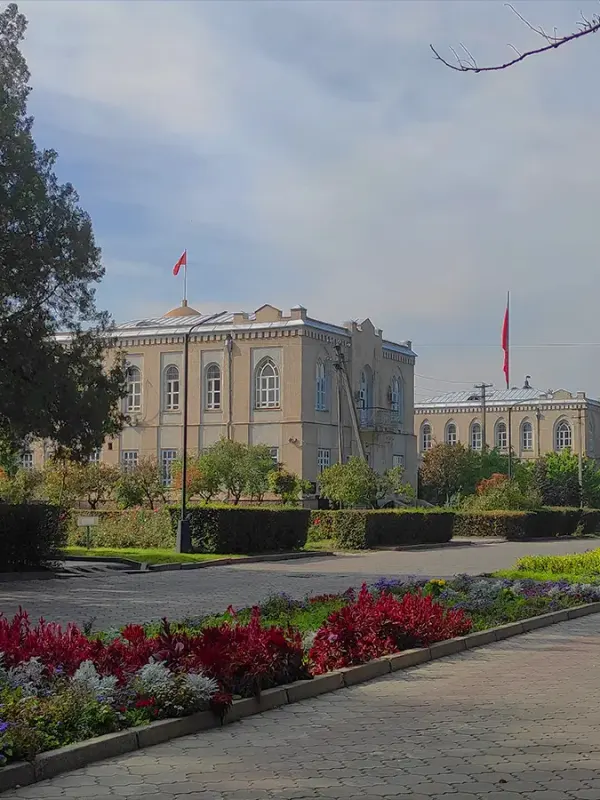 1/3. The leafy centre of Bishkek
 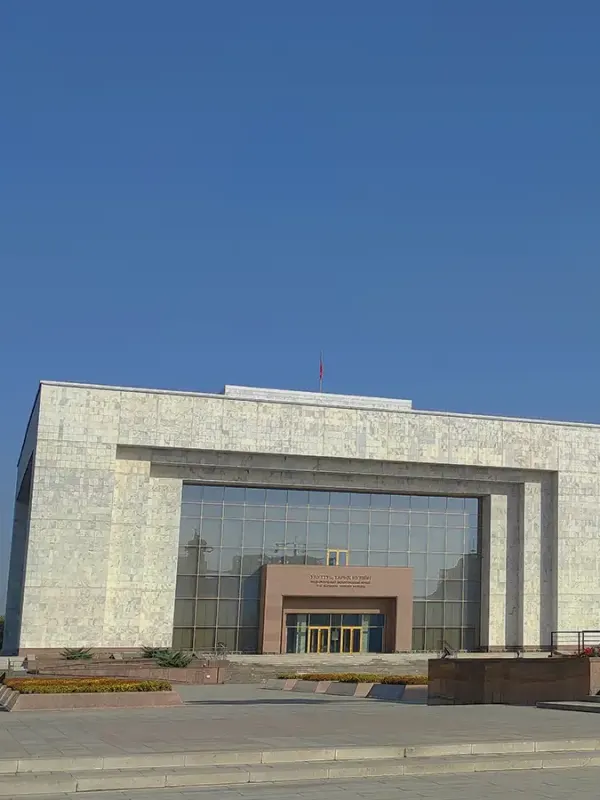 2/3. National Historical Museum
 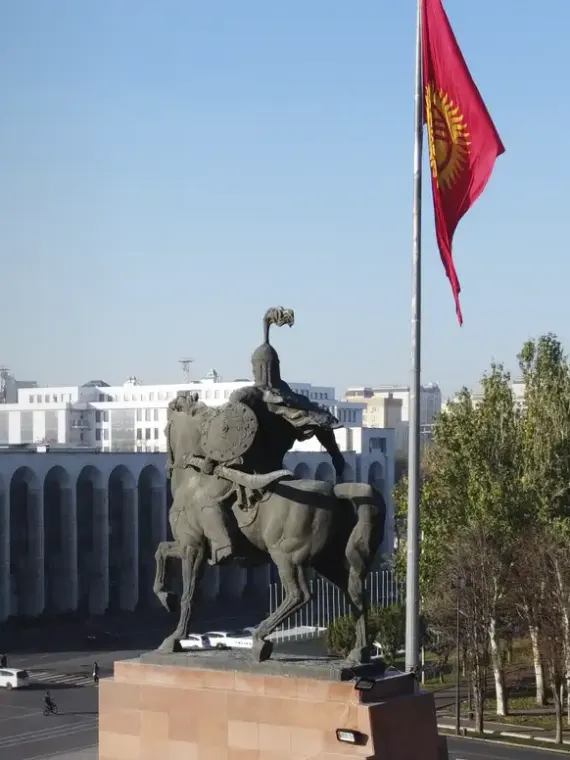 3/3. Manas monument on Ala-Too Square
 On a first visit, do not try to cover the entire city. The main walking sights are around Ala-Too Square, Chüy Avenue, Oak Park and Erkindik Boulevard. It is easy to walk between them, while the bazaar, southern neighbourhoods and more distant parks are better treated as separate trips.
What to see in Bishkek
Ala-Too Square. Begin at the country's main square. The Manas monument and the National Historical Museum stand here, surrounded by buildings from different phases of Soviet and contemporary architecture. Public access and traffic may be restricted during state events, so do not plan a tight connection around one particular entrance.
National Historical Museum. The extensive displays connect archaeology, traditional culture, the Soviet period and independent Kyrgyzstan. Allow 60-90 minutes for a quick visit, or two to three hours if you want to read labels and cover several floors. Our separate guide explains what to see in the National Historical Museum.
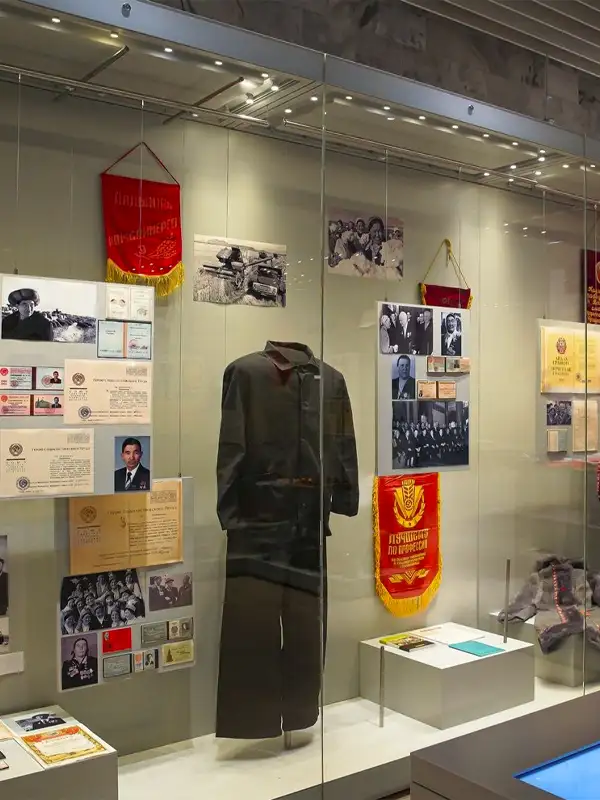 1/4. The Kyrgyz SSR in the museum display
 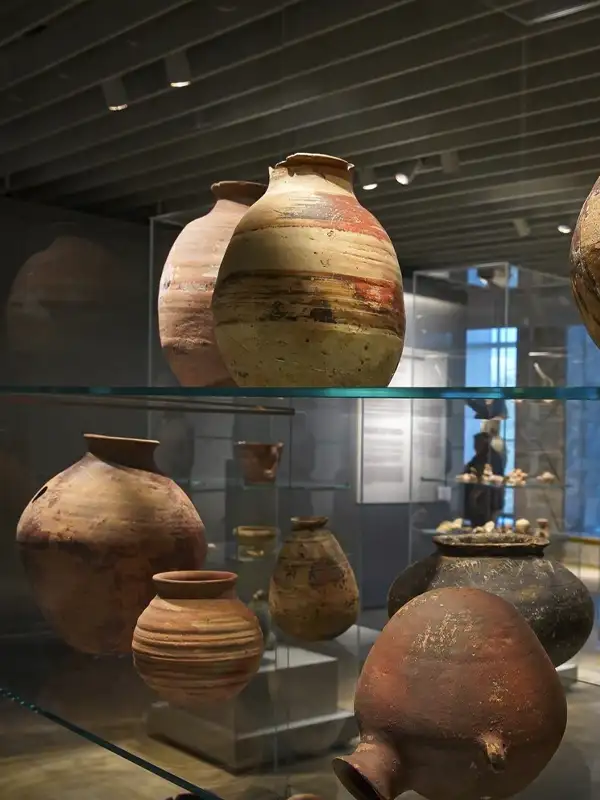 2/4. Ceramic vessels from different periods
 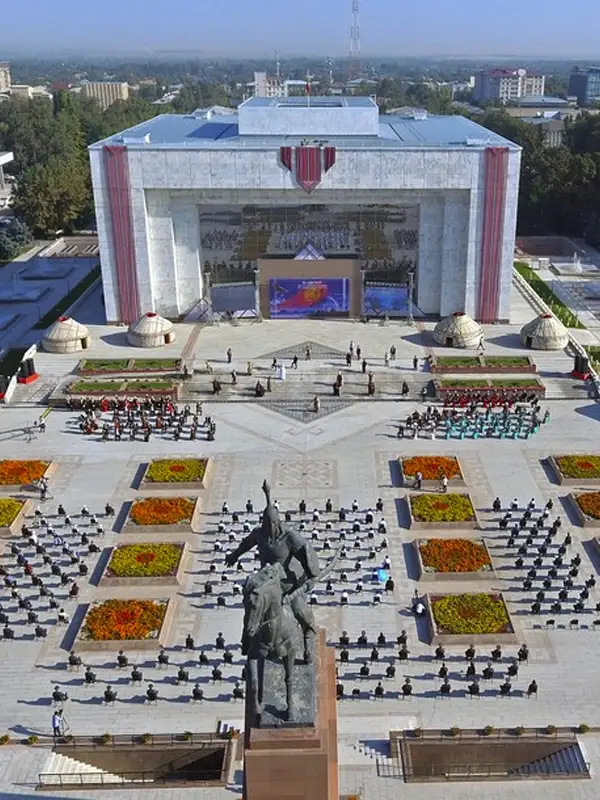 3/4. The museum on Ala-Too Square
 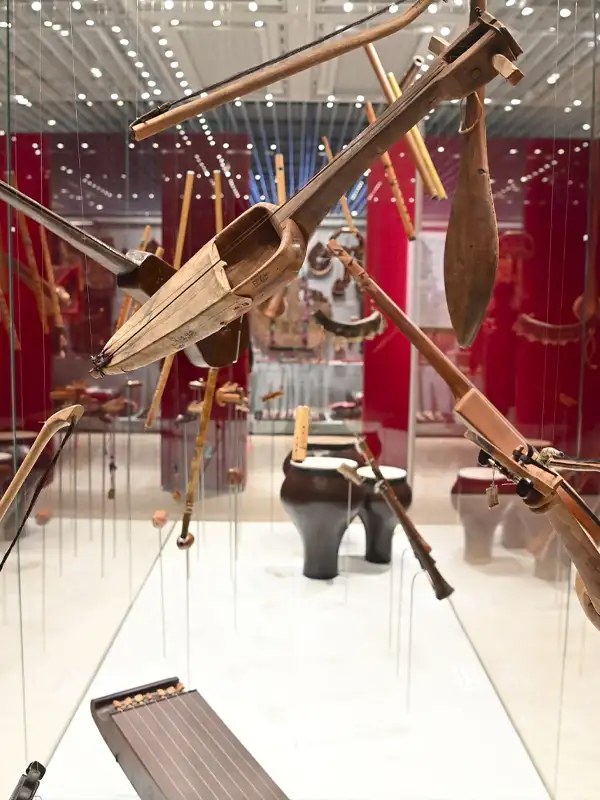 4/4. Traditional musical instruments
 Oak Park and the Museum of Fine Arts. From Ala-Too Square, continue into Oak Park among sculptures and mature trees. The Gapar Aitiev National Museum of Fine Arts is nearby. While the history museum asks what happened, the art museum shows how artists saw the country and its people. Our guide to museums in Kyrgyzstan offers more options.
Erkindik Boulevard. The pedestrian section runs for roughly 2.3 kilometres from the Bishkek II railway station area towards Jibek Jolu Avenue. The central section is most useful to visitors, linking the station, Toktogul Street, Chüy Avenue and the northern part of the centre.
Old Square and Chüy Avenue. The city's Soviet layer is especially clear here: large public buildings, broad streets, monuments and a strict grid of blocks. Look beyond a single facade and notice the space between buildings, parks and squares. Nearby, the Frunze Museum encloses a preserved family annexe within 1960s architecture. This open urban geometry is one of the defining features of central Bishkek.
Which museum should you choose? Start with the National Historical Museum for a broad introduction to the country. Choose the Aitiev Museum for Kyrgyz painting and decorative art. The Frunze Museum works best for one biographical story and the architecture of Soviet Bishkek. All three are central, so two can be combined in a single walking day.
Chingiz Aitmatov House Museum. The writer's study, library, manuscripts and personal belongings remain in his home in Chong-Aryk. The museum is well outside the walking centre and stands on controlled state-residence grounds, so book ahead and treat it as a separate trip.
Osh Bazaar. Visit for produce, spices, dried fruit, flatbread, kurut and the everyday life of a large city. In 2026, trading areas and access routes continue to change, so check the current entrance on a map and do not build a minute-by-minute itinerary around the market. The Kyrgyz food section will help you recognise local dishes.
Dordoy Bazaar. This large wholesale and retail market lies north of the centre and deserves a separate trip. Our practical Dordoy guide explains how to find the right sector, compare prices, inspect a purchase and save the seller's location.
Victory Square. The memorial complex lies east of the main walking circuit. Add it after Oak Park or the art museum if you still have time for another distinct part of the city. It is not necessary to make a separate trip solely for a quick photograph.
Half-day, one-day and two-day plans
Half a day. Walk around Ala-Too Square, choose one museum, then continue through Oak Park and along Erkindik Boulevard. This plan stays compact and avoids repeated trips across the city. If the museum is closed, replace it with a walk to Old Square or Victory Square.
For a ready-made sequence, map and shortcuts, use our self-guided walking tour of Bishkek.
One day. Visit Ala-Too Square and the history museum in the morning. After lunch, walk through Oak Park, the Museum of Fine Arts and part of Erkindik Boulevard. Treat Osh Bazaar or the southern parks as a separate excursion, not a compulsory stop between two museums.
Two days. Keep the first day for the city. Use the second for one trip into the surrounding area: a short walk in Ala-Archa, the Burana historical complex or an unhurried visit to an ethnographic complex near the capital. Combining a city day, a distant bazaar and a mountain route usually turns Bishkek into a view from a taxi window.
Where to stay in Bishkek
The municipality divides Bishkek into four administrative districts: Leninsky, Oktyabrsky, Pervomaysky and Sverdlovsky. These areas are too large to guide an accommodation choice. Look instead at the nearest landmark, the walking route and the actual travel time to the places you need.
Near Ala-Too Square, Chüy Avenue or Erkindik Boulevard. This is convenient for a short first visit. You can walk through much of the centre without making a separate journey to museums and cafes.
West of the centre, near Manas Avenue. The Philharmonic Hall and Osh Bazaar are closer, but check the route to Oak Park on a map. A block beside a major road can be noticeably noisier than the next one.
Southern neighbourhoods and Asanbay. These areas suit a longer stay, remote work or frequent trips towards the southern exits. You will need transport to reach the historic centre, and morning and evening congestion affects journey times.
Before booking: map the walk to the nearest bus stop and the drive to Ala-Too Square during peak hours. The same distance can take very different amounts of time on narrow and broad streets.
Getting from Manas Airport to Bishkek
Manas International Airport is 23 kilometres north-west of the centre. Flights may arrive at night, and the airport operates around the clock. Check the board, contact details and current services on the official airport page.
Express bus No. 153 connects the airport with Asanbay and crosses the city using fixed stops. Night departures have also been introduced for this route. Check the timetable, stop and separate fare on the day you arrive: roadworks and route changes matter more than an old screenshot.
A taxi or pre-booked transfer is easier with luggage or after a night arrival. Give the full hotel name and show the point on a map: street, housing estate and landmark names can repeat, and a new property may not yet appear in every navigation app.
Getting around Bishkek
On foot. The centre works well for walking, but broad blocks make distances deceptive. Cross major avenues at permitted crossings and allow time for traffic lights. In summer, move longer walks to the morning or evening.
Buses. Since 1 July 2026, municipal transport has accepted the Tulpar card, Visa, Mastercard and Elcard bank cards, QR payments and Pay24 single electronic tickets. Tulpar allows up to four free transfers within 60 minutes of the first payment. The municipality lists the current methods in its public transport payment guide.
Routes on a map. Before setting out, compare the route in 2GIS with another navigation app, then confirm the number at the stop or on the bus sign. Road reconstruction and temporary closures can change stops faster than older articles are updated.
Taxis. They are useful for the bazaar, southern neighbourhoods and returning after a late dinner. During rush hour, a short ride through the centre may take longer than walking. If timing matters, check the arrival estimate before ordering rather than relying on distance alone.
When to visit Bishkek
Spring and autumn suit long walks around the city. Bishkek is already turning green in April and May, although rain and sudden cold spells remain possible. September and early October usually make it easier to combine the city with trips through the Chüy Valley.
Summers in Bishkek can be hot. A museum day and shaded boulevards work better than crossing open squares in the middle of the day. Carry water and a hat, and visit the bazaar in the morning.
Winter can bring frost, ice and periods of poor visibility caused by temperature inversions and air pollution. The white wall of the Kyrgyz Ala-Too south of the city is striking in clear weather, but the mountain panorama cannot be guaranteed on a particular day.
Day trips from Bishkek
Ala-Archa. This is the most straightforward first trip into the mountains: roughly 40 kilometres from the centre, an asphalt road and options ranging from a short riverside walk to the demanding route towards Ak-Sai Waterfall. Check the weather for the gorge rather than Bishkek.
Burana Tower. The historical complex near Tokmok includes the minaret, a museum, balbal stone figures and traces of medieval Balasagun. The trip takes about half a day and complements the history museum well.
Alamedin Gorge. It lies closer than many longer routes, but road conditions and the type of walk depend on your chosen starting point. Do not enter only the gorge name in a navigation app: save the exact trailhead in advance.
Supara ethnographic complex. This is an option for a short outing without a mountain hike. Near the south-eastern edge of the city, the complex combines a restaurant, stylised architecture and a small private museum display.
Poppy fields near Gornaya Maevka. This seasonal spring sight lies roughly 30 kilometres from the capital. Flowering cannot be guaranteed by the calendar, and entering private land requires the owner's permission.
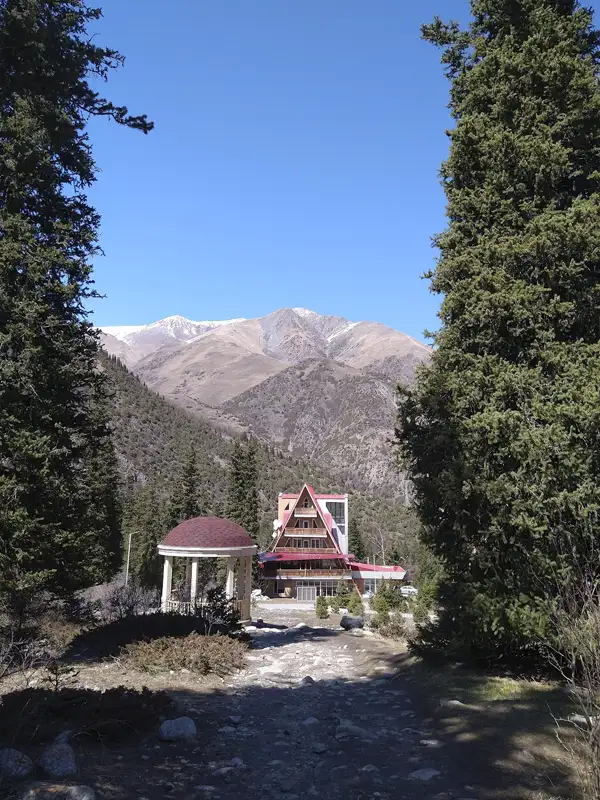 1/4. Upper Ala-Archa National Park
 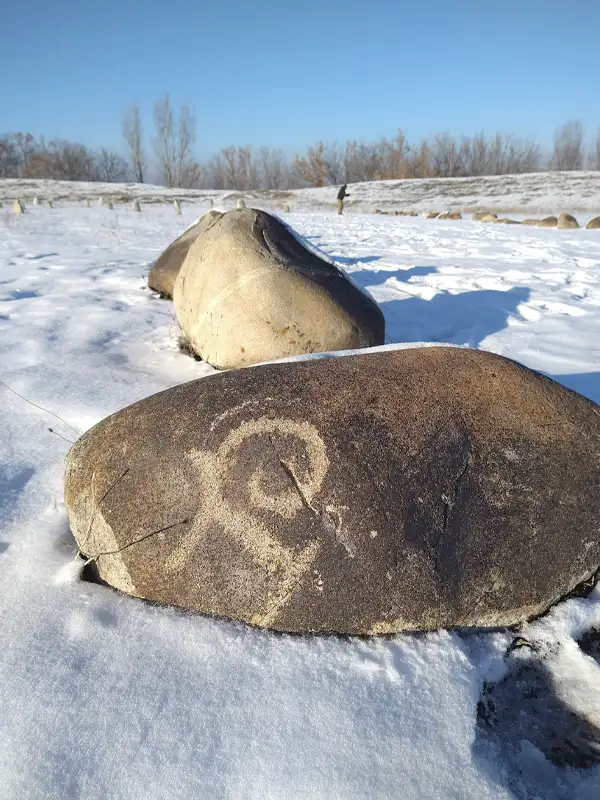 2/4. Balbal stone figures near Burana Tower
 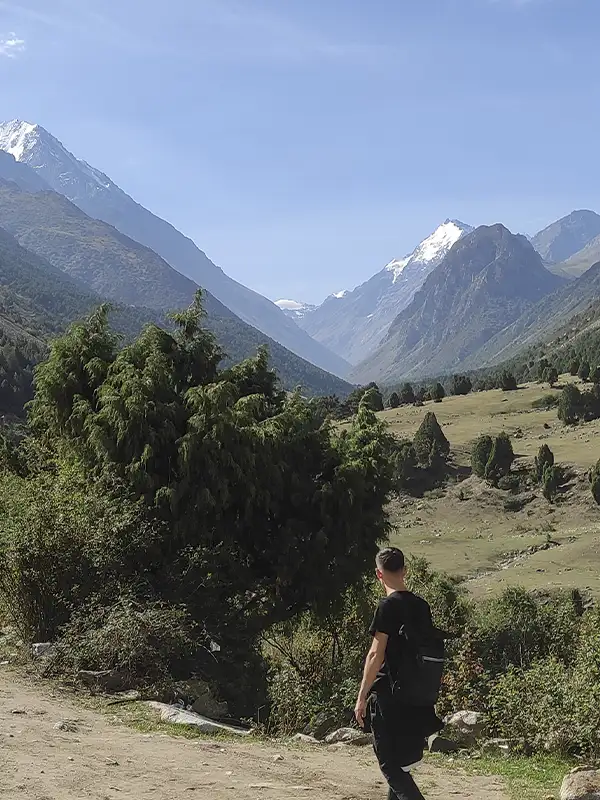 3/4. Alamedin Gorge
 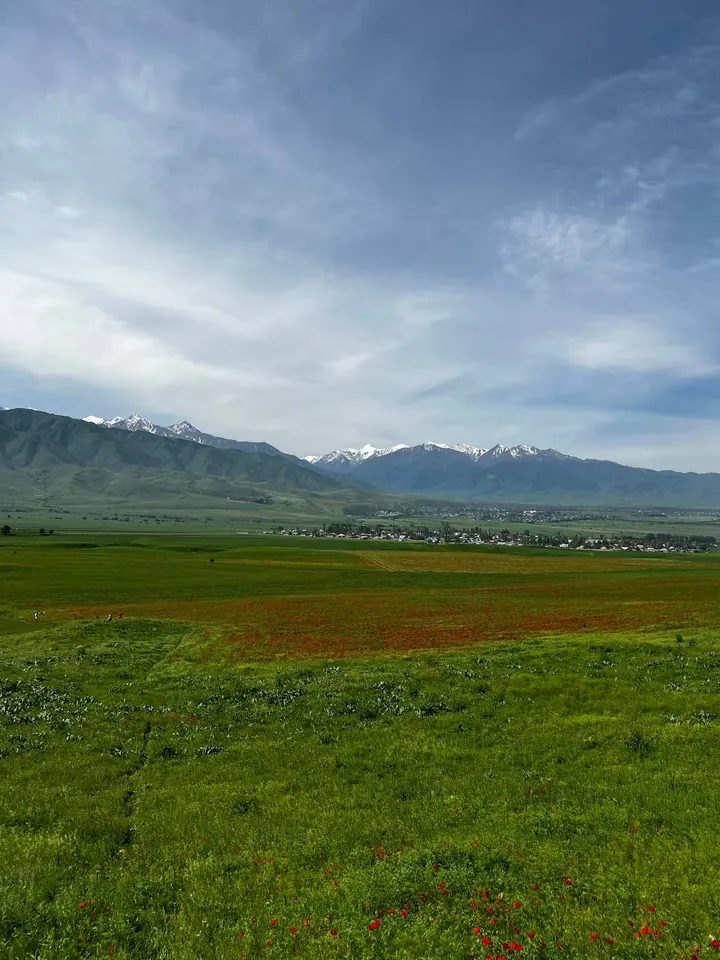 4/4. Spring fields near Gornaya Maevka
 How the city became Bishkek
The site at the northern foot of the Kyrgyz Ala-Too was connected with settlements and trade routes long before the modern city. In the nineteenth century, the Kokand fortress of Pishpek stood here. A settlement of the Russian Empire later developed around a regular street grid.
In 1926, the city was renamed Frunze after Mikhail Frunze, the military and political figure born here. The capital received its present name, Bishkek, in 1991. The Soviet period still shapes the centre, while markets, new neighbourhoods, the Kyrgyz language in public life and population growth have added further layers.
The simplest way to see Bishkek without rushing is to keep one day for the centre, choose one museum in advance and only then add a bazaar or a trip into the mountains. The capital then becomes part of the journey instead of a waiting room between the airport and the highway.
Share on social media
If you found this guide useful, share it on social media. It takes a moment and helps more travellers discover the project. Thank you!
Anything to add?
Share your experience, leave a comment or suggest an improvement.