Contents:
What is Supara?
Supara is a commercial ethnographic complex, not a conventional state museum. Restaurant halls, yurts, a courtyard, decorative objects and a private museum display share the same grounds. The format suits visitors who want to see household objects, architectural styling and a modern presentation of Kyrgyz food in one visit.
The museum is interactive, with models and traditional games beside objects in cases. This makes the subject approachable but does not turn the whole complex into a historical reconstruction. Its buildings and interiors are modern creations based on the founder's interpretation of Kyrgyz culture.
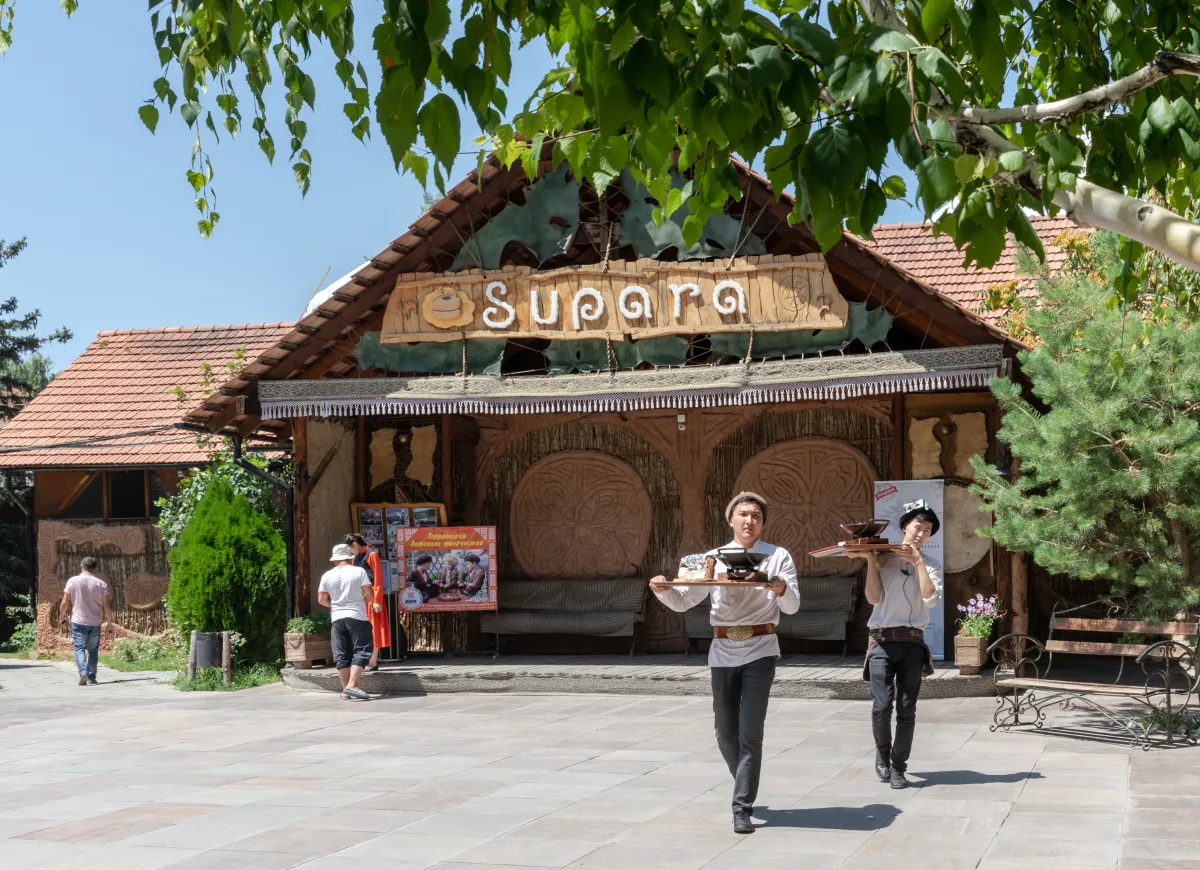 1/4. Main entrance and courtyard Photo: Ninara, Wikimedia Commons, CC BY 2.0; edited for this site.
 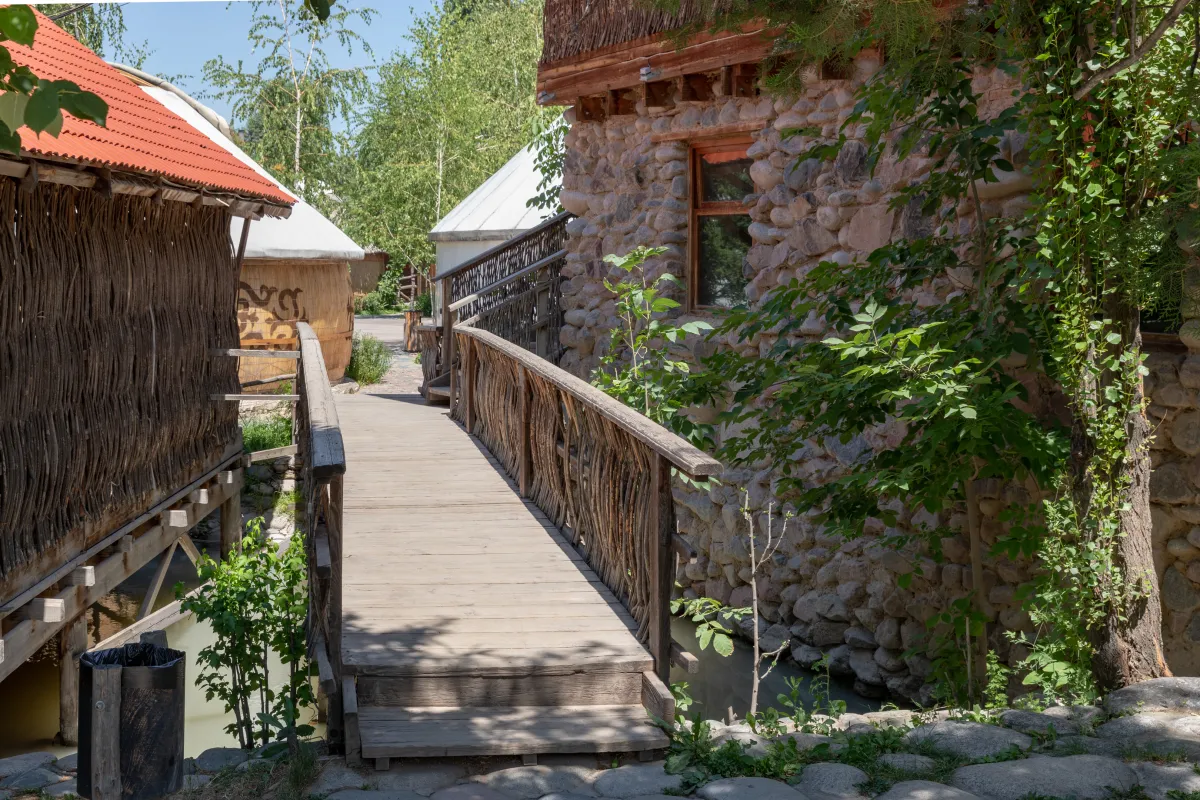 2/4. Walkways between the halls Photo: Ninara, Wikimedia Commons, CC BY 2.0; edited for this site.
 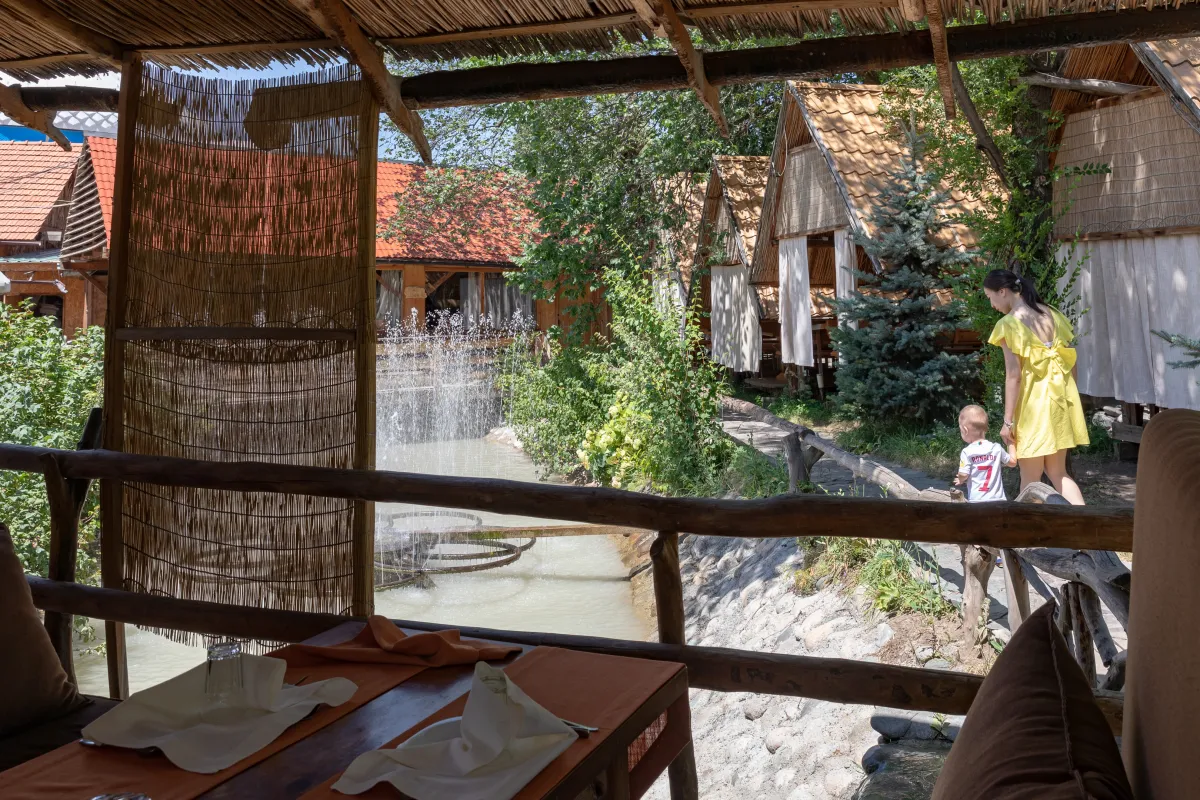 3/4. Summer courtyard and pavilions Photo: Ninara, Wikimedia Commons, CC BY 2.0; edited for this site.
 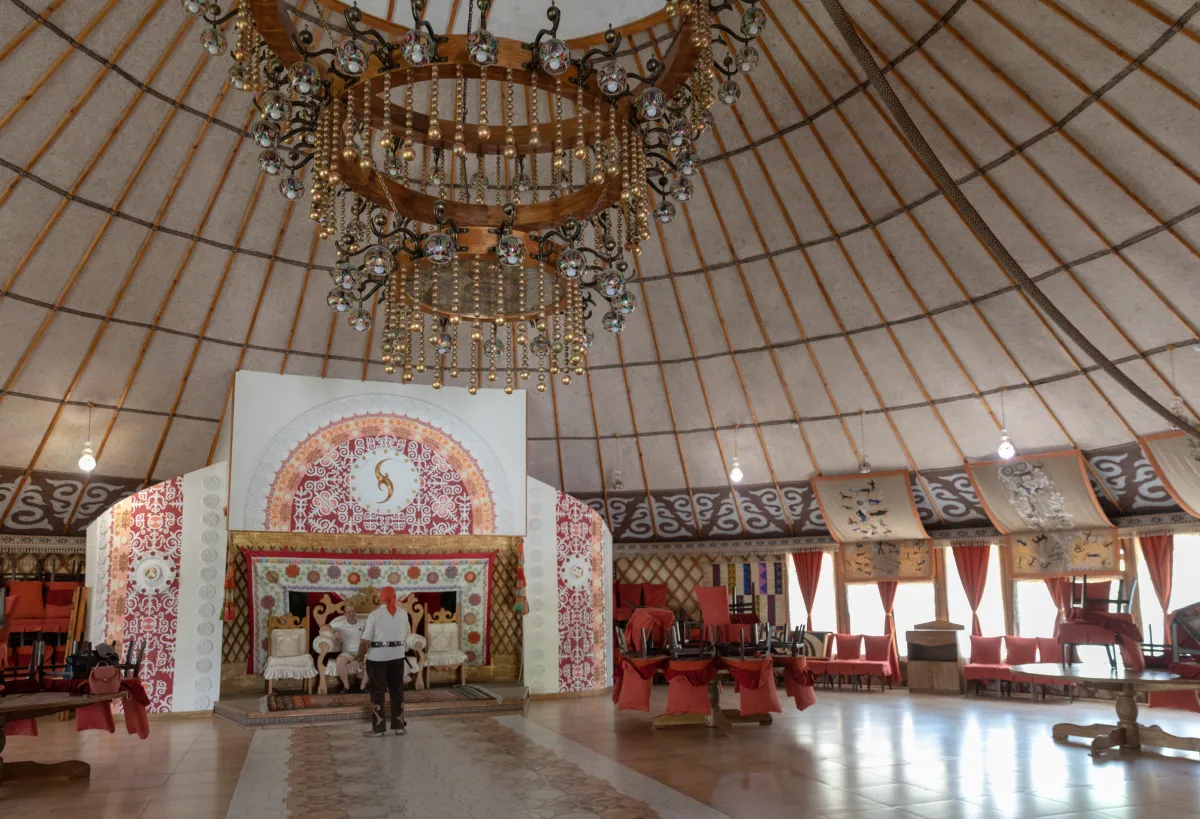 4/4. Large dining hall Photo: Ninara, Wikimedia Commons, CC BY 2.0; edited for this site.
 Getting there and what to book
The complex is in Kok-Jar village in Alamüdün District, beside the south-eastern edge of Bishkek. An ordinary road leads there, and a four-wheel-drive vehicle is not needed. Journey time depends on your part of the city and traffic, so check a navigation app before leaving.
Confirm a museum visit and a restaurant table separately. Restaurant opening hours do not guarantee that a tour or museum staff member will be available throughout the day. Contact the complex in advance for a large group, an event or a weekend meal.
Allow about an hour for an unhurried museum visit. With lunch and a walk around the grounds, plan for two to three hours. Admission, tour and menu prices change, so this page does not fix a figure that will quickly become outdated.
What to see in the private museum
Models. One of the clearest parts of the display presents household scenes in miniature: assembling a yurt, preparing food, working with animals and carrying out craft processes. Follow the order of actions and look at the purpose of the figures' clothing.
Horse tack and tools. These objects explain the connection between transport, livestock keeping and everyday work. Confirm the purpose of a particular piece from its label or a guide. Similar leather and wooden items served different tasks.
Kitchen utensils. Hand mills, wooden dishes, leather containers and other objects connect the museum with the restaurant. They show the process before a finished dish: how grain was ground, a drink transported and food served at a shared table.
Textiles and decorative art. Tush kiyiz wall hangings, carpets and motifs functioned both as household objects and interior decoration. Not every pattern has one ancient meaning. Material, technique and an object's place in the home are more dependable guides.
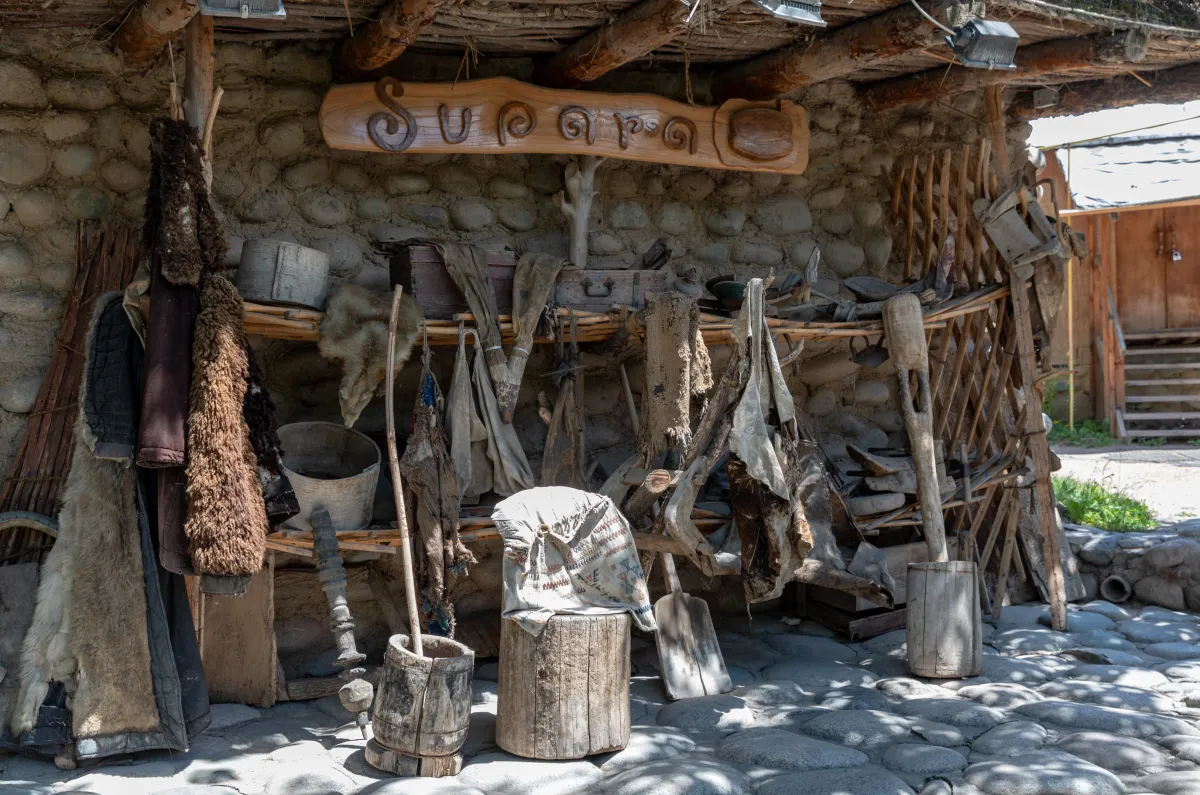 1/3. Household-object display Photo: Ninara, Wikimedia Commons, CC BY 2.0; edited for this site.
 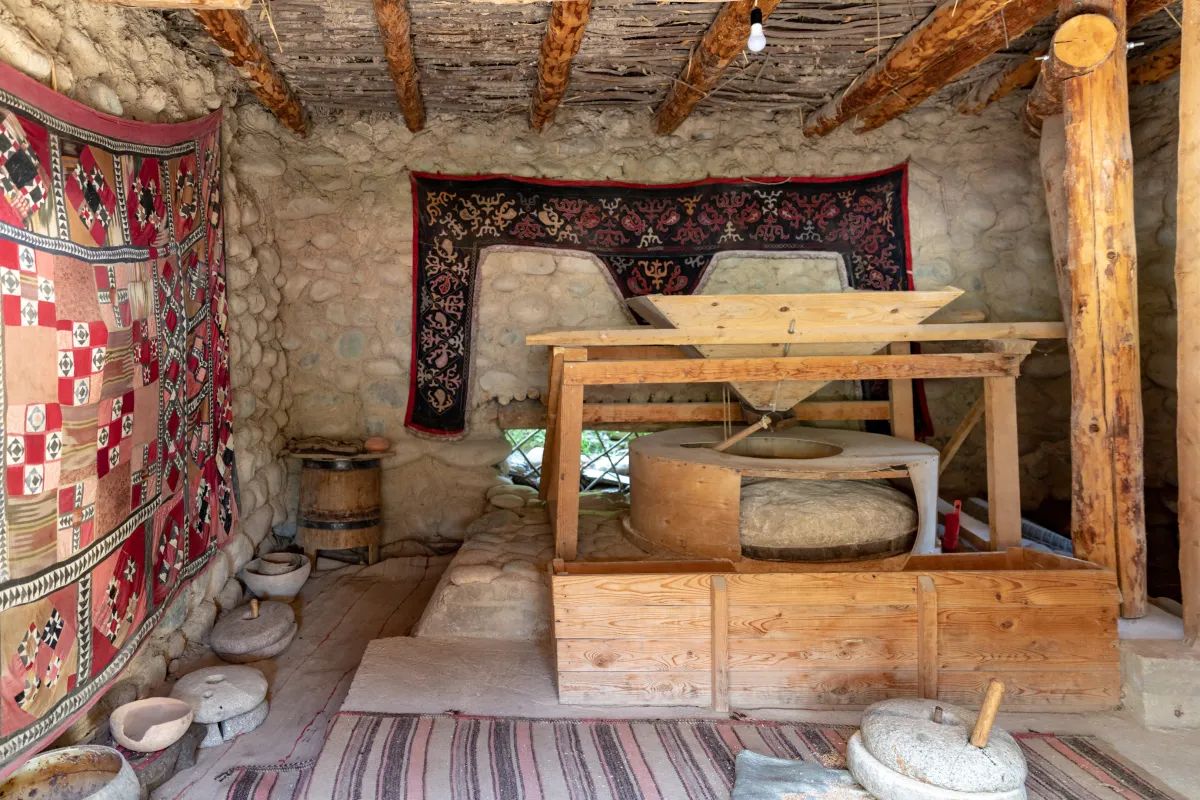 2/3. Mill and textiles Photo: Ninara, Wikimedia Commons, CC BY 2.0; edited for this site.
 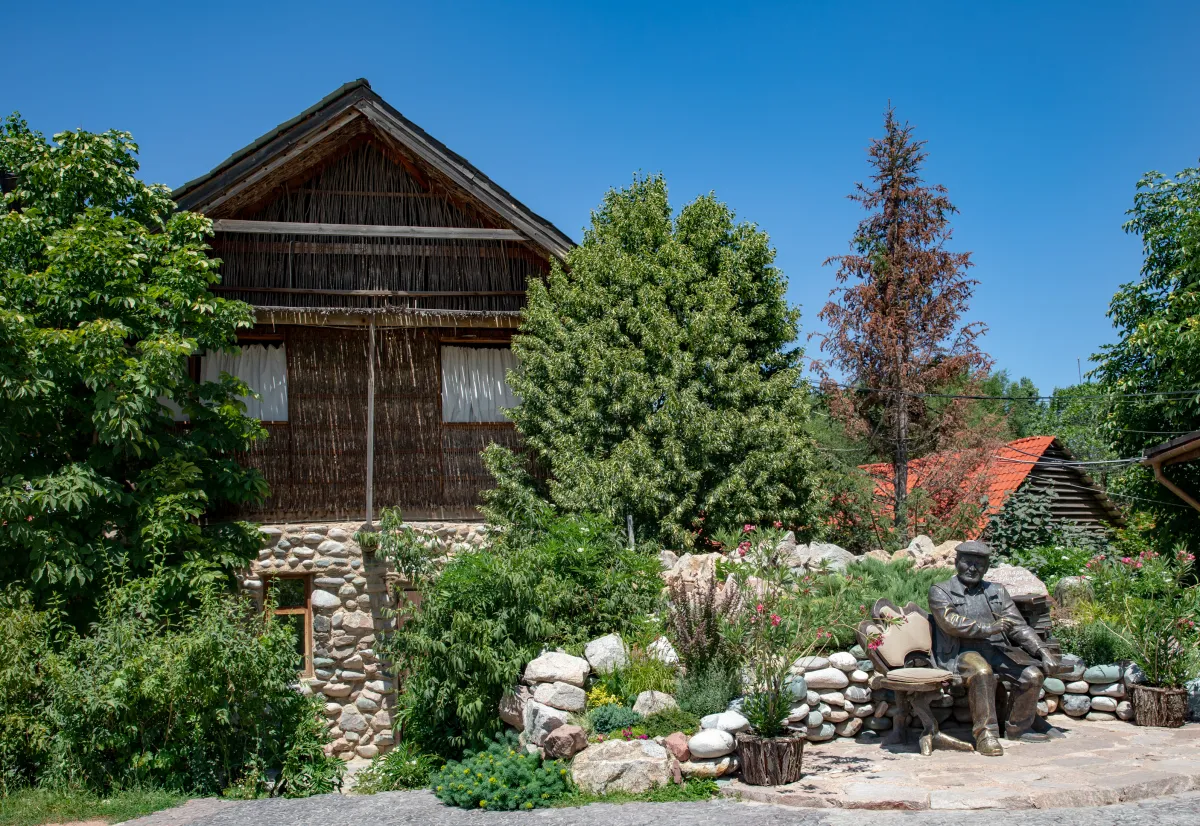 3/3. Garden and complex architecture Photo: Ninara, Wikimedia Commons, CC BY 2.0; edited for this site.
 Architecture and food
The complex uses wood, stone, clay, felt and other materials that its creator associated with traditional architecture. Large yurts have been adapted for restaurants and events, so their construction differs from a portable dwelling. This is a modern interpretation, not an untouched historical site.
The restaurant continues the museum story through food, but the phrase "an old recipe" proves little on its own. Ask about ingredients and preparation if a particular technique interests you. Our separate food guides explain Kyrgyz dishes in more detail.
Do not assume that workshops, performances, games or horse programmes are included in an ordinary ticket. They run to a schedule or for groups, so confirm availability and conditions before arriving.
Who created the complex, and what does the name mean?
Taabaldy Egemberdiev, one of the founders of the Shoro company, created the project. He helped develop its architecture and collected objects for the interiors and display. The complex's own history emphasises this personal vision: Supara grew not from an existing museum building but from an attempt to assemble culture in a functioning modern space.
In traditional life, a supara is a leather mat or cloth used when working with dough. The name links the complex with home, shared food and manual work. Afterwards, continue exploring the country's history at the National Historical Museum or choose another site from our guide to museums in Kyrgyzstan.
Share on social media
If you found this guide useful, share it on social media. It takes a moment and helps more travellers discover the project. Thank you!
Anything to add?
Share your experience, leave a comment or suggest an improvement.