Contents:
The main rule: the type of accommodation does not guarantee particular facilities. Before paying, obtain written confirmation of the address, bed type, heating, bathroom, meals, transfer and cancellation terms.
Where to start when choosing accommodation
Build your day-by-day itinerary first, then look for a place to stay near the point where each day actually ends. An attractive house twenty kilometres from the gorge you need may add a morning transfer, while a cheap room across town can mean two extra journeys with luggage.
Choose three non-negotiable requirements and separate them from preferences. For example, a private bathroom, overnight heating and an early breakfast may be essential, while a view, sauna and large room would simply be welcome. This filter is more useful than an overall rating.
Hotel or apartment
- Compare the area with the purpose of your stay and your arrival time.
- Check whether reception is open around the clock or how late check-in works.
- Confirm the lift, air conditioning or heating if you specifically need them.
Guesthouse
- Ask whether the bathroom is private and where it is located.
- Confirm dinner, breakfast, parking and the host’s contact details.
- Check the map pin and the final section of the road.
Yurt, camp or glamping site
- Confirm the operating season and how to reach the site.
- Ask about overnight heating, bedding and electricity.
- Check the toilet, shower, drinking water and meals separately.
Choosing the right area and route stop
There is no universally best area. In Bishkek, one traveller may choose the centre for walks and cafés, while another needs a short journey to a meeting point or the road out of the city. In Osh, compare access to the centre, airport and the road you will take next.
Karakol is often used as a base for eastern Issyk-Kul and mountain day trips. Check the transfer pickup point as well as the distance on the map. Staying near the centre does not mean that a vehicle heading into a gorge will collect you at the door.
At Issyk-Kul, choose the shore and settlement first. The phrase “by the lake” does not tell you whether the water is within walking distance, whether there is public beach access or how long it takes to reach a café or bus stop. Ask for an exact map pin and look at recent photographs of the approach.
Hotel, guesthouse or yurt camp
A hotel is useful when you need predictable check-in, a private room and a clearly defined set of services. You should still check whether breakfast is included, whether reception operates at night and whether the photograph shows the room category you selected.
A guesthouse generally combines several rooms with direct contact with the hosts. A private bathroom, kitchen, dinner, parking and daily cleaning depend on the individual property. Do not assume that the conditions at one guesthouse apply to another.
A yurt camp or glamping site places you closer to the landscape, but the name does not define the level of comfort. Your bed may be in a shared yurt, the bathroom may be in a separate building and electricity may run to a schedule. Obtain these details before booking.
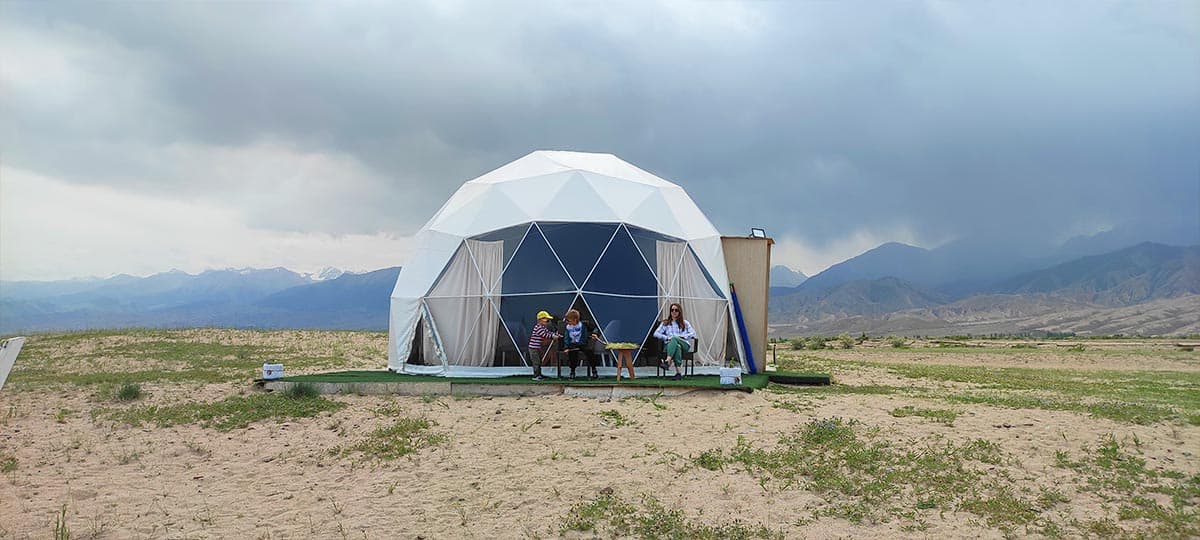 1/3. Glamping in an open landscape
 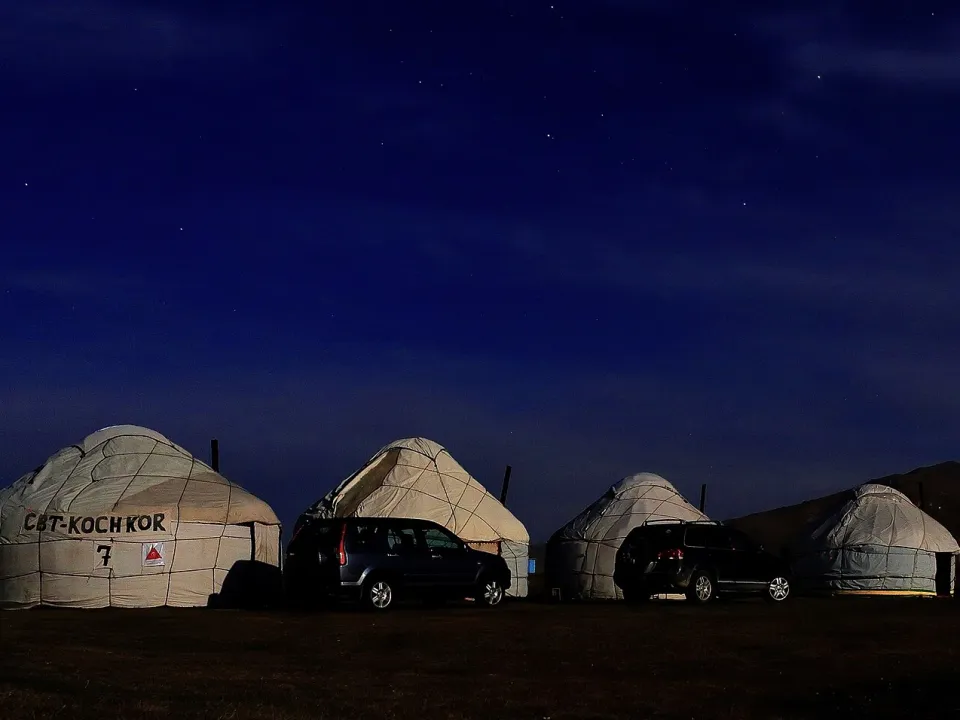 2/3. A yurt camp after sunset Photo: Thomas Depenbusch, Wikimedia Commons, CC BY 2.0; edited for this site.
 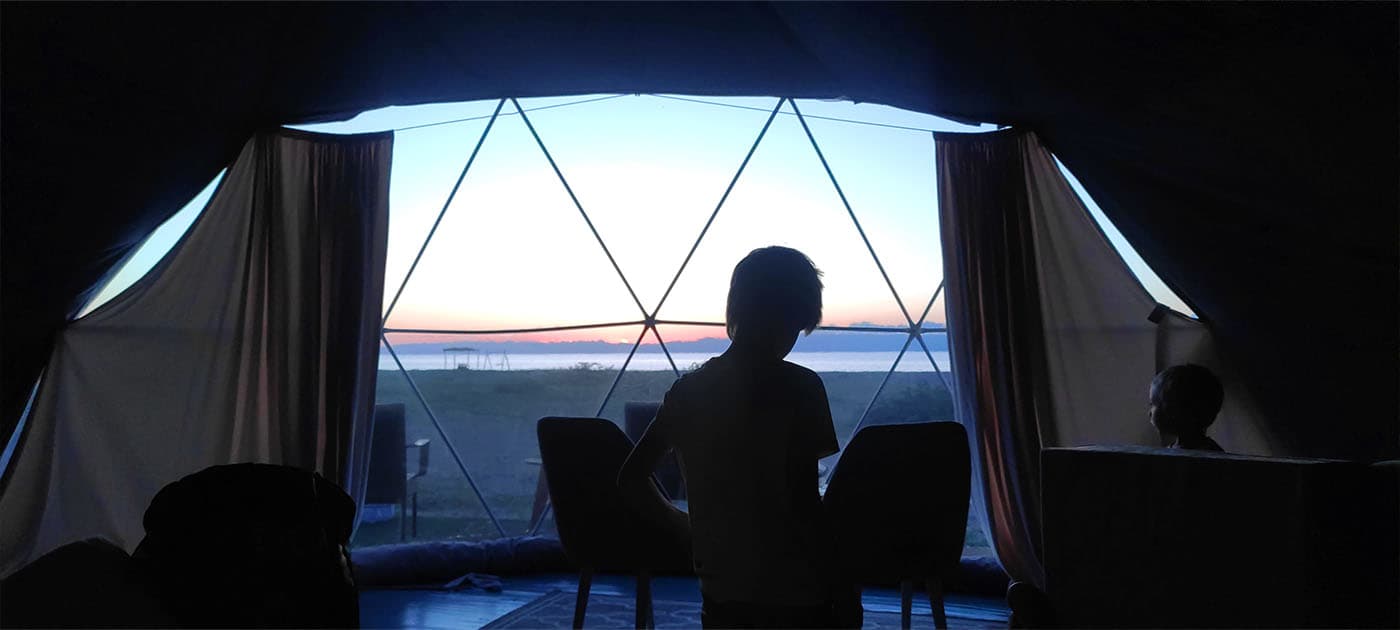 3/3. Interior and panoramic window
 How to check the heating
“Is there heating?” is too broad a question. Ask how your particular room or yurt is heated, whether the system runs throughout the night and who tends the stove. Also confirm an extra blanket and the possibility of changing rooms if the heating fails.
An electric heater depends on the power supply, a stove on fuel and attention, and central heating on the operating season. Do not assume that any system works around the clock without confirmation from the host. In a cold location, a photograph of the bed and heat source is more useful than another photograph of the façade.
For a night in a yurt. Ask who tends the stove, how long it remains warm and where the extra blankets are kept. Do not change the stove settings without instructions from the host.
What to ask about bathrooms and water
Ask for a one-sentence description of the bathroom: private or shared, inside the room, elsewhere in the house or in a separate building. The word “shower” does not guarantee hot water at all hours. Confirm the schedule, water reserve, towels and whether the system works during the cold season.
At a camp, ask what kind of toilet is provided, whether the route is lit at night and where you can wash your hands. Drinking water is a separate question: find out where to obtain it, whether it is included and whether you need to bring a supply. Official sanitation requirements treat water, food areas and toilets as separate parts of a camp, so one answer does not cover the others.
How to arrange meals
Find out which meals are included and when they are served. If you leave for a route before breakfast, ask in advance about an early meal or packed food. If you arrive in the evening, tell the host your arrival time; the kitchen may close before check-in.
Write allergies, vegetarian requirements and other restrictions in simple terms before paying. Ask whether the kitchen can prepare a suitable dish without the restricted ingredient, rather than merely removing it from the plate. At a remote camp, also check whether lunch can be purchased and where the nearest alternative is located.
How to check a transfer
Confirm the meeting point and time, driver’s name, vehicle number, permitted luggage and contact number. Ask whether the ride is shared or private, whether waiting after a flight delay is included and where the driver will leave you at the end.
For mountain accommodation, ask which vehicle can handle the final section in the road’s current condition. An ordinary saloon, four-wheel drive and carrying luggage on foot are very different arrangements. If the transfer costs extra, obtain the total amount and currency before departure.
The main ways of travelling around the country are covered in our Kyrgyzstan transport guide. The host or transfer operator must still confirm the conditions for your particular property.
What to confirm before paying
- Address and dates. Save the map pin, property name, dates, number of guests and host’s contact details.
- Room and beds. Record the category, number of separate beds, floor and presence of stairs or a lift.
- Facilities. Obtain answers about heating, the bathroom, hot and drinking water, electricity and connectivity.
- Meals and transfer. Separate included services from those paid for on site.
- Payment and cancellation. Confirm the deposit, currency, payment method, refund terms and free-cancellation deadline.
Save the confirmation and map pin offline. The name in a booking app, the sign at the property and the profile in a messaging app may differ slightly, particularly for family-run accommodation. One screenshot with the address and telephone number is more useful than a long conversation that you cannot open without a connection.
How to choose a yurt camp
Confirm the operating season and exact camp location. At Son-Kul and in other high-altitude areas, the same general place name may refer to different shores and access roads. Ask about the final journey time, road condition, transfer arrangement and plan for a sudden change in weather.
Then check the number of guests per yurt, type of bed, bedding, heating, electricity, charging, toilet, shower and meals. If you are travelling with a child or someone has limited mobility, ask how far the yurt is from the dining area and bathroom. Our guide to the Kyrgyz yurt explains its construction and how an overnight stay works.
The Tourism Department’s official list of yurt camps is a useful place to start looking. Contacts and operating seasons change, so an entry on the list does not replace direct confirmation for your dates.
What to check on arrival
Before unpacking, check the beds, lock, heating, water and bathroom. If the room differs from the confirmation, show the conversation immediately and agree on a solution. For late check-in, establish how to reach the person on duty before setting out along a remote road.
Confirm breakfast and checkout times, luggage storage, payment for additional services and the morning transfer point. At a camp, ask to be shown a safe route to the toilet and dining area after dark. These five minutes resolve most practical questions before the hosts or driver go to sleep.
Frequently asked questions about accommodation in Kyrgyzstan
Does every yurt camp have heating?
There is no standard set of facilities across all camps. Confirm the heat source, operating time, who tends the stove and whether extra blankets are available.
Does a guesthouse include a private bathroom?
Not necessarily. The bathroom may be private, shared on the same floor or located in another building. Ask for a written description of the facilities for your particular room.
Are meals normally included in the room price?
This depends on the property and rate. Confirm breakfast, dinner, serving times, dietary requirements and whether food will be available after a late arrival.
How should I choose accommodation after a night flight?
Look for confirmed late check-in and arrange the transfer in advance. Save the map pin, telephone number and entry instructions offline.
Should I rely only on ratings and photographs?
A rating can help remove weak options, but it does not confirm the facility you need. Read recent reviews and obtain direct answers about heating, bathrooms, meals and road access.
What should I ask before staying with a child?
Confirm a separate bed, overnight heating, distance to the bathroom, a safe route across the site, suitable food and the transfer time.
Share on social media
If you found this guide useful, share it on social media. It takes a moment and helps more travellers discover the project. Thank you!
Anything to add?
Share your experience, leave a comment or suggest an improvement.