Contents:
Which shore of Issyk-Kul should you choose?
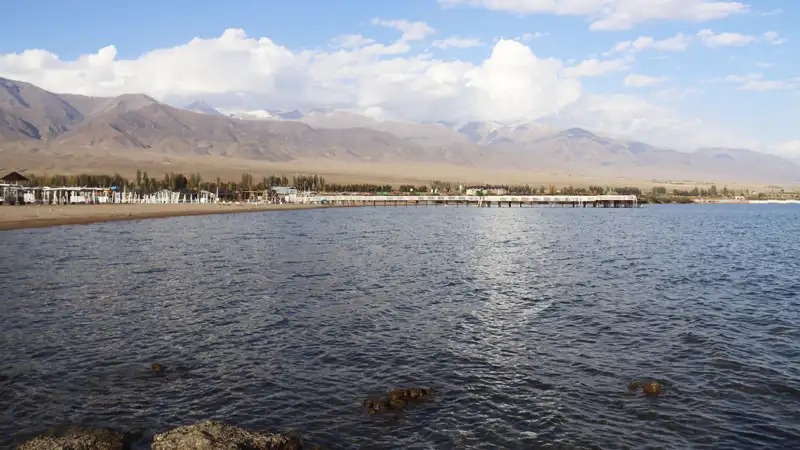
Issyk-Kul is about 180 kilometres long, so the words “a hotel by the lake” tell you very little about the trip. Tamchy, Cholpon-Ata, Karakol and the south shore are several hours apart. Decide what kind of holiday you want first, then choose the town or village.
North shore. This is where you will find most of the large resorts, serviced beaches, cafés and entertainment. Cholpon-Ata and Bosteri suit travellers who want resort facilities right outside their hotel. Expect more people, traffic and music in July and August.
South shore. There are fewer large resort complexes between Balykchy and Karakol, but this shore provides easier access to Skazka Canyon, Bokonbaevo, Barskoon and Jeti-Oguz. Accommodation is more often in guesthouses and yurt camps. Check the beach separately: not every stretch of shore is sandy or has a safe entry into the water.
The eastern end and Karakol. Choose this area if you want to combine the lake with city life, food and hiking. Trails from Karakol lead into Karakol Gorge, Altyn-Arashan and Lake Ala-Kul. Reaching the beach from the city centre requires a separate trip.
The western end and Balykchy. This is the lake's transport gateway and a convenient stop on the way to Naryn. Travellers looking for a conventional beach holiday usually continue farther along the shore: the west is windier and has fewer resort areas.
When to go
Summer is the main beach season. The water is still cool in June; July and August offer the widest choice of open hotels and cafés; September is quieter, but the weather is less predictable. Spring and autumn are better for sightseeing trips around Issyk-Kul. Life on the shore continues in winter, although some resort accommodation and restaurants close for the season.
The lake is deep, and wind can create waves very quickly. Swim at an authorised beach, keep away from boats and never leave children by the water without an adult. A clear, gently shelving shoreline can drop away suddenly.
How to get to Issyk-Kul
The main road from Bishkek runs through Boom Gorge to Balykchy, where it divides into the north-shore and south-shore routes. An ordinary car is suitable for the main lakeside road. You may need a four-wheel-drive vehicle for particular side gorges and unpaved roads, not for Issyk-Kul itself.
Approximate journey times from Bishkek
Balykchy. About 3 hours without long stops. Congestion or traffic restrictions in Boom Gorge will add to the journey time.
Cholpon-Ata. Usually 4-5 hours. The north shore is busier on summer weekends.
Karakol via the north shore. Roughly 6-7 hours, allowing for stops, traffic and roadworks.
These times are only a guide. At night, tiredness is compounded by unlit stretches of road and animals on the carriageway.
Bus and marshrutka. Public transport runs from Bishkek to Balykchy, Cholpon-Ata and Karakol. Departure points and the last service can change, so check them on the day you travel. If your hotel is in a small village, agree in advance where to get off and who will meet you by the main road.
Train. Passenger trains run to Balykchy on a seasonal timetable. The journey is slower than driving, but avoids road traffic. Check dates and seat availability on the Kyrgyz Railways website.
Plane. Issyk-Kul Airport is in Tamchy. Destinations and flight frequency vary by season. A ticket to Tamchy does not cover the final part of the journey: you will still need a transfer to Cholpon-Ata, Bosteri or Karakol. Current flights are published by Airports of Kyrgyzstan and the airlines.
The name and key facts
The Kyrgyz name Ысык-Көл, Ysyk-Köl, is usually translated as “warm lake”. In a typical winter, the deep open water does not freeze over completely because of the lake's large volume and mineral content. Shallow bays and the water's edge can freeze, however, so the familiar claim that “Issyk-Kul never freezes” needs this qualification.
The lake lies at an elevation of about 1,608 metres between the Küngöy Ala-Too and Teskey Ala-Too ranges. Its maximum depth is 668 metres. Issyk-Kul is endorheic: rivers flow into it, but no surface river flows out. A mountain panorama of the lake appears on the reverse of the 200 som banknote; the front carries a portrait of Alykul Osmonov, for whom the lake became a defining image of mature lyric poetry.
The lake and its surrounding landscapes form the Ysyk-Köl Biosphere Reserve, which UNESCO added to the World Network of Biosphere Reserves in 2001. This is more than a ceremonial designation: different areas along the shore have different conservation regimes, while fishing and motorised transport are regulated separately.
Since March 2025, restrictions on plastic bags and single-use plastic products have applied in the resort, recreation and beach zone. The practical response is simple: bring a reusable bag and bottle, and do not leave packaging on the beach. An explanation is available on the Kyrgyz Ministry of Natural Resources website.
What to see around the lake
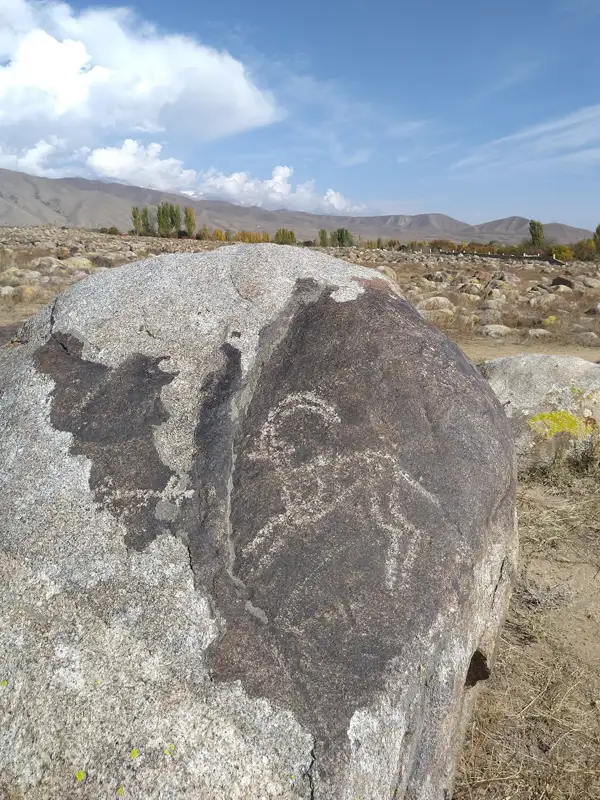 1/4. Petroglyphs in Cholpon-Ata
 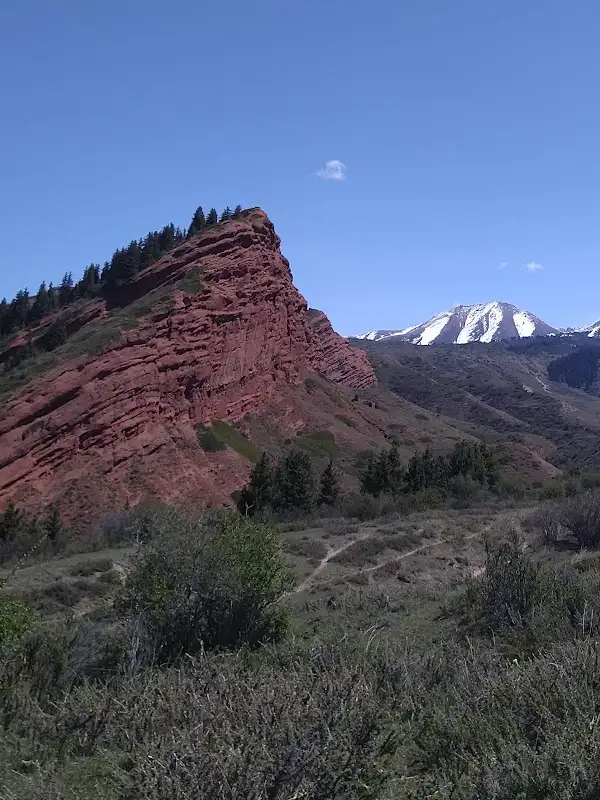 2/4. Jeti-Oguz Gorge
 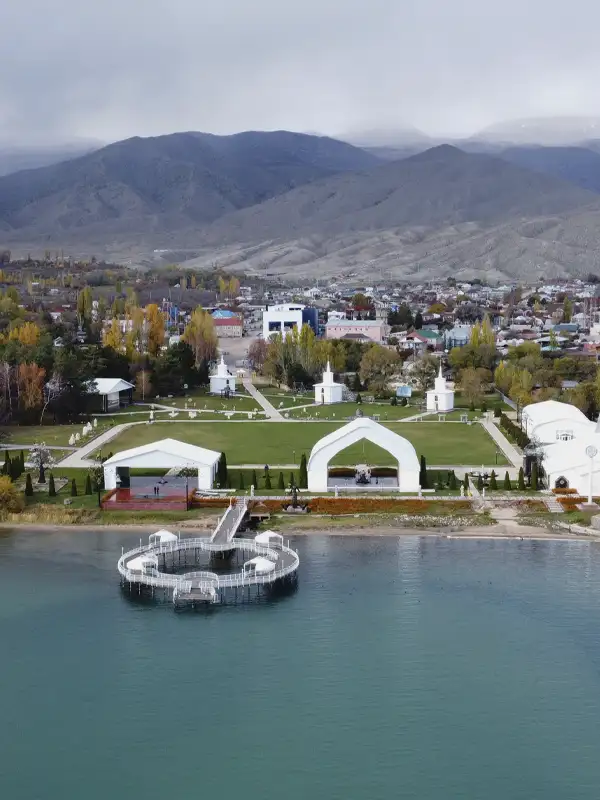 3/4. Rukh Ordo
 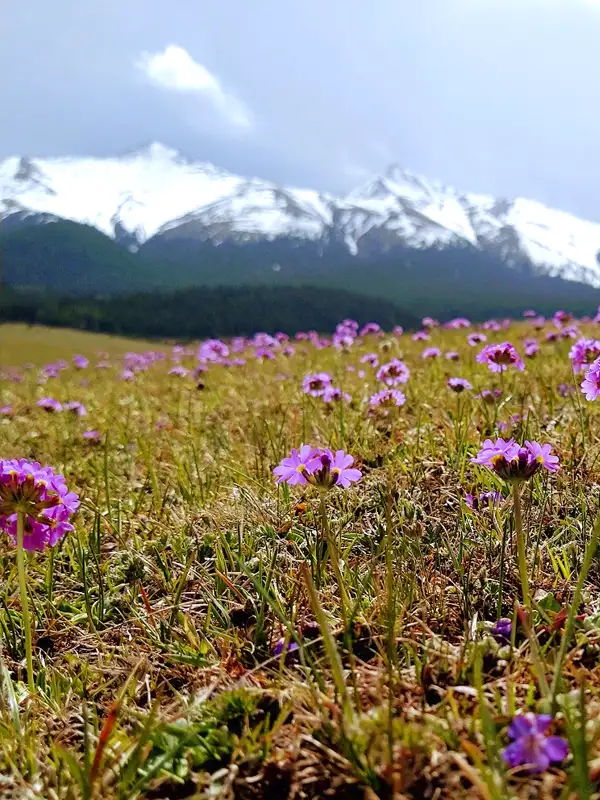 4/4. Grigorievka Gorge
 Cholpon-Ata. In one day, you can combine the beach with the open-air petroglyphs and the Rukh Ordo cultural centre. In summer, visit museums and popular attractions in the morning, before the tour groups arrive and the day becomes hot.
Northern gorges. Grigorievka and Semenovka gorges are close to each other, but they are not a single paved excursion. Rain changes the unpaved sections and river crossings. Do not take an ordinary car anywhere you may have to drive back through churned-up mud.
Karakol. The city has preserved its wooden Holy Trinity Cathedral and Dungan Mosque. Try ashlyan-fu while you are here, and set aside a separate day for the Przhevalsky Museum in Pristan-Przhevalsk.
Jeti-Oguz and Barskoon. The red rocks of Jeti-Oguz make an easy short trip, while the upper valley leads to longer hiking routes. The waterfalls in Barskoon Gorge sit at different elevations: reaching the higher ones requires footwear with good grip.
Skazka Canyon. The dry clay formations are at their most striking in the morning and towards sunset. The surface becomes slippery and easily damaged after rain, so do not climb the narrow ridges. See the canyon route for more details.
Where to stay
Cholpon-Ata and Bosteri. These towns offer the widest choice of summer facilities, entertainment and accommodation. They work well for a car-free trip if you do not plan to make daily excursions to the opposite shore.
Tamchy, Chok-Tal and Sary-Oy. Convenient for a short airport transfer and a quiet beach holiday. Shore quality varies from property to property, so look for recent photographs of the entry into the water, not just the rooms.
Karakol. The best option if city life, food and mountains matter more to you than swimming every day. Check the distance to the beach: an address in Issyk-Kul Region does not mean the lake is within walking distance.
Bokonbaevo, Tosor and Tamga. Good bases for the south shore, Skazka Canyon and Barskoon Gorge. There are fewer large hotels here, but it is easier to find a guesthouse or yurt camp.
The south shore of Issyk-Kul
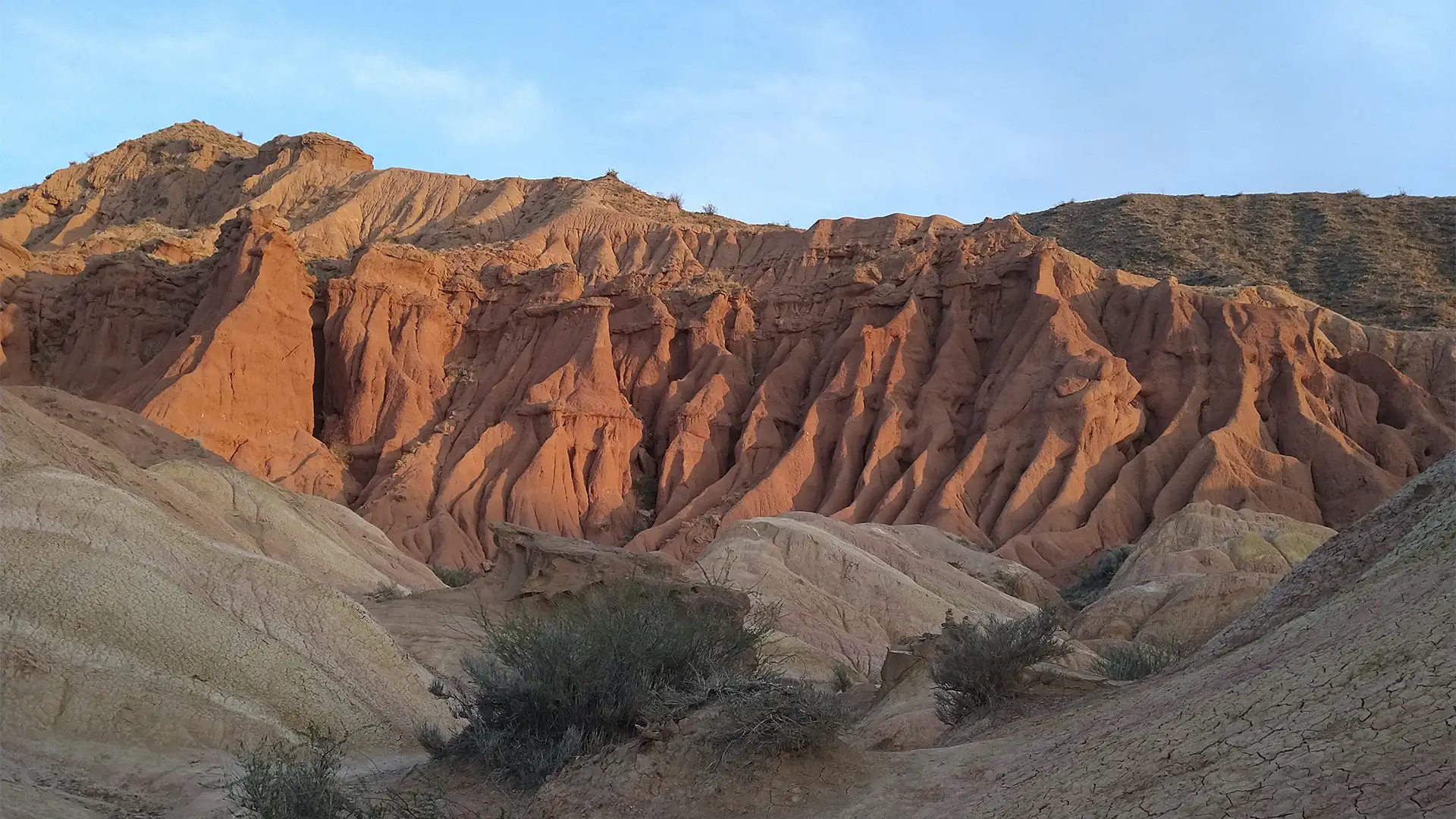
Choose the south shore for the route, not for a vague idea of “wilderness”. It has villages, guesthouses and popular stops of its own. Distances are considerable: it is difficult to walk around Skazka Canyon at a relaxed pace, drive to Barskoon, see Jeti-Oguz and finish the evening in Karakol all in one day.
Split the trip between at least two bases, or travel around the lake with overnight stops. Bokonbaevo is convenient for the western section, Tamga and Barskoon for the central section, and Karakol for the east. If you leave the road to park on unpaved ground by the beach, check the forecast: after heavy rain, a dry track can quickly become a trap.
Before camping, find out who owns the shore and whether an overnight stay is permitted. Do not pitch your tent in a dry riverbed, next to a cliff or right at the water's edge. Strong winds can rise with little warning.
How to choose accommodation
Lists of the “best resorts” date quickly. Before booking, it is more useful to check six things:
- Private beach or access to a public one. Ask for the real distance and whether you need to cross the main road.
- Shoreline. The sand in an advertising photograph may end at the neighbouring pier. Look for a recent view of the entry into the water.
- Food. In a small village, the nearest café may open only in summer. Ask whether breakfast and drinking water are included.
- Hot water and heating. These matter more than the swimming pool in the photograph if you visit in June, September or winter.
- Quiet. Check whether the property is next to a beach club, stage or family accommodation blocks.
- Cancellation. Weather, flights and road conditions can change your plans. Compare refund terms before paying.
If you plan to explore both shores, changing accommodation is more efficient than returning to the same place every day. You will find a ready-made circular itinerary in our route around Issyk-Kul.
Share on social media
If you found this guide useful, share it on social media. It takes a moment and helps more travellers discover the project. Thank you!
Anything to add?
Share your experience, leave a comment or suggest an improvement.