Contents:
What the memorial complex includes
The complex consists of a museum building and a park. Maps, documents, books, portraits, expedition equipment and natural-history material fill the galleries. The grounds contain a bust, a large monument topped by an eagle and Nikolai Przhevalsky's grave.
The museum is not in central Karakol but closer to the shore of Issyk-Kul. Account for it as a separate trip from town, rather than a quick stop between central sights.
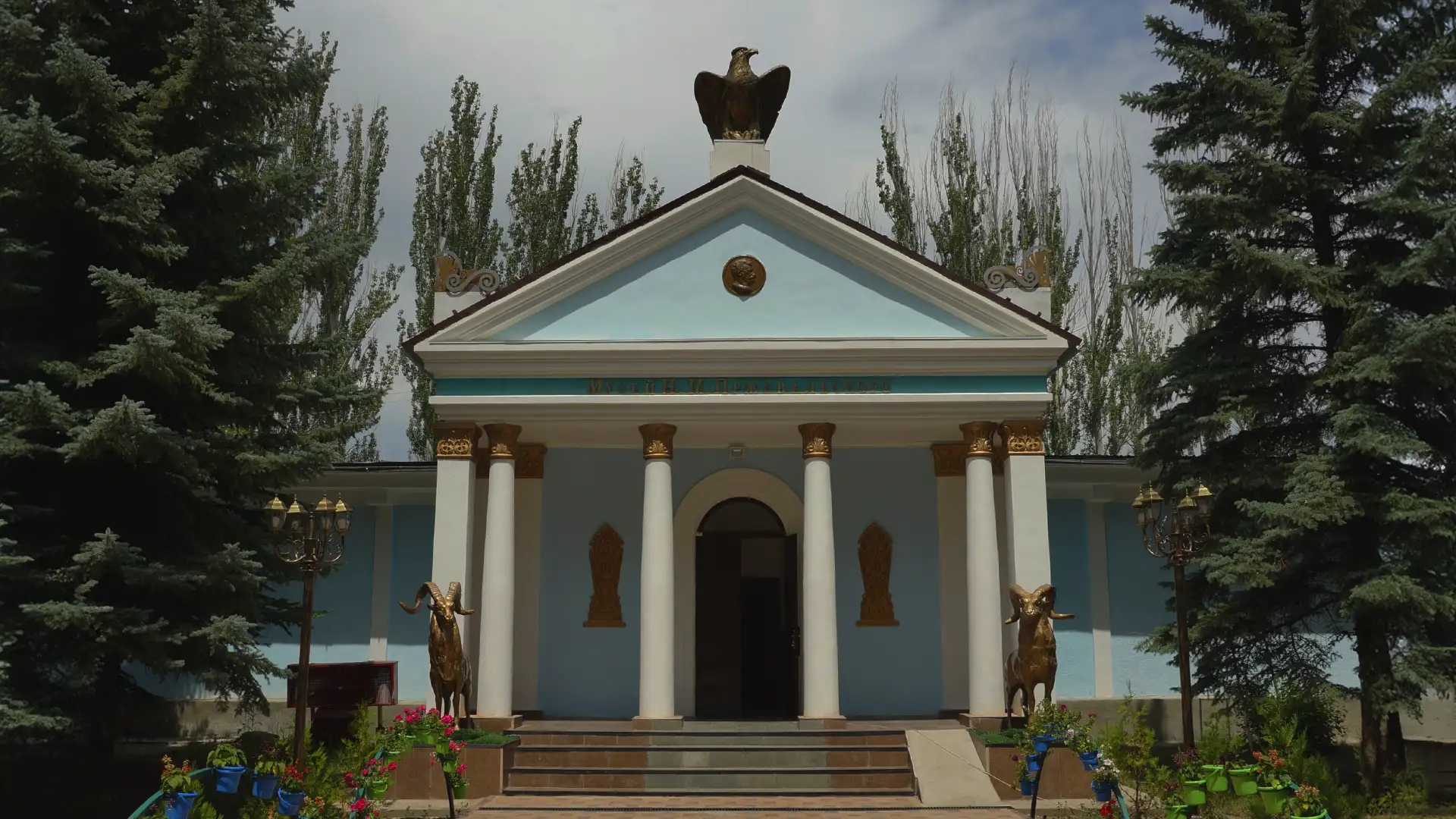
Getting there and preparing for a visit
The museum is in Pristan-Przhevalsk, a settlement that is administratively part of Karakol. An ordinary road reaches it, so a four-wheel-drive vehicle is not required. Journey time depends on your starting point and traffic; check a navigation app before leaving.
Check opening hours and ticket prices on the day of your visit. Timetables and guided-tour arrangements at memorial museums can change, while old travel listings keep circulating outdated details. Allow 60 to 90 minutes for the museum and a walk through the park.
The park is exposed to wind from the lake. Bring an extra layer in cooler seasons even when Karakol feels warm. Treat the grounds as a memorial: do not climb the monuments, make noise beside the burial or picnic near the grave.
Who was Nikolai Przhevalsky?
Nikolai Przhevalsky lived from 1839 to 1888. He was an officer of the Russian Empire, a geographer and a naturalist who explored the Ussuri region and Central Asia. His expedition parties mapped mountain ranges, lakes and rivers, collected zoological and botanical specimens, and recorded observations about territories and their populations.
His four major Central Asian expeditions crossed Mongolia, the Gobi, northern Tibet and the headwaters of the Yellow and Yangtze rivers. A Russian Geographical Society project brings together a detailed chronology, maps and documents.
Przhevalsky arrived in Karakol in 1888 before another expedition, fell ill and died. He was buried beside Issyk-Kul. The town was called Przhevalsk during the Soviet period. Its historical name, Karakol, was restored in 1992, while the settlement retained the name Pristan-Przhevalsk.
What to see in the museum
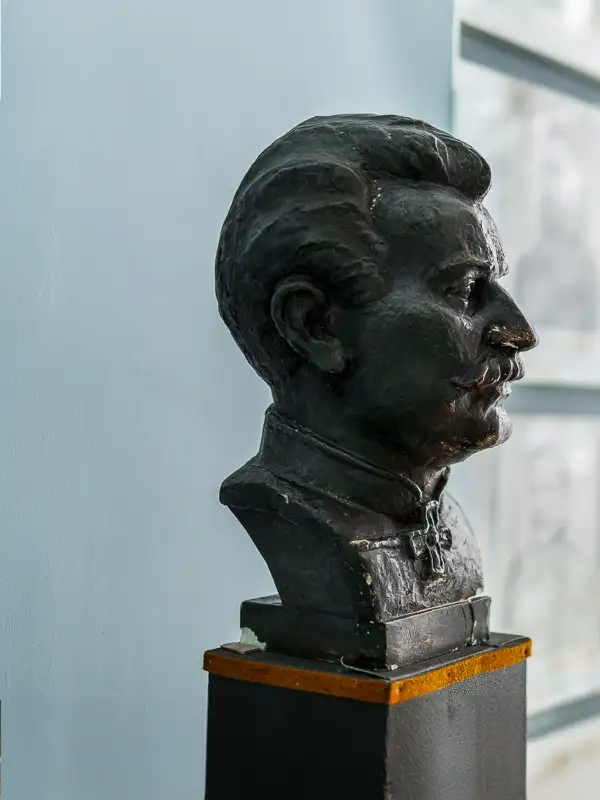 1/4. Bust of the explorer
 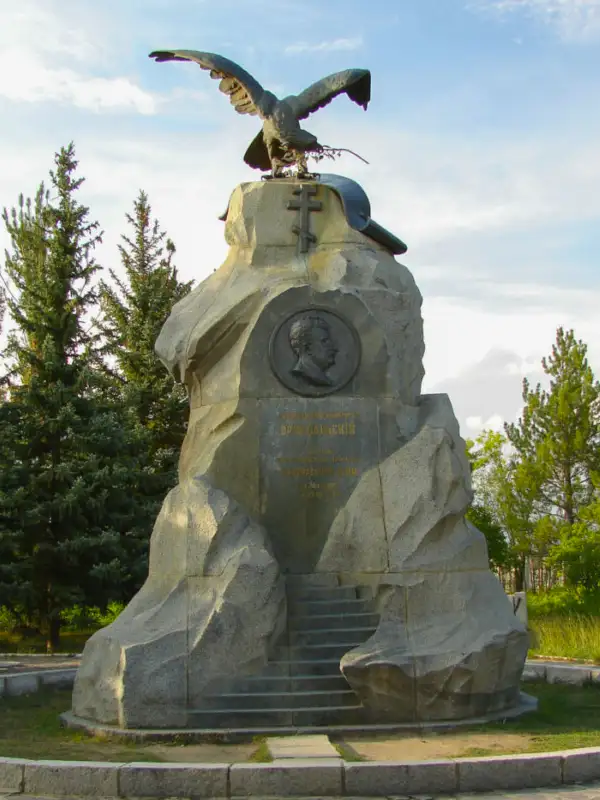 2/4. Monument in the memorial park
 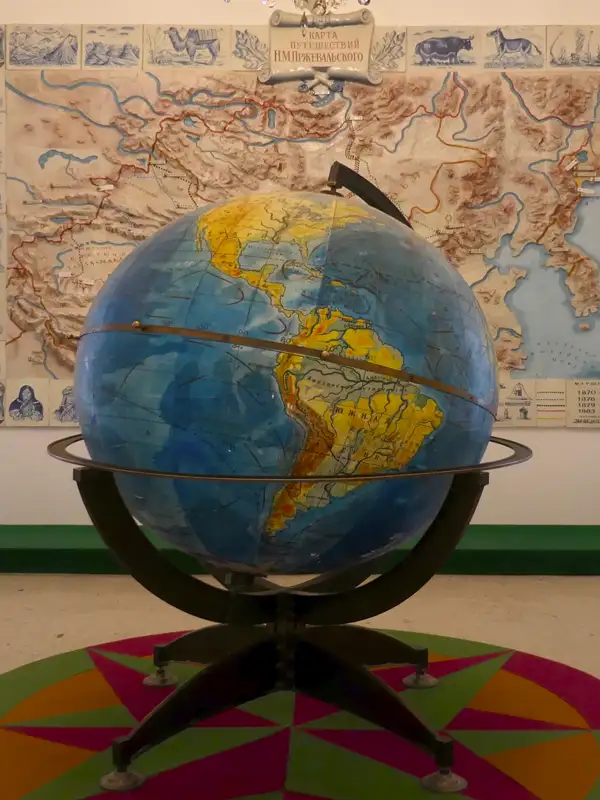 3/4. Map of the expeditions
 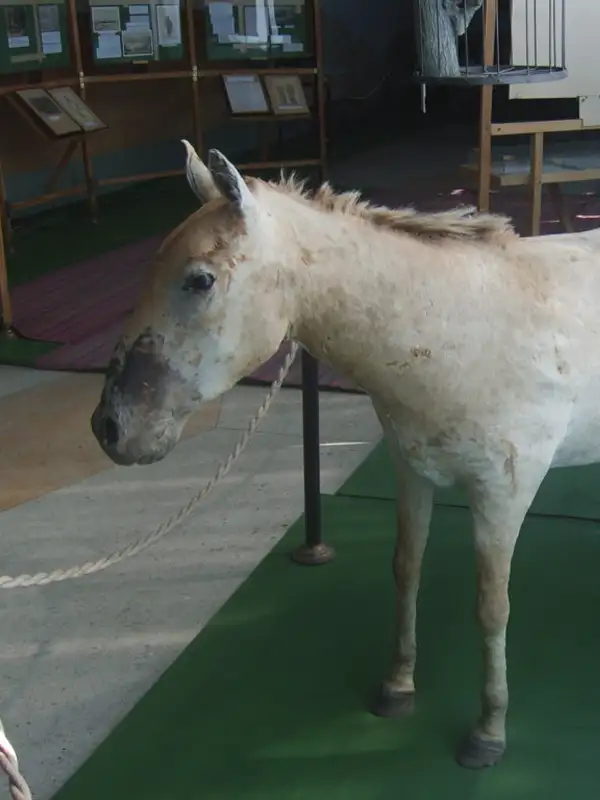 4/4. Przewalski's horse
 Route maps. These show the scale of the expeditions more clearly than any list of awards. Compare the routes with a modern political map: the parties crossed areas of present-day China, Mongolia, Kazakhstan and Kyrgyzstan, often without familiar transport infrastructure.
Field equipment and documents. Diaries, letters, books and everyday objects help explain how observations were collected in the nineteenth century. A label identifying an object as a personal possession matters more than a visual resemblance. Some items may be representative examples or later copies.
Natural-history collection. Przewalski's horse is the best-known species associated with the explorer's name, and the museum shows it as a taxidermy specimen. The scientific name does not mean that local people were unaware of the animal before European science described it.
Memorial park. After the galleries, walk to the monument and grave. The park completes the biography with a specific place: Przhevalsky died in Karakol while preparing another journey and was buried beside Issyk-Kul.
How to read the display today
Przhevalsky's expeditions produced maps, descriptions and large scientific collections. At the same time, he served as an officer of the Russian Empire, and nineteenth-century exploration was tied to rivalry between empires and the expansion of knowledge about territories European mapmakers considered little known.
The phrase "discovered an unknown land" always raises the question: unknown to whom? People in Central Asia had their own place names, routes and knowledge of nature. This perspective does not erase scientific results, but it helps separate careful observation from the imperial language of the period.
After the memorial complex, return to Karakol or continue along the eastern shore of Issyk-Kul. Our museum guide to Kyrgyzstan lists other cultural sites in the region.
Share on social media
If you found this guide useful, share it on social media. It takes a moment and helps more travellers discover the project. Thank you!
Anything to add?
Share your experience, leave a comment or suggest an improvement.