Why visit Shah-Fazil?
Shah-Fazil stands in Gulistan village in Ala-Buka District, far from the main tourist roads. Its value lies not in the number of monuments but in the combination of architecture, an old cemetery and a revered place. The main mausoleum looks restrained outside, while its interior preserves rich carved stucco decoration.
The complex operates as a state museum-reserve and remains a religious setting at the same time. Local residents and pilgrims come here, so sightseeing must not interfere with prayer or commemorative practices.
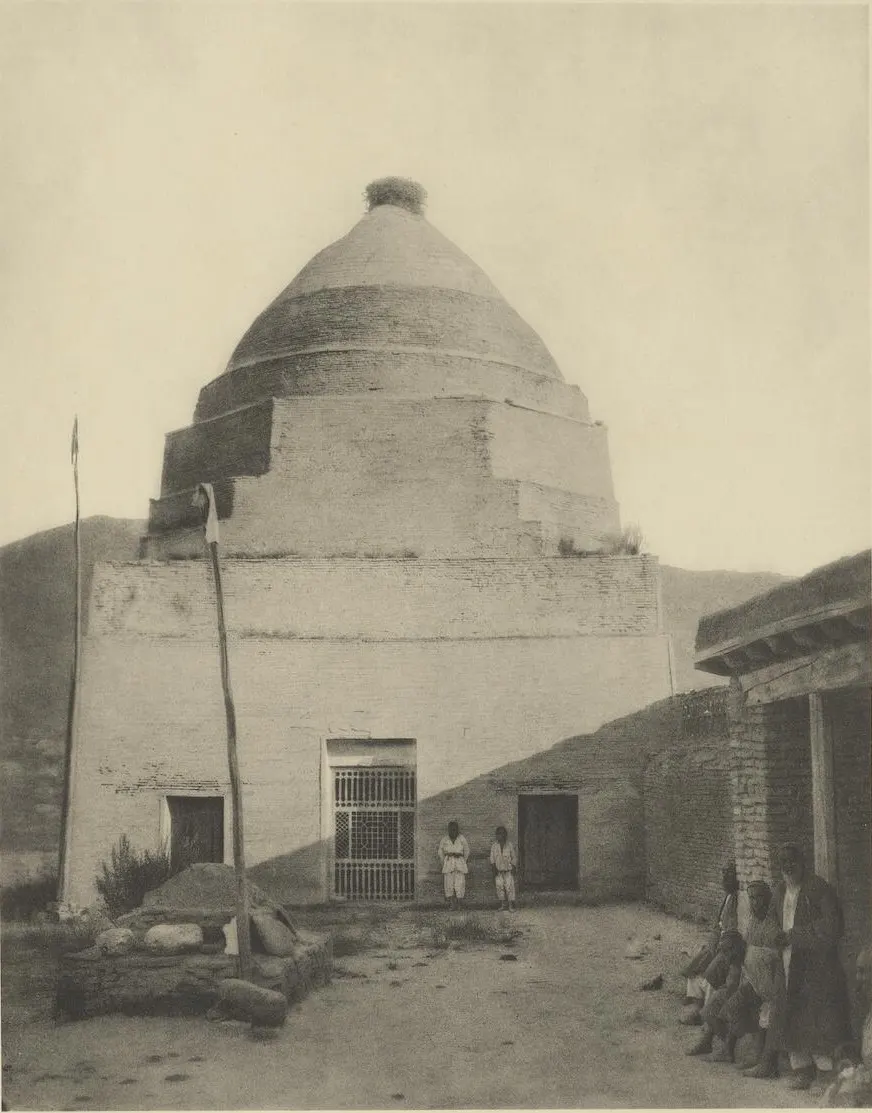 1/2. The mausoleum and complex courtyard in 1924 Photo: Ernst Cohn-Wiener / Heidelberg University Library, CC BY 4.0; edited for this site.
 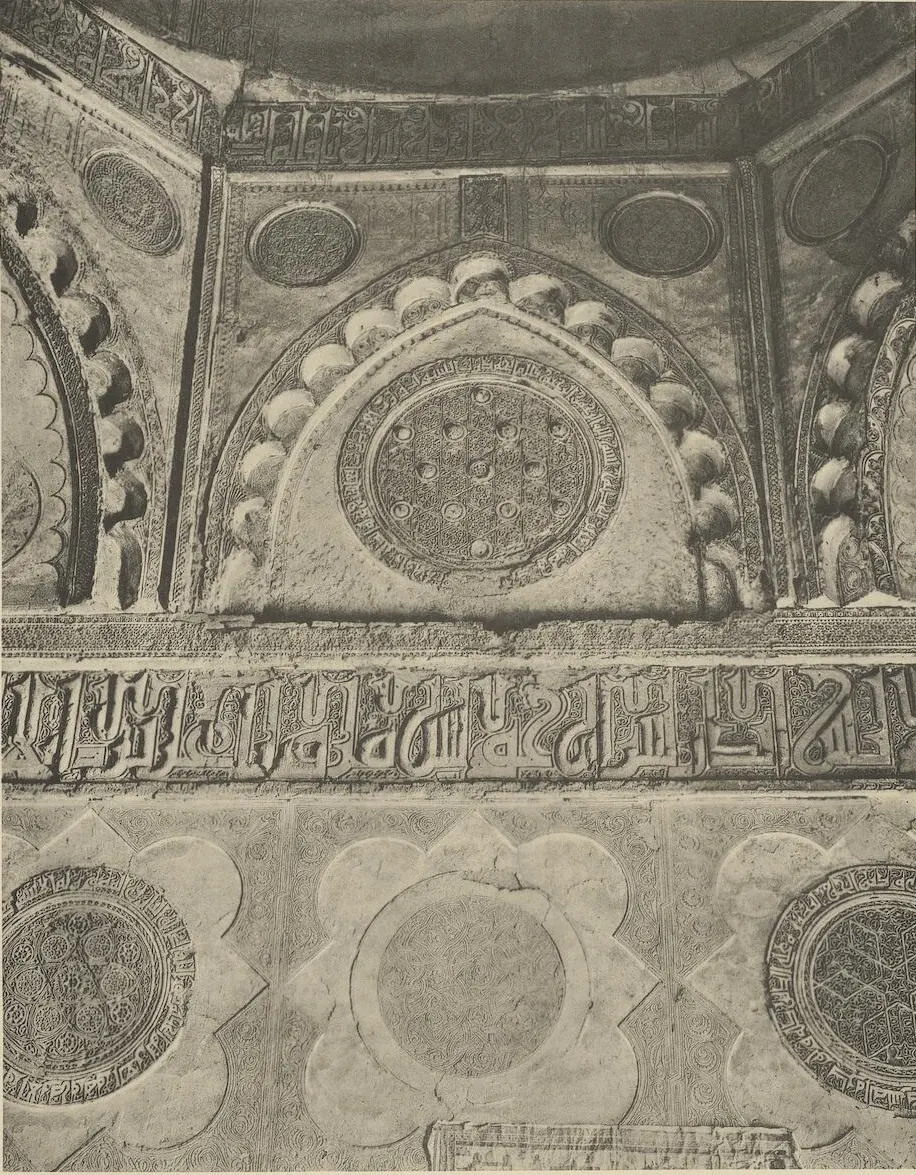 2/2. The carved mausoleum interior in 1924 Photo: Ernst Cohn-Wiener / Heidelberg University Library, CC BY 4.0; edited for this site.
 What to see in the Safed-Bulan complex
Shah-Fazil Mausoleum is dated to the eleventh century. Inside, the complete surface matters more than individual “scenes”: carved ornament, Arabic inscriptions, the rhythm of niches and changing light across the walls. Flash disrupts both other visitors and the experience of the space, so prepare your camera settings beforehand.
The sacred landscape includes other mausoleums, cemeteries and places linked to the tradition of Safed-Bulan. Ask a member of staff or local guide which structures are open and which path to follow. The story of the warriors' tragic deaths and Safed-Bulan's deed matters deeply to local memory, but it should not be presented as a precisely documented chronicle.
The new museum building was completed in 2025. The project includes an exhibition hall and a restoration workshop. Confirm what is actually on display and whether the building will be open on your chosen day because no stable timetable is published.
Shah-Fazil and UNESCO
In January 2025, Kyrgyzstan submitted an updated nomination for the Safid-Bulan, or Shah-Fazil, historical and cultural complex to the UNESCO Tentative List. This is an important stage in preparing a nomination, not inscription on the World Heritage List.
On a sign, in conversation with a driver or in a publication, the accurate phrase is “a property on the UNESCO Tentative List”. This status does not guarantee an international ticketing system, standard opening hours or visitor infrastructure.
How to get there from Kerben and Ala-Buka
Useful bases for the trip are Kerben and the district centre of Ala-Buka. Public transport connects the villages but rarely gives a visitor a clear amount of time for the site and the return journey. It is more practical to hire a car with waiting time and show the driver the mausoleum's exact location in advance.
Driving time varies with the condition of local road sections. Leave in the morning, download an offline map and arrange the return before setting out. Do not rely on finding a cash machine, cafe or stable mobile signal at the site.
Shah-Fazil works best as a separate route through the western part of Jalal-Abad Region. Combining it with Sary-Chelek in one day is impractical because both places require time and their own logistics.
How much time you need and what to check
Allow one and a half to two hours for the mausoleum, grounds and a short guided visit. If the museum is closed, the visit may be shorter, but the journey still makes sense only when access to the complex itself has been confirmed.
- whether the grounds, mausoleum and new museum gallery are open;
- whether a member of staff or guide will be present at your chosen time;
- whether interior photography without flash is permitted;
- whether there is a separate fee and only cash is accepted;
- whether a religious event will restrict access that day.
Clothing, photography and behaviour
Choose clothes that cover your shoulders and knees; women may find it useful to carry a light scarf. Before entering, see whether visitors remove their shoes and follow the caretaker's instructions. Do not pass between a person praying and the direction of prayer, sit on burial structures, or leave food and litter.
Ask permission before photographing the interior or other people. Even with a silent phone, a long photo session inside the confined mausoleum disturbs others. Shah-Fazil is better remembered after a short explanation of the ornament and a quiet visit than after trying to photograph every wall.
Share on social media
If you found this guide useful, share it on social media. It takes a moment and helps more travellers discover the project. Thank you!
Anything to add?
Share your experience, leave a comment or suggest an improvement.