Contents:
Why stop in Kerben
Kerben is the working centre of Aksy District. Its value to travellers is practical: this is where you can buy food, withdraw cash, refuel, find a room and arrange a car before heading into smaller valleys. The town sits at roughly 1,300 metres, where dry foothills meet the orchards of western Kyrgyzstan.
Three or four hours is enough for a first look around the centre. Stay overnight if you arrive late from Osh or Manas, want an early start for Arkyt, or would otherwise reach the final mountain road after dark. An overnight stop in Kerben makes the journey to the nature reserve far less rushed.
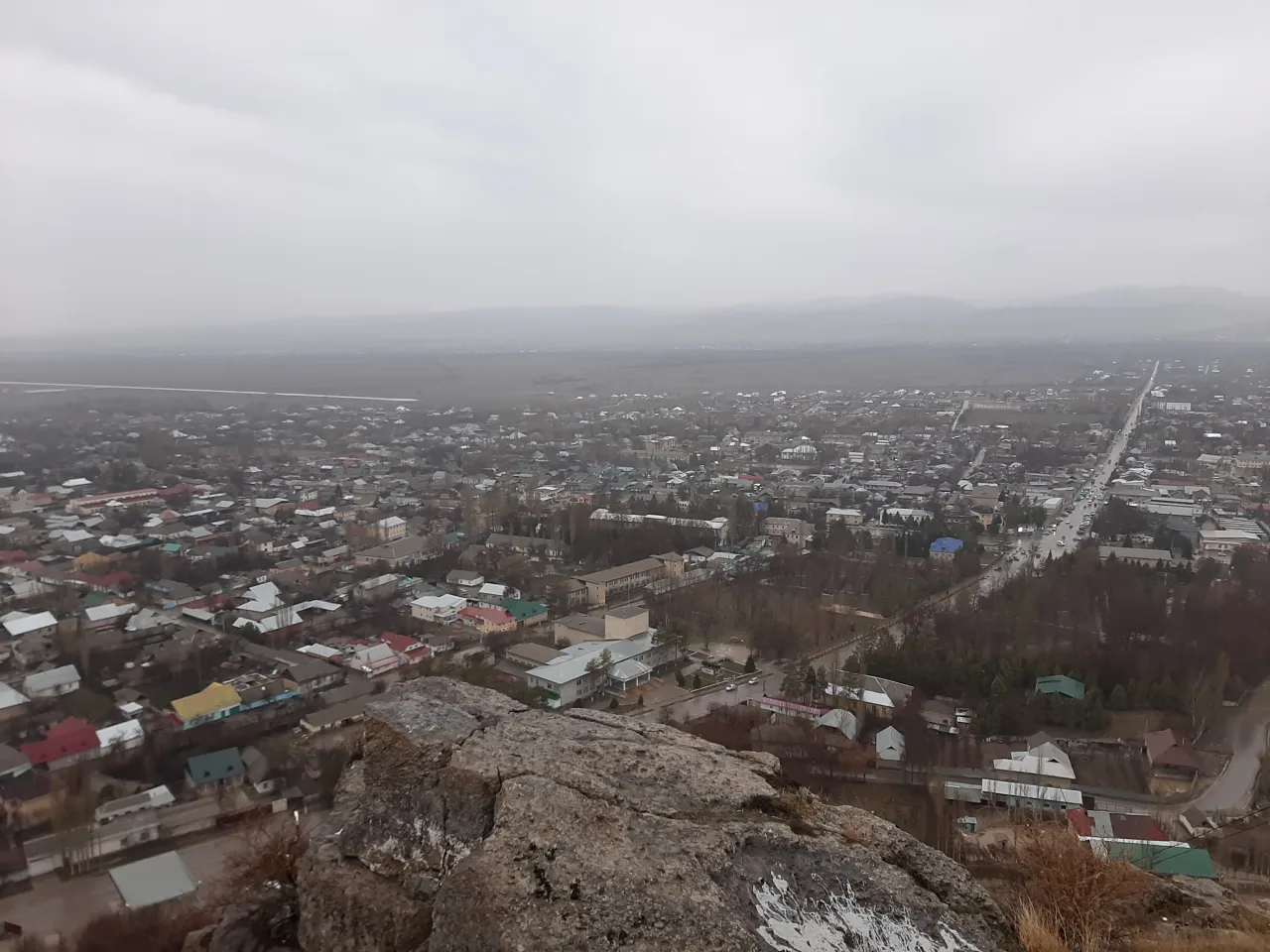 Kerben from a rise near the centre. Photo: Abdyrashit Satylganov, Wikimedia Commons, CC BY-SA 4.0; edited for this site.
A town for a wider route. Aksy gives the stop its purpose: local roads, orchards, foothills and a sensible starting point for Sary-Chelek.
Kerben and the former name Karavan
Older documents, maps and local speech may use the name Karavan. The Kyrgyz encyclopaedia also records Kerben, Kerven and Karavan, linking them with the idea of a caravan route. This is one recorded interpretation; the linguistic history is not settled. The former name remains useful when searching archives or old timetables.
Kerben received town status in 2004. It is now a town of district significance and the administrative centre of Aksy District. The layout reflects that role: government offices and commercial streets quickly give way to detached houses, gardens and roads leading to surrounding villages.
What to see in town
The central streets. Start by the Kerben sign, the small landscaped area around it and the nearby blocks. This compact section shows the everyday rhythm of a district centre, with shops, offices, shared taxis and people arriving from outlying villages.
The bazaar. This is a useful stop before an onward journey. Pick up water, flatbread, fruit and a simple snack, but do not leave all your shopping until late evening. Fresh produce and transport are generally easier to find earlier in the day.
The House of Culture area. An armoured personnel carrier displayed on a plinth is one of the town's most obvious landmarks. The open-air monument fits naturally into a short walk through the centre and does not require a separate visit.
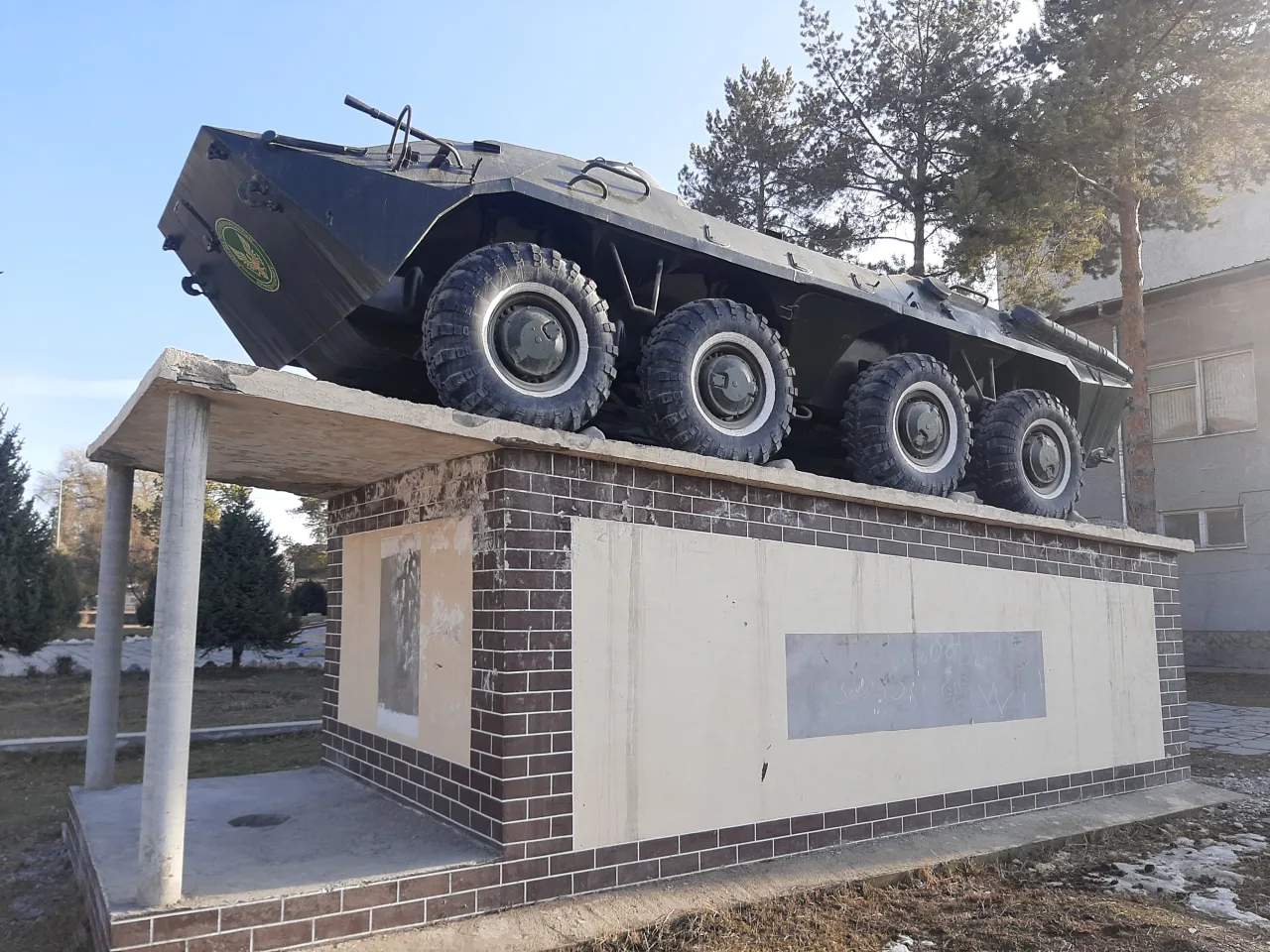 1/2. A landmark by the House of Culture Photo: Abdyrashit Satylganov, Wikimedia Commons, CC BY-SA 4.0; edited for this site.
 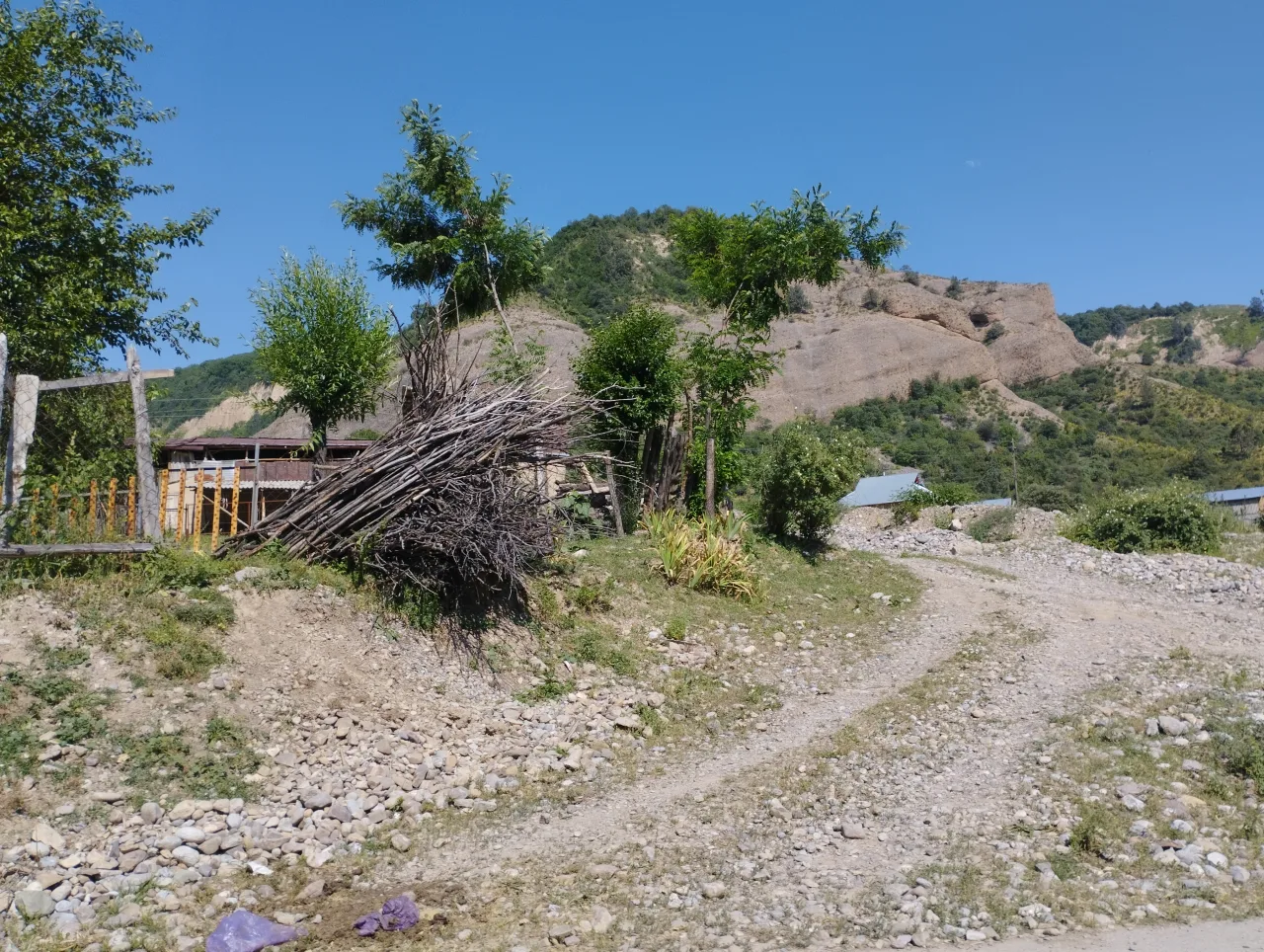 2/2. A rural Aksy landscape Photo: Mirzoulugʻbek, Wikimedia Commons, CC0; edited for this site.
 Use ordinary courtesy when taking photographs. Ask market traders and drivers before making close portraits, and do not walk into a courtyard or orchard simply because a gate happens to be open.
A half-day or full-day plan
Half a day. Visit the bazaar in the morning, then walk through the central garden and the streets around the administrative buildings. Continue to the House of Culture before looping back through the residential blocks. The route is unhurried and leaves time to find a driver or confirm a ticket.
A full day. Add a long lunch, a walk towards the edge of town on public roads and time to organise the next leg. Do not treat an unnamed hill as a formal viewpoint: access may cross private land, and the surface becomes slippery after rain.
If Kerben is only a stop on a longer journey, avoid combining a full transfer, a town walk and the climb to Sary-Chelek on the same day. Travel in the western part of the region needs spare daylight, particularly when connections or wet roads are involved.
Using Kerben as a base for Sary-Chelek
The road to Sary-Chelek Lake continues through the district towards Arkyt, where travellers enter the reserve. Kerben makes a convenient staging point: sleep here, buy supplies, ask about the road and arrange a local driver for the next section.
Not every itinerary requires a change in Kerben. Official timetables sometimes list direct services towards Sary-Chelek. Confirm the actual last stop before boarding, as the names Sary-Chelek, Kyzyl-Tuu and Arkyt do not always refer to the same drop-off point.
Leave for the reserve in the morning. Download an offline map, carry cash and allow time for access checks. Weather and conservation rules affect the final road, so clarify exactly what a promise of transport “to the lake” includes before paying.
Getting to Kerben
From the east, the road reaches Kerben via Tash-Kumyr and continues west towards Ala-Buka. Bus-station schedules list direct links from Osh and Manas (Jalal-Abad). Services from Bishkek may be seasonal, so confirm the date, departure point and fare on the day of travel.
Shared taxis commonly leave once every seat is taken. Before paying, ask whether the car goes to central Kerben, how much luggage is included and whether a change in Tash-Kumyr is expected. Keep the driver's number for your return and do not rely on an unconfirmed last departure.
If you are driving, refuel before turning into the smaller valleys and keep unfamiliar stretches for daylight. The broader guide to fares, shared taxis and road travel is in our Kyrgyzstan transport section.
Weather, road conditions and accommodation
Spring and autumn are comfortable for a town walk and avoid the strongest summer heat. After heavy rain, ask about the Tash-Kumyr to Kerben road because mudflow debris or temporary works can affect individual sections. In summer, walk early or late. In winter, check that your room is heated and leave enough daylight for the drive.
Choose accommodation near the centre or close to a confirmed pick-up point. Ask about hot water, heating or air conditioning, parking and an early departure before booking. In a small town, a precise address, a working phone number and a transport arrangement matter more than a long list of unverified amenities.
Kerben works best as an honest pause between the main road and rural Aksy. A few hours introduce the town; one night removes the pressure from the onward trip to Sary-Chelek.
Share on social media
If you found this guide useful, share it on social media. It takes a moment and helps more travellers discover the project. Thank you!
Anything to add?
Share your experience, leave a comment or suggest an improvement.