Contents:
How many days do you need in Arslanbob?
One full day is enough to walk from the village centre to the Small Waterfall, climb to a panoramic viewpoint and explore the nearest part of the walnut forest. The journey from Osh takes up much of a day, so a return trip without an overnight stay leaves little time for Arslanbob itself.
We recommend staying for at least two nights. Use the arrival day for the market and a short walk, devote the next day to the forest and one waterfall, then leave calmly in the morning. The Big Waterfall or a longer horse trek needs its own daylight window and a return plan agreed in advance.
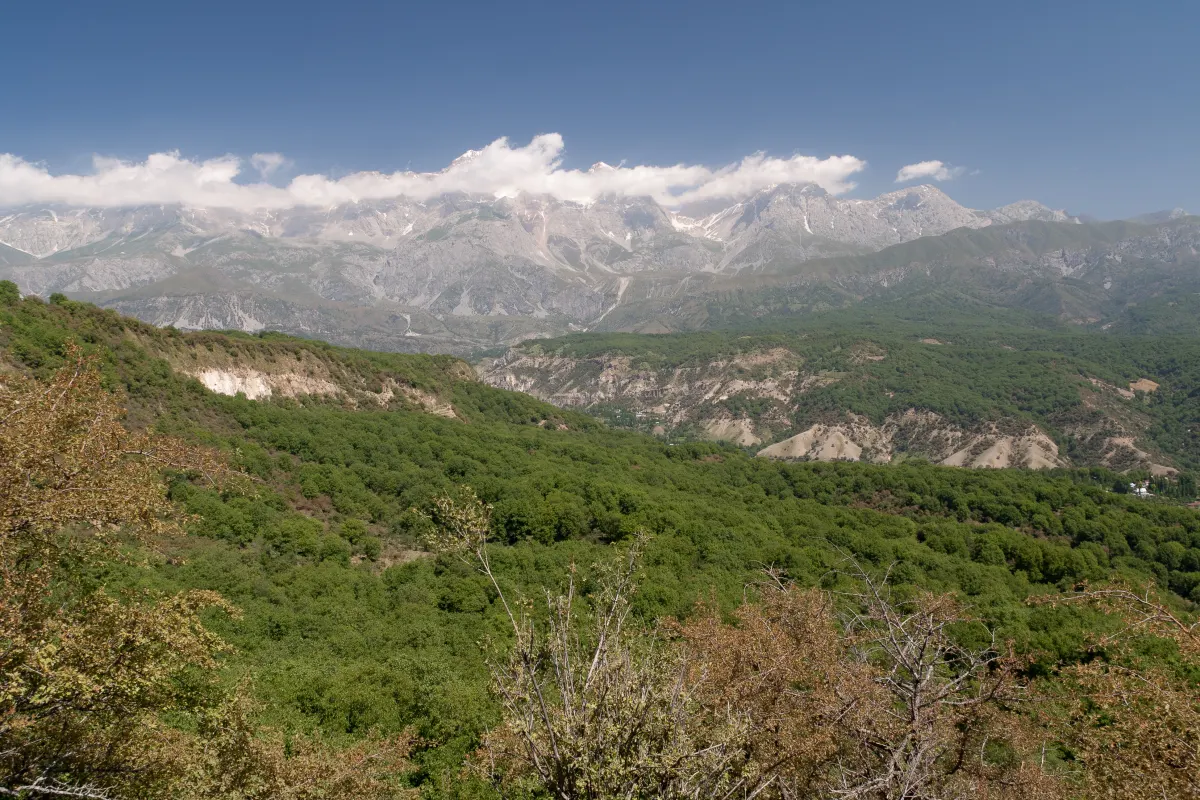 1/3. Forest below Babash-Ata Photo: Ekrem Canli, Wikimedia Commons, CC BY-SA 3.0; edited for this site.
 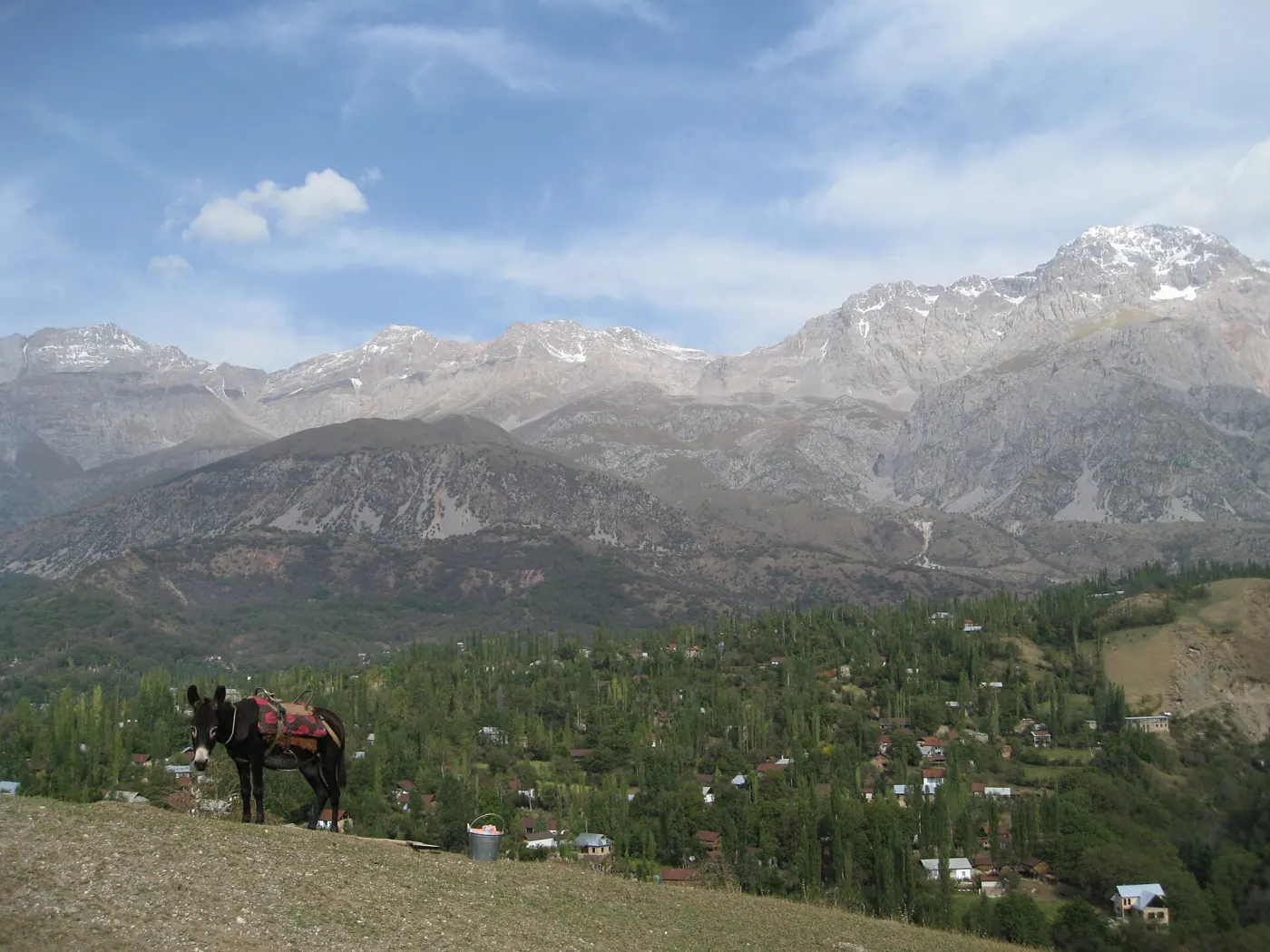 2/3. Arslanbob and Babash-Ata Photo: Patrick Barry / surrealpenguin, Wikimedia Commons, CC BY-SA 2.0; edited for this site.
 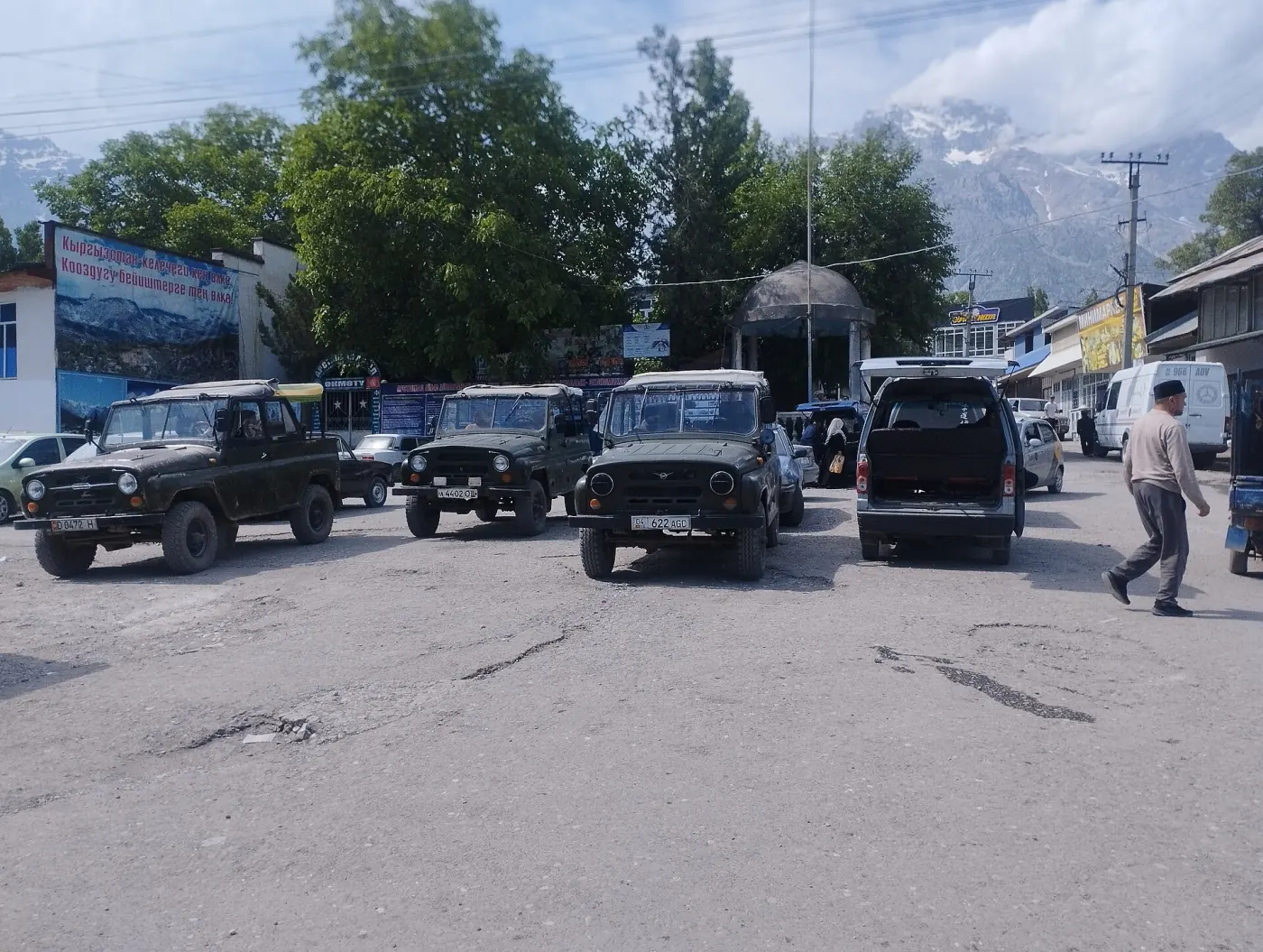 3/3. The village transport point Photo: Mirzoulugʻbek, Wikimedia Commons, CC0 1.0; edited for this site.
 How to explore the walnut forest
The forest around Arslanbob contains much more than walnut trees. Wild apples, pears, cherry plum, hawthorn and other fruit-bearing species grow here, while woodland alternates with gardens, pasture and houses. This mosaic makes the walk rewarding: a shaded lane opens onto a dry slope, then a stream, an orchard or a view towards the rocky range.
Scientific studies estimate that Kyrgyzstan has roughly 34,000 to 47,000 hectares of actual walnut-fruit forest. The frequently repeated figure of 600,000 hectares describes a broader historical survey area, not an unbroken forest beside one village. Arslanbob remains part of one of the largest and most valuable tracts, but you enter a living cultural landscape rather than a single national park with a main gate.
Legend and history. Local stories link the walnuts with Alexander the Great. Pollen research confirms a long history of walnut in the region, while people have also shaped the present forest over many centuries. There is no evidence that Alexander's army planted it.
Local families use or lease parts of the forest. In September and October, gathering walnuts is work rather than a tourist activity. Do not collect nuts or fruit without an invitation, stay outside fenced plots and ask your host which paths are suitable for an independent walk.
Small Waterfall or Big Waterfall?
The Small Waterfall is closer to the centre. Depending on your starting point, the walk is roughly 1 to 1.5 km each way and follows village streets, a path and steps. It works well on an arrival day or as a short outing. Rocks near the water are slippery, and the lower platform can become busy. Do not stand beneath the falling water or climb wet ledges for a photograph.
The Big Waterfall lies higher and farther from the village. From the centre, it requires a separate outing: visitors sometimes cover part of the approach in a local vehicle before continuing on foot through a rocky valley. Bridges, stream crossings and the final approach can change after rain or high water. Agree the drop-off point, walking section and return time with a local guide before departure.
The names “Small” and “Big” do not describe the difficulty. The Small Waterfall is more accessible, but still has wet rocks and steps around its basin. The route to the Big Waterfall is longer, less obvious and a poor choice for an independent late start or a walk after rain.
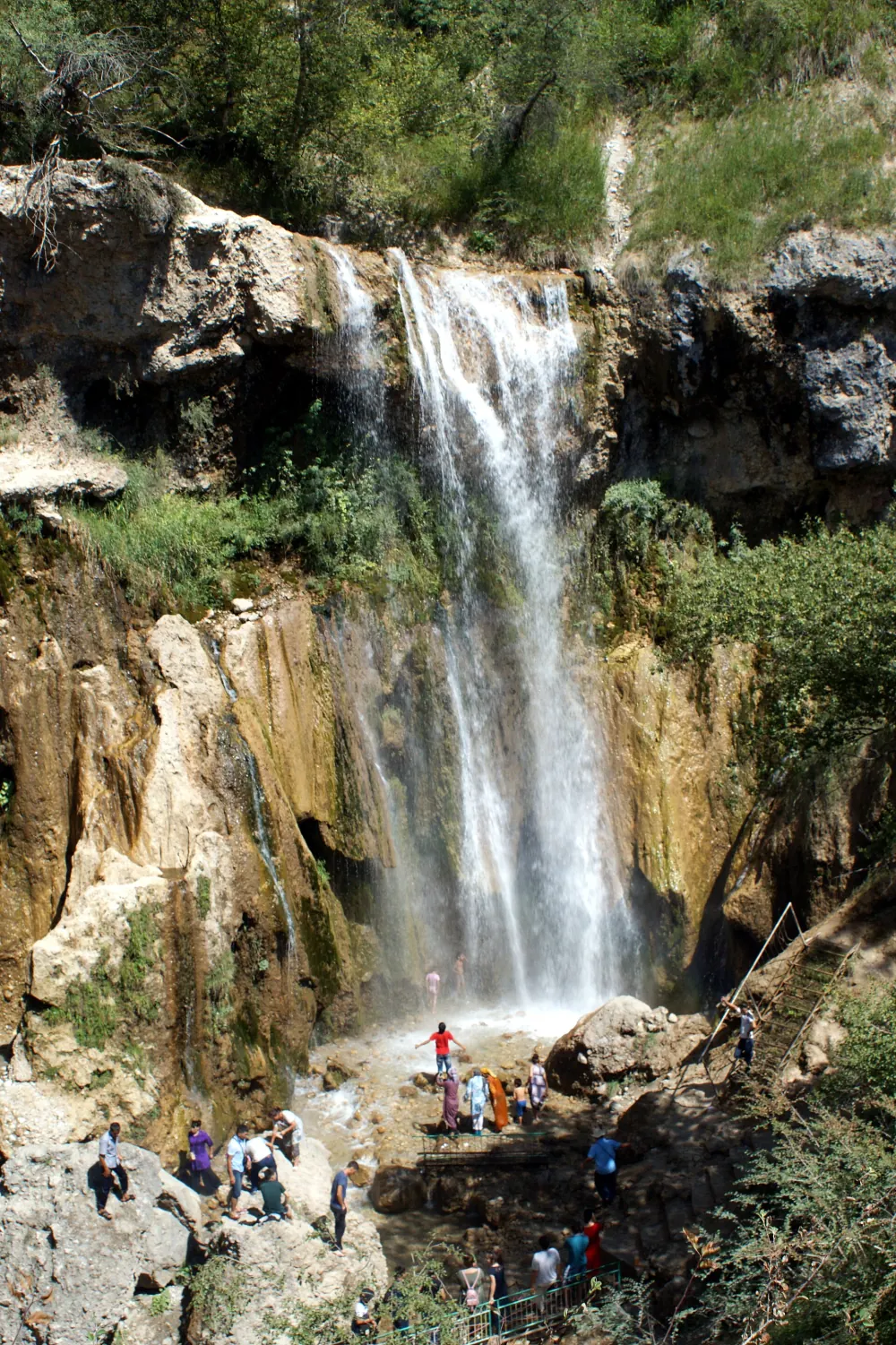 1/3. Small Waterfall Photo: Kondephy, Wikimedia Commons, CC BY-SA 4.0; edited for this site.
 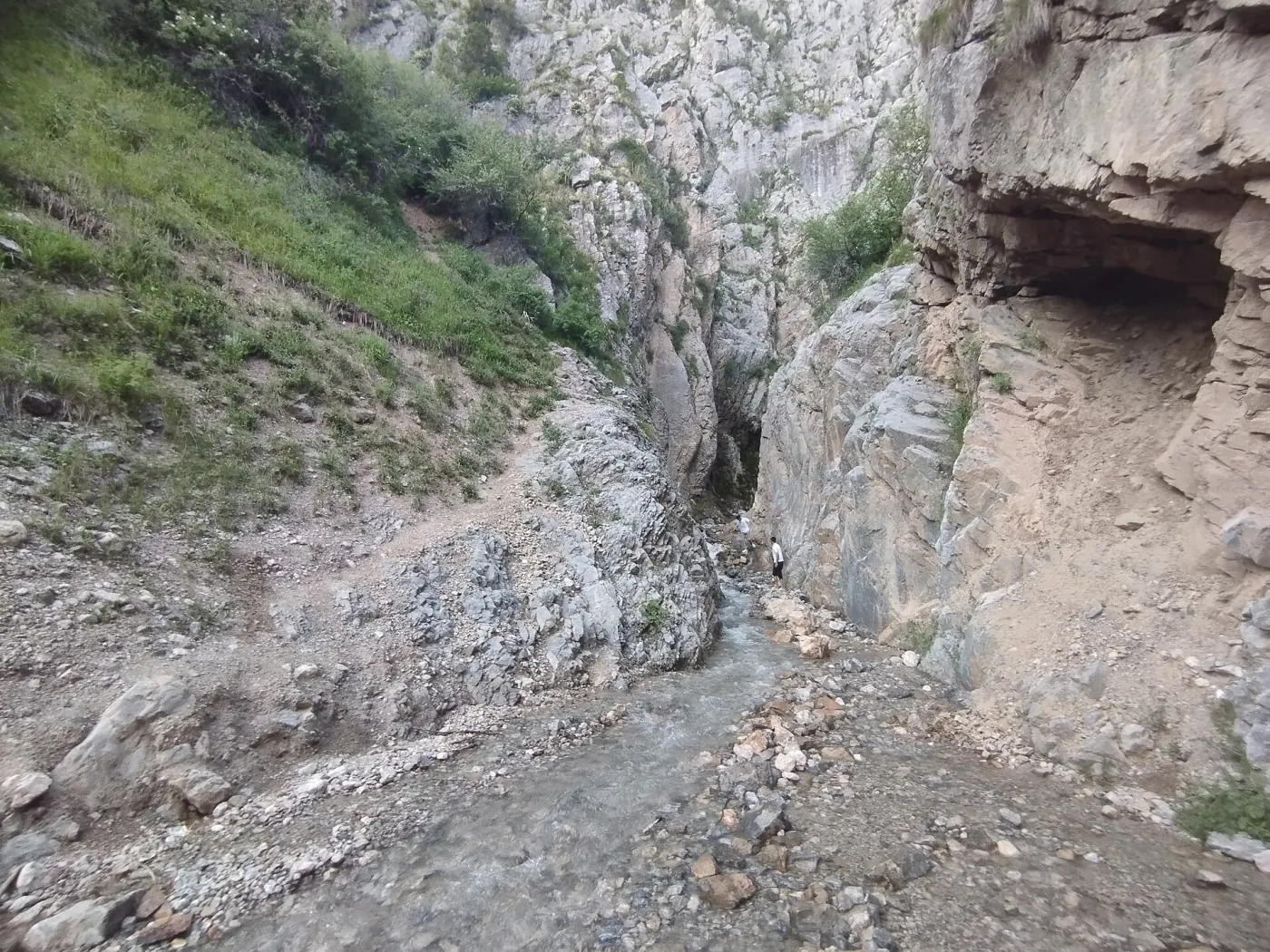 2/3. Terrain in the upper valley Photo: Mirzoulugʻbek, Wikimedia Commons, CC0 1.0; edited for this site.
 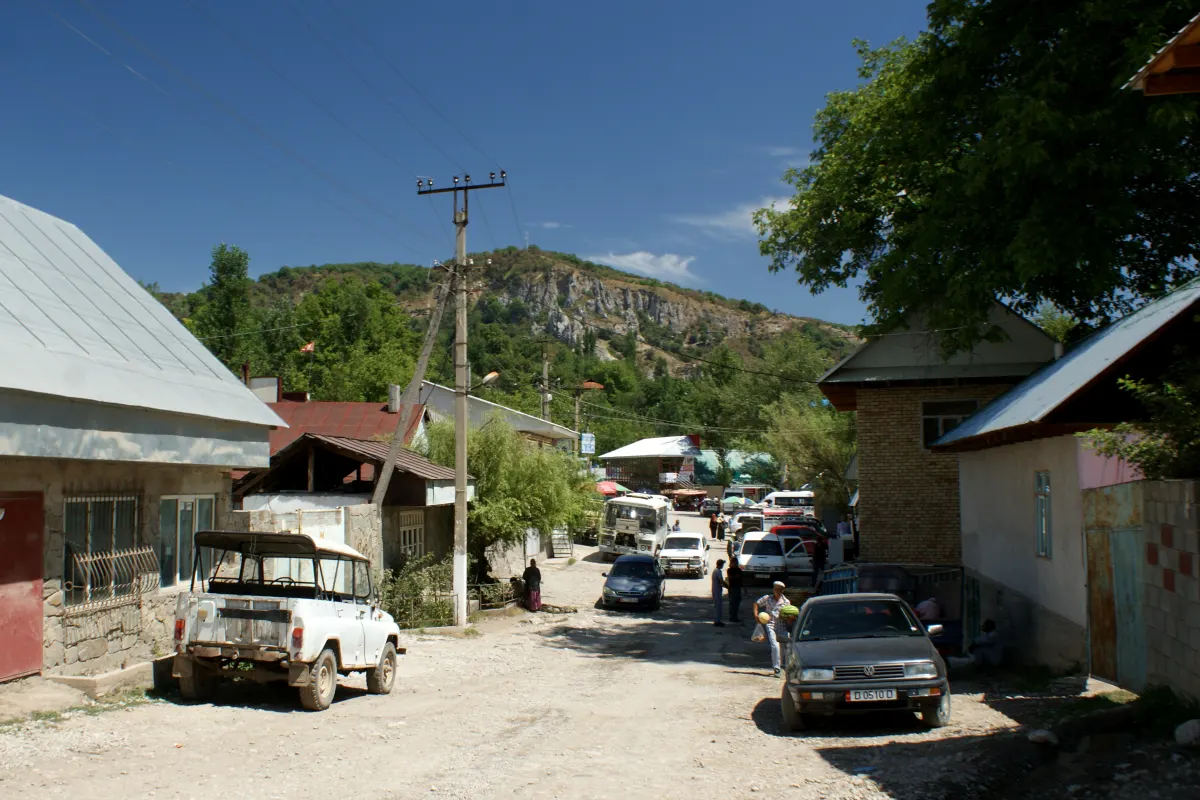 3/3. The market and village centre Photo: Kondephy, Wikimedia Commons, CC BY-SA 4.0; edited for this site.
 How to reach Arslanbob from Osh and Manas
The main road passes through Bazar-Korgon before climbing towards Arslanbob. A private car from Osh takes much of half a day. A minibus is slower because of boarding and intermediate stops. Do not commit to a waterfall walk on the evening of arrival until you know the actual travel time and weather.
When checked on 27 August 2026, the official intercity table listed a direct Osh to Arstanbap service at 14:00. Timings and fares can change, so consult the Ministry of Transport timetable and then confirm the service at Osh bus station. If the direct bus is unavailable or full, the practical alternative involves changes in Manas and Bazar-Korgon.
From Manas, formerly Jalal-Abad, first travel to Bazar-Korgon, then look for a minibus or shared taxi to Arslanbob. There are more options in the morning. Ask about the departure point and return service the day before: the last vehicle may leave when full rather than according to a time convenient for your walk.
Drivers should keep daylight for the climb beyond Bazar-Korgon. Road surfaces vary, and the village has narrow streets and steep approaches to some guesthouses. Before booking, ask whether your vehicle can reach the house and where it can be parked.
Where to stay, eat and find a guide
Family-run guesthouses are the main form of accommodation. Rooms, hot water and bathroom arrangements vary even within the same price range. Before booking, confirm breakfast and dinner, private or shared bathroom, parking, heating outside summer and distance from the centre. Arslanbob spreads across steep slopes, so a property described as “near Arslanbob” may still mean a long uphill walk with luggage.
CBT Arstanbap works with local guesthouses and can help arrange walking and riding routes. When booking a guide, record the duration, starting point, transport to the trail, food and return arrangements. “The waterfall” is too vague because the Small and Big waterfalls require very different plans.
Guesthouses commonly prepare dinner by prior arrangement. The centre has a market, small cafés and shops for bread, seasonal fruit, dried produce and walnuts. Bring cash before climbing into the village and do not depend on finding a late meal without a booking.
You will hear both Uzbek and Kyrgyz in Arslanbob. Ask before photographing people, courtyards or the harvest. Wear modest clothing around the mosque and in family homes, and follow your hosts' requests.
When to visit Arslanbob
Spring
Slopes turn green, while streams and waterfalls carry more water.
- Forest roads and paths become muddy after rain.
- Check snow and crossings before planning the Big Waterfall.
Summer
The easiest season for walks, guesthouses and long daylight.
- Start a longer route in the morning, before heat and possible storms.
- Book accommodation and local vehicles ahead for weekends.
Autumn
The forest changes colour and families gather walnuts and fruit.
- Harvest dates vary by year and plot.
- Do not enter a working forest plot or collect walnuts without permission.
Winter
The village remains inhabited, but snow, heating and short daylight determine the trip.
- Confirm that accommodation is open and has hot water.
- Do not attempt the distant waterfall without local trail advice and winter equipment.
Practical one- and two-day plans
Forest and Small Waterfall
- Morning in the nearest part of the walnut forest.
- Lunch at a guesthouse or in the centre.
- Panoramic viewpoint and Small Waterfall, without an evening transfer to Osh.
A relaxed first visit
- Arrival, the market and a short village walk.
- A full day with a guide in the forest and at one chosen waterfall.
- Second night followed by a morning departure through Bazar-Korgon.
Big Waterfall
- A separate day for the longer route.
- Vehicle, guide and turnaround time agreed in advance.
- A shorter backup plan if rain or a damaged crossing blocks the approach.
A southern Kyrgyzstan route
- Arslanbob as its own stop after Osh or Manas.
- A separate overnight journey before Sary-Chelek.
- No attempt to combine two distant natural sites in one day.
With a private car, you can make a separate stop at the Uzgen minaret and mausoleums on the way from Osh. This does not work with the direct minibus timetable. After Arslanbob, do not plan a quick transfer to Sary-Chelek: the two places share a region but require different roads and bases. The broader travel logic is covered in our guide to Jalal-Abad Region.
What to check before a walk
- Download an offline map and mark your guesthouse, the village centre and the selected waterfall.
- Ask your host about current path, bridge and stream-crossing conditions after rain.
- For the Big Waterfall, arrange a guide, transport, turnaround time and return before dark.
- Carry small cash, water, food, sun protection, a rain layer and shoes with reliable grip.
- Do not collect nuts or fruit and do not enter family plots without permission.
- Keep away from the edge of wet rock and do not stand beneath a waterfall.
- Write down your accommodation address and return plan because signal may disappear in the upper valley.
Our Kyrgyzstan travel-safety guide covers communications, drinking water, mountain weather and emergency numbers.
Share on social media
If you found this guide useful, share it on social media. It takes a moment and helps more travellers discover the project. Thank you!
Anything to add?
Share your experience, leave a comment or suggest an improvement.