Contents:
Why Jalal-Abad is now called Manas
Jalal-Abad was officially renamed Manas in September 2025. The city remains the administrative centre of Jalal-Abad Region, so the new city name and the unchanged regional name now appear side by side. The transition is especially visible in tickets, map apps and addresses: some services use Manas, while others still list Jalal-Abad.
Search for both names when planning a journey. When booking a taxi or accommodation, send a map pin rather than relying on the name alone. The Jalal-Abad sanatorium, the railway station and many older signs may continue to use the former city name.
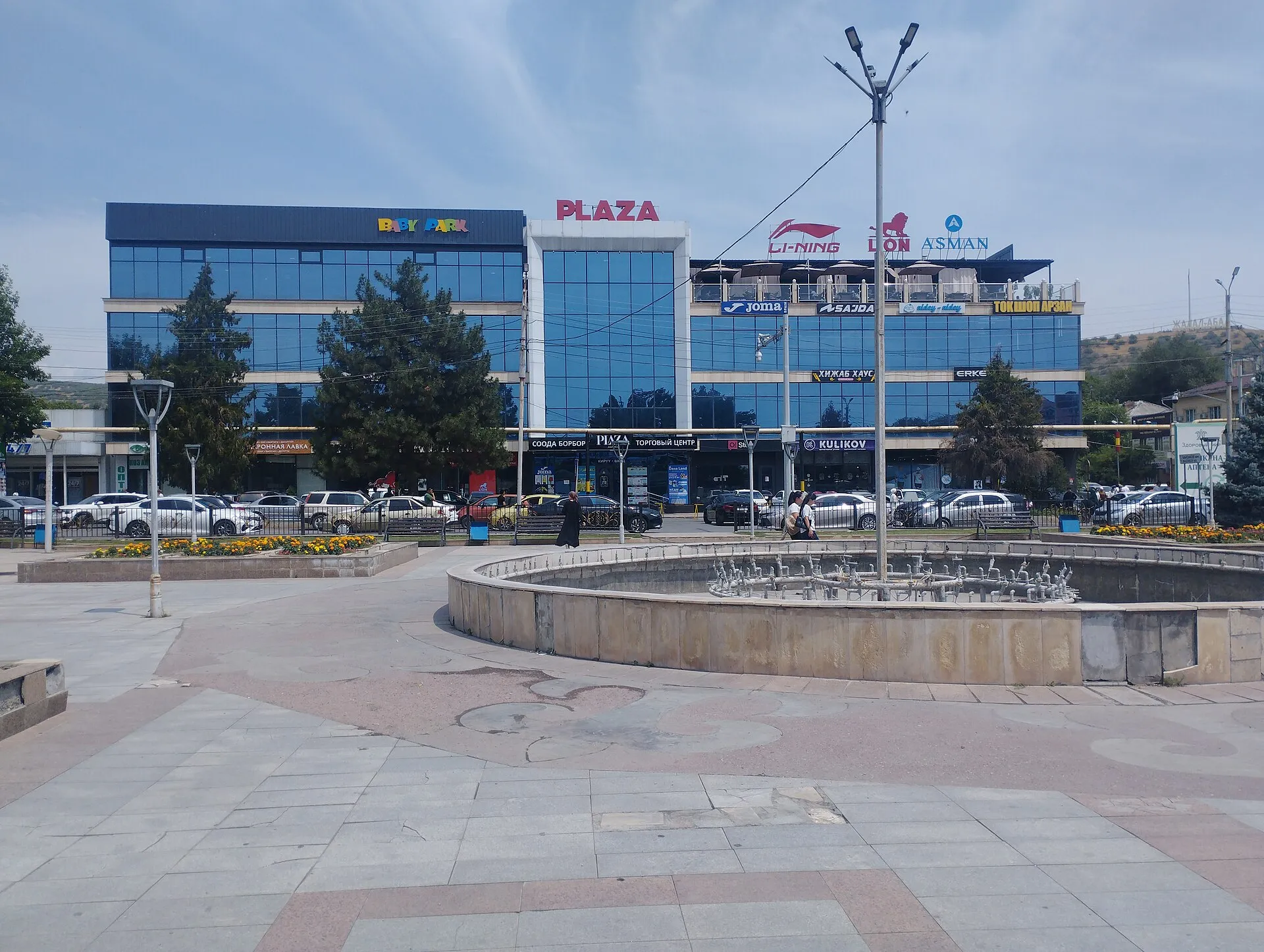 1/3. Central Manas Photo: Mirzoulugʻbek, Wikimedia Commons, CC0 1.0; edited for this site.
 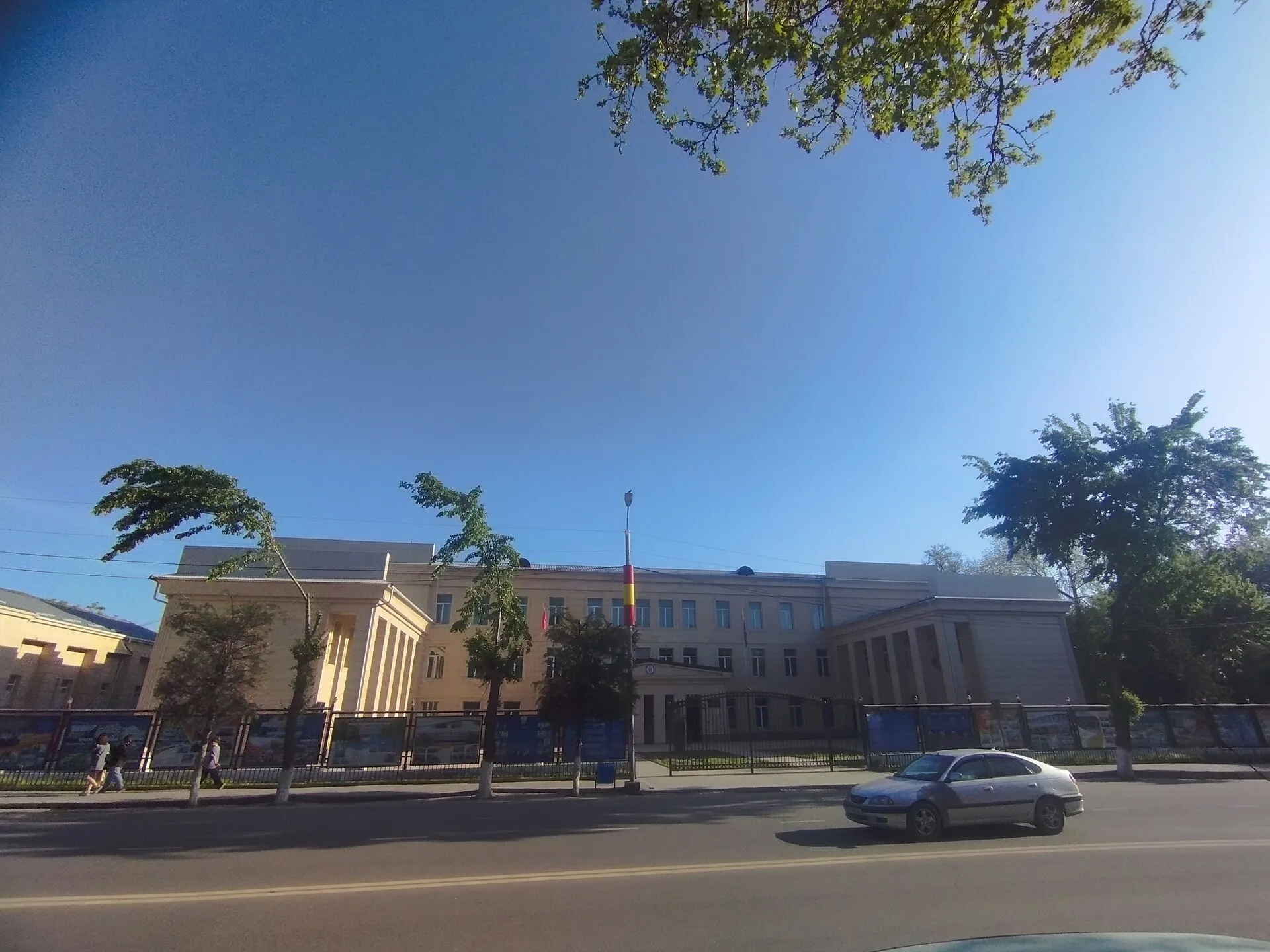 2/3. The city university Photo: Mirzoulugʻbek, Wikimedia Commons, CC0 1.0; edited for this site.
 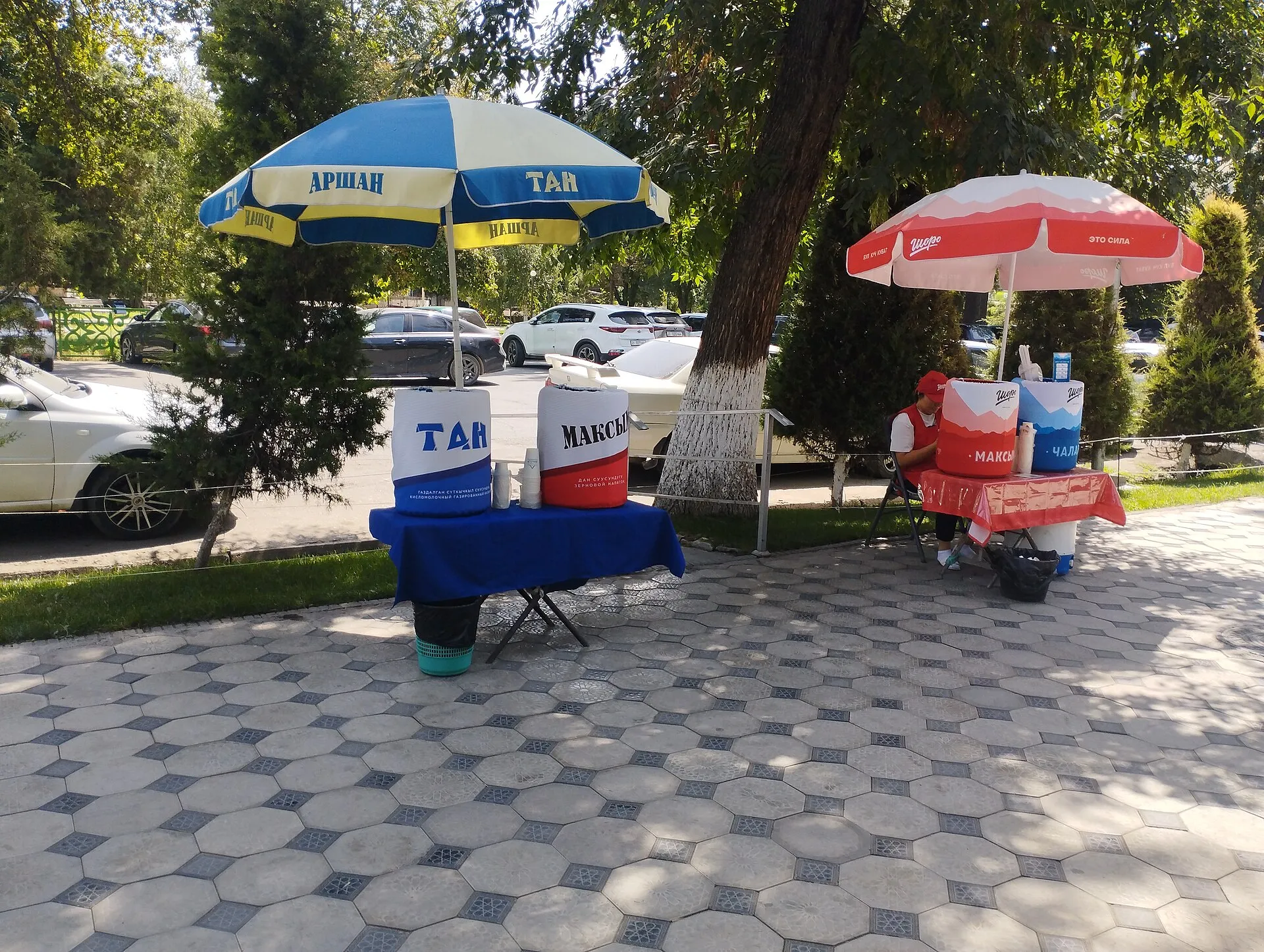 3/3. Cold drinks in the city centre Photo: Mirzoulugʻbek, Wikimedia Commons, CC0 1.0; edited for this site.
 Names to know. Manas is the city. The surrounding region is still called Jalal-Abad Region, while the resort and sanatorium retain the name Jalal-Abad.
What to see in the city
Ayub-Too. This low hill rises above the southern side of the city and gives the clearest sense of its setting: the neighbourhoods of the Fergana Valley lie below, with the foothills beginning beyond them. A large national flag stands on the slope. Walk up in the morning or evening, carry water and do not count on continuous shade.
Central streets and parks. Manas rewards an unhurried walk more than a race between monuments. Link the main square, leafy streets, the market and the renovated Manas Park, which is primarily a place for everyday city life. The park works well for families in the evening, while the centre is easy to combine with dinner.
The railway station. The station building offers a glimpse of the city's transport history and still carries the older name in some signs and listings. Do not assume that a station marker means a useful passenger service: check current trains and destinations separately.
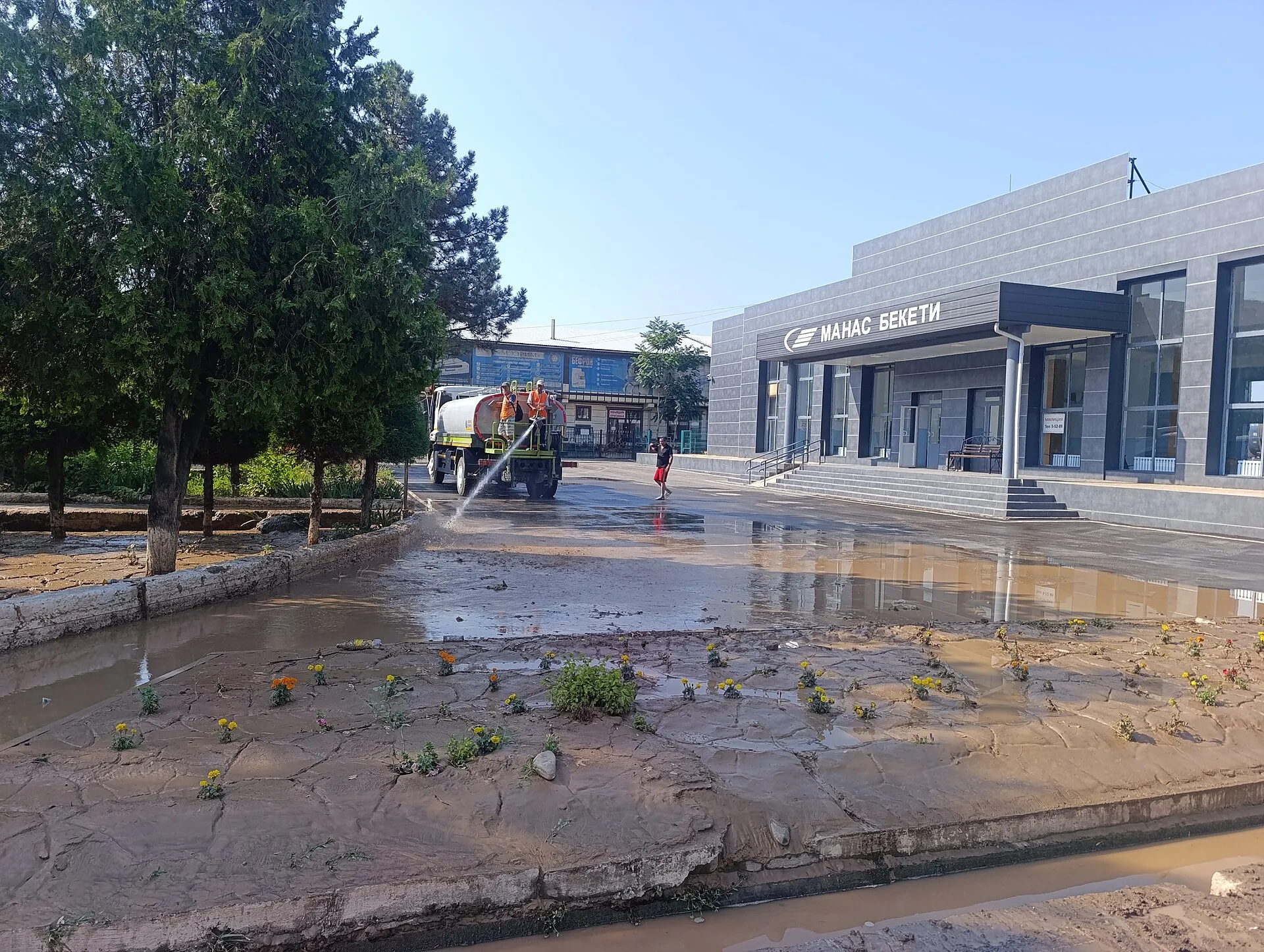 1/3. Manas railway station Photo: Mirzoulugʻbek, Wikimedia Commons, CC0 1.0; edited for this site.
 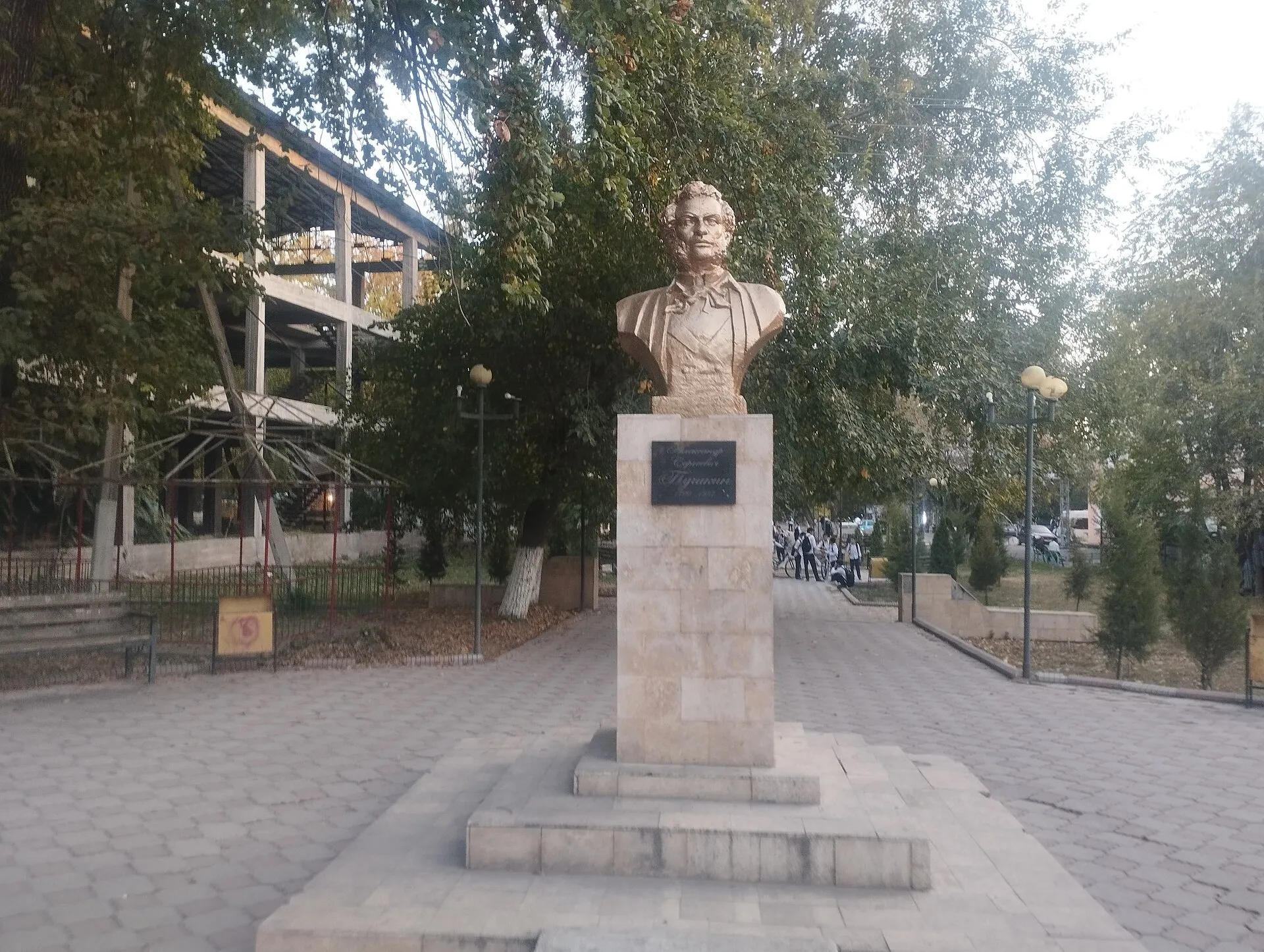 2/3. A city garden Photo: Mirzoulugʻbek, Wikimedia Commons, CC0 1.0; edited for this site.
 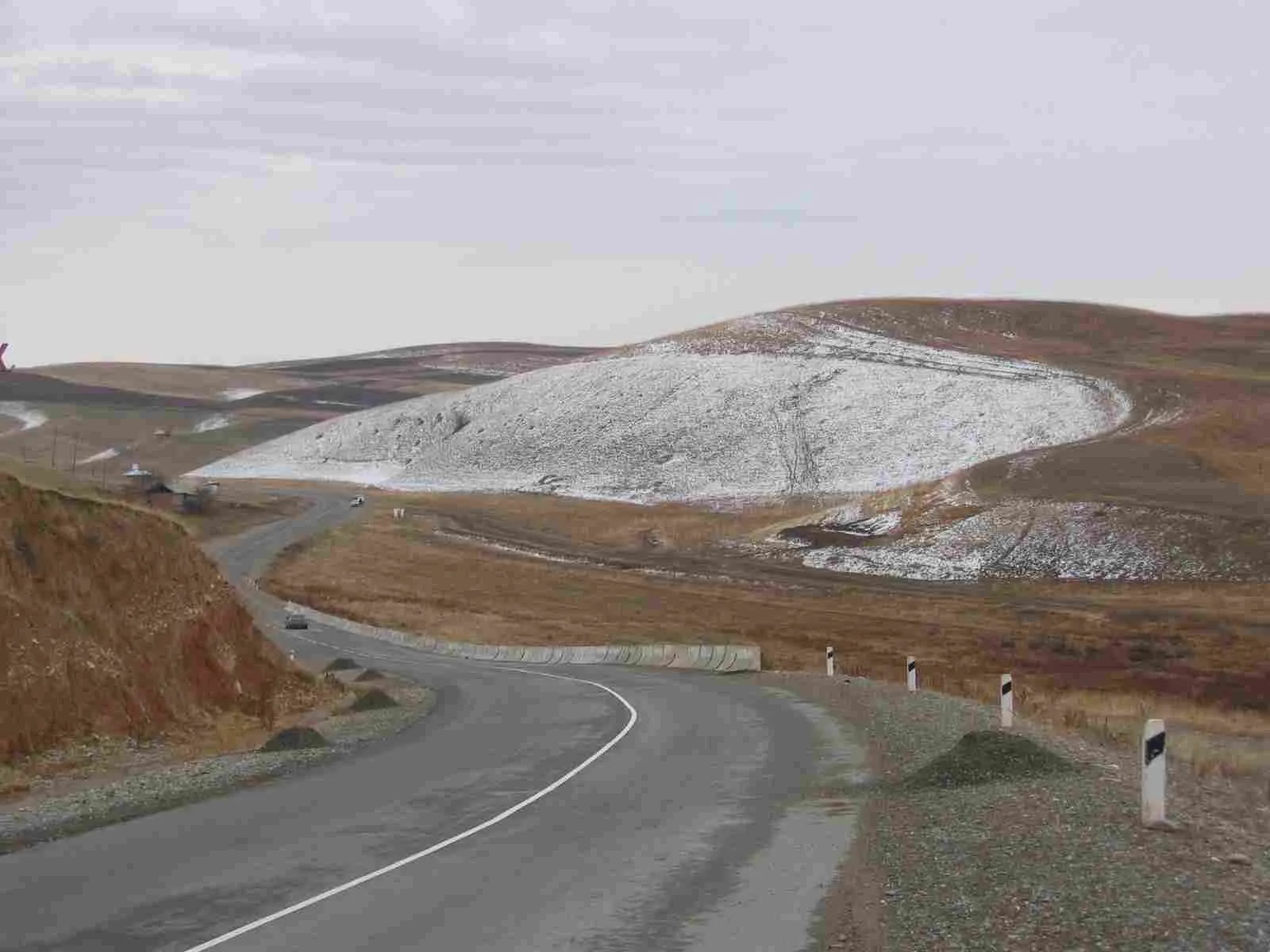 3/3. The road across southern Kyrgyzstan Photo: celichowster, Wikimedia Commons, CC BY-SA 2.0; edited for this site.
 Ayub-Too, the spa and mineral springs
The settlement grew around mineral springs on Ayub-Too, and the Jalal-Abad sanatorium established the city's identity as a spa town. Visitors come for treatments, a mineral-water pool and a quiet routine, but independent travellers should first establish what is actually open to day visitors.
Ask the sanatorium whether it accepts guests without a residential package, which facilities are available on your chosen day and whether a medical consultation is required. Lists of treatments and water properties are not a substitute for medical advice. On a short visit, the walk on Ayub-Too and the view over the city may be enough.
One, two and three-day itineraries
One day. Start in the centre and market, head towards Ayub-Too after lunch, and leave the park and a local dinner for the evening. If the sanatorium is the purpose of your visit, confirm access in advance and build the day around that appointment.
Two days. Spend the first day in the city, on the hill and around the springs. On day two, choose either Arslanbob or a shorter trip through the surrounding countryside. Places can be far apart even when they share the same regional label.
Three days or more. Manas fits naturally between Osh, Arslanbob, Sary-Chelek and the Toktogul Reservoir. For Sary-Chelek and Toktogul, moving your base is usually more sensible than returning to the same hotel after every long day.
Getting there and around
Roads connect Manas with Osh, Bishkek, Suzak and towns across the region. Shared taxis and minibuses leave from different points, so ask for the exact pickup address as well as the departure time. Allow a margin for traffic and roadworks on the Osh-Manas road.
The city airport operates on a changing schedule. Check the flight, terminal and luggage allowance before leaving: construction of a new airport in Suzak District does not mean that it has already replaced the usual arrival point.
Short sections of the centre are walkable, but a taxi or local transport is more practical for Ayub-Too, the sanatorium and outlying neighbourhoods. Save the address in Russian or Kyrgyz and keep a map pin on your phone. The Kyrgyzstan transport guide covers apps, payment and longer journeys.
When to visit
Spring turns the foothills green and usually brings comfortable daytime walks. Unpaved sections on the slopes become slippery after rain, so shoes with proper grip are more useful than a light city pair.
Summer is hot in the Fergana Valley. Visit Ayub-Too and the market early, pause in the middle of the day and confirm that your room has working air conditioning. Buy water before walking up the hill.
Autumn works well for combining the city with road trips across the region. Winter leaves Manas active as a working regional centre, but shorter daylight and conditions on mountain roads require a flexible itinerary.
Where to go next
Arslanbob draws visitors to walnut forests, waterfalls and a large mountain village. Treat it as a destination in its own right rather than a quick afternoon outing. Without a car, establish the return transport in advance or stay overnight.
Mailuu-Suu suits travellers interested in the region’s industrial history. Begin at the city museum and do not plan an independent visit to tailings sites, waste dumps or restricted industrial land.
Sary-Chelek lies farther to the north-west. The journey to the reserve takes a substantial part of the day, and road access varies with the season. For a calmer visit, spend the night closer to Arkyt.
The Toktogul Reservoir makes a logical next stop on the way towards Bishkek. Continuing north avoids retracing the road to Manas and leaves more time for the mountain journey.
Where to stay
In the centre. This is the easiest choice for a first visit without a car: food, the market, parks and transport are close at hand. Check street noise, air conditioning and the exact entrance, especially for a late arrival.
Near Ayub-Too and the sanatorium. This suits travellers coming for treatments or a quiet routine. You will use transport more often for the centre, so compare the actual road route rather than the straight-line distance.
Near the main road out of town. A practical option for one night before continuing across the region. Confirm parking, an early breakfast and whether the property can arrange a car at the required time.
Before booking: search for accommodation under both Manas and Jalal-Abad, then compare the map pins. During the name transition, the same property may appear under different city labels.
Share on social media
If you found this guide useful, share it on social media. It takes a moment and helps more travellers discover the project. Thank you!
Anything to add?
Share your experience, leave a comment or suggest an improvement.