Kyrgyz has an important place in the cultural and social life of Kyrgyzstan. It is closely related to Kazakh and has developed from older Turkic language traditions into a modern literary language.
Like many Turkic languages, Kyrgyz is agglutinative: suffixes attach to a stem to express grammatical relationships. Its sound system and morphology also have features that distinguish it from neighbouring languages.
The language name is tied to the country's name. Our separate guide to Kyrgyzstan, Kirgizia and related spellings explains why older and translated texts use several forms and which one this site follows.
Key facts about Kyrgyz
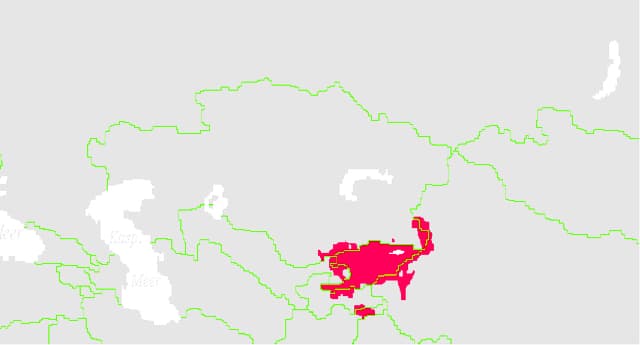 Distribution. More than 4.5 million people speak Kyrgyz. Most live in Kyrgyzstan, with Kyrgyz-speaking communities in Uzbekistan, Tajikistan, Kazakhstan, China, Russia, Afghanistan and other countries.
Turkic roots: Kyrgyz belongs to the same broad language family as Turkish, Uzbek and Kazakh.
Writing systems: Arabic, Latin and Cyrillic scripts have all been used at different periods. Cyrillic is used officially today in Kyrgyzstan.
Kasym Tynystanov was a central figure in writing reform and the author of pioneering Kyrgyz textbooks. His biography shows how alphabet, spelling and grammar moved into schools and print.
Sounds: Kyrgyz includes vowels and consonants that may be unfamiliar to speakers of other languages.
Mutual understanding: Kyrgyz and Kazakh are close, although the degree of understanding varies by speaker and context.
Language support: Programmes in Kyrgyzstan aim to preserve and develop Kyrgyz as national heritage and as a language of public life.
Useful phrases for travellers
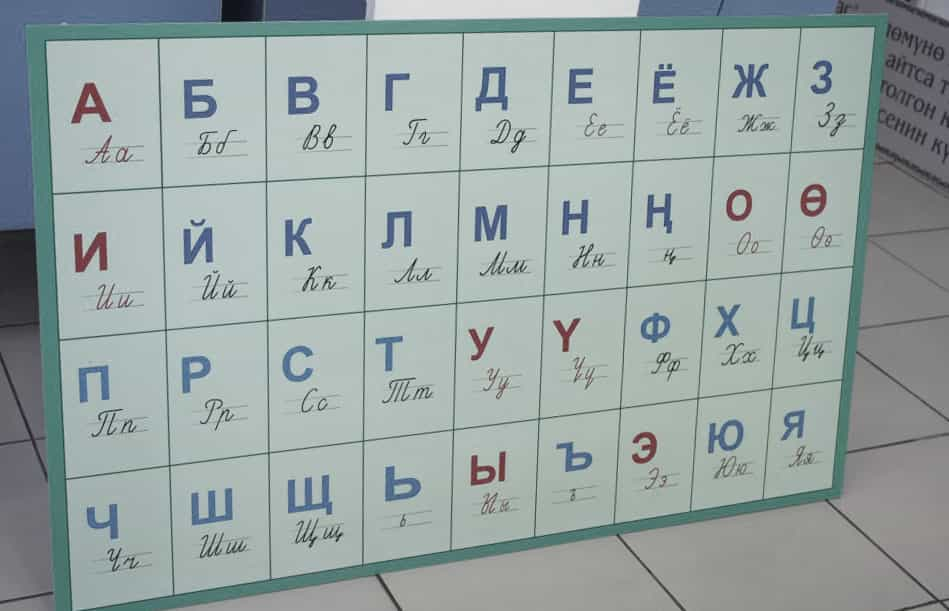 Alphabet. The modern Kyrgyz Cyrillic alphabet has 36 letters, including characters not found in Russian.
Arabic and Latin writing systems were used at earlier stages. Today the letters ң, ө and ү distinguish Kyrgyz Cyrillic from the Russian alphabet.
Each phrase appears in Kyrgyz Cyrillic with a smaller Latin reading aid. The Latin line helps with pronunciation but is not an alternative official spelling.
| Kyrgyz | English |
|---|---|
| Саламатсызбы! [Salamatsyzby!] | Hello! |
| Менин атым ... [Menin atym ...] | My name is ... |
| Иштериңиз кандай? [Ishteringiz kanday?] | How are you? |
| Рахмат. [Rakhmat.] | Thank you. |
| Чоң рахмат. [Chong rakhmat.] | Thank you very much. |
| Ооба. [Ooba.] | Yes. |
| Жок. [Jok.] | No. |
| Кечиресиз. [Kechiresiz.] | Excuse me. / Sorry. |
| ... барбы? [... barby?] | Is there ...? / Do you have ...? |
| Жакшы калыңыз. [Jakshy kalyngyz.] | Goodbye, said to the person staying. |
| Жакшы барыңыз. [Jakshy baryngyz.] | Goodbye, said to the person leaving. |
For transport, shopping and emergencies, continue to the traveller’s Kyrgyz phrasebook.
Frequently asked questions about Kyrgyz
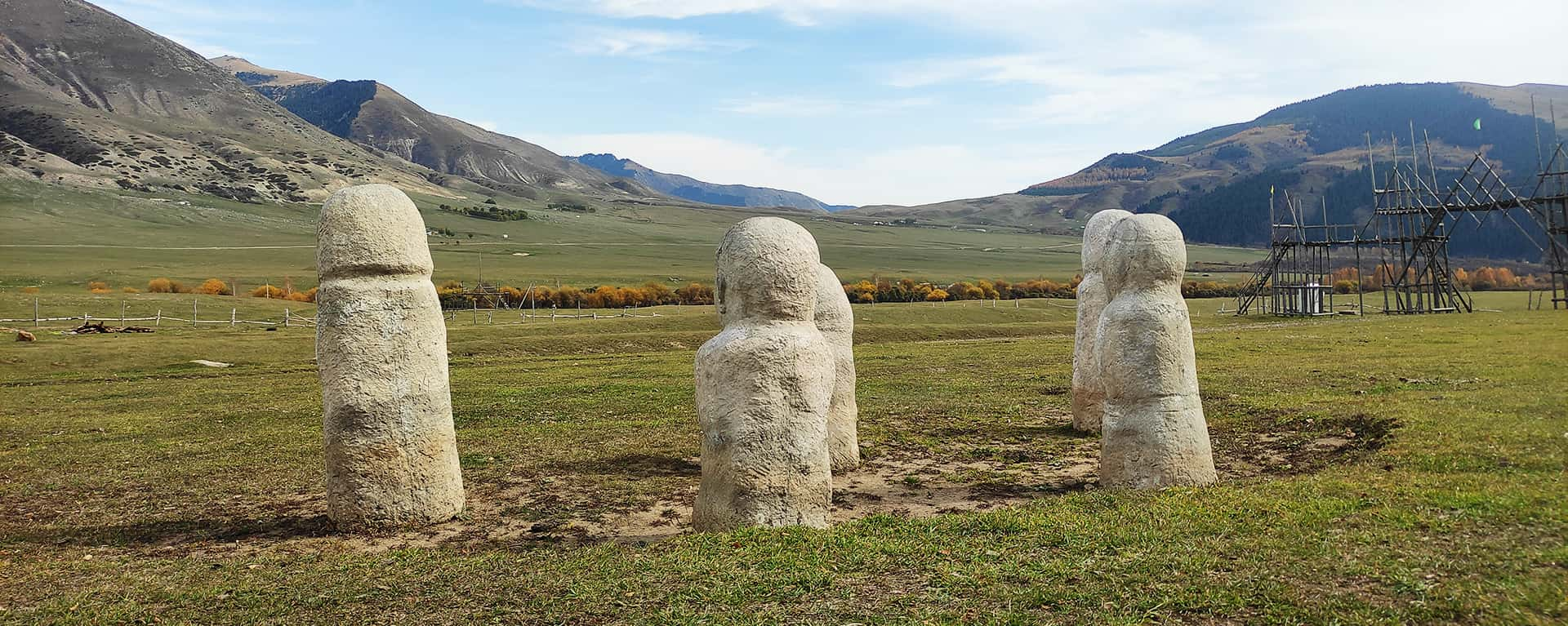
Language is both a means of communication and part of Kyrgyzstan’s cultural heritage. Understanding its basic structure helps visitors recognise the context behind names, speech and oral traditions.
What is Kyrgyz?
Kyrgyz is a Turkic language and the state language of Kyrgyzstan. It belongs to the Kipchak branch of the Turkic language family.
How many people speak Kyrgyz?
Kyrgyz is spoken by millions of people, most of them in Kyrgyzstan, with communities in several neighbouring and migrant-destination countries. Exact totals depend on the source and whether they count first- and second-language speakers.
Which alphabet does Kyrgyz use?
Modern Kyrgyz in Kyrgyzstan uses a Cyrillic alphabet. Arabic and Latin scripts were used at earlier stages.
What is the history of Kyrgyz?
The language developed over a long period and was shaped by contact with other Turkic languages and by the political history of Central Asia, the Russian Empire and the Soviet Union.
How does Kyrgyz differ from other Turkic languages?
Kyrgyz shares many structural features with other Turkic languages but has its own phonology, vocabulary and grammar.
Is Kyrgyz difficult to learn?
Difficulty depends on your first language and previous experience. Speakers of another Turkic language may find more familiar structures than speakers of an Indo-European language.
Does Kyrgyz have dialects?
Yes. Kyrgyz has several dialects, while the standard literary language is based largely on northern varieties.
What are its main grammatical features?
Kyrgyz is agglutinative: grammatical meanings are expressed by adding suffixes to a word stem.
Where can I learn Kyrgyz?
Schools and universities in Kyrgyzstan offer courses, and online materials and language-learning applications are also available.
Is there literature in Kyrgyz?
Yes. Kyrgyz literature includes oral epics, modern prose and poetry. Manas is its best-known epic tradition.
Authors: Evgeny Buyanov, Dmitry Kalyuzhny, Maria Kalyuzhnaya
Share on social media
If you found this guide useful, share it on social media. It takes a moment and helps more travellers discover the project. Thank you!
Anything to add?
Share your experience, leave a comment or suggest an improvement.