Contents:
- Why Tynystanov matters
- Chyrpykty, Karakol and the Urkun
- Tashkent and his first publications
- The first Kyrgyz textbooks
- Alphabet and spelling reform
- Grammar and scholarly vocabulary
- Poetry, translation and Manas
- Education official, researcher and professor
- Repression and rehabilitation
- Where his legacy remains visible
- Frequently asked questions
Why Kasym Tynystanov matters
Tynystanov worked at a moment when Kyrgyz had to function in mass education, newspapers and academic description. The spoken language and its epic and poetic traditions were centuries older. The new challenge was institutional: agree on writing conventions, produce primers and grammars, name linguistic concepts in Kyrgyz and train teachers to use them.
He took part in nearly every stage of that work. He wrote textbooks, drafted spelling rules, studied morphology and syntax, helped build terminology, edited a newspaper and ran the education system. His biography therefore connects the history of the Kyrgyz language with literature, scholarship and the making of public institutions in the 1920s and 1930s.
The familiar claim that one man “created Kyrgyz writing” is too neat. Alphabets and school standards emerged from committees, teachers, linguists, publishers and government bodies. Tynystanov stands out because he moved repeatedly from theory to something a reader could hold and use: a primer, a grammar, a glossary or a school programme.
Chyrpykty, Karakol and the Urkun
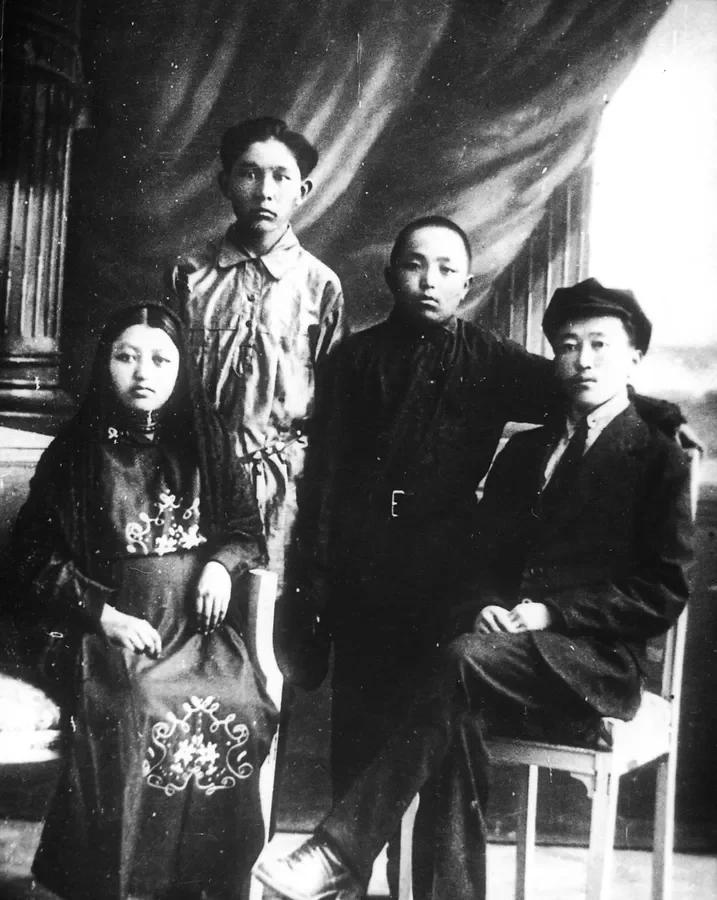
Kasym Tynystanov was born on 10 September 1901 in Chyrpykty, on the north shore of Issyk-Kul. Between 1909 and 1912 he attended a Muslim school, followed by a reformist new-method school and, from 1914 to 1916, a Russian-native school in Karakol. Three different school systems had already shaped his education before he was fifteen.
In 1916, during the Urkun, his family fled across the border into China. Tynystanov returned in 1918. This was not merely a dramatic preface to later achievement. It was part of a generational experience in which schooling was interrupted, a border became an escape route and young people returned to a region whose political and educational institutions were being remade at speed.
Tashkent and his first publications
After returning, Tynystanov resumed his education at the Kazakh-Kyrgyz Institute of Education in Tashkent and graduated in 1924. Tashkent was a major centre for publishing, teacher training and debates about the future of Central Asian languages. Study quickly led him into editorial and organisational work.
He published poetry while still a student. A collection of his verse appeared in Moscow in 1925, the same year he edited the newspaper Ala-Too. A newspaper acted as a testing ground for a young written language: vocabulary and spelling had to work in reports and articles that ordinary readers could understand, not only in theoretical discussions.
The first Kyrgyz textbooks
A textbook turns a language standard into a sequence of practical decisions: which letters to teach first, how to connect sound and spelling, which examples feel familiar and what level of explanation suits an adult or a child. During the 1920s Tynystanov prepared Okuu kitebi (A Reading Book), Chondor uchun alippe (Primer for Adults), Bizdin til (Our Language) and Ene tilibiz (Our Mother Tongue).
The books served different learners. The adult primer opened a route into literacy, the reader supplied connected prose, and the language books explained rules. Their significance lies beyond the label “first”: they treated Kyrgyz as a subject with its own structure rather than an accessory to somebody else’s curriculum.
Alphabet and spelling reform was collective work
In 1926 Tynystanov attended the First Turkological Congress in Baku and presented a paper on the principles of a new alphabet. Across the region, the debate involved much more than letter shapes. It affected literacy campaigns, printing costs, teacher training and the relationship between related Turkic languages.
During the twentieth century Kyrgyz was written successively in Arabic, Latin and Cyrillic scripts. Tynystanov worked on the move to Latin and drafted principles for literary spelling. He sought consistent ways to represent Kyrgyz sounds. The final choices, however, came through commissions and institutions rather than from a lone inventor.
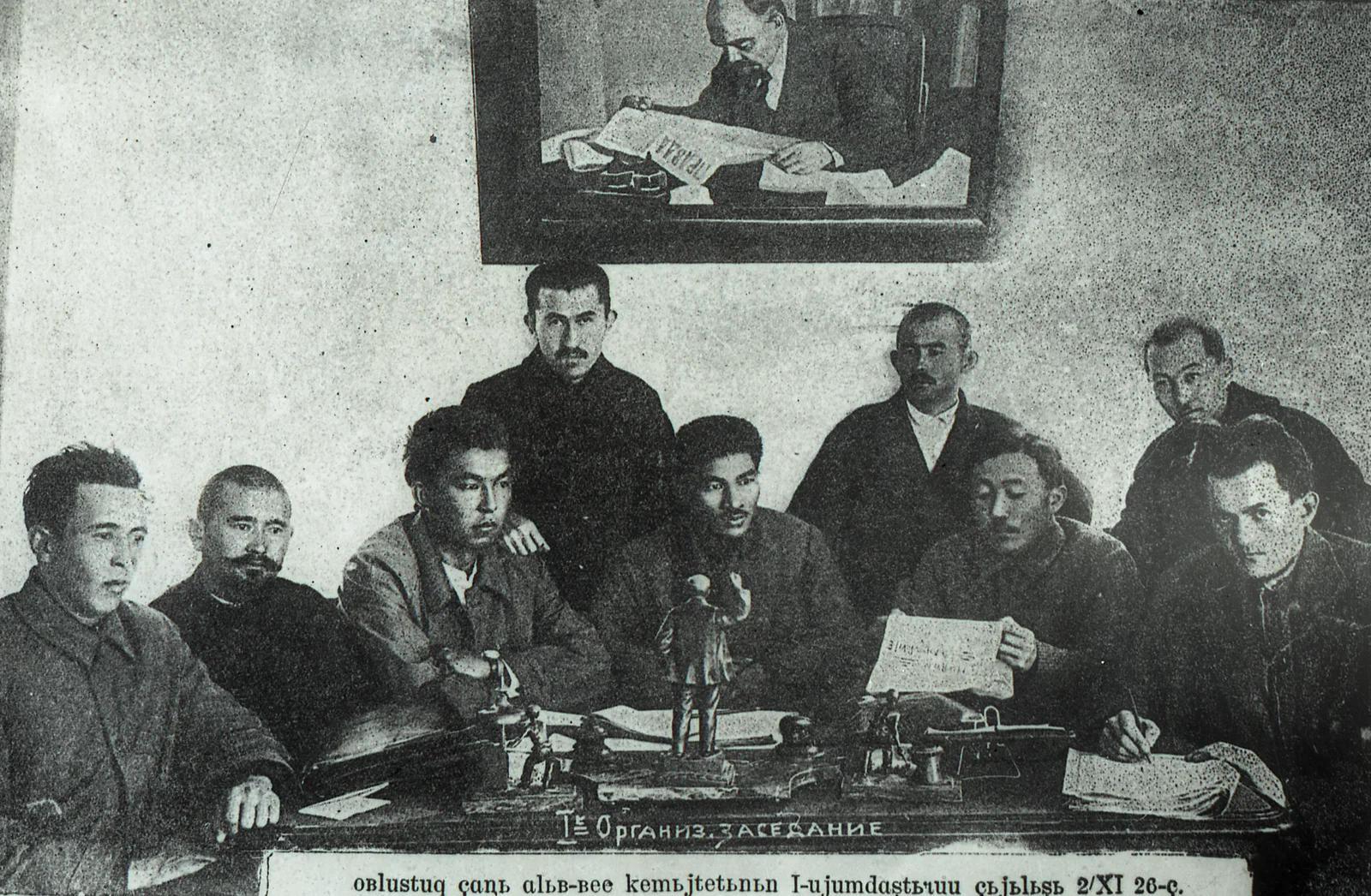
An archival photograph of the Latin Language Committee of the Kyrgyz ASSR shows Tynystanov fifth from the left in the front row, holding a sheet of paper. The collective setting is the point: people around that table debated conventions, edited material and converted reform into classroom practice.
Grammar and a Kyrgyz scholarly vocabulary
An alphabet is only the beginning. The harder task is to describe a language in that language. Tynystanov worked on phonetics, morphology, syntax and vocabulary. His textbooks on Kyrgyz morphology and syntax appeared in 1934 and 1936.
Terminology could not be solved by replacing words mechanically. Teachers needed clear Kyrgyz terms for subjects, predicates, modifiers, word structure and sentence types. A terminology dictionary connected with this work appeared in 1933. Recent scholarship from Kyrgyzstan’s National Academy of Sciences continues to examine how Tynystanov helped establish the vocabulary used to discuss Kyrgyz grammar.
This achievement is easy to overlook because it now feels ordinary. It survives whenever a school lesson, dictionary or editorial discussion can analyse Kyrgyz in Kyrgyz instead of constantly borrowing the basic language of description.
Poetry, translation and Manas
Tynystanov did not build a wall between linguistics and literature. He wrote poetry and drama and translated the Internationale and fables by Ivan Krylov into Kyrgyz. Translation tested the emerging standard under pressure: meaning, rhythm and tone all had to survive in a written form that was still being settled.
He also knew long passages from the Manas epic and took part in the scholarly study of oral tradition. Oral heritage and new writing were not opposites. The work of a manaschi, the recording of epic variants, school editions and linguistic study offered different ways to preserve and understand the same cultural body.
Education official, researcher and professor
From 1927 to 1930 Tynystanov served as People’s Commissar for Education in the Kyrgyz ASSR. He was no longer responsible for a single book but for a system: schools, teacher training, curricula, publishing and cultural institutions. He later worked as a researcher and director at the Kyrgyz Institute of Cultural Construction.
He received the title of professor in 1936. Kyrgyz official institutions describe him as the first Kyrgyz professor. The phrase marks more than a personal promotion. It points to the emergence of scholars who could teach, write complete courses and build research institutions within the republic.
The range of his posts also made him vulnerable. In a centralised political system, academic debate, a school syllabus and questions of loyalty could be pushed into the same arena. Work once promoted as useful for public education could later be recast as an ideological offence.
Repression and three stages of rehabilitation
Tynystanov was arrested in August 1937 and executed in 1938. He was 37. His life ended after the major textbooks had appeared, while the institutions he had helped create continued to operate without openly acknowledging his contribution.
His return to public history took decades and cannot be reduced to one date. The conviction was overturned in 1957. His party status was restored in 1964. In 1988 the republican authorities revisited his literary legacy, allowing his grammatical works, plays, poetry and literary studies to return fully to scholarship and publication.
That sequence clarifies what “rehabilitated” meant in practice. Cancelling an unlawful conviction came first. Political status and the public recovery of a body of work required separate decisions later.
Where Tynystanov’s legacy remains visible
A house museum and a bust stand in his home village of Chyrpykty, west of Cholpon-Ata on Issyk-Kul’s north shore. No stable official timetable is available online, so confirm access locally rather than planning a fixed itinerary around the museum.
Issyk-Kul State University in Karakol bears his name, as does a major street in Bishkek. The three settings preserve different layers of memory: a family home, an educational institution and a name woven into the everyday city.
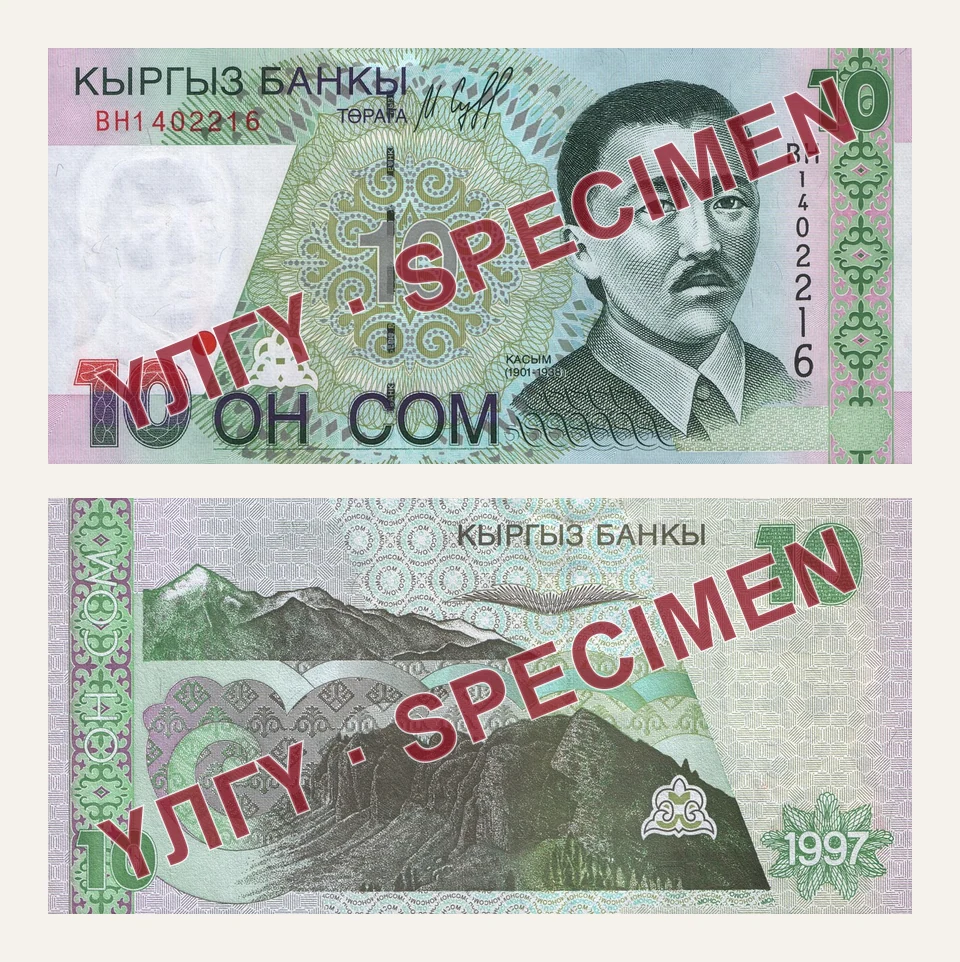
Tynystanov’s most widely circulated portrait appeared on the old 10 som banknote. Its reverse shows the red rocks of Jeti-Oguz. The two sides connect the scholar to Issyk-Kul through geography rather than through a literal scene from his life.
The official university biography provides a fuller career chronology, while the National Bank profile lists his works and the stages of rehabilitation.
Frequently asked questions about Kasym Tynystanov
Who was Kasym Tynystanov?
Kasym Tynystanov was a Kyrgyz linguist, educator, writer and public official. He wrote textbooks, worked on spelling and terminology, led public education and received the title of professor in 1936.
Did Tynystanov create the Kyrgyz alphabet by himself?
No. Writing reform was developed by committees, scholars, teachers and government institutions. Tynystanov played a central role by working on the alphabet and spelling principles and turning them into textbooks and school programmes.
Which textbooks did Tynystanov write?
His books included Okuu kitebi, Chondor uchun alippe, Bizdin til and Ene tilibiz, followed by textbooks on Kyrgyz morphology and syntax.
Why was Kasym Tynystanov repressed?
He was arrested during the political purges of 1937 and executed in 1938. The charges were later overturned: legal rehabilitation came in 1957 and restoration of his party status in 1964.
Where is Tynystanov’s house museum?
The museum is in his home village of Chyrpykty on the north shore of Issyk-Kul. Check access locally before travelling because a stable official timetable is not published.
Which banknote features Tynystanov?
His portrait appears on the front of the old 10 som banknote. The reverse shows the red rock formations of Jeti-Oguz near Issyk-Kul.
Share on social media
If you found this guide useful, share it on social media. It takes a moment and helps more travellers discover the project. Thank you!
Anything to add?
Share your experience, leave a comment or suggest an improvement.