Contents:
Why visit Jeti-Oguz and how long do you need?
Jeti-Oguz is memorable for its sudden change of landscape. At the entrance, the brick-red strata of Seven Bulls and Broken Heart rise above the road. Farther in, the valley narrows and the red walls give way to Tien Shan spruce, a river and the green Kok-Jaiyk pastures. One trip shows both the dry foothills of the Issyk-Kul basin and a wetter alpine gorge. The same red rocks appear on the reverse of the older 10 som banknote.
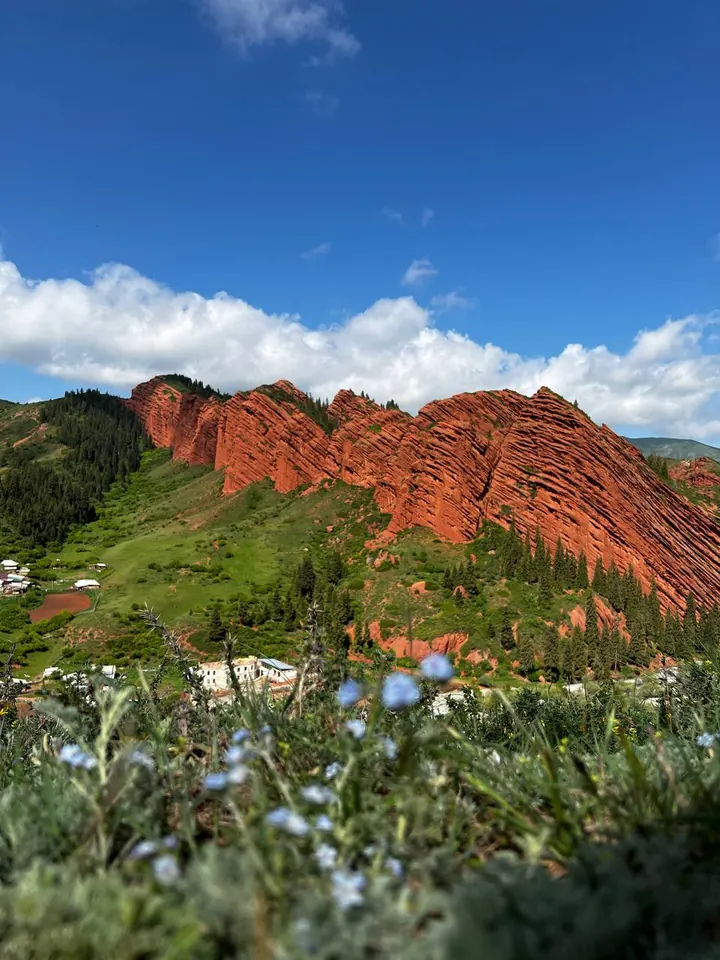 1/6. Red strata and flowers
 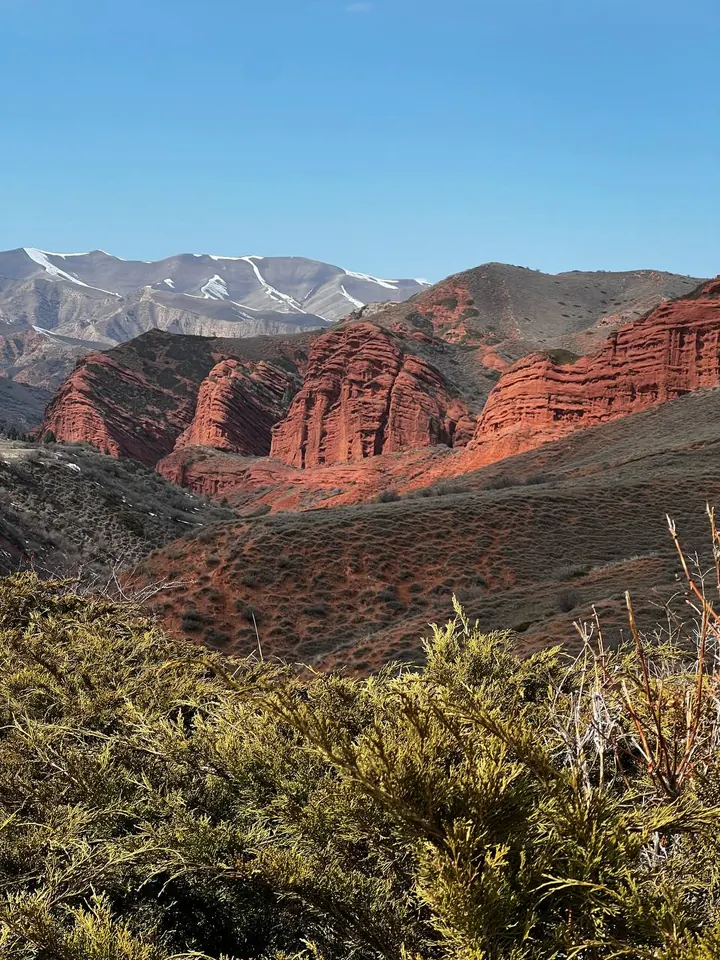 2/6. Jeti-Oguz from the opposite slope
 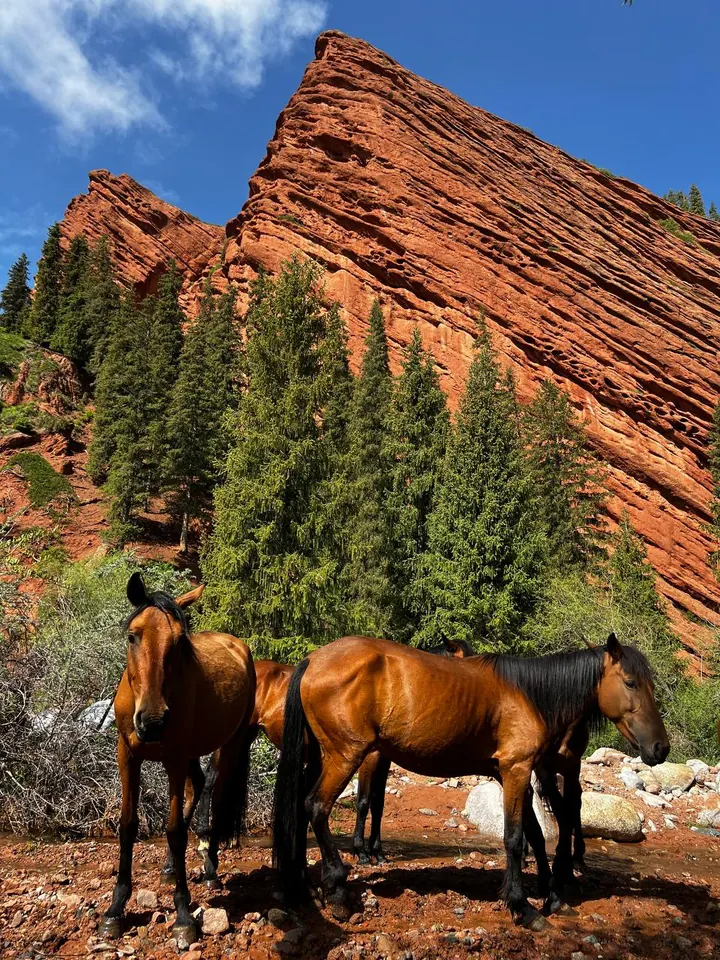 3/6. Horses by the red rocks
 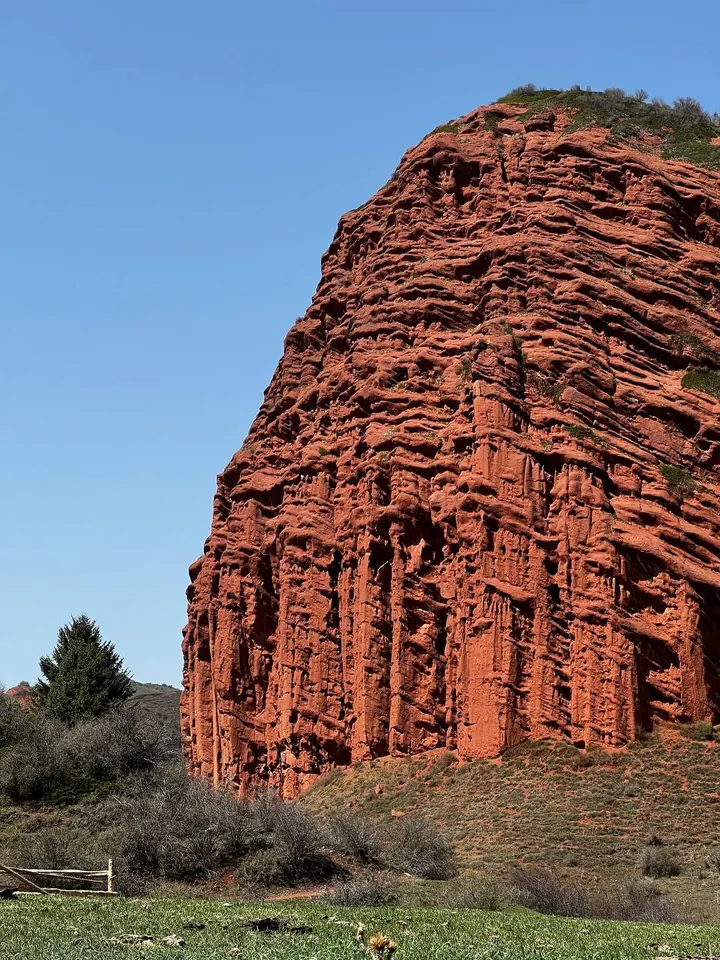 4/6. Red tower beside the road
 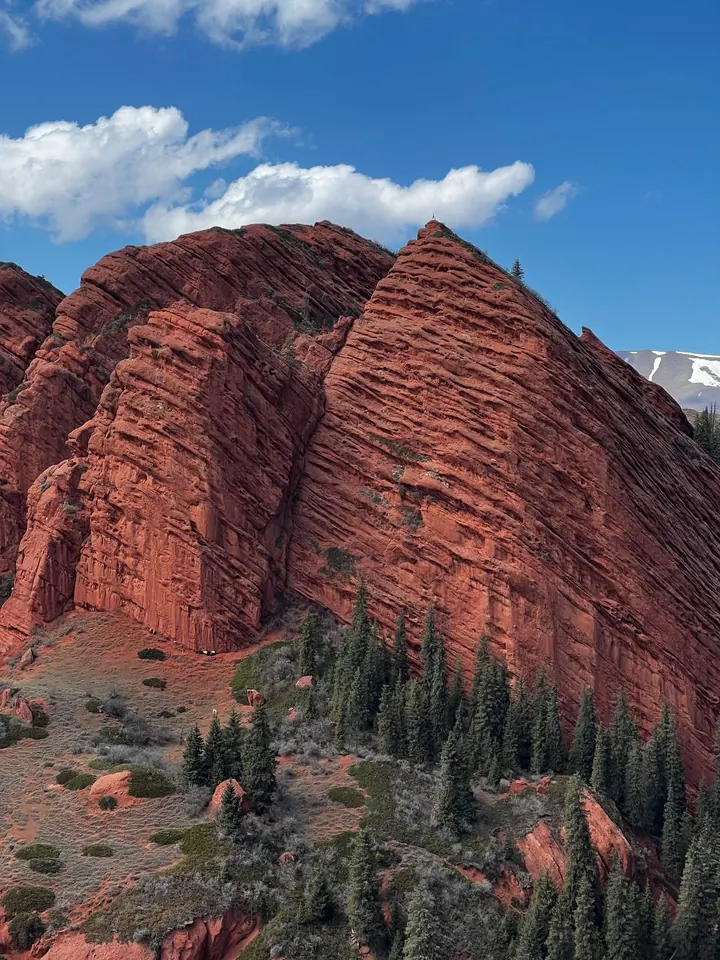 5/6. Folds of the Seven Bulls
 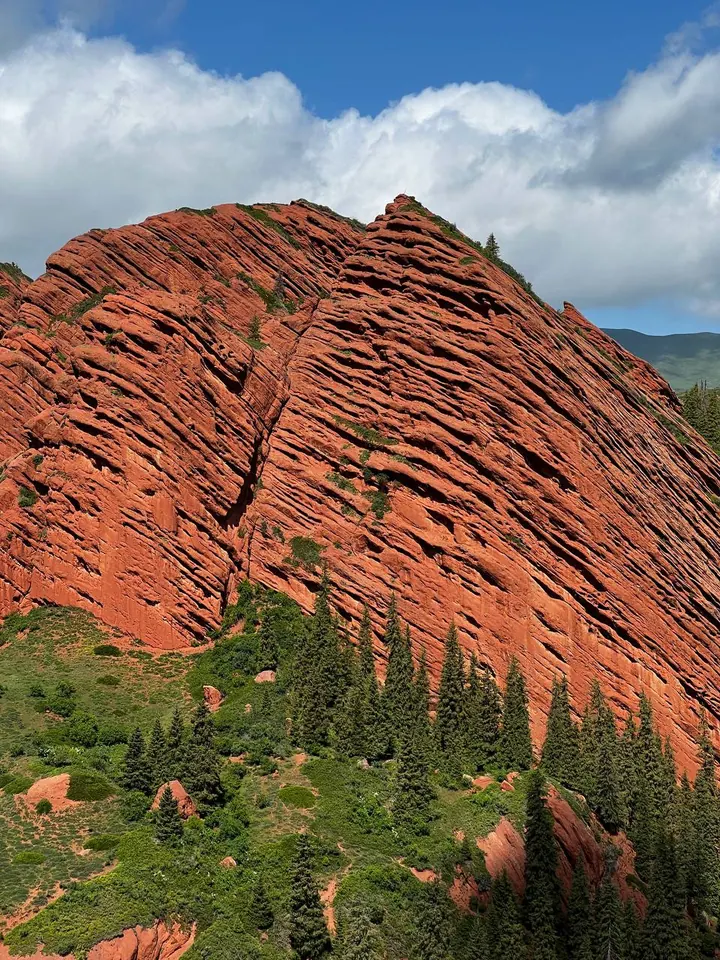 6/6. Close view of the red wall
 Allow 1 to 1.5 hours for Seven Bulls and Broken Heart. That is enough to stop at both formations and climb to the viewpoint opposite the red ridge. The resort, Kok-Jaiyk and a short walk in the upper valley need half a day. Adding Maiden's Braids waterfall turns the outing into a full day of 7 to 9 hours, including the journey from Karakol.
We recommend going beyond a quick photograph at Broken Heart. If the road is dry and you have at least half a day, continue above the resort. The contrast between the red folds at the entrance and the broad green valley explains why Jeti-Oguz is one of the main natural sights near Karakol.
What the name Jeti-Oguz means
In Kyrgyz: jeti means “seven”, while ögüz means “bull” or “ox”.
Jeti-Oguz means “seven bulls” in Kyrgyz. The name refers to a row of weathered red projections resembling animals lying side by side. The official website of the President of the Kyrgyz Republic gives the same explanation.
The number of distinct peaks changes with the viewpoint. The strata overlap, while water, frost and rockfall continue to divide the wall into ribs. The “bulls” are easiest to recognise from the opposite slope, where the whole ridge fits into view.
The red walls consist of sedimentary rock. A study of Jeti-Oguz mineral waters describes the Seven Bulls escarpment as brick-red Palaeogene conglomerate, a cemented mixture of rounded rock fragments. The wider Jeti-Oguz geological section also contains younger strata that researchers date to roughly 22.4 to 8.5 million years ago. Iron oxides, particularly haematite, supply the red pigment.
Several folk legends surround Seven Bulls and Broken Heart. In the best-known version, seven bulls were sacrificed during a feud between two rulers and their blood stained the earth. Stories about Broken Heart involve doomed love, but disagree about the characters and ending. These stories belong to local folklore. The rock composition and weathering explain how the formations developed.
What to see at Jeti-Oguz
Seven Bulls. The main view opens from the hill opposite the cliffs. A short climb reveals the whole chain, the settlement and the road into the gorge. The slope is loose, so stay low after rain and keep away from the edge. At the base of the wall you can inspect the texture and tilted layers, but the overall outline disappears.
Broken Heart. This separate split formation stands beside the road before the main ridge. Visitors usually stop here for a few minutes and then continue to Seven Bulls. Look at it from both sides, since the familiar heart-shaped cleft is not obvious from every angle.
Jeti-Oguz resort. The resort stands at roughly 2,200 metres and uses thermal mineral waters. A 2026 hydrogeological study traces them to rain and meltwater that descends through fractures, warms at depth and interacts with the rock. Temperatures in the sampled outlets reached 32 °C: thermal water here may feel moderately warm.
The resort operates as a medical institution. Ask it directly about accommodation, bath access, opening times and suitability of treatments. Choose a procedure with a doctor: the springs have different compositions, while travel reviews do not account for medical restrictions.
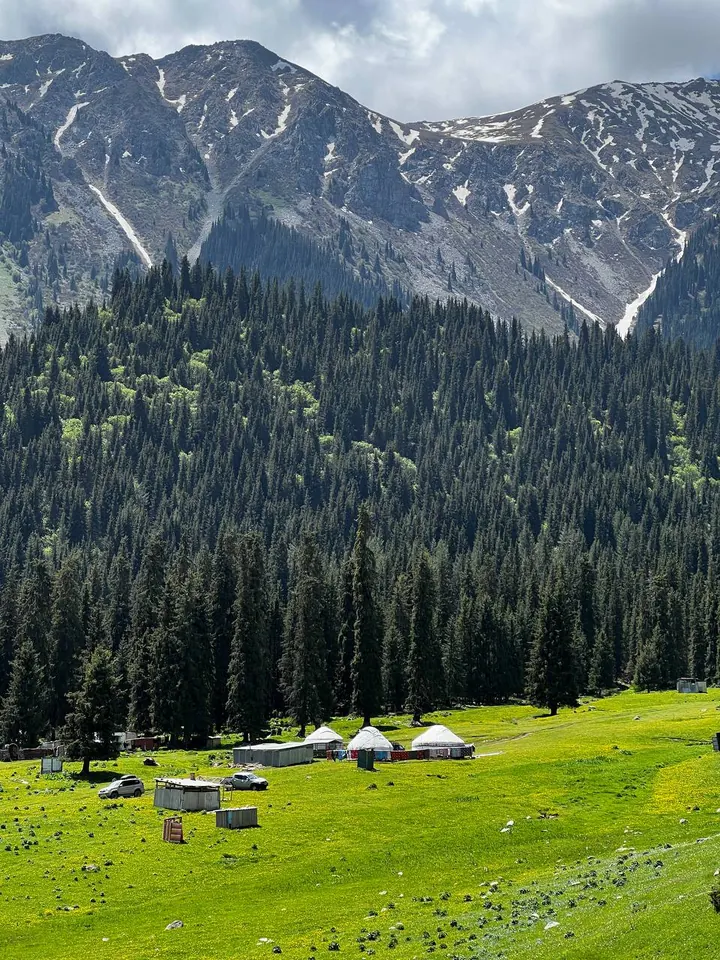 1/6. Seasonal yurts in Kok-Jaiyk
 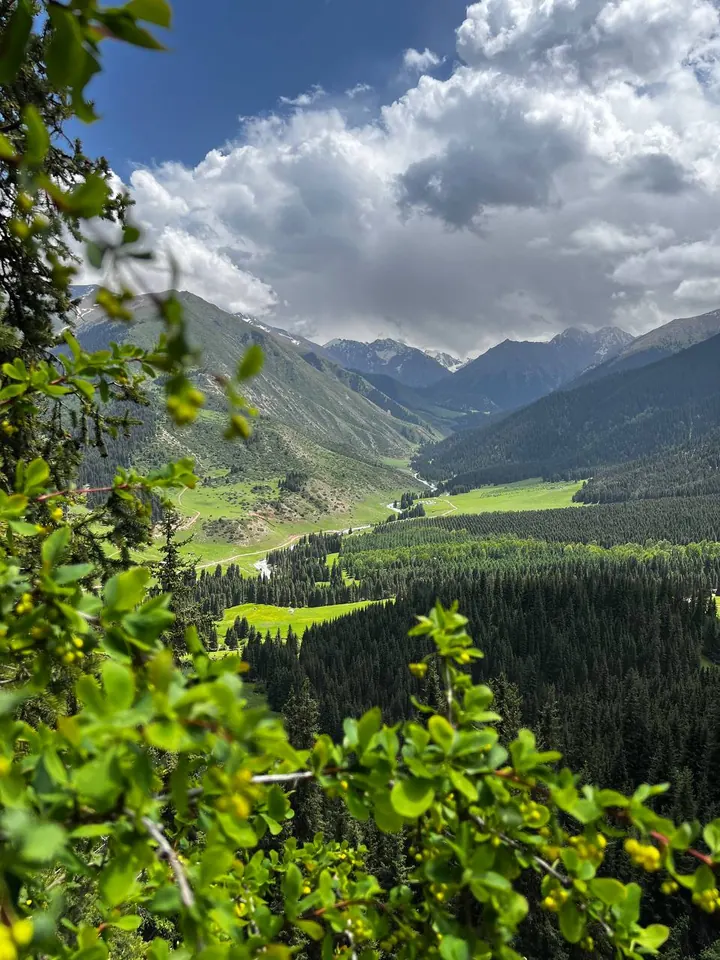 2/6. Upper Jeti-Oguz valley
 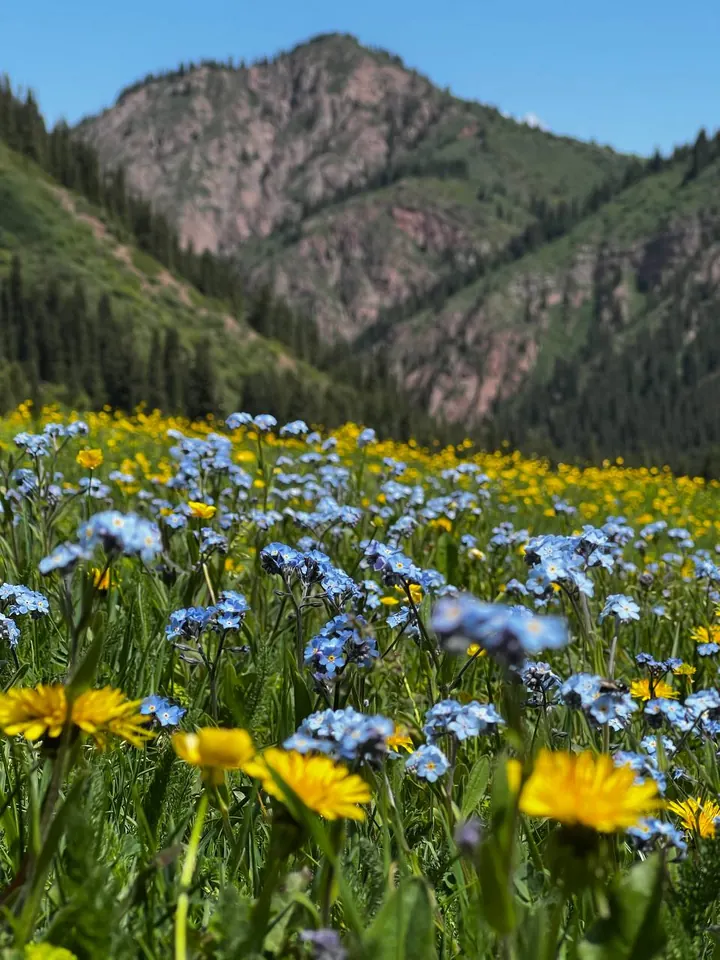 3/6. Flowers in Kok-Jaiyk
 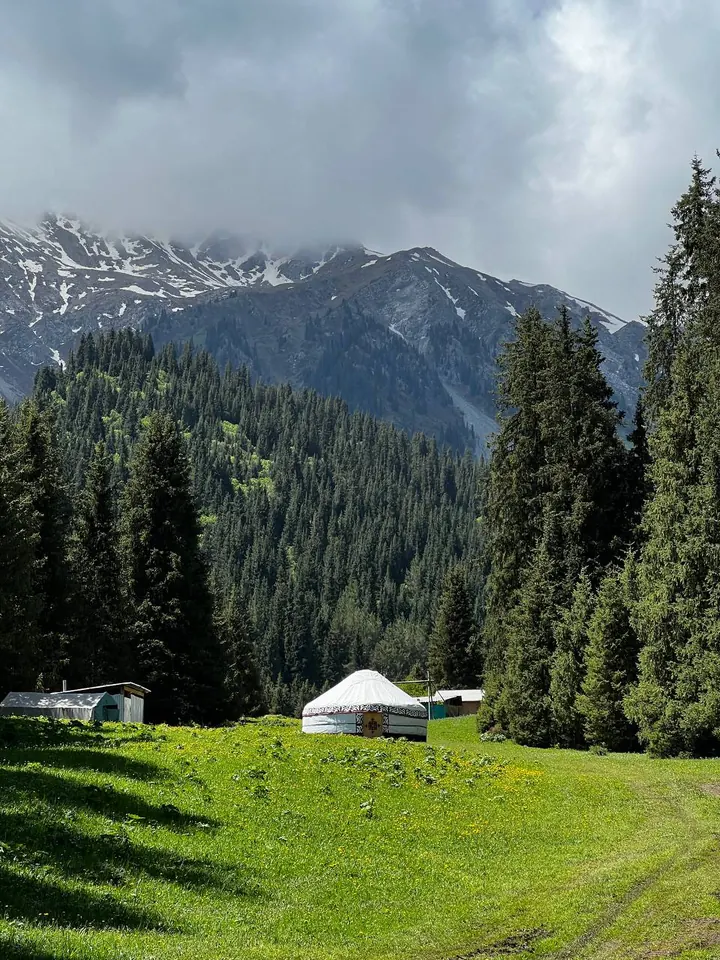 4/6. Yurt beside the forest
 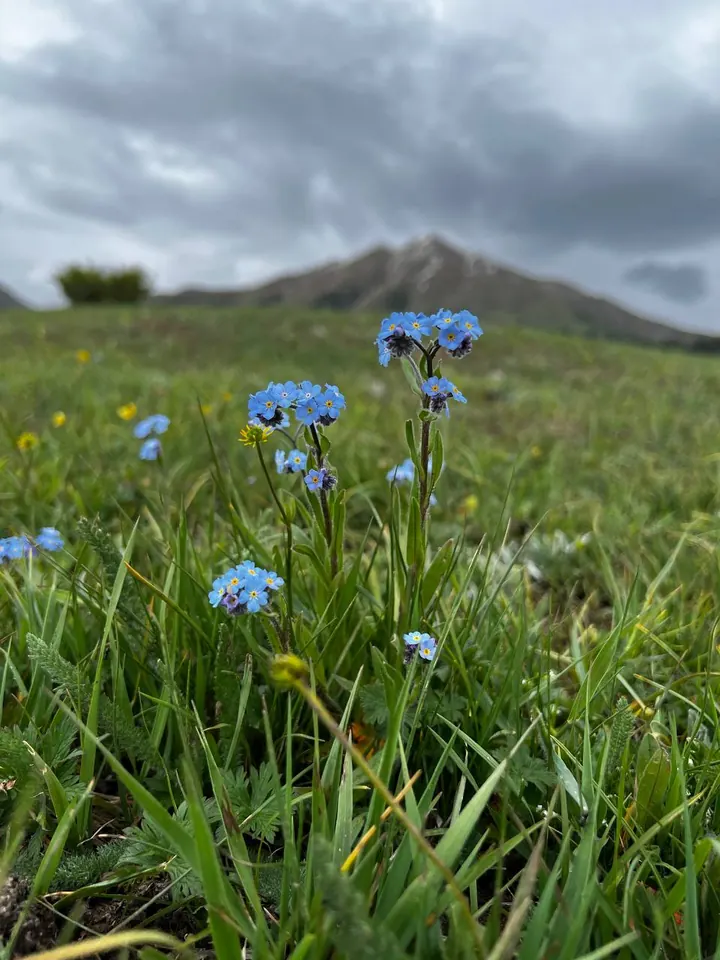 5/6. Flowers on the jailoo
 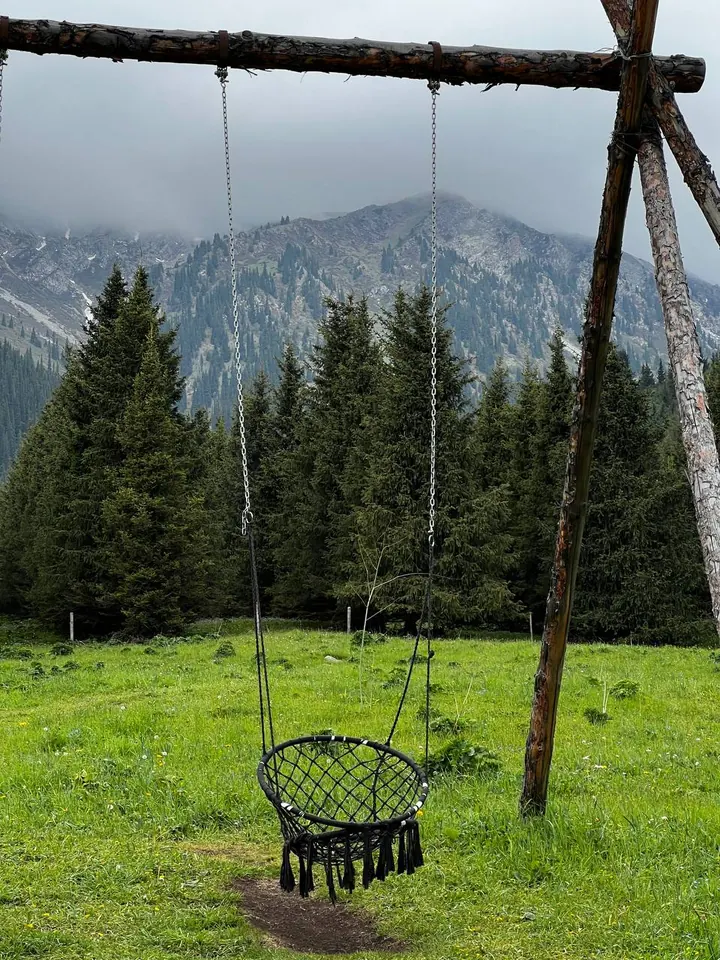 6/6. Swing on the summer pasture
 Kök jaiyk means a green, wide-spreading mountain meadow in Kyrgyz. “Valley of Flowers” is an evocative tourist name.
Kok-Jaiyk. This broad summer pasture above the resort has spruce forest, yurts and views towards snowy summits.
Kok-Jaiyk remains a working jailoo, or seasonal pasture. Do not enter a yurt without an invitation, ask before photographing people and do not feed horses. Arrange a meal, overnight stay or ride in advance: a particular camp may not have opened at the start of the season or may already have closed in autumn.
Maiden's Braids waterfall. The trail starts around Kok-Jaiyk, crosses forest and climbs to a rock step. Walking time depends on where you leave the vehicle; from the nearest camps, the return trip takes several hours. The final stretch may be wet even on a dry day. Stop at firm ground and do not scramble onto rocks beneath the falling water.
How to get to Jeti-Oguz from Karakol
The red rocks are about 30 km from Karakol. The drive normally takes 40 to 50 minutes. Head west towards Kyzyl-Suu, then turn through Jeti-Oguz village into the gorge. Seven Bulls and Broken Heart stand before the resort and require no hike.
An ordinary car reaches the rocks and resort. Beyond that, the tarmac ends and the track develops stones, ruts and shallow stream crossings. Local cars travel well into the valley in dry weather, but the same section may become slippery and washed out after a downpour. Choose your turning point by the road and your vehicle, not another traveller's map pin.
Without a car, book a waiting taxi or arrange a trip with a local operator in Karakol. A one-way taxi to the rocks does not solve the return from Kok-Jaiyk because mobile reception is unreliable higher in the gorge. The official intercity timetable lists a Bishkek to Jeti-Oguz resort service, but confirm the departure before travelling; this bus does not continue to the waterfall.
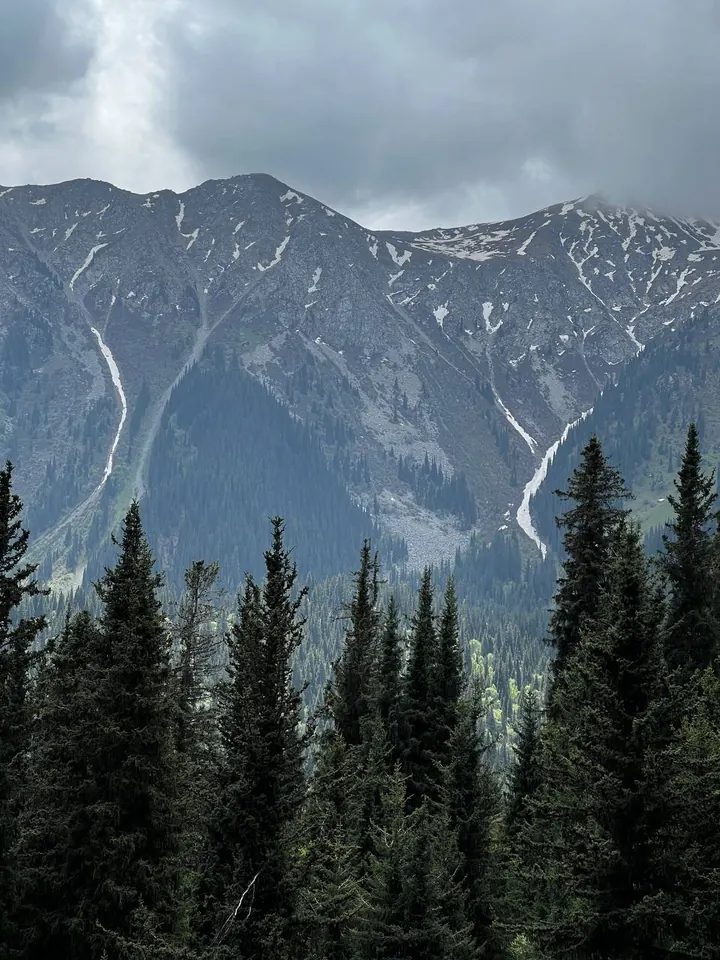 1/6. Ridge above the upper gorge
 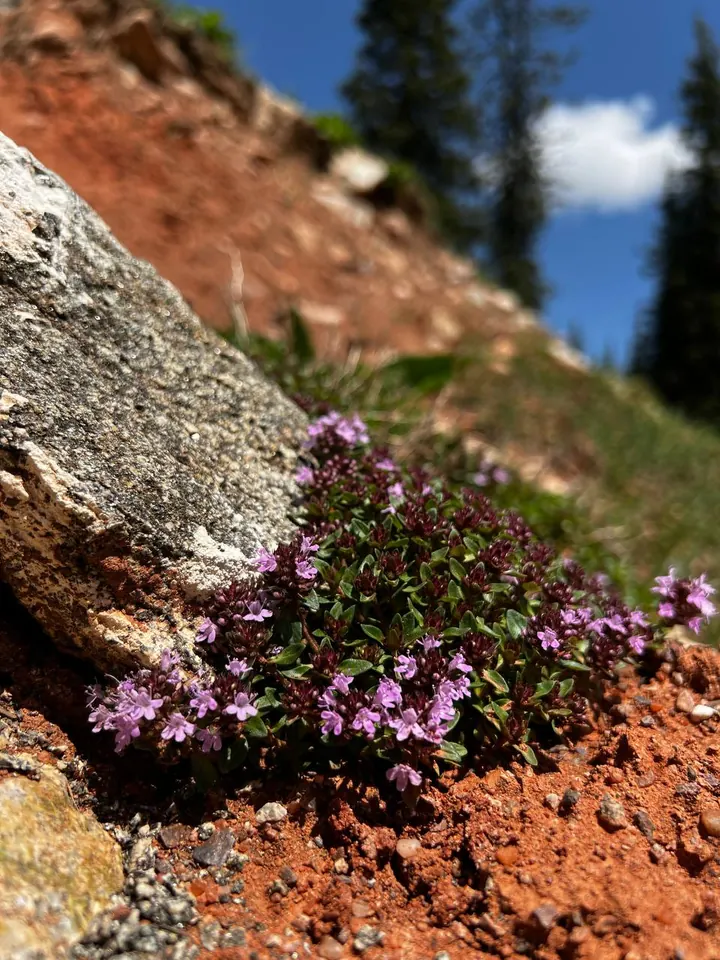 2/6. Flowers on the red slope
 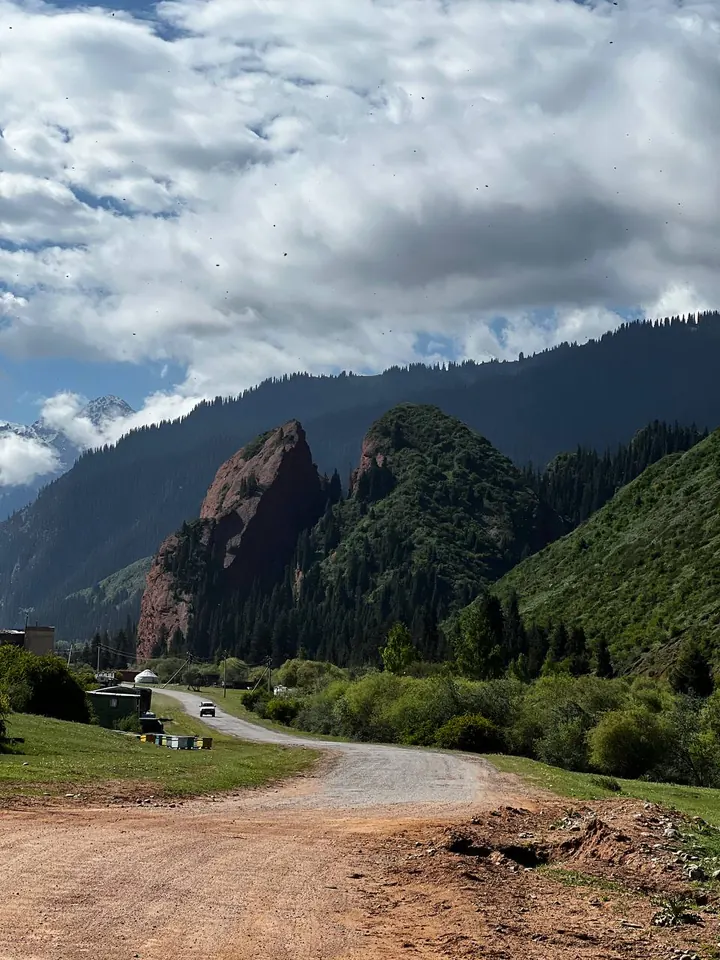 3/6. Road into the upper gorge
 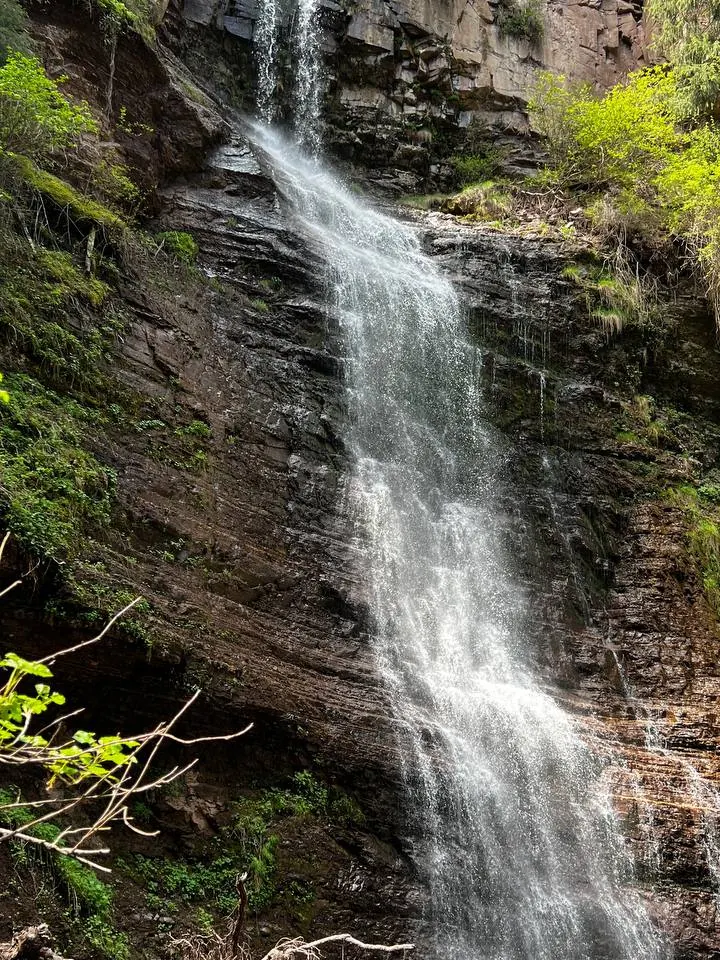 4/6. Maiden's Braids waterfall
 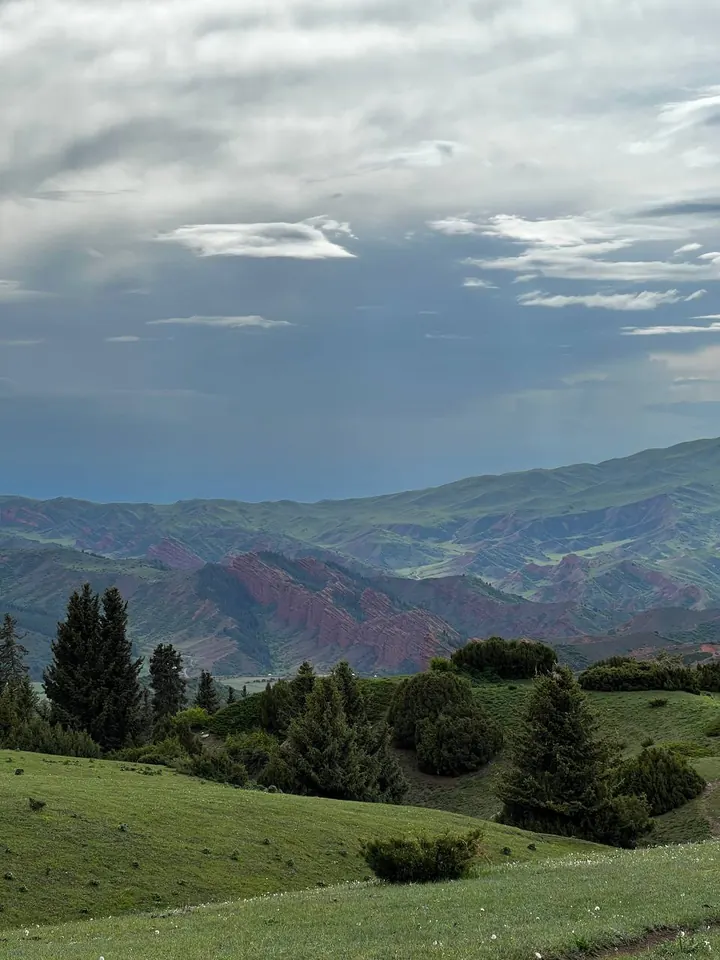 5/6. Jeti-Oguz in changing weather
 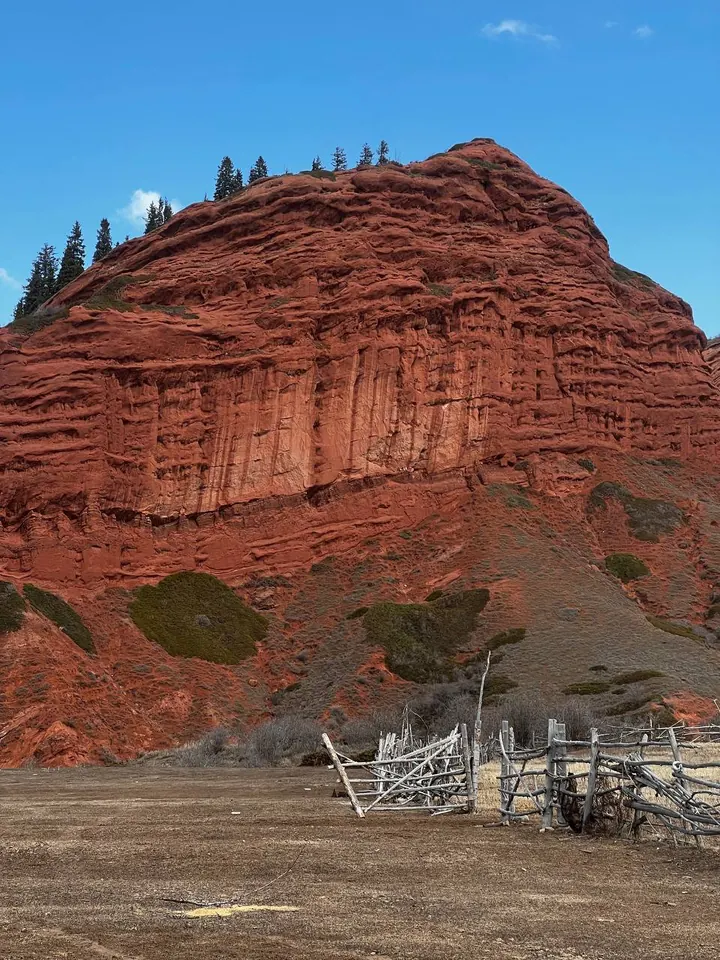 6/6. Roadside stop by the red rock
 Do not drive deep into the gorge after heavy rain. Small streams rise, the ground softens and turning on a narrow section becomes difficult. Leave the car lower down and shorten the walk, or save Kok-Jaiyk for another day.
When to go and what to bring
The red rocks are accessible year-round, but the upper part of the trip depends on snow and the condition of the unpaved road. From late spring to early autumn, it is easier to combine Kok-Jaiyk, seasonal yurts and the waterfall. Flowering changes with elevation and weather, so do not plan around one supposedly exact date. Autumn is quieter, but nights are colder and seasonal camps close.
Comfortable everyday shoes are enough for the red rocks. Kok-Jaiyk and the waterfall call for trainers or boots with good grip, drinking water, a rain jacket and a warm layer even on a clear morning. Download an offline map, carry cash and bring a small bag for your rubbish. Do not rely on constant reception, card payments or an open café in the upper valley.
Low morning and evening light shows the folds of the red strata best. Daylight makes it easier to assess the track and return before dark. On a first visit, we recommend leaving Karakol in the morning, taking time at the rocks and then deciding from the weather whether to continue to Kok-Jaiyk and the waterfall.
Where the gorge leads next
Beyond Kok-Jaiyk, the easy road trip ends and serious mountain routes begin. The classic traverse links Jeti-Oguz with Karakol Gorge, Ala-Kul and Altyn Arashan via Telety and Ala-Kul passes. One current itinerary takes five days and four nights; Telety Pass reaches 3,670 metres and Ala-Kul Pass 3,860 metres.
This is a separate multi-day trek. It requires a tent or confirmed camps, warm equipment, food, navigation and experience at altitude. Confirm the stages and camp availability before setting out. If you have not crossed passes above 3,500 metres, hire a local guide and check snow and weather separately.
A full day is enough for a first introduction to Jeti-Oguz. The route from Karakol to Seven Bulls, Kok-Jaiyk and the waterfall shows its essential sequence: the red strata of the ancient Issyk-Kul basin, a working pasture, a spruce valley and the transition into the high Tien Shan.
Share on social media
If you found this guide useful, share it on social media. It takes a moment and helps more travellers discover the project. Thank you!
Anything to add?
Share your experience, leave a comment or suggest an improvement.