Contents:
Kyrgyz and Russian: the distinction
The Constitution defines Kyrgyz as the state language and Russian as a language used in an official capacity. It is therefore imprecise to say that the country has “two official languages”: both have legal status, but that status is worded differently.
Kyrgyz belongs to the Turkic language family. Russian is widely used in daily urban life, trade, services and communication between people with different first languages. The language you hear depends on the region, the speaker’s age and the situation.
Which language will help on your trip
Bishkek and larger cities. Russian will usually be enough to order food, speak to hotel staff, call a taxi and buy a ticket. A sign or menu may be only in Kyrgyz, only in Russian or bilingual.
Smaller towns and villages. You are more likely to hear mainly Kyrgyz. Even when someone understands Russian, a greeting and thanks in Kyrgyz set a friendly tone.
Tourist areas. Some hotels, yurt camps and travel companies employ English-speaking staff, but this is not guaranteed. Save your address, dates and booking terms as text so that you can show them without a long explanation.
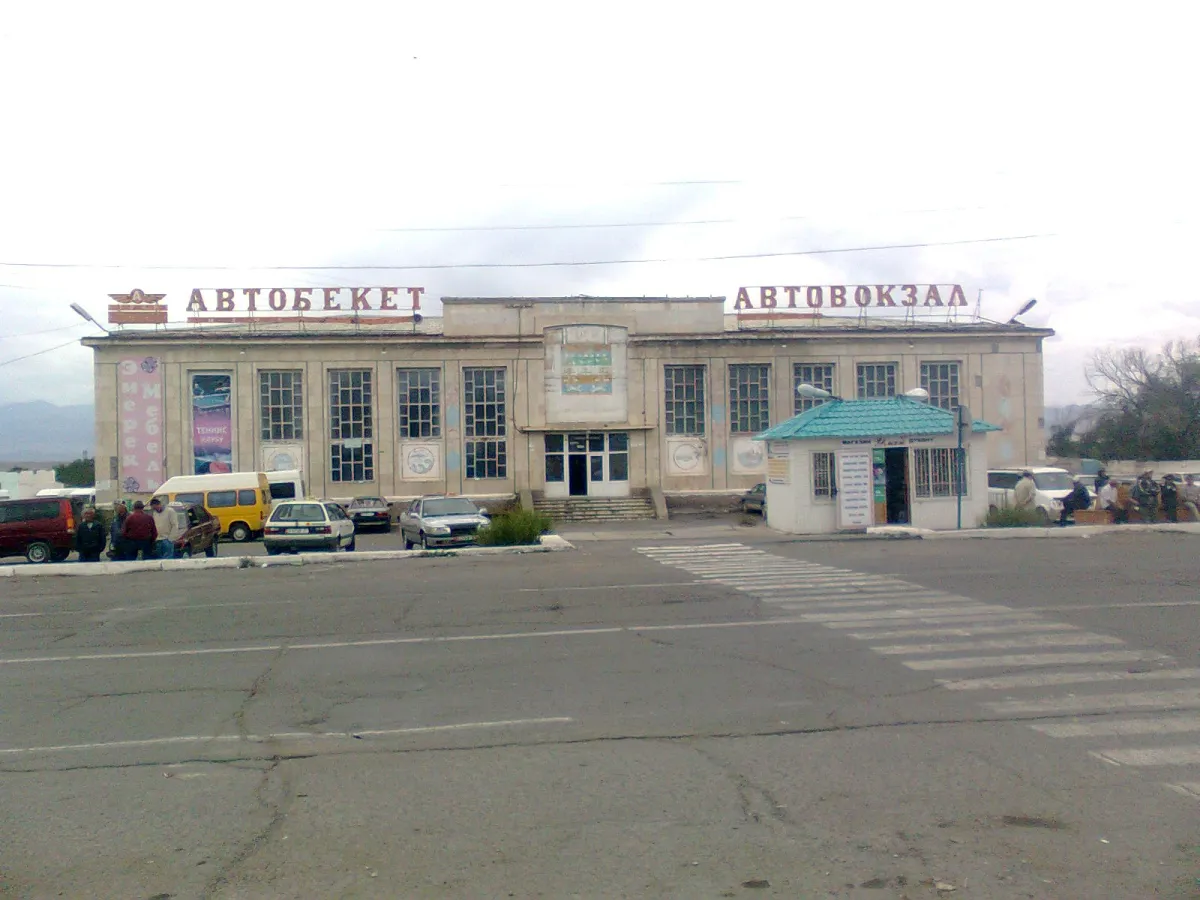 1/2. Bilingual sign at Balykchy bus terminal Photo: Askarbek, Wikimedia Commons, CC BY-SA 3.0; edited for this site.
 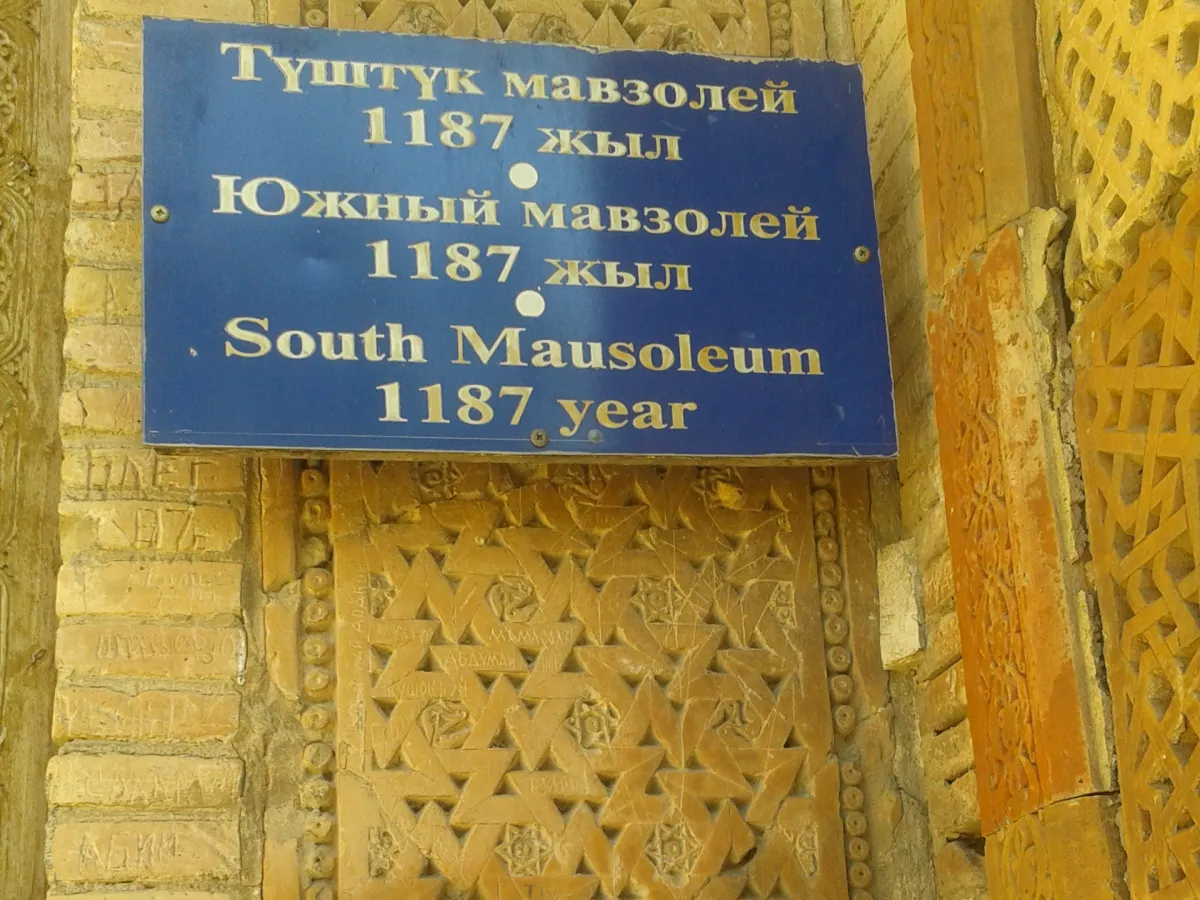 2/2. Three languages on a visitor sign in Uzgen Photo: Hsharapov, Wikimedia Commons, CC BY-SA 3.0; edited for this site.
 How to read Kyrgyz words
The Kyrgyz alphabet is based on Cyrillic. In addition to letters familiar to Russian readers, it contains ң, ө and ү. The letter ң represents a nasal sound similar to ng in the English word “sing”. Ө and ү are vowels absent from standard Russian; for an initial conversation, recognising the letters matters more than perfect pronunciation.
When searching, do not replace a place name with an improvised Russian transliteration. Copy the spelling from your booking or map: a single letter may lead to a different village, gorge or guesthouse.
Useful Kyrgyz phrases
Forms ending in -сызбы and polite requests ending in -ңызчы suit an unfamiliar adult. Keep “Салам” for an informal situation; “Саламатсызбы” is a safer way to open a conversation.
The Latin line follows the BGN/PCGN romanisation convention as a reading aid: ng represents ң, ö represents ө, ü represents ү and y represents ы.
| Kyrgyz | English |
|---|---|
| Саламатсызбы! [Salamatsyzby!] | Hello! (polite) |
| Салам! [Salam!] | Hi! |
| Рахмат! [Rakhmat!] | Thank you! |
| Сураныч. [Suranych.] | Please. |
| Кечиресиз. [Kechiresiz.] | Excuse me / Sorry. |
| Сиз орусча сүйлөйсүзбү? [Siz oruscha süylöysüzbü?] | Do you speak Russian? |
| Мен түшүнбөйм. [Men tüshünböym.] | I do not understand. |
| Кайталап коюңузчу. [Kaytalap koyunguzchu.] | Please repeat that. |
| Бул канча турат? [Bul kancha turat?] | How much does this cost? |
| Дарыкана кайда? [Darykana kayda?] | Where is the pharmacy? |
| Даараткана кайда? [Daaratkana kayda?] | Where is the toilet? |
| Мага такси чакырып коюңузчу. [Maga taksi chakyryp koyunguzchu.] | Please call me a taxi. |
| Мени бул дарекке алып барыңызчы. [Meni bul darekke alyp baryngyzchy.] | Please take me to this address. |
| Тез жардам чакырыңызчы. [Tez jardam chakyryngyzchy.] | Please call an ambulance. |
| Жардам бериңизчи. [Jardam beringizchi.] | Please help me. |
| Кош болуңуз. [Kosh bolunguz.] | Goodbye. |
Preparing to communicate
- Download Kyrgyz and Russian language packs in your translation app before leaving the city.
- Save your accommodation address, host’s name and telephone number in a note and screenshot.
- Show a driver both the map point and its name rather than relying only on pronunciation.
- For a complicated question, use short sentences without slang or ambiguity.
- Check automatic translations of important terms such as departure time, price, included services and meeting point.
In an emergency, state or show your location first, then describe the problem briefly. An accurate location is more useful than a long translated message.
Share on social media
If you found this guide useful, share it on social media. It takes a moment and helps more travellers discover the project. Thank you!
Anything to add?
Share your experience, leave a comment or suggest an improvement.