Contents:
Why stop in Kochkor-Ata?
Kochkor-Ata is a town of district significance in Nooken District, Jalal-Abad Region. Its value to a traveller is mainly practical: stop for lunch, buy water and food, arrange a vehicle to Mailuu-Suu or break a long journey into two manageable days.
Kyrgyzstan's National Statistical Committee lists Kochkor-Ata among the region's three towns of district significance. There is no conventional visitor centre or circuit of ticketed attractions. The interest lies in everyday working life, the oil industry and the town's position between the Fergana Valley and the narrow Mailuu-Suu valley.
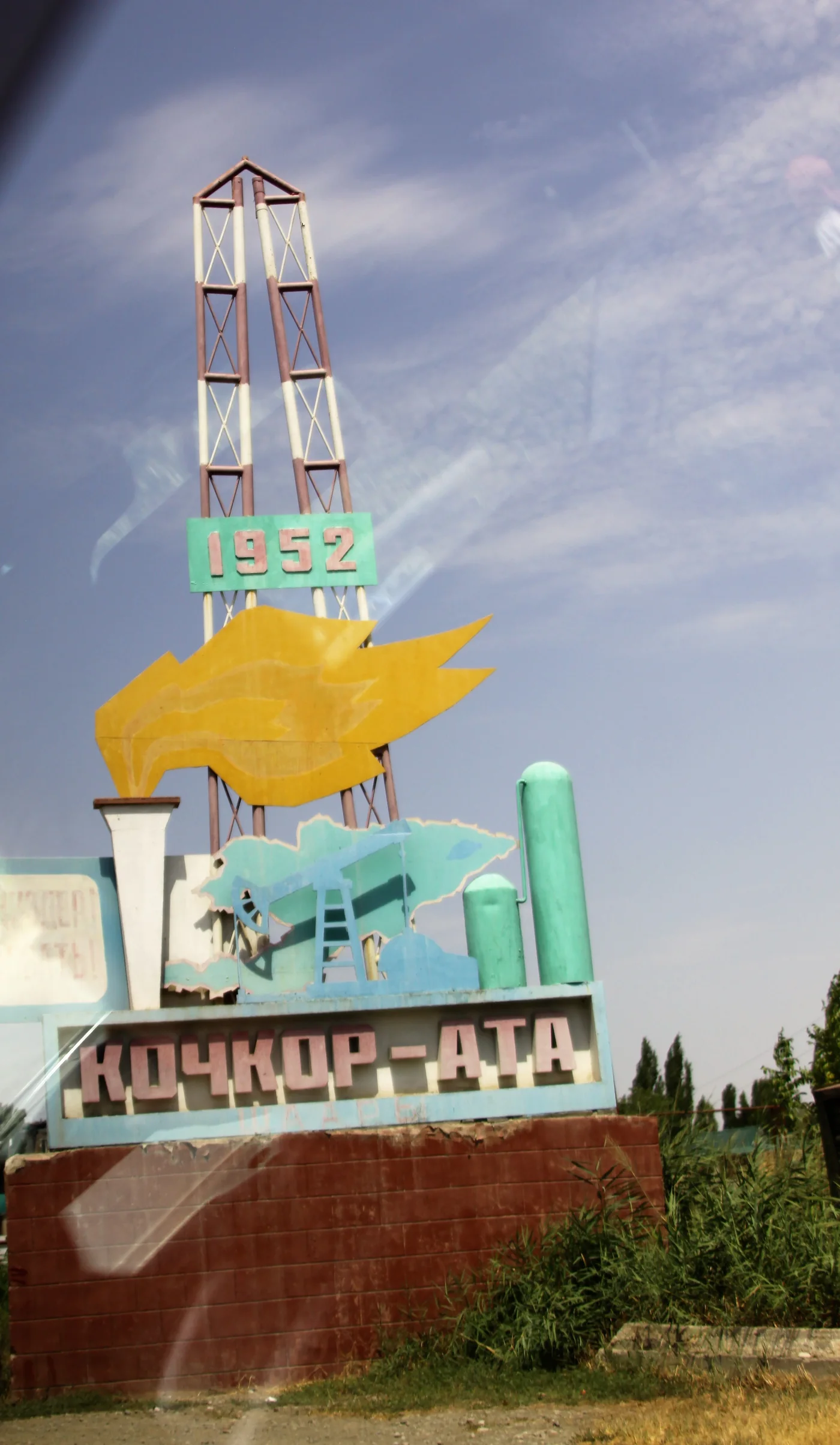 1/2. The entrance monument points to the town's oil history Photo: JohnNewton8, Wikimedia Commons, CC BY-SA 4.0; edited for this site.
 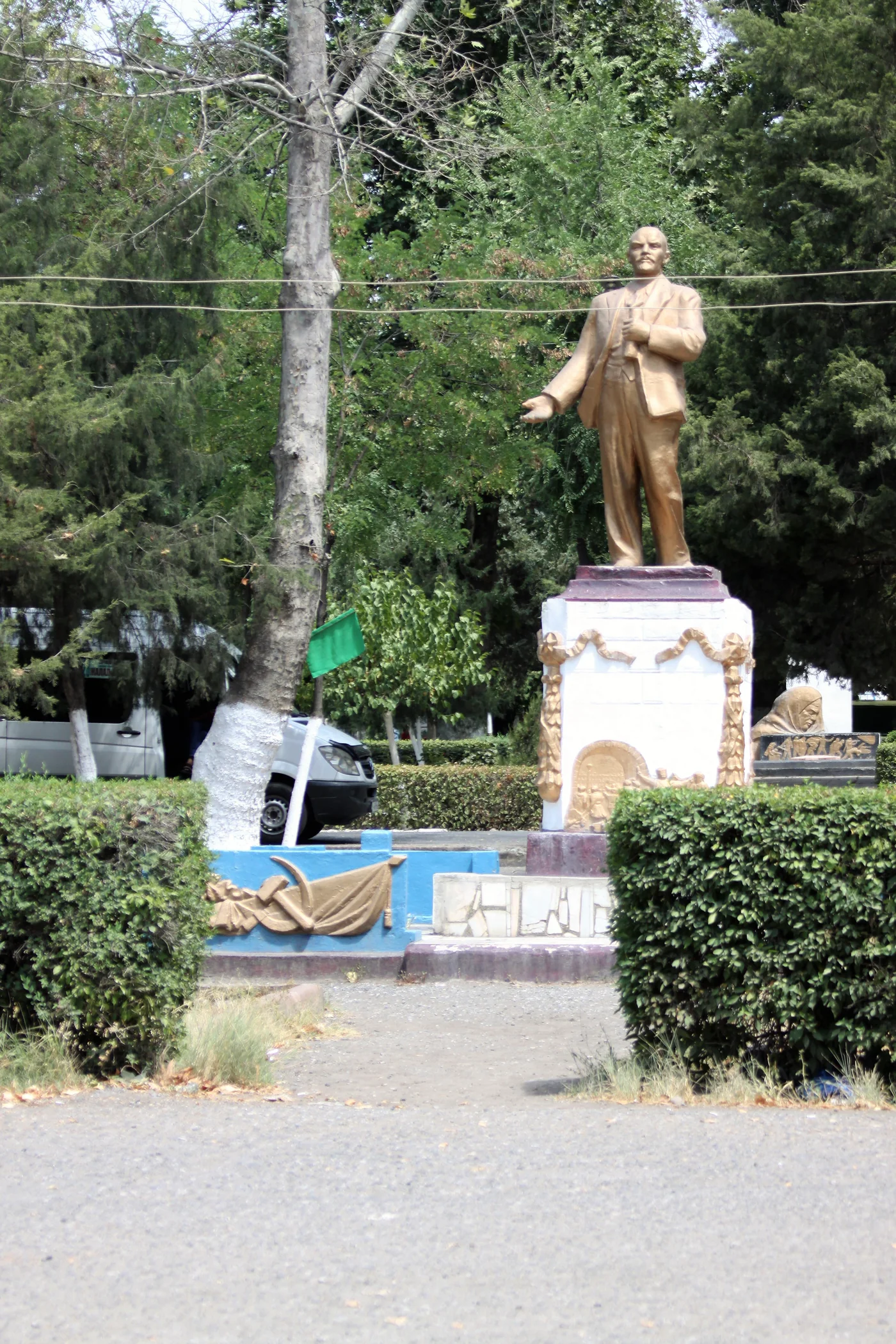 2/2. A surviving layer of Soviet urban history Photo: JohnNewton8, Wikimedia Commons, CC BY-SA 4.0; edited for this site.
 What to see in the centre
The bazaar and adjoining streets. Start here if you arrive without a car. It is the easiest area for provisions, small change, lunch and questions about the next marshrutka. Save your drop-off point first, as the return vehicle may leave from another side of the market.
The central park and residential streets. A walk through the greener centre reveals the layout of the former workers' settlement more clearly than a forced checklist of sights. The Lenin monument survives as part of the Soviet urban layer. It needs no special detour but fits naturally into a short walk.
The entrance monument. Its oil derrick and the date 1952 explain the town's origin at a glance. View it only from a safe stopping place. Do not step into traffic or ask a driver to pull over where there is no proper shoulder.
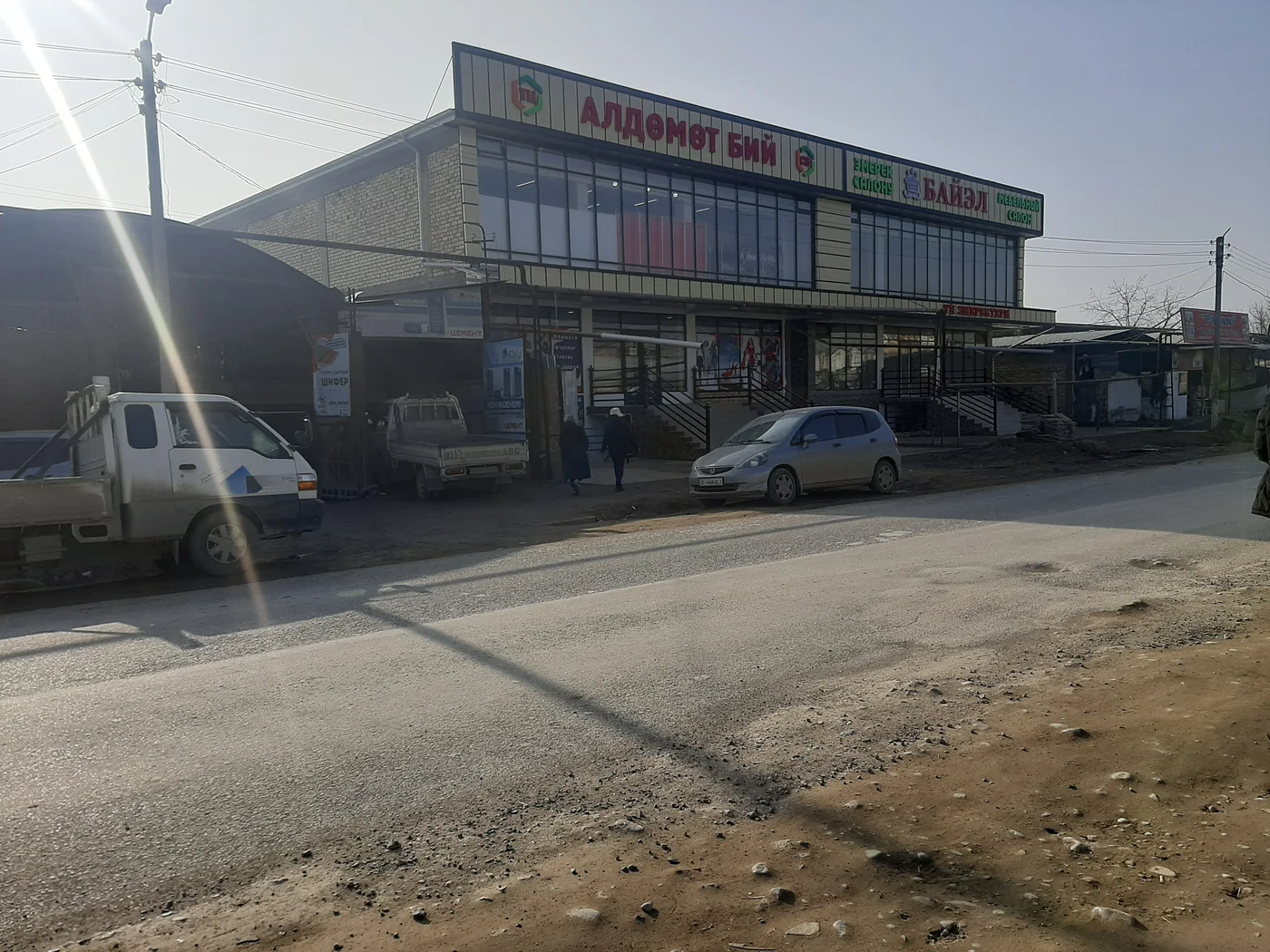 The market is a practical stopping point. Photo: Абдырашит Сатылганов, Wikimedia Commons, CC BY-SA 4.0; edited for this site.
How oil shaped the town
Oilfields in this part of the Fergana Basin entered development in the middle of the twentieth century. The Kyrgyzneft production association was established in 1952, and the settlement grew with its workforce, housing and services. Today's Kyrgyzneftegaz still manages its operations from an office in Kochkor-Ata.
In 2003, the urban-type settlement of Kochkor-Ata became a town of district significance. That history accounts for the compact centre, detached housing and industrial premises around it. Oil is essential context, but active wells, tanks and production compounds are not visitor attractions.
The industrial estate is a working environment. Stay outside fences, avoid close photographs of security and equipment, do not fly a drone around oil-and-gas infrastructure and never turn onto a service road for a better picture.
A two-hour or half-day plan
Two hours. Confirm your onward vehicle, walk along the bazaar street, cross the central park, have lunch and return with time to spare. The whole plan stays on public streets and needs no taxi.
Half a day. Add a slow loop through residential streets and a short ride to the entrance monument. A driver is useful only for a safe stop and reliable return to the centre. Agree the fare and waiting point before you leave, especially if Mailuu-Suu is your next destination.
Kochkor-Ata does not need a full sightseeing day. Include it for a considered break, a look at Kyrgyzstan's oil-town history and a useful connection. With limited time, choose the centre and market instead of collecting arbitrary pins around the outskirts.
Where to go next
To Mailuu-Suu. The road turns north into a narrow industrial valley. Mailuu-Suu rewards a carefully planned visit for its city museum, uranium legacy and continuing tailings remediation. Leave in the morning and confirm the return journey; the last convenient vehicle may run earlier than a navigation app suggests.
To Manas and Osh. Eastbound travel runs through Bazar-Korgon to Manas, formerly Jalal-Abad, and then towards Osh. This is the more useful direction for a broader southern itinerary and connections to frequent intercity transport.
To Sary-Chelek. A western journey can continue through Kerben towards Sary-Chelek. Do not combine the lake and Mailuu-Suu in one short day. They lie on different branches, and waiting for shared transport quickly consumes the daylight margin.
Getting there and staying overnight
From Manas, follow the westbound road through Bazar-Korgon. From Osh, travellers usually connect through Manas or find a shared car heading west. Marshrutkas and shared taxis may wait until full, so an app's driving time is not a departure timetable.
Show the driver the full pin for “Kochkor-Ata, Nooken District”. Do not shorten it to Kochkor, which lies near Naryn in a different part of the country. Our Kyrgyzstan transport guide explains shared vehicles, fares and transfers.
An overnight stop is most useful before an early trip to Mailuu-Suu or after a long drive. Confirm hot water, heating, late check-in and the possibility of arranging a morning car. In a small town, a working phone number matters more than an attractive listing with no recent reviews.
When to visit and what to keep in mind
Spring and autumn are the easiest seasons for a daytime walk without intense heat. In summer, explore in the morning or late afternoon and carry water and sun protection. In winter, confirm heating at your accommodation and allow extra time on the road.
The bazaar street mixes cars and pedestrians. Step away from the flow for photographs, cross only where traffic is clear and look after your phone and wallet as you would in any busy market. Outside town, do not stop beside oil infrastructure and use only a wide public shoulder.
Share on social media
If you found this guide useful, share it on social media. It takes a moment and helps more travellers discover the project. Thank you!
Anything to add?
Share your experience, leave a comment or suggest an improvement.