Contents:
Why stay in Naryn
Naryn follows the river of the same name between dry mountain slopes. It is the regional capital and a useful place to sleep, restock, find a driver and check road conditions before travelling into the central Tian Shan.
One unhurried day is enough for the city itself. Extra nights are worthwhile for Salkyn-Tor, Eki-Naryn, Son-Kul or the road towards At-Bashy. Do not read a regional map as a city itinerary: Naryn Region's best-known places are spread far apart.
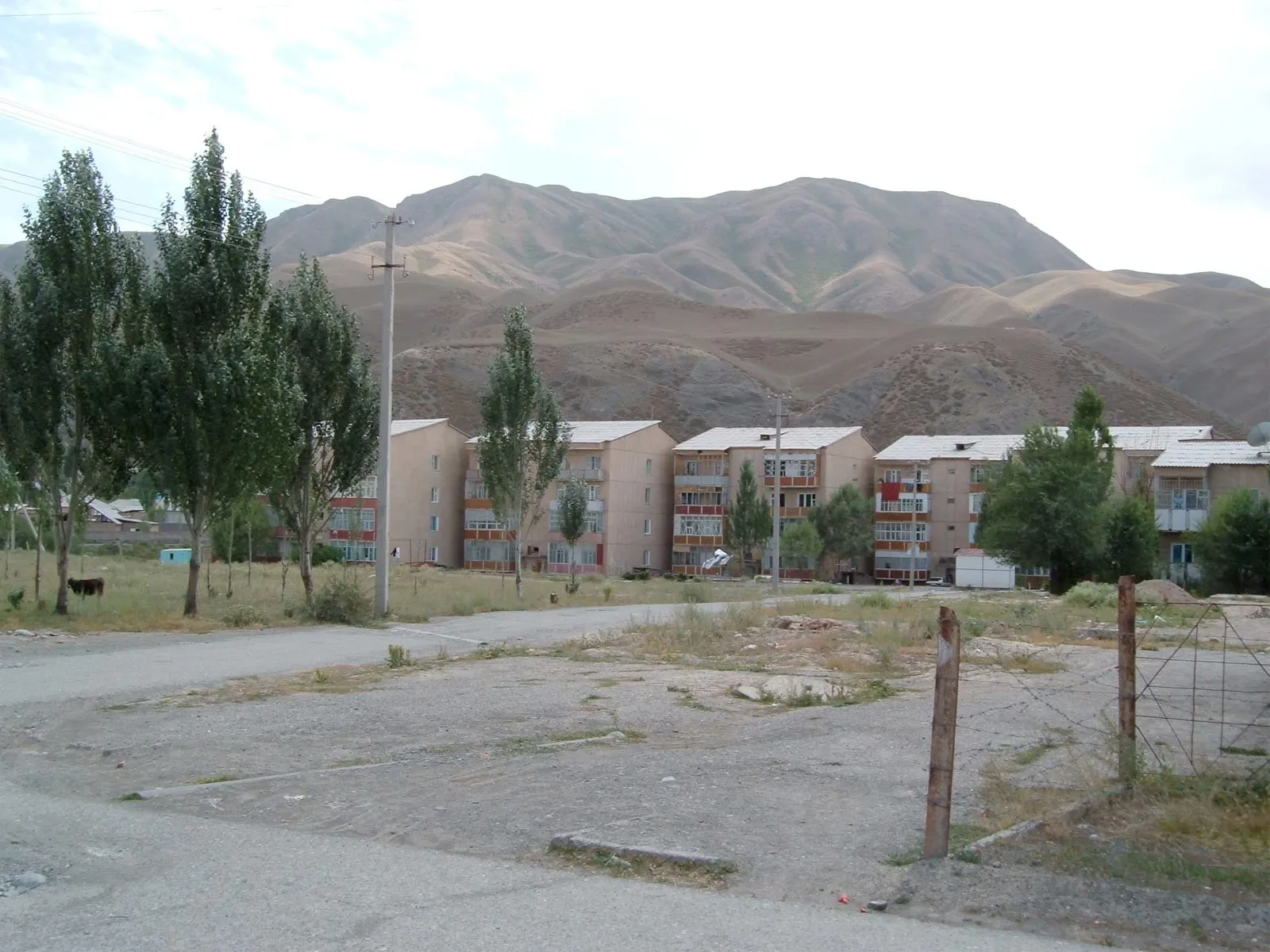 1/3. Naryn between the mountain slopes Photo: Hux, Wikimedia Commons, Public domain; edited for this site.
 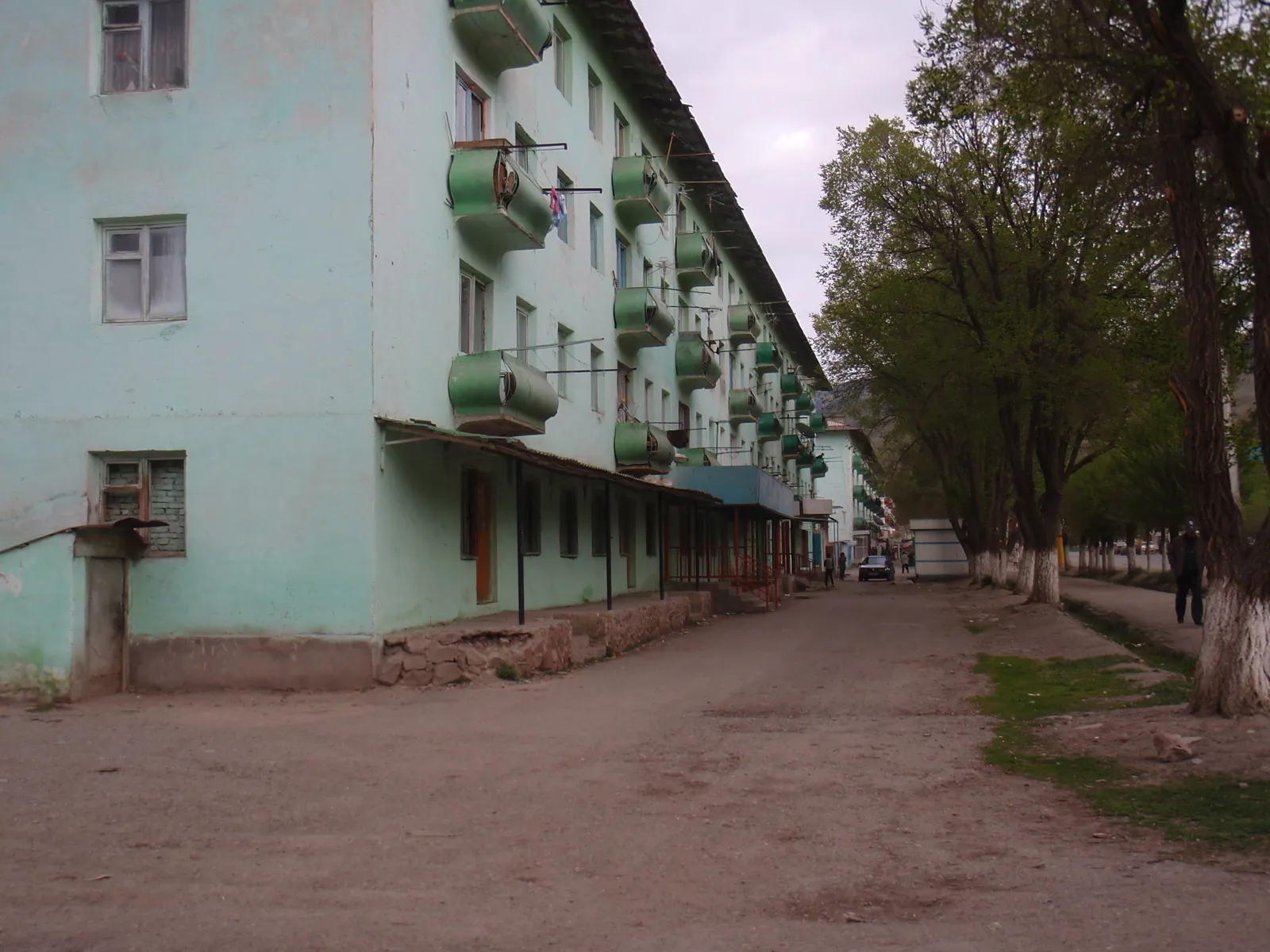 2/3. A city street Photo: Raki_Man, Wikimedia Commons, CC BY 3.0; edited for this site.
 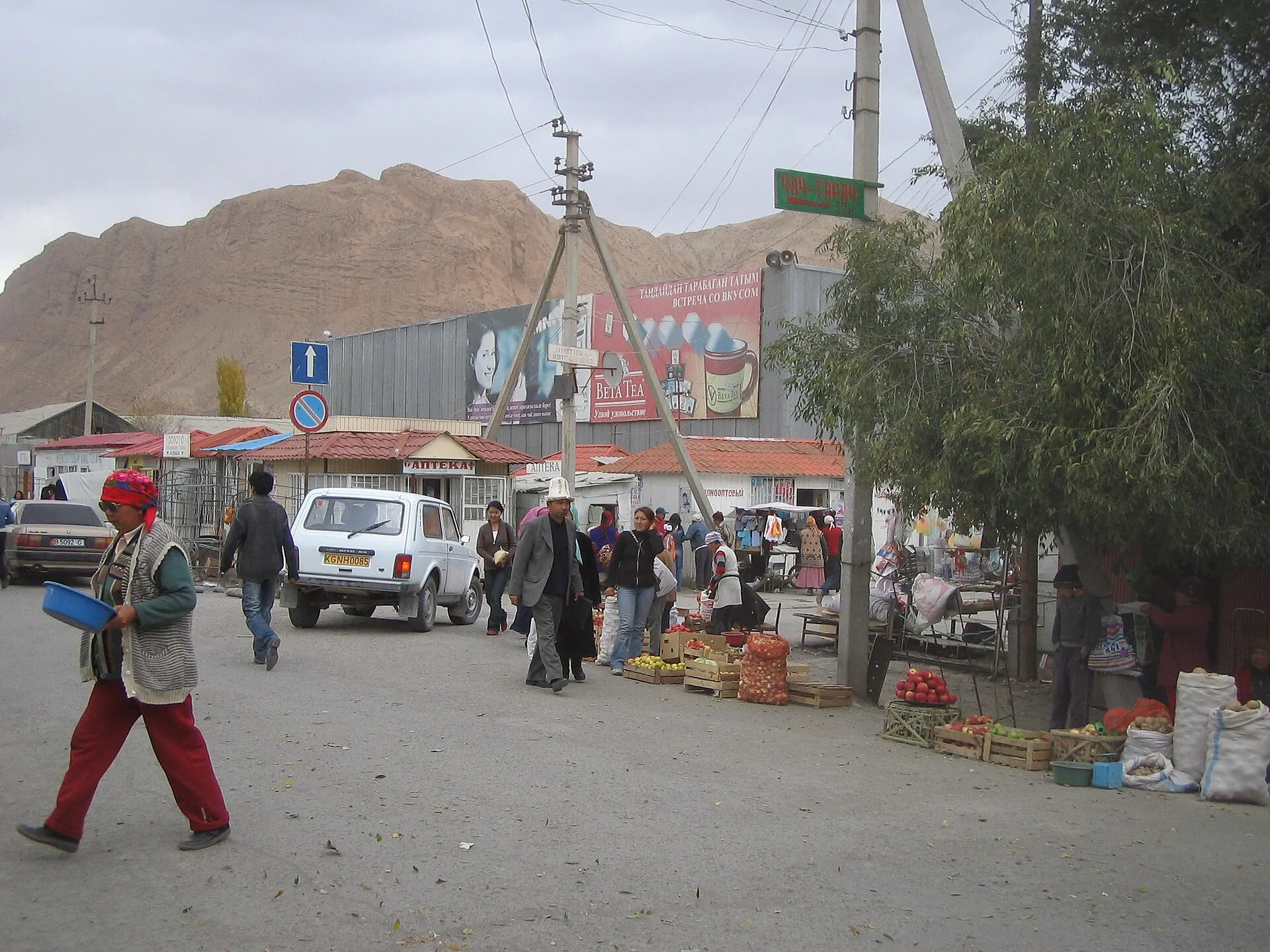 3/3. Naryn market Photo: Leo Wallentin, Wikimedia Commons, Public domain; edited for this site.
 Altitude. Central Naryn lies at about 2,000 metres. Take the first few hours gently, drink water and avoid a strenuous climb immediately after arriving.
What to see in the city
The river and valley panorama. Naryn is memorable less for a single monument than for its fast river, long strip of streets and nearby ridges. Begin beside an accessible section of the river, then find an open viewpoint over the valley. Ask your accommodation or a local guide for a safe current route, as tracks and vehicle access change.
The centre, market and theatre. The central streets show the rhythm of an everyday regional city. The market is useful for fruit, bread and provisions for the road. Naryn's music and drama theatre is a prominent landmark, although performances and access should be checked separately.
Naryn Regional Historical and Ethnographic Museum. The collection on Razzakov Street links archaeology, traditional life and the history of the region. A Traditional Crafts Centre opened here in 2026. Confirm opening hours, a guided tour and any workshop by phone.
The University of Central Asia campus. Designed by architect Arata Isozaki, the modern complex opened in 2016. Its exterior is an unusual piece of contemporary architecture in a high mountain valley. The campus remains a working university, so do not enter the grounds without permission.
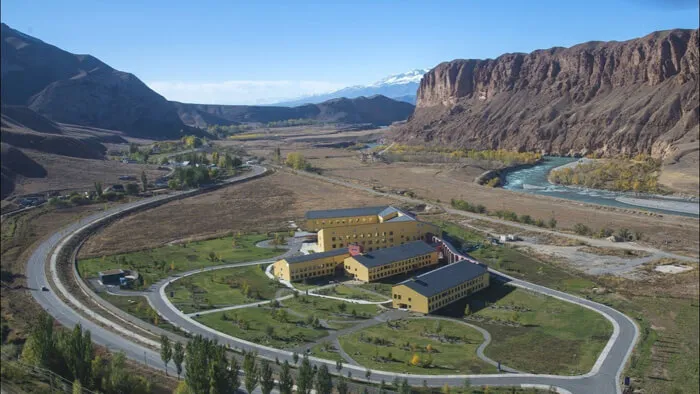 1/3. University of Central Asia campus Photo: Emil.akhmatbekov, Wikimedia Commons, CC BY-SA 4.0; edited for this site.
 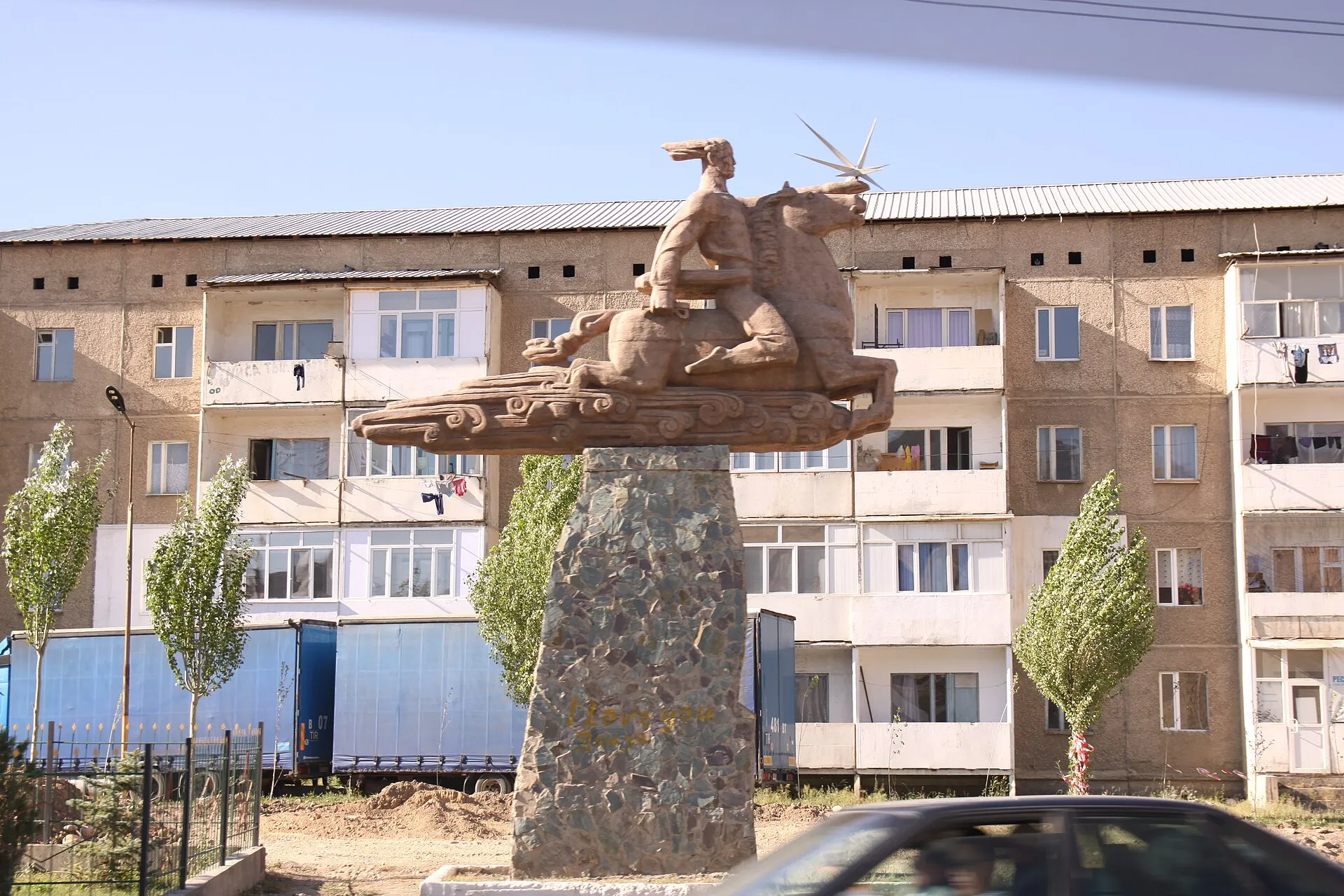 2/3. Monument to the young generation Photo: JohnNewton8, Wikimedia Commons, CC BY-SA 4.0; edited for this site.
 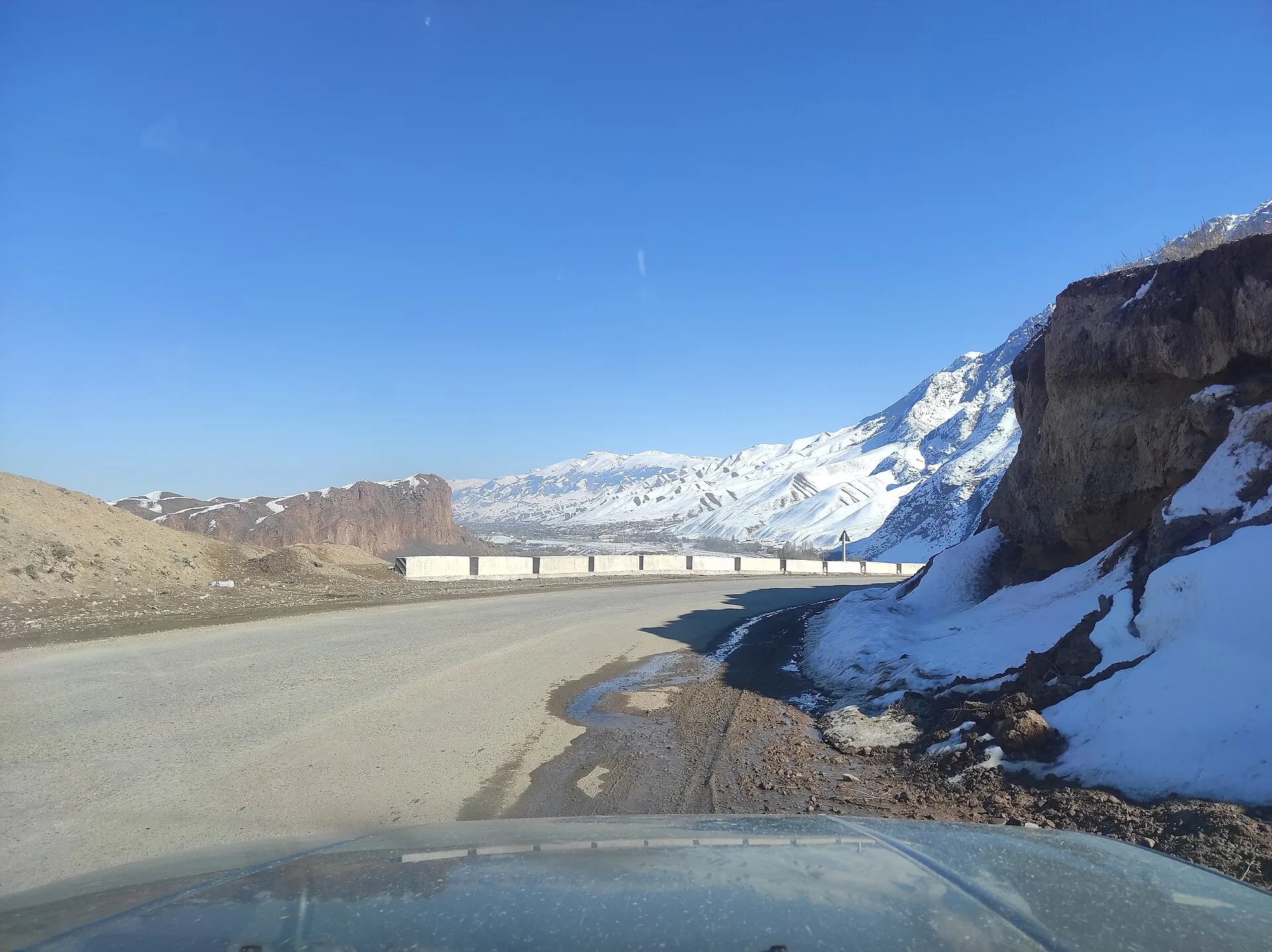 3/3. A mountain road in winter Photo: Artelow, Wikimedia Commons, CC0 1.0; edited for this site.
 One, two and three-day itineraries
One day. Walk through the centre and market in the morning, reach the river after lunch and look over the city from an open viewpoint towards evening. Leave time to buy provisions, withdraw cash and confirm a driver if your mountain journey begins the next morning.
Two days. Give the first day to Naryn. For the second, choose one nearby outing: Salkyn-Tor Nature Park or the Eki-Naryn valley. Confirm road conditions, park access and the return journey locally.
Three days or more. Add a separate trip to At-Bashy and Tash Rabat, or continue to Son-Kul for a night. If you return from Naryn to Bishkek, avoid placing a remote excursion and the capital-bound drive in one rigid schedule.
Getting there and around
The road from Bishkek usually runs through Balykchy and Kochkor before crossing Dolon Pass. Intercity minibuses and shared taxis may leave from different stands, so confirm both the time and exact pick-up point on the day. Snow, fog and roadworks can affect the pass.
Scheduled flights to Naryn airport began in 2025, but timetables can change. Check the date, departure airport, baggage allowance and return service directly with the carrier. Keep a road alternative rather than building the entire journey around a flight.
Naryn is unusually long. Short sections of the centre work well on foot, while taxis are more practical for the outskirts, campus and departure points beyond town. Save your accommodation address and coordinates, as an imprecise pin can lead to the wrong entrance. See our wider guide to transport in Kyrgyzstan.
When to visit
Summer is the easiest season for combining the city with high-altitude lakes and yurt camps. The sun is intense by day, but the temperature falls quickly after sunset. Pack a warm layer, sun protection and a waterproof jacket even in July.
Spring and autumn can suit the city and paved-road journeys, but snow may close the high passes earlier than expected. Check the condition of the exact road and whether accommodation at your remote destination is operating. The calendar alone is not enough.
Winter brings ordinary city life alongside deep cold, short daylight and less predictable passes. Confirm heating and hot water before booking, then check the road again before departure.
Short trips from Naryn
Salkyn-Tor lies roughly 20 kilometres from the city and offers a short introduction to the surrounding mountain landscape. Check access, fees and road conditions before setting out. Do not take an unfamiliar trail without a map, communications and a clear turnaround time.
Eki-Naryn is about 45 kilometres away. The valley around the meeting of two rivers feels greener and more open than the city basin. It works as a self-contained outing when your driver has agreed either to wait or to collect you.
At-Bashy and Koshoy-Korgon can be combined on the way to Tash Rabat. The day needs an early start and a vehicle arranged in advance. Stay farther south if you want time for a slow visit rather than a sequence of brief stops.
Son-Kul, Tash Rabat and Kel-Suu
Son-Kul is roughly 90 kilometres north-west of Naryn, but the mountain approaches turn that distance into a much longer journey. Roads and yurt camps operate seasonally. One night beside the lake is far more comfortable than forcing a same-day return.
Tash Rabat stands roughly 110 kilometres south of Naryn. The medieval caravanserai lies at about 3,200 metres but has been temporarily closed for restoration since August 2026. After an official reopening, an overnight yurt stay makes better use of the journey.
Kel-Suu lies in a border zone and requires a permit, a suitable vehicle and several days. Chatyr-Kul also comes with border restrictions. Naryn is useful for arranging these journeys, but neither lake is close to the city.
Where to stay
In the centre. This is the easiest choice for a first visit without a car, with the market, food and transport nearby. Check the walking distance to your actual stop, as “central” can cover a broad stretch of this long city.
Near the river. The setting may be quieter and the view better, but the market and evening meals can require a taxi. Ask about road access, parking and the possibility of arranging an early car.
At the edge of town. This suits an overnight stop before Tash Rabat or Son-Kul. Confirm an early breakfast, heating, hot water and the driver's meeting point. If the property helps with border-zone permits, ask for the processing time and required documents well in advance.
Before a remote journey: confirm the route, vehicle type, overnight stay, food, communications and a fallback plan. In Naryn Region, distance alone rarely indicates the real travel time.
Share on social media
If you found this guide useful, share it on social media. It takes a moment and helps more travellers discover the project. Thank you!
Anything to add?
Share your experience, leave a comment or suggest an improvement.