Contents:
Why visit
Naryn’s museum lets you read the region at close range. The large national institutions build a chronology of Kyrgyzstan as a whole; here, archaeological finds, felt carpets, clothing, tools, photographs and documents remain tied to the high Tian Shan and its towns and villages.
It makes a useful first stop in Naryn, especially before travelling to Tash Rabat, Koshoy Korgon or Song-Kul. After the displays, broad phrases such as “nomadic life” become more precise: you can see how people cooked, stored food, worked wool, furnished a portable home and prepared for long journeys.
The museum is open. A few old travel listings still mark it as permanently closed. Official reports document exhibitions in April 2026 and the opening of a Traditional Crafts Centre in May. Call before you go nonetheless, as individual rooms and guided tours may follow a changing schedule.
How the displays are organised
The core collection links archaeology, ethnography and the history of Naryn Region. The sequence of cases may change, but the narrative remains recognisable. The region first appears as a landscape of ancient settlements, burials and roads, then as a place shaped by herding and craft, before photographs and documents carry the story through the twentieth century.
Archaeology. Finds from across the region have entered the holdings, including pottery fragments, quern stones, spindle whorls, medieval household objects and arrowheads. Not every object will be on permanent display. If Koshoy Korgon, Tash Rabat or a particular period matters to you, mention it to the guide before starting.
Ethnography. The value lies in connections rather than in a single attractive antique. Felt rugs make sense alongside the yurt; wooden and leather containers explain transport and storage; clothing responds to the climate; tools reveal the labour behind a finished object.
Regional history. Photographs, printed matter and personal collections cover local people, education, work and the upheavals of the twentieth century. Temporary exhibitions bring in subjects that do not fit the permanent route.
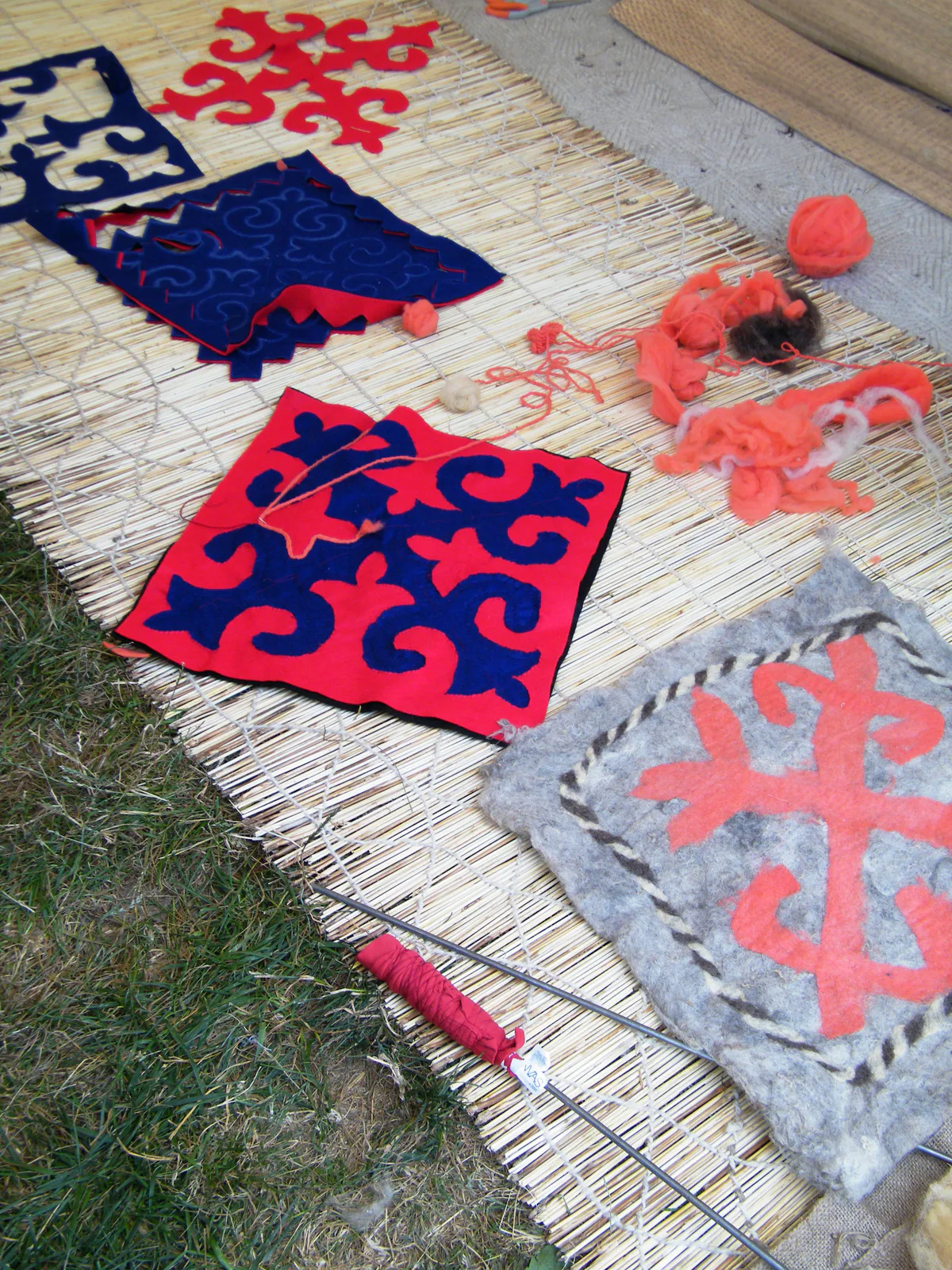 1/3. Context: cutting and assembling a shyrdak Photo: Sarah Stierch, Wikimedia Commons, CC BY 4.0; edited for this site.
 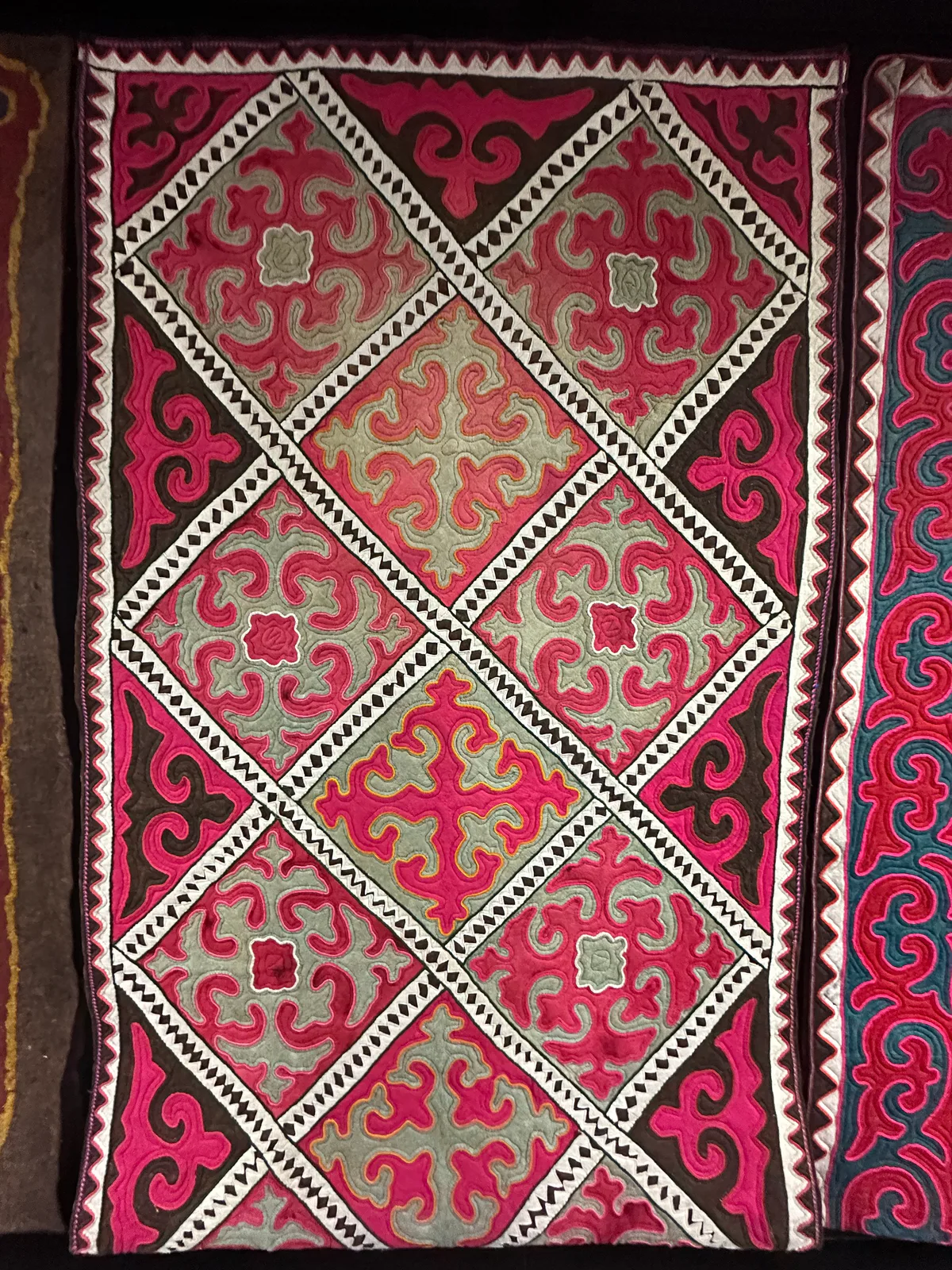 2/3. Context: seams and outlines in a shyrdak Photo: Incall, Wikimedia Commons, CC BY-SA 4.0; edited for this site.
 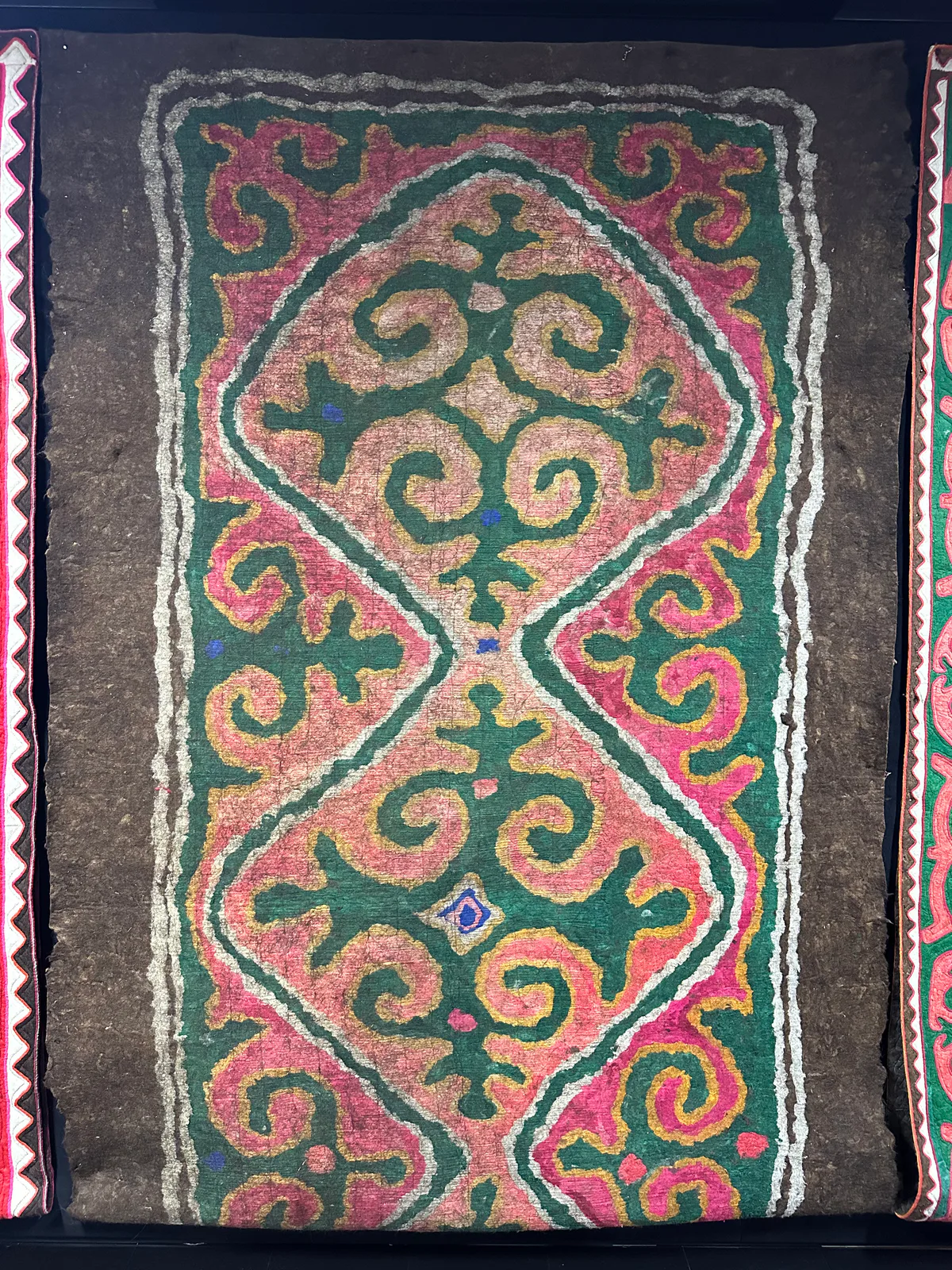 3/3. Context: the softer pattern of ala kiyiz Photo: Incall, Wikimedia Commons, CC BY-SA 4.0; edited for this site.
 These openly licensed photographs illustrate craft techniques. They are not photographs of the museum’s exhibits.
What to look for
Felt construction. Compare shyrdak with ala kiyiz. A shyrdak is assembled from cut pieces of finished felt, joined by seams and often edged with cord. In ala kiyiz, coloured wool is felted into the ground. Our guide to shyrdak and ala kiyiz explains the two methods in detail.
Signs of use. A worn edge, a repair or uneven stitches may tell you more about an object’s life than perfect preservation. Ask where it came from and whether a family used it before it entered the museum.
Archaeological context. An arrowhead or pottery fragment can look modest on its own. Its value comes from the findspot, date and associated material. If the label is brief, ask which district the object came from and what evidence supports its dating.
Language. Visitors in 2023 reported English labels on part of the display, but do not assume that every room has a complete English route. A guide is especially useful where a familiar household object needs no explanation for a local visitor but is opaque to a traveller.
Who Kaken Mambetalieva was
Kaken Mambetalieva was born in 1936 in Echki-Bashy, in present-day Naryn Region, and became the first Kyrgyz woman ethnographer. She researched everyday life and culture, taught, and helped establish professional ethnographic scholarship in Kyrgyzstan. Her work fits the museum’s method: an ordinary household object becomes evidence about labour, family and social organisation.
The institution was founded in 1985 as a regional history museum and received Mambetalieva’s name in May 2011. Her bust was unveiled outside the entrance on 18 May 2012, making it a useful landmark. A memorial display inside introduces her life and research.
Spelling: English sources use both Mambetalieva and Mambetaliyeva. This page follows the spelling most often used in the museum’s recent English-language references.
What changed in 2026
A Traditional Crafts Centre opened at the museum on 15 May 2026. It was designed as a place to preserve and pass on shyrdak and ala kiyiz making, embroidery, weaving and jewellery skills. The shift matters: craft can be presented as a process rather than only as a finished object behind glass.
The adjacent AS Gallery hosts temporary shows. In spring 2026, its programme included Hungarian Matyó embroidery and work by artist Zalkarbek Esenkhanov. The gallery changes more quickly than the permanent collection, so ask what is on during your visit.
Do not assume a workshop is included with ordinary admission. Give the museum your date, group size and chosen technique. Confirm the duration, teaching language, material fee and whether participants keep the sample they make.
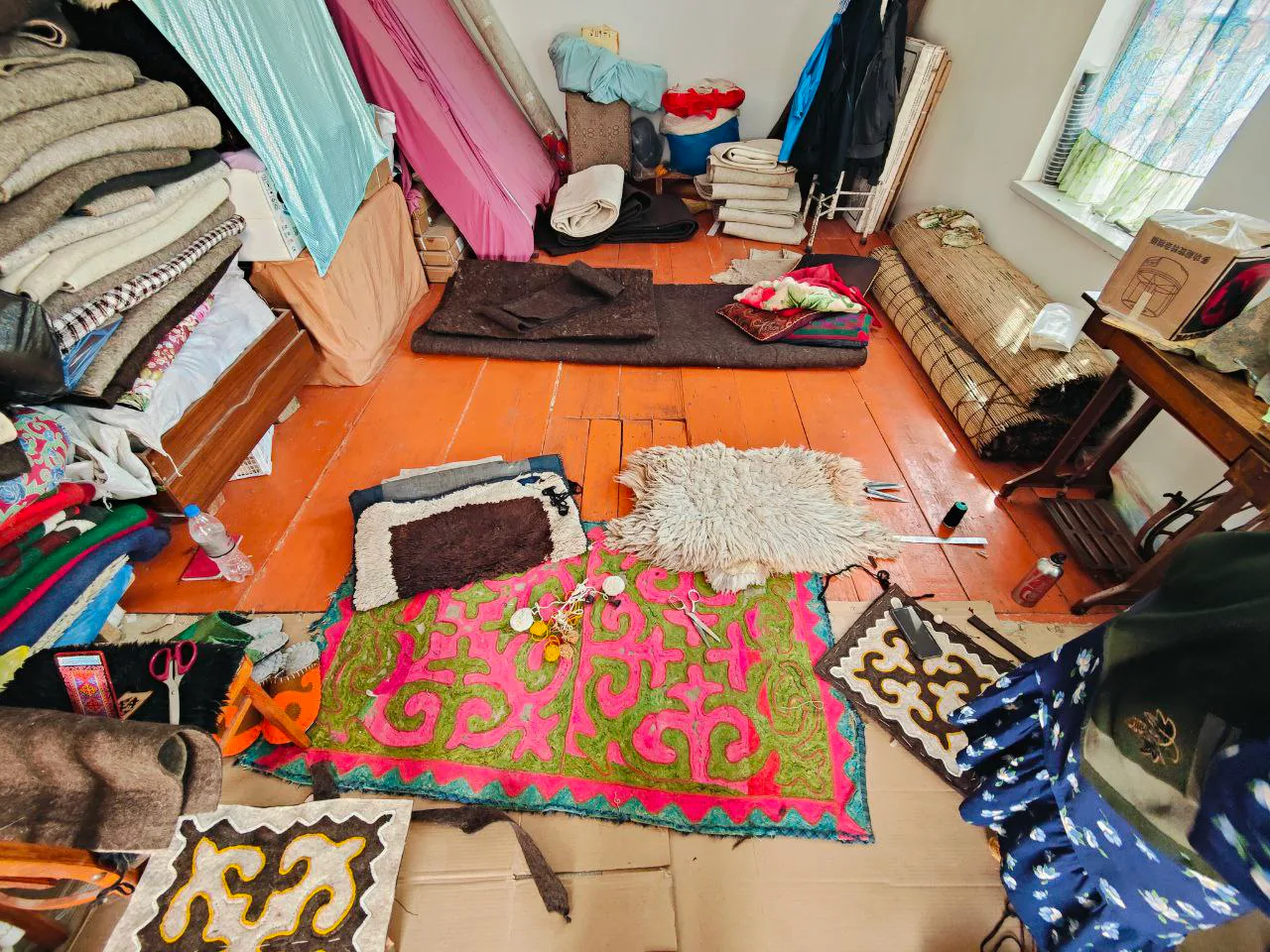 Context: Ainagul apa’s shyrdak workshop in Kochkor, Naryn Region, 2025. Photo: Adamboluu, Wikimedia Commons, CC BY-SA 4.0; edited for this site.
Hours, admission and tours
Opening hours. Updated travel directories list daily opening from 09:00 to 18:00. We could not find an official calendar run by the museum, so call +996 3522 530 56 the day before. A public holiday, exhibition changeover or event may affect access to individual rooms.
Admission. No reliable current tariff appears in the museum’s public official sources. Ask separately about general admission, a guided tour, photography and a workshop. Carry cash unless card or QR payment has been confirmed.
Guided visits. You can look around independently, but a member of staff can connect objects with particular districts and explain local terms. Arrange English or another language in advance. For a short visit, ask for a focused route through archaeology, ethnography and the Mambetalieva memorial section.
The museum’s current activity is confirmed by the May 2026 report on the crafts centre. Its legal address appears in the Kyrgyz government registry.
How to get there
The address is 4 Iskhak Razzakov Street, Naryn. The approximate coordinates are 41.4253, 76.0211. The museum stands within the built-up town, so no special transport is required; walk from the centre or take a short taxi ride.
Look for the red museum sign and the bust of Kaken Mambetalieva outside. Map services sometimes show two entries at the same address. Choose the regional state museum named after K. Mambetalieva, not the museum at Naryn State University.
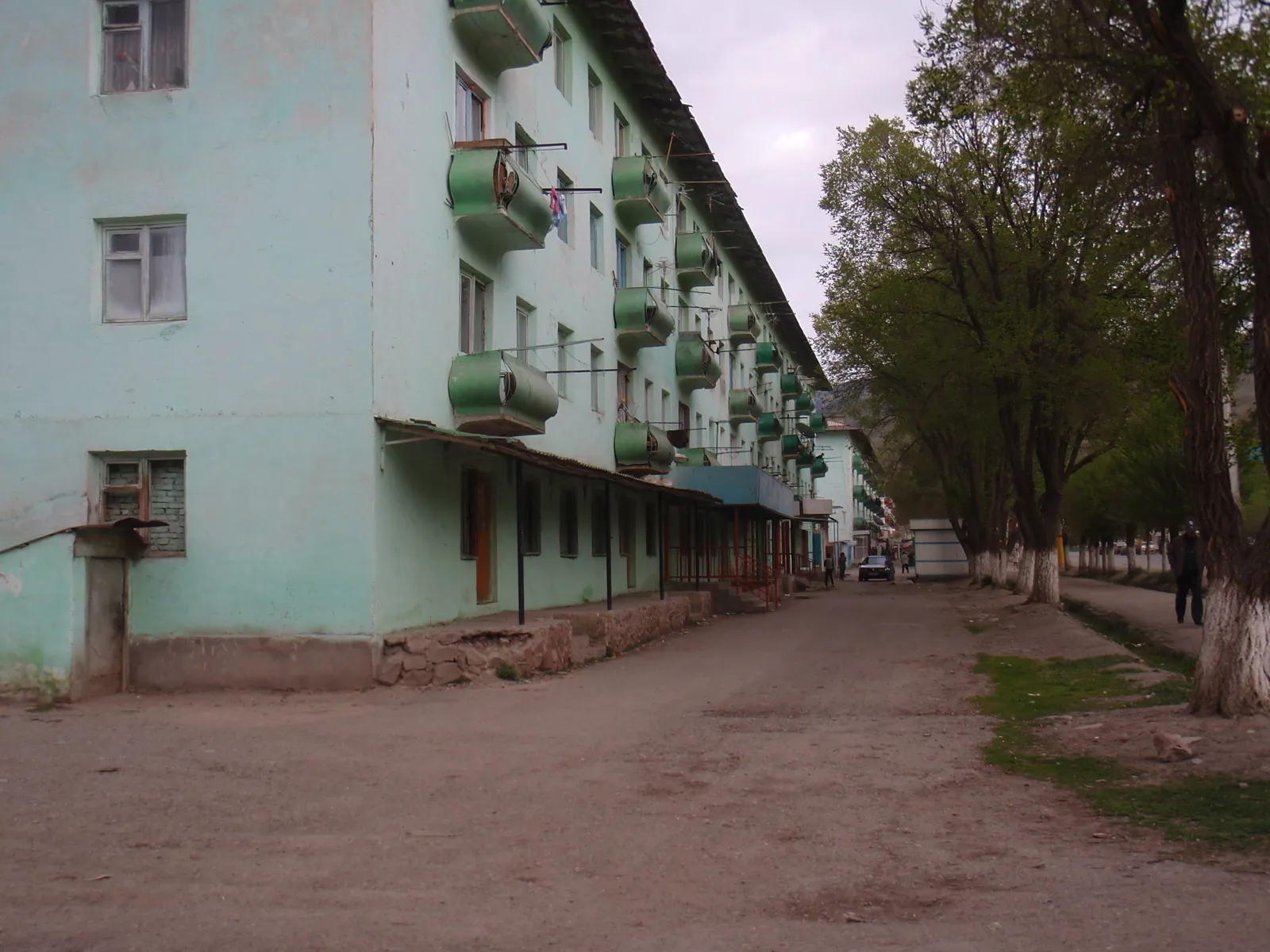 A street in Naryn. Photo: Raki_Man, Wikimedia Commons, CC BY 3.0; edited for this site.
How much time to allow
A first look
- Cover the core archaeology, ethnography and history sections.
- Choose three objects and read them as parts of one material system.
- Check the current temporary exhibition before buying a ticket.
A guided visit
- Ask the guide to connect exhibits with the places on your onward route.
- Spend time in the Kaken Mambetalieva memorial section.
- Leave room for the AS Gallery and questions after the tour.
Museum and crafts centre
- Choose a technique and book the session beforehand.
- Confirm material costs and duration.
- Avoid scheduling a bus or long drive immediately afterwards.
What to combine with the museum
Continue through central Naryn and towards the river. The market and ordinary streets help you see which parts of the museum’s story remain present in daily life. Our Naryn city guide puts the stop into a wider walking route.
If felt becomes the main theme, follow it into workshops around Kochkor or a pre-arranged session at the new crafts centre. The I Love KG guide to shyrdak and ala kiyiz will help you distinguish the techniques and ask more precise questions.
For a national chronology, visit the National Historical Museum in Bishkek. Naryn’s collection is smaller but keeps one region in focus. More independent guides appear in our overview of museums in Kyrgyzstan.
Frequently asked questions
Is the Naryn Regional Historical and Ethnographic Museum open?
Yes. Official reports document exhibitions and the opening of a Traditional Crafts Centre in spring 2026. Confirm the day’s hours on +996 3522 530 56 before setting out.
Where is the museum?
It is at 4 Iskhak Razzakov Street in Naryn. The approximate coordinates are 41.4253, 76.0211.
What are the opening hours?
Updated travel directories list daily opening from 09:00 to 18:00, but there is no public official museum calendar. Call the day before, especially around holidays or exhibition changes.
How much is admission?
A current official tariff is not publicly available. Ask about general admission, a tour, photography and workshops, and carry cash unless another payment method is confirmed.
What can I see?
The main themes are archaeology from Naryn Region, traditional life and crafts, regional history and a memorial display about Kaken Mambetalieva. Temporary exhibitions change.
Can I visit without a guide?
Independent viewing is possible, but a guide can explain the use of household objects and connect archaeological finds with specific places. Arrange a foreign-language tour in advance.
Are craft workshops available?
A Traditional Crafts Centre opened at the museum in 2026. Book the technique, duration and material fee in advance; a workshop is not automatically part of the standard admission ticket.
Share on social media
If you found this guide useful, share it on social media. It takes a moment and helps more travellers discover the project. Thank you!
Anything to add?
Share your experience, leave a comment or suggest an improvement.