Contents:
What kind of museum is it?
The institution's official name is the Kurmanjan Datka Museum of Nomadic Civilisation. It occupies a modern building beside Issyk-Kul and is much smaller than the National Historical Museum in Bishkek. Visitors come not for a complete chronology of the country but for an object-based account of nomadic livelihoods and everyday culture.
The cases bring together clothing, jewellery, textiles, leather and wooden objects, photographs and maps. Some pieces are ethnographic objects; others help explain modern ways of preserving traditions. Not everything in the room is ancient. Check the museum label for an object's age and origin instead of guessing from its appearance.
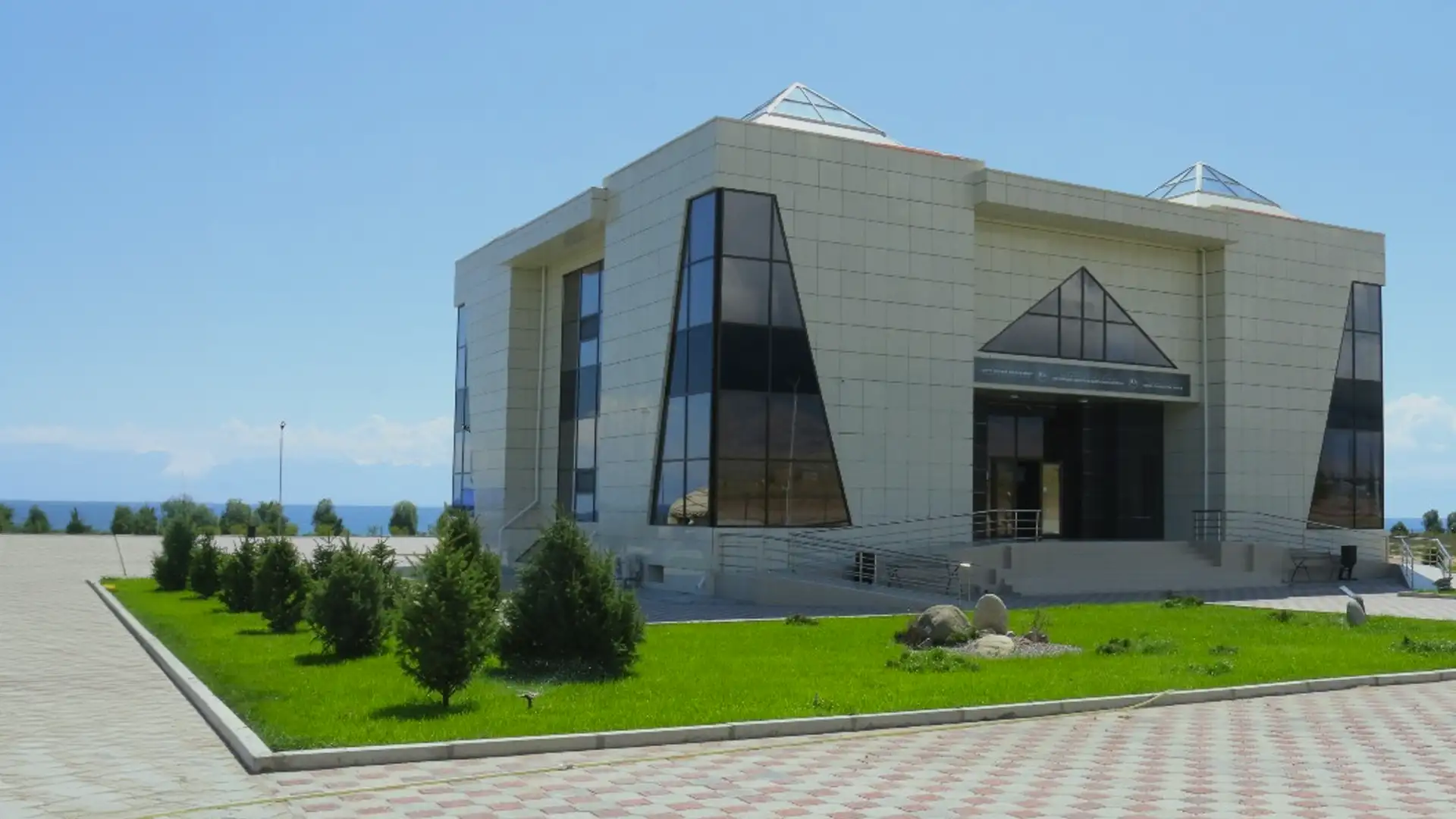
Getting there and preparing for a visit
The museum is in Chon-Sary-Oy, west of Cholpon-Ata. Navigation apps use both "Museum of Nomadic Civilisation" and "Kurmanjan Datka Museum of Nomadic Civilisation". Compare the pin with the coordinates at the top of this page to avoid a similarly named destination.
An ordinary road leads to the museum, so a four-wheel-drive vehicle is not needed. Check the journey time in your navigation app before leaving. Summer traffic on Issyk-Kul's northern shore can be heavy, and a trip from the neighbouring village is very different from a journey from Bishkek.
Check opening hours, ticket prices and guided-tour availability before visiting. Old listings may not reflect cleaning days, public holidays or seasonal changes. A self-guided visit usually takes 45 to 60 minutes; allow longer for a detailed tour.
What to see in the display
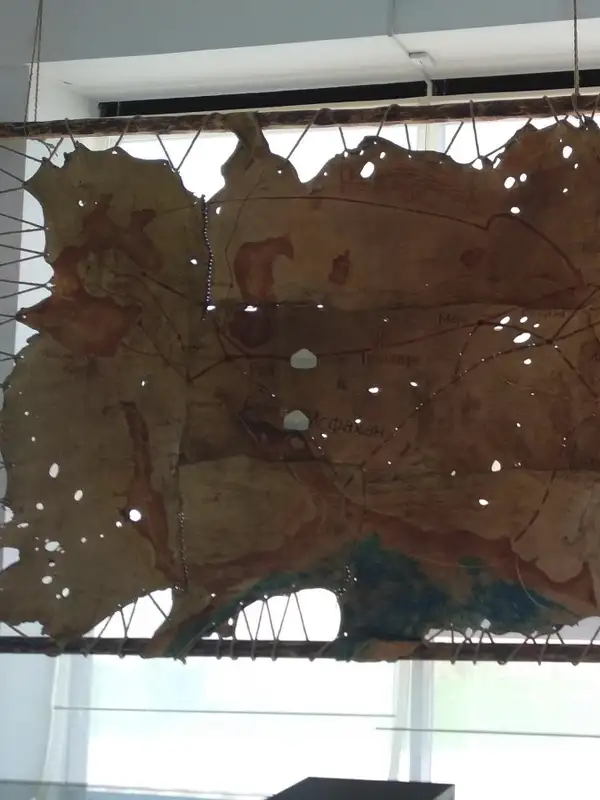 1/4. A map in the museum
 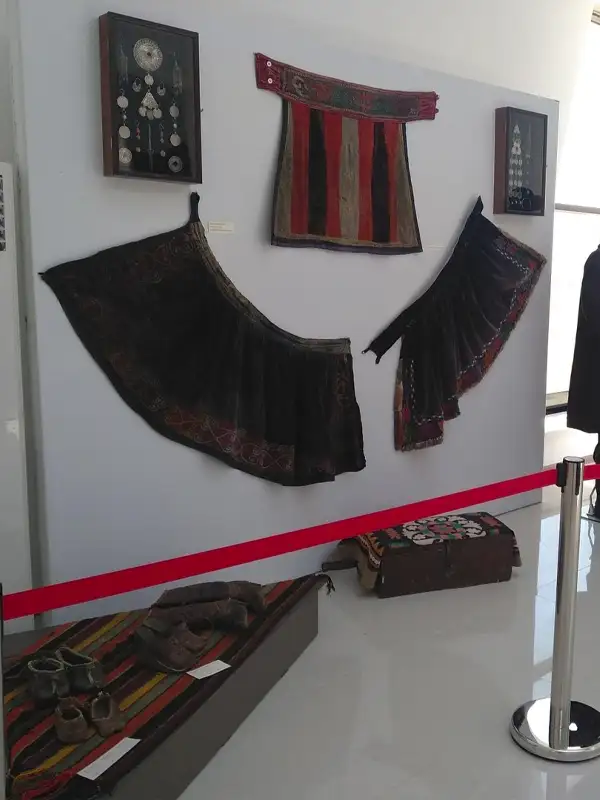 2/4. Clothing and jewellery
 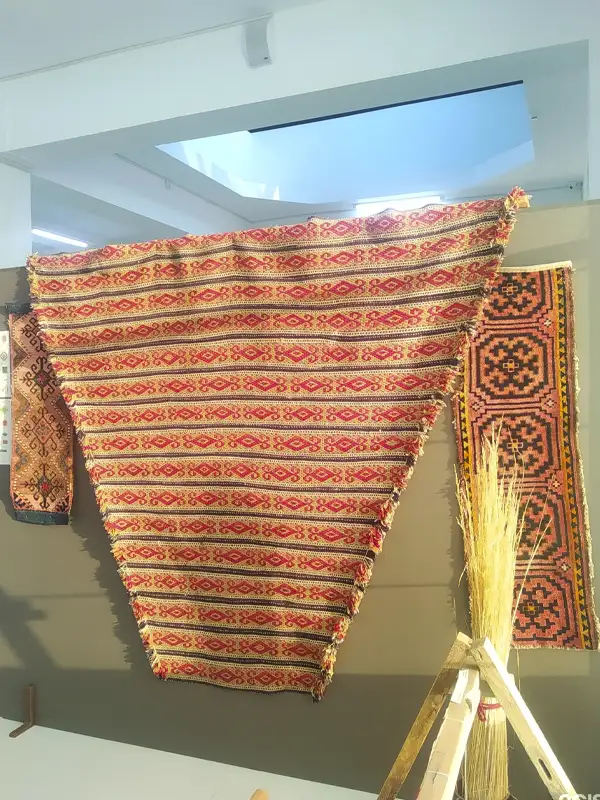 3/4. Textiles and ornament
 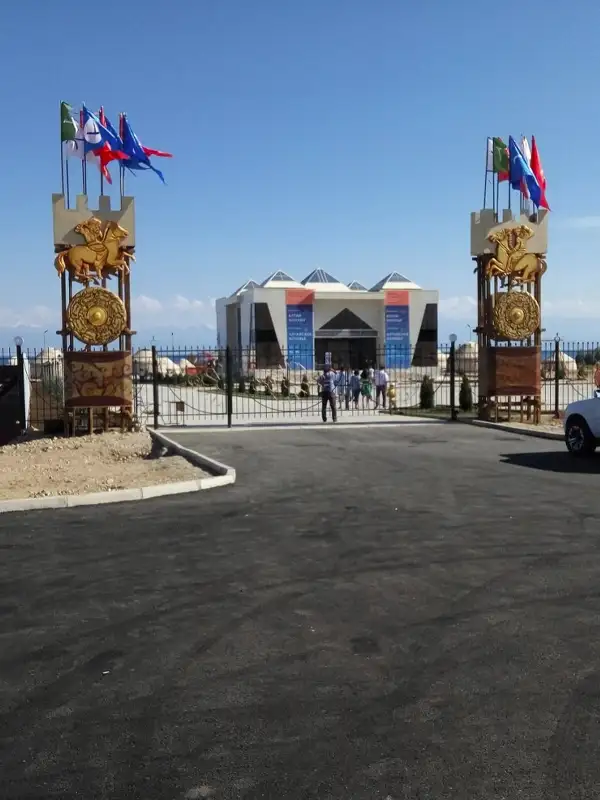 4/4. Entrance to the museum grounds
 Clothing and jewellery. Look at both decoration and construction. Dense fabric, leather, layers and headwear relate to the climate, riding and the materials available. Jewellery demonstrates craft techniques, but do not invent a universal meaning for every motif when the museum label gives none.
Textiles. Woven bands, carpets and patterns let you compare different ways of working with wool. The material was practical: it served as the covering and interior of a yurt and was used for bags and clothing. A finished object can hide the number of stages involved in spinning, dyeing and assembling a pattern.
Maps and photographs. These connect the objects with a territory and way of life. Nomadic livestock keeping depended on pasture, water and season. A family's route was not aimless wandering but a repeated movement between winter and summer grazing grounds.
Household objects. Consider their weight, material and portability. Collapsible furniture, containers, leather parts of horse tack and compact tools all answered the same need: the household had to keep working after a move.
What the museum explains about nomadic life
Nomadism is a system of livelihood linked to grazing animals and moving between pastures. It is not random movement across the steppe. Families knew their seasonal camps, water sources and the timing of transitions, and routes were repeated from year to year.
Material culture grew from these conditions. A yurt comes apart into portable elements, felt protects against cold and wind, horse tack enables travel, and stores and utensils must survive transport. The exhibits make most sense when you look for this relationship between function and form.
Modern Kyrgyz life is not limited to nomadic livestock keeping. Seasonal grazing, crafts, food and festivals preserve particular elements of the culture. The museum presents a heritage; it does not claim to reconstruct every historical period exactly.
Who was Kurmanjan Datka?
Kurmanjan Datka lived from 1811 to 1907 and led the Kyrgyz people of Alay. In the Kokand Khanate, the title datka was associated with high administrative and military authority. Kyrgyzstan remembers her as a ruler who had to make decisions during the region's incorporation into the Russian Empire.
Her name gives the museum a broader context, while the display covers several aspects of nomadic culture. Ask whether a themed tour is available if you want a detailed account of Kurmanjan Datka. Afterwards, continue to the Cholpon-Ata petroglyphs or the Rukh Ordo complex.
Share on social media
If you found this guide useful, share it on social media. It takes a moment and helps more travellers discover the project. Thank you!
Anything to add?
Share your experience, leave a comment or suggest an improvement.