Contents:
Permit and type of trip
Kel-Suu lies close to the Chinese border, so a passport alone is not enough. Each participant needs a border permit issued in advance for the exact dates. You can apply through Kyrgyzstan's official e-Visa portal or a registered tour operator. Allow several weeks for processing rather than a single day in Naryn.
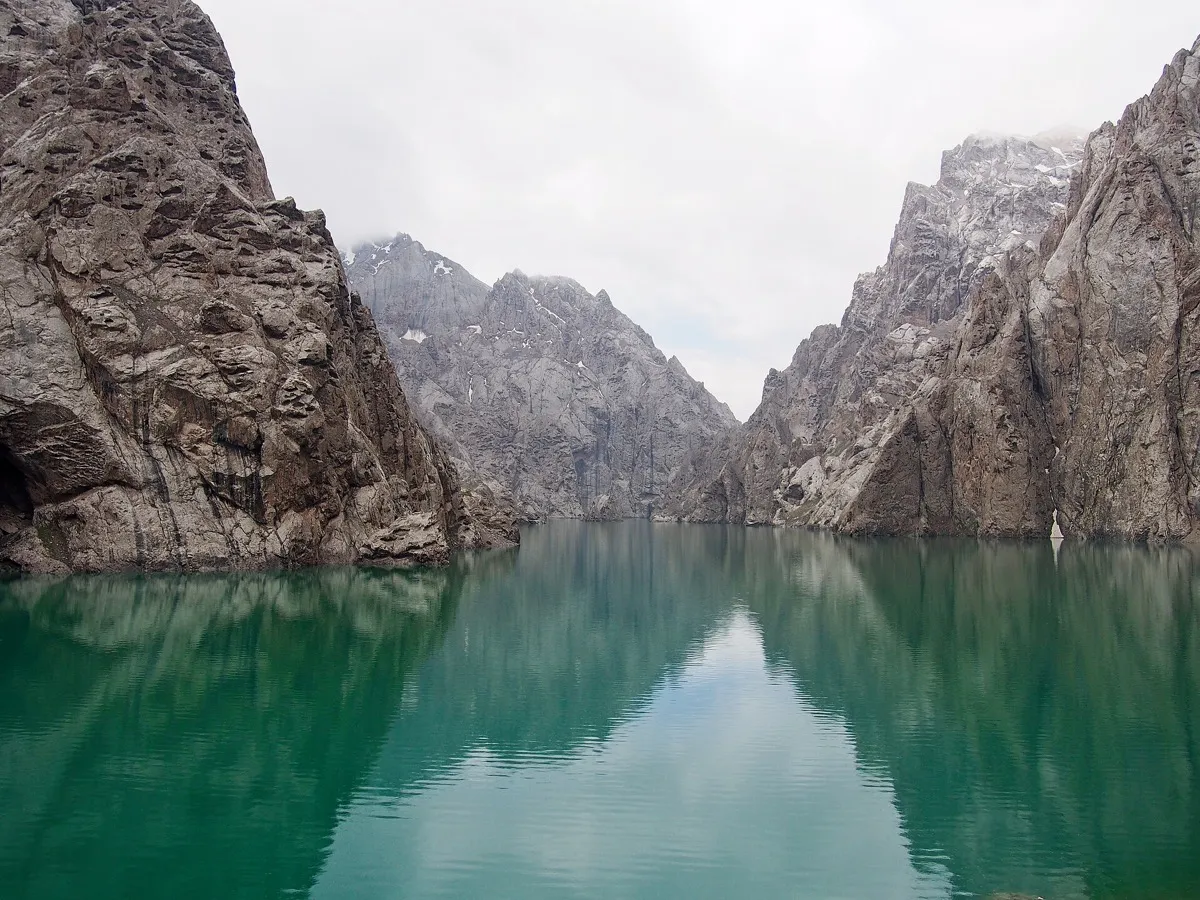 1/3. The lake in a narrow Kakshaal-Too valley Photo: Eventyrlys, Wikimedia Commons, CC BY-SA 4.0; edited for this site.
 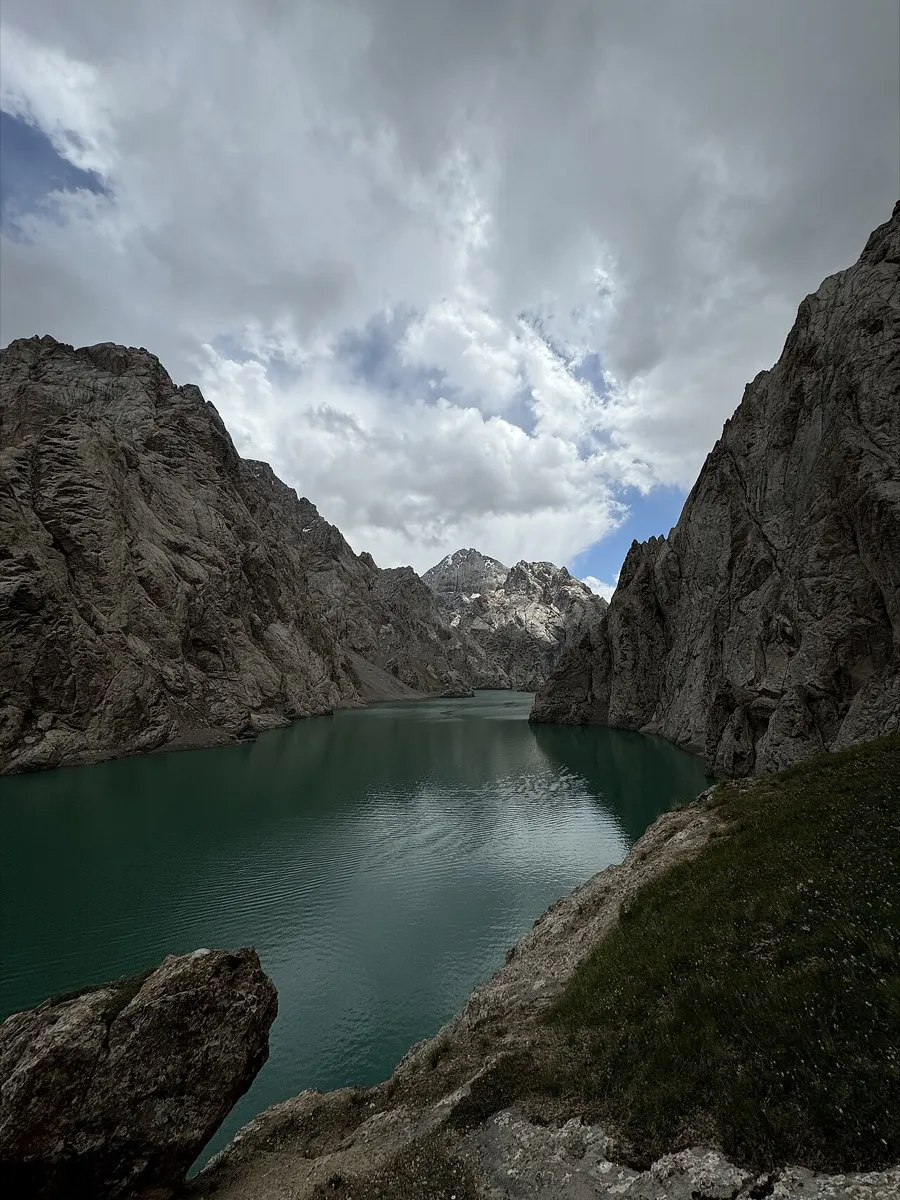 2/3. Kel-Suu’s rocky corridor Photo: Mamatkazy, Wikimedia Commons, CC0 1.0; edited for this site.
 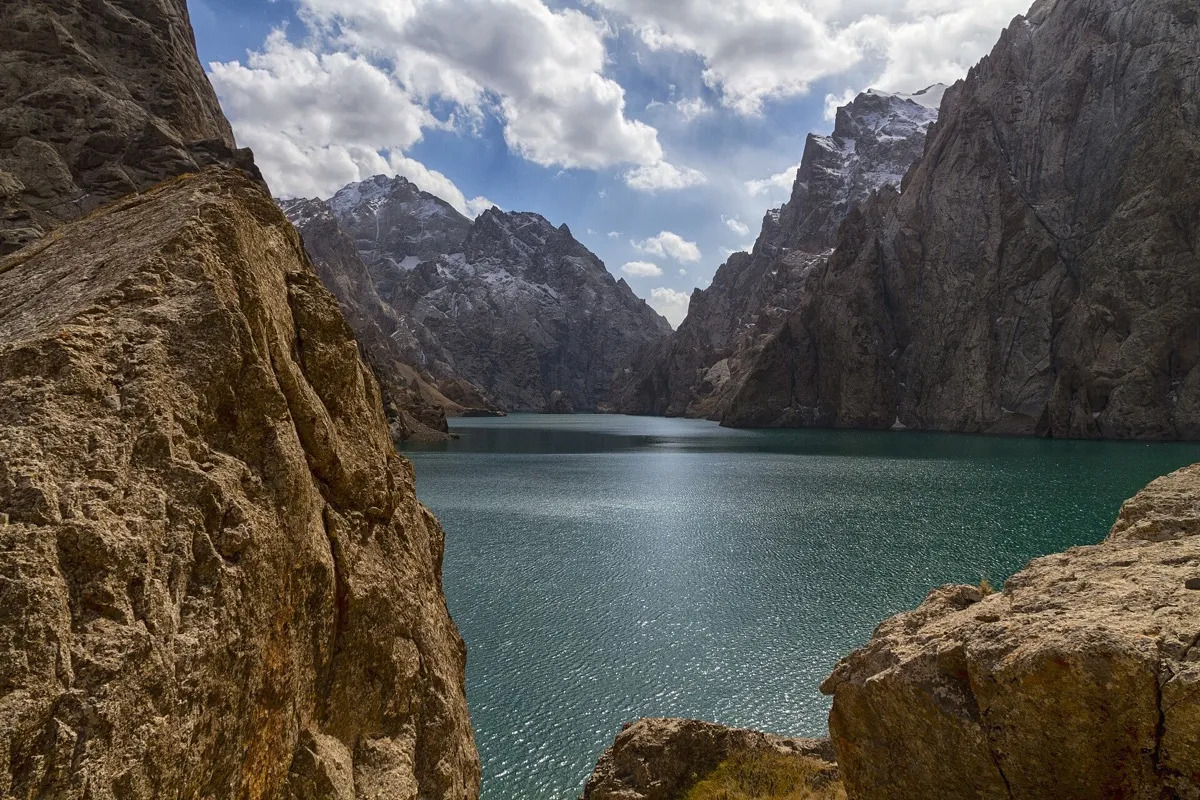 3/3. The shore and sheer lake walls Photo: Sergey Kalachev, Wikimedia Commons, CC BY 3.0; edited for this site.
 In January 2025, the Ministry of Natural Resources prohibited vehicles from driving directly to the lake and tightened enforcement. Its official announcement permits visits with authorisation and as part of organised tours. Ask your operator where the approved vehicle route ends, who presents the documents at the checkpoint and what the final section involves.
A sensible itinerary includes a night in Naryn before departure and one or two nights in Kok-Kyya Valley. A return trip in a single day leaves too little time at the lake and forces you to drive on unpaved roads after dark.
You will feel the altitude before the walking section begins. Take the first day slowly and avoid filling it with alcohol or strenuous exercise. Stop climbing and descend if you develop a worsening headache, nausea, confusion or poor coordination.
The road from Naryn to Kel-Suu
From Naryn, the route runs through At-Bashy into the Ak-Sai Valley and on towards Kok-Kyya. The final tens of kilometres cross dirt tracks, ruts and sections that turn to mud after rain. You need a high-clearance four-wheel-drive vehicle with an experienced driver.
Allow 5-7 hours from Naryn to the camp. This is a guide, not a timetable: document checks, stops, fords and road conditions can easily add time. Trying to find your own diversion around a washed-out section is dangerous because the state border is nearby.
Vehicles cannot drive to the water's edge. Continue on foot or horseback from the authorised car park or camp. The distance changes with the parking location and access rules, so ask your operator for the kilometres, elevation gain and return time.
The main season is summer and early autumn. Snow, heavy rain or rising river levels can stop a trip even in July. Before departure, obtain two confirmations: your border permit is ready, and the road and lake are open that day.
If you continue to the caravanserai, check the separate travel plan for Tash Rabat. More stops and roads appear in our guide to Naryn Region.
Elevation and changing water levels
Kel-Suu fills a narrow rocky valley in the Kakshaal-Too range. A landslide dams the lake, while water escapes through rock and underground channels. Its level therefore changes dramatically, and in some years the lake is almost empty.
A photograph of a full turquoise lake does not guarantee the same view on the day you arrive. Satellite maps also lag behind current conditions. The camp or an operator based in the valley can provide recent information, but even they cannot promise an exact colour and level several weeks ahead.
The Kyrgyz name Köl-Suu appears in Russian as Kel-Suu, Kyol-Suu and Köl-Suu. It is often translated as “coming water”. The phrase neatly describes the changes, but does not replace the hydrological explanation of underground drainage.
Exact dimensions depend on how full the lake is. Figures from older guidebooks, including a length of 9 kilometres and a width of up to 2 kilometres, are better understood as a description of one period rather than fixed measurements.
What to do at the lake
Walk to a viewpoint. You can see only part of the long lake from the shore, but there is no need to climb scree for a complete view. Keep to the trail and follow your guide's instructions.
Travel on horseback. A horse reduces the physical effort, but does not remove the effects of altitude or cold. Ask in advance about a helmet, guide, duration and whether the saddle is suitable for an inexperienced rider.
Go onto the water. Boat trips are possible only when the water is deep enough and through an authorised operator. Wear a fastened life jacket. Do not enter caves, approach the cliff face or land in places exposed to rockfall.
Reception in the valley is unreliable. Bring warm layers, waterproof clothing, drinking water, a torch, first-aid kit and power bank. Do not photograph border posts or fly a drone without separate permission. Your vehicle, horse and boat should leave no packaging, wet wipes or fire scars behind.
The official restriction on vehicle access and the organised visiting procedure were published by the Kyrgyz Ministry of Natural Resources. Review the announcement with your operator before the season, as access rules may be clarified.
Share on social media
If you found this guide useful, share it on social media. It takes a moment and helps more travellers discover the project. Thank you!
Anything to add?
Share your experience, leave a comment or suggest an improvement.