Contents:
What the Skazka walk is like
The main ridges begin beside the car park. A short circuit follows the floors of dry gullies, passes coloured walls and returns within an hour. A longer option climbs to viewpoints and takes about two hours. Elevation gain is small, but loose ground slides underfoot.
Skazka works as a stop between Bokonbaevo and Karakol rather than a multi-day destination. There is no forest, water or long managed path. Summer heat and reflected light from pale slopes are the main difficulties.
The canyon lies in the Ysyk-Köl Biosphere Territory. Do not break thin ridges, scratch inscriptions or drive off the dirt road over untouched slopes. The formations are less stable than they look.
How to get there
The turning is on the southern Issyk-Kul road between Tosor and Kaji-Sai. It is about 8 km from Tosor, 30-35 km from Bokonbaevo and around 100 km from Karakol. The Department of Tourism gives 120 km from Balykchy.
The car park is about 2 km along a dirt road. An ordinary car can manage it when dry. Rain makes the clay slippery and quickly deepens ruts. With low ground clearance or wet ground, leave the car in a safe area and walk.
A fee may be collected at the entrance, and arrangements and price change. A ticket office does not mean there are rescuers, water or marked paths inside. Save the car-park location and agree a waiting time with your driver.
Do not enter during a thunderstorm or heavy rain. Water collects in dry channels and wet walls collapse. Winter may bring little snow, but ice and short daylight do not make the walk automatically safe.
Why the rocks are coloured
The canyon consists of sandstone, clay and other sedimentary layers. Water cuts through softer parts, wind loosens open walls and denser layers remain as ridges and towers. The process continues after every heavy rain.
Iron compounds create red and ochre tones, while grey and pale areas vary in composition and moisture. Light changes contrast but does not “repaint” the rock during the day. Side light in morning and evening simply shows the relief more clearly.
Names such as “Chinese Wall”, “castle” and “dragon” come from resemblance and imagination. They are useful landmarks, not official geological features or remains of ancient architecture.
What to see and where to turn back
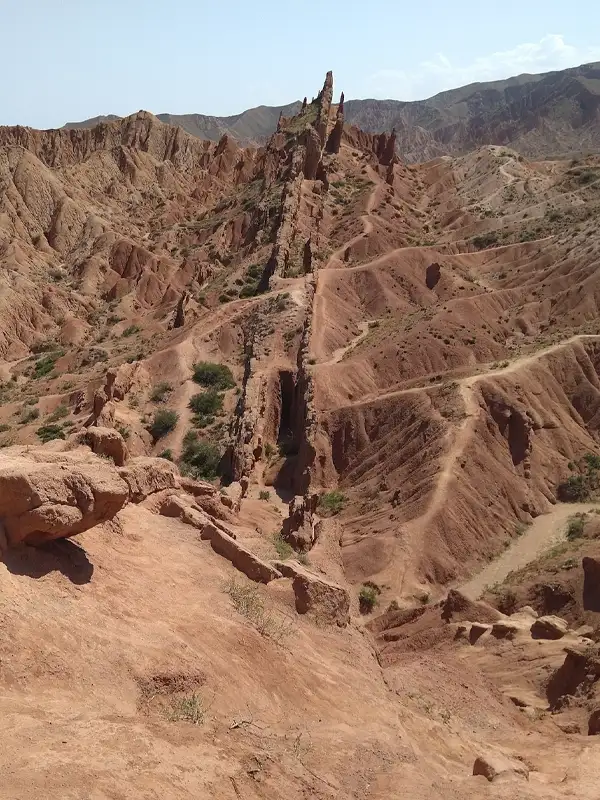 1/4. Chinese Wall ridge
 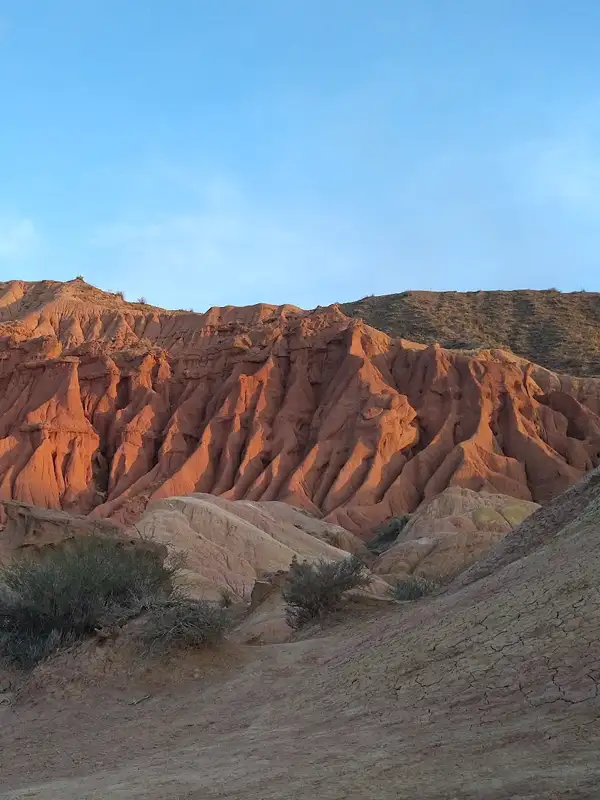 2/4. Coloured rock layers
 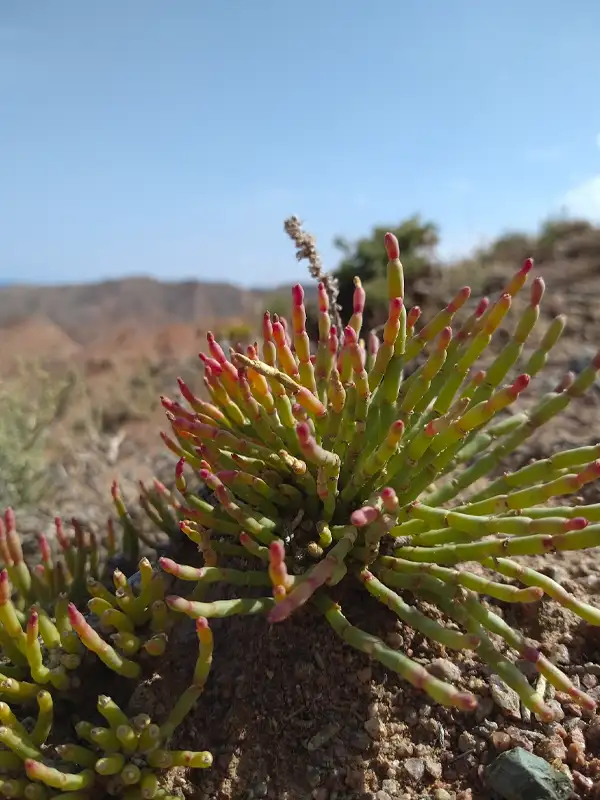 3/4. Dry-canyon vegetation
 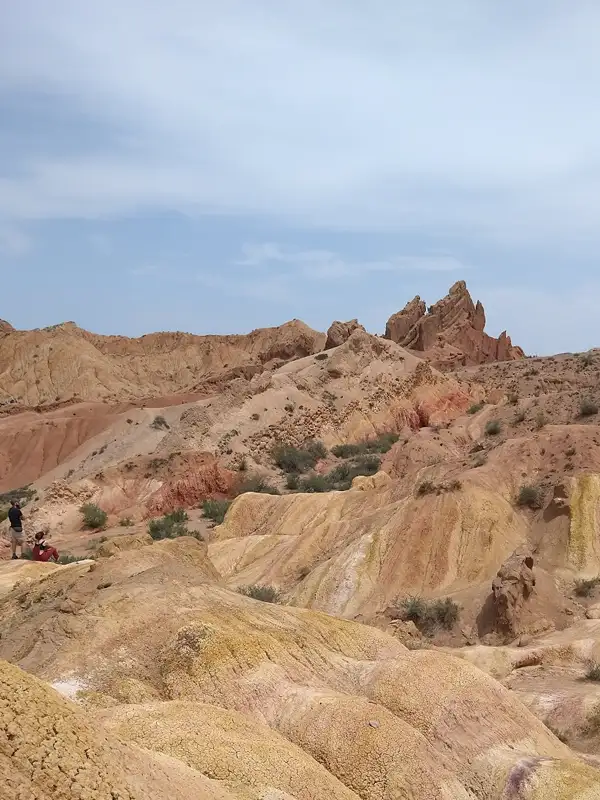 4/4. Skazka's red ridges
 Lower gullies. The simplest family option follows a broad dry channel without walking beneath overhangs. Watch children, as passages branch quickly.
Chinese Wall. The long toothed ridge is visible from several parts of the canyon. You do not need to walk along its crest; the shape reads better from below and the chance of slipping is lower.
Issyk-Kul viewpoint. A stable rise opens a view of the lake and Terskey Ala-Too. Climb only on a broad worn path and return the same way.
Climbing loose walls, picnicking on a narrow ridge and walking at night without light are inappropriate here. Take water, a hat, sunscreen, closed footwear and a windproof layer. For most visitors, 60-90 minutes is enough to see Skazka without rushing into every branch.
Share on social media
If you found this guide useful, share it on social media. It takes a moment and helps more travellers discover the project. Thank you!
Anything to add?
Share your experience, leave a comment or suggest an improvement.