Contents:
How many days do you need to drive around Issyk-Kul?
The official Issyk-Kul ring road is 442 kilometres long. Your actual trip will be longer because access roads to accommodation, beaches, canyons and gorges are not part of that figure. You can complete the circuit in two long driving days, but little time will remain for the lake itself. Five or six days is a far better first trip.
Balykchy, where the north and south shore roads divide, makes a natural start and finish. When arriving from Bishkek, take the north shore first. This keeps day one manageable after the drive through Boom Gorge and lets you reach the longer Karakol excursions with more energy. The opposite direction works just as well if your south-shore accommodation is fixed to a particular date.
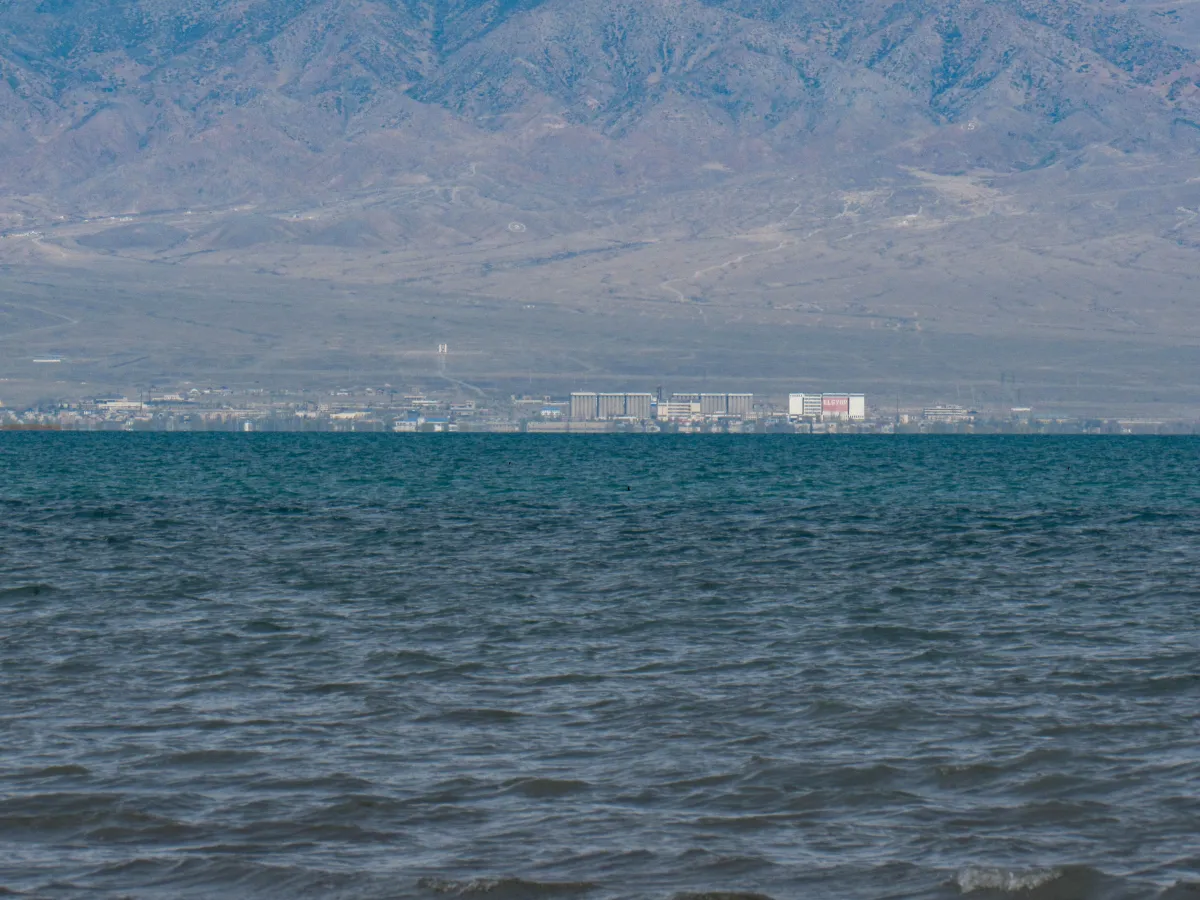 1/3. The western end of the circuit at Balykchy Photo: Nikolai Bulykin, Wikimedia Commons, CC BY-SA 4.0; edited for this site.
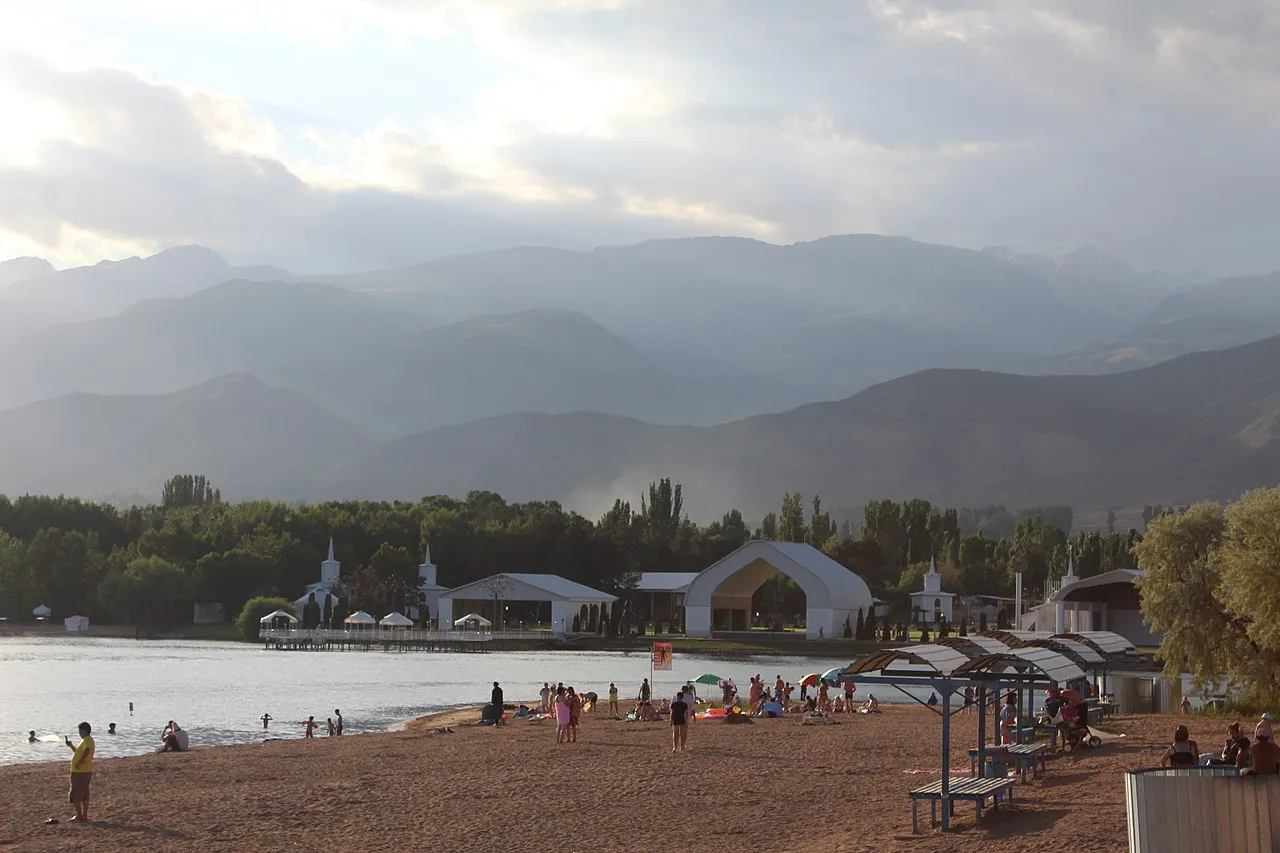
 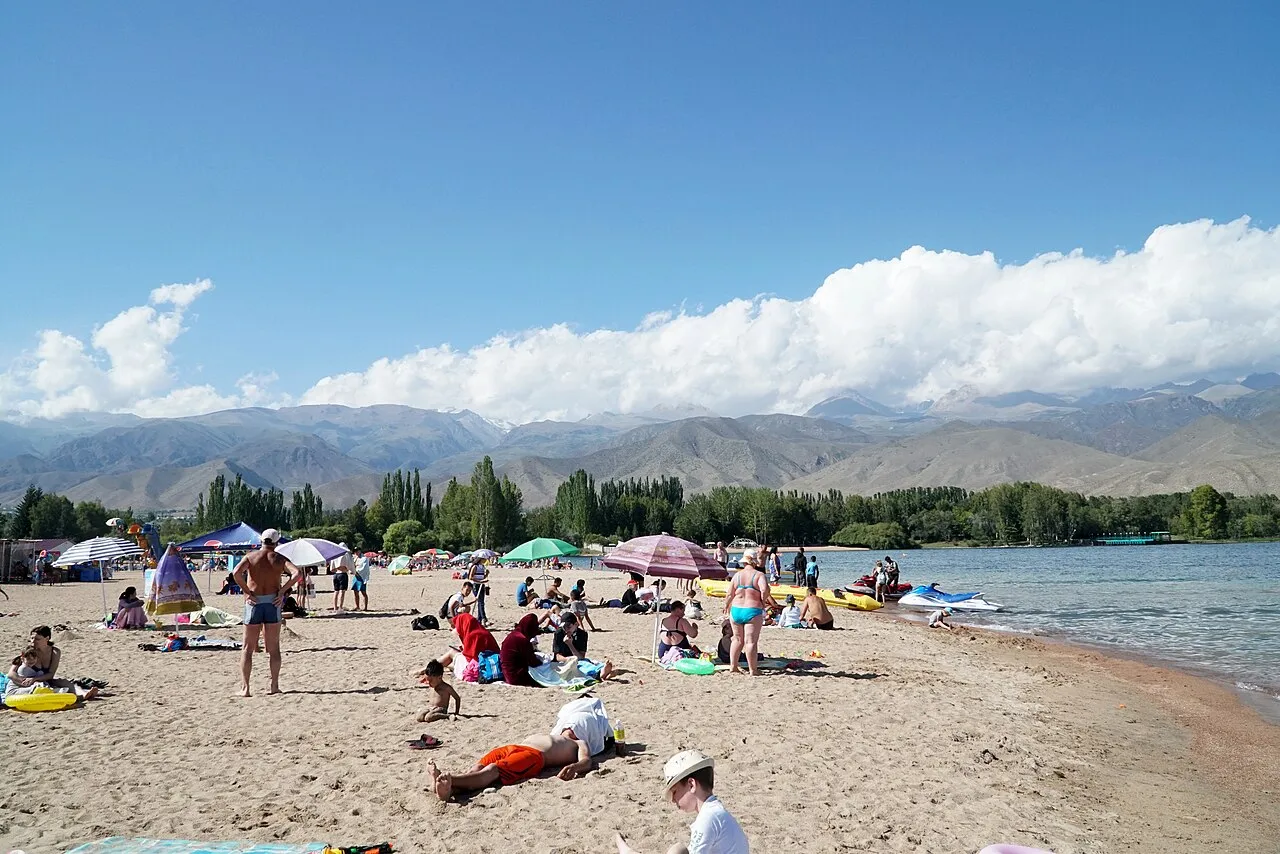 2/3. A beach stop in Cholpon-Ata Photo: Adam Harangozó, Wikimedia Commons, CC BY-SA 4.0; edited for this site.
 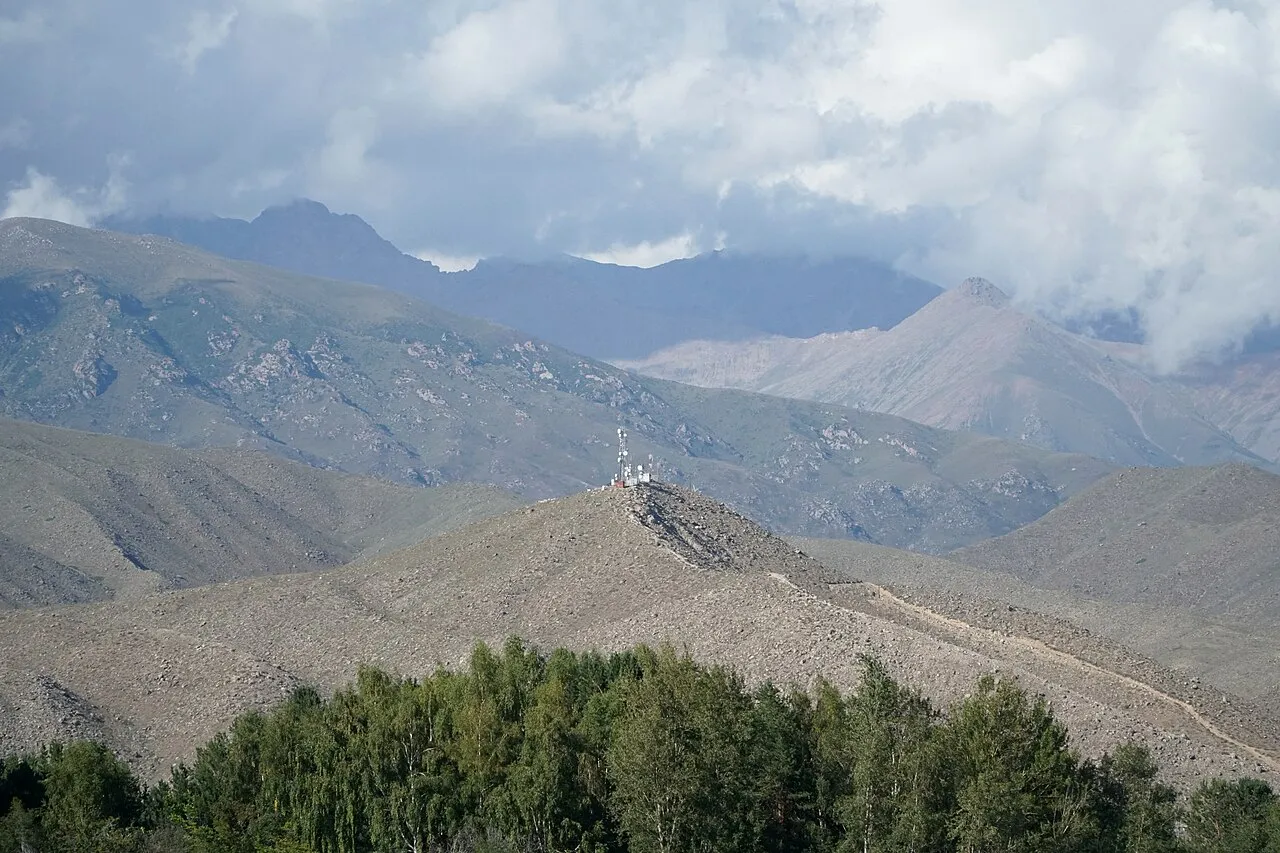 3/3. The Küngöy Ala-Too above the north shore Photo: Adam Harangozó, Wikimedia Commons, CC BY-SA 4.0; edited for this site.
 Fast pace
- Cholpon-Ata, Karakol and one south-shore stop
Comfortable pace
- Towns, one northern gorge, Jeti-Oguz, Barskoon and Skazka
Unhurried
- A beach day, a hike or an extra night in Karakol
A day-by-day Issyk-Kul road trip
Day 1: Balykchy to Cholpon-Ata. Join the north-shore road in Balykchy. In Cholpon-Ata, choose one substantial stop: the open-air petroglyph field or the Rukh Ordo cultural centre. Both can fit if you reach the lake before lunch. Stay in Cholpon-Ata, Bosteri or one of the smaller villages farther east.
Day 2: a northern gorge and Karakol. Choose either Grigoriev Gorge or Semenov Gorge. Do not treat the mountain track between them as compulsory. Rain, river crossings and your vehicle determine whether it is sensible. In a normal car, visit the lower section of one gorge, return to the shore road and continue to Karakol.
Day 3: Karakol. Give the car a break and explore Karakol on foot. The Dungan Mosque, Holy Trinity Cathedral, market and a bowl of ashlyan-fu make a full but relaxed day. If towns are not your priority, use Karakol as a base for a separate trip to Altyn-Arashan. Do not combine that excursion with the move to the south shore.
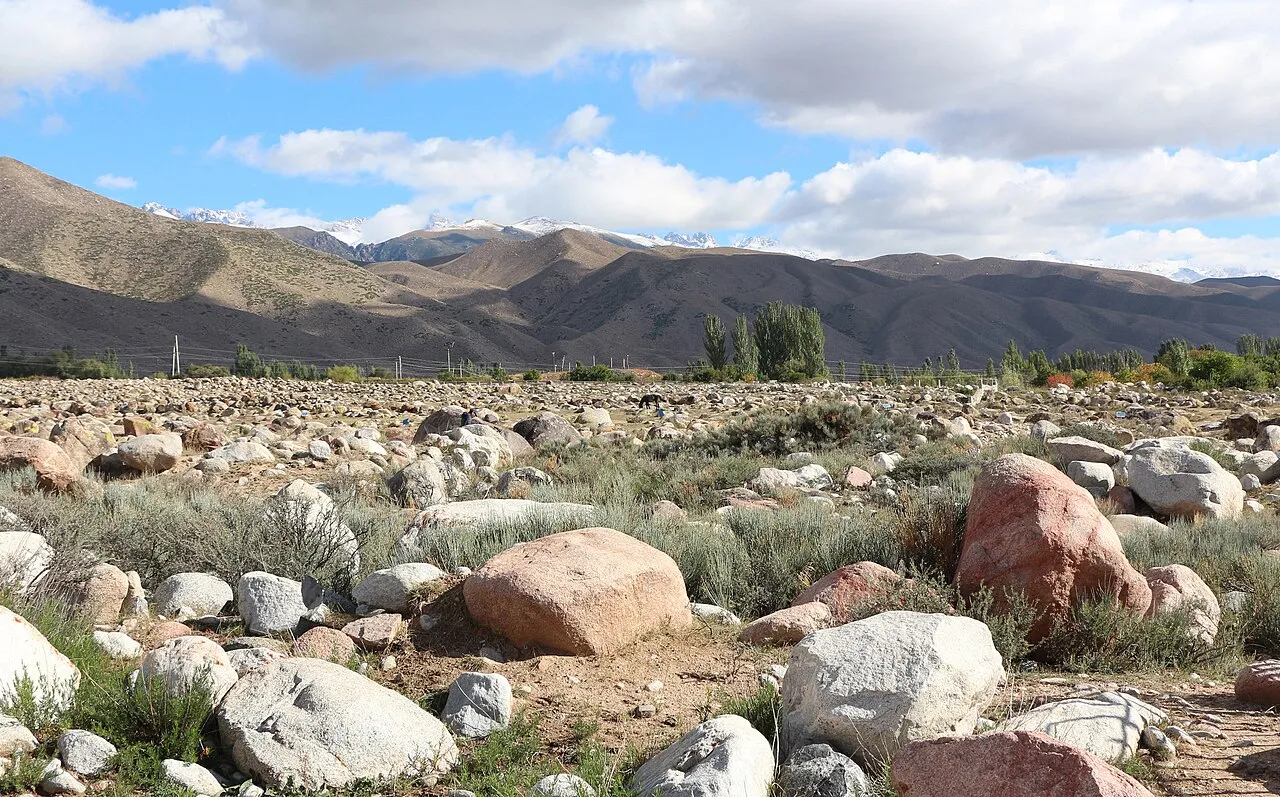 1/4. Petroglyphs on the north shore Photo: Bgag, Wikimedia Commons, CC0 1.0; edited for this site.
  2/4. Rukh Ordo beside the lake Photo: Firespeaker, Wikimedia Commons, CC BY-SA 4.0; edited for this site.
 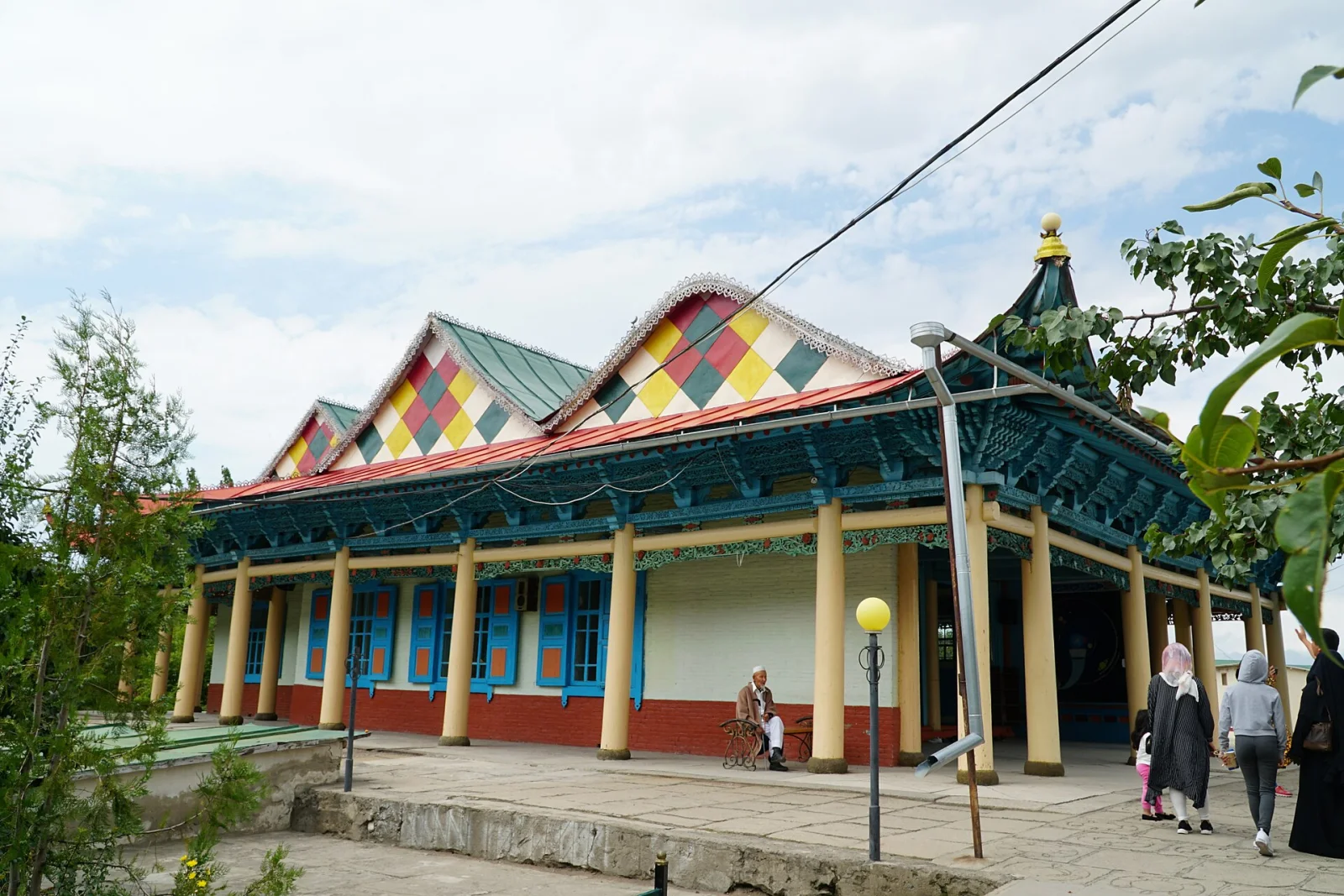 3/4. The Dungan Mosque in Karakol Photo: Adam Harangozó, Wikimedia Commons, CC BY-SA 4.0; edited for this site.
 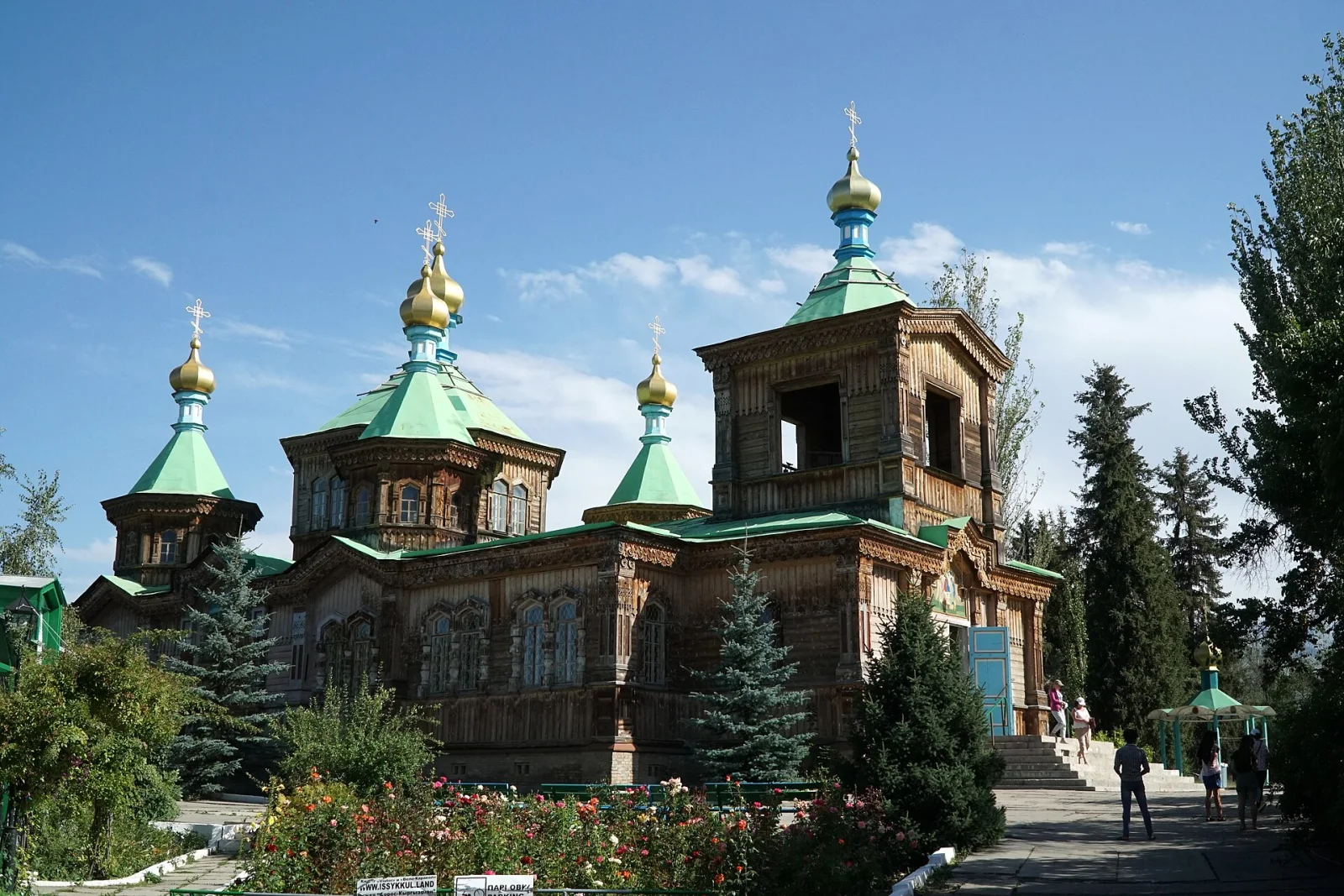 4/4. Holy Trinity Cathedral Photo: Adam Harangozó, Wikimedia Commons, CC BY-SA 4.0; edited for this site.
 Day 4: Jeti-Oguz to Barskoon or Tamga. Leave early for the red formations of Jeti-Oguz. About ninety minutes is enough for Seven Bulls and the main viewpoint. Kok-Jaiyk and the waterfall turn this into a half-day trip and require a dry unpaved road. Return to the ring road afterwards and stay in Tamga, Barskoon or a nearby guesthouse.
Day 5: Barskoon, Skazka and Bokonbaevo. Pick one waterfall that suits your fitness in Barskoon Gorge, then leave time for Skazka Canyon. Its loose ridges are unsafe after rain. A night in Bokonbaevo shortens the final drive and gives you an evening on the quieter south shore.
Day 6: Bokonbaevo to Balykchy. Keep the last day light. Stop at an authorised beach and visit Ak-Sai Canyon only if the access road is dry, then return to Balykchy. If you are continuing to Bishkek, add the drive through Boom Gorge and avoid promising a precise arrival time.
What kind of car do you need?
A sound ordinary car is enough for the ring road itself. Four-wheel drive becomes relevant on optional side trips, not on the main shore route. The upper Jeti-Oguz road, the link between the northern gorges and tracks to remote canyons can change after a storm. Turn around if ruts are deeper than your ground clearance or a river crossing has no clearly visible bottom.
The Issyk-Kul ring road is covered by several major reconstruction projects. They include parts of the north shore, the south-shore road from Balykchy to Barskoon and the Barskoon to Karakol section. Even new asphalt may be followed by a lane closure, dust or a temporary diversion. Before setting off, look for recent notices on the Kyrgyz Ministry of Transport website and ask your next host about the final approach.
Do not build your schedule around the navigation app's pure driving time. Add at least an hour on every gorge day and two hours before a flight, train or fixed check-in. Roadworks, livestock and an unscheduled lake stop are normal parts of the route.
Can you travel around Issyk-Kul without a car?
Marshrutkas, buses and shared taxis connect the main towns. A realistic public-transport sequence is Balykchy, Cholpon-Ata, Karakol, Bokonbaevo and Balykchy. Intercity vehicles follow the ring road, but they do not wait at a trailhead or turn off for a canyon.
Arrange a car with waiting time from the nearest base for nature excursions. Cholpon-Ata works for one northern gorge, Karakol for Jeti-Oguz, and Tamga or Bokonbaevo for Skazka and Barskoon. Agree on the total price, return time and meeting point in writing. You may not find a taxi at a remote trailhead, and mobile coverage is patchy.
If you would rather avoid several transfers, do not force a literal circuit. Combine the north shore with Karakol, or Karakol with the south shore. A calm trip between two bases produces more than a day lost to waiting for transport.
Where to stay around the lake
Cholpon-Ata or Bosteri works for the first night, beaches and cultural sights. Allow at least two nights in Karakol if you want one day in town and one mountain excursion. Tamga or Barskoon gives easy access to the waterfalls and the middle of the south shore. Bokonbaevo shortens the final leg to Balykchy and provides a useful buffer before the return to Bishkek.
Book the key nights ahead in July and August, especially summer weekends on the north shore. In the south, confirm hot water, meals, shoulder-season heating and the exact access road as well as the price. “At Issyk-Kul” does not necessarily mean a beach outside the door: fields, the main road or a closed resort compound may stand between the room and the water.
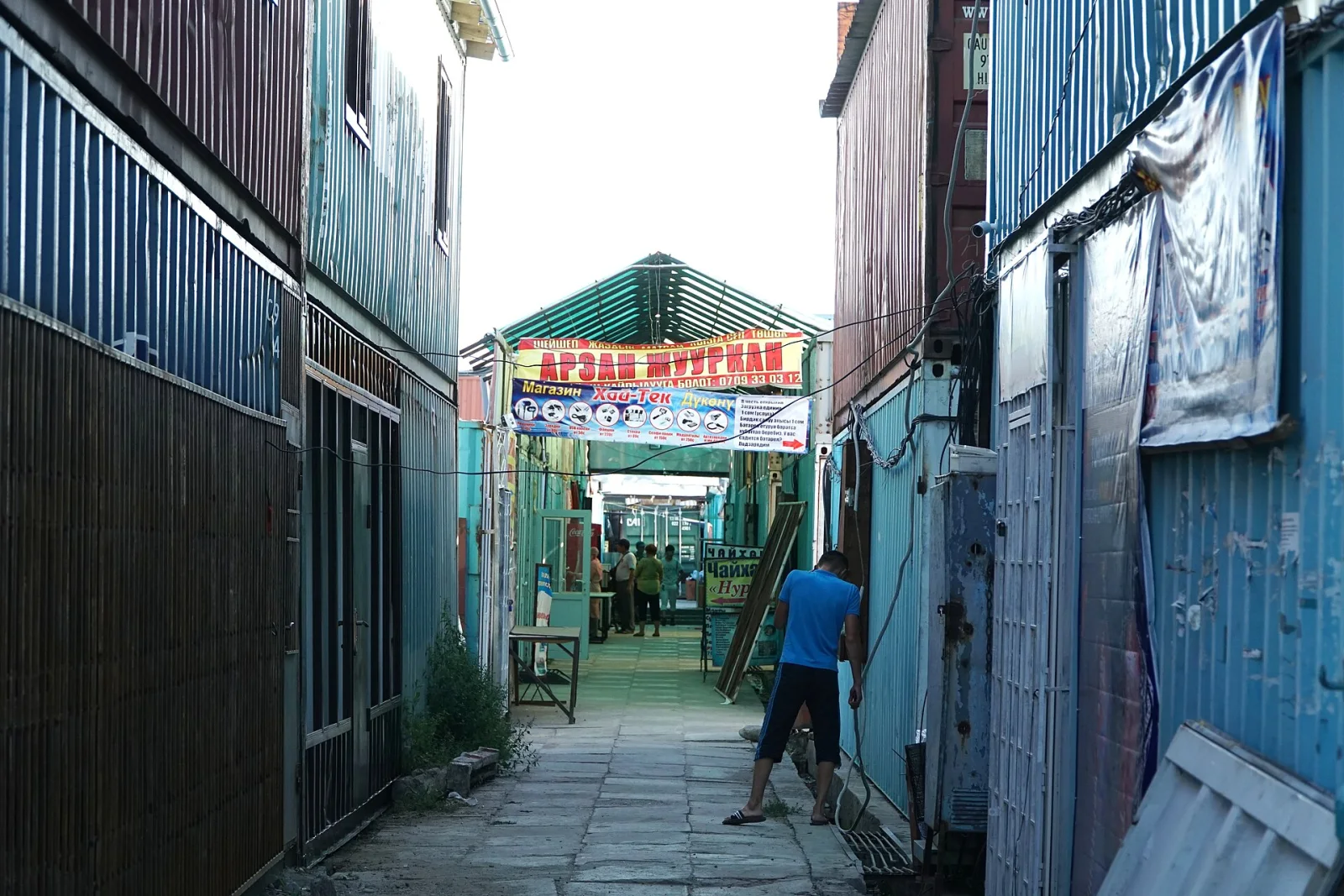 1/3. Stocking up at Karakol market Photo: Adam Harangozó, Wikimedia Commons, CC BY-SA 4.0; edited for this site.
 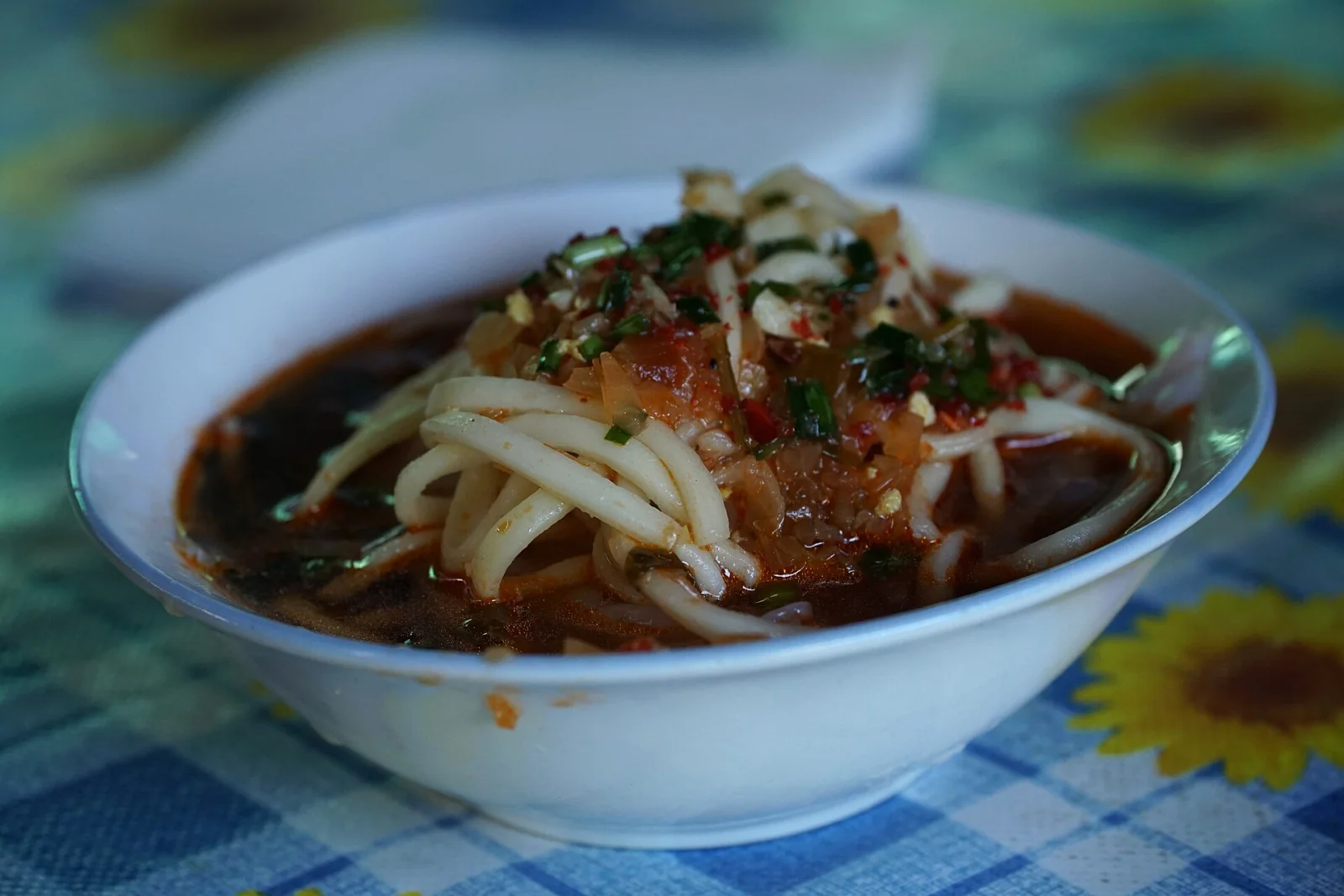 2/3. Ashlyan-fu during the Karakol stop Photo: Adam Harangozó, Wikimedia Commons, CC BY-SA 4.0; edited for this site.
 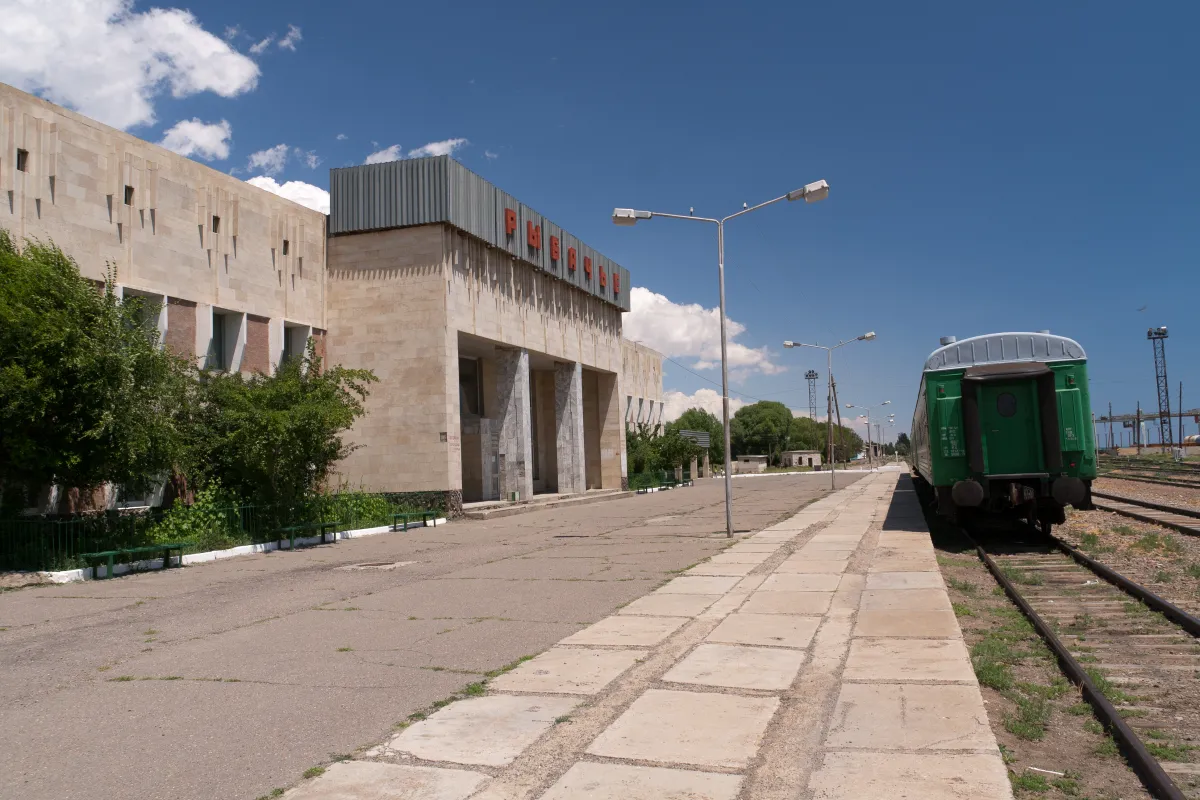 3/3. Completing the circuit in Balykchy Photo: Ekrem Canli, Wikimedia Commons, CC BY-SA 3.0; edited for this site.
 When to go and what to bring
June to September is the easiest period for combining the circuit with swimming, summer cafés and yurt camps. July and August are warmer, but accommodation costs more and the north shore is busier. May, late September and October suit a road trip where swimming is optional. People use the main road in winter too, but short daylight, snow and closed seasonal businesses call for a different itinerary.
Keep drinking water, a warm layer, waterproof jacket, hat, sunscreen, first-aid kit and car charger within reach. Download an offline map before leaving town. Fill up in Balykchy, Cholpon-Ata, Karakol and larger villages rather than waiting for the reserve light. Cash remains useful at small guesthouses, car parks and cafés when the card terminal or mobile connection fails.
Restrictions on plastic bags and single-use plastic products apply in Issyk-Kul's beach and resort zone. Bring a reusable bag and bottle, and carry all rubbish to a proper bin. The Kyrgyz Ministry of Natural Resources explains the rule.
How to shorten or extend the route
In three days, stay in Cholpon-Ata and Karakol, then return along the south shore with one stop at Jeti-Oguz or Skazka. This is a rapid overview without the northern gorges, Barskoon or a long beach break.
With seven days, add one completely free day after Karakol or on the south shore. Rain then does not cancel the trip's main walk, and tiredness will not force you to drive the final 200 kilometres after dark. A serious trek to Ala-Kul needs several extra days and its own equipment. It is not a quick stop on the road circuit.
The most useful rule is simple: one substantial side trip per day. The ring road links the lake, towns and overnight stops. Add gorges according to the weather and your energy, not simply because every marker fits on the same map.
Share on social media
If you found this guide useful, share it on social media. It takes a moment and helps more travellers discover the project. Thank you!
Anything to add?
Share your experience, leave a comment or suggest an improvement.