Contents:
How the drive through Boom Gorge works
Boom Gorge is rarely a journey in its own right. It is the most dramatic section of the road from Bishkek to Balykchy, Issyk-Kul, Kochkor and Naryn. There is no entrance gate, ticket office or continuous visitor trail. This is a working transport corridor with lorries, bends and stretches where stopping is impossible.
Allow about 3 hours from Bishkek to Balykchy without long stops, then add a margin. The gorge occupies only part of that drive. Summer weekends, heavy rain and roadworks can all extend the journey considerably.
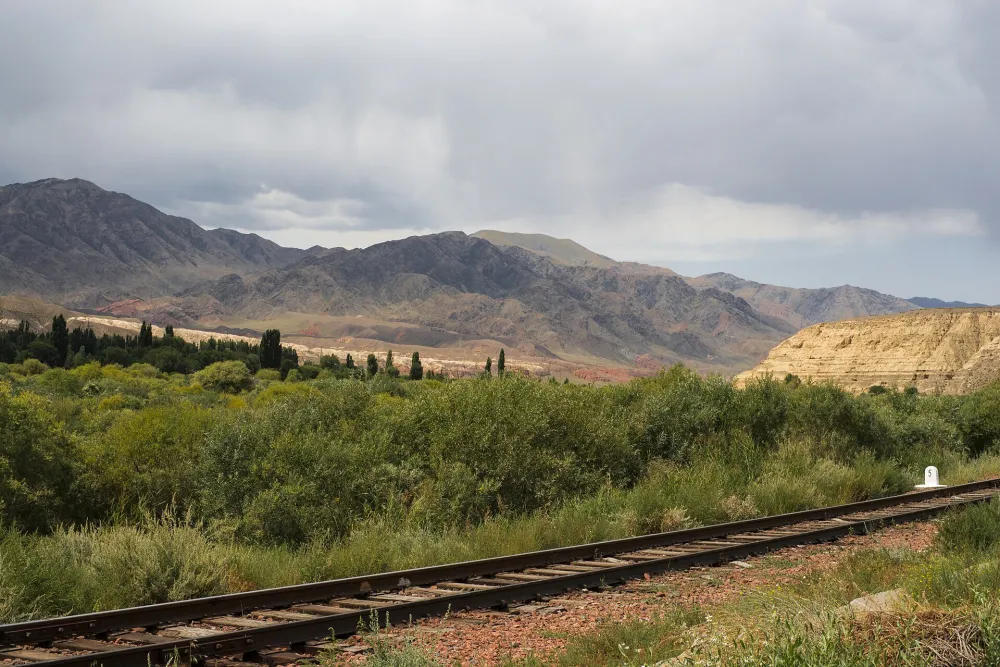 1/3. The railway along the valley Photo: Vilya Shoni, Wikimedia Commons, CC BY 4.0; edited for this site.
 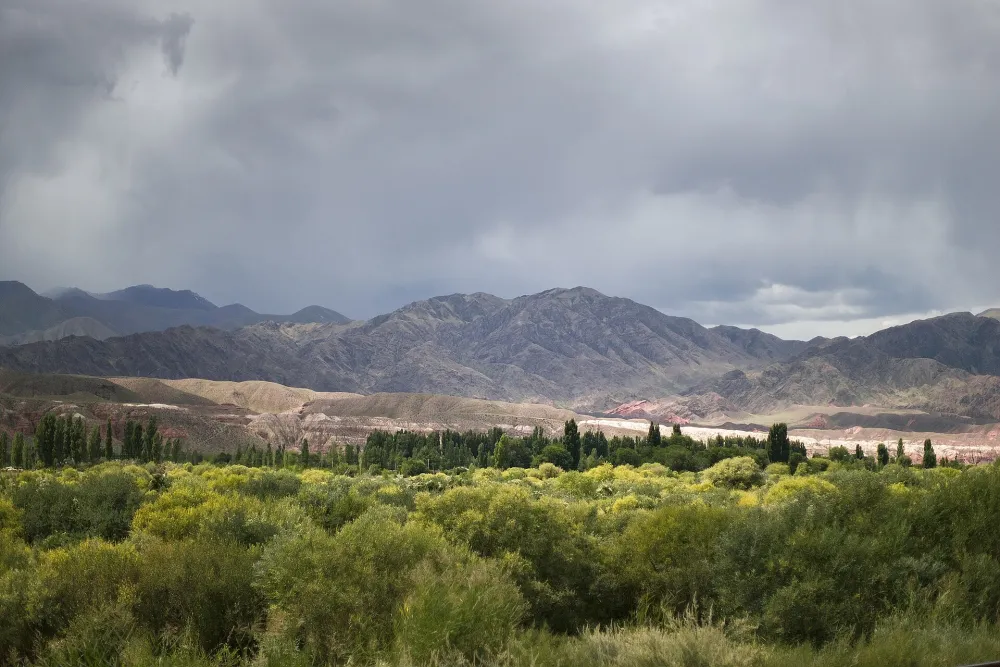 2/3. The River Chüy valley Photo: Vilya Shoni, Wikimedia Commons, CC BY 4.0; edited for this site.
 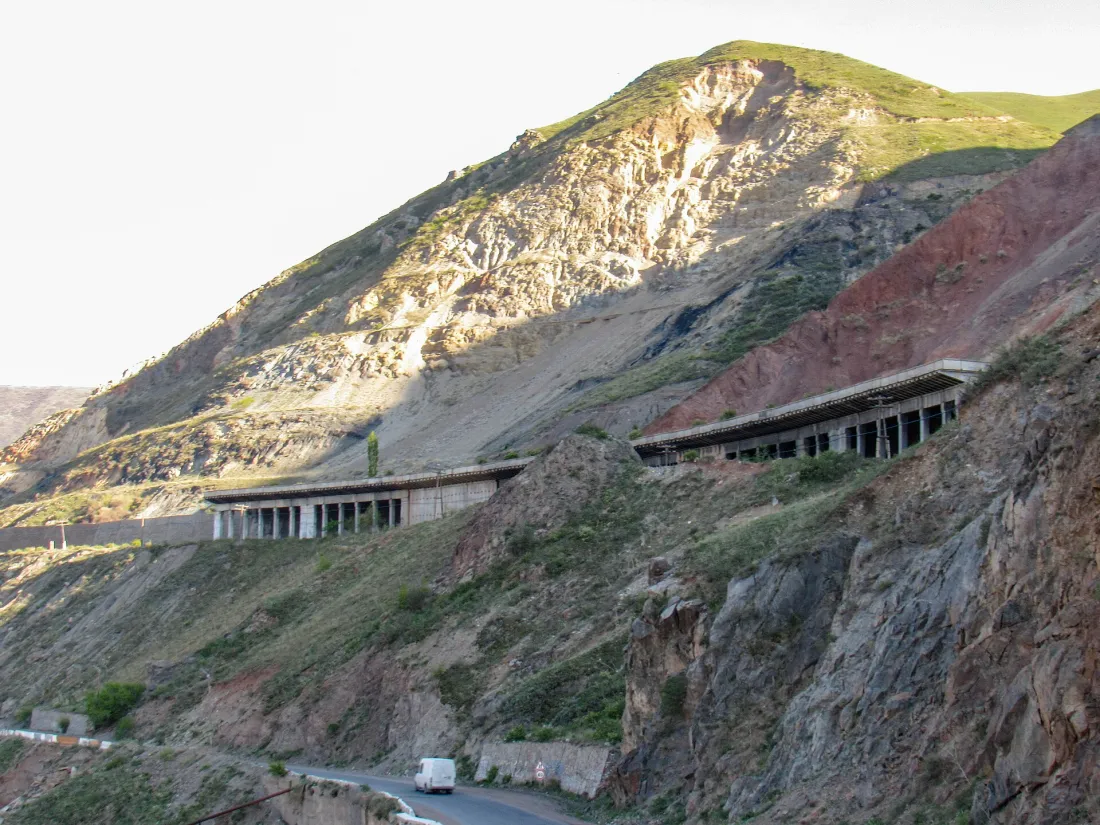 3/3. Rockfall protection for the railway Photo: Nikolai Bulykin, Wikimedia Commons, CC BY-SA 4.0; edited for this site.
 Map and direction of travel
From the Chüy Valley, the road enters the gorge beyond the Kemin area and gradually draws closer to the river and railway. Near the Balykchy end, the routes divide: continue through the town for Issyk-Kul or take the southern branch towards Kochkor and Naryn. Download this section for offline use, as navigation and reception can falter in the narrowest parts.
The coordinates above mark the middle of the gorge, not a car park. Use them only to orient yourself on the map. Do not try to stop at the pin: choose a distinct lay-by where the whole vehicle can leave the traffic lane.
Where you can stop
Use only established lay-bys with a clear entrance and exit. Pass one by if oncoming traffic is hard to see, lorries already occupy the edge or a steep slope begins beyond the barrier. The next safe opportunity matters more than an unplanned photograph.
Red Bridge. This is the trailhead for the separate walk into the Konorchek Canyons. It needs several hours, water, a dry forecast and an offline map. Do not treat the bridge as a five-minute photo stop or enter the channel unless you are prepared for the full route.
Balykchy end. Once clear of the gorge, take a proper break in town or continue to Kok-Moynok Canyon. These are independent destinations with their own access, not reasons to stop on the shoulder inside Boom.
Do not step into the traffic lane or onto the railway for a photograph. Keep out of service tunnels and protective galleries. Space is tight, and a train or vehicle can emerge from a bend much sooner than it seems.
What you see from the road
The gorge's defining scene unfolds directly from the road. The River Chüy occupies the valley floor, the highway follows its curves and the railway keeps above the water, occasionally disappearing into protective galleries. Slopes shift from grey and brown to red; the valley floor greens in spring and becomes drier and more sharply defined in summer.
The driver should keep watching the road, so wait for a proper lay-by before taking in the panorama. The passenger Bishkek-Balykchy train reveals the same corridor from a different height and suits travellers who do not want to drive, although its season and timetable require a separate check.
Why road and railway share the gorge
The river cut the most practical passage through the ranges, leaving transport routes to share the same narrow corridor. The Frunze-Rybachye road opened in 1935. In 1948, the railway reached Rybachye, today's Balykchy. Galleries on the slopes shield the line from falling rock and snow, making the engineering constraints of the terrain easy to read.
The name. Toponymic studies connect the Turkic words boam and bom with a river gorge or a difficult passage through rock. The name describes the shape of the landscape.
Rockfalls, mudflows and seasons
Boom's slopes remain active. Kyrgyzstan's emergency authorities identify March to May as a particularly likely period for rockfall, while mudflow season in the region extends from March to September. Heavy rain and spring snowmelt can bring water, mud and stones onto the road. Winter adds ice, wet snow and shaded sections.
Check the weather and the latest road-status notices before leaving. Planned removal of unstable rock can temporarily restrict traffic. If road crews are working ahead or police have closed a section, do not bypass a barrier or wait below a steep slope.
Where to go next
Most travellers emerge from the gorge into Balykchy and continue around Issyk-Kul. The other branch leads towards Kochkor and Naryn. Set the correct destination in your navigation app before the junction so that you do not have to change lanes at the last moment.
According to Kyrgyzstan's Ministry of Transport, construction of the Balykchy bypass was still under way in July 2026. Follow temporary signs and allow for changes to the traffic layout. Call 112 in a life-threatening emergency.
Share on social media
If you found this guide useful, share it on social media. It takes a moment and helps more travellers discover the project. Thank you!
Anything to add?
Share your experience, leave a comment or suggest an improvement.