Contents:
Why visit the house museum
The museum’s strength lies in the scale of a real home rather than in a vast collection of showcases. These are the rooms where Chingiz Aitmatov worked, read, received guests and lived with his family. His desk, bookshelves, the long dining table and everyday possessions bring the writer close without turning him into a monument.
This is a small private museum on the southern edge of Bishkek. It suits readers who want to connect manuscripts and a working library with Aitmatov’s diplomatic career and domestic life. For a broad introduction to the country, choose the National Historical Museum. Come here for one person and an unusually intact atmosphere.
Do not set out without a reservation. The house stands within the Ala-Archa State Residence, where access is controlled. Arrange a date and time on +996 500 12 12 28 and ask which identification document the gate will require.
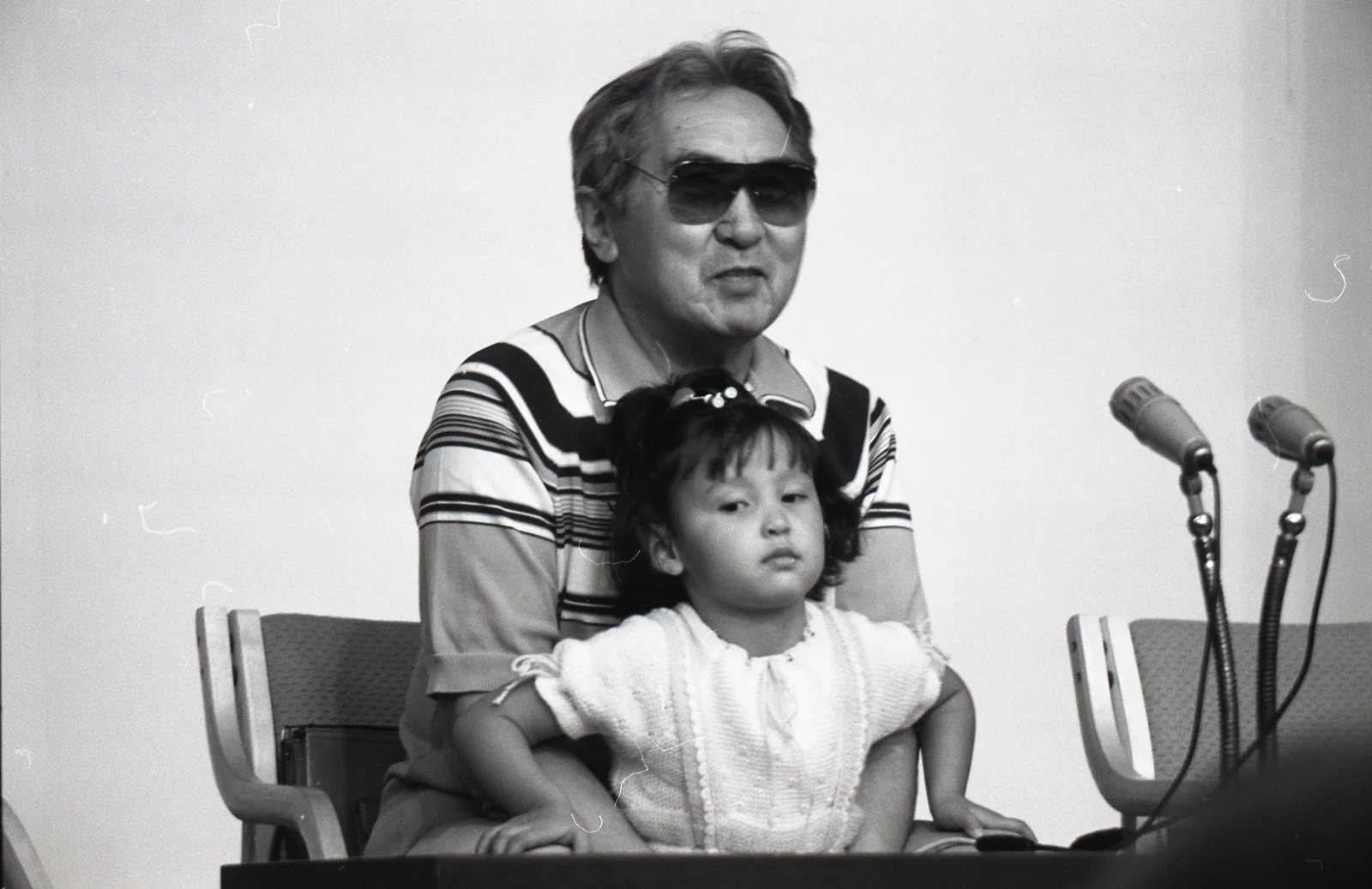 Chingiz Aitmatov in Bishkek, 1987. Photo: Jaan Künnap, Wikimedia Commons, CC BY-SA 4.0; edited for this site.
How a family home became a museum
Aitmatov moved into this house in the mid-1980s and lived here for the rest of his life. Sources differ on the precise year. The museum’s virtual tour gives 1984, while the University of Central Asia museum guide links the purchase and conversion to 1986. The practical point is clear: the house preserves the last two decades of the writer’s life.
After Aitmatov died in 2008, his family decided to turn part of the building into a memorial museum. It opened on 12 December 2014, his birthday. Eldar Aitmatov’s family still occupies another part of the house, which also accommodates the International Chingiz Aitmatov Foundation. The site therefore remains a private home, a working cultural institution and a public display at the same time.
That status explains the intimate format. Groups are small, visits are scheduled and a guided tour is the normal way to see the rooms. An unregulated stream of walk-in visitors would not work in this setting.
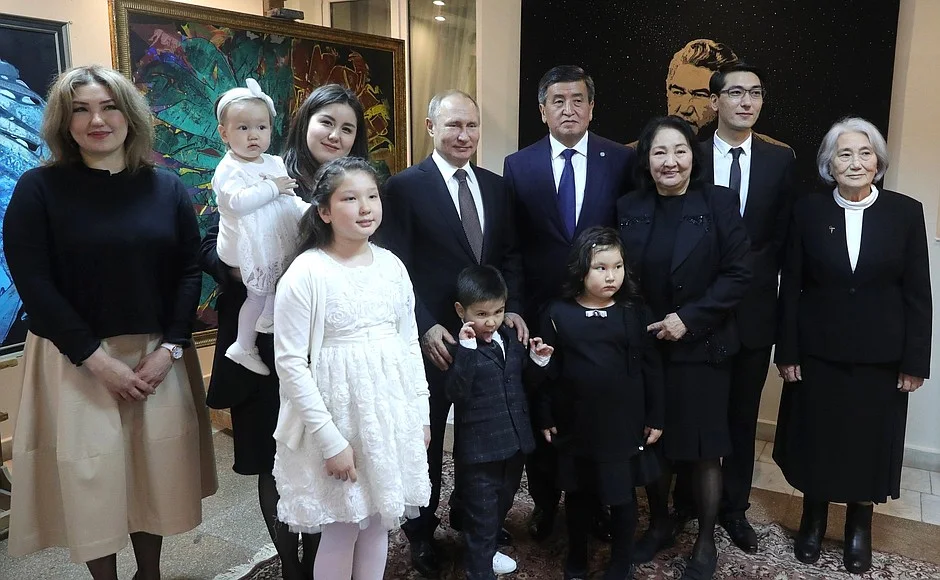 The Aitmatov family and official guests at the museum, 2019. Photo: kremlin.ru, Wikimedia Commons, CC BY-SA 4.0; edited for this site.
What survives inside
The route runs across two floors. Most rooms retain their domestic arrangement, including the living room with its large table, the study, bedroom and library. Visitors leave belongings in the glassed-in veranda and put on shoe covers. The ritual sets the right pace: this is a fragile lived-in environment, not a reconstructed stage set.
Study and library. The desk, books, papers and objects on the shelves make the daily work of writing tangible. Look beyond individual titles to the range of languages, inscriptions and the way fiction sits beside evidence of Aitmatov’s public and diplomatic life.
Display rooms. Two rooms were adapted for cases containing awards, medals and documents. They include Aitmatov’s favourite tweed jacket, a diplomatic uniform and handwritten notes for his unfinished work “Oimo”. A separate photographic gallery follows his life as a public figure and diplomat.
Domestic details. The Bishkek museum guide singles out an old radio that Aitmatov took on journeys and a pair of roller skates. Beside state awards and formal portraits, such objects return the biography to human scale.
Details worth noticing
A draft beside a finished book. Handwritten revisions preserve a moment when a word could still be replaced, a paragraph moved or a story taken elsewhere. At the material connected with “Oimo”, ask the guide what you are looking at: an isolated note, a page of a draft or a longer passage.
Home and diplomacy. The uniform, awards, gifts and photographs with heads of state are not evidence of a second career unrelated to literature. They show how closely writing, public speech and international work were joined in Aitmatov’s later life.
Art within the interior. Paintings by artists from Kyrgyzstan, including Suimenkul Chokmorov, Dzhumabaye Umetov and Damir Kongurbayev, share the house with gifts from abroad. Watch for the shifting boundary between personal surroundings and a curated display. In a memorial home it is rarely absolute.
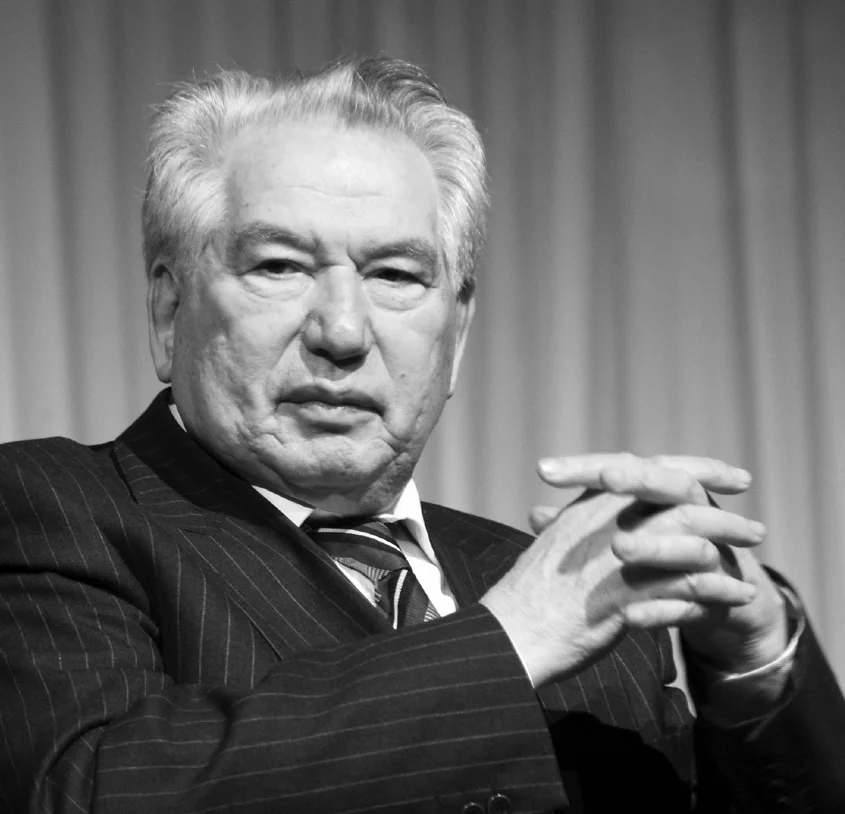 1/2. Chingiz Aitmatov, 2007 Photo: Elke Wetzig, Wikimedia Commons, CC BY-SA 3.0; edited for this site.
 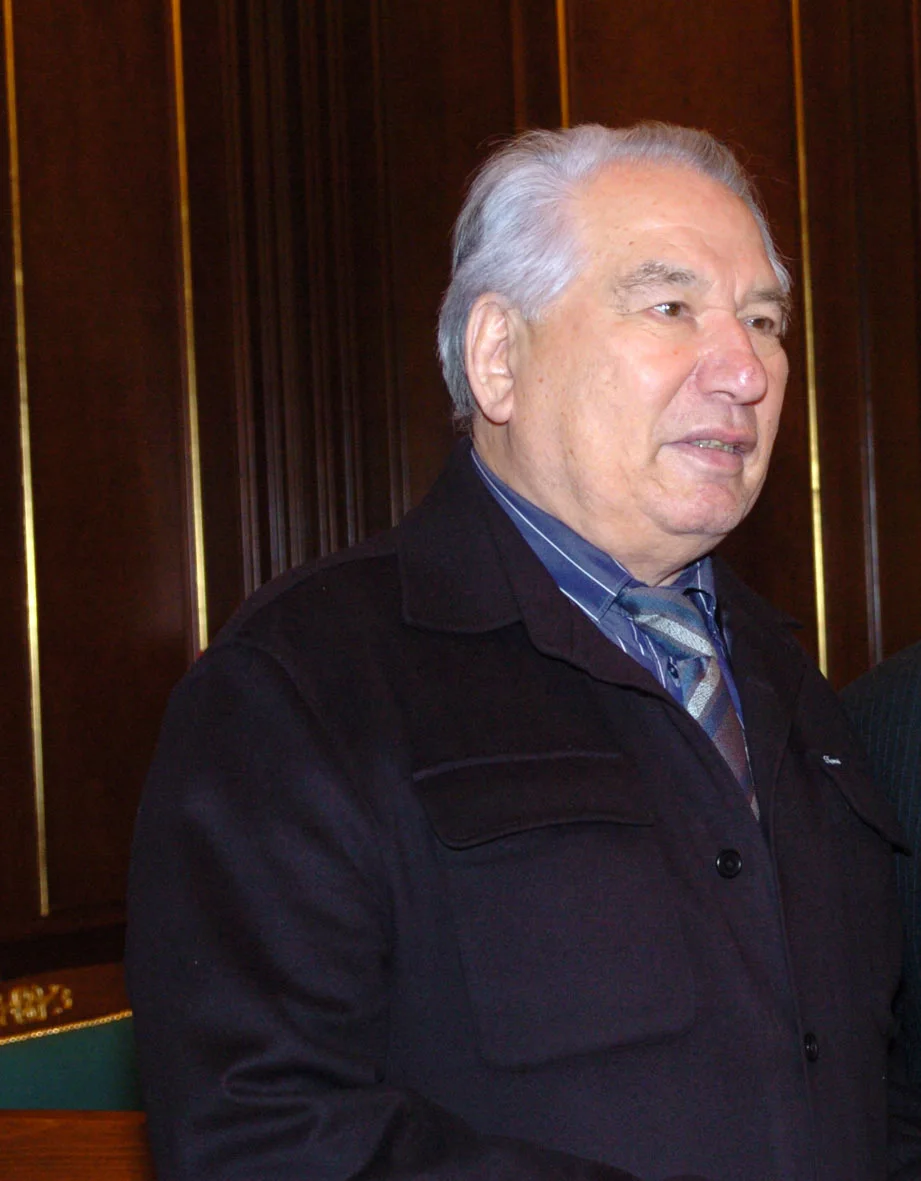 2/2. Chingiz Aitmatov, 2006 Photo: State Counsellor of Tatarstan, Wikimedia Commons, CC BY 4.0; edited for this site.
 Aitmatov beyond the books
Chingiz Aitmatov was born on 12 December 1928 in Sheker, in today’s Talas Region. He wrote in Kyrgyz and Russian and also worked as a journalist and diplomat. “Jamila”, “The First Teacher”, “The White Ship”, “Farewell, Gulsary!” and “The Day Lasts More Than a Hundred Years” carried the landscapes and moral conflicts of Kyrgyzstan into world literature.
The house prevents that list from becoming a textbook entry. The library reveals his reading, the manuscripts show work in progress, while gifts and photographs trace an international network. Even the setting below the mountains matters. In Aitmatov’s prose, landscape often acts within the story rather than decorating it.
Another thread leads to the oral epic. Aitmatov knew Sayakbay Karalaev, one of the best-known performers of “Manas”. Our guide to the manaschi tradition explains how individual storytellers shape and transmit the epic.
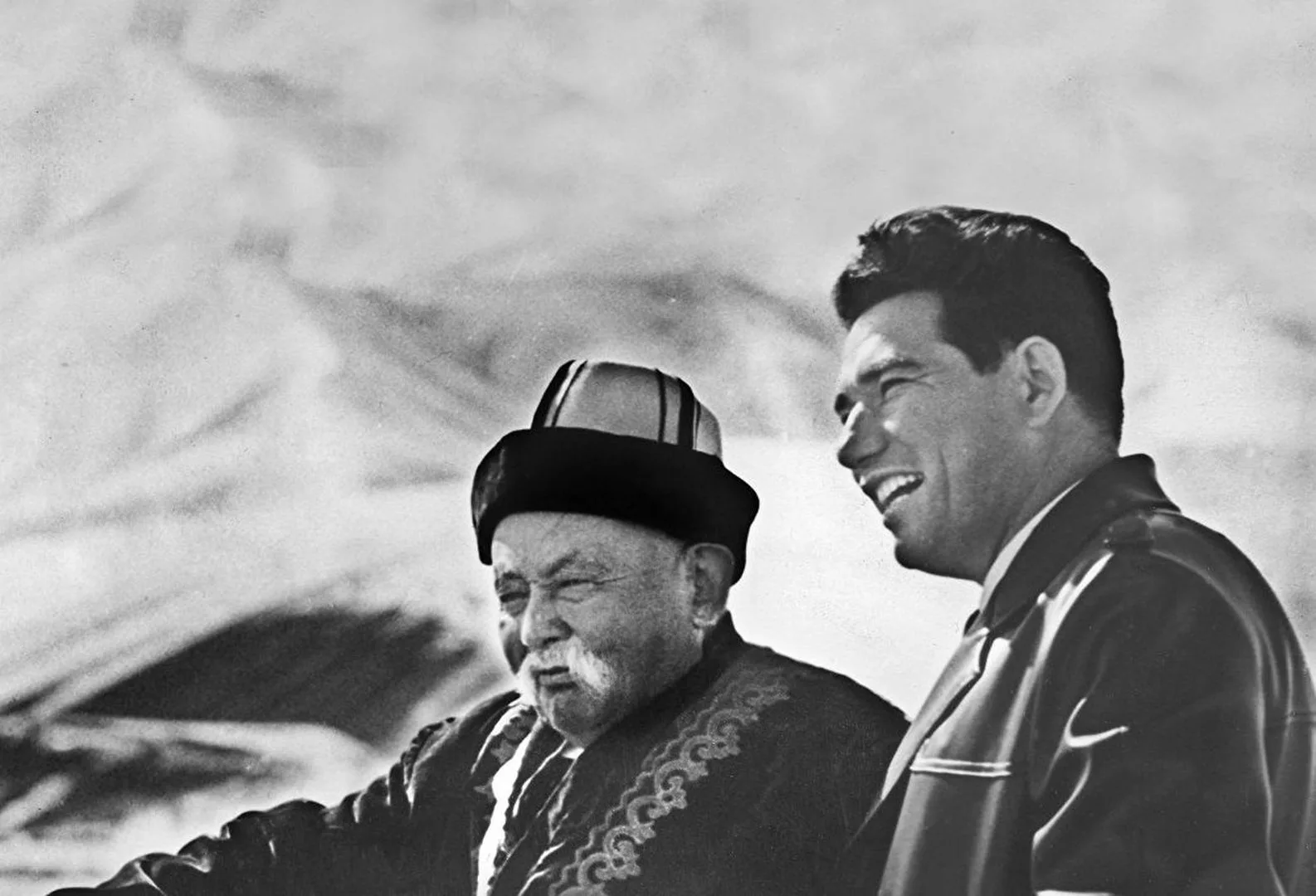 Sayakbay Karalaev and Chingiz Aitmatov, 1968. Photo: unknown photographer, Manas Ordo archive, Wikimedia Commons, CC BY-SA 4.0; edited for this site.
Booking, opening hours and admission
Reservation. Call +996 500 12 12 28 before travelling. Give the date, party size and preferred language. Ask which document is required at the gate, whether photography is allowed and where a member of staff will meet you.
Opening hours. The 2024 University of Central Asia guide and current map listings give Monday to Saturday, 10:00 to 17:00, with Sunday closed. A confirmed booking matters more than the published schedule. The museum may not be able to receive walk-in visitors even during those hours.
Admission. The price has changed. The 2024 guide listed 200 som including the tour, while visitor reports from 2026 mention 500 som per person. We do not present the older figure as a current tariff. Confirm the price when booking and carry cash unless the museum explicitly confirms card payment.
Group size. This is a small house. The museum guide gives a maximum of 15 visitors at one time. Larger parties should discuss separate groups and a second entry slot in advance.
You can preview the rooms and their sequence through the museum’s official virtual tour. The English edition of the Museums of Bishkek guide adds practical detail about this and other small institutions.
How to get there
The address is 305 Chyngyz Aitmatov Avenue, Bishkek. The house stands in Chong-Aryk on the city’s southern edge, at approximately 42.8000, 74.5851. Treat it as a separate excursion rather than a stop on a walking route through the centre.
A taxi directly to the house museum is the simplest option. Show the driver your booking confirmation. If you use public transport, calculate the route to Chong-Aryk on the day of the visit because bus numbers and termini change. A short walk remains from the nearest stops to the residence.
Do not ask for Ala-Archa National Park. The Ala-Archa State Residence and the national park with the same name are in different places. Enter the full address or the museum coordinates in your navigation app.
How much time to allow
A relaxed guided visit
- Walk through the domestic rooms with museum staff.
- Pause at the study, library and manuscripts.
- Ask about one favourite book rather than trying to cover an entire biography.
A close literary visit
- Reread one short Aitmatov work before you travel.
- Connect the text with photographs, working notes and the library.
- Leave time for the courtyard and questions after the room circuit.
A separate trip from the centre
- Allow a buffer for the journey to Chong-Aryk and controlled entry.
- Do not place a fixed-time ticket immediately after the museum.
- Return to central Bishkek or continue through the southern outskirts.
What to combine with the visit
The house museum pairs naturally with the Ata-Beyit memorial complex, where Chingiz Aitmatov and his father Torekul are buried. The two places approach memory differently: one through rooms and possessions, the other through a state memorial landscape. You will need transport between them.
Back in central Bishkek, continue at the Gapar Aitiev Museum. It introduces painting from Kyrgyzstan and includes works by Suimenkul Chokmorov, whose art also hangs in Aitmatov’s home. Our guide to museums in Kyrgyzstan compares further options.
On Issyk-Kul, the writer’s name continues at Rukh Ordo in Cholpon-Ata. That large lakeside complex places literature within a broader discussion of religion, epic tradition and cultural dialogue. The Chong-Aryk house is quieter and more personal, so the two sites do not replace each other.
Frequently asked questions about the Chingiz Aitmatov House Museum
Can I visit the museum without booking?
Do not rely on it. The house is within the controlled Ala-Archa State Residence and admits small groups. Arrange a date and time first on +996 500 12 12 28.
Where is the Aitmatov House Museum?
It is in Chong-Aryk on the southern edge of Bishkek, at 305 Chyngyz Aitmatov Avenue. Approximate coordinates are 42.8000, 74.5851.
How much is admission?
The price has changed. A 2024 guide lists 200 som including the tour, while 2026 visitor reports mention 500 som. Confirm the current fee when you book.
What can I see inside?
The living room, study, bedroom and library retain much of their domestic character. Separate displays contain awards, documents, photographs, clothing and manuscript material, including notes for the unfinished work “Oimo”.
May I take photographs?
The 2024 museum guide says that photography and video are allowed, but this is a private home on controlled grounds. Confirm the current rule when booking and never photograph the residential part without separate permission.
How long does a visit take?
Allow 60 to 90 minutes for the tour and a calm look around. With travel from central Bishkek and the entry procedure, the outing will usually take a substantial part of half a day.
Share on social media
If you found this guide useful, share it on social media. It takes a moment and helps more travellers discover the project. Thank you!
Anything to add?
Share your experience, leave a comment or suggest an improvement.