Contents:
What the landscape near Gornaya Maevka really looks like
Poppy fields appear in the foothills of the Chüy Valley for a few weeks in spring. The red flowers are particularly striking beside fresh grass and the snowy wall of the Kyrgyz Ala-Too, giving a short trip three distinct layers: flowers, green hills and mountains.
A continuous red carpet is less common than photographs suggest. Poppies usually grow as islands, ribbons or loose clusters among other grasses. A low camera angle hides the gaps, while a telephoto lens compresses the flowers visually. A wide view gives a more accurate sense of scale.
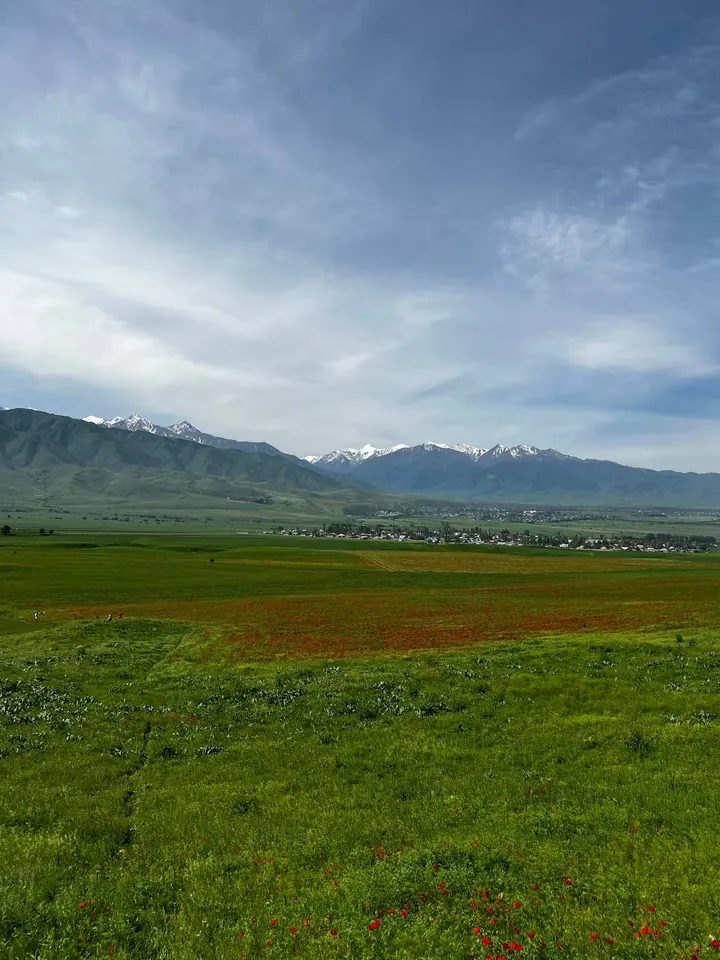 1/9. The red colour appears as a ribbon
 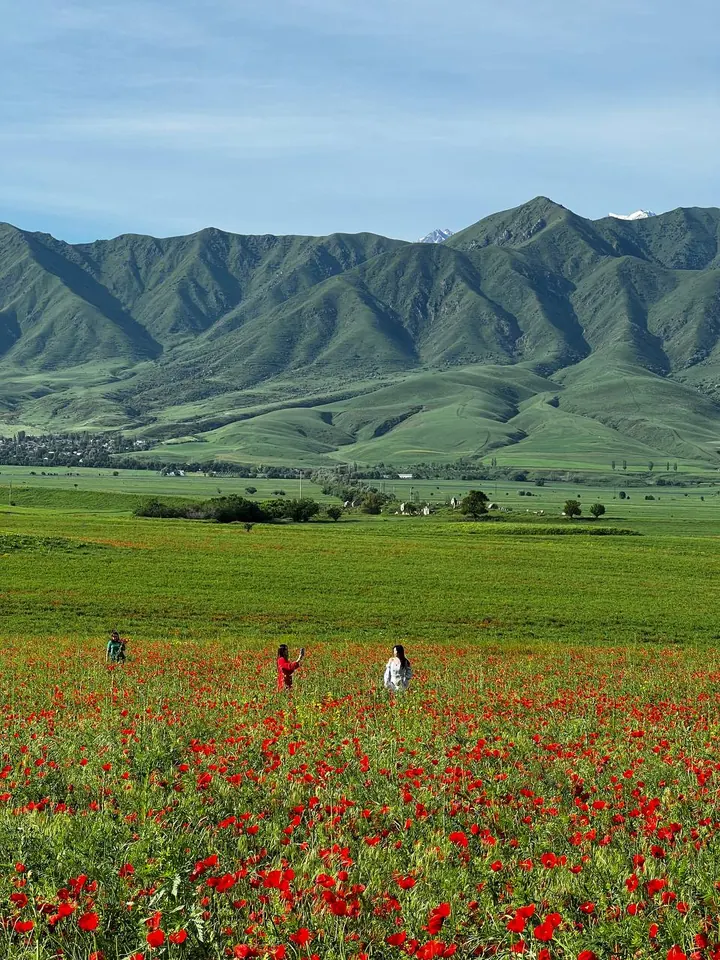 2/9. Poppies grow in separate patches
 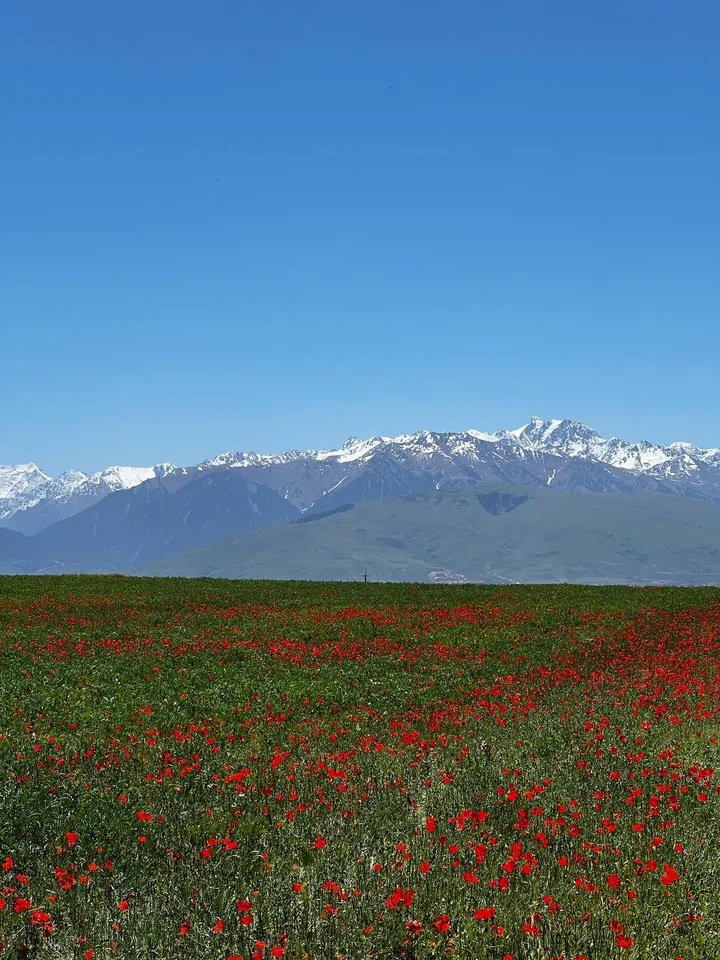 3/9. A wide view towards the mountains
 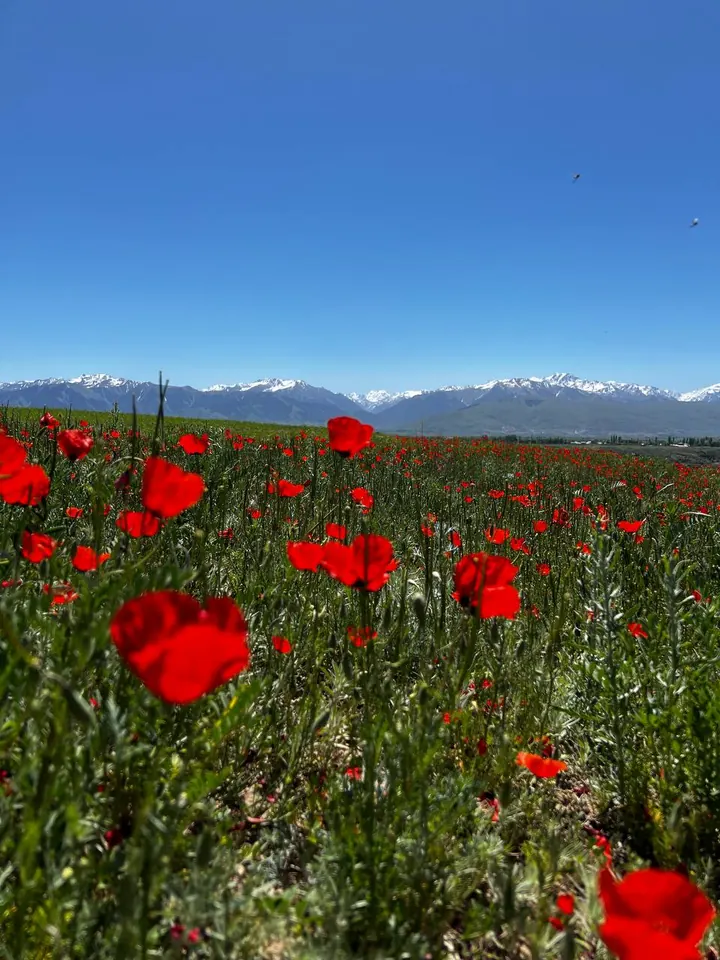 4/9. Typical flower density
 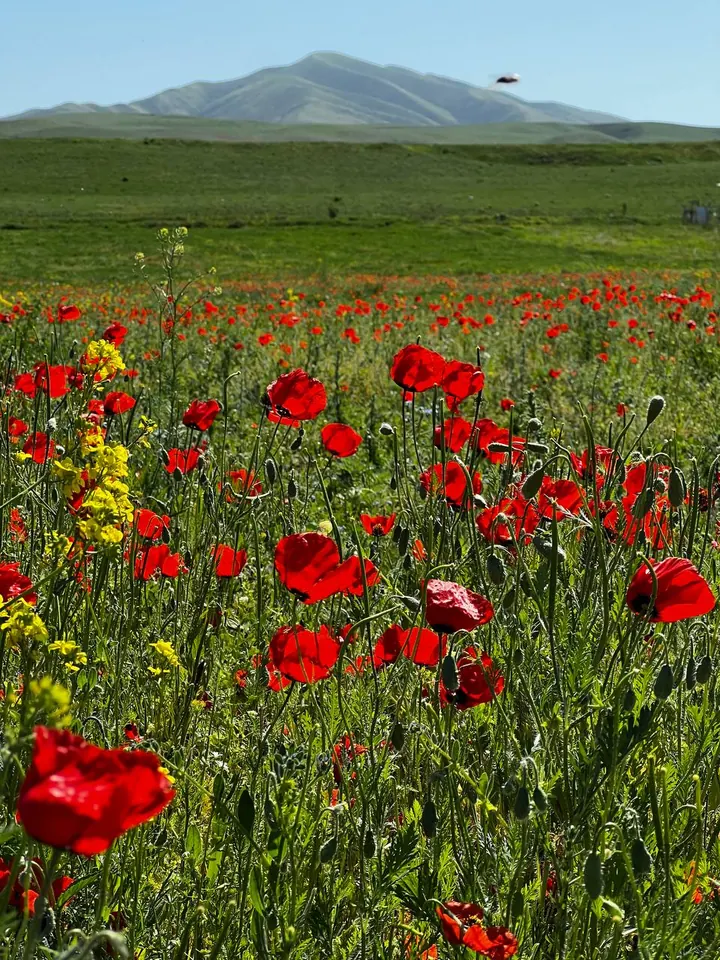 5/9. Flowers on the hillside
 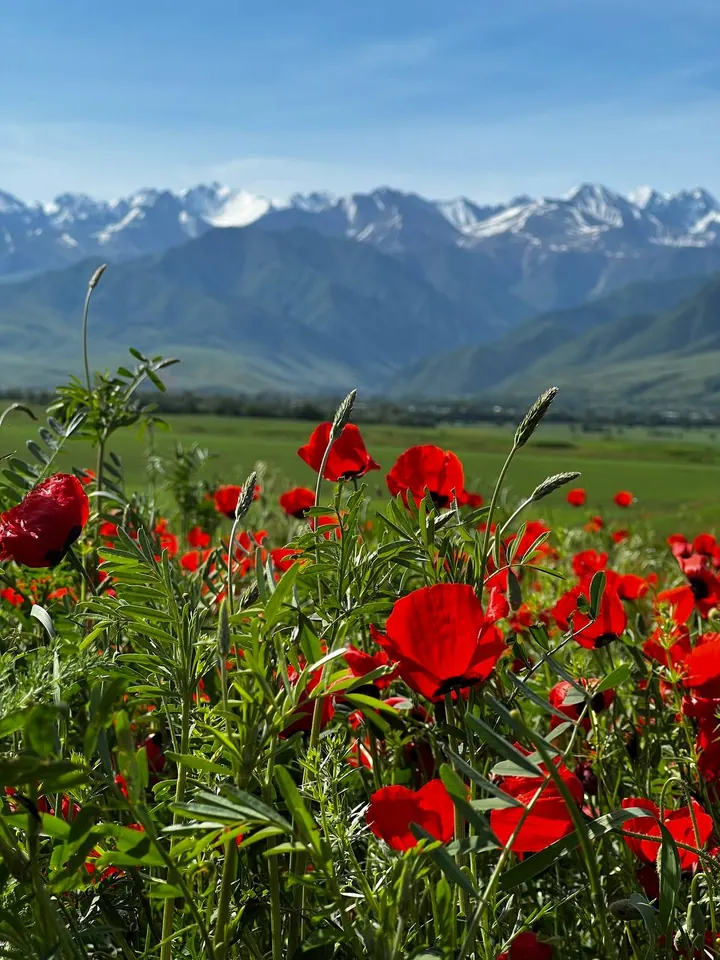 6/9. Flowers and the Kyrgyz Ala-Too
 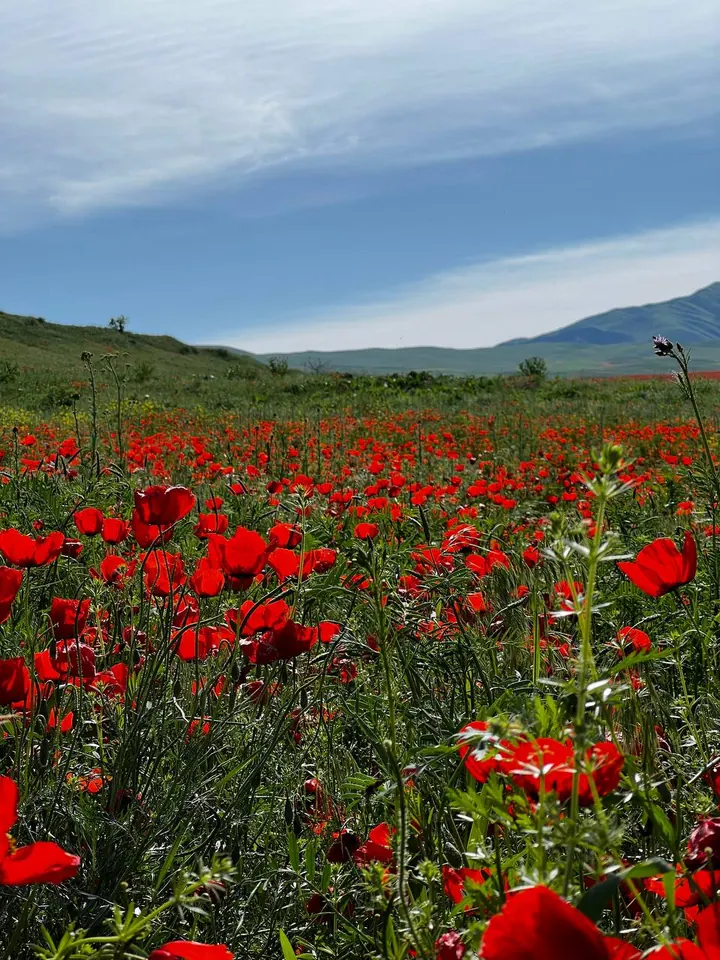 7/9. A denser patch
 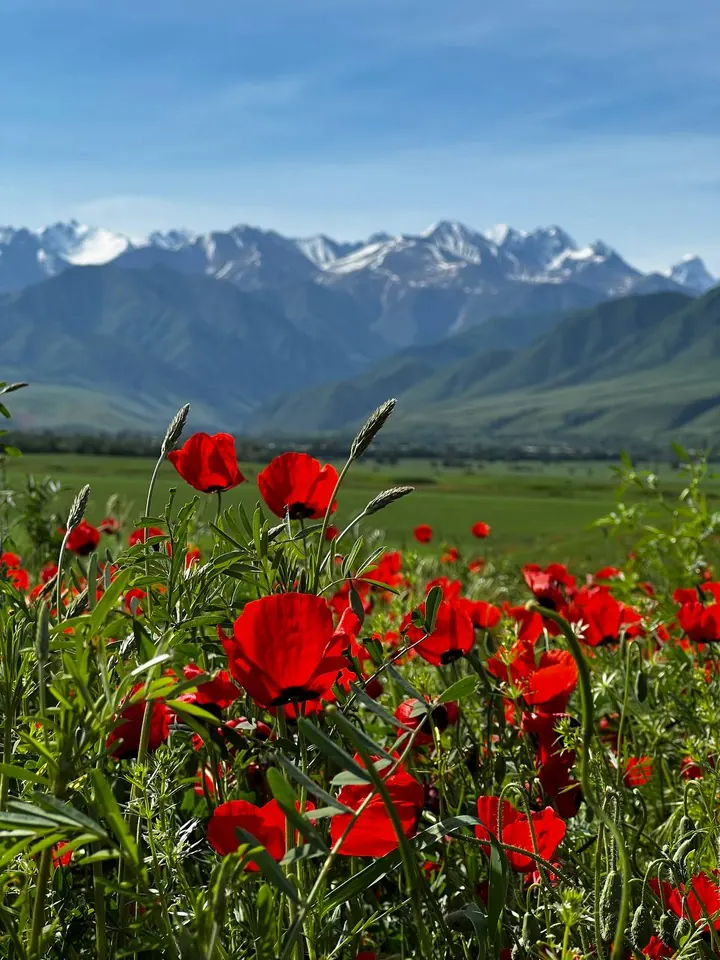 8/9. The valley and mountain backdrop
 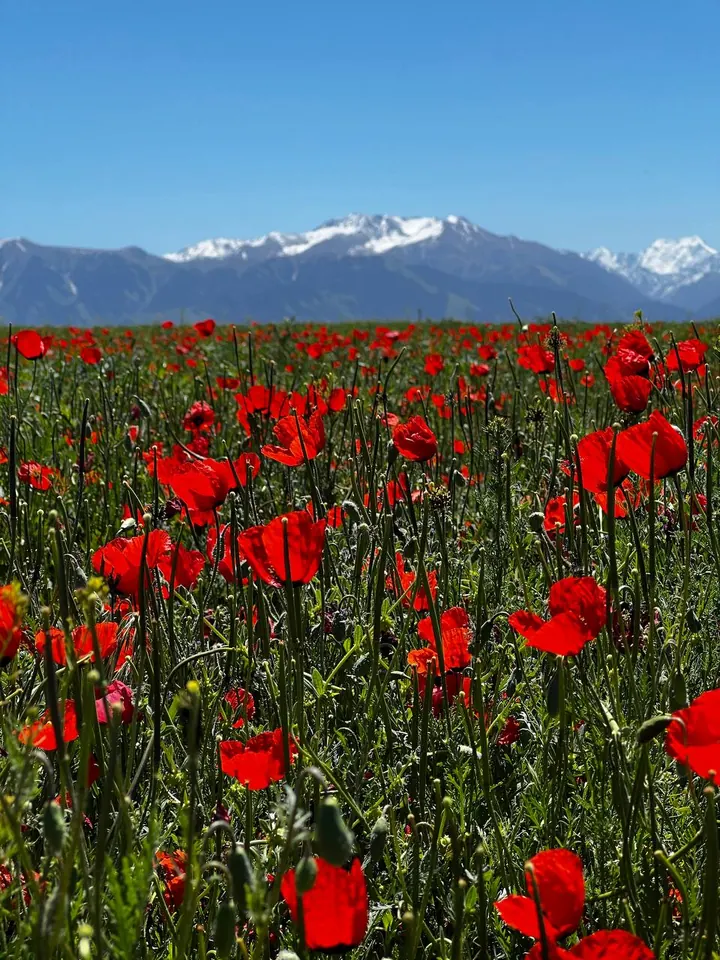 9/9. A view from the edge of the field
 Treat the journey as a search through the landscape, not a visit to a permanent attraction. There is no ticket office, fenced viewpoint or guaranteed schedule. A bright patch may appear near Gornaya Maevka one year, while slopes by neighbouring villages can be better the next.
When poppies flower near Bishkek
The usual window in the foothills closest to Bishkek runs from late April to mid-May. The Kyrgyz news outlet 24.kg gives the same seasonal range. The calendar helps you choose a week, but it cannot confirm flowers on a particular slope.
The precise peak depends on spring temperatures, rainfall, elevation and wind. Petals can drop quickly after hot days, while a rainy spring may shift the season compared with the previous year. Agricultural use also changes: plots can be cultivated, cut or grazed.
Check photographs posted within the last two or three days and ask the photographer when the image was taken. An old geotag only proves that flowers grew there in a past season. A current answer that the poppies are flowering is more useful than year-old coordinates.
Before setting out, check the official Kyrgyzhydromet forecast. Heavy rain turns unsurfaced turn-offs into mud, while gusty wind moves the thin stems and makes photography harder. A dry, calm morning usually works better for both the road and the camera.
How to reach Gornaya Maevka and find a field
Check the name. Gornaya Maevka lies in the foothills south-east of Bishkek. Maevka without the word Gornaya is on the capital's northern edge.
Gornaya Maevka lies about 30-33 kilometres south-east of central Bishkek. Drivers normally travel through Kok-Jar, Besh-Küngöy and Koy-Tash, then turn towards Gornaya Maevka and Issyk-Ata. Allow between one and one and a half hours for the drive, plus an extra margin on spring weekends.
The coordinates and map buttons at the top lead to the village, not to a flowering plot. This is deliberate: poppies appear in different places, some land may be private, and a public pin can direct dozens of cars towards one entrance. That damages both the flowers and the chance to take photographs in peace.
We recommend searching from the broad view down to the detail. First inspect the slopes slowly from a public road or safe stopping place. Look for a faint brick-red or burgundy tint in the greenery, not necessarily a vivid red patch. Zoom in with your phone, then decide whether a permitted approach exists.
Stop only where the whole car can leave the carriageway without blocking a gate, farm entrance or agricultural machinery. Do not turn onto soft ground after rain. A car, taxi booked for the return journey or local guide makes the seasonal search easier because the route can change with fresh information.
Part of the drive follows the same direction as Alamedin Gorge. Do not combine the trips automatically: searching for flowers can take longer than expected, while the waterfall deserves a separate hiking day.
How to photograph poppies without creating an endless-field illusion
Begin with a wide frame from the edge of the plot. It records where the flowers grow, the density of the red patches and their relationship with the hills. Then photograph the same section at twice the zoom. The perspective will look denser, while you retain an honest comparison.
You do not need to walk into the middle for a strong foreground. Crouch by the edge or an existing path and hold the camera at flower height. A few nearby poppies will cover the gaps while the mountains remain behind them. This angle often makes an entire slope seem red.
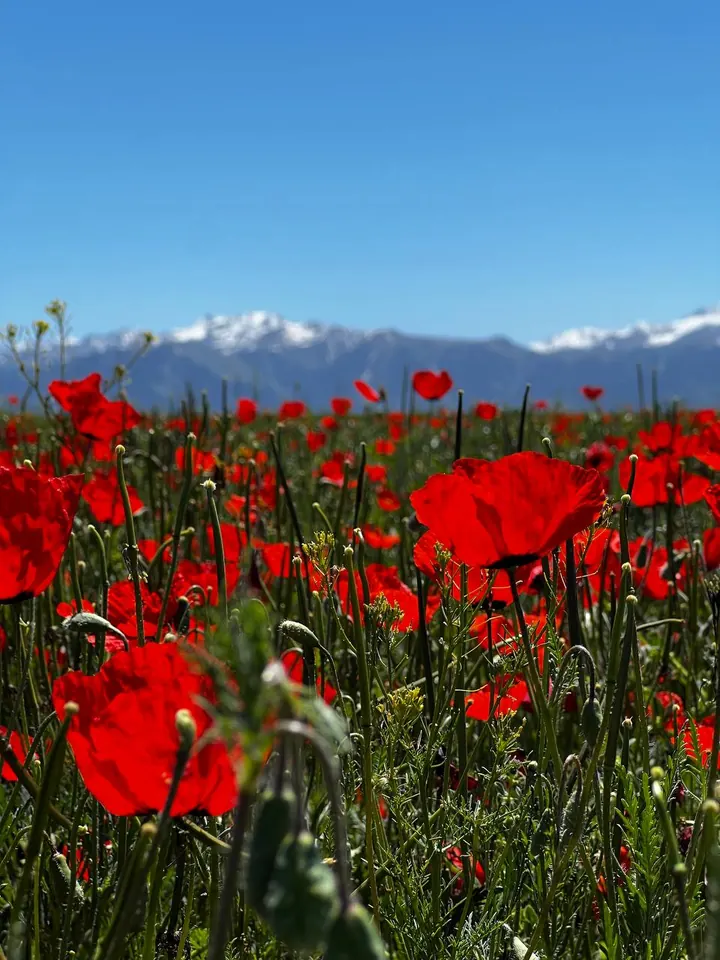 1/9. A low angle makes the field denser
 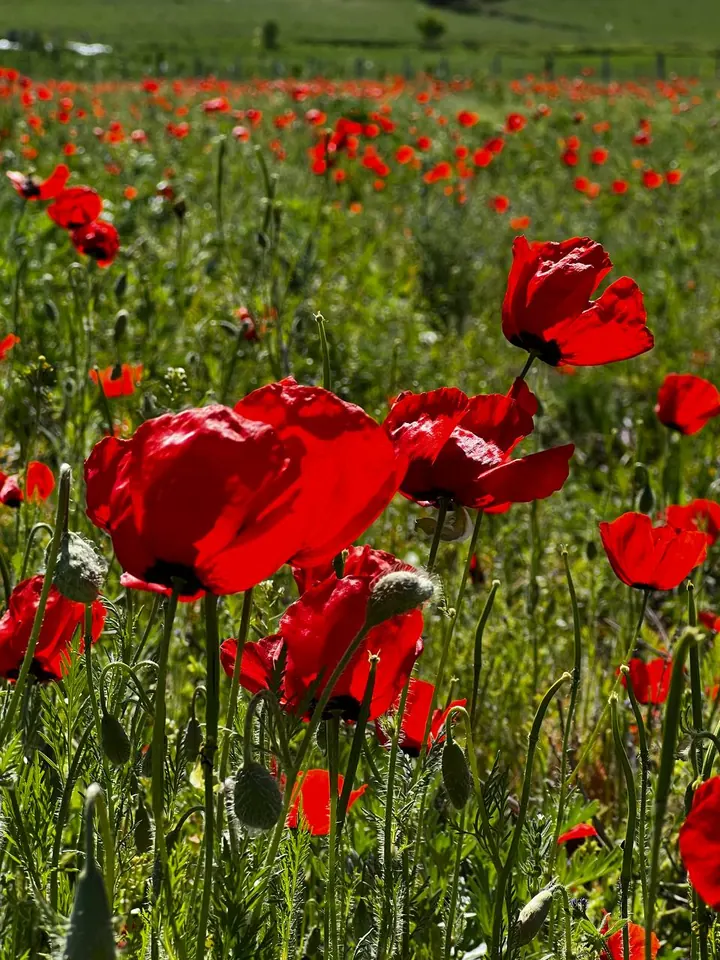 2/9. Flowers at the edge
 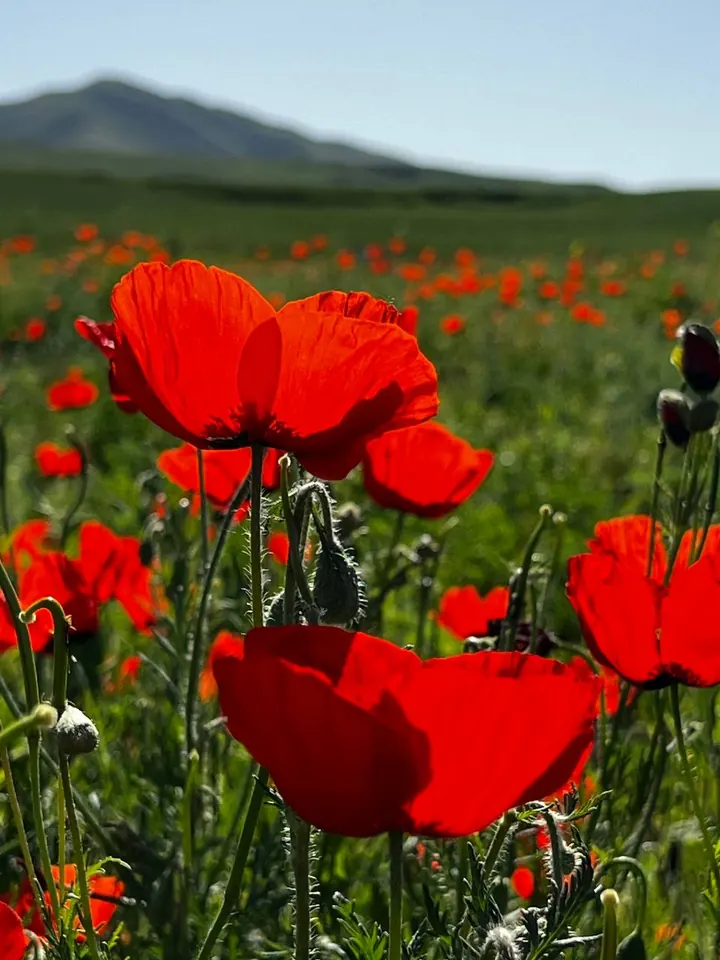 3/9. One flower and a soft background
 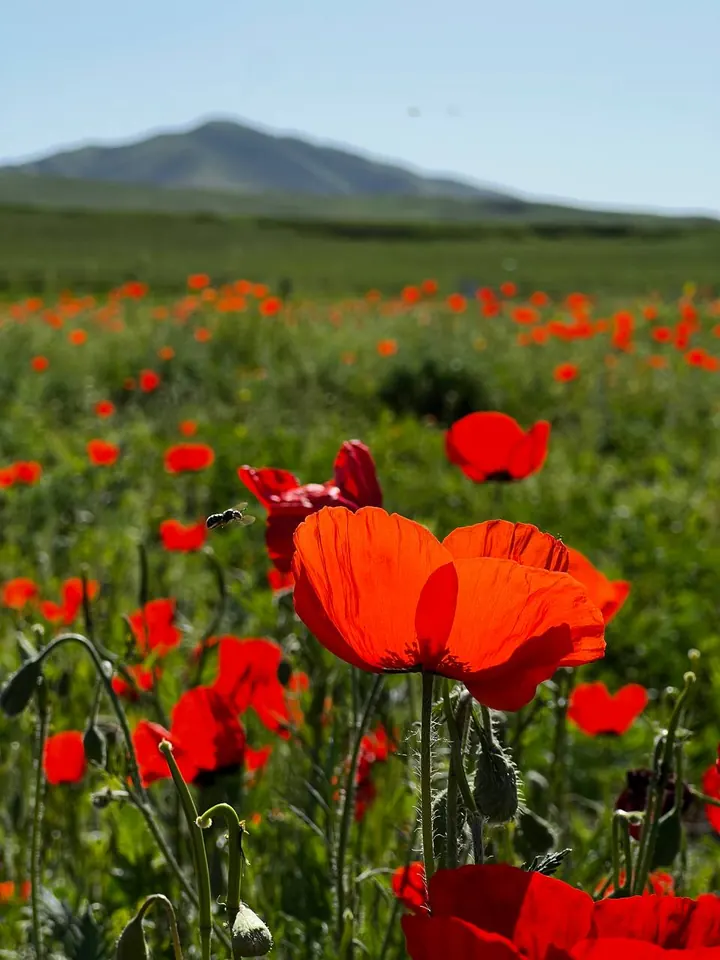 4/9. Focus on the foreground
 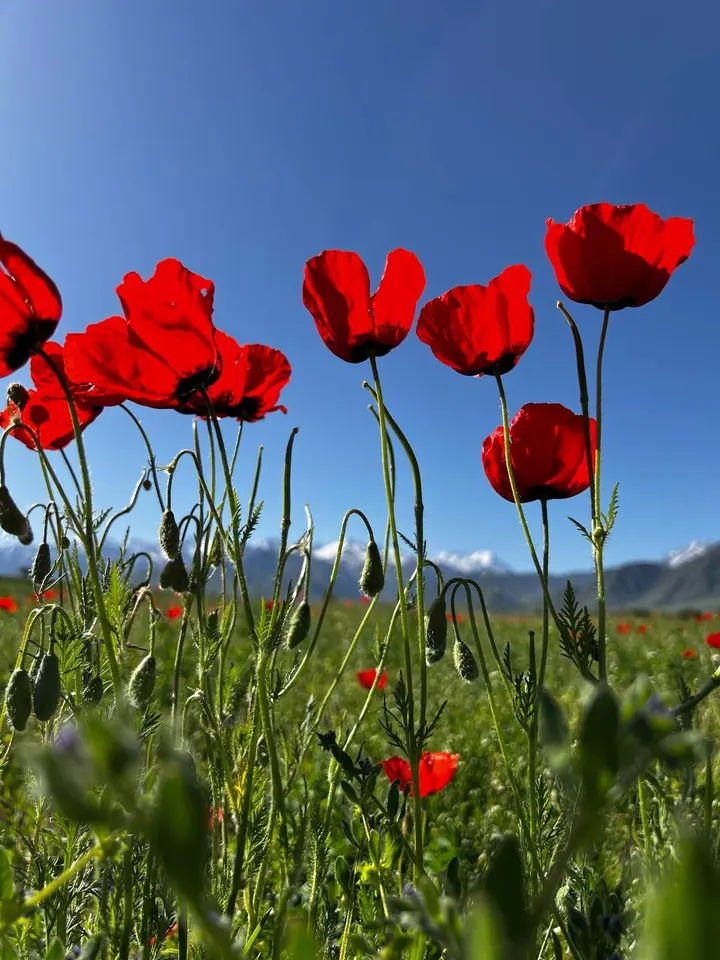 5/9. Looking up from below
 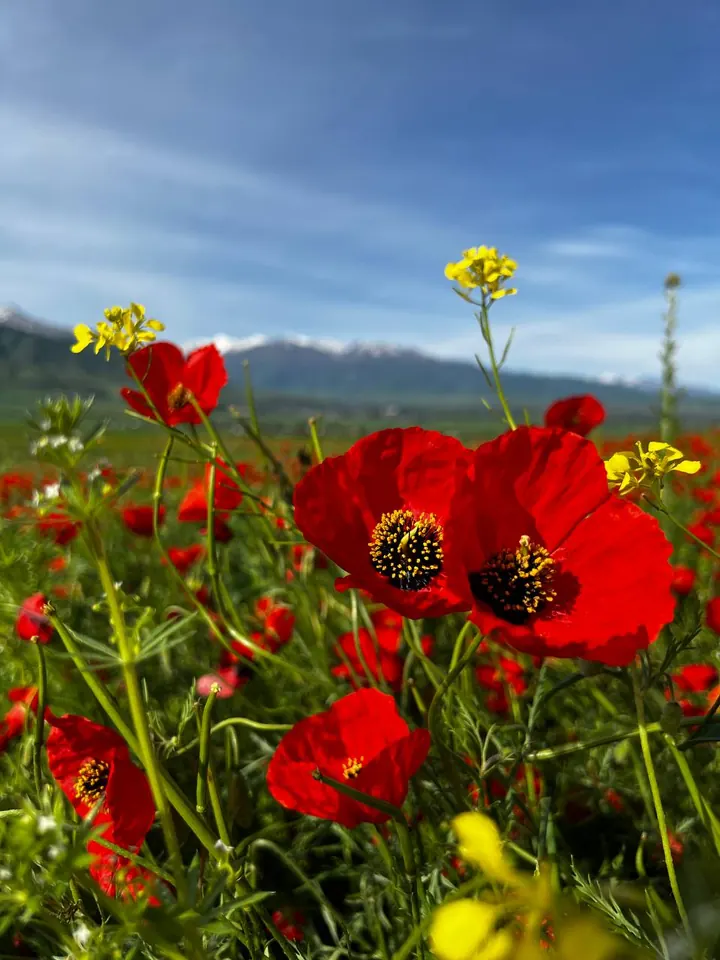 6/9. Flower details
 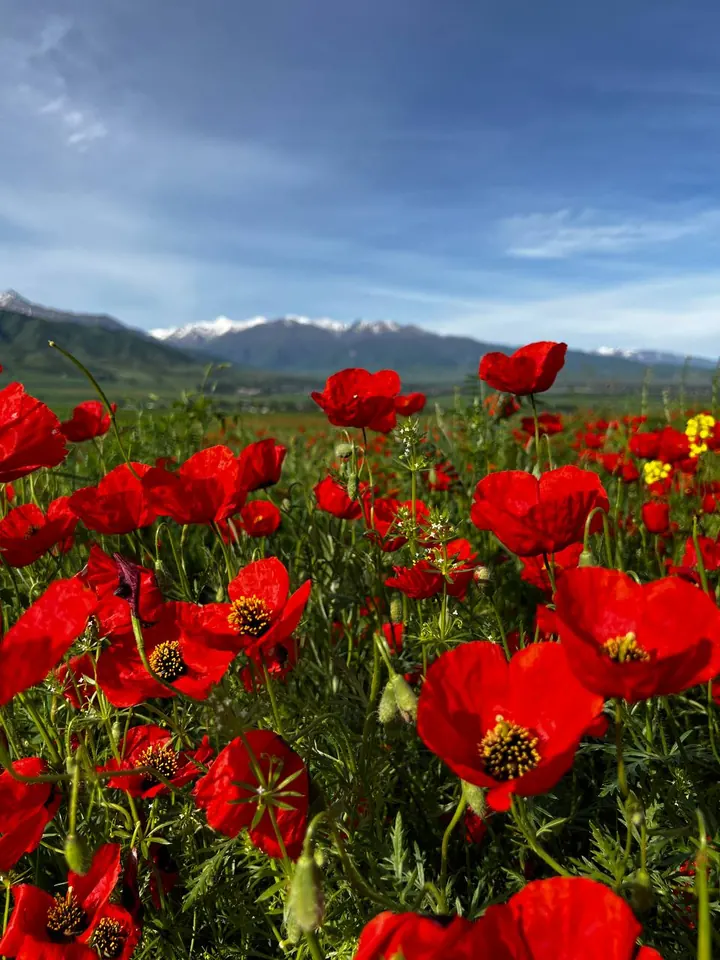 7/9. Foreground and landscape
 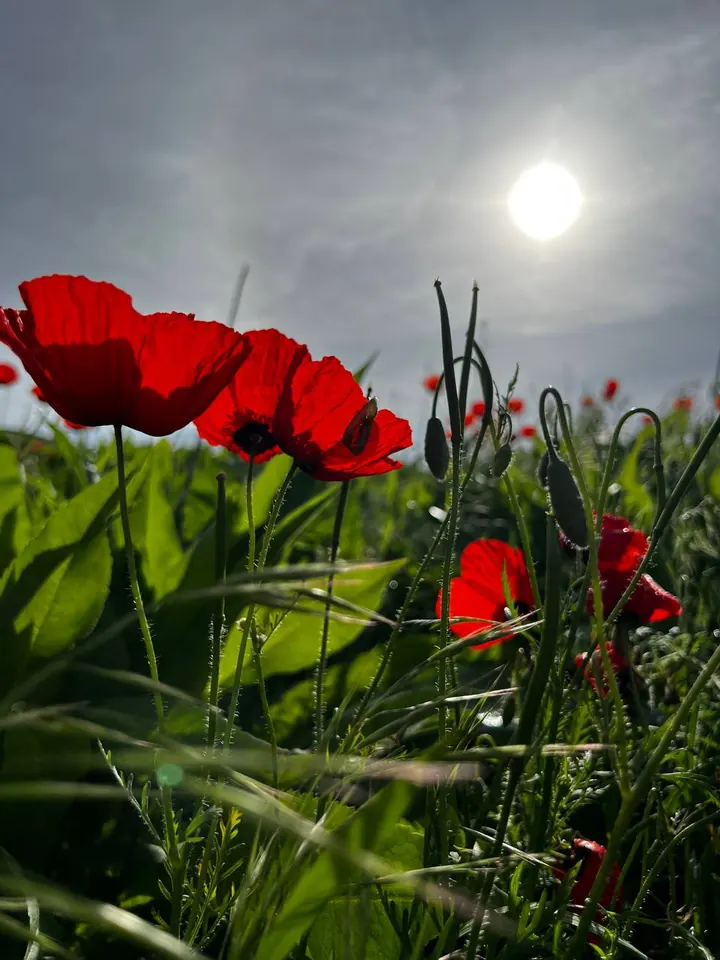 8/9. Backlit petals
 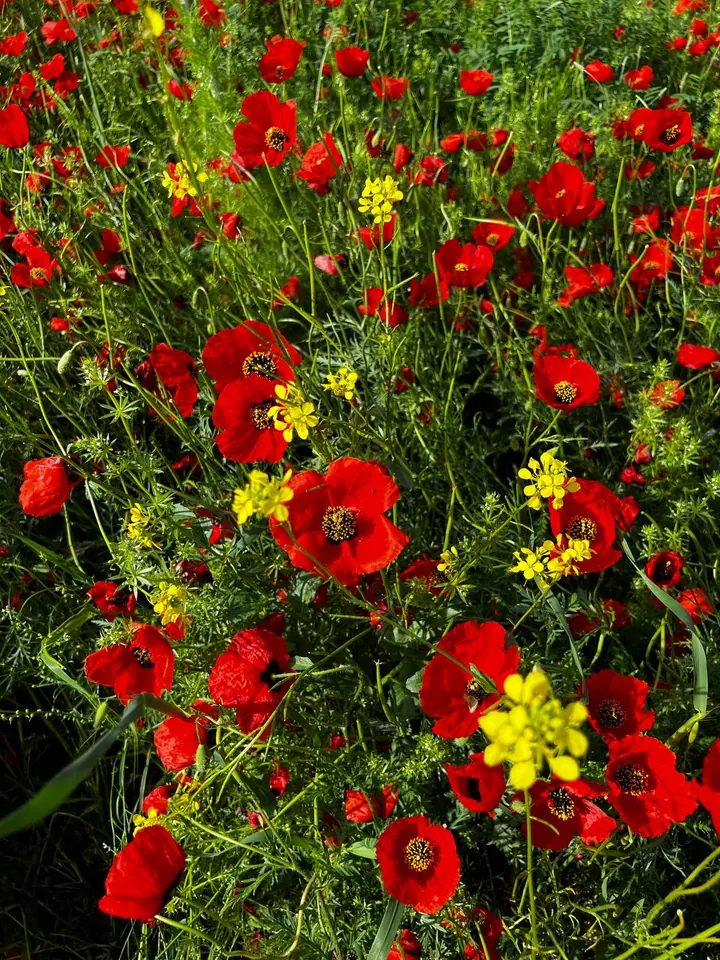 9/9. Different flowers in one patch
 Side light in the morning and evening reveals the thin petals and mountain relief. At midday the colour remains rich, but the contrast between red flowers and snow becomes harsher. In strong wind, use a fast shutter speed or switch your phone to burst mode.
A person standing on a road, boundary or existing path gives useful scale. There is no need to ask a model to lie among the flowers or open a new passage for a photograph. A good image does not require a trail of broken stems.
How to protect flowers and private land
We advise treating every plot as private until an owner or local resident clearly gives permission to enter. The absence of a fence does not turn crops, pasture or hay meadow into a public park. Without permission, take photographs from the road, field boundary or an existing path.
Rules for one visit: do not pick poppies, arrange flowers for a picture, widen paths, drive onto the field or leave rubbish. Keep dogs close, especially around livestock and crops.
Field poppies have delicate petals and stems that break easily underfoot. One person leaves a narrow trace; a group quickly turns it into a path. A picked flower will last only briefly, while one left in place remains part of the landscape and can produce seed.
We do not publish the coordinates of a specific flowering patch. Such an address becomes outdated quickly and channels visitors into one place. Searching along permitted roads spreads the pressure and improves the chance of photographing without a queue of people.
If you travel with a guide, it is reasonable to receive the current location only shortly before departure. Ask more important questions in advance: will the group enter private land, has the owner agreed, and how many people will be beside the flowers at once?
What to bring and how to extend the trip
Allow half a day for the outing. Bring closed shoes, water, sun and wind protection, a lens cloth and a bag for your rubbish. Spare footwear helps after rain, when even a short approach over clay becomes slippery.
If you do not find flowers, do not rescue the trip by entering closed land. Choose Ala-Archa for a predictable walk near Bishkek, and use the guide to active travel in Kyrgyzstan to prepare for a spring outing.
Share on social media
If you found this guide useful, share it on social media. It takes a moment and helps more travellers discover the project. Thank you!
Anything to add?
Share your experience, leave a comment or suggest an improvement.