Why visit Ala-Archa?
In one day, Ala-Archa takes you from dry foothills to juniper forest, a waterfall and glacier views. The park begins high above the Chüy Valley, so its mountain scale is apparent from the upper transport stop. You can still match the outing to your ability.
A short walk. The lower river valley suits visitors who want one or two hours in the mountains without a large ascent. It has a broad road, bridges, woodland and views into the upper gorge. Closed shoes and a warm layer are sensible even here.
Ak-Sai Waterfall. The popular route is about 4.3 kilometres each way and gains roughly 700 metres. The ascent normally takes around 2.5 hours, and the full route occupies most of a day with stops. Its final sections are steep, so it is neither a pushchair walk nor an easy hike for every child.
Ratsek Hut. The hut stands above the waterfall at 3,380 metres. Reaching it requires an early start, stamina, settled weather and proper mountain equipment; many visitors stay overnight. It is not simply the next short stop after the waterfall.
Mountaineering. Ala-Archa’s summits, glaciers and rock walls are technical terrain. Trail-walking experience does not replace rope, crampon and ice skills. An ascent requires a qualified guide or independent mountaineering competence.
How to get to Ala-Archa
The park is about 40 kilometres from central Bishkek, near Kashka-Suu village. The paved road suits an ordinary car; you do not need an off-road vehicle to reach the entrance. Leave early at weekends, when traffic and parking can become busy.
Traffic arrangements inside the park have changed. In 2025, visitors left private combustion-engine cars at the entrance and used electric buses to reach the upper area. Before travelling, check the current procedure, entrance price and transport timetable on Ala-Archa’s official website. The park also asks visitors to confirm exact fees at the ticket office instead of relying on old blog prices.
City bus route No. 1 has operated to the park, but check its timetable and seasonality on the day. If it does not suit your plans, agree a return meeting time with your driver in advance: mobile reception can be unreliable in the upper valley.
The road and trails ice over in winter, wet snow occurs in spring and summer thunderstorms are possible later in the day. Check a mountain forecast, not one for central Bishkek. If cloud covers the upper gorge, walk lower down and leave the waterfall for another day.
How the national park works
Ala-Archa is commonly translated as “variegated juniper”. Archa is the local juniper that grows on dry, stony slopes and gives the gorge its characteristic appearance.
The state nature park was created in 1976 to protect rare plants, wildlife and high-altitude ecosystems. Visitors have access to an active recreation zone occupying only about 5% of the area. The remainder is a restricted quiet zone.
This matters more than a list of rare animals. Snow leopards and other elusive species may live within the protected massif, but no visitor can be promised a sighting. Stay on existing trails, do not feed wildlife or pick plants and do not enter closed areas.
Official rules prohibit fires and the creation of new trails. Carry all rubbish out. Call 112 in an emergency; mountain rescuers are stationed in the park, but evacuation from the upper trail still takes time.
What to see in Ala-Archa
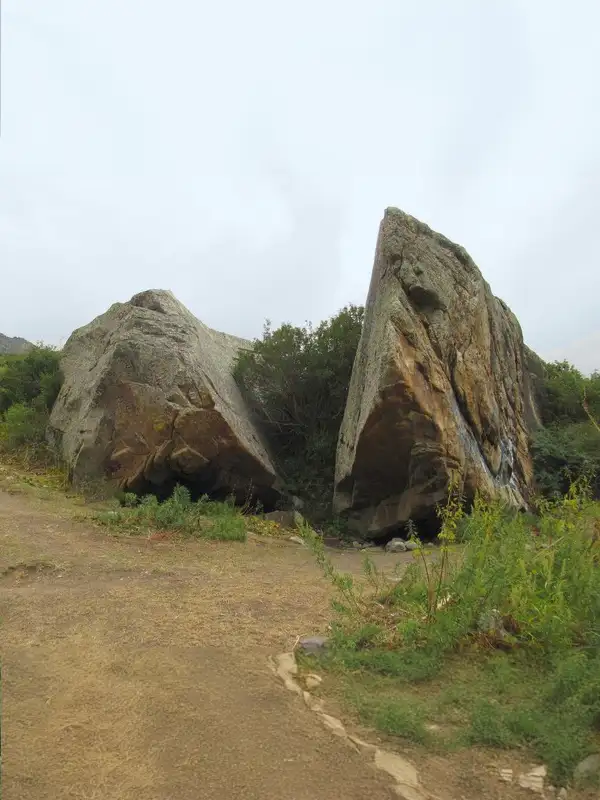 1/5. Broken Heart rock
 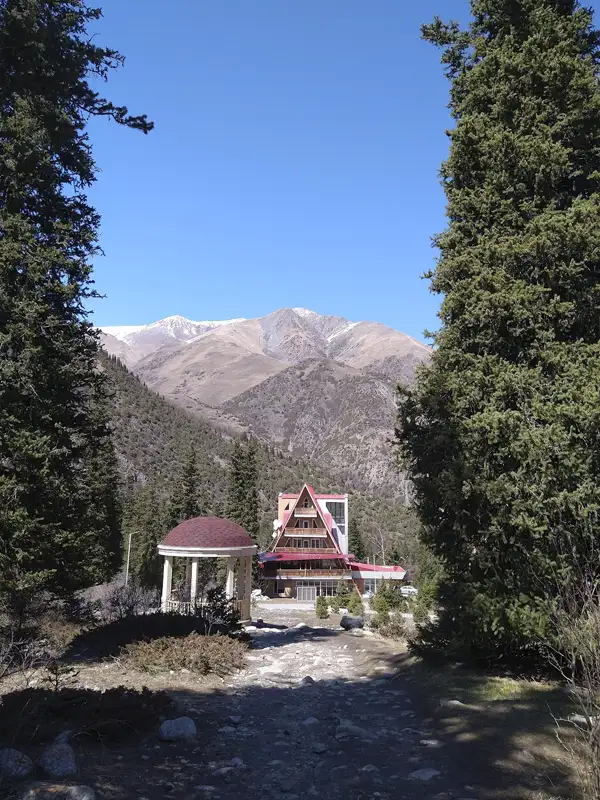 2/5. Upper park
 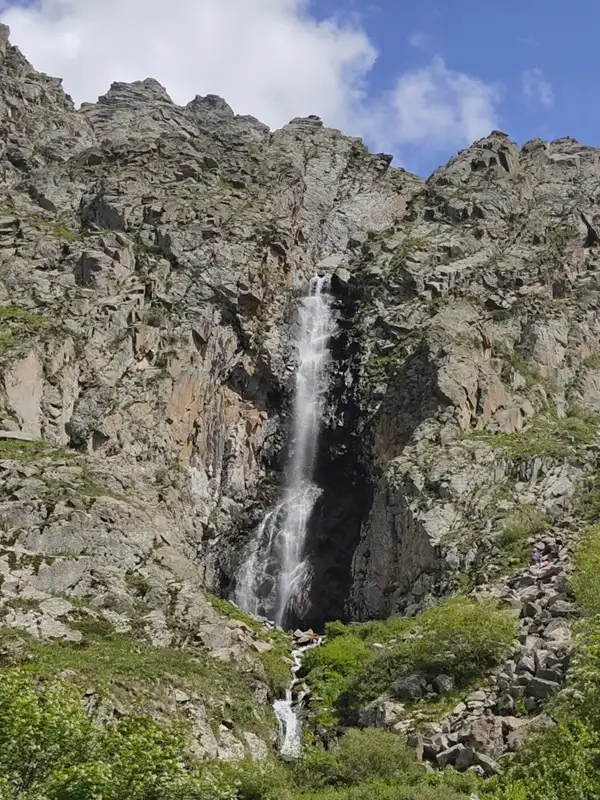 3/5. Ak-Sai Waterfall
 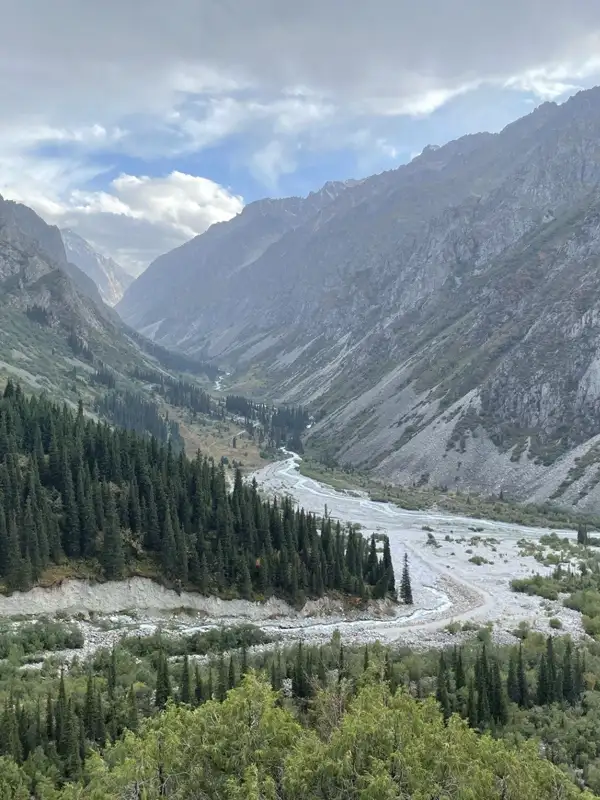 4/5. Ala-Archa valley
 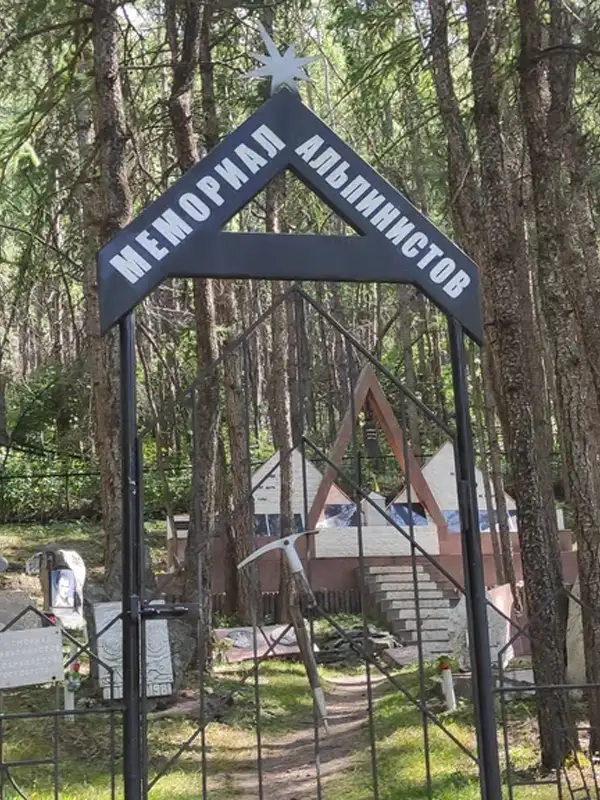 5/5. Mountaineers' memorial
 Ala-Archa river valley. The gentlest option follows the main valley rather than climbing sharply into Ak-Sai Gorge. It is suitable for a first visit and unsettled weather. Set a turnaround time even when you have no sporting objective.
Broken Heart rock. This recognisable formation stands on the way into Ak-Sai valley. It marks the end of the easier approach and the beginning of more obvious climbing. You can photograph it from the trail without treating it as a compulsory scramble.
Ak-Sai Waterfall. It carries more water in early summer and normally less by autumn. Take at least a litre of water per person, food, rainwear, a hat and a torch. Trekking poles help on the descent, particularly over loose ground.
Mountaineers’ memorial. The memorial recalls Ala-Archa’s long role in Soviet and Kyrgyzstani mountaineering. It is a place of remembrance, not an attraction, and deserves quiet respect.
Ratsek Hut and upper routes. The route continues above the waterfall through Ak-Sai valley. Beyond the hut are approaches to the glacier, Uchitel Peak, Korona and other climbing objectives. Do not set out late or continue with a severe headache, nausea, poor coordination or rapidly deteriorating weather.
Share on social media
If you found this guide useful, share it on social media. It takes a moment and helps more travellers discover the project. Thank you!
Anything to add?
Share your experience, leave a comment or suggest an improvement.