Contents:
Choosing a route at Chunkurchak
The simplest outing combines Golubinyi Waterfall, the suspension bridge and several viewpoints above the valley. The nearest parking area is roughly 250 metres from the waterfall, with about 60 metres of ascent. The approach itself usually takes around ten minutes, but allow one or two hours for the stairs, bridge and a walk along the gorge.
The landscape deserves more time than a single attraction. Chunkurchak has rounded green slopes, red cliffs, patches of juniper and an upper valley beneath the Kyrgyz Ala-Too. A short visit can easily fill half a day if you stop only in safe places and stay on existing paths.
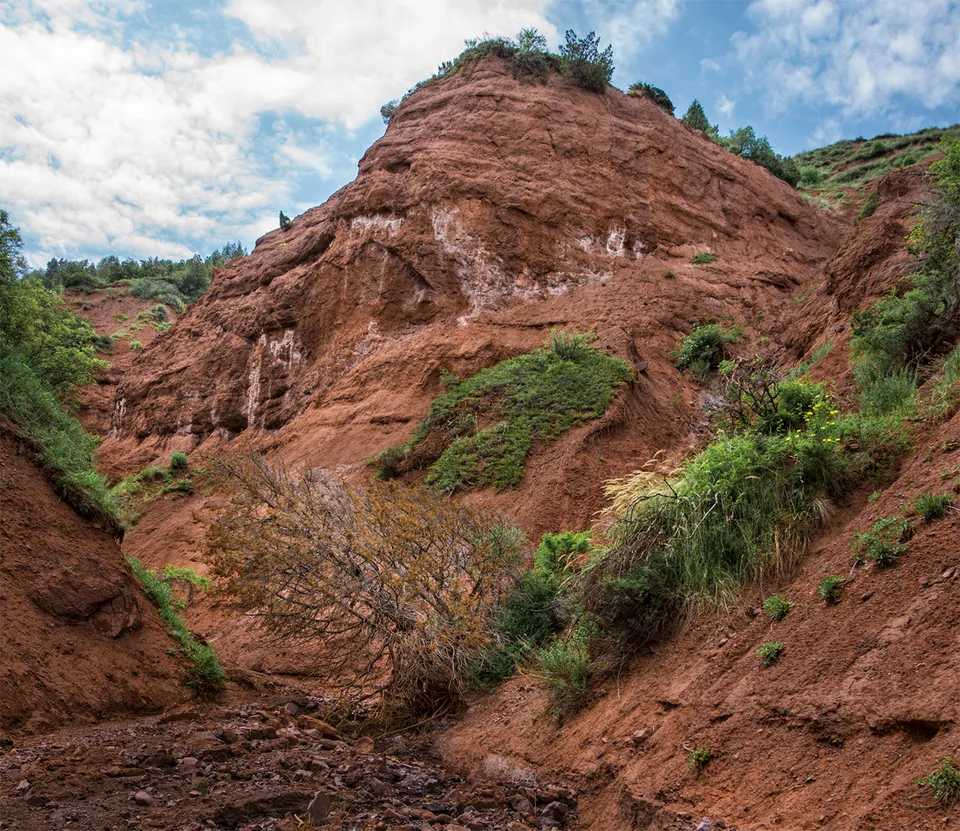 1/3. Red rock in a side gully Photo: Vilya Shoni, Wikimedia Commons, CC BY-SA 4.0; edited for this site.
 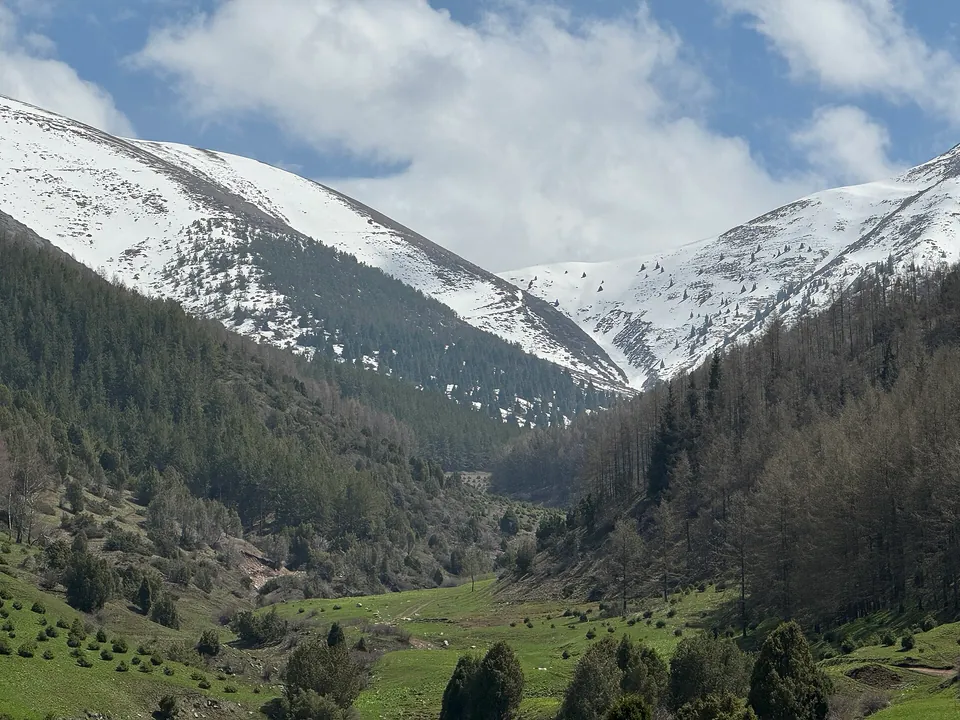 2/3. The upper valley in spring Photo: Timjusup, Wikimedia Commons, CC BY-SA 4.0; edited for this site.
 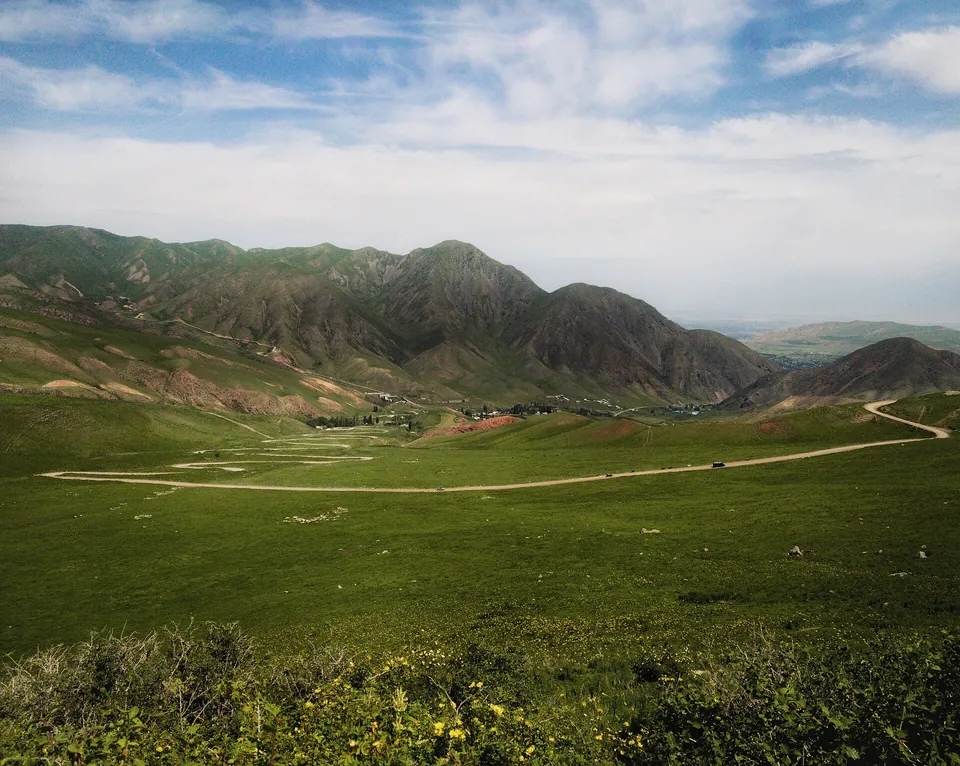 3/3. The shape of the valley Photo: Vilya Shoni, Wikimedia Commons, CC BY-SA 4.0; edited for this site.
 Winter is a different trip, centred on pistes and chairlifts. Snow conditions, rental equipment and slope rules are covered in our guide to Chunkurchak ski base. A summer walk to the bridge is not a guide to winter safety on the mountain.
Getting to Chunkurchak from Bishkek
Map names: Chunkurchak, Chon-Kurchak and Chong-Kuurchak all appear online. The coordinates above lead to the valley, not to one commercial venue.
From central Bishkek, the usual drive runs through Koy-Tash, Arashan and Tatyr. The distance is about 30-40 kilometres, depending on your final stop. Allow between one hour and ninety minutes for city traffic, ongoing works and the short approach to the waterfall.
On 29 July 2026, the Ministry of Transport reported that the first asphalt layer had been laid along all 20.731 kilometres of the Arashan-Chunkurchak road. A second layer, some barriers and road signs were still pending. New asphalt therefore does not mean all work has finished: check the latest ministry update and keep time in reserve.
The final spur to the waterfall is short, but the surface becomes slippery after rain. If a normal car begins to scrape or lose traction, leave it on firm ground and walk the remaining distance. Do not park on a bend, outside a gate or where the road narrows.
No confirmed scheduled public transport runs to the bridge. Without a car, book a driver for the day or agree on an exact return time. Download an offline map because mobile reception varies across the valley.
Golubinyi Waterfall and the suspension bridge
You can approach the waterfall from below along the stream or from the upper parking area. The two options form a short loop. Stairs connect the levels, and the rocks beside the water can be wet. Closed shoes with a grippy sole work better than smooth city trainers.
The suspension bridge crosses a side gully beside the waterfall. It opens a view into two parts of the valley, but the crossing is optional. The same landscape can be enjoyed from viewpoints on the accessible bank.
The bridge has no stable official tariff or timetable published online. Bring cash and confirm the fee, opening and restrictions at the entrance. Follow staff instructions, do not bounce the bridge or overtake other visitors, and keep children close.
Turn back before the bridge if its deck is icy, gusty wind develops, a thunderstorm begins or the site is closed. A fear of heights is also a perfectly good reason to skip it. A successful day out does not depend on the crossing.
When to visit Chunkurchak
Late spring and early summer. The slopes turn green, flowers appear and snow remains on the higher peaks. Clay sections and the waterfall path quickly become slippery after rain.
July and August. The valley is cooler than the city, but high-altitude sunlight is stronger. Start in the morning to avoid the exposed slope at midday and leave time for a possible afternoon storm.
September and October. The air is often clearer, there are fewer visitors and evenings are colder. The first snow and overnight ice can arrive before they do in Bishkek, so check a forecast for the gorge rather than the city centre.
Winter. You need winter tyres, a current road check and a separate plan for the day. Do not enter closed slopes or walk across active ski pistes.
Food and accommodation
Chunkurchak works as a day trip, but the valley also has recreation areas, cafés and accommodation. Supara Chunkurchak lies about 40 kilometres south of the capital; the operator lists a restaurant, yurts, cottages and advance booking. Confirm availability and opening times before travelling.
For an overnight stay or an organised outing, Kara-Bulak Eco Resort operates near Tatyr. Arrange day access, accommodation and activities before travelling.
The waterfall, bridge, ski base and Supara occupy the same broad area, but they are separate destinations. Save each point individually instead of navigating only by the word “Chunkurchak”, which can lead to the wrong parking area.
Use an established spot for a picnic, keep vehicles off pasture and take rubbish back to the city. In dry weather, observe any fire restrictions posted by landholders or the authorities.
What to bring and check
For a short walk, pack water, closed footwear, a warm layer, a windproof jacket, sun protection, a small amount of food, cash and a charged phone. In spring and autumn, leave spare socks and shoes in the car.
Before setting off, check rain and wind, the road, access to the bridge and your return meeting point. Tell someone your route if you plan to walk beyond the developed area. The cliffs look close, but leaving the path leads onto steep, loose ground.
For a more predictable mountain outing within a managed park, choose Ala-Archa. Another short trip south of the city leads to Alamedin Gorge, while our guide to active travel in Kyrgyzstan covers general preparation.
Share on social media
If you found this guide useful, share it on social media. It takes a moment and helps more travellers discover the project. Thank you!
Anything to add?
Share your experience, leave a comment or suggest an improvement.