Why visit Burana Tower?
Burana conveys the scale of medieval Chüy Valley history without a long hike. The tower, about 24 metres high, was a minaret rather than a separate fortress. Earthworks, foundations, museum finds and stone figures show that a substantial city once surrounded it.
It makes an easy half-day trip from Bishkek. The climb to the upper platform is short, but the internal staircase is very narrow, steep and dark. Visitors with reduced mobility, severe claustrophobia or poor balance are better viewing the tower from outside.
The open site offers little protection from sun or wind. Arrive in the morning in summer, and bring water and a hat. Steps can become cold and slippery in autumn and winter. Access to the top depends on museum rules and maintenance work.
How to reach Burana
The complex is about 83.5 km from Bishkek and 12 km south-west of Tokmok. Allow roughly 1.5 hours each way by car from the capital without traffic. The final section follows an ordinary road through villages, so a four-wheel-drive vehicle is unnecessary.
Without a car, take a marshrutka or bus to Tokmok and arrange a return taxi. Agree whether the driver will wait, as another vehicle may not be available at the site. The coordinates on this page lead to the museum complex, not merely the nearest village.
Before leaving: confirm opening hours, ticket prices and access to the tower with the museum. Conditions change, and walking outside does not replace the closed museum or staircase climb.
Balasagun and the history of the minaret
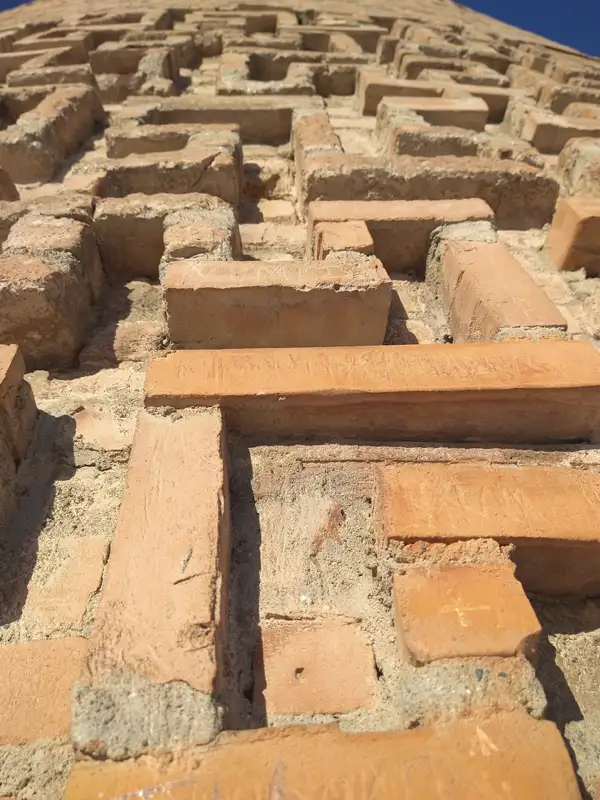
Balasagun developed in the Chüy Valley on the site of an earlier settlement and became one of the centres of the Karakhanid state in the tenth and eleventh centuries. The minaret dates to the eleventh or twelfth century. It was originally taller, but earthquakes destroyed the upper section. The present tower has an octagonal base and a round, tapering shaft with patterned brickwork.
The city is associated with Yusuf Balasaguni, author of Kutadgu Bilig. His biography opens a view onto Balasagun’s eleventh-century intellectual world, while the practical route and the history of the surviving site remain here.
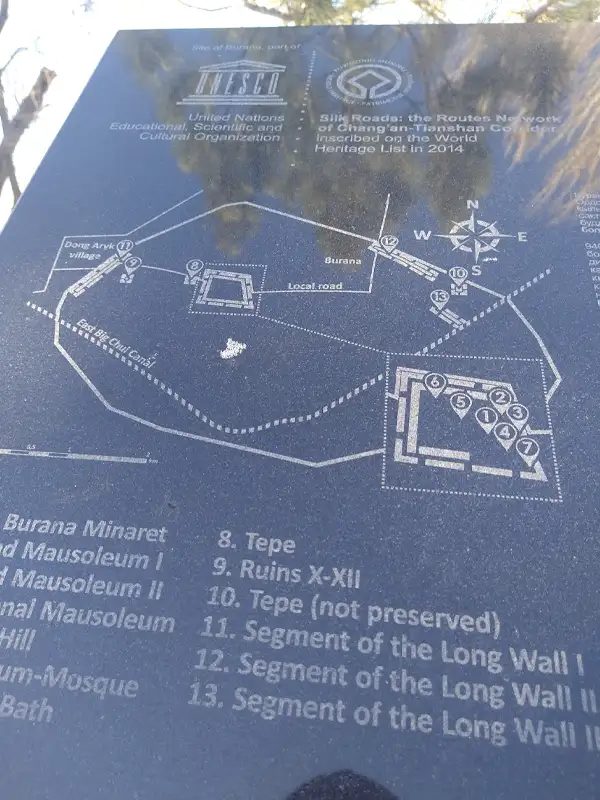
The Mongols did not simply destroy the city in one day. UNESCO material says that it survived in the thirteenth century under the name Gobalik, later declined and disappeared by the fifteenth century. The Balasagun settlement now forms part of the transnational UNESCO property Silk Roads: the Routes Network of Chang'an-Tianshan Corridor.
Our guide to the Silk Roads in Kyrgyzstan places Balasagun within the wider network of Chüy Valley cities, Tash Rabat, Osh and Uzgen, without turning them into a single invented route.
A legend tells of a khan who built the tower while trying to save his daughter from a predicted death by karakurt bite. This is folklore, not an explanation of the building's purpose. Archaeologists identify the tower as a minaret.
What to see at the site
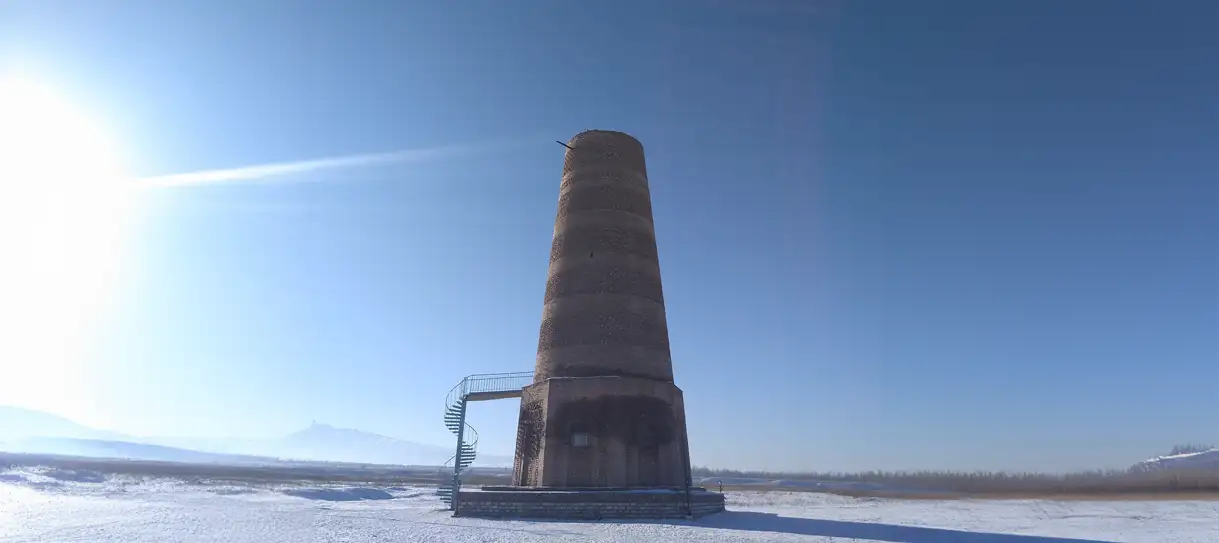
 1/4. Patterned minaret brickwork
  2/4. View across the Chüy Valley
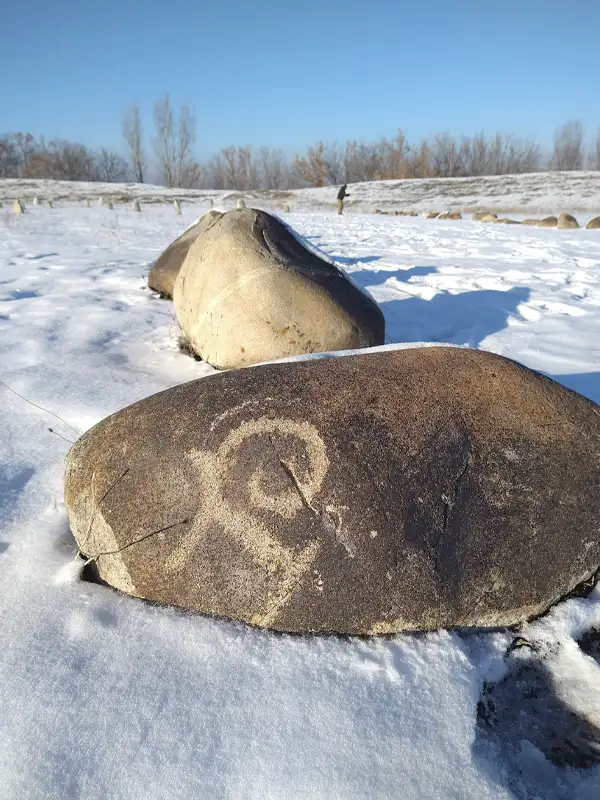
  3/4. Stone figures in the lapidarium
  4/4. Museum of the archaeological complex
 Minaret. Examine the bands of differently patterned brickwork, then climb the internal staircase if the entrance is open. Space at the top is limited. Pass people coming the other way only where you can stop safely.
Museum. The small display connects the tower with its city. Ceramics, coins and household objects provide more context than an outside view of the minaret alone.
Balbals and stones with petroglyphs. An open lapidarium stands nearby. Many objects were moved here from elsewhere in the Chüy Valley, so their current arrangement is not an untouched ancient cemetery around the tower.
Settlement. Earthworks and raised areas are less obvious than the tower. Follow permitted paths and do not climb archaeological remains. One to two hours is enough for the complex, but the museum and an unhurried walk deserve more than a quick photograph at the entrance.
Share on social media
If you found this guide useful, share it on social media. It takes a moment and helps more travellers discover the project. Thank you!
Anything to add?
Share your experience, leave a comment or suggest an improvement.