Contents:
What samsa means in Kyrgyzstan
Samsa and somsa: Russian-language menus in Kyrgyzstan usually use samsa, while Uzbek signs and captions often use somsa. Both names refer to the same family of baked pastries.
Samsa is a sealed savoury pastry made from wheat dough and a filling. In Kyrgyzstan, it appears at markets, bakeries, teahouses and small roadside stalls. One hot samsa makes a quick snack; two large ones with tea can amount to lunch.
The dish belongs to a broad Central Asian tradition. Samsa is made in Kyrgyzstan, Uzbekistan, Kazakhstan, Tajikistan, Turkmenistan and the Uyghur regions of China. A useful local guide therefore concentrates on oven, dough and filling without assigning a shared food to one country.
Southern Kyrgyzstan is particularly associated with tandoor samsa filled with meat and onion. In Bishkek and northern towns, triangular flaky samsa from a conventional oven often sits alongside it. Both are familiar, but the crust and density of the pastry differ.
What the tandoor changes
The tandoor is heated first, then the baker presses the prepared pastries against its hot inner wall. The base sets quickly on the clay while radiant heat cooks the top. Long tools help lift each samsa out before it can fall onto the embers.
Tandoor samsa develops a firmer, drier shell while the sealed filling holds meat juices and melted fat. A conventional oven heats more gently and suits laminated dough. A home oven captures the principle of a hot sealed bake, although direct contact with a scorching clay wall produces a different crust.
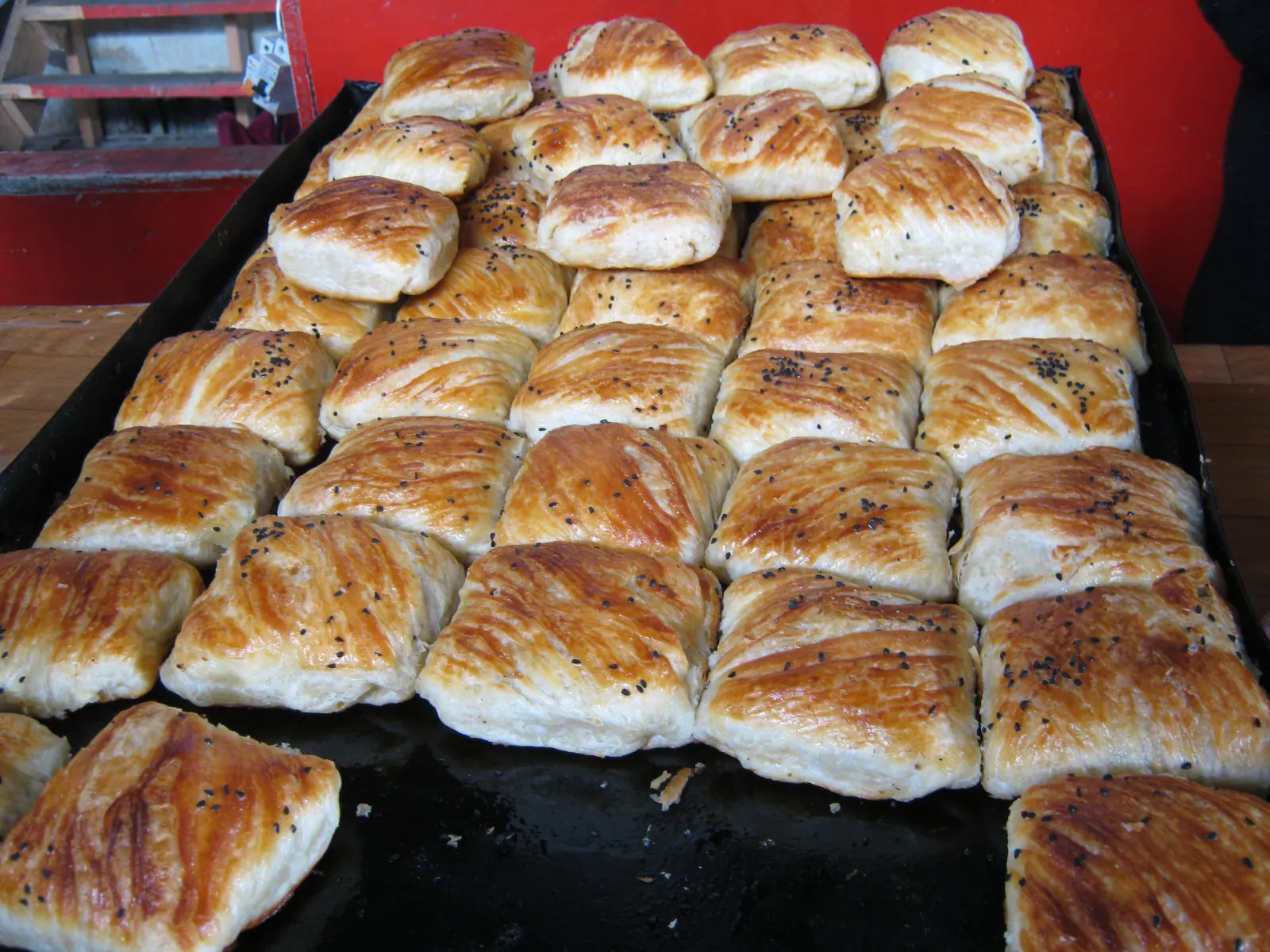 1/3. Oven-baked samsa, Osh Photo: Osmonaliev A., Wikimedia Commons, CC0 1.0; edited for this site.
 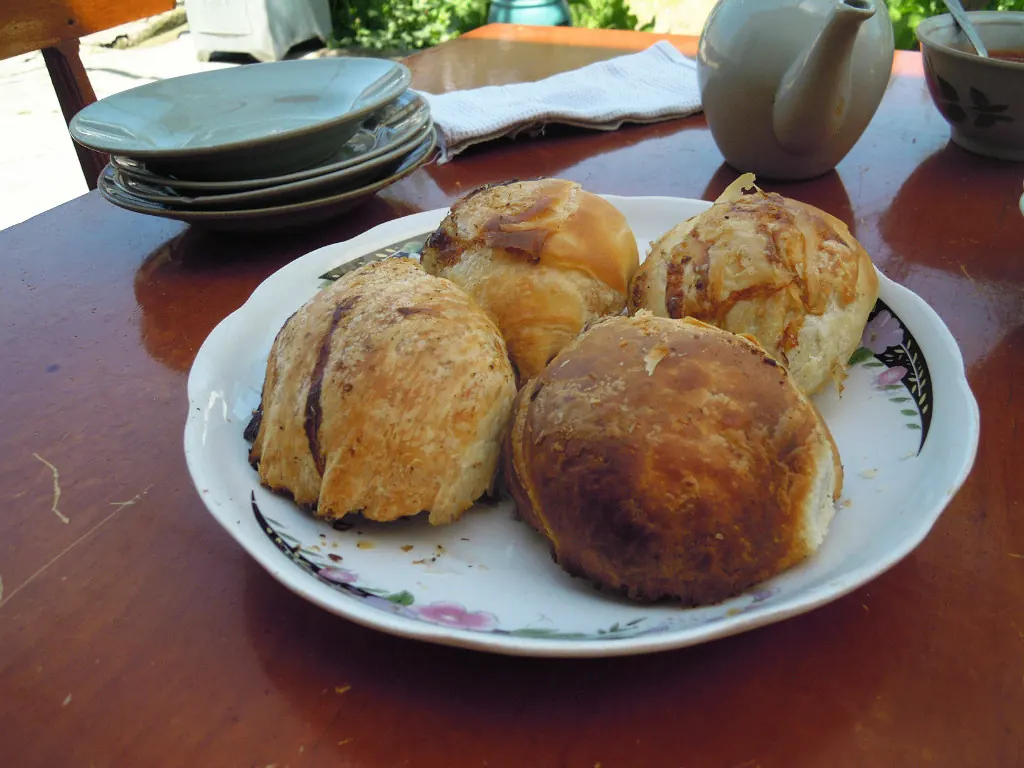 2/3. Tandoor samsa, Samarkand Photo: Farsizabon, Wikimedia Commons, CC BY-SA 4.0; edited for this site.
 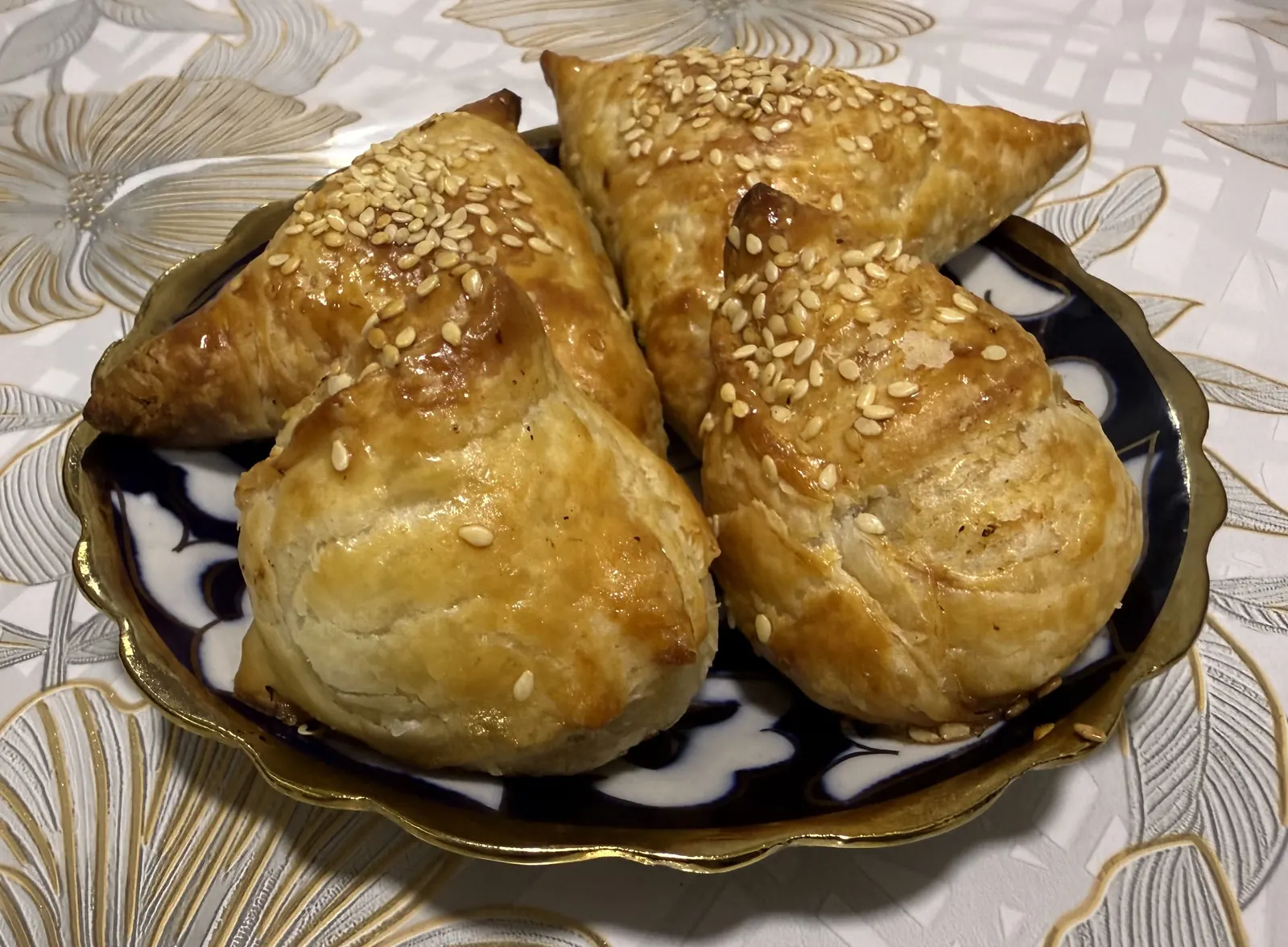 3/3. Homemade samsa, Tashkent Photo: Panpanchik, Wikimedia Commons, CC BY 4.0; edited for this site.
 Dough, shapes and fillings
Unleavened dough made with flour, water, salt and a little fat withstands fierce heat and supports a heavy meat filling. For the flaky version, the cook rolls out the dough, spreads it with butter, folds or coils it, chills it and divides it again. Thin crisp layers appear where the coil is cut.
The meat filling usually combines lamb or beef with plenty of onion. Tail fat adds moisture, while cumin, coriander and black pepper alter the aroma. Ask before buying: a batch may contain mixed meats, and a label that simply says meat does not tell you which kind.
Pumpkin and potato make distinct meat-free fillings. Neighbouring Uzbek traditions also include green samsa with spinach and herbs, oversized Jizzakh samsa, thin flaky versions and fried forms. A Kyrgyz bakery usually offers a shorter range that can change with the season.
Shape helps a baker distinguish batches, but there is no universal code. A triangle can hold meat, pumpkin or potato, and a round samsa does not guarantee any particular filling. Asking the seller and checking whether trays are labelled separately is more reliable.
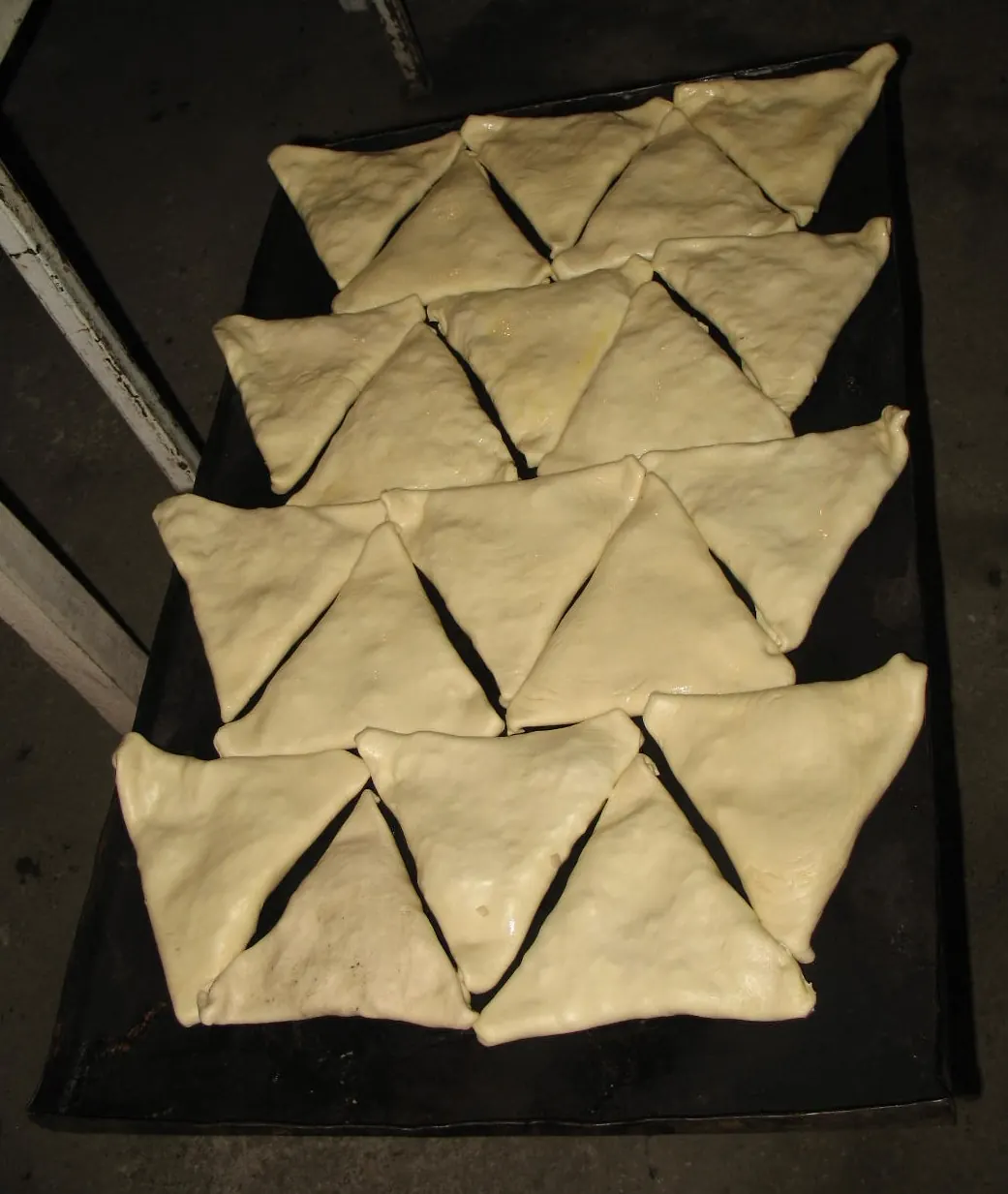 1/3. Samsa ready for baking, Karakol Photo: Firespeaker, Wikimedia Commons, CC BY-SA 3.0; edited for this site.
 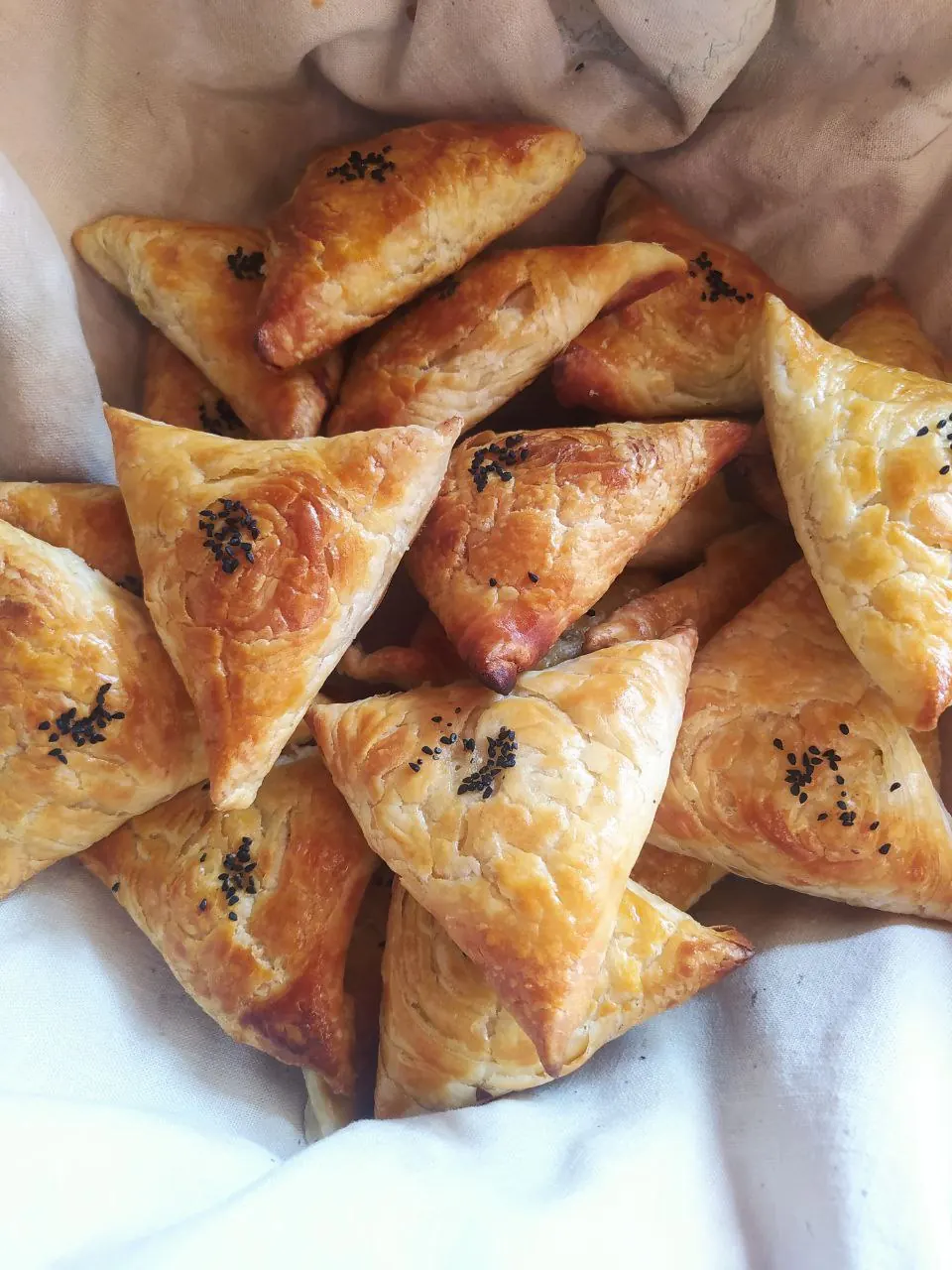 2/3. Green samsa, Uzbekistan Photo: Zahro designer, Wikimedia Commons, CC BY 4.0; edited for this site.
 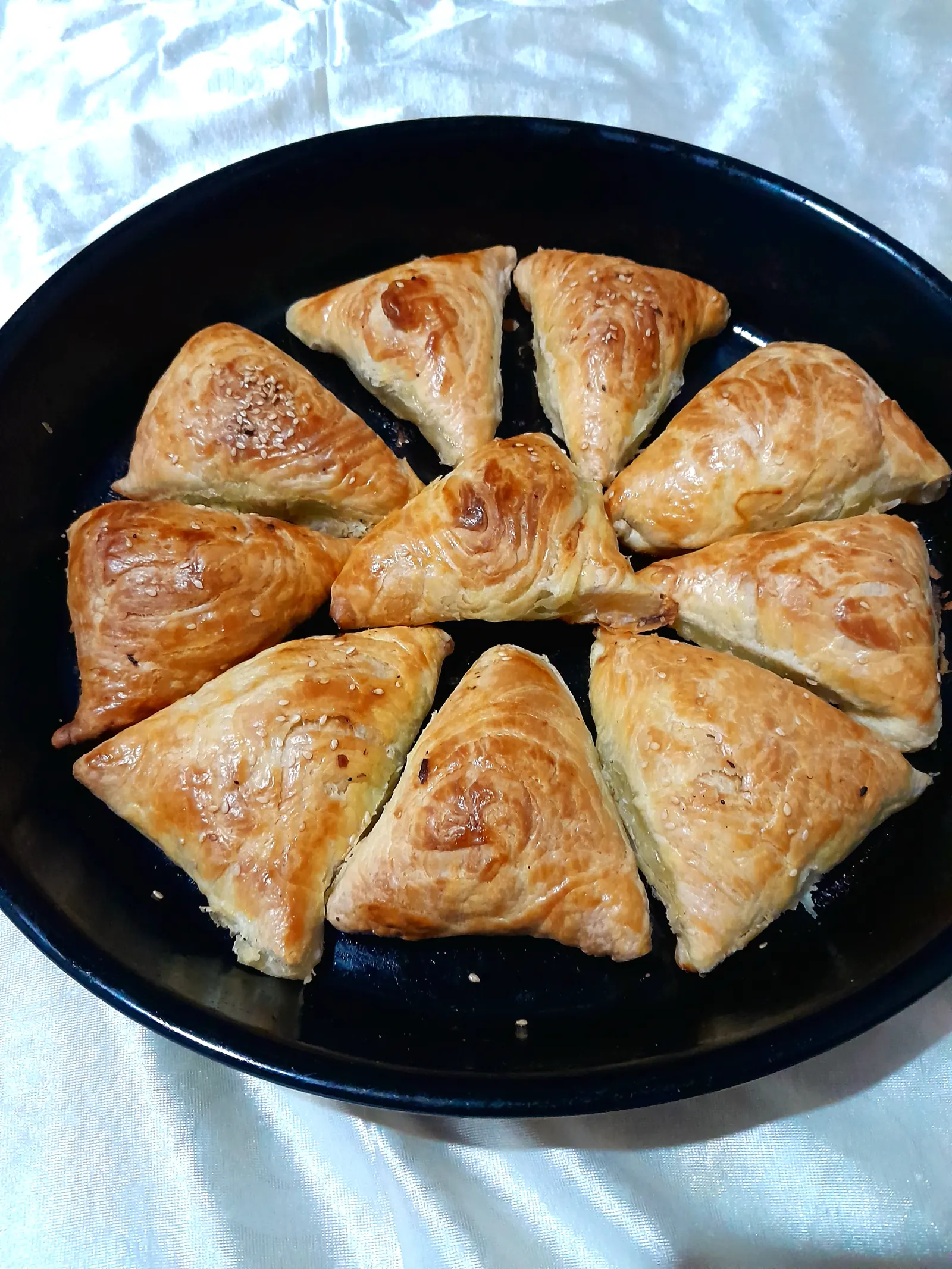 3/3. Flaky samsa, Uzbekistan Photo: Miss Kamola, Wikimedia Commons, CC BY-SA 4.0; edited for this site.
 Where to try samsa
Osh is the clearest place to begin with tandoor samsa. The local tourism portal Destination Osh highlights meat and onion as well as pumpkin and potato fillings. Look for a stall where you can see the tandoor and new batches keep appearing.
At a market, walk along the row once before choosing. Compare size, pastry and queue. A strong baking smell suggests a recent batch, but turnover is the better clue: samsas moving straight from the rack to customers have little time to sit around.
In Karakol, Bishkek and other cities, tandoor and oven-baked samsa are sold side by side. On a southern trip, combine it with Uzgen and Osh plov; in the north, compare it with local tandoor bread. A stall, baker and baking schedule can change, so an old list is rarely worth crossing a city for.
How to choose a fresh and safe samsa
Choose from the current batch and eat it hot. Meat pastry needs a thoroughly cooked centre and safe holding after baking. The WHO guide for travellers recommends thoroughly cooked food that remains steaming hot and warns against prepared dishes left at room temperature for hours.
Check whether raw parcels and finished pastries are separated and whether the serving tongs and counter are clean. A long queue helps only when the stall also works carefully. If the samsa is merely lukewarm, sits without heat and nobody knows when it was baked, wait for the next fresh batch.
For a journey, keep the pastry separate from chilled food and eat it soon. At home, cool leftovers promptly, refrigerate them and reheat until the centre is hot. A microwave warms the filling but softens the crust; the oven restores more of its texture.
How to order and eat it
Ask about the filling, meat and size before ordering. A large Osh samsa can weigh far more than a small flaky triangle. For a first tasting, buy one of several versions for the table, cut them open and compare pastry, onion and fat.
Samsa is eaten by hand. Break the first corner cautiously and let the steam escape. Green or black tea balances a rich filling, and a separate sauce is optional. Sauce can help a dry serving, but it cannot put the lost juices back inside.
Wheat pastry contains gluten. A flaky batch may use butter, margarine or animal fat, and the top often carries egg and sesame. Pumpkin or potato filling does not automatically make the whole pastry vegan, so ask about the dough, glaze and shared baking tray.
The recipe below is designed for a conventional oven and laminated dough. It makes 12 triangular beef samsas. The stated weight refers to each raw parcel because the finished weight varies with the moisture in the meat, onions and oven.
Homemade flaky beef samsa
Photo: Osmonaliev A., Wikimedia Commons, CC0 1.0; edited for this site.
A reproducible conventional-oven recipe for 12 triangular samsas, about 130 g each before baking, with measured ingredients and separate steps.
Cuisine: Kyrgyzstan and Central Asia. Category: Savoury baking. Yield: 12 pieces, about 130 g each before baking. Preparation: . Cooking: . Total time: .
Ingredients:
- 340 g plain wheat flour, plus a little for rolling
- 240 ml water
- 18 g salt: 7 g for the dough and 11 g for the filling
- 150 g softened unsalted butter for laminating
- 600 g minced beef
- 150 g finely chopped onion
- 2 tsp ground coriander
- 2 tsp ground black pepper
- 1 egg and 10 ml water for the glaze
- 10 g white or black sesame seeds
Method:
Step 1. Dissolve 7 g salt in 240 ml water. Add the flour gradually, knead to a smooth firm dough for 4-5 minutes, cover and rest for 10 minutes.
Step 2. Divide the dough into six equal pieces. Roll each into a circle about 20 cm wide. Stack the circles, spreading butter between every layer except the top one.
Step 3. Cover the stack and chill it in the freezer for 10 minutes. Roll it into a rectangle about 5 mm thick, then coil it tightly from the long edge into a log.
Step 4. Mix the minced beef, onion, coriander, black pepper and the remaining 11 g salt. Keep the filling chilled until shaping.
Step 5. Preheat the oven to 200°C. Line a large baking tray with baking paper or grease it lightly.
Step 6. Cut the dough log into 12 equal rounds. Press each round cut-side up to retain the visible layers, then roll it into a circle about 15 cm wide.
Step 7. Place 1-1.5 tbsp filling in the centre. Bring up three edges, pinch the seams securely and set the triangle seam-side down on the tray.
Step 8. Whisk the egg with 10 ml water, brush the parcels and sprinkle them with sesame.
Step 9. Bake for 20-25 minutes until golden. The filling must cook through; if you use a thermometer, the centre of the meat should reach 71°C.
Step 10. Leave the samsas on the tray for 5 minutes, then serve hot. Steam and juices inside remain considerably hotter than the crust.
Share on social media
If you found this guide useful, share it on social media. It takes a moment and helps more travellers discover the project. Thank you!
Anything to add?
Share your experience, leave a comment or suggest an improvement.