Contents:
How the tandyr works
The tandyr is first heated with fuel. Once the coals have dropped to the bottom, flatbreads are attached to the hot wall. The baker works quickly, moistening the underside of the dough, pressing it into place with a special cushion and removing the baked bread with a metal hook and paddle.
The centre is made thinner and pierced with a bread stamp or fork. The holes prevent one large bubble from forming, leaving the centre flat while the wide rim rises. Sesame, nigella and other seeds are possible but not compulsory.
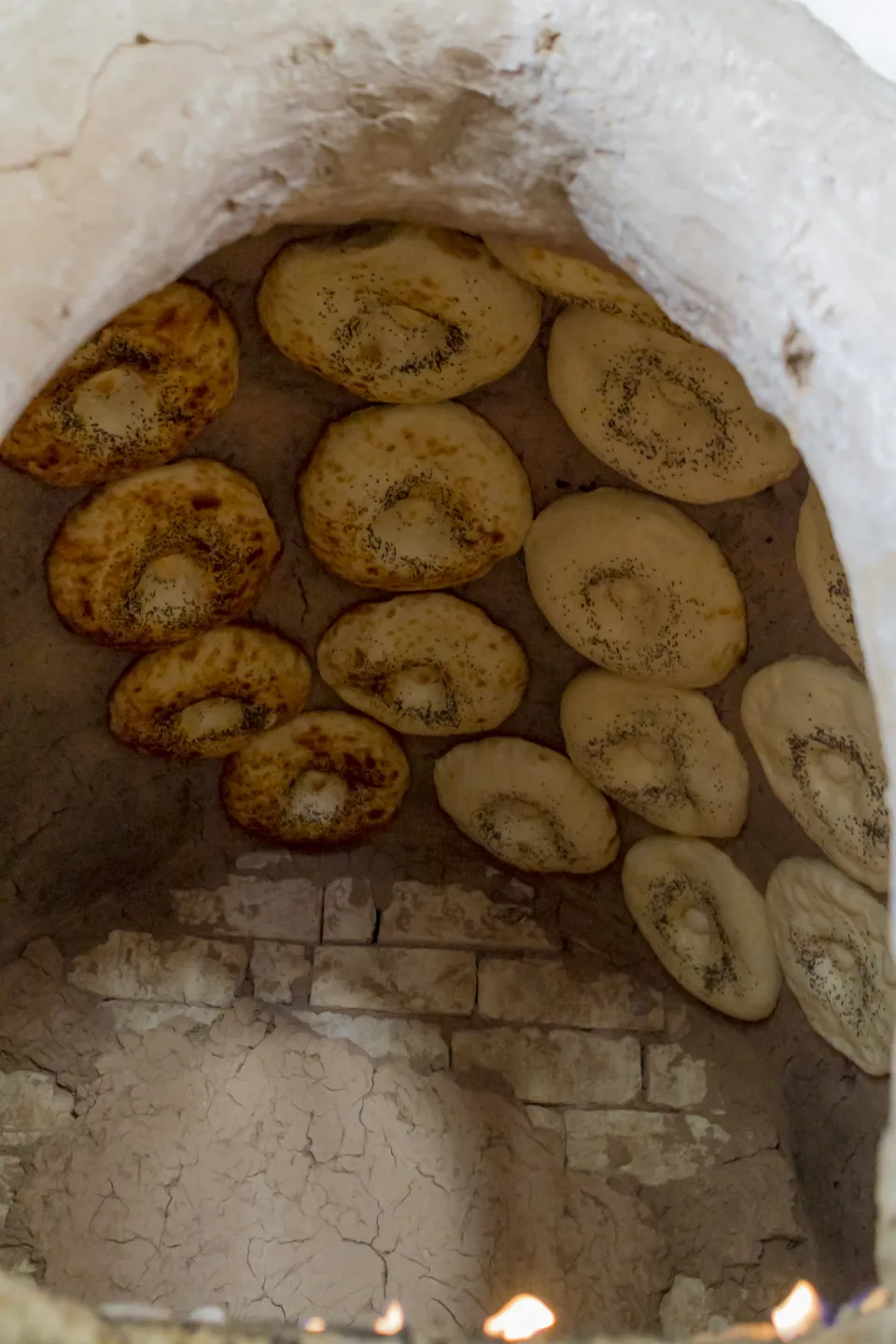 Flatbreads inside a tandyr in Tashkent. Photo: Benjamin Goetzinger, Wikimedia Commons, CC BY-SA 4.0; edited for this site.
Tandyr baking belongs to a shared Central Asian bread tradition. Among Kyrgyz people, it became particularly established in the south of the country and also appeared in the Chuy and Talas valleys. It is therefore more accurate to describe a regional technique than a product belonging to one national cuisine alone.
Where to find and how to choose a flatbread
Fresh tandyr nan is sold at dedicated bakeries, markets and places where the oven itself is visible. A good flatbread is cooked through at the rim and breaks easily without crumbling into dry dust. Dark marks from the wall are normal; a wet, sticky centre means the bread was removed too soon.
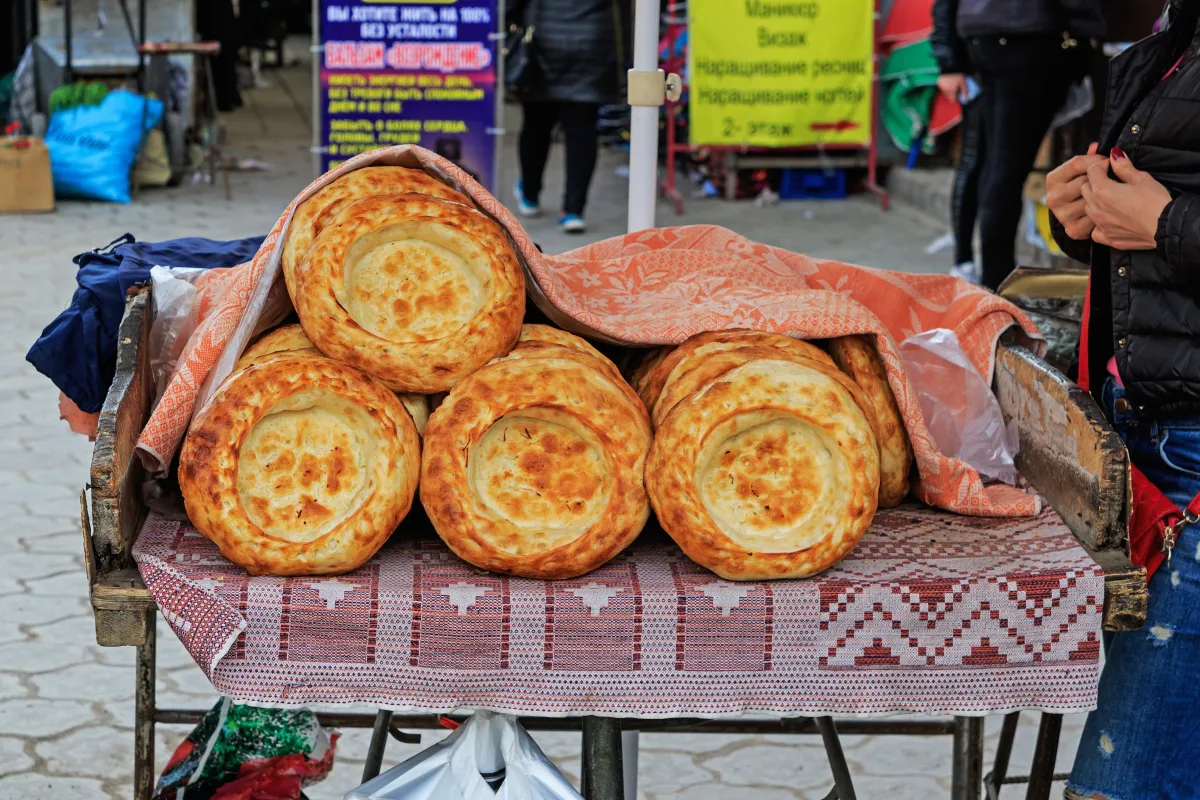 Fresh flatbreads at a market in Kant. Photo: A.Savin, Wikimedia Commons, Free Art License 1.3; edited for this site.
Tandyr bread is best eaten on the day it is baked. It accompanies soup, meat, vegetables and tea. A cool flatbread can be sprinkled with water and warmed briefly, but its original crust cannot be restored completely.
The base is normally wheat, so the bread contains gluten. Milk, egg and seeds depend on the recipe and finish. If you have an allergy, do not rely on appearance alone.
Tandyr nan and other breads
The name tandyr nan describes the baking method. Tokoch is a broader word: in Kyrgyz it refers to homemade bread and flatbreads of different forms. A type of tokoch may be baked in a tandyr, but a fried flatbread or one cooked in a kazan is still tokoch.
A home oven is cooler than a tandyr and does not hold dough on a vertical clay wall. The recipe below creates a similar shape and browned rim, but is more honestly described as an adaptation. A preheated baking stone, steel or inverted heavy baking tray brings the crust closer.
A flatbread inspired by tandyr bread
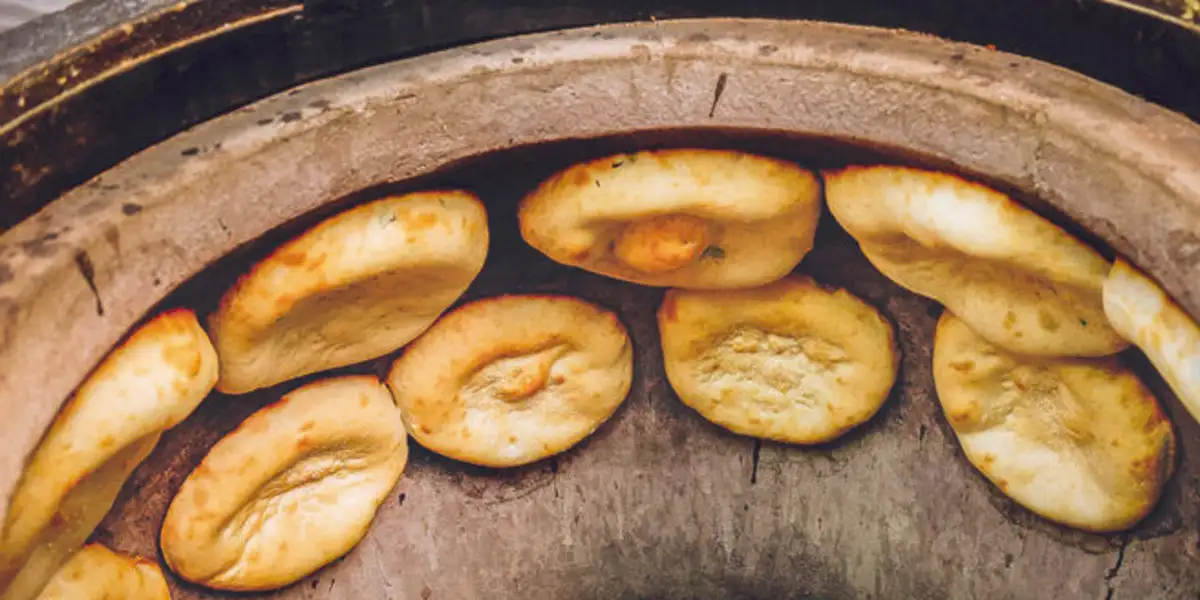
A home adaptation making two flatbreads. It recreates the shape and a short, intense bake but cannot replace bread baked on the wall of a real tandyr.
Cuisine: Central Asian. Total time: 2 hours.
Ingredients:
- 500 g wheat flour
- 300 ml warm water
- 7 g dried yeast
- 1 tsp sugar
- 1 tsp salt
- 1 tbsp vegetable oil
- sesame or nigella seeds, optional
- water to moisten the surface
Method:
Step 1. Combine the water, yeast and sugar. After 5-10 minutes, add the flour, salt and oil, then knead into a smooth, soft dough.
Step 2. Cover and leave for about 1 hour, until the dough has increased in volume.
Step 3. Place a baking stone or inverted heavy baking tray in the oven. Heat to its maximum temperature, ideally 240-250 °C.
Step 4. Divide the dough in half. Form two circles with a wide rim and thin centre.
Step 5. Pierce the centre repeatedly with a fork, lightly moisten the surface and scatter with seeds.
Step 6. Transfer the first flatbread on the underside of a cold baking tray or a wide board and carefully slide it onto the hot surface. Bake for 10-14 minutes until deeply golden.
Step 7. Bake the second flatbread in the same way. Cool the bread on a rack without covering it for the first 10 minutes.
Share on social media
If you found this guide useful, share it on social media. It takes a moment and helps more travellers discover the project. Thank you!
Anything to add?
Share your experience, leave a comment or suggest an improvement.