Contents:
Noodles and a meat-and-vegetable sauce
Lagman starts with an unleavened wheat dough that is rested thoroughly, oiled and pulled into long strands. Handmade noodles have a firm bite and stand up to the hot sauce. Cut noodles also appear, but provide a different texture.
The sauce uses lamb or beef, onion and vegetables. A common Kyrgyzstan version includes green radish, sweet pepper, tomato, garlic and herbs. The ingredients change with the season and family recipe: potatoes, beans, aubergine or cabbage may appear, but need not all be present at once.
Lagman is primarily connected with Uyghur and Dungan cuisines, but has long been a familiar part of food in Kyrgyzstan. Cultural exchange and local variations describe it more accurately than declaring every recipe a single “ancient national dish”.
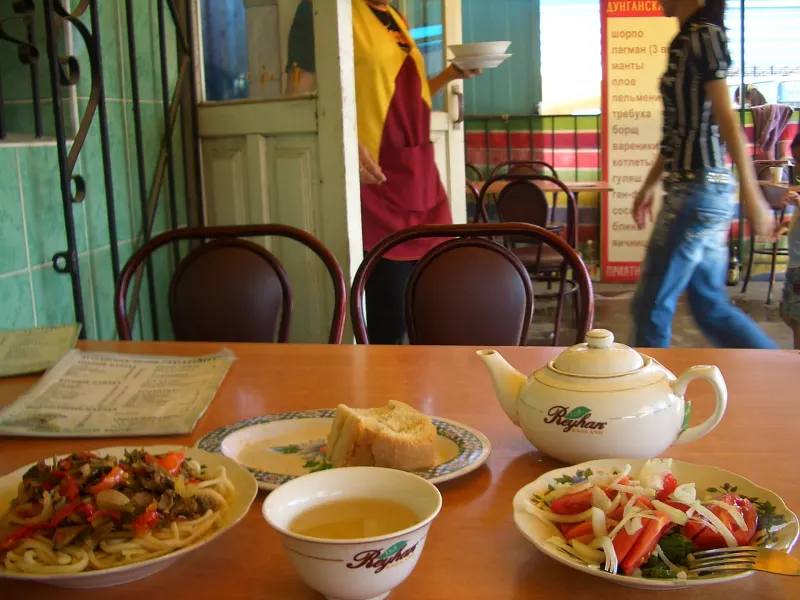 1/3. Lagman at a café in Dordoy Bazaar Photo: Vmenkov, Wikimedia Commons, CC BY-SA 3.0; edited for this site.
 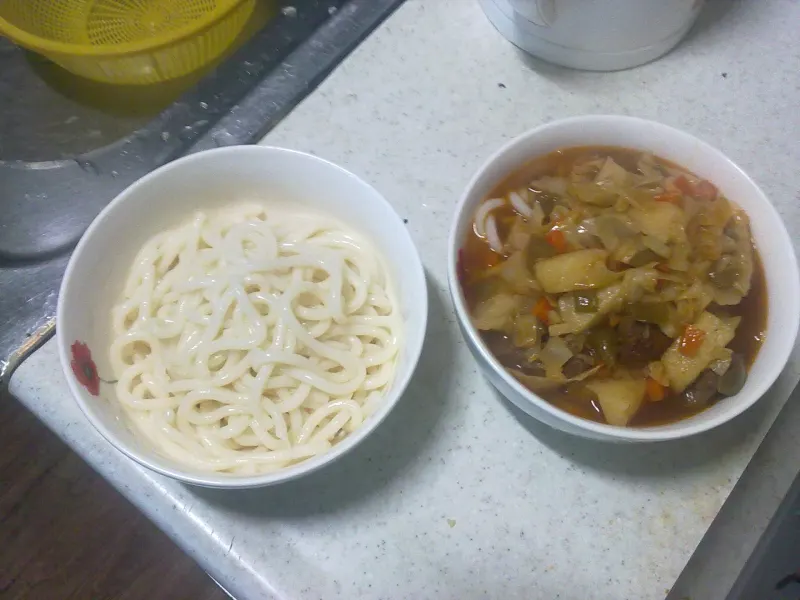 2/3. Noodles and sauce before combining Photo: Arthoum, Wikimedia Commons, CC BY-SA 3.0; edited for this site.
 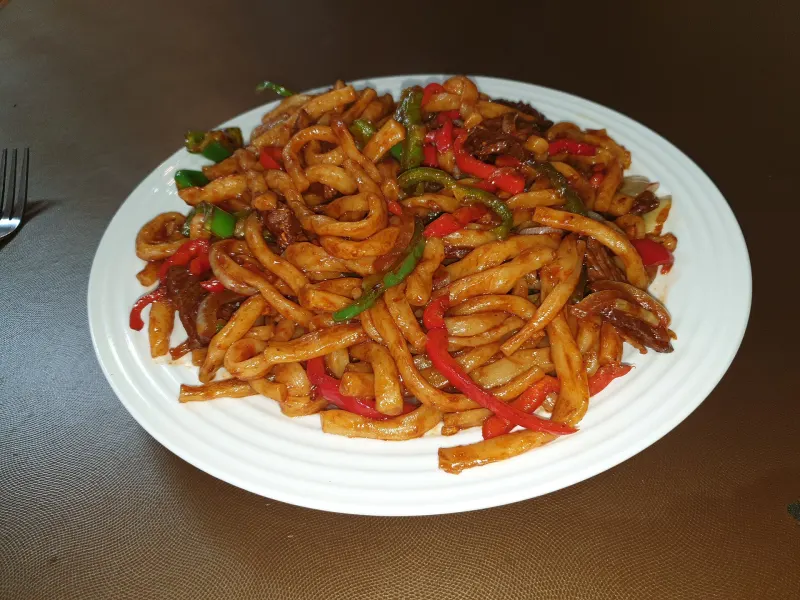 3/3. A Uyghur version with hand-pulled noodles Photo: Orderinchaos, Wikimedia Commons, CC BY-SA 4.0; edited for this site.
 Soupy, guiru and boso lagman
Ordinary lagman often comes in a deep bowl with a noticeable amount of broth. The balance of noodles and liquid changes even within one city, so a menu photograph tells you more about the style than the name alone.
Guiru lagman normally has a thicker sauce and more coarsely cut vegetables. Boso lagman is fried with the meat, vegetables and sauce after the noodles have been boiled. Spellings and recipe details vary, but this distinction helps you choose between a bowl with broth and fried noodles.
A hot sauce of chilli and garlic is often served separately. Add it gradually: the heat varies by restaurant, and an overly generous spoonful is difficult to undo.
How to choose lagman in a café
First ask which style it is: soupy, served with a thick sauce or fried. Then check the meat and level of heat. The sauce may have been prepared in advance, so removing one particular vegetable from a finished serving is not always possible.
The noodles contain wheat, while sauces may include soya, vinegar and chilli. Vegetarian lagman must be ordered specifically: an absence of visible meat does not guarantee vegetable broth. For cold noodles with a hot-and-sour sauce, look for ashlyam-fu.
Homemade lagman
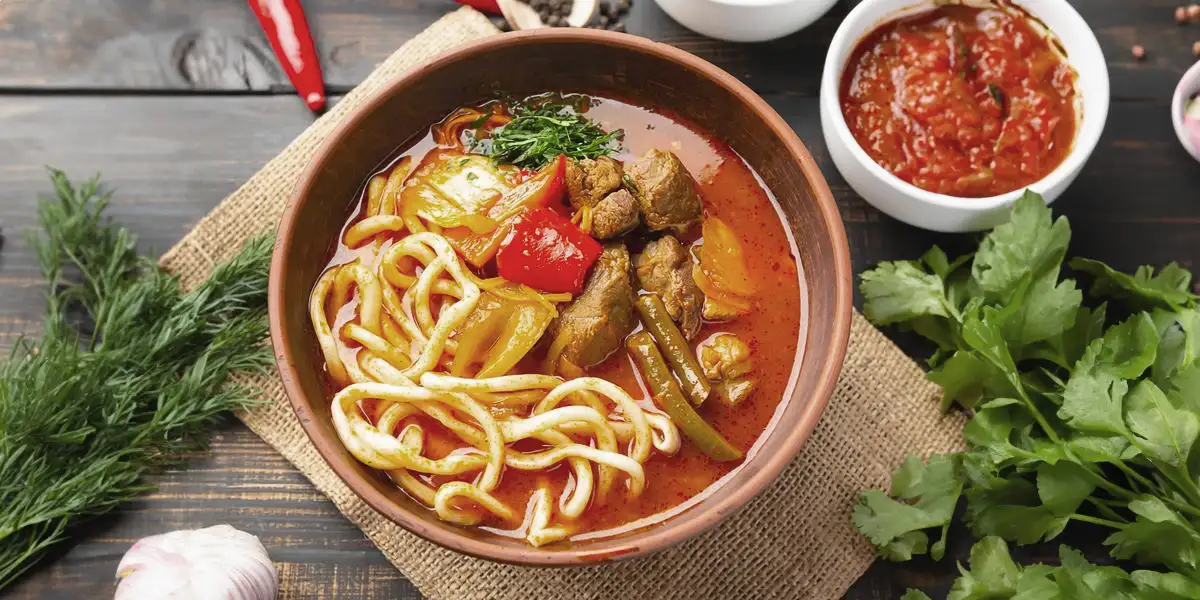
A recipe for 5-6 servings with meat-and-vegetable sauce and homemade noodles. Pull the noodles only after the dough has rested for a long time; for a first attempt, you can cut them thinly instead.
Cuisine: Uyghur, Dungan and Central Asian. Total time: 3 hours.
Ingredients:
- 500 g wheat flour
- 220-240 ml water
- 1.5 tsp salt for the dough
- 3 tbsp vegetable oil for the dough
- 600 g lamb or beef
- 2 onions
- 1 green radish
- 2 sweet peppers
- 2 tomatoes or 2 tbsp tomato purée
- 3 garlic cloves
- 600-800 ml water or unsalted stock
- 3 tbsp vegetable oil
- salt, red pepper and herbs to taste
Method:
Step 1. Dissolve the salt in the water, add the flour and knead into a firm dough. Cover and rest for 1 hour.
Step 2. Divide the dough into finger-thick ropes, coat with oil and arrange in spirals. Cover for another 1-1.5 hours.
Step 3. Cut the meat into small cubes and brown in a kazan or deep pan. Add the onions and cook until soft.
Step 4. Add the green radish, sweet pepper and tomato. Fry for 8-10 minutes, then pour in the water or stock and simmer until the meat is tender.
Step 5. Add the garlic, salt and pepper 10 minutes before the end. Adjust the liquid to your preferred consistency.
Step 6. Carefully pull each rope into a long noodle. If the technique does not work yet, roll out the dough and cut it thinly with a knife.
Step 7. Cook the noodles in batches in salted water for 3-5 minutes. Divide between deep bowls and add the hot sauce and herbs.
Share on social media
If you found this guide useful, share it on social media. It takes a moment and helps more travellers discover the project. Thank you!
Anything to add?
Share your experience, leave a comment or suggest an improvement.