Contents:
What ganfan is
Ganfan is a plate of fluffy rice with a hot meat-and-vegetable gravy. The rice stays plain, while the sauce carries the flavour through browned meat, onion, tomato, sweet or hot pepper and other seasonal vegetables.
The dish belongs to the Dungan and Uyghur food traditions of Central Asia. In Kyrgyzstan, it appears at home and in canteens and cafes beside lagman. The 1988 cookbook Dungan Cuisine, published in Frunze, explains gan mifan as “dry rice” and suggests serving it with a range of sauces, particularly fried vegetables and meat.
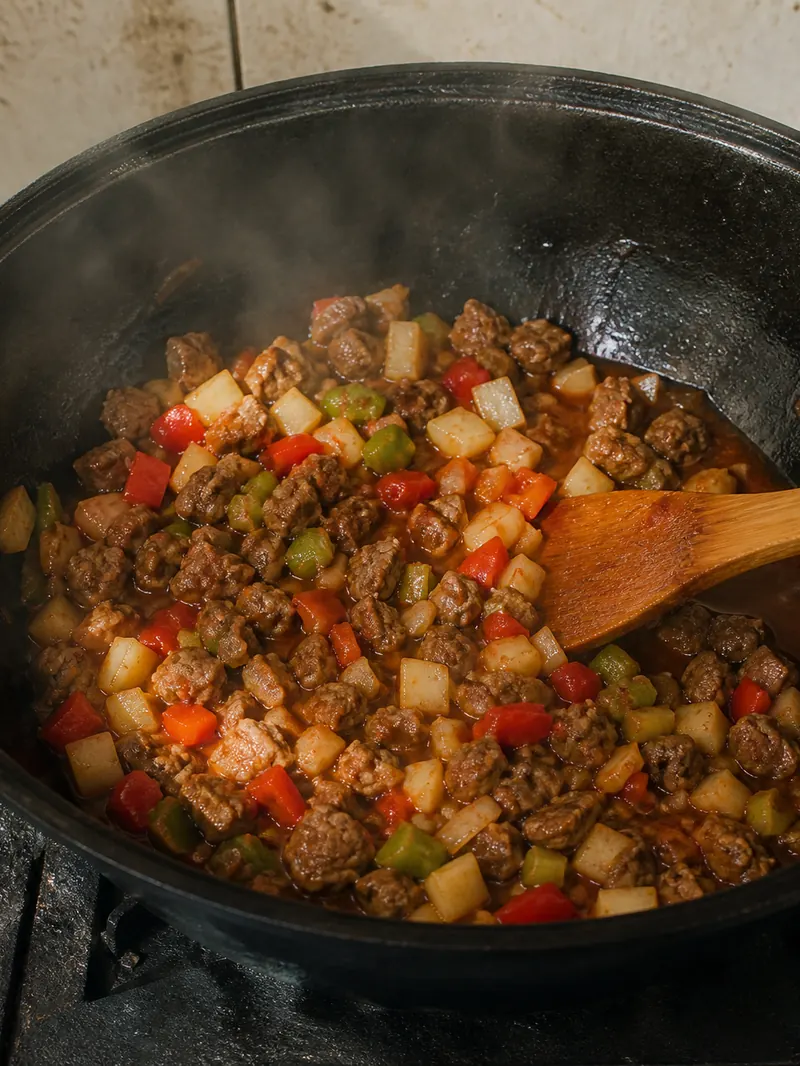 1/3. Editorial illustration: meat-and-vegetable gravy in a kazan Image: I Love KG, created with AI.
 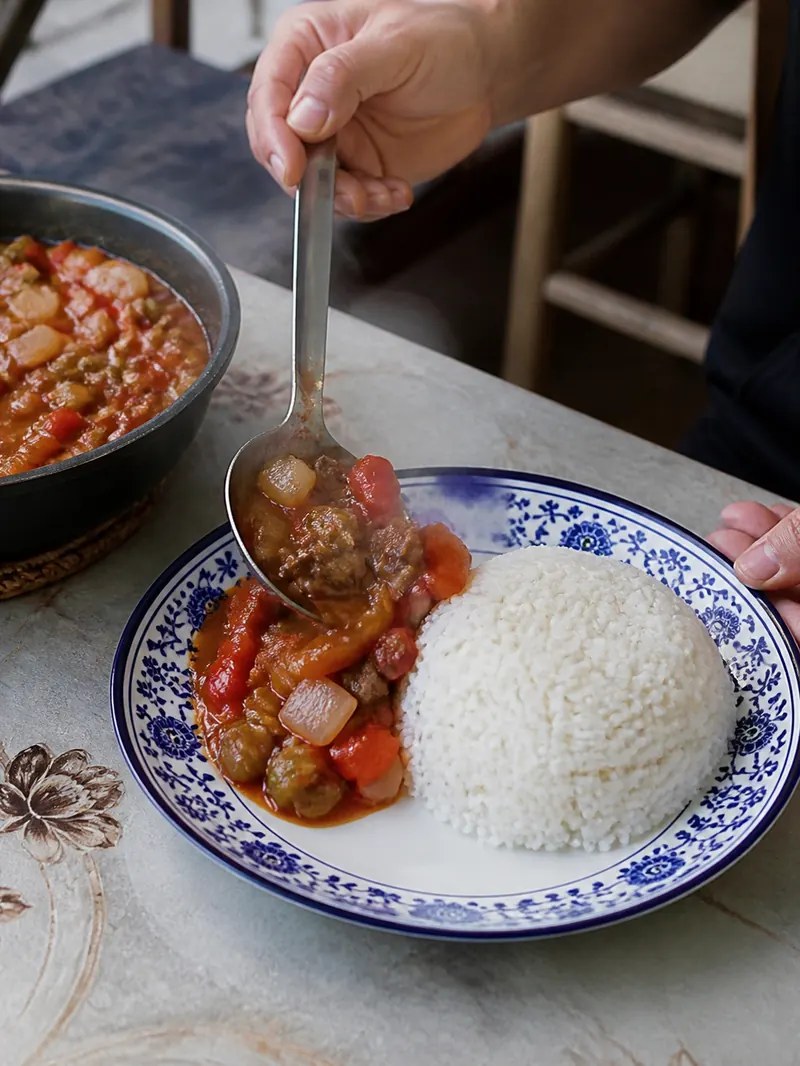 2/3. Editorial illustration: rice and gravy meet on the plate Image: I Love KG, created with AI.
 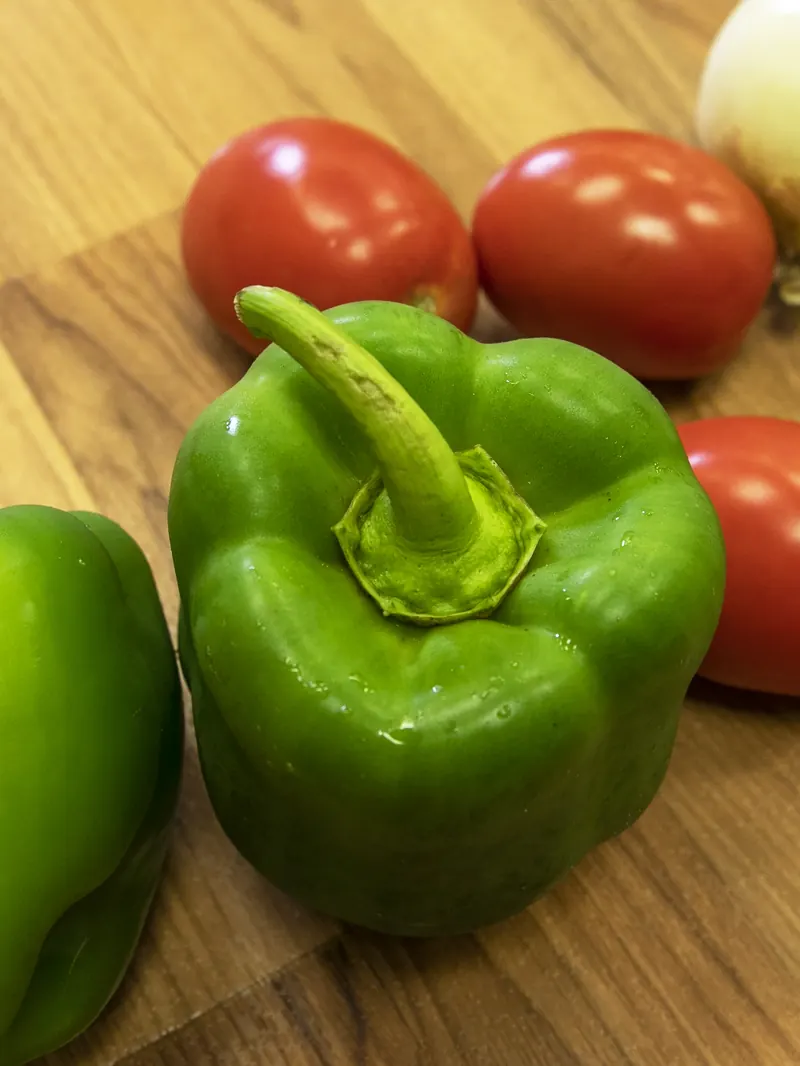 3/3. Peppers, tomatoes and onions appear in many modern versions Photo: Alabama Extension, Wikimedia Commons, CC0 1.0; edited for this site.
 The name: a Dungan-Russian dictionary defines ganfan as firmly cooked rice and links it to ganmifan. Menus normally use the shorter form, ganfan.
Why the rice is cooked separately
Separate cooking preserves two distinct textures. The rice stays dry and fluffy, so it starts absorbing the gravy only on the plate. The sauce can be bold, savoury and juicy without turning the rice into a soft mass.
Long-grain white rice is a practical choice at home. Rinse it until the water is nearly clear, soak it briefly, cook it under a tight lid and let it finish off the heat. In a more traditional method, the rice may be parboiled, drained and finished over steam.
Do not soak the entire mound in gravy before it reaches the table. Spoon the sauce beside the rice or cover only half: some grains absorb the juices while the rest keep their own texture.
How the gravy is built
The gravy starts with meat browned quickly over high heat. Onion and firm vegetables follow, then peppers, cabbage and tomatoes. Hot water or unsalted stock draws the meat juices and vegetables together into a loose sauce.
There is no single fixed vegetable list. Kyrgyzstan versions may include daikon or another radish, napa or white cabbage, sweet pepper, celery, potato, mushrooms and jussai. Season and the cafe's speciality shape the plate more than the basic name does.
The cut changes the way the dish eats. Larger pieces keep the meat and vegetables distinct; smaller dice release their juices faster and create a more even gravy. Either way, the sauce should run freely from a spoon rather than sit as a thick paste.
How ganfan differs from other dishes
Lagman can use a closely related meat-and-vegetable sauce, but serves it with long hand-pulled noodles. Ganfan uses rice. This is why the dishes often sit together on a menu and repeat the same sauce names.
In Osh plov, rice cooks in the kazan with meat, carrot, fat and zirvak, absorbing their aroma as it cooks. Ganfan keeps plain rice and a full-flavoured gravy separate. Mampar follows another structure: small pieces of dough finish cooking in a thick soup and are eaten with a spoon.
Cold Karakol ashlyam-fu also comes from Kyrgyzstan's Dungan food culture, but relies on noodles, starch jelly, vinegar and chilli sauce. Ganfan arrives hot and gets its substance from rice and meat gravy.
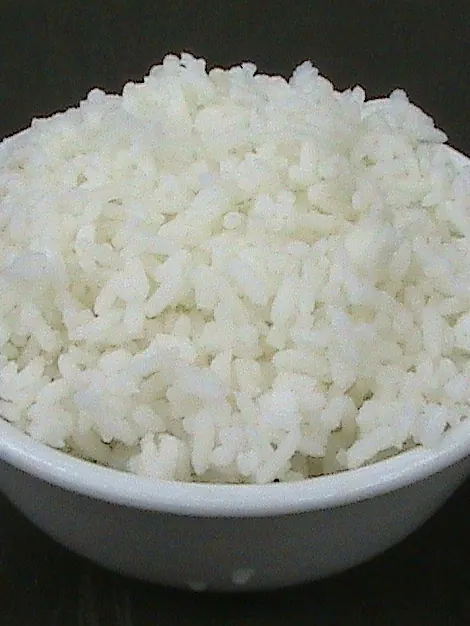 1/3. The plain rice is cooked separately from the gravy Photo: Anna Frodesiak, Wikimedia Commons, CC0 1.0; edited for this site.
 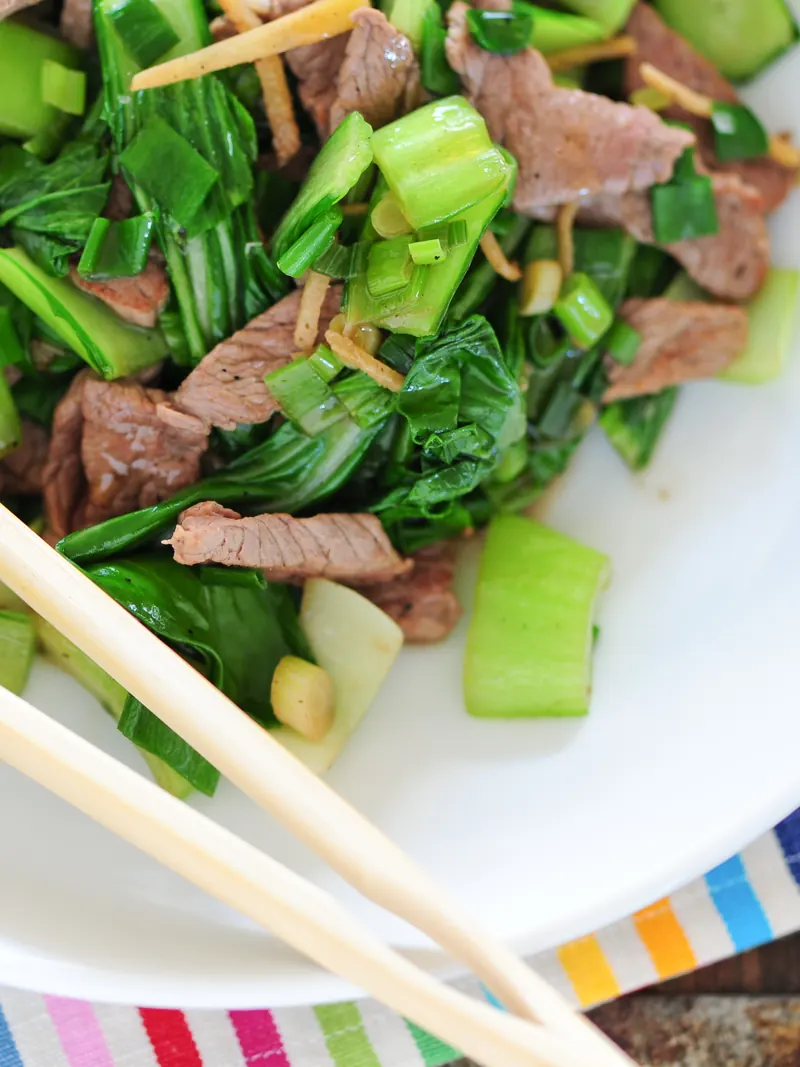 2/3. Fast frying keeps the meat and vegetables distinct Photo: Jules Clancy, Wikimedia Commons, CC BY 2.0; edited for this site.
 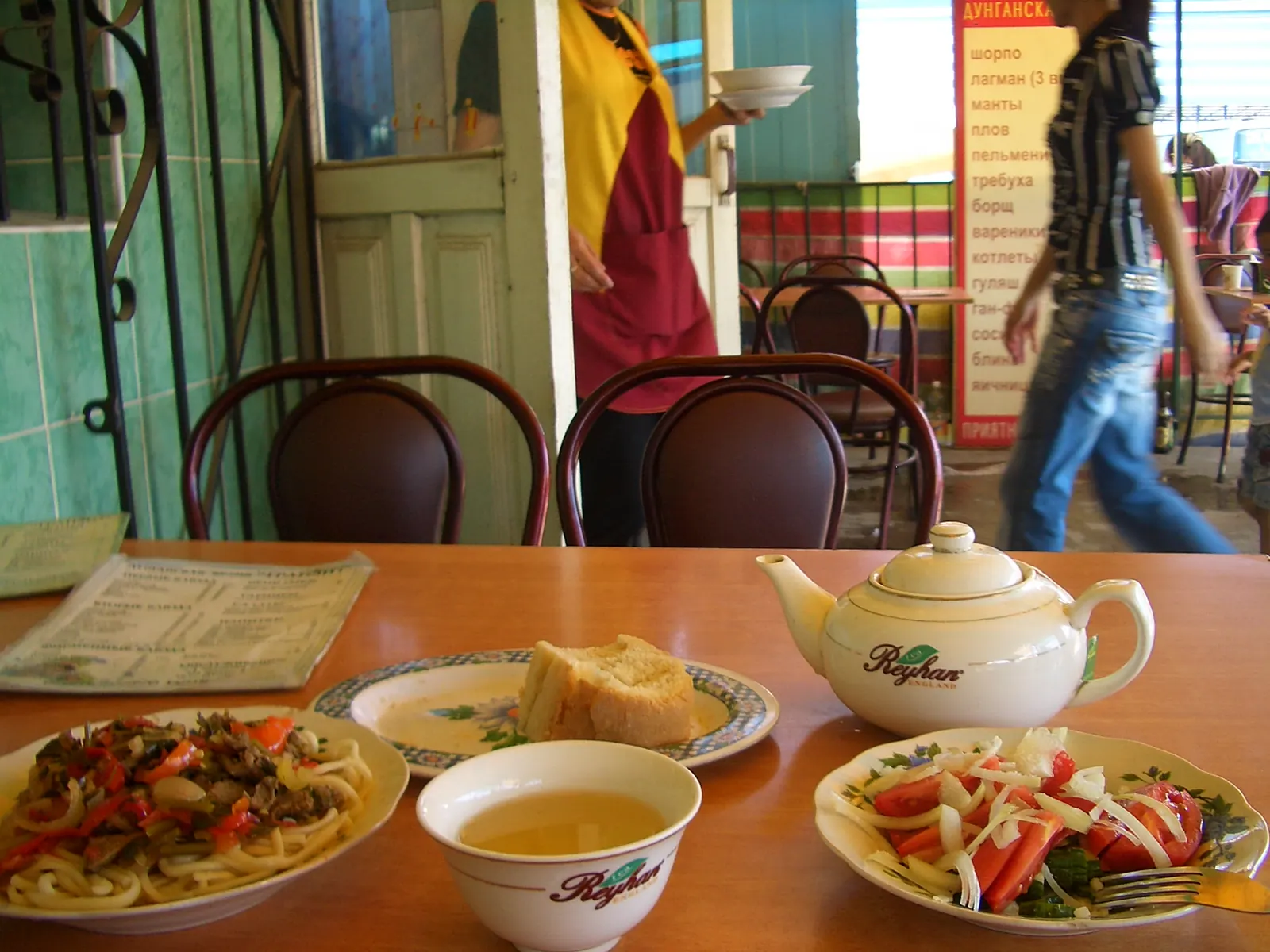 3/3. Ganfan and lagman often appear on the same Dungan menu Photo: Vmenkov, Wikimedia Commons, CC BY-SA 3.0; edited for this site.
 How to read the menu and order
In Bishkek, ganfan is easiest to find in Dungan and Uyghur restaurants and cafes that specialise in lagman. In Karakol, ashlyam-fu tends to claim more attention, but ganfan appears on broader menus from the same culinary tradition.
Guiru usually points to a coarser cut of meat and vegetables, suiru to a finer dice, and moguru to mushrooms. Treat these as useful clues, not universal rules. Before ordering, ask which meat is used, whether hot chilli is included and which vegetables are in today's batch.
Home-style ganfan is often simpler than the named variants. It works well for a first order because the rice, meat and vegetable gravy are easy to recognise on the plate. Ask for laza and vinegar on the side so you can taste the base before adjusting it.
Storing rice and gravy safely
Cut raw meat on a separate board and wash the knife before it touches cooked rice or fresh herbs. The beef must cook through, and the gravy should return to a steady boil after the meat goes back into the pot.
Store rice and gravy in separate shallow containers. Cool the rice quickly and refrigerate it. The UK's Food Standards Agency advises cooling it preferably within one hour, using it within 24 hours and reheating it only once, until steaming hot throughout.
Bring the gravy back to a confident simmer on its own. Add it to the rice on the plate rather than storing an assembled ganfan: the grains stay intact and both components reheat more evenly.
The recipe below fixes one home version with beef, daikon, peppers and cabbage. Nutrition figures are omitted because the finished weight depends on evaporation from the gravy and how much water the particular rice absorbs.
Ganfan with beef and vegetable gravy
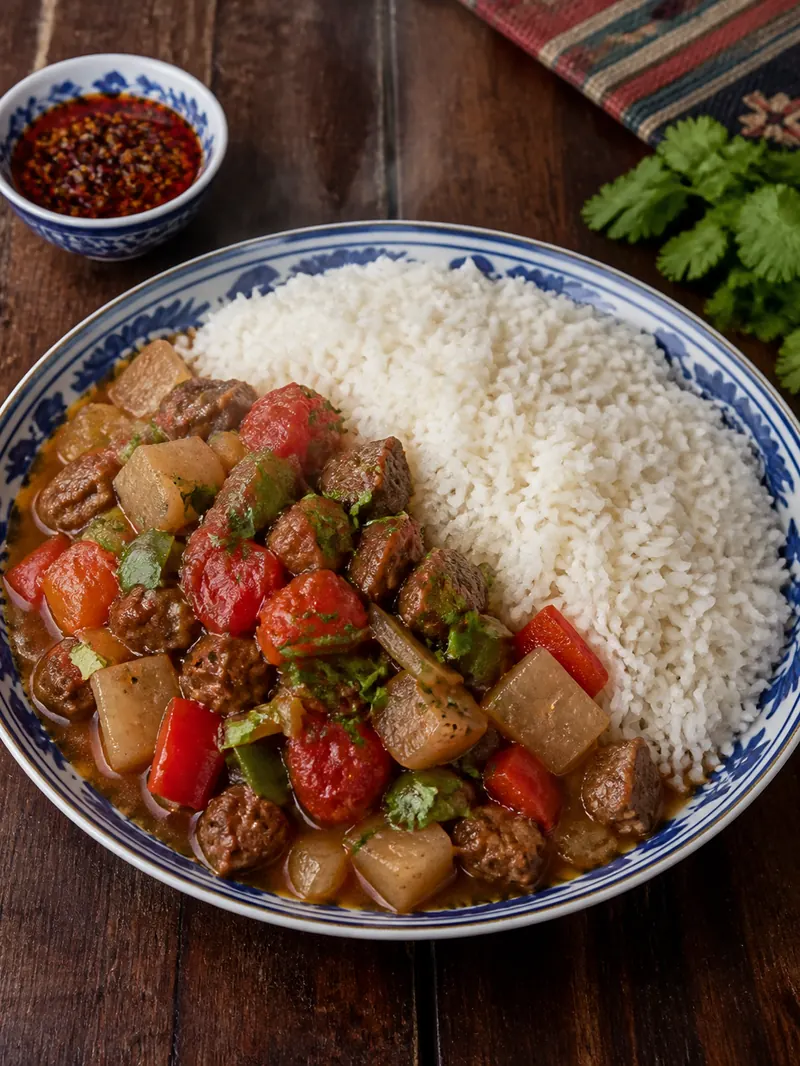
Image: I Love KG, created with AI.
A six-plate home version with fluffy long-grain rice and a loose gravy of beef, daikon, sweet pepper, cabbage and tomato.
Cuisine: Dungan and Uyghur cuisine of Kyrgyzstan. Category: Hot rice dish. Yield: 6 plates. Preparation: . Cooking: . Total time: .
Ingredients:
- 360 g long-grain white rice
- 540 ml water for the rice
- 4 g salt for the rice
- 600 g chilled beef shoulder
- 45 ml vegetable oil
- 240 g onion
- 20 g garlic
- 10 g fresh ginger
- 250 g daikon or green radish
- 250 g red and green sweet pepper
- 250 g napa cabbage
- 120 g celery stalks
- 400 g ripe tomatoes
- 30 g tomato paste
- 30 ml light soy sauce
- 500 ml hot water or unsalted meat stock
- 4 g salt for the gravy, then to taste
- 2 g ground coriander
- 1 g freshly ground black pepper
- 30 g coriander leaves or celery leaves
- rice or grape vinegar and laza chilli oil, to serve
Method:
Step 1. Rinse the rice five or six times, until the water is nearly clear. Put it in a saucepan with 540 ml water and 4 g salt, then leave it to soak for 20 minutes.
Step 2. Cut the beef on a separate board into 1.5-2 cm cubes or short strips. Slice the onion, cut the daikon and celery into short batons, and cut the peppers and cabbage into squares. Dice the tomatoes and finely chop the garlic and ginger.
Step 3. Bring the rice to a gentle boil, stir once and cover tightly. Cook over the lowest heat for 12 minutes. Turn off the heat and leave it covered for another 15 minutes without releasing the steam.
Step 4. Heat 30 ml oil in a heavy kazan or wide pot until very hot. Brown the beef in two batches for 3-4 minutes each. Transfer it to a clean plate.
Step 5. Add the remaining 15 ml oil and the onion. Cook for 3 minutes. Add the garlic and ginger and stir for another 30 seconds without letting the garlic darken.
Step 6. Add the daikon and celery and fry for 3 minutes. Add the sweet peppers and cabbage and cook over high heat for another 2 minutes. The vegetables should begin to soften but keep their shape.
Step 7. Add the tomatoes, tomato paste, soy sauce, coriander and black pepper. Cook for 5-6 minutes, until the tomatoes release their juice and the paste loses its raw smell.
Step 8. Return the beef and any juices to the pot. Pour in 500 ml hot water or unsalted stock. Once boiling, lower the heat and cook without a tight lid for 12-15 minutes. The gravy should run freely from a spoon. Add 4 g salt and adjust, allowing for the soy sauce.
Step 9. Fluff the rice with a fork. Mound it on each plate and spoon the gravy beside it or over half of the rice. Scatter with herbs and serve vinegar and laza separately.
Step 10. Divide leftover rice and gravy quickly between separate shallow containers and refrigerate. Use the rice within 24 hours and reheat it only once, until steaming throughout.
Frequently asked questions about ganfan
What is ganfan?
Ganfan is fluffy rice served with a hot meat-and-vegetable gravy. The rice is cooked separately, then the gravy is spooned beside it or over it just before serving.
How is ganfan different from lagman?
The gravies can be very similar. Ganfan pairs them with rice, while lagman uses long hand-pulled noodles.
Are ganfan and plov the same dish?
No. Ganfan rice is cooked separately and meets the finished gravy only on the plate. In plov, the rice cooks in the kazan with meat, carrot, fat and seasoned zirvak.
What do guiru, suiru and moguru mean?
On menus, guiru usually means a coarser cut of meat and vegetables, suiru a finer cut, and moguru a version with mushrooms. Names and ingredients vary between cafes, so ask about the meat and vegetables before ordering.
Is ganfan always spicy?
No. The gravy may be aromatic, but laza chilli oil and vinegar are often served separately. This lets you adjust heat and acidity on your own plate.
Can ganfan be made without meat?
A vegetable gravy can be made with mushrooms, daikon, sweet pepper, cabbage and tomato. In a cafe, still ask about the stock: no visible pieces of meat does not guarantee a vegetarian base.
Share on social media
If you found this guide useful, share it on social media. It takes a moment and helps more travellers discover the project. Thank you!
Anything to add?
Share your experience, leave a comment or suggest an improvement.