Contents:
What mampar is
Mampar is a thick soup made with meat, vegetables and small pieces of unleavened dough. The meat is browned with onion and tomato, then simmered in broth. Soft strips of prepared dough are torn or cut into little flags and dropped into the nearly finished soup.
The dish belongs to the Dungan and Uyghur food traditions of Central Asia. In Kyrgyzstan, it appears on home, canteen and café menus beside lagman and ashlyam-fu. The 1988 cookbook Dungan Cuisine, published in Frunze, calls it myanpyar and gives a core recipe plus versions with cabbage and potato.
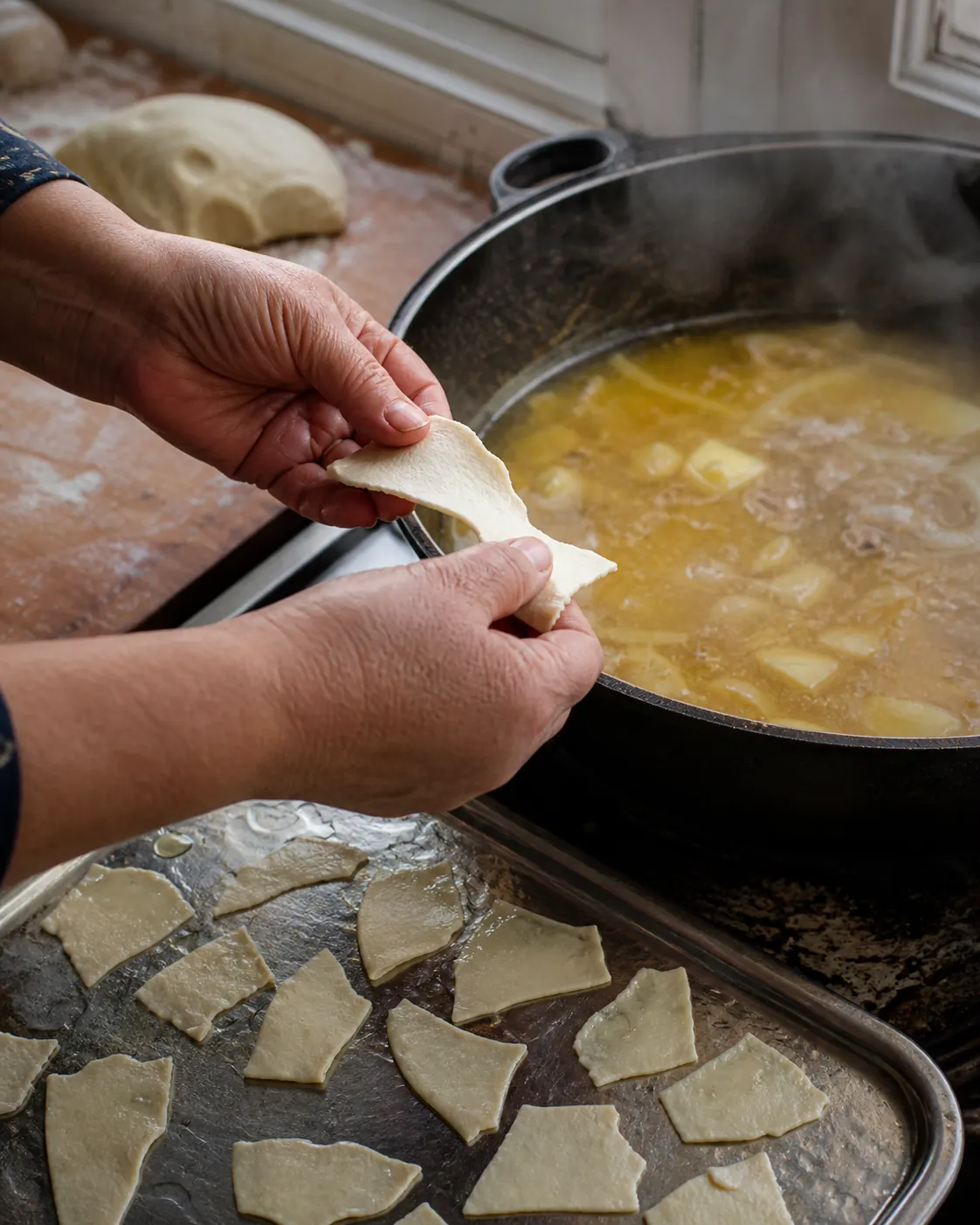 1/3. Editorial illustration: the dough is torn into small pieces Image: I Love KG, created with AI.
 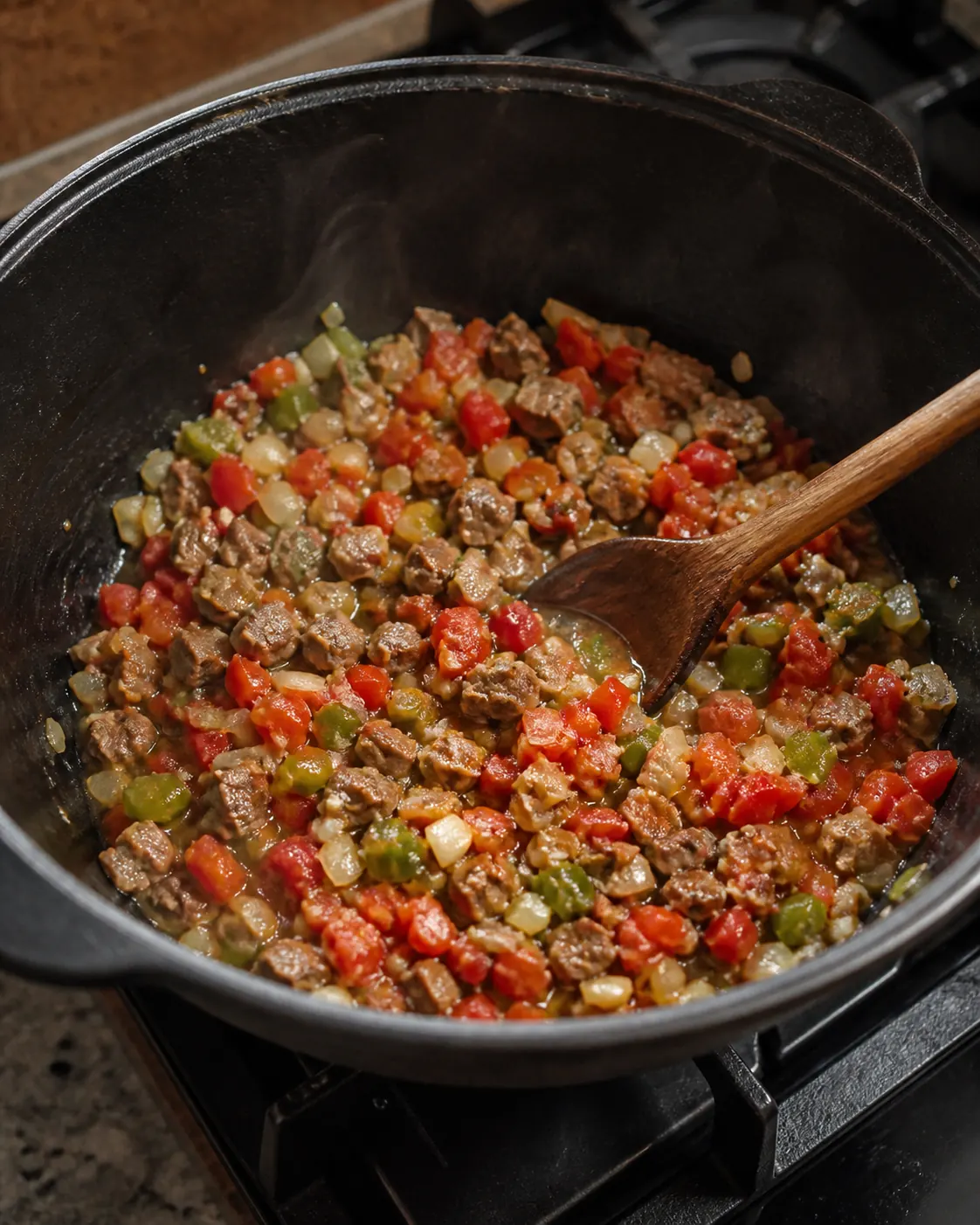 2/3. Editorial illustration: the meat and vegetable base Image: I Love KG, created with AI.
 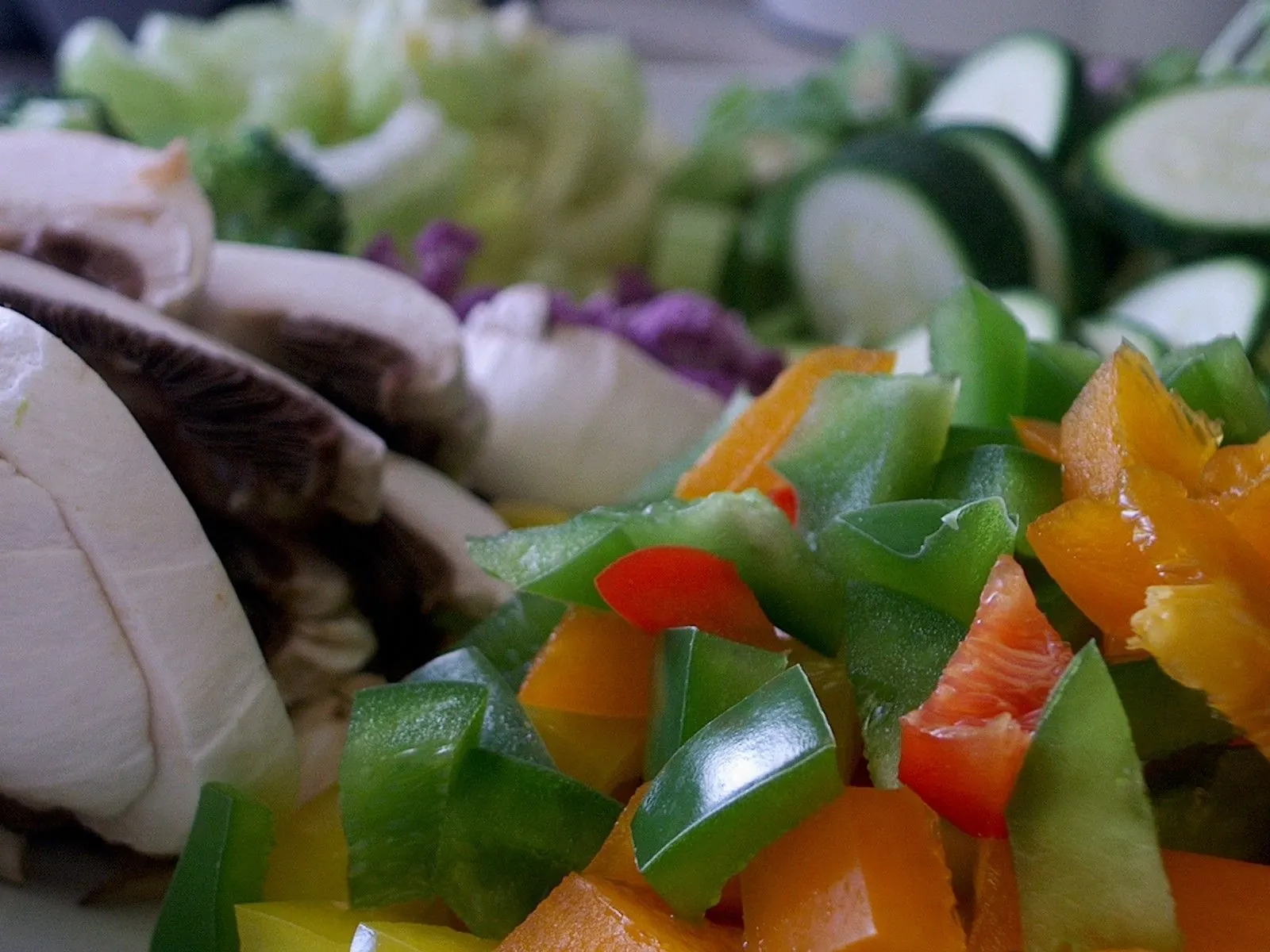 3/3. The vegetable mix changes with the season Photo: Alastair M. Robinson, Wikimedia Commons, Public domain; edited for this site.
 Names on menus: mampar, manpar, mampyar and myanpyar refer to closely related versions of the same dish. English menus most often use mampar or manpar.
How the dough is made
The basic dough contains wheat flour, water and salt. It should be slightly softer than dumpling dough so it stretches without tearing after a rest. Egg appears in modern home recipes, but the essential technique does not require it.
The rested dough is divided into ropes, lightly oiled and flattened into ribbons. Small pieces, roughly the size of the top joint of a thumb, are torn from each ribbon. An uneven edge is useful: it holds the thick broth and shows that the dough was shaped by hand.
If the pieces are too thick, their surfaces turn soft before the centres cook through. Roll them almost transparent and they disappear into the soup. A practical starting thickness is about 2 mm before stretching; the dough becomes slightly thinner as each piece is torn.
How the soup builds flavour
The base begins with finely diced meat. Beef or lamb is browned quickly before onion, sweet pepper, garlic and tomato go into the pot. Let the tomato lose its raw smell before adding water. This creates depth rather than merely colouring the broth.
The vegetables are flexible. Carrot and sweet pepper are familiar in present-day Kyrgyzstan, while the 1988 cookbook already documents separate cabbage and potato versions. Celery leaves, jussai or coriander go in near the end so their aroma remains fresh.
Keep the heat adjustable at the table. Laza is made from red chilli and garlic scalded with hot oil, sometimes with tomato or spices. Vinegar is served alongside it. A few drops of acidity lift the meat broth, but the soup should not taste like a marinade.
How mampar differs from lagman
The clearest distinction is the dough. Lagman uses long hand-pulled noodles. Mampar keeps the dough as short torn pieces, often cooked directly in the soup. This makes the broth slightly thicker, and each spoonful carries meat, vegetables and dough together.
Chuchvara also uses unleavened dough, but each wrapper encloses a meat filling. Mampar pieces remain unfilled and cook loose in the broth, so the two dishes are not interchangeable simply because their dough begins with similar ingredients.
A related family of meat-and-vegetable gravies is also served with rice. That dish is ganfan: the rice is cooked separately and meets the sauce on the plate.
Shorpo centres on a clearer meat broth and larger vegetables. Mampar relies more heavily on a browned tomato base, small dice and the body added by flour. Karakol ashlyam-fu is cold, includes starch jelly and has no hot meat broth.
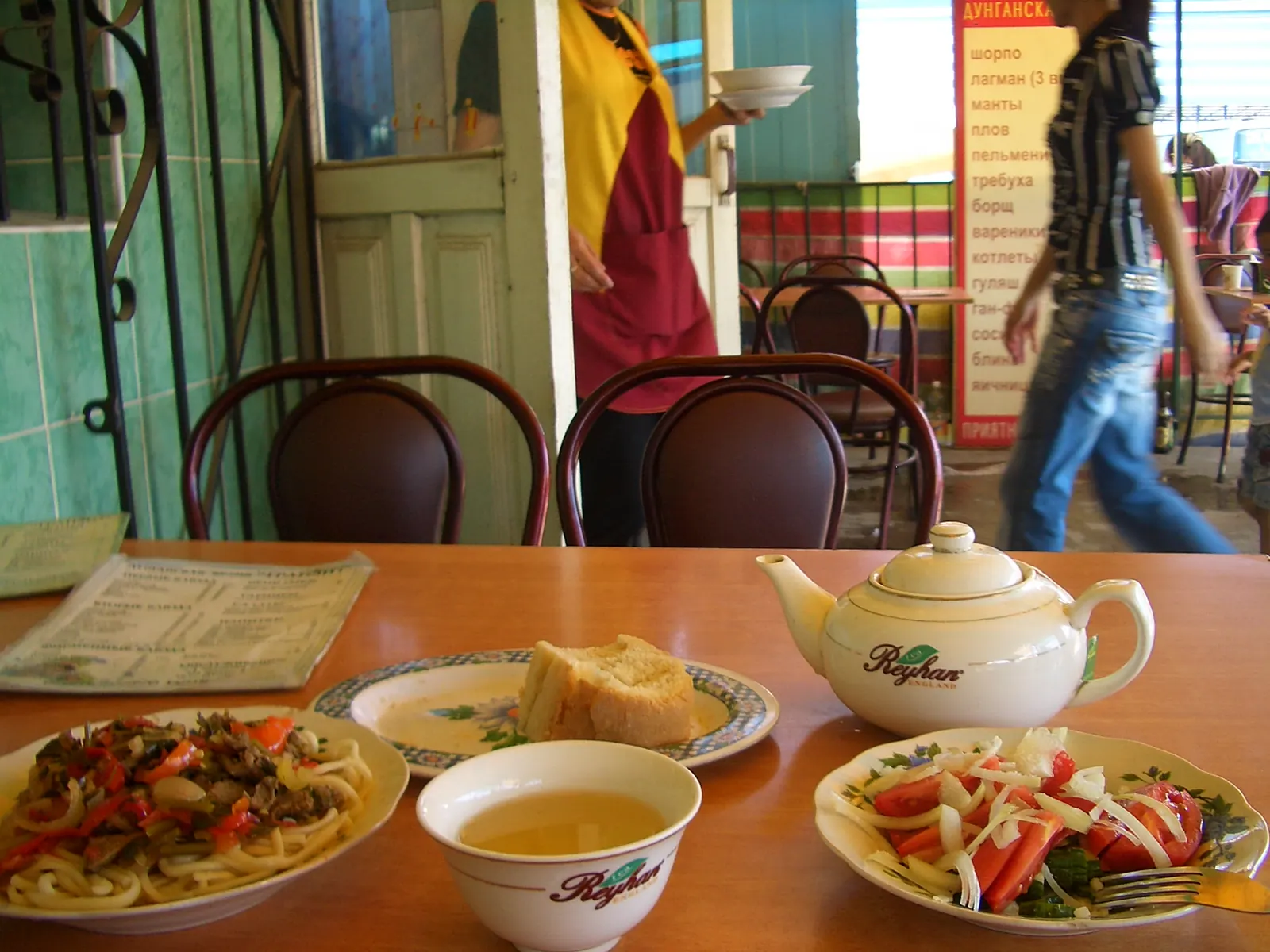 1/3. Lagman at a Dungan café in Dordoy Bazaar Photo: Vmenkov, Wikimedia Commons, CC BY-SA 3.0; edited for this site.
 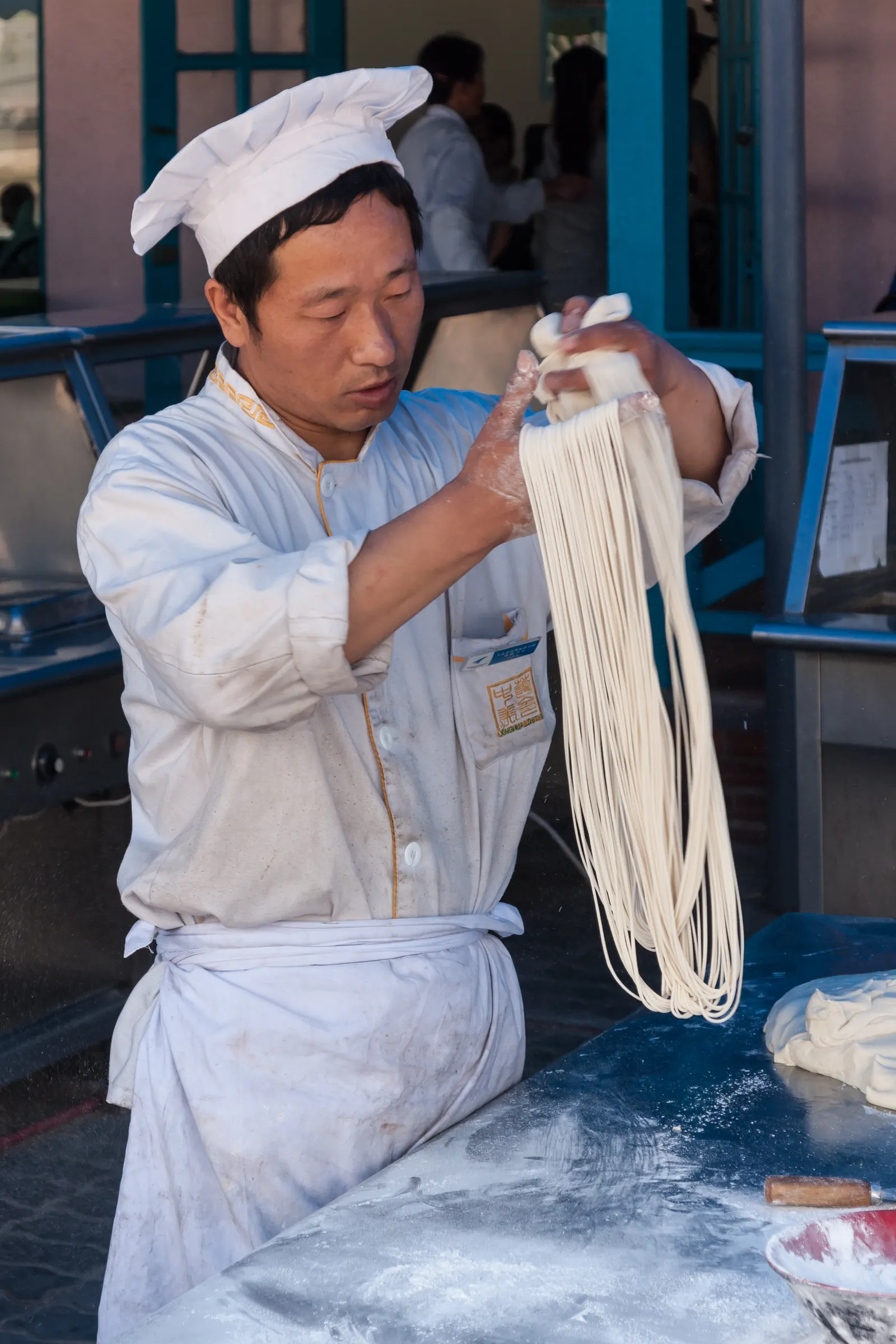 2/3. Long hand-pulled noodles provide a useful comparison Photo: Photo by CEphoto, Uwe Aranas, CC BY-SA 4.0; edited for this site.
 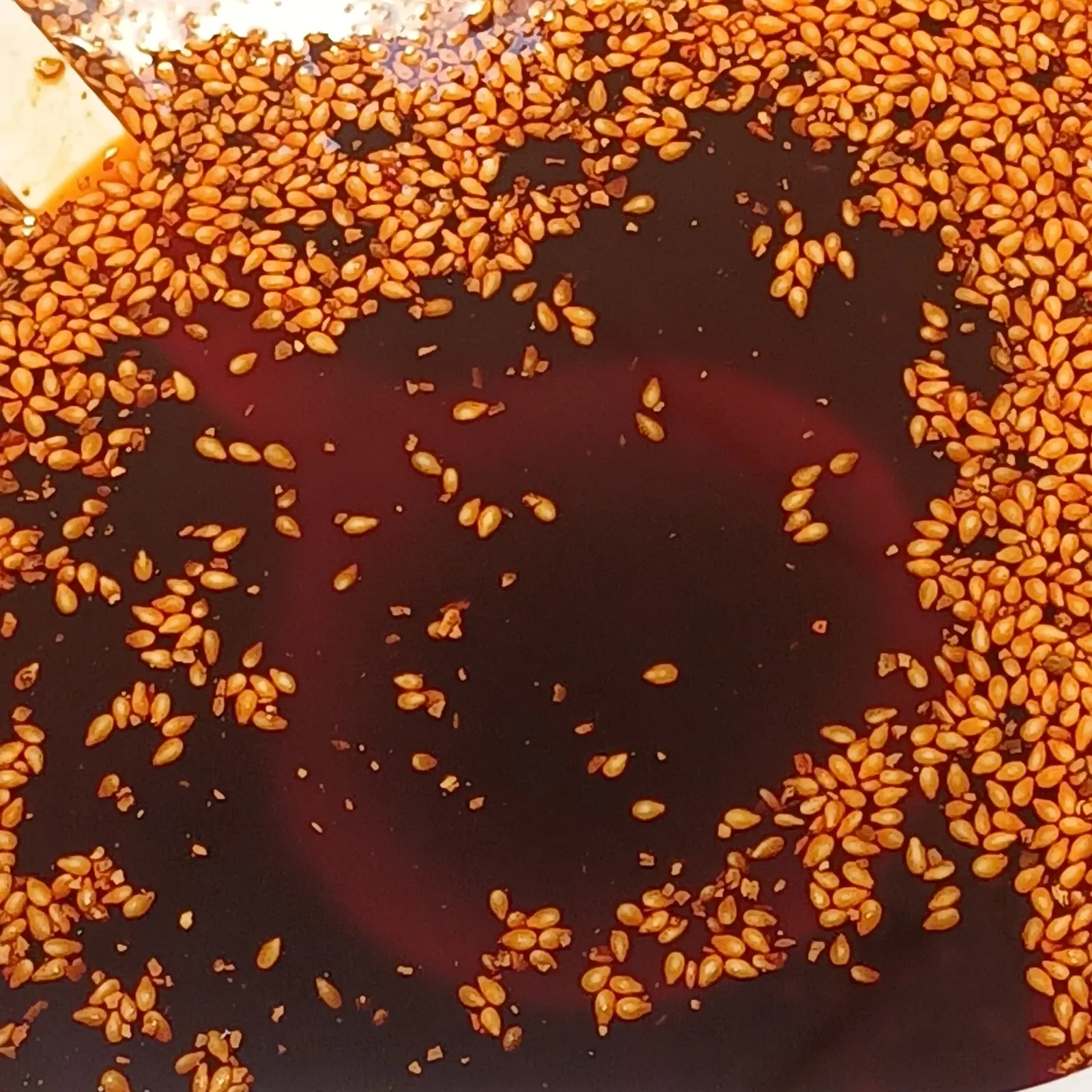 3/3. Add chilli oil to your own bowl Photo: Fumikas Sagisavas, Wikimedia Commons, CC0 1.0; edited for this site.
 Where to try it and how to order
In Bishkek, look for mampar in Dungan, Uyghur and wider Central Asian cafés, as well as canteens with a broad soup menu. Around Dordoy Bazaar, the kitchen's specialism matters as much as the dish name: one café may prepare several lagman styles and make all its dough in house.
Dungan food has a stronger place in the culinary identity of Karakol, although mampar is less famous than ashlyam-fu. Ask whether the dough is cooked in the soup, which meat is used and whether laza comes separately. Those three answers tell you much about the bowl's thickness, richness and heat.
Good mampar arrives properly hot. The dough is tender with a slight bite at the centre, the meat is easy to chew, the vegetables remain distinct and fresh herbs are still aromatic. Dough keeps absorbing broth as the soup stands. The result remains edible, but loses the contrast that makes the dish interesting.
Storage and reheating
Cut raw meat on a separate board and wash the knife before handling herbs or cooked garnishes. Once the dough goes in, bring the soup back to a steady boil and stir from the bottom. Torn pieces are heavier than noodles and tend to stick at first.
Mampar continues to thicken as it cools. If you are cooking for two days, you can boil part of the dough separately and keep it in a covered container with a drop of oil. Reheat the broth first, then add only the amount of dough you need.
USDA guidance recommends reheating leftovers to 74°C throughout. Refrigerate the finished soup within two hours, preferably in several shallow containers.
The recipe below combines the dough technique of Dungan myanpyar with a contemporary Kyrgyzstan vegetable base. Nutrition is omitted because neither the final cooked yield nor the portion weight after the dough absorbs broth has been measured.
Mampar with beef and hand-torn dough
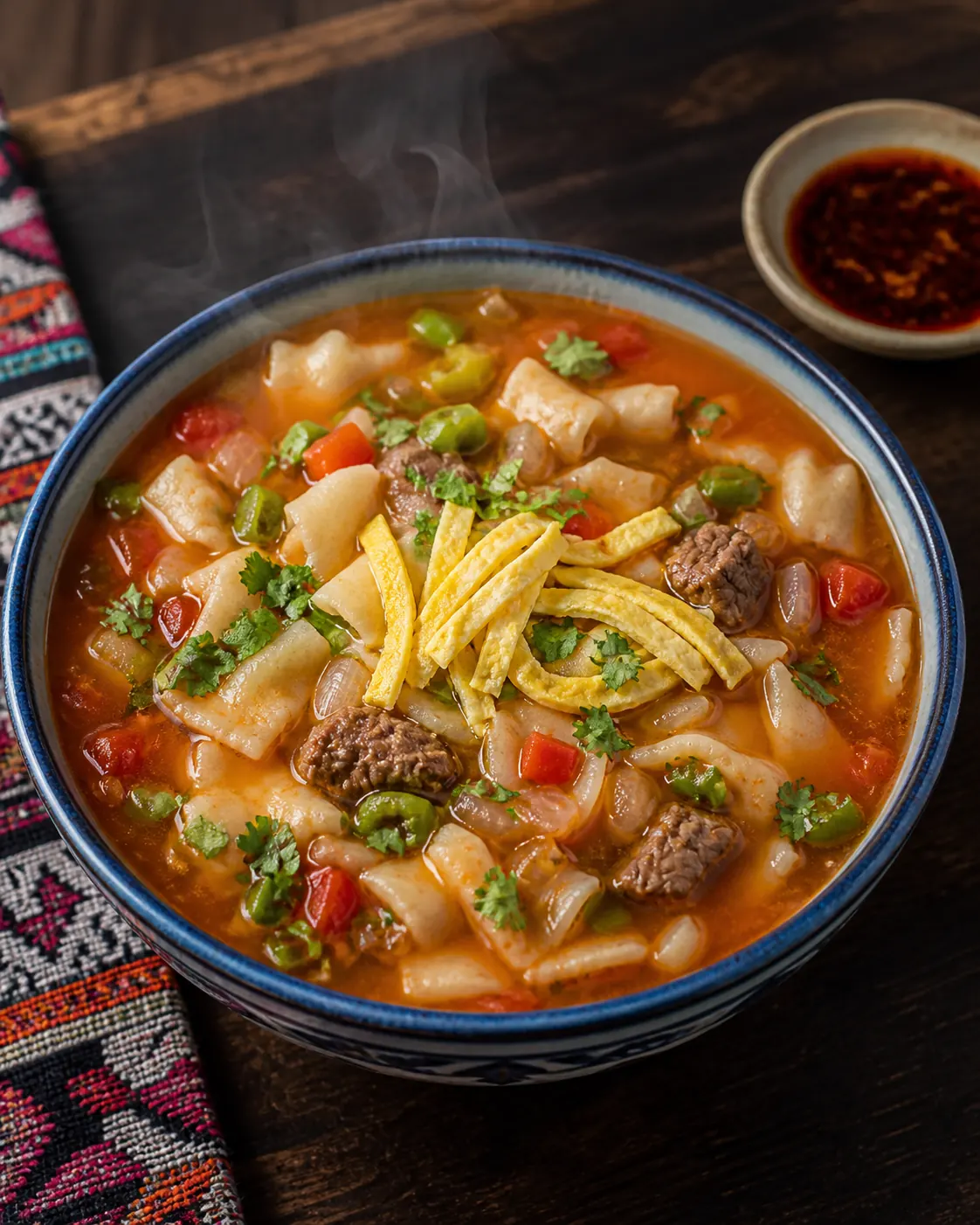
Image: I Love KG, created with AI.
A home version of the thick soup with beef, tomato, sweet pepper and small pieces of unleavened dough. Serve laza and vinegar separately.
Cuisine: Dungan and Uyghur cooking in Kyrgyzstan. Category: Thick meat soup. Yield: 6 large bowls. Preparation: . Cooking: . Total time: .
Ingredients:
- 500 g chilled beef shoulder
- 30 ml vegetable oil
- 250 g onion
- 20 g garlic
- 250 g red and green sweet pepper
- 500 g ripe tomatoes
- 30 g tomato paste
- 1.5 litres water or unsalted meat stock
- 300 g wheat flour
- 150 ml water for the dough
- 8 g salt for the soup
- 4 g salt for the dough
- 2 g cumin seed
- 1 g ground coriander
- 1 g freshly ground black pepper
- 15 ml grape or rice vinegar, to serve
- 2 eggs
- 30 g coriander leaves or celery leaves
- laza chilli oil, to taste
Method:
Step 1. Mix the flour with 4 g salt. Add 150 ml water and knead for 8 minutes until the dough is soft and smooth. Cover and rest for 30 minutes.
Step 2. Cut the beef into 2 cm cubes on a separate board. Finely dice the onion, sweet pepper and tomatoes, and chop the garlic. Strip the leaves from any coarse herb stems.
Step 3. Heat 25 ml oil in a heavy pot. Brown the beef for 7-8 minutes. Add the onion and cook for 5 minutes, then add the sweet pepper and garlic for a further 3 minutes.
Step 4. Add the tomatoes and tomato paste. Cook for 6-7 minutes, until the tomatoes release their juice and the paste loses its raw smell. Stir in the cumin, coriander and black pepper.
Step 5. Pour in 1.5 litres hot water or unsalted stock. Bring to the boil, lower the heat and simmer for 35-40 minutes, until the beef is tender. Add 8 g salt and taste the base before adding the dough.
Step 6. Divide the dough into four and roll each piece into a rope as thick as a finger. Brush with the remaining 5 ml oil, flatten into ribbons and tear off small flat pieces. Lay them in a single layer so they do not stick.
Step 7. Return the soup to a medium boil. Drop the dough in by small batches and stir from the bottom at once. After the final batch, cook for 8-10 minutes until tender with a slight bite.
Step 8. Beat the eggs with a pinch of salt. Cook two thin omelettes in a dry non-stick pan, roll and slice into strips. This garnish is optional.
Step 9. Remove the soup from the heat, add half the herbs and rest under a lid for 5 minutes. Divide between deep bowls and top with omelette and the remaining herbs. Serve vinegar and laza separately.
Step 10. Within two hours, divide leftovers between shallow containers and refrigerate. Reheat mampar to 74°C throughout before serving again.
Frequently asked questions about mampar
Are mampar, manpar and mampyar the same dish?
Yes. The spellings refer to the same family of thick meat soups with small pieces of unleavened dough. Older Russian-language sources also use myanpyar. The vegetables and the way the dough is cooked vary between families and regions.
How is mampar different from lagman?
The difference lies in the dough and the way the bowl is assembled. Mampar uses small, flat pieces of torn or cut dough cooked in a thick soup. Lagman uses long hand-pulled noodles with a meat-and-vegetable sauce or broth.
Can I use ready-made dough?
You can buy frozen mampar pieces or make a simple unleavened dough at home. Do not substitute long noodles if you want the characteristic texture: the flavour may remain close, but the dish will eat differently.
Does the dough have to be cooked separately?
Both methods appear in published recipes. Cooking the dough in the soup lets the flour thicken the broth slightly. Separate cooking produces a clearer base and works well when the soup will be reheated later.
Can mampar be made without meat?
A vegetable version can use a rich tomato base with onion, sweet pepper, garlic and mushrooms. In a café, still ask about the stock: the absence of visible meat does not guarantee a vegetable base.
Is mampar always spicy?
No. Red chilli appears in many versions, but laza and vinegar are best served separately. Each person can then control the heat and acidity in their own bowl.
Share on social media
If you found this guide useful, share it on social media. It takes a moment and helps more travellers discover the project. Thank you!
Anything to add?
Share your experience, leave a comment or suggest an improvement.