Contents:
What chuchvara are
Chuchvara combine thin unleavened dough with a meat filling. A large sheet of dough is cut into small squares. Each square receives a little chopped meat and onion, is folded into a triangle, then has its two points joined. The result is a compact dumpling with a short seam and visible folds.
Size matters more than an ornamental pleat. Two or three cooked chuchvara should fit on a tablespoon, and a bowl holds many of them. A guide from Uzbekistan's official tourism portal also identifies their miniature size and broth serving as defining features of the dish.
The filling usually contains lamb, beef or both. Pork is not characteristic of the Uzbek version. Onion keeps the centre juicy, while cumin and black pepper support the meat without turning every spoonful into a hot sauce.
Why the dish belongs in a Kyrgyzstan food guide
Chuchvara belong above all to Uzbek cooking and to a wider Central Asian family of small filled dumplings. In Kyrgyzstan they occur naturally wherever several food traditions meet: in Osh, Kara-Suu, Bishkek and other towns with Uzbek cafes and mixed Central Asian menus.
It is therefore more accurate to describe chuchvara in Kyrgyzstan than to claim them as a separate national dish of the country. The same principle applies to lagman, ganfan and much southern urban cooking: a dish keeps its roots while being comfortably at home on both sides of a border.
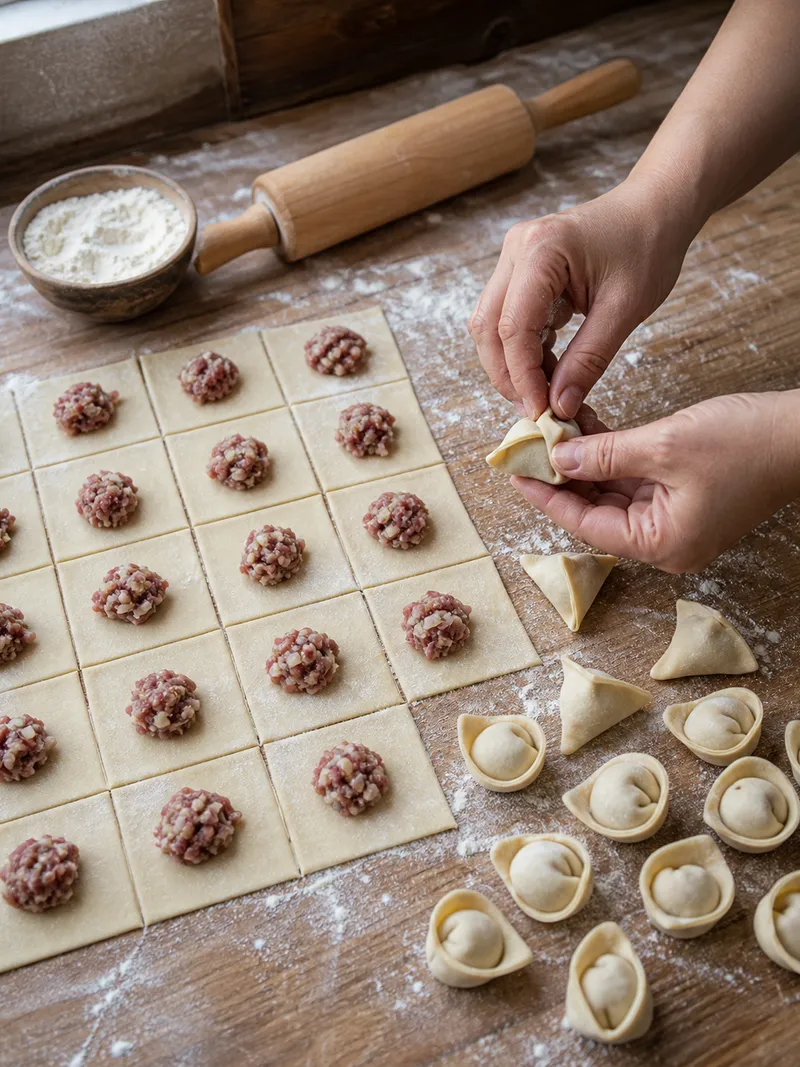 1/3. Editorial illustration: chuchvara begin as small squares of dough Image: I Love KG, created with AI.
 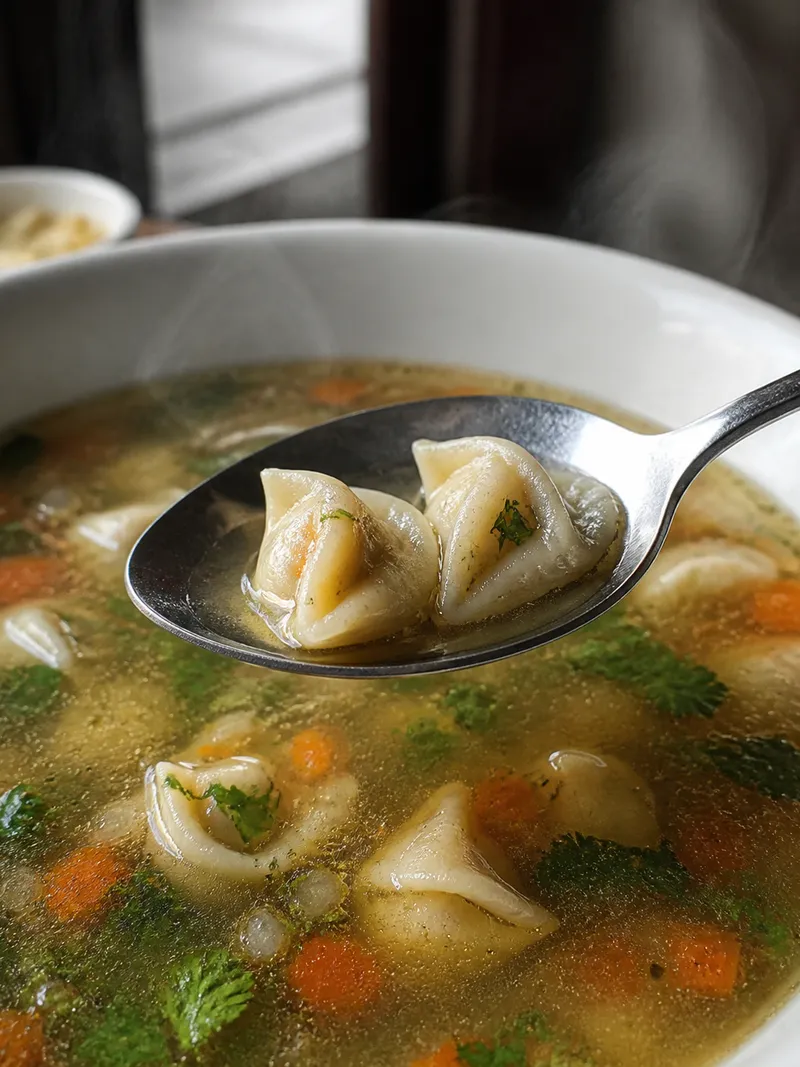 2/3. Editorial illustration: the spoon shows their miniature scale Image: I Love KG, created with AI.
 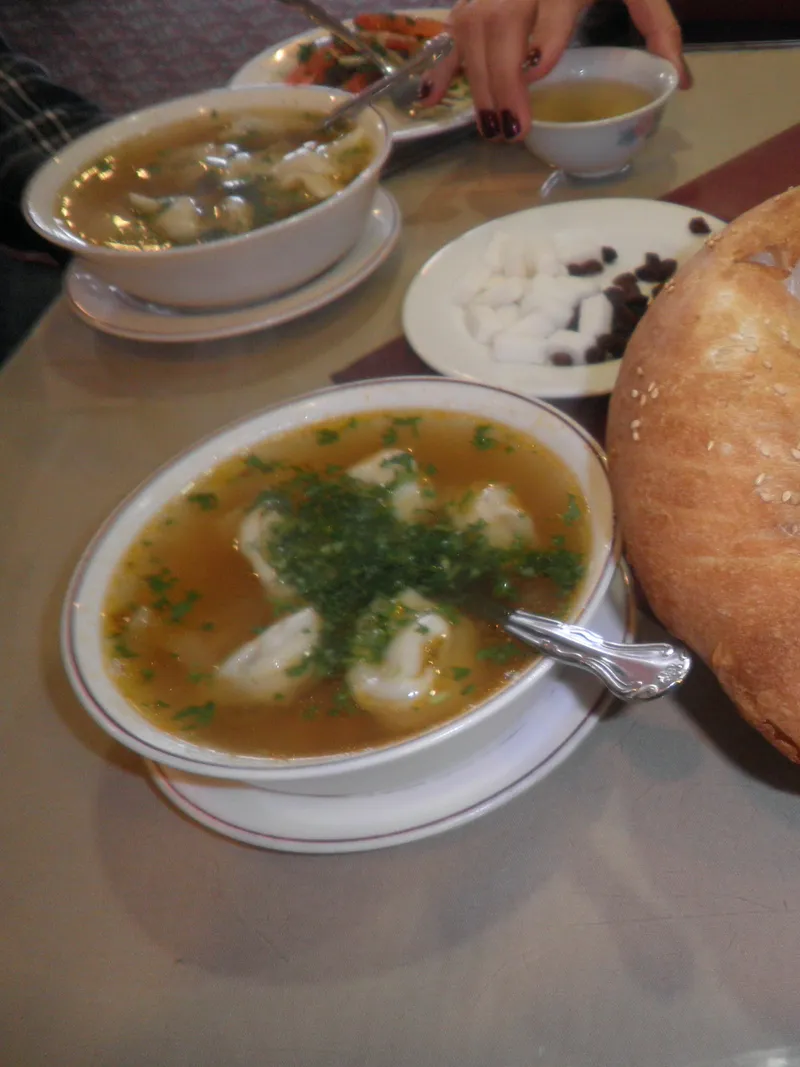 3/3. A related dish: tushpara in broth with flatbread Photo: Bnwwf91, Wikimedia Commons, Public domain; edited for this site.
 Size, dough and fold
Squares of about 4-5 cm are a manageable starting point at home. Larger wrappers are easier to close, but quickly approach ordinary pelmeni. Very small squares slow the work and demand exceptionally thin, even rolling.
The dough needs to be firm and properly rested. Freshly kneaded gluten pulls the sheet back as you roll. Thirty minutes under a cover relaxes it, so a thin edge seals more readily and is less likely to tear in the pot.
Use little filling. If the meat mound stops the square folding neatly on the diagonal, reduce it instead of stretching the dough. Seal the triangle first, pressing out air, then bring its two sharp points together around a finger.
A practical rhythm: roll one sheet, cut it into squares and cover half with a towel. Exposed wrappers dry quickly, and a dry edge will not seal cleanly.
Broth, drained and fried versions
The most recognisable serving is chuchvara in clear meat stock or a fuller vegetable soup with onion, carrot and tomato. Coriander, dill or basil goes into the bowl. Cultured milk, vinegar and chilli may arrive on the side, allowing each diner to set the balance.
“Without broth” can describe two different plates. Boiled chuchvara may simply be drained and served with katyk, sour cream, herbs or sauce. Alternatively, the cooked dumplings are fried until their edges turn golden. This version is called qovurma chuchvara.
One verb is worth clarifying before you order: boiled or fried. “Dry” is not used consistently, and a menu photograph may include a sauce that does not come with the standard portion.
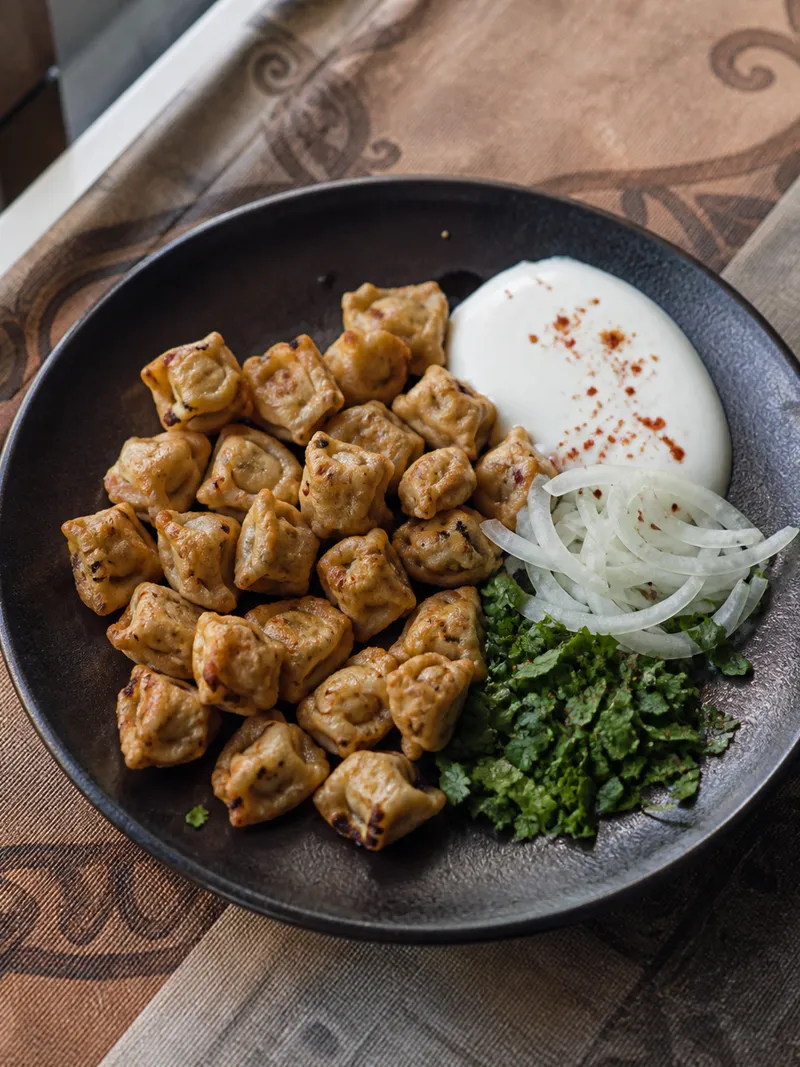 1/2. Editorial illustration: qovurma chuchvara with golden edges Image: I Love KG, created with AI.
 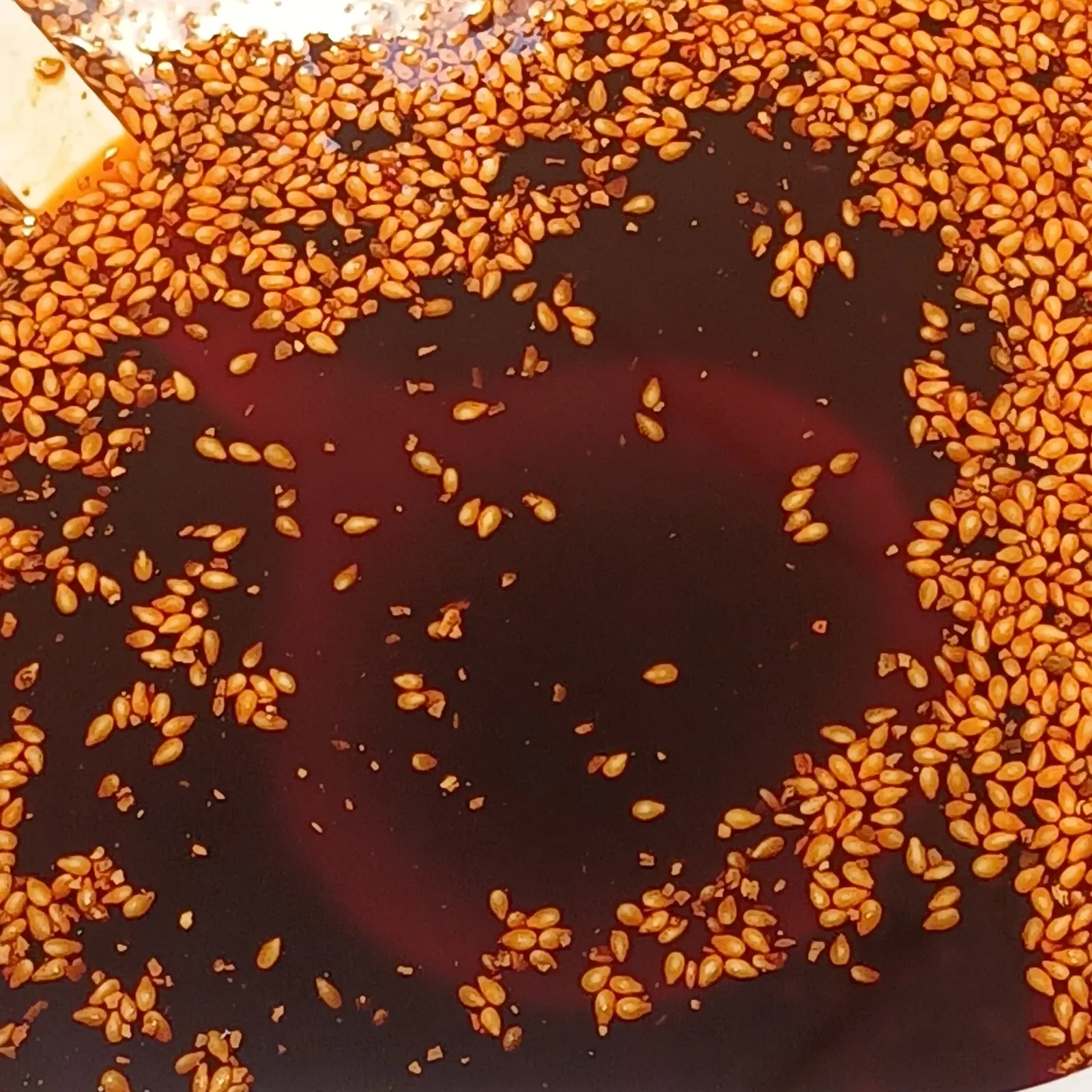 2/2. Add chilli oil sparingly to your own bowl Photo: Fumikas Sagisavas, Wikimedia Commons, CC0 1.0; edited for this site.
 Chuchvara, pelmeni, manty and tushpara
Russian pelmeni and chuchvara share the same basic construction: unleavened dough encloses raw meat and the dumpling is boiled. Chuchvara, however, are generally much smaller, begin as a square, and more often arrive with a deliberate stock or vegetable-soup base.
Manty are much larger and cook over steam. They retain more meat juices, so diners eat them one at a time rather than collecting several on a spoon. Size and cooking method separate manty from chuchvara more reliably than any spice list.
Tushpara, dushpara and related names belong to the same wide family of small dumplings. On a menu, they may indicate a local-language name or a neighbouring recipe. Do not draw a rigid boundary from the word alone: look at the scale, fold, broth and finish.
Mampar is also eaten with a spoon from a thick meat-and-vegetable soup, but its torn pieces of dough are unfilled. Every little chuchvara encloses meat.
How to order and eat them
Choose the soup version for a first taste. It lets you judge three elements together: thin dough, juicy filling and a balanced broth. If a heavy film of fat covers the surface, let the bowl settle for a minute and taste from the middle before stirring everything together.
Ask which meat is used, how hot the soup is and whether the cultured-milk sauce comes separately. The filling and stock may contain lamb, beef or both. A vegetable-rich bowl is not vegetarian: the dumplings contain meat and the liquid may be meat stock.
Eat chuchvara with a spoonful of broth. A larger dumpling can be divided against the edge, but a properly small one is meant to be eaten whole. Flatbread, fresh herbs and a light salad are enough beside the bowl; another heavy main course is often unnecessary.
Freezing and food safety
Keep raw meat away from herbs and finished stock. Chopped beef and lamb in the centre must reach at least 71°C. Colour is not a reliable substitute for checking the largest test dumpling with a food thermometer.
To freeze chuchvara, dust a board with flour and arrange the raw dumplings in one layer. Once solid, transfer them to a bag. Drop them straight into boiling stock in small batches so the liquid returns to temperature quickly.
Do not leave the cooked dish at room temperature for more than two hours. Move leftovers to a shallow container, refrigerate and use within 3-4 days. Reheat the soup to 74°C throughout. These temperatures and limits follow USDA FSIS guidance.
Chuchvara in vegetable-rich meat stock
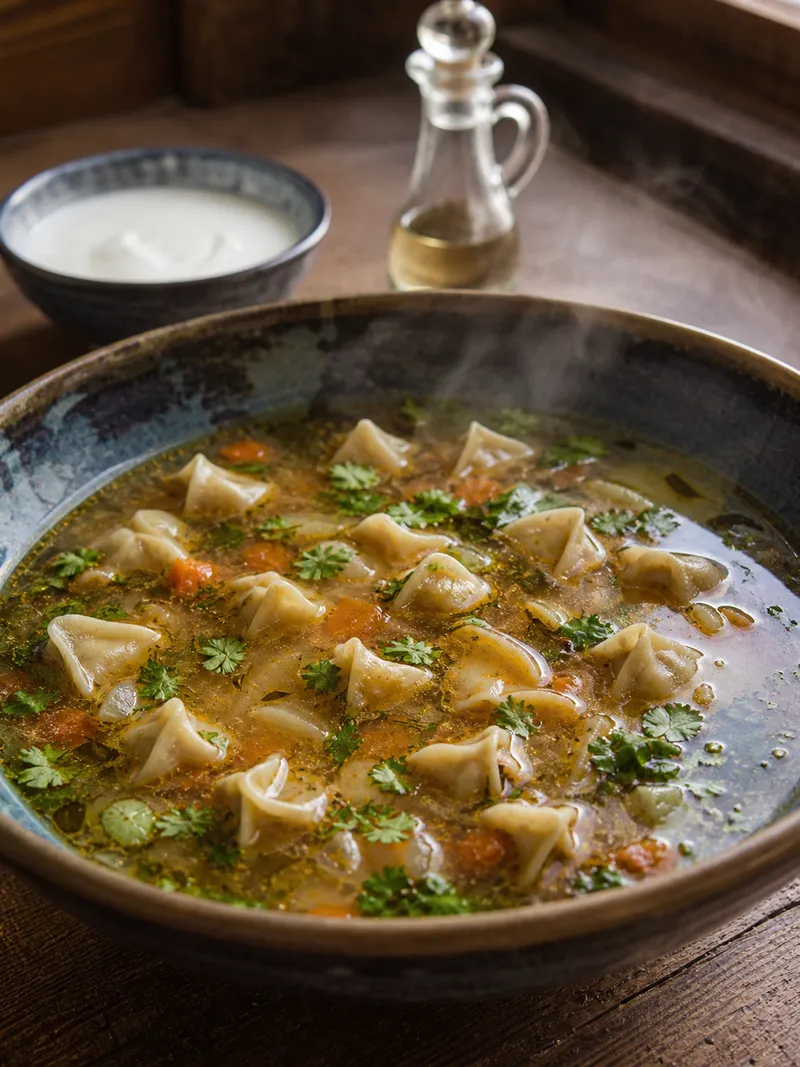
Image: I Love KG, created with AI.
A home soup version yielding about 110 small dumplings, or six deep bowls. Wrappers of 4-5 cm are kinder to a home cook than restaurant miniatures while preserving the characteristic scale.
Cuisine: Uzbek and Central Asian. Category: Soup with meat-filled dumplings. Yield: about 110 dumplings, 6 deep bowls. Preparation: . Cooking: . Total time: .
Ingredients:
- 300 g plain wheat flour, plus 20 g for dusting
- 130 ml room-temperature water
- 1 large egg, about 55 g without the shell
- 4 g salt for the dough
- 250 g chilled beef
- 150 g chilled lamb
- 180 g onion for the filling
- 6 g salt for the filling
- 2 g ground cumin
- 1 g freshly ground black pepper
- 30 ml vegetable oil
- 200 g onion for the soup
- 200 g carrot
- 350 g ripe tomatoes or crushed tomatoes
- 2.4 litres unsalted meat stock or water
- 8 g salt for the soup, then more to taste
- 2 g ground cumin for the soup
- 30 g coriander and dill
- katyk or sour cream, vinegar and chilli oil to serve, optional
Method:
Step 1. Dissolve 4 g salt in 130 ml water. Combine the flour, egg and water, then knead the firm dough for 8-10 minutes until smooth. Cover and rest for 30 minutes.
Step 2. Finely chop the beef and lamb or pass them through the coarse plate of a mincer. Finely dice 180 g onion. Mix the meat, onion, 6 g salt, 2 g cumin and black pepper. Keep the filling chilled until needed.
Step 3. Divide the dough in half. Keep one piece covered and roll the other to about 1 mm thick. Cut it into 4-5 cm squares and cover half with a towel so the edges do not dry.
Step 4. Place about half a teaspoon of filling in each square. Fold diagonally, seal the sides of the triangle while pressing out air, then join the two sharp points around a finger. Arrange the dumplings in one layer on a floured board.
Step 5. For the soup, slice 200 g onion into thin half-moons, cut the carrot into short matchsticks and dice the tomatoes. Heat the oil in a wide pot; cook the onion for 4 minutes, the carrot for 5 minutes, then the tomatoes for another 7 minutes.
Step 6. Pour in 2.4 litres of hot unsalted stock or water. Add 8 g salt and 2 g cumin. Once boiling, simmer the vegetable base for 12 minutes and adjust the salt.
Step 7. Raise the heat. Add the chuchvara to the actively boiling soup in four batches, sweeping a spoon gently across the bottom after each addition. Let the liquid return to the boil before adding the next batch.
Step 8. After the last batch, keep at a gentle boil for 6-8 minutes. Cut open the largest dumpling and use a thermometer to check that the centre of its meat filling has reached at least 71°C.
Step 9. Add half the herbs and remove the pot from the heat. Rest under a lid for 5 minutes. Ladle into deep bowls and add the remaining herbs. Serve katyk or sour cream, vinegar and chilli oil separately.
Step 10. Within two hours, transfer leftovers to shallow containers and refrigerate. Use within 3-4 days and reheat to 74°C throughout before serving again.
Why there are no nutrition figures: the stock's composition and fat content, the flour left from dusting and the cooked yield have not been verified by a control weighing. A value per 100 g would look more precise than the evidence allows.
Frequently asked questions about chuchvara
What is chuchvara?
Chuchvara are small Uzbek meat dumplings. They are boiled in stock or a vegetable-rich soup, while the fried version is known as qovurma chuchvara.
How are chuchvara different from pelmeni?
Size is the clearest practical clue. Chuchvara are folded from small squares of thin dough, so several can fit on a spoon. Stock or vegetable soup is more often an integral part of the dish rather than an optional extra.
Are chuchvara and tushpara the same thing?
The names belong to one broad family of small filled dumplings and sometimes overlap. Chuchvara is firmly associated with Uzbek cooking; tushpara is heard more often in Kazakh and neighbouring traditions. Shape, size and broth depend on the kitchen.
Can chuchvara be served without broth?
Yes. Boiled dumplings may be drained and served with a cultured-milk sauce, while qovurma chuchvara are fried until their edges turn golden. Ask which preparation the menu means.
Can homemade chuchvara be frozen?
Yes. Freeze the raw dumplings in a single layer until firm, then transfer them to a bag. Cook from frozen in small batches and allow a few extra minutes.
Are chuchvara spicy?
The base is usually aromatic rather than hot. Chilli oil, vinegar, herbs and a cultured-milk sauce may come separately, letting you season your own bowl.
Share on social media
If you found this guide useful, share it on social media. It takes a moment and helps more travellers discover the project. Thank you!
Anything to add?
Share your experience, leave a comment or suggest an improvement.