Contents:
How manty are made
Manty use unleavened dough and cook on racks above steam rather than in water. The tiered steamer used for them is called a mantovarka or kaskan. Steam gradually cooks both dough and filling while keeping the meat juices inside.
The meat is best chopped finely with a knife. This gives the filling more texture than a fine plate on a mincer. Onion supplies moisture and sweetness, so a good recipe uses a noticeable amount rather than one small onion per kilogram of meat.
Shape does not determine quality. Manty may be pinched into a pouch or envelope, or formed by joining opposite edges of the dough. It matters more to roll the centre thinly, leave the edges slightly thicker and seal every seam firmly.
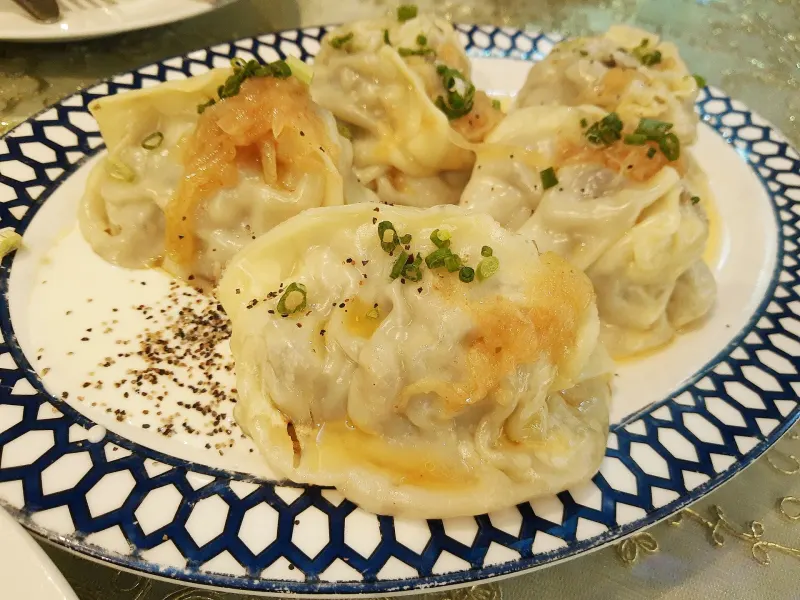 1/3. Large Uzbek-style manti Photo: Scudsvlad, Wikimedia Commons, CC BY-SA 4.0; edited for this site.
 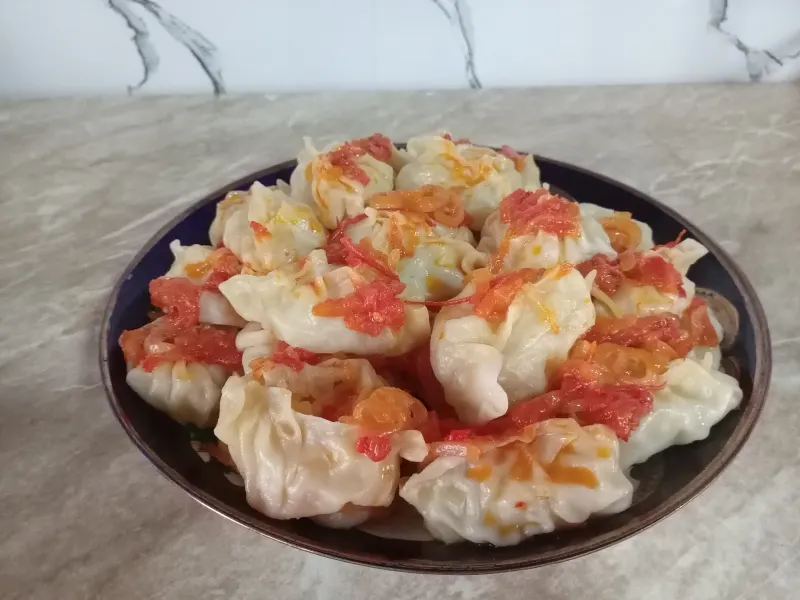 2/3. An Uyghur way of shaping manti Photo: Abilqosimova, Wikimedia Commons, CC BY 4.0; edited for this site.
 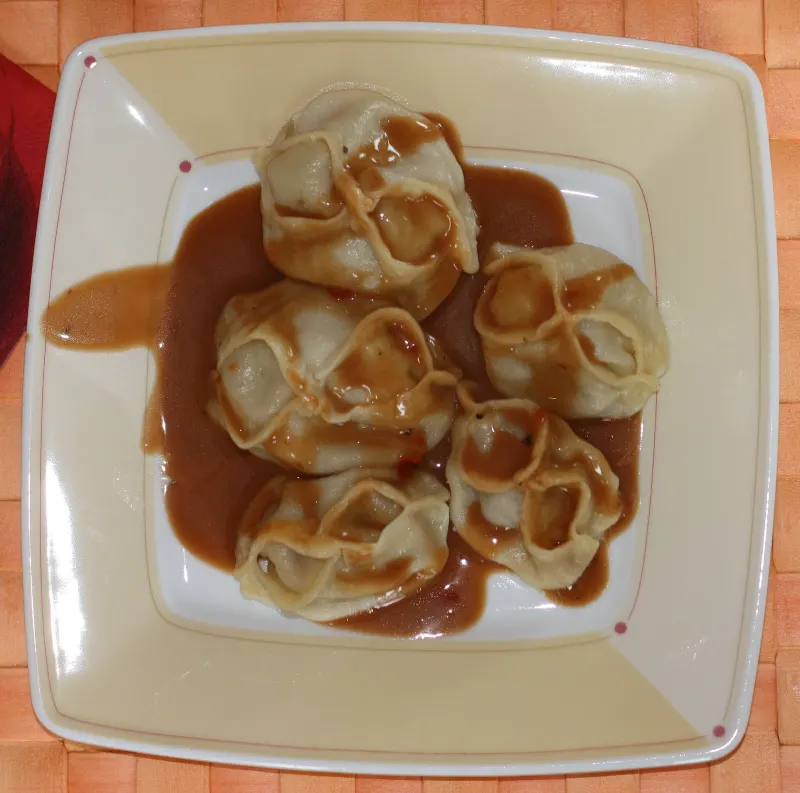 3/3. Homemade manti with a hot sauce Photo: Sterilgutassistentin, Wikimedia Commons, CC BY-SA 3.0; edited for this site.
 Meat, pumpkin and jusai
A meat filling combines lamb or beef with onion, salt and pepper. Fat-tail fat may be added to lean meat. It affects the juiciness and richness of the filling rather than the dish's name.
Pumpkin manty may be vegetable-only or contain fat-tail fat, so the word “pumpkin” on a menu does not automatically mean vegetarian. Jusai, an aromatic plant in the onion family, may also be combined with fat, egg or meat. Ask about the ingredients before ordering.
Manty are found throughout Central Asia, and Kyrgyz cuisine does not exist in isolation from neighbouring traditions. Size, sealing method, spices and sauce change from one home to another. Insisting that a single version is the only correct one is unhelpful here.
How to order and eat manty
Manty are served hot, usually several to a portion. Vinegar with pepper, hot sauce, sour cream or a cultured milk sauce may come alongside. Accompaniments vary by restaurant, so taste the filling without them first.
You can eat manty with a fork or your hands. Bite the edge carefully, as hot juice may be trapped inside. If you need to check the ingredients, ask about the meat, fat-tail fat, egg in the dough or filling, and dairy products in the sauce.
Manty differ from oromo in shape: each manty is formed separately, while oromo is rolled as one large coil and cut after cooking. Both are steamed.
Manty with meat
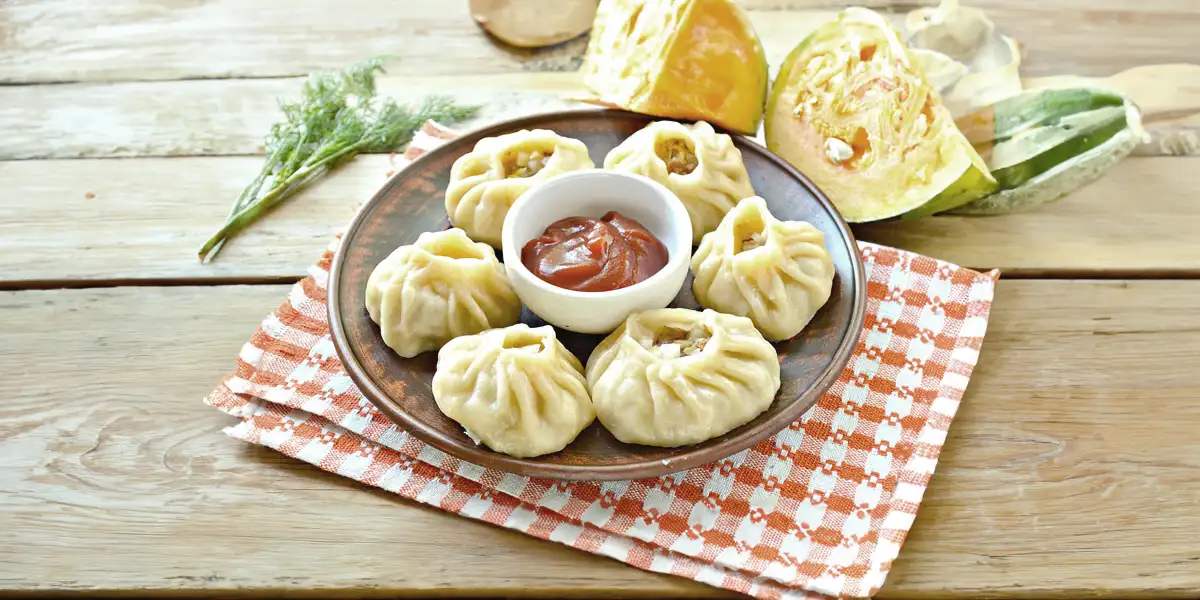
A home recipe for 4-6 servings. Onion and a small amount of cold water keep the filling juicy, while the manty steam for 40-45 minutes.
Cuisine: Kyrgyz and Central Asian. Total time: 2 hours 15 minutes.
Ingredients:
- 450 g wheat flour
- 180-200 ml water
- 1 tsp salt for the dough
- 700 g lamb or beef
- 350 g onions
- 50 ml cold water for the filling
- 1 tsp salt for the filling
- black or red pepper to taste
- vegetable oil for the steamer racks
Method:
Step 1. Combine the flour, water and salt. Knead into a firm, smooth dough, cover with a damp towel and rest for 40 minutes.
Step 2. Finely chop the meat and onion. Add the salt, pepper and cold water, then mix the filling thoroughly.
Step 3. Divide the dough into small pieces and roll into circles about 10-12 cm across. The centre should be thin, while the edges may remain slightly thicker.
Step 4. Place a tablespoon of filling in the centre and seal the edges firmly in your chosen shape.
Step 5. Oil the steamer racks. Arrange the manty with spaces between them so steam can circulate.
Step 6. Cook above steadily boiling water for 40-45 minutes. Remove carefully to avoid tearing the dough and losing the juice.
Share on social media
If you found this guide useful, share it on social media. It takes a moment and helps more travellers discover the project. Thank you!
Anything to add?
Share your experience, leave a comment or suggest an improvement.