Contents:
Noodles, starch and a hot-and-sour sauce
Two very different textures meet in one bowl. Wheat noodles retain their bite, while cooked and chilled starch sets into a soft jelly that is cut into strips. A vegetable sauce, fine ribbons of egg, vinegar dressing and a chilli-and-garlic laza complete the dish.
Each element is prepared separately and assembled just before serving. The flavour therefore depends not on one secret ingredient but on the balance: the noodles should not be overcooked, the starch must hold its shape, vinegar provides a distinct sharpness and laza supplies the heat.
The spellings ashlyam-fu, ashlyan-fu and ashlyanfu refer to the same name on Russian-language menus. When ordering, it is more useful to check the ingredients and serving temperature than to search for the one correct spelling.
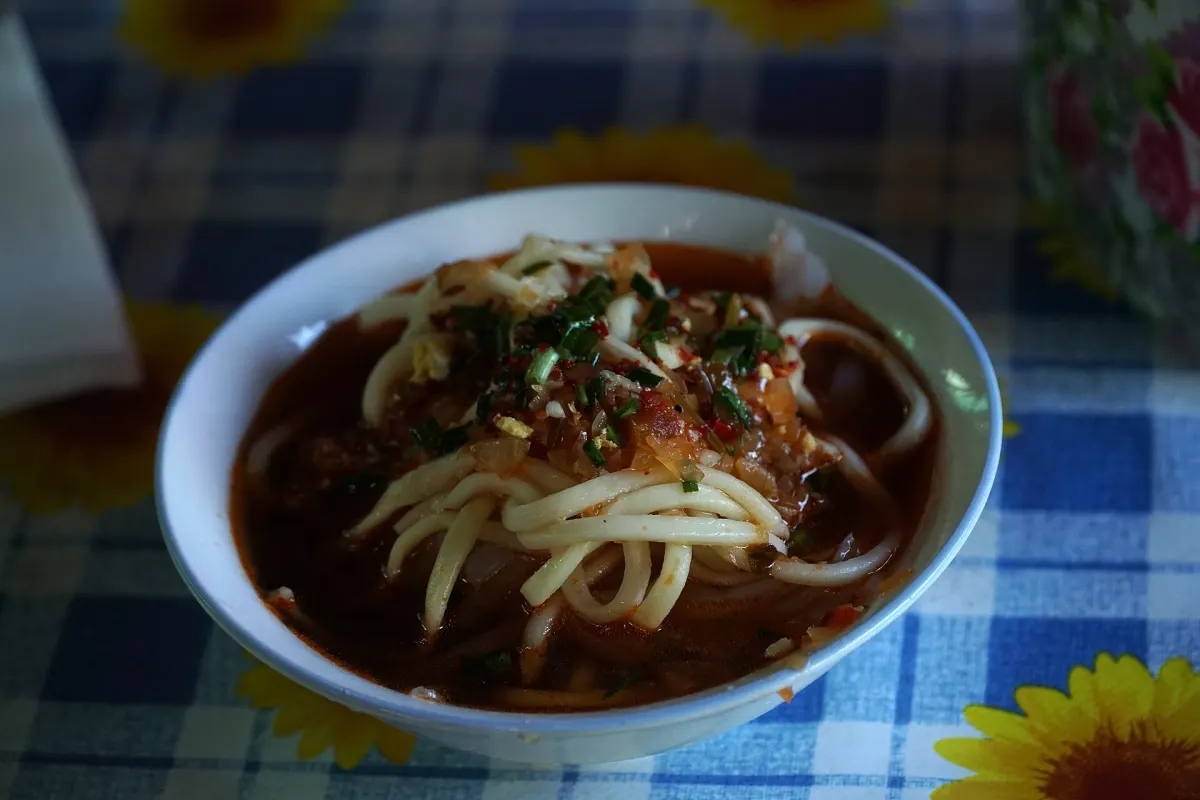 1/4. Cold ashlyam-fu in Karakol Photo: Adam Harangozó, Wikimedia Commons, CC BY-SA 4.0; edited for this site.
 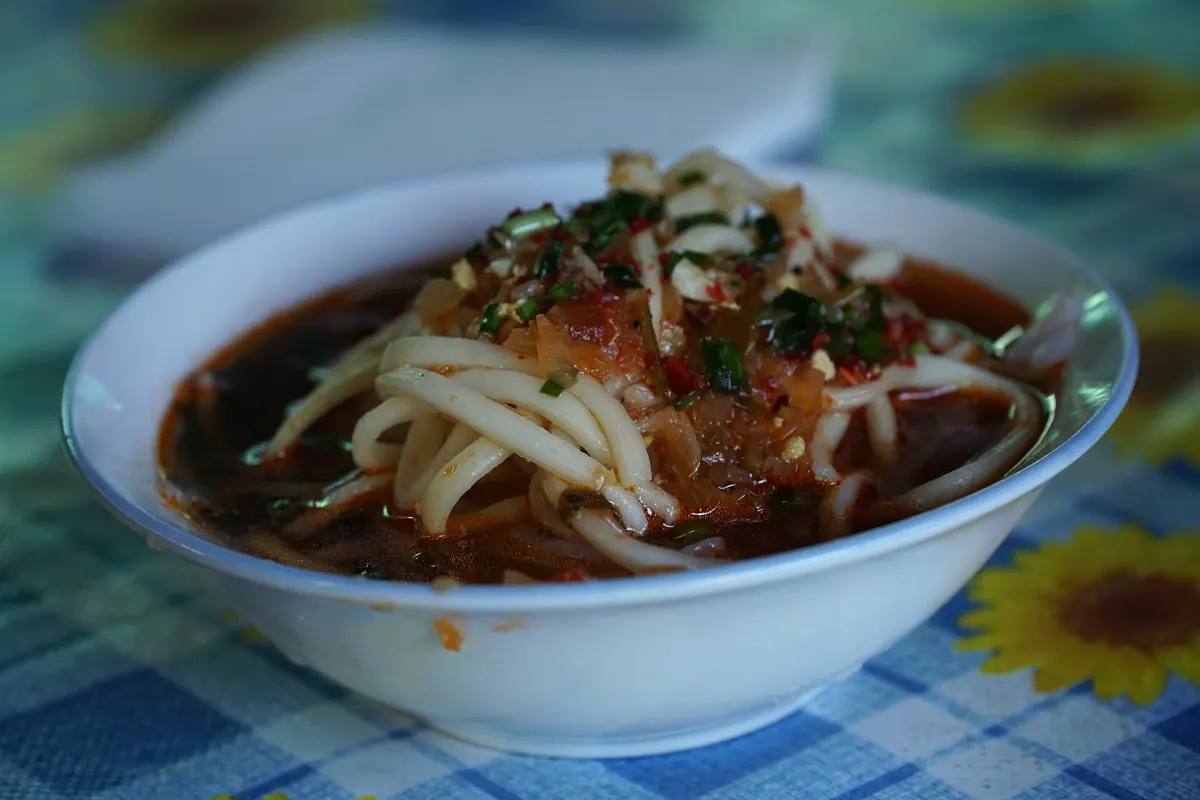 2/4. Noodles and starch jelly Photo: Adam Harangozó, Wikimedia Commons, CC BY-SA 4.0; edited for this site.
 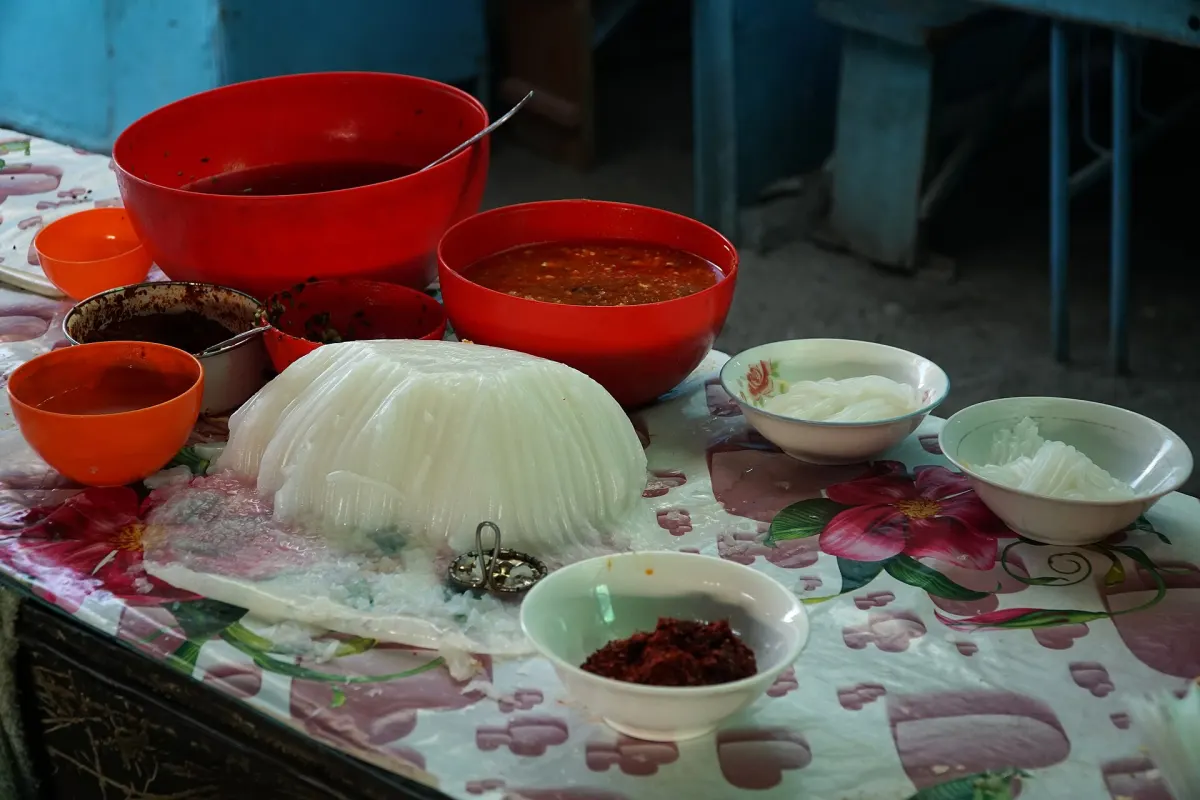 3/4. The components are prepared separately Photo: Adam Harangozó, Wikimedia Commons, CC BY-SA 4.0; edited for this site.
 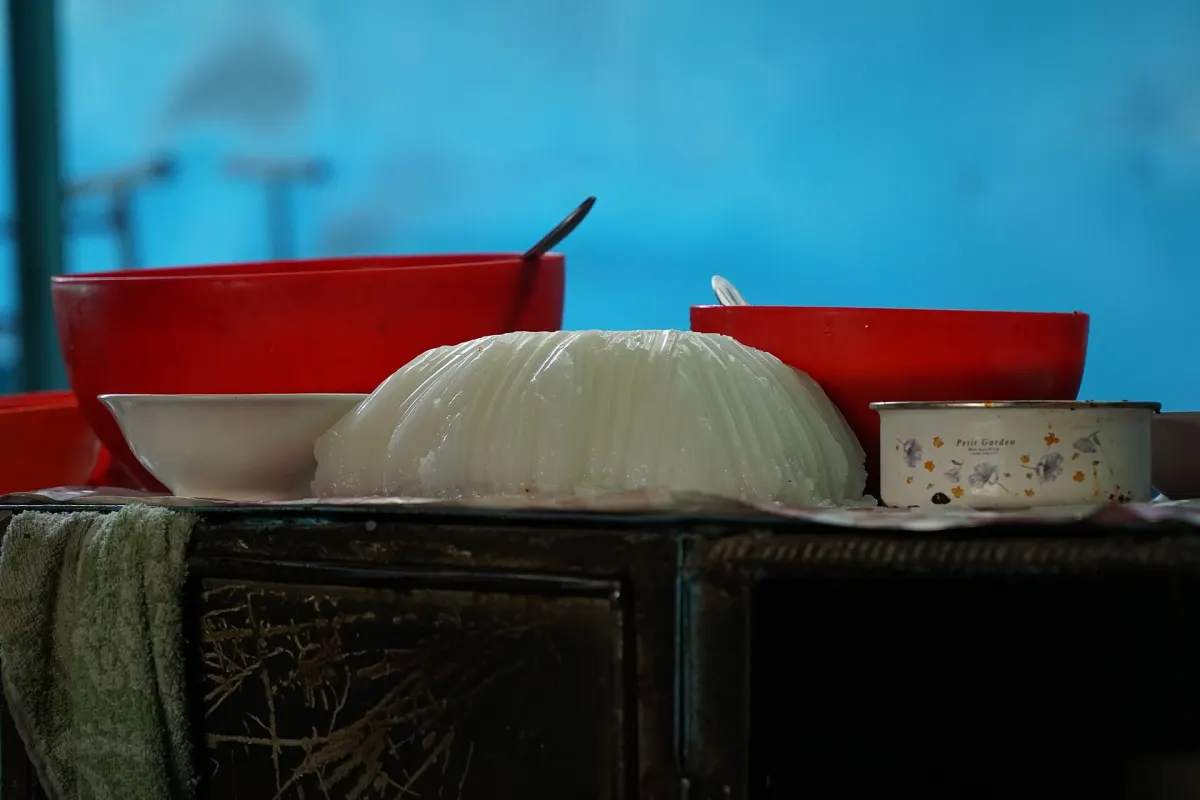 4/4. Starch jelly before slicing Photo: Adam Harangozó, Wikimedia Commons, CC BY-SA 4.0; edited for this site.
 Why ashlyam-fu is associated with Karakol
Ashlyam-fu grew out of Dungan culinary tradition and became a speciality of Karakol. Several market vendors may prepare it from family recipes, so the sauce, amount of starch jelly and level of heat can vary even between neighbouring stalls.
The classic version is served cold. In winter, hot water or tea may be added to the sauce and the bowl served warm. People in Karakol often order a fried potato pie alongside ashlyam-fu and eat it separately rather than putting it into the soup.
You can also find the dish in Bishkek, but Karakol's market lets you compare several versions in one place. This is a case where local variation is more interesting than a ranking of the “most authentic” vendor.
How to order and adjust the flavour
If you do not tolerate much chilli, ask for the laza on the side. Acidity is harder to remove because vinegar forms part of the basic dressing. It is also worth specifying whether you want the dish warm or cold, especially in winter.
The basic version is often meat-free but contains egg and wheat noodles. Sauces vary, so vegans and anyone allergic to egg, wheat or soya should ask about the ingredients. Do not confuse it with hot lagman: sharing noodles does not make the two dishes alike.
Homemade ashlyam-fu
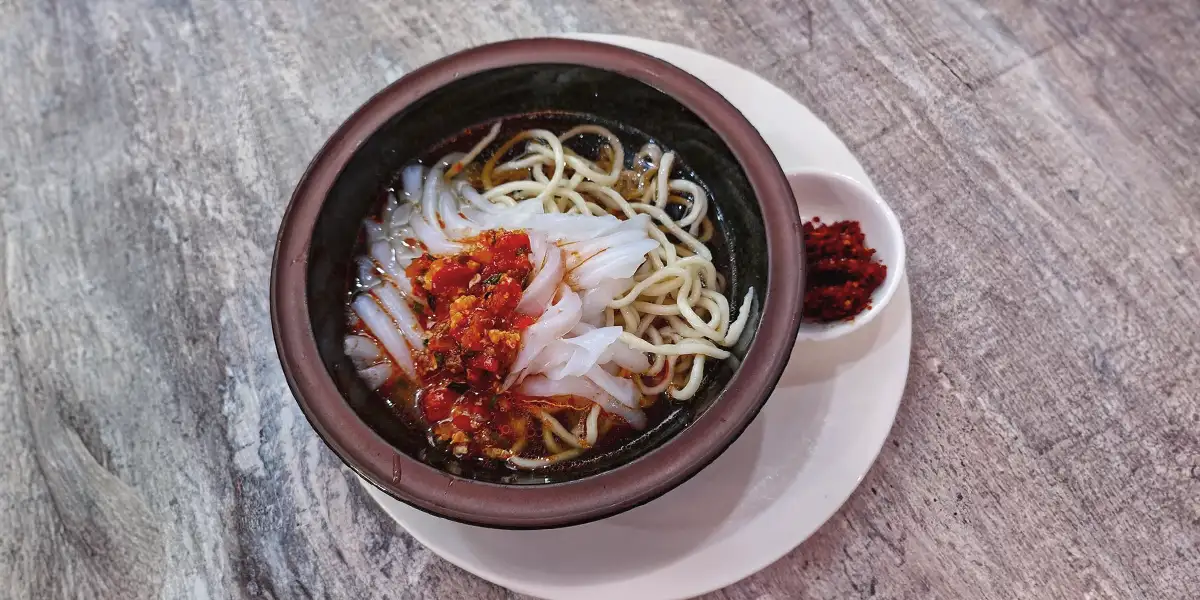
A simplified home version for 4 servings. It retains the dish's main layers without copying any particular Karakol vendor's family recipe. The starch jelly needs several hours to chill.
Cuisine: Dungan cuisine of Kyrgyzstan. Total time: 5 hours.
Ingredients:
- 350 g fresh wheat noodles
- 100 g corn, potato or mung-bean starch
- 600 ml water for the starch jelly
- 2 eggs
- 1 litre water for the vegetable sauce
- 1 small onion
- 1 small carrot
- 1 sweet pepper
- 50 g jusai or spring onions
- 1 tbsp tomato purée
- 50-80 ml 5% vinegar, to taste
- 3 garlic cloves
- 1 tsp sugar
- salt and hot red pepper to taste
- 4 tbsp vegetable oil
Method:
Step 1. Mix the starch with 200 ml cold water. Bring the remaining 400 ml to the boil, then pour in the starch mixture in a thin stream, stirring constantly.
Step 2. Cook over a low heat until thick and translucent. Pour into a mould, cool, then refrigerate for at least 3 hours.
Step 3. Finely chop the onion, carrot and sweet pepper. Fry quickly in two tablespoons of oil, add the tomato purée and one litre of water. Simmer for 10 minutes, add half the jusai, salt, sugar and vinegar, then cool completely.
Step 4. Beat the eggs, cook a thin omelette and cut it into strips. Cook the noodles until they retain some bite, rinse in cold water and drain.
Step 5. For the laza, combine the crushed garlic and red pepper. Heat two tablespoons of oil and carefully pour it over the mixture.
Step 6. Cut the starch jelly into strips. Divide the noodles, jelly and omelette between bowls, then add the cold sauce, remaining jusai and laza to taste.
Share on social media
If you found this guide useful, share it on social media. It takes a moment and helps more travellers discover the project. Thank you!
Anything to add?
Share your experience, leave a comment or suggest an improvement.