Checked on 28 August 2026. The map shows landmarks within Kyrgyzstan’s 13 state nature parks, not their boundaries or guaranteed entrances. Confirm the open zone, road access and rules with the park administration before travelling.
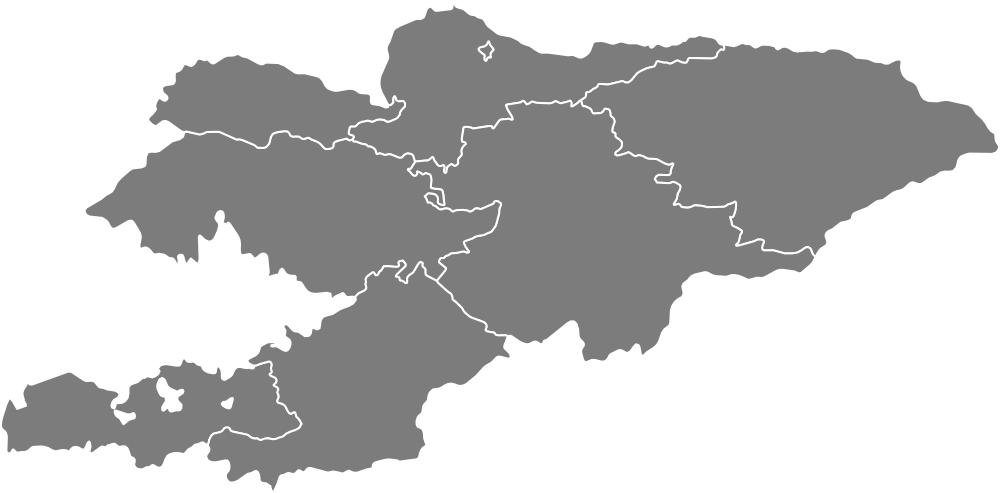
Parks, reserves and biosphere territories
Kyrgyzstan’s protected natural areas operate under different regimes. A state nature park includes a reserve-regime zone, an ecological stabilisation zone, a tourist and recreational zone and an area of limited economic activity. A walk or picnic is not permitted everywhere, even if there is no barrier at the entrance.
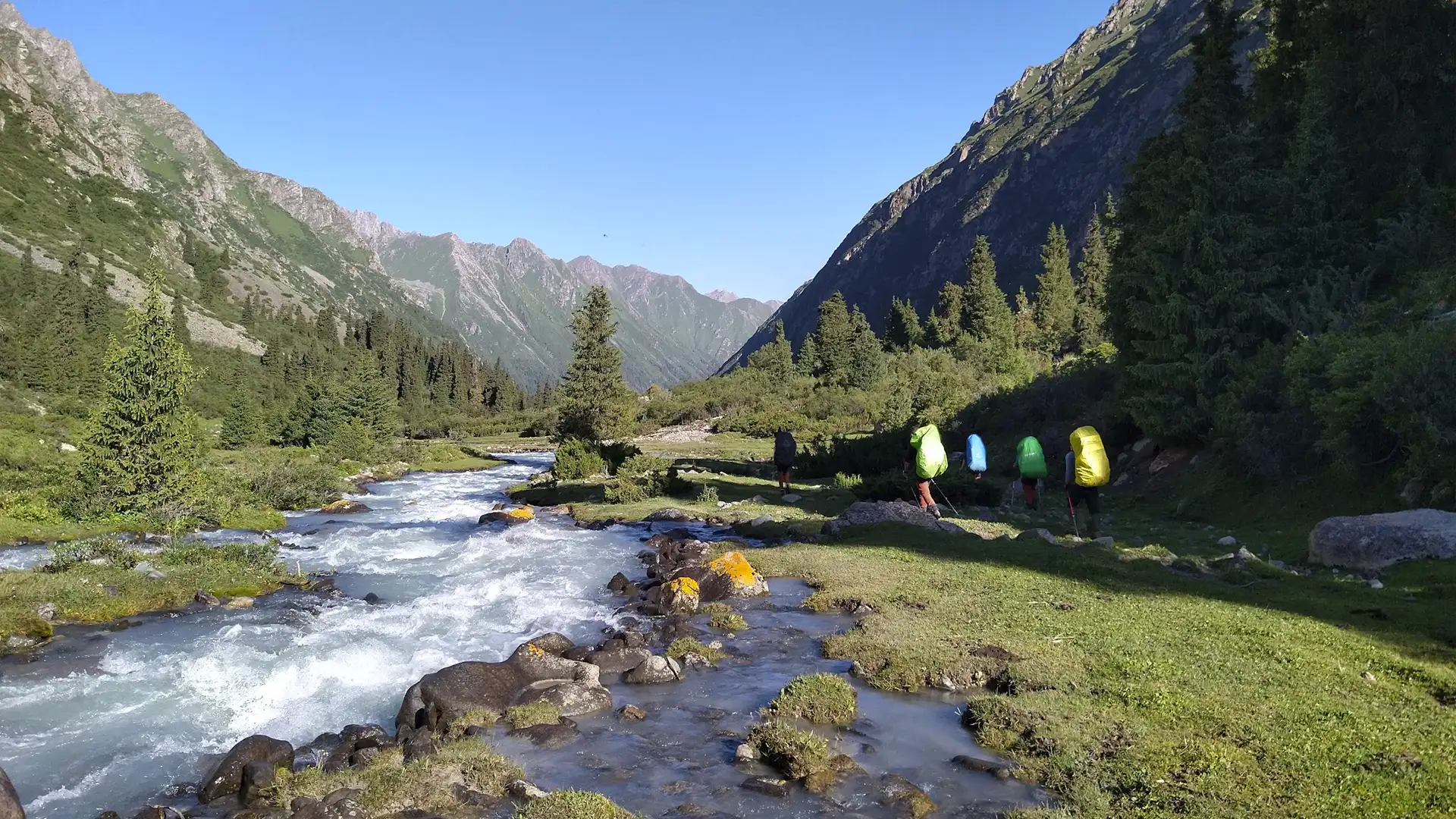
 1/4. Ala-Archa National Park
 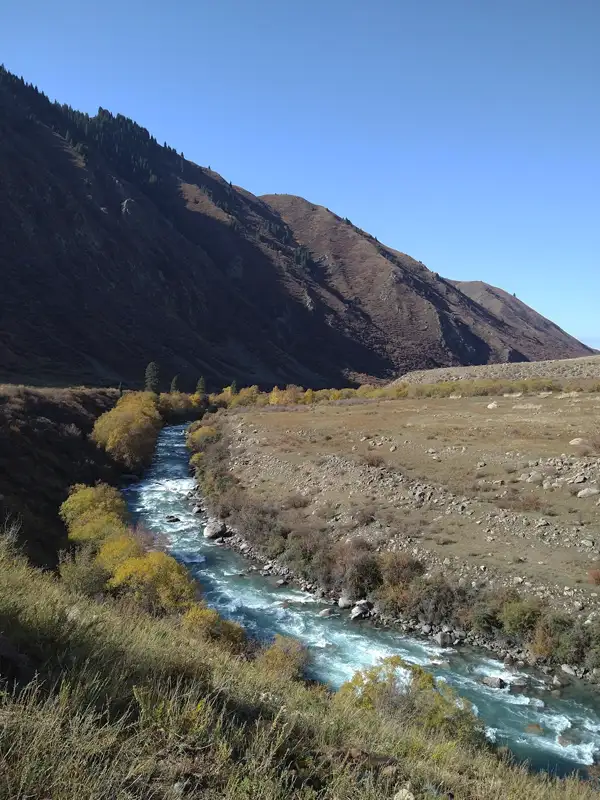 2/4. Chon-Kemin National Park
 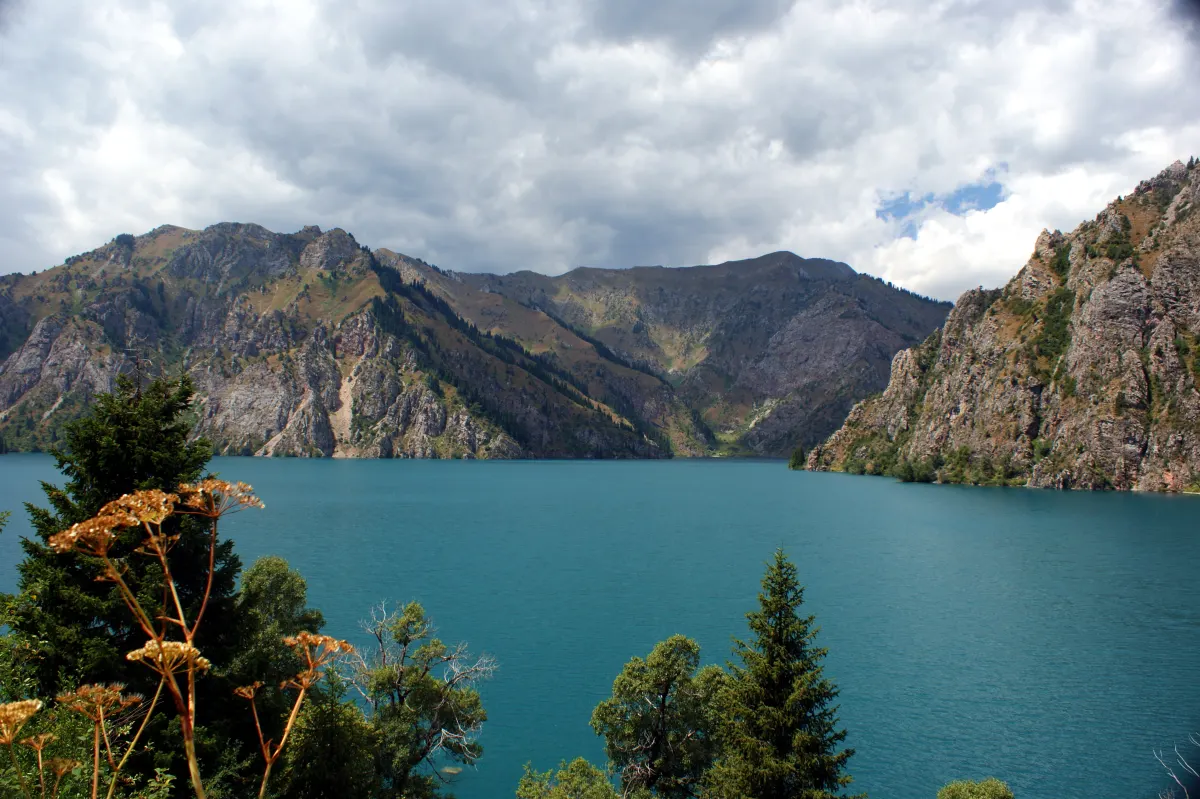 3/4. Sary-Chelek Nature Reserve Photo: Kondephy, Wikimedia Commons, CC BY-SA 4.0; edited for this site.
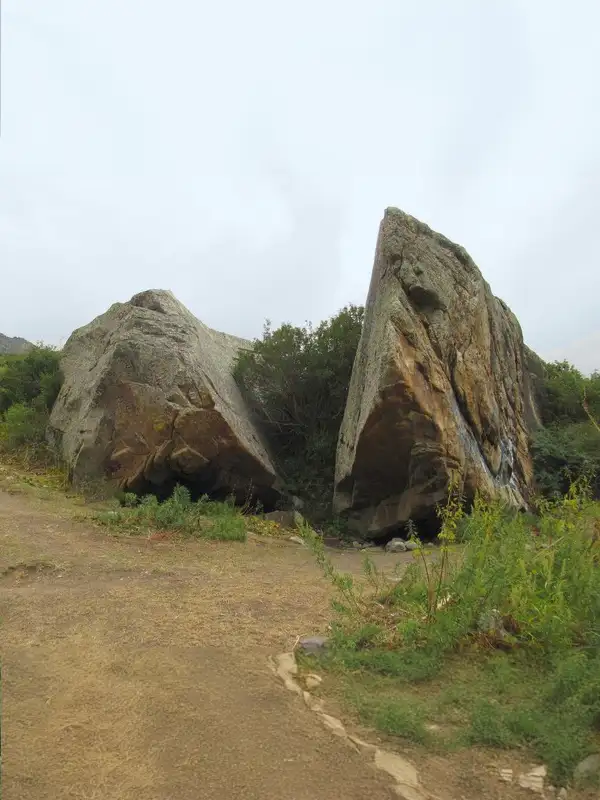
 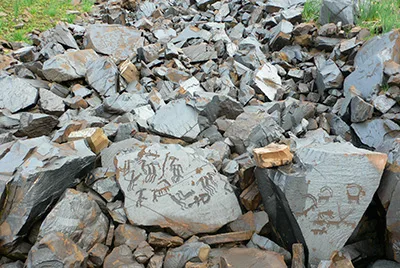 4/4. Saimaluu-Tash petroglyphs Photo: Sraosha 9, Wikimedia Commons, Public domain; edited for this site.
 A nature reserve is created primarily to conserve ecosystems and support scientific work. Access is usually stricter than in a national park. A biosphere territory covers an even larger landscape with its own zoning, where settlements, farmland and areas of enhanced protection may sit side by side.
A Ministry of Natural Resources summary dated 9 April 2024 reported 13 state nature parks, 10 reserves and protected areas covering 7.38% of Kyrgyzstan. The ministry’s current overview names only some sites, so the complete map list was checked against the National Statistical Committee’s official table for 2023. Numbers and boundaries may change.
Which parks to choose
Ala-Archa. The most straightforward day trip from Bishkek. You can walk in the lower valley without mountaineering experience, while higher routes lead to a waterfall, Ratsek Hut, glaciers and summits. Proximity to the city does not make every trail easy: above the forest, weather changes quickly and the descent takes several hours. Start with our separate Ala-Archa route guide.
Chon-Kemin. This broad valley suits walking and horse riding, wildlife watching and several days in a guesthouse. Distances within the district are substantial, and public transport does not reach every trail. Our Chon-Kemin guide helps connect transport and walks.
Karakol. The park covers forest and high-altitude areas near Karakol. Popular crossings to alpine lakes and neighbouring gorges begin here. A day outing and a multi-day trek require different equipment, and spring water can damage bridges and crossings.
Khan-Teniri. This park lies in the remote east and protects the high-altitude ecosystems of the central Tian Shan. A journey here needs expedition-level preparation. Border rules apply in some areas, while road access, communications and evacuation are more difficult than around Karakol.
Besh-Tash. This park south of Talas is known for its river valley, forests and high-altitude lake. The unpaved road varies with the season and rainfall. Do not treat the lake as a short walk from a car park: confirm the starting point and actual elevation gain. On 28 July 2026, the ministry reported an automated checkpoint; check its operation and payment procedure for your travel date.
Kyrgyz-Ata. South of Osh, the park is suitable for a trip into juniper forest and a mountain valley. An automated checkpoint was installed in July 2026, and construction of a new entrance complex began on 14 August. Check the access route, checkpoint operation and open zones before travelling.
Saimaluu-Tash. The park protects a natural landscape and a large collection of petroglyphs. The seasonal approach is physically demanding, and visitors normally cover part of it on horseback or on foot. Do not trace the carvings, wet them for contrast or touch them with hard objects.
Sary-Chelek and Besh-Aral often appear in tourist lists of “national parks”, but they are state nature reserves. The Issyk-Kul Nature Reserve, the Ysyk-Köl Biosphere Territory and areas around Issyk-Kul Lake also have their own regimes. Protection at Son-Kul is partly connected with the Karatal-Japyryk Nature Reserve. Do not transfer the rules of one protected area to another.
Visiting rules
- Confirm the category and zone. Ask the administration whether your route is open, registration is required and overnight stays are permitted.
- Check the road. A gate, ford or damaged bridge may move the trailhead. Carry spare fuel and allow extra time in remote parks.
- Ask about fire and vehicles. Since 11 May 2026, motor-vehicle movement across protected areas has been restricted, with exceptions for existing public roads and official duties. Do not assume that quad bikes or leaving the road are allowed without direct confirmation. Check fire and drone rules separately.
- Do not feed wildlife. Watch from a distance, do not approach young animals and leave no food waste. Read more in our guide to wildlife in Kyrgyzstan.
- Take rubbish away. A bin at the entrance does not mean there will be one at the campsite. Carry out everything you bring in.
An official overview of categories and selected sites is published on the Ministry of Natural Resources website. Confirm contacts and temporary restrictions before setting out. For a difficult hike, also use the general advice in our active travel guide.
Share on social media
If you found this guide useful, share it on social media. It takes a moment and helps more travellers discover the project. Thank you!
Anything to add?
Share your experience, leave a comment or suggest an improvement.