Contents:
After a snakebite: call 112 or 103 immediately, keep the person completely still and arrange transport to hospital. Do not wait for severe symptoms to appear.
How likely is an encounter?
Snakes and spiders do not seek out people. A bite usually happens when an animal is stepped on, disturbed beneath a rock, trapped in clothing or deliberately handled. Stepping back calmly is almost always more useful than trying to identify the species.
Habitats vary by region and altitude. Dry valleys, foothills and rocky ground offer more shelter to warmth-loving species. A venomous snake may nevertheless turn up on a popular mountain trail: the photograph above was taken in Ala-Archa National Park.
Colour, head shape and the pattern on a snake's back are not reliable identification tools for a traveller. Young animals may look different, while harmless species can resemble venomous ones. Keep your distance instead of consulting an identification guide while standing a step away.
Which snakes occur in Kyrgyzstan?
Kyrgyzstan's Ministry of Natural Resources lists vipers and pit vipers among the country's venomous snakes. The Halys pit viper occurs in the Tien Shan, with documented sightings even in Ala-Archa. Its camouflage blends easily into rocks and dry soil.
The Central Asian cobra, Naja oxiana, also appears in scientific records for the country. This rare species is associated with dry, stony habitats across Central Asia. Its presence does not make an ordinary visit to Bishkek, Issyk-Kul or the main trekking routes a cobra hunt. The practical rule remains the same: do not approach and leave the animal a clear escape route.
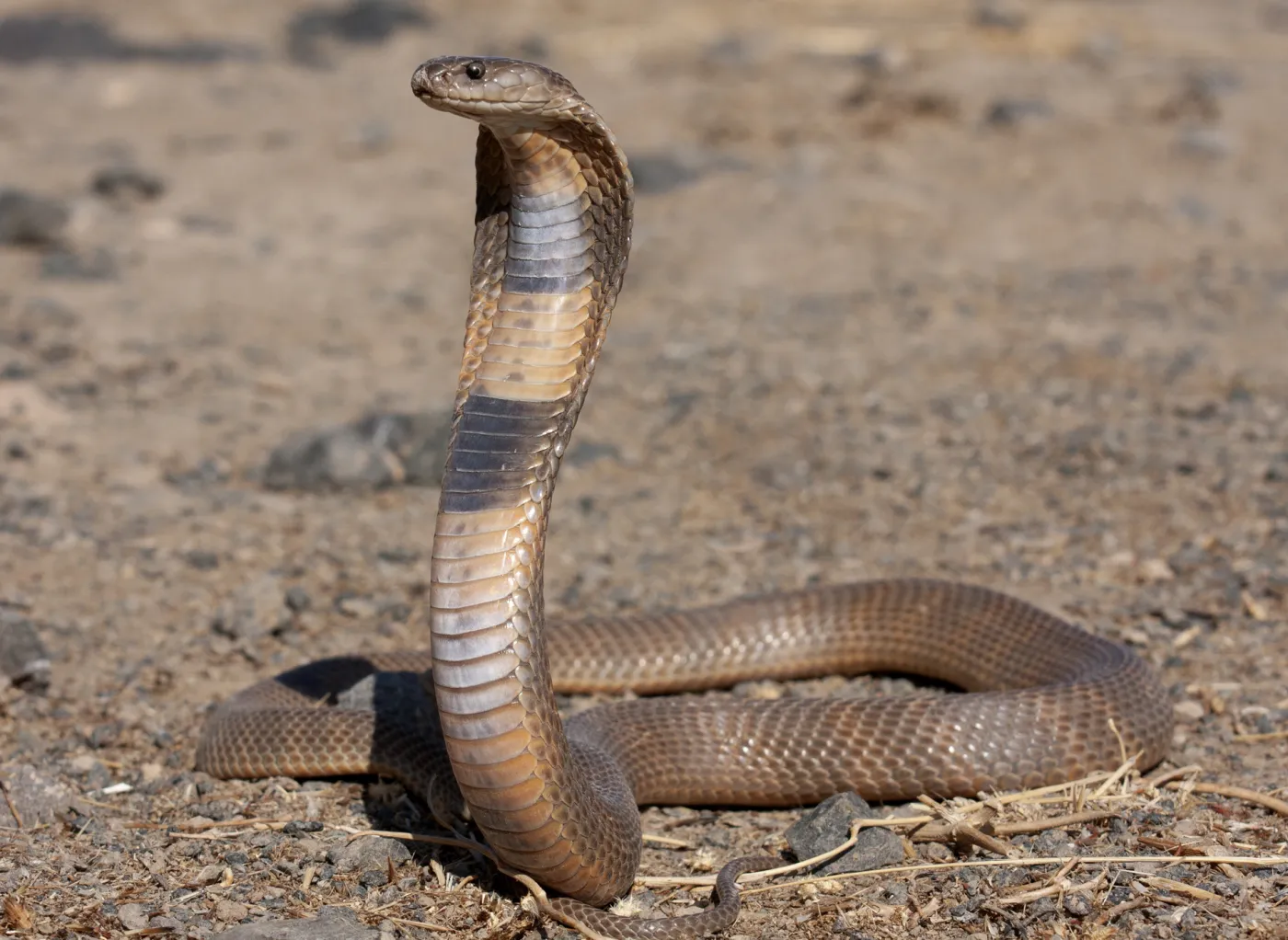 Central Asian cobra, a species whose range includes Kyrgyzstan. Photo: Ali Khani, Wikimedia Commons, CC BY 4.0; edited for this site.
The Ministry of Natural Resources also names karakurt, tarantulas, scorpions, solifuges and ticks. It is a useful overview of possible encounters, but treatment after a bite should be decided by a clinician, not from an online photograph.
Karakurt and other arachnids
The region's most medically significant spider is the karakurt, Latrodectus tredecimguttatus, a member of the black widow genus. Karakurts hide in sheltered places and bite when accidentally pressed against the skin or when a low web is disturbed.
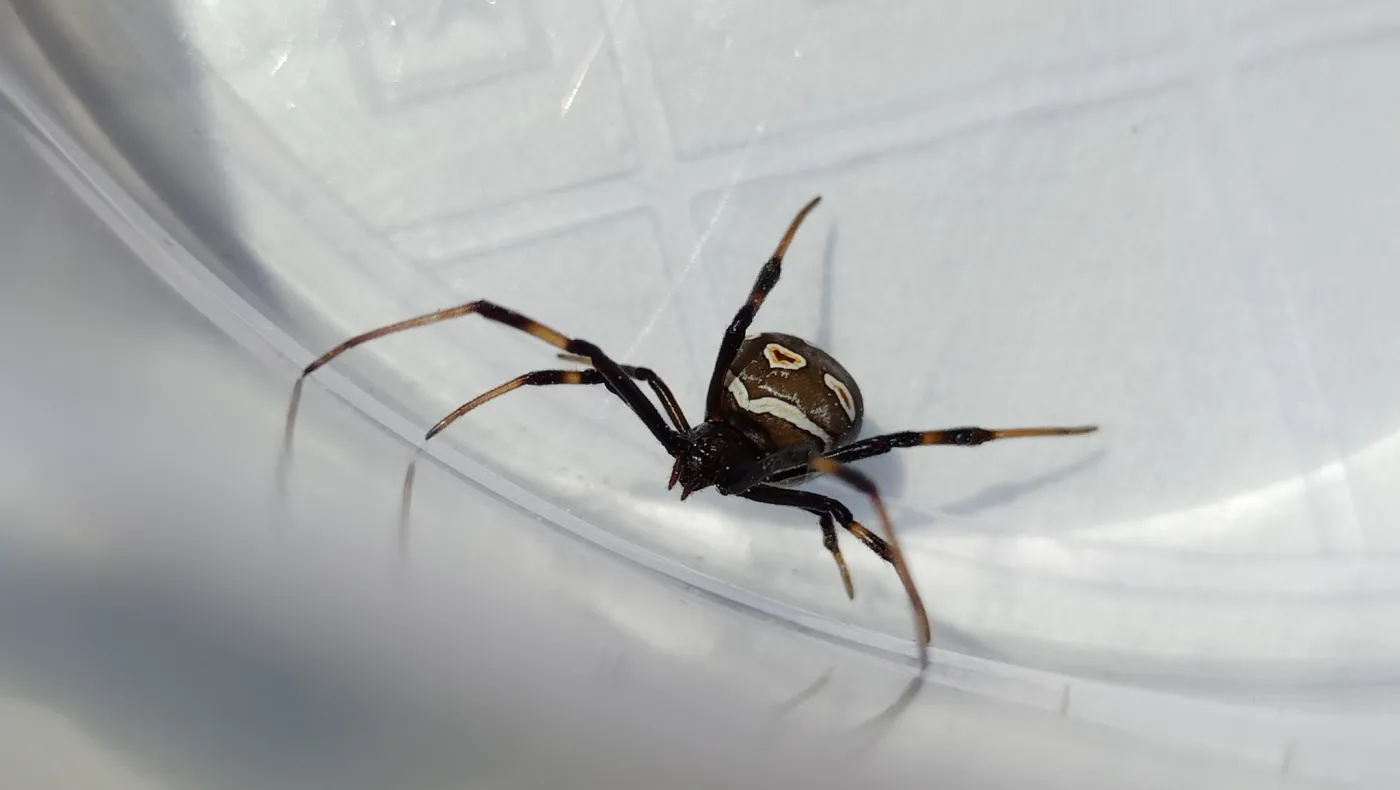 Female karakurt; its markings change with age. Photo: 0959kedi, Wikimedia Commons, CC BY 4.0; edited for this site.
The bite may initially feel like a pinprick. Increasing pain, painful muscle cramps, sweating, nausea, vomiting, weakness and breathing difficulty can follow. A small mark on the skin does not rule out envenoming. Any general deterioration requires urgent medical care.
A solifuge is not a spider. Solifuges form a separate order of arachnids and have no venom glands. They can still break the skin with a painful mechanical bite, so they should not be handled.
Large tarantulas also occur in Kyrgyzstan. Their appearance is usually more alarming than their medical effect: a bite hurts but does not normally cause severe systemic poisoning. Breathing difficulty, rapidly worsening illness, strong cramps or spreading pain always require urgent assessment.
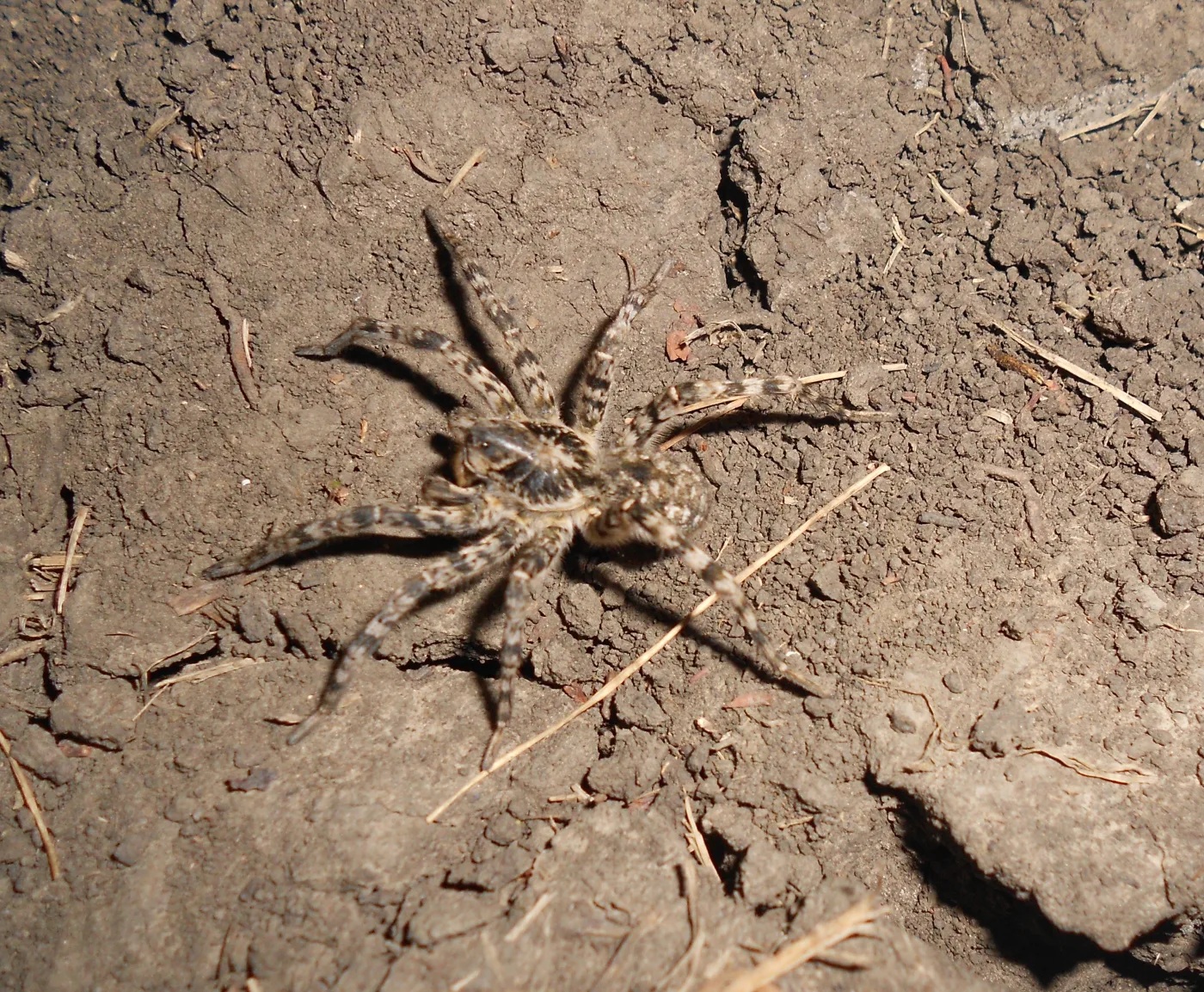 1/3. A tarantula against a background where it is easy to miss Photo: Sandhu, Wikimedia Commons, Public domain; edited for this site.
 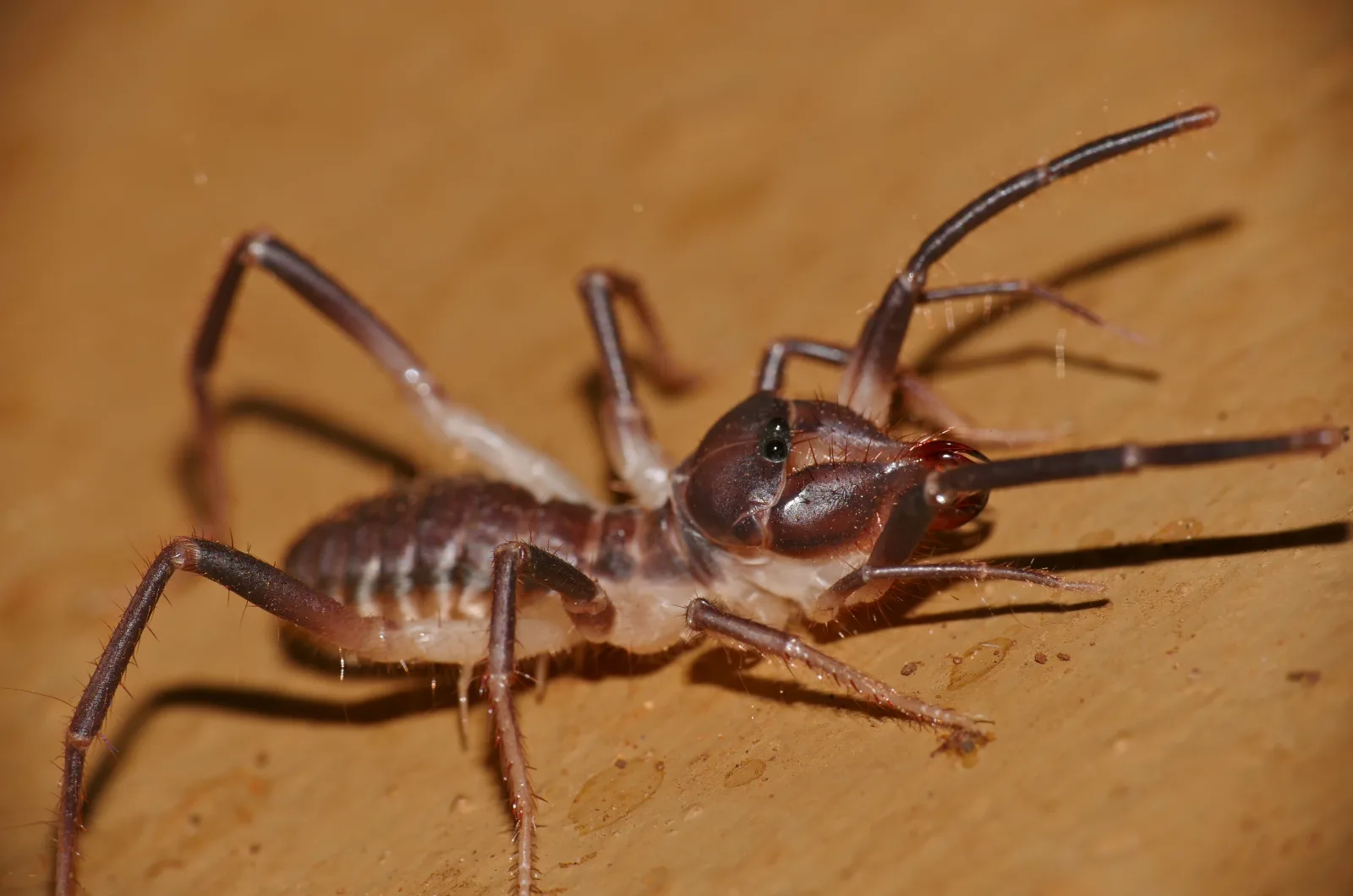 2/3. Solifuge: large jaws, but no venom glands Photo: Bernard DUPONT, Wikimedia Commons, CC BY-SA 2.0; edited for this site.
 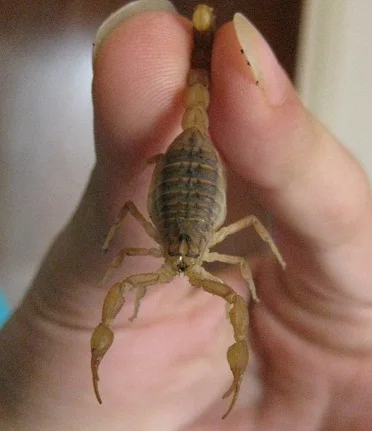 3/3. Useful for scale; do not imitate the contact shown Photo: Alireza5166, Wikimedia Commons, CC BY-SA 3.0; edited for this site.
 How to prevent bites outdoors and at camp
Watch your footing
- Wear closed shoes and use a torch after dark.
- Check the ground before sitting down or putting down a backpack.
- If you see a snake, stop and give it time to move away.
Do not reach in blindly
- Keep your hands out of crevices, burrows and spaces beneath rocks.
- Move an object with a long stick while standing to one side.
- Wear sturdy gloves when collecting firewood or doing camp chores.
Seal your sleeping space
- Choose and inspect the campsite before dark.
- Keep the entrance and insect mesh closed.
- Do not leave open shoes or loose clothing on the ground.
Shake out your gear
- Check shoes, sleeping bags, jackets and towels.
- Never pick up an animal for a photograph.
- Seal food and rubbish so they do not attract rodents.
Heat and seasonal activity affect the chance of an encounter. Compare valley and high-altitude conditions in our guide to Kyrgyzstan's climate. Before a remote trek, read about active travel and consider how an evacuation would work.
What to do after a snakebite
Every confirmed or suspected snakebite needs urgent medical assessment. Venom can cause swelling, tissue damage, abnormal blood clotting, weakness or breathing problems. The appearance of the bite does not indicate how serious the envenoming is.
-
Move a safe distance away
Do not catch or kill the snake. A photograph from a distance is useful only if it does not delay care or create another risk.
-
Call 112 or 103
Give your location, the time of the bite, the person’s condition and available transport. In a remote area, start organising an evacuation immediately.
-
Stop all movement
Lay the person down, splint the bitten limb and remove rings, watches and tight footwear. They should not walk.
-
Monitor breathing and consciousness
If the person vomits or becomes drowsy, place them on their side. Be ready to start CPR if they stop breathing normally.
Do not: apply a tight tourniquet, cut or burn the wound, suck out venom, give alcohol or make the person walk. Antivenom is given in a medical facility when clinically indicated.
The World Health Organization recommends keeping the person completely still and transporting them as quickly as possible to a facility equipped to treat snakebite envenoming.
What to do after a spider bite
If you saw a karakurt, felt a bite near its shelter or develop general symptoms, treat the situation as urgent. With a small local reaction and no spider seen, the mark alone is an unreliable diagnosis: insect bites, irritation and infection can look similar.
-
Wash the skin
Clean the bite gently with soap and water. Do not cut the wound or try to remove venom.
-
Apply a cold pack through cloth
A cool compress can reduce pain and swelling. Do not put ice directly on the skin.
-
Remove tight items
Take off rings, watches and tight clothing, and keep the affected part of the body still.
-
Seek help if symptoms spread
Call 112 or 103 for severe or spreading pain, muscle cramps, sweating, vomiting, weakness or breathing difficulty.
Seek help sooner for a child, a pregnant person, an older adult or anyone with a serious chronic condition. Do not try to obtain or administer antivenom yourself.
What to arrange before a trip
In a remote area, the time to hospital matters more than naming the species from a photograph. Save an offline map, the coordinates of the nearest settlement, 112 and 103, your accommodation or guide's contact details and a backup transport option. Tell someone your route and expected return time.
A regular first-aid kit cannot treat envenoming. Useful contents include clean water or wound wash, clean cloth, a cold pack, material for securing a splint and personal medication. Check your insurance before a difficult route: a standard policy may exclude trekking, evacuation or activities above a stated altitude.
Our guide to wildlife in Kyrgyzstan provides the wider context. If you are travelling through the dry south, research your base in Batken, mobile coverage and the distance to medical care in advance.
Share on social media
If you found this guide useful, share it on social media. It takes a moment and helps more travellers discover the project. Thank you!
Anything to add?
Share your experience, leave a comment or suggest an improvement.