Contents:
What to bring home from Kyrgyzstan
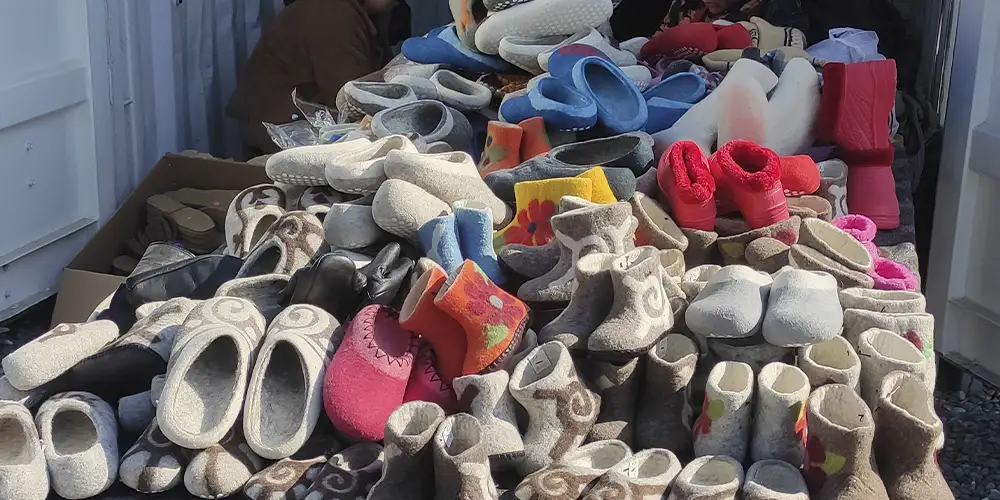
A good souvenir from Kyrgyzstan has a clear connection to a local material and maker. At a workshop, you can learn who felted the wool, embroidered the pattern or carved the wooden detail. Handmade and mass-produced goods often sit beside one another on an anonymous stall, so a “made in Kyrgyzstan” label proves little by itself.
Felt goods. Slippers, toys, cases, bags and small panels are easy to carry in luggage. Ask whether the maker used natural wool, check the seams and make sure the item is completely dry. A strong damp smell and a loose edge suggest problems with storage or felting.
Textiles and clothing. An embroidered bag, belt, waistcoat or small household item is more practical than a full stage costume. Ask about the fabric and care instructions: bright hand embroidery and appliqué may require delicate cleaning.
Wood, leather and metal. A small bowl, case, belt or piece of jewellery takes little space. Ask for a hallmark and receipt for silver, and check wooden objects for cracks and unglued joints. Avoid souvenirs made from horn, bone, feathers or skins unless their lawful origin is clear.
Komuz. This three-stringed instrument suits someone who genuinely intends to play or study music. Decoration matters, but first check the neck is straight, the pegs work, the body has no cracks and all strings sound. Arrange cabin baggage dimensions or a hard case before flying.
Food. Uzgen rice, nuts, dried fruit, nabat sugar and spices are easiest to carry in factory or clearly labelled packaging. Kurut is made from a fermented milk base, so its ingredients, production date and your destination’s rules for animal products are particularly important.
Shyrdak and ala-kiyiz
 1/3
1/3 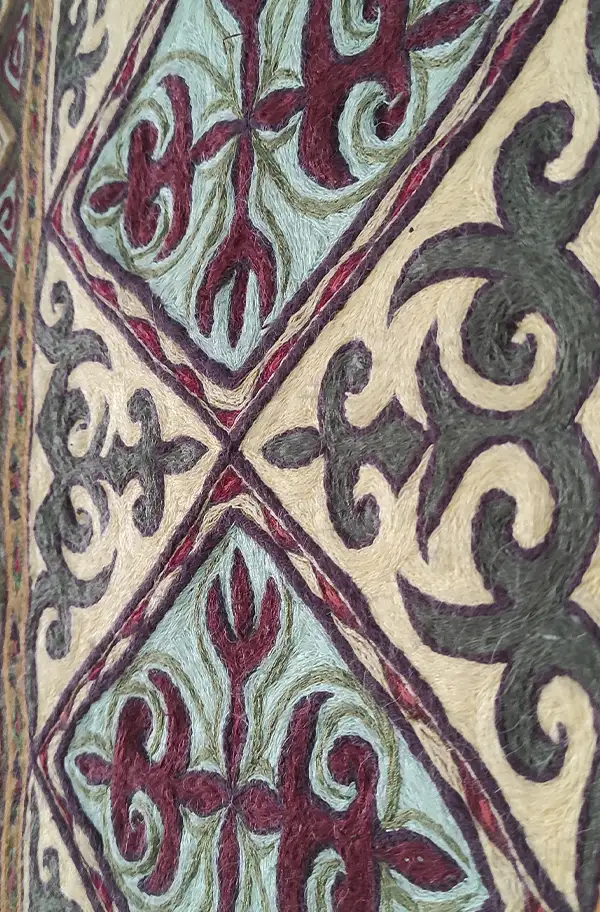 2/3
2/3 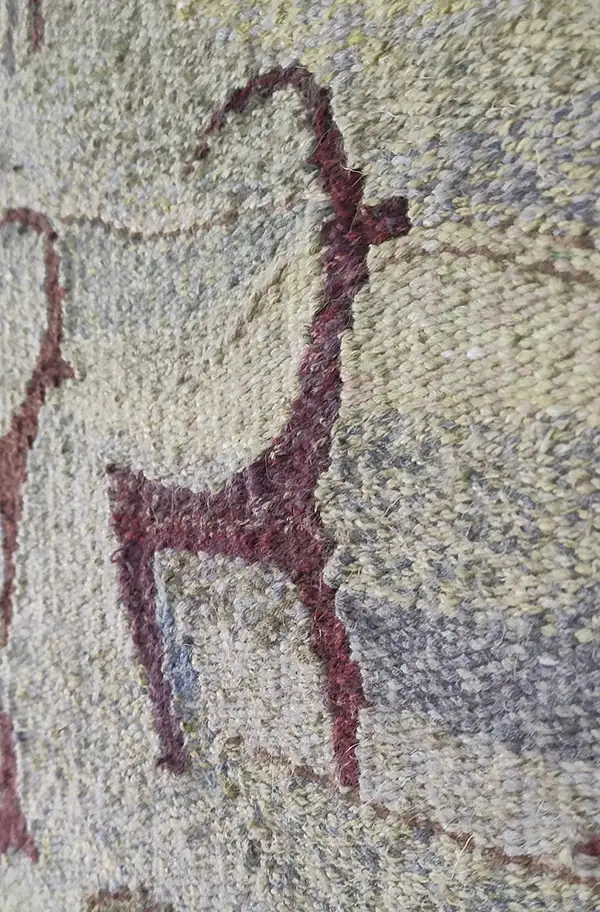 3/3
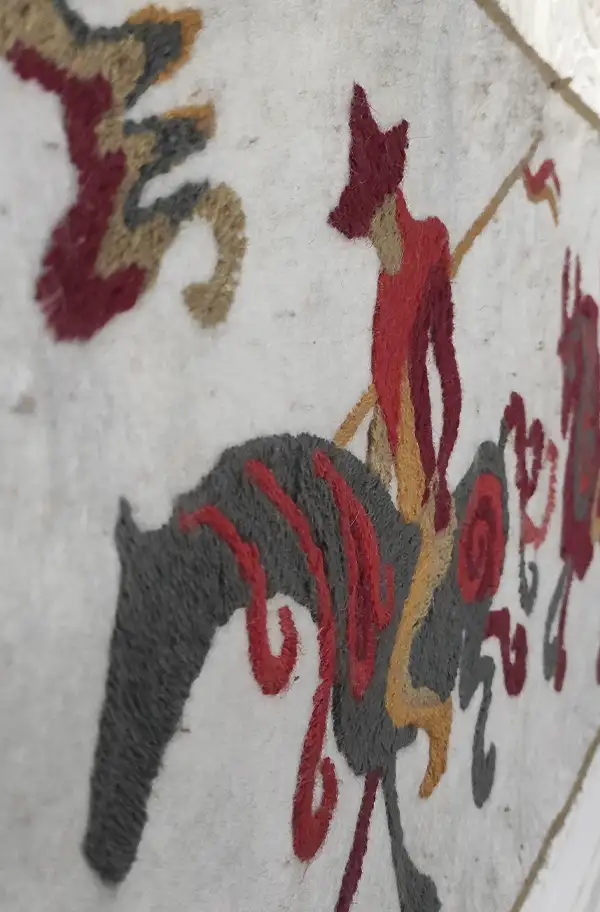
3/3 Shyrdak and ala kiyiz are two different kinds of Kyrgyz felt carpet. A shyrdak pattern is cut from layers of felt, paired and quilted together. In ala kiyiz, coloured wool is arranged into a composition and felted with the base. The finished carpets therefore differ in pattern, edge and texture.
In 2012, UNESCO inscribed the art of making shyrdak and ala-kiyiz on the List of Intangible Cultural Heritage in Need of Urgent Safeguarding. This does not give museum status to every carpet; it recognises the knowledge, techniques and transmission of the craft between generations. UNESCO describes the tradition on its website.
Unroll the carpet completely before buying it. Check that it lies flat, the felt has an even density, the edges are secure and there are no damp areas. Ask the maker to explain the technique and materials. Learn the meaning of a pattern from the author of that particular piece: universal claims such as “four corners represent the four cardinal directions” are often later, attractive legends.
Measure and weigh a large shyrdak before paying. It is usually rolled for transport, but baggage rules depend on the airline. A receipt naming the workshop helps show that the piece is modern.
Traditional headwear
 1/4
1/4 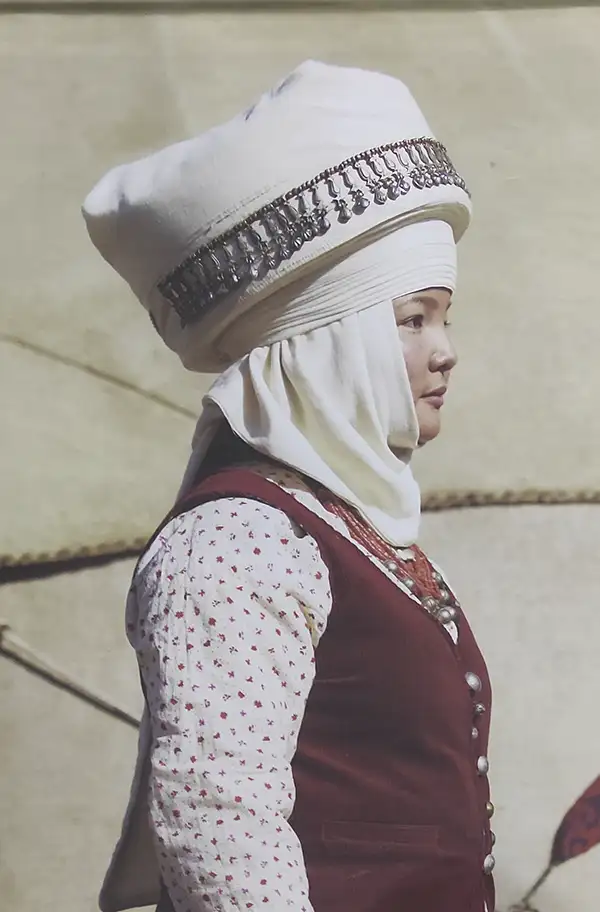 2/4
2/4 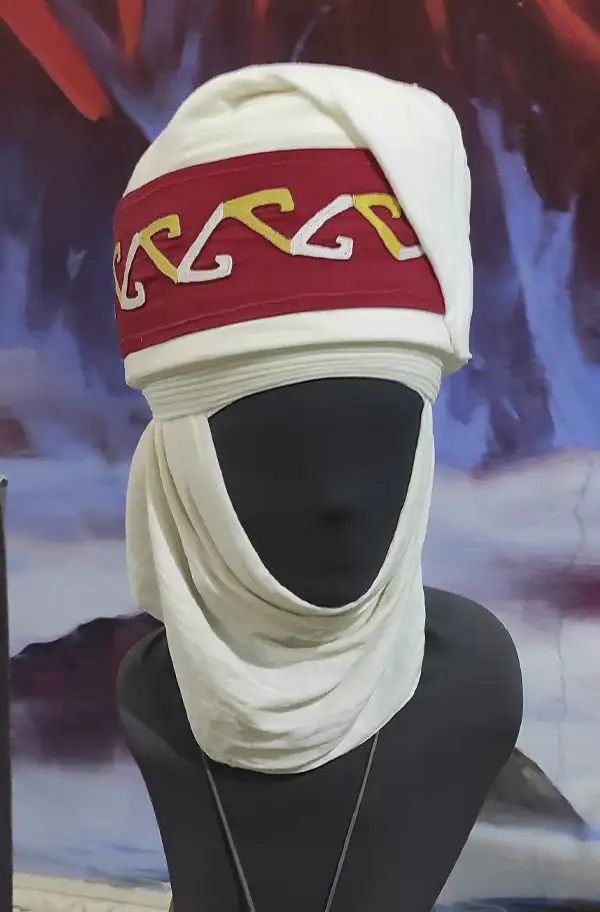 3/4
3/4 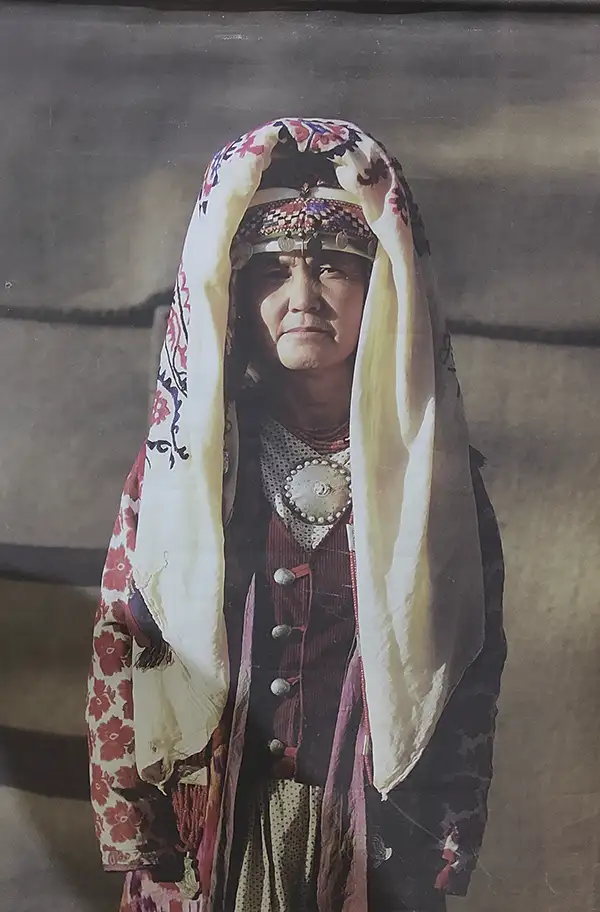 4/4
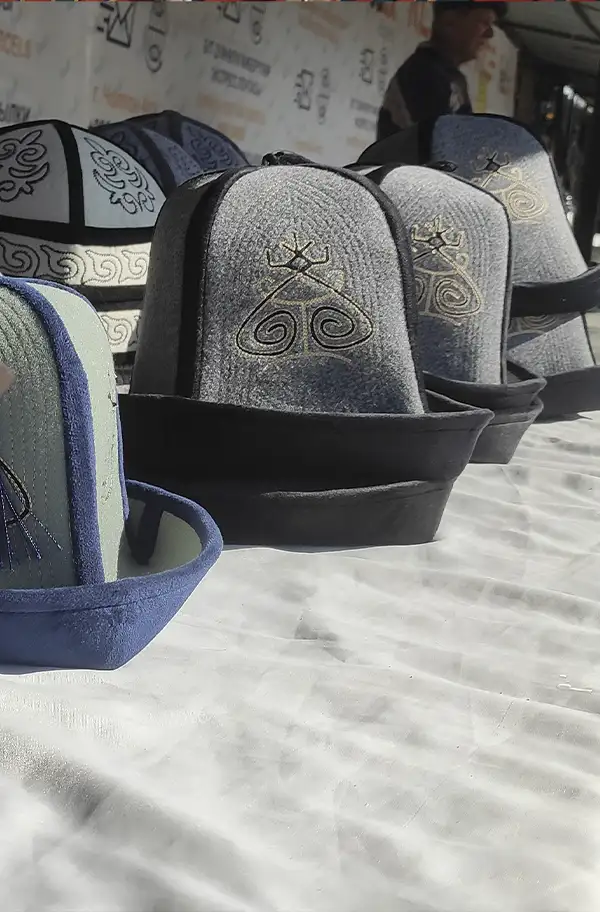
4/4 Ak-kalpak. The white felt hat with black or coloured trim is among Kyrgyzstan’s most recognisable forms of men’s headwear. For a wearable souvenir, check size, felt density and the finish of the edging. The ak-kalpak belongs to a living culture, so do not use it as disposable fancy dress or place it on the ground.
Topu. This small skullcap can be for men, women or children and varies in cut, fabric and embroidery. The Russian umbrella term “tyubeteyka” covers many Central Asian forms, so ask the maker about the origin of a particular pattern.
Elechek and other women’s headwear. An elechek is formed from a long length of white cloth, while festive and regional forms add ornaments. It is a complex part of dress, not a ready-made hat of one standard shape. For a souvenir, a small artist-made doll, photograph or book about dress is more practical than a random stage replica.
What to check before export
Age and cultural value. According to the government permits portal, ordinary souvenirs, works under 50 years old and works exported during the artist’s lifetime do not require a Kyrgyz export permit. Antiques, old carpets, works of art and objects of possible historical value may require an expert assessment or permit. The process is described on the eLicense portal.
Animals and plants. Do not buy horns, skins, taxidermy, birds of prey feathers, rare plants or unidentified bone objects without documents. Restrictions may apply to export from Kyrgyzstan, import into your destination or both.
Food. Meat, dairy products, honey, fresh fruit, seeds and plants are subject to the destination country’s veterinary or phytosanitary rules. Kyrgyzstan’s membership of the Eurasian Economic Union does not remove every sanitary restriction. Check the authorities of the destination and transit countries rather than copying rules from an old article.
Alcohol and bulky luggage. Alcohol allowances, duties and cabin-baggage rules depend on your route, age and airline. Check before buying. Arrange suitable luggage and packaging in advance for a carpet, komuz or ceramics.
Keeping the receipt and workshop contact is the most useful habit. They help show that an item was bought legally and made recently, and allow you to contact the maker for care instructions or the story behind a pattern.
Share on social media
If you found this guide useful, share it on social media. It takes a moment and helps more travellers discover the project. Thank you!
Anything to add?
Share your experience, leave a comment or suggest an improvement.