Contents:
Check the format before booking: a solo komuz recital, a komuz ensemble, a folk orchestra and a mixed folklore show reveal very different sides of the instrument.
How a komuz is built
A traditional komuz has three strings, a long fretless neck and a wooden body with a flat soundboard. The body and neck are often carved from one piece of wood, then closed with a separate thin top. Apricot, walnut and juniper are among the woods used by makers. The finished response matters more than an impressive timber name: two instruments made from the same species can feel and sound quite different.
The fretless fingerboard is easy to recognise. There are no metal bars to fix the notes, so the player places each finger by ear and muscle memory. Intonation is therefore part of the technique from the first lesson, not a detail reserved for advanced players.
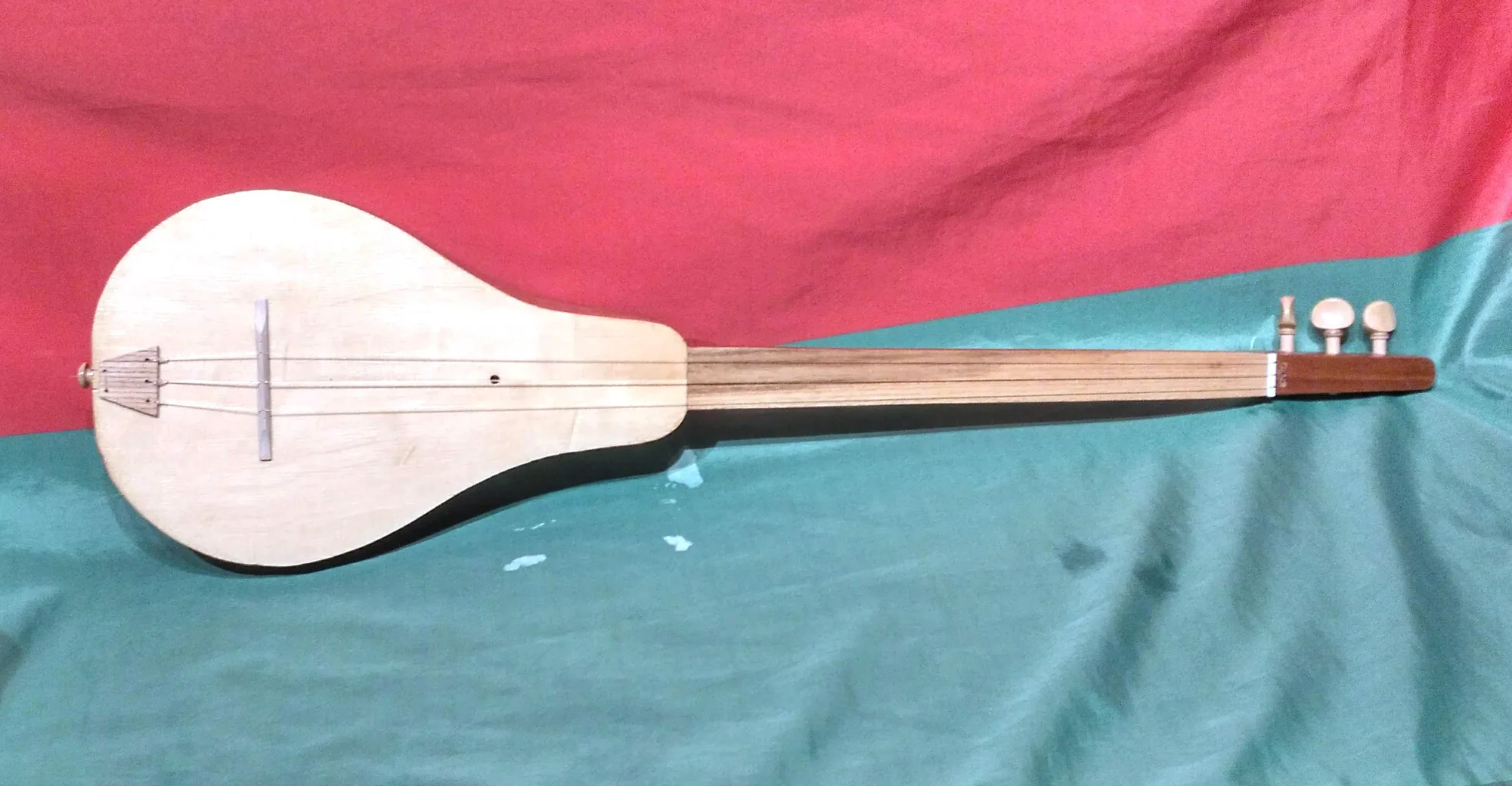 A komuz seen from the front. Photo: Jo Dusepo, Wikimedia Commons, CC BY-SA 4.0; edited for this site.
There is no single tuning for every piece. Kyrgyz performers use several established tunings and choose one for the register, mood and fingering of a particular work. If a teacher tunes your komuz differently from an online recording, ask for the name and purpose of that tuning before assuming either version is wrong.
How players create the sound
The right hand does far more than pluck one string at a time. Players brush across several strings, reverse the direction of a stroke, strike with the fingernail and add short percussive touches on the soundboard. The left hand shapes the melody on the fretless neck while open strings continue to provide rhythm and resonance.
In a virtuoso solo, gesture can become part of the performance. A musician may cross the hands, move the instrument behind the neck or rotate it without losing the pulse. These feats grow from secure basic technique; they are stagecraft, not a sensible starting posture for a beginner.
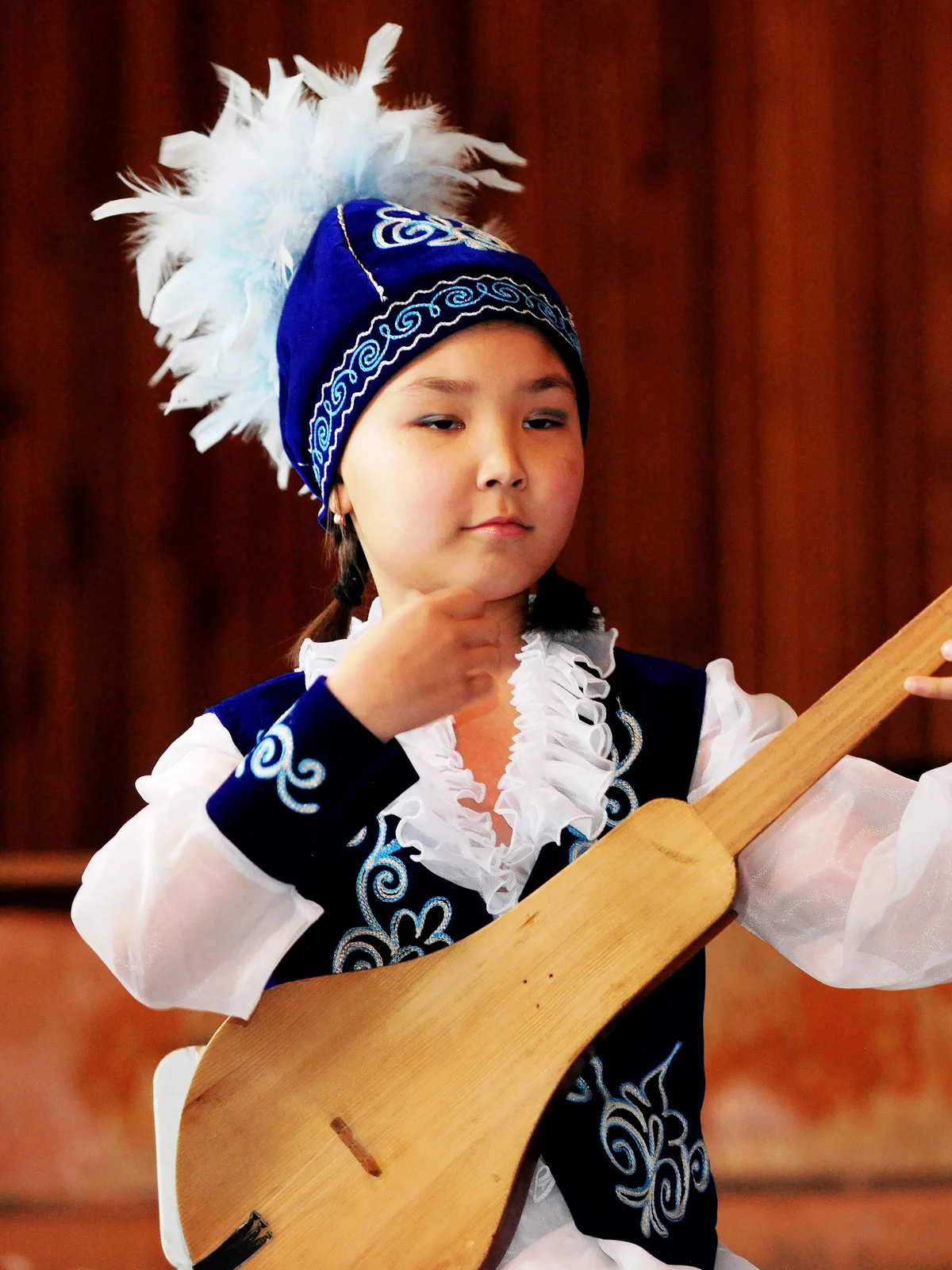 1/2. Music-school student in Bishkek, 2010 Photo: Nichelle Anderson, U.S. Air Force, Wikimedia Commons, public domain; edited for this site.
 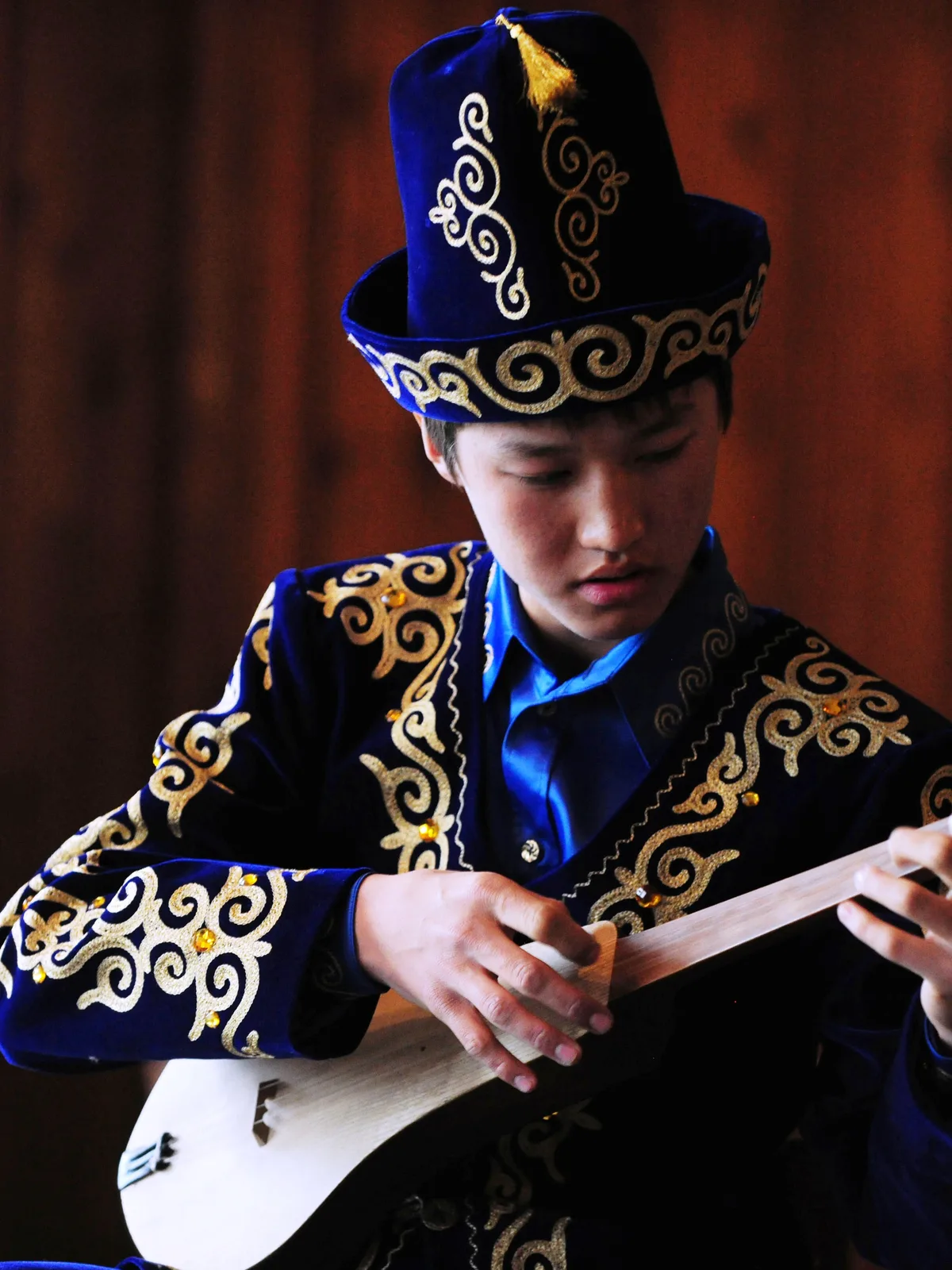 2/2. Music-school student in Bishkek, 2010 Photo: Nichelle Anderson, U.S. Air Force, Wikimedia Commons, public domain; edited for this site.
 What is a kuu?
Kuu is the Kyrgyz term for an instrumental piece and the performance tradition around it. A work may have a title, an image or a short narrative which the player conveys through pace, repeated figures, dynamics and gesture. Before a recital, ask for the title and a two-sentence introduction. That small amount of context can turn an abstract pattern into a gallop, a conversation, a landscape or a character study.
The Smithsonian Folkways catalogue offers a useful example: Samara Tokhtakunova performing “Ker-Tolgoo”, a piece by Niyazaaly whose title evokes a horse's gait. The recording shows how three strings can sustain melody and rhythm without orchestral support.
Four ways to hear the komuz
A kuu played by one musician
- Tuning, attack, resonance and pauses remain exposed.
- Gesture and the position of the instrument may extend the story.
- The clearest introduction to the komuz itself.
Song accompaniment
- The komuz supports the pulse and answers the vocal line.
- The singer, akyn or songwriter may be the focus of the programme.
- Ask whether translations or a short synopsis are available.
Komuz ensemble
- Parts and registers are distributed between the musicians.
- Tight ensemble rhythm replaces some solo freedom.
- Common at music-school concerts and public celebrations.
Folk orchestra
- The komuz joins bowed, wind and percussion instruments.
- Reconstructed instruments in several registers may be used.
- A listing does not necessarily guarantee a separate komuz solo.
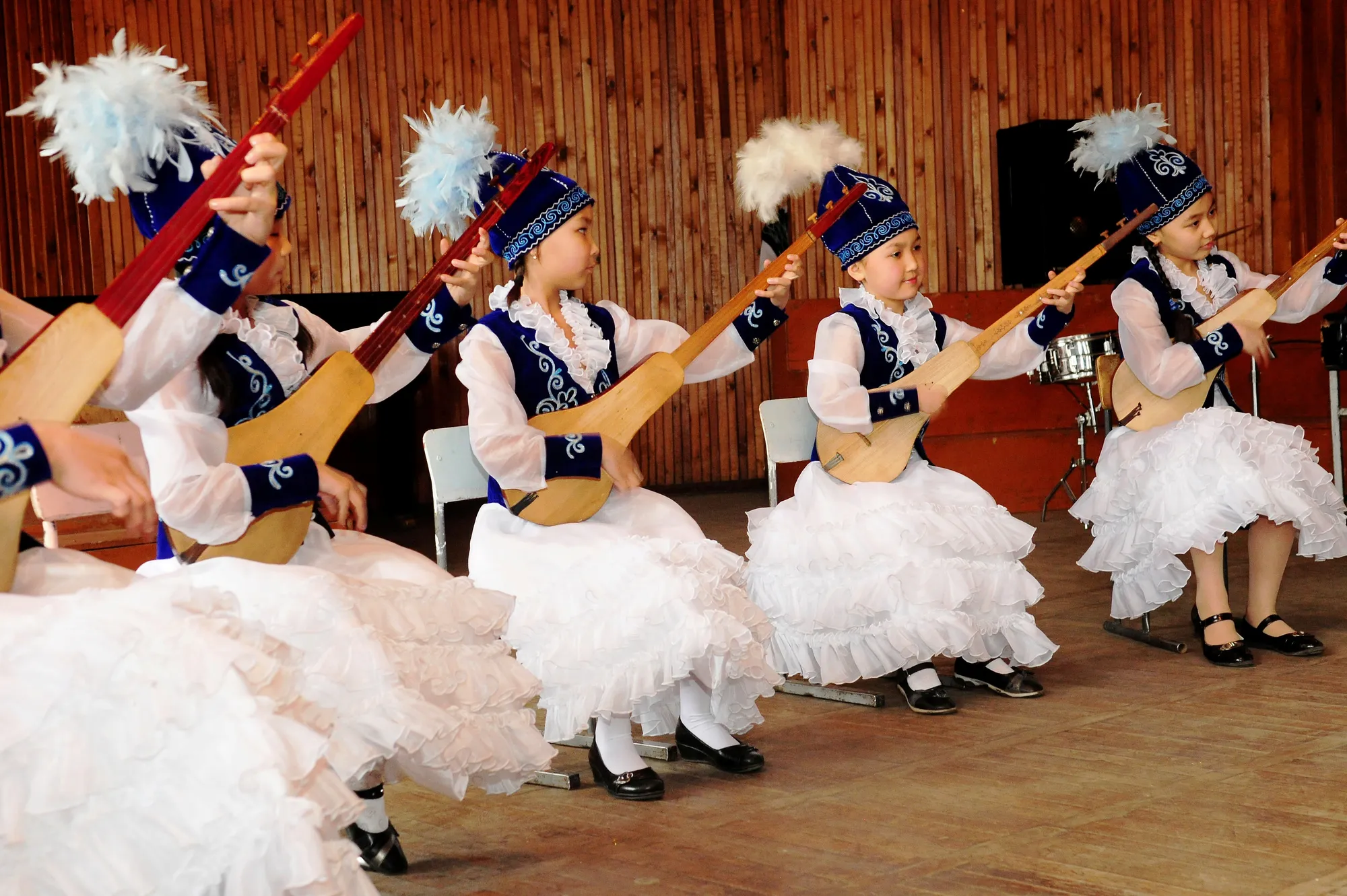 Children's komuz ensemble in Bishkek, 2010. Photo: Nichelle Anderson, U.S. Air Force, Wikimedia Commons, public domain; edited for this site.
Komuz and temir komuz
The temir komuz belongs to the jaw-harp family. A small metal frame is held at the mouth and its flexible tongue is set in motion with a finger; the player's mouth changes and amplifies the sound. You may also see the names ooz komuz and temir ooz komuz.
The wooden three-stringed komuz and the metal temir komuz differ in construction, technique and sound. Both may appear on the same concert bill, which is why a vague English listing that simply says “komuz” can be misleading.
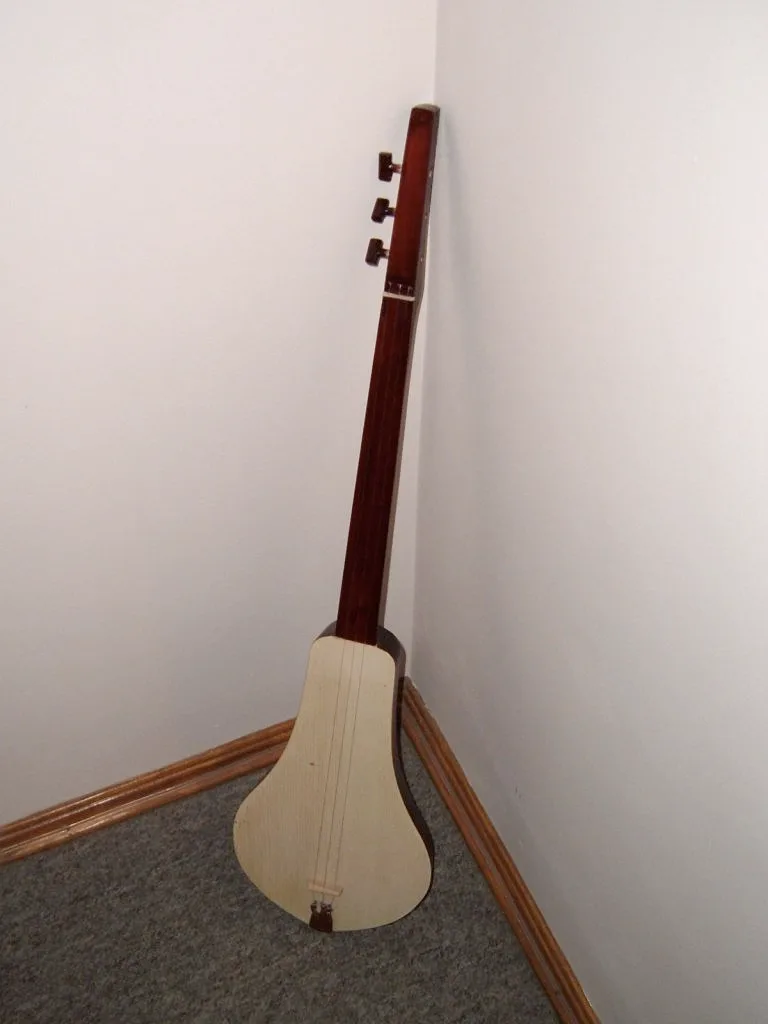 The outline of a traditional three-stringed komuz. Photo: Hux, Wikimedia Commons, public domain; edited for this site.
Where to hear it live
In Bishkek, check current programmes at the Philharmonic, music schools, museums, city festivals and smaller cultural venues. Komuz Day falls on 9 September, so themed events are more likely around that date. The schedule changes each year; use a current listing rather than an old festival article. The date itself is confirmed in an official Bishkek city announcement.
In Karakol, Osh, Naryn and other regional centres, the instrument appears at local festivals, student concerts, celebrations and some visitor programmes. An “ethno concert” does not automatically include a solo kuu. Ask for the line-up, approximate length and whether the host will introduce the works.
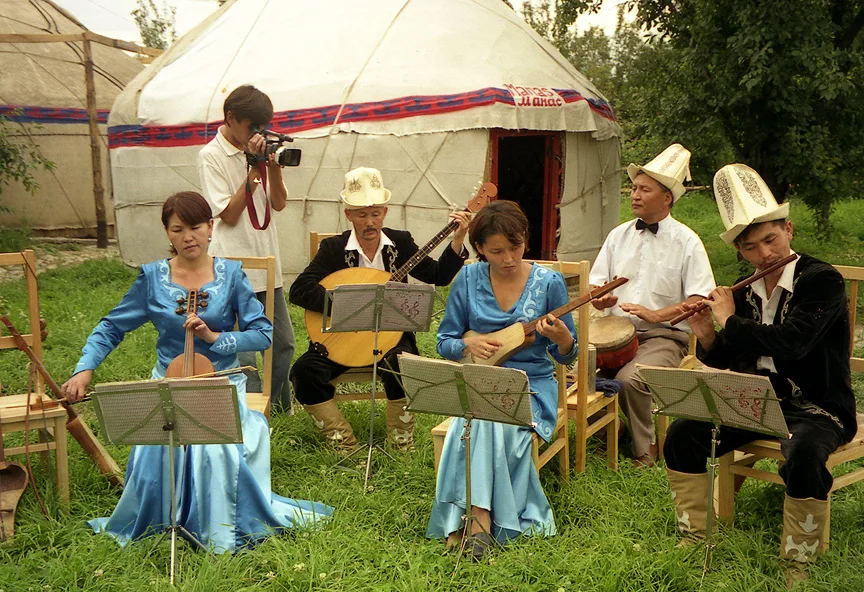 Musicians beside a yurt in Karakol, 2002. Photo: Simon Garbutt, Wikimedia Commons, public domain; edited for this site.
What to expect from a first lesson
-
Tune with the teacher
Learn the name of the tuning as well as the sound of each string. A different piece may require a different setup.
-
Find a balanced position
Sit without twisting, secure the body of the instrument and keep the shoulders and wrists relaxed.
-
Play the open strings
Practise the direction of the right-hand stroke and an even pulse before adding a melody.
-
Place the left hand
On a fretless neck, pitch depends on finger position and listening. Slow, short repetitions are more useful than rushing.
-
Build one short phrase
Ask for a simple pattern or the opening of a kuu, then note its name and tuning so you can repeat it correctly.
A one-off taster session can use the teacher's instrument. If you plan to continue, ask which size, tuning and string tension suit the course before buying. There is no need to arrive at the first lesson with your own komuz.
How to choose an instrument
Buying directly from a maker gives you the chance to ask about the wood, age, strings, tuning and care. A signature and carved ornament are not substitutes for testing. Take a teacher or experienced player if possible and compare at least two instruments in the same room.
- Neck: sight along it and look for a noticeable bend or twist.
- Pegs: tune all three strings, play for several minutes and check whether they hold.
- Body: inspect the soundboard, seams and edges. An open crack, gap or loose part needs an explanation from the maker.
- Response: each string should speak clearly. Play up the neck and listen for buzzes or dead spots.
- Comfort: compare weight, neck thickness and string spacing. Decoration is little consolation if the hand tires quickly.
- Purpose: tell the seller whether you need a student instrument, a performance komuz or a decorative object.
There is no universally best wood or one mandatory tuning. Judge the finished instrument by tuning stability, balance between the strings, tone and playability.
Transport and care
Use a case that protects the pegs, neck and soundboard from impact. Do not leave the instrument in a closed car, beside a heater, in direct sun or in a damp room. Wood reacts to abrupt changes in heat and humidity.
Before a flight, measure the komuz inside its case and obtain written confirmation of the airline's cabin or checked-baggage rules. A fabric bag keeps off dust but offers little protection beneath heavy luggage. Checked transport calls for a rigid case with the instrument secured inside.
If the komuz is one of your souvenirs from Kyrgyzstan, keep the receipt and the maker's contact details. A future player should also receive the recommended tuning, string information and care instructions. A decorative miniature may look convincing but is not expected to tune or withstand regular practice.
How to build a cultural day around it
Begin with the instruments in the National Historical Museum, then add either a live recital or a short lesson. The museum supplies historical context, a performance reveals tone and gesture, and a lesson makes the physical work of both hands tangible.
Within the wider culture of Kyrgyzstan, the komuz sits beside oral epic, craft and traditional games, but the practices should not be collapsed into one folklore package. A manaschi normally performs the Manas epic without obligatory komuz accompaniment, while the instrument has its own solo, song and ensemble repertoire.
Frequently asked questions
How many strings does a komuz have?
A traditional Kyrgyz komuz has three strings. The tuning changes with the piece and performing tradition, so there is no single note sequence for every situation.
Does a komuz have frets?
No. Its fingerboard is fretless. The player finds each pitch through finger placement and listening, which makes intonation part of beginner training.
Is a kuu a song?
A kuu is an instrumental piece and the performance tradition around it. It may carry a title, image or narrative, but it does not require a vocal part.
Are komuz and temir komuz the same instrument?
No. The komuz is a wooden three-stringed lute. The temir komuz is a metal jaw harp whose sound is shaped by a vibrating tongue and the player's mouth.
Where am I guaranteed to hear a komuz?
There is no single venue with a guaranteed daily programme. Check current Philharmonic, museum, music-school and festival listings, then confirm the line-up with the organiser.
Can I buy a komuz at a market?
Yes, but test it as a musical instrument: inspect the neck, pegs and body, then check tuning stability and response across the fingerboard. Bring a teacher or experienced player for a first purchase if possible.
Share on social media
If you found this guide useful, share it on social media. It takes a moment and helps more travellers discover the project. Thank you!
Anything to add?
Share your experience, leave a comment or suggest an improvement.