Contents:
Checked on 3 September 2026. The full-year figures for 2025 remain preliminary, while forecasts for 2026 can change. Nothing on this page is investment or currency advice.
The economy in five figures
Kyrgyzstan’s gross domestic product exceeded KGS 1.976 trillion in 2025 and grew by 11.1% in real terms. It was the fourth year of rapid expansion after 2021. That does not mean every household’s income rose by 11.1%: GDP measures the value of goods and services produced, not how the resulting income is distributed.
Trade and vehicle repair
- The largest individual activity in the official GDP breakdown.
- It includes wholesale and retail trade as well as repair of cars and motorcycles.
- Its share was 17.3% in 2024.
Manufacturing
- This is finished production rather than extraction alone.
- Food, drink, building materials and many other products sit in this category.
- Mining and quarrying are counted separately and contributed 2.1%.
Construction
- Housing, roads and infrastructure have supported recent growth.
- The sector accounted for 7.7% in 2024.
- Expansion raises demand for materials, workers and transport.
Agriculture, forestry and fishing contributed another 8%, finance and insurance 7.1%, transport and storage 3.1%, and hotels and restaurants 2.1%. These current-price shares come from Kyrgyzstan’s National Statistical Committee. They must not be added to growth rates: a share describes size within the whole economy, while a growth rate describes change.
Trade and services: the economy in plain sight
Kyrgyzstan’s position between China, Kazakhstan, Uzbekistan and Russia has made commerce particularly important. Goods move through wholesale markets, warehouses, carriers and small shops. Some imports are consumed in the country and some are sold onward, so import values do not equal purchases by Kyrgyz households.
Dordoy Bazaar makes this system tangible. A shipping container can work as both shop and stockroom; lorries, banks, cafés and repair services cluster around it. The market supports more than retail jobs. It also creates work in freight, accounting, security, communications and property rental.
Services extend far beyond trade. They include transport, banking, communications, education, healthcare, restaurants, hotels, public administration and real estate. In Bishkek, offices, delivery services, cafés and apartment construction make that economy easy to see. In a district town, the same category may consist of a bazaar, bank branch, workshop, pharmacy and local transport.
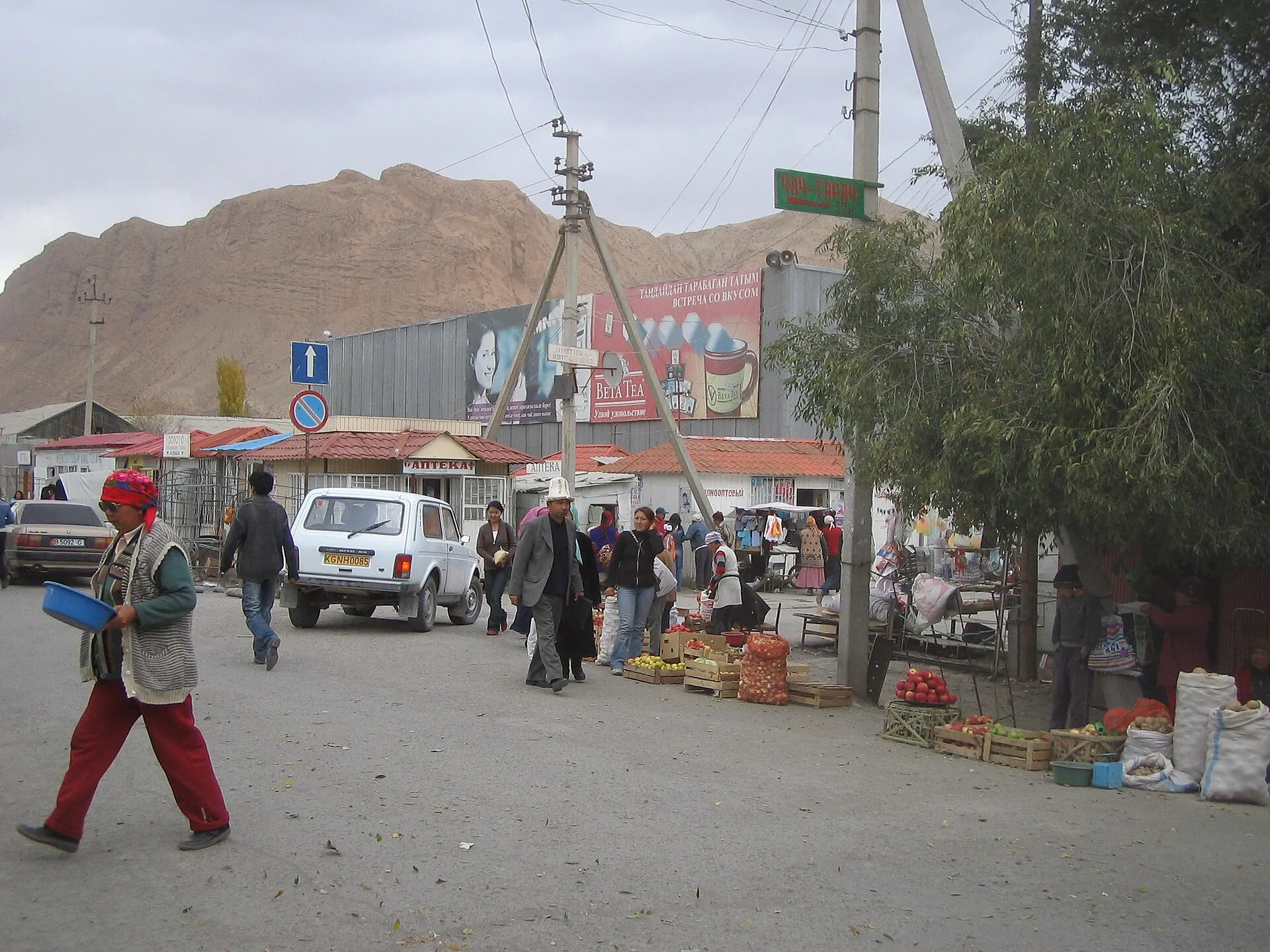 Naryn market: local producers and everyday demand meet in a regional centre. Photo: Leo Wallentin, Wikimedia Commons, public domain; edited for this site.
Industry, gold and energy
Kyrgyz industry is not one uniform sector. Food processing, beverages, cement, glass, textiles and other manufacturing sit alongside the extraction of coal, oil, metals and industrial minerals. One large plant can shift a national index, so a strong or weak year does not necessarily describe conditions at hundreds of smaller factories.
Gold has an exceptional role in exports and official reserves. Prices, production volumes and the timing of shipments can noticeably move the trade figures. Yet a gold mine is not the whole economy: trade, construction, farming, transport and public services also provide everyday jobs and income.
Electricity generation relies heavily on rivers and hydropower. Toktogul Reservoir regulates the Naryn and feeds the key station in its cascade. Water availability varies by season and year, tying generation to reservoir levels, domestic demand and energy exchanges with neighbouring countries.
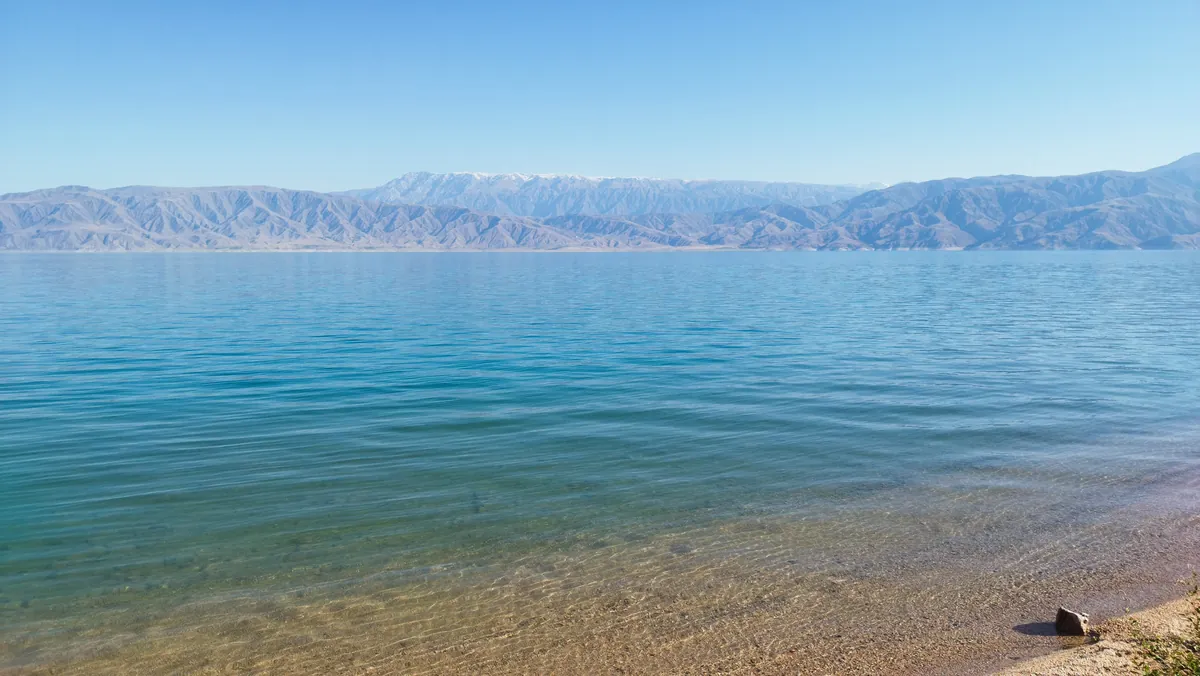 Toktogul Reservoir: water is a natural resource, an energy reserve and regional infrastructure. Photo: Arthur Dolchenko, Wikimedia Commons, CC BY-SA 4.0; edited for this site.
Agriculture and regional differences
Agriculture’s share of GDP fell to 8%, but that figure does not make it unimportant. In rural communities it shapes employment, seasonal income, household food and demand for transport. A family may raise livestock, grow fodder, sell milk, host travellers and have a relative working in a city at the same time.
The Chüy Valley combines fields and food processing with access to the country’s largest market. Issyk-Kul brings together tourism, livestock, orchards and gold. The south depends on the fertile Fergana Valley, commerce and processing. Naryn and other high-altitude areas rely more heavily on pastoral farming, public-sector jobs, road access and seasonal tourism.
A national average therefore hides several economic calendars. A harvest, the opening of a mountain pass, the visitor season or a construction contract can matter more to one district than the country-wide GDP figure.
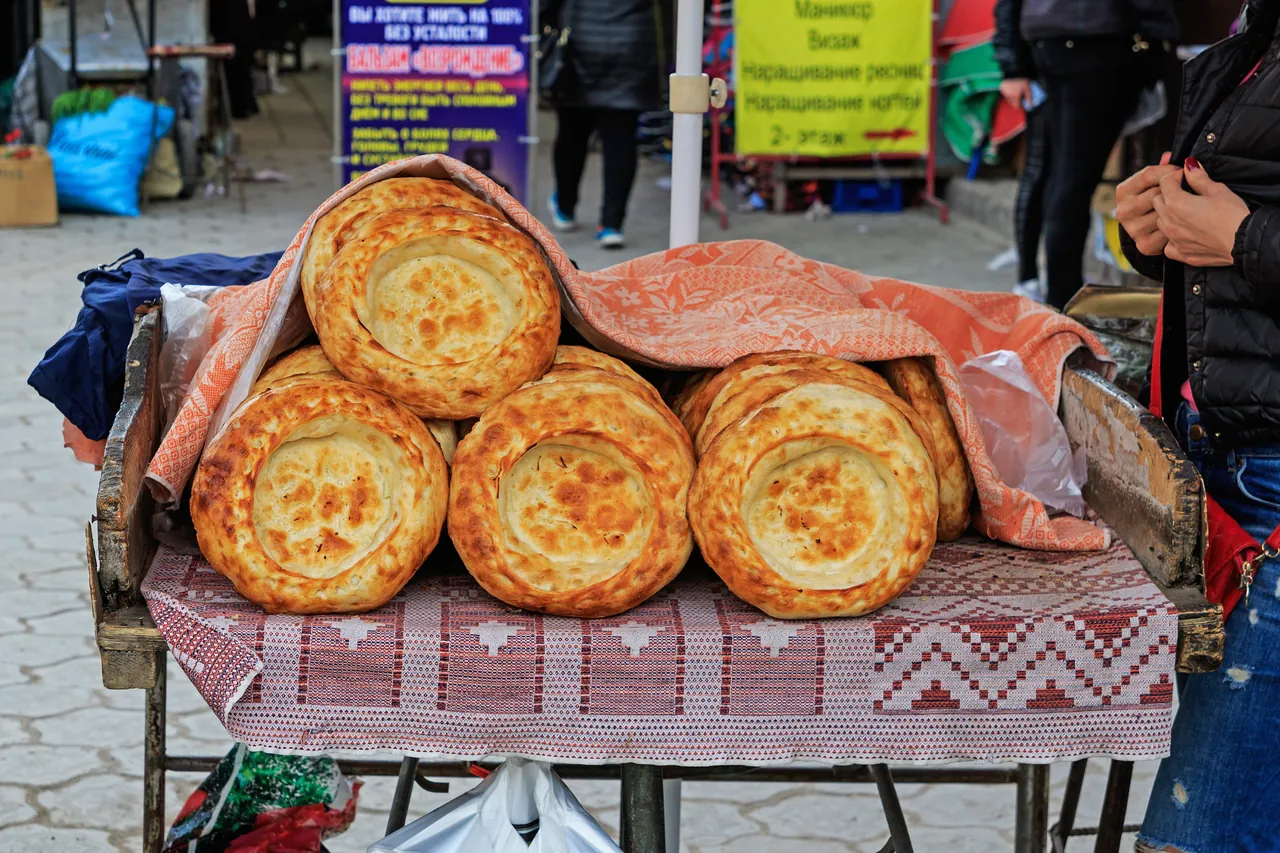 Food at a town market follows a short chain from farm and bakery to customer. Photo: A. Savin, Wikimedia Commons, Free Art License 1.3; edited for this site.
Why remittances matter
Many Kyrgyz citizens work abroad and send money to their families. These transfers pay for day-to-day spending, housing, education, healthcare and small businesses. The International Monetary Fund estimated net remittance inflows at more than 14% of GDP in 2025.
Remittances support domestic demand, but they also connect household income to conditions in destination countries. The rouble exchange rate, demand for labour and migration rules can quickly affect spending in Kyrgyzstan. External resilience therefore depends on more than exports.
Money earned abroad is not recorded as a good or service produced inside Kyrgyzstan. It still passes through the local economy when a household shops, builds a home or pays for a service. That is why the importance of remittances is easier to see in family budgets than in the GDP sector table.
Construction, roads and major projects
Construction has become one of the fastest-growing parts of the economy. Apartment and commercial projects are visible in Bishkek and Osh, while roads, airports and energy facilities are being upgraded around the country. Work creates immediate demand for cement, steel, machinery, freight and labour; the benefit of a completed road or power station arrives later.
Major projects require careful language. The start of construction does not mean a railway already carries passengers or a dam already generates power, as our guides to the China-Kyrgyzstan-Uzbekistan railway and Kambar-Ata-1 show. Schedules, costs and financing can change. Our guide to Kyrgyzstan’s major projects in 2026 separates active sites, enabling works and memoranda; this economic overview focuses on how they affect demand.
The alternative North-South road already shows how infrastructure affects communities. A new corridor changes more than journey time: fuel stations, cafés, repair services, warehouses and new routes to market can develop along it.
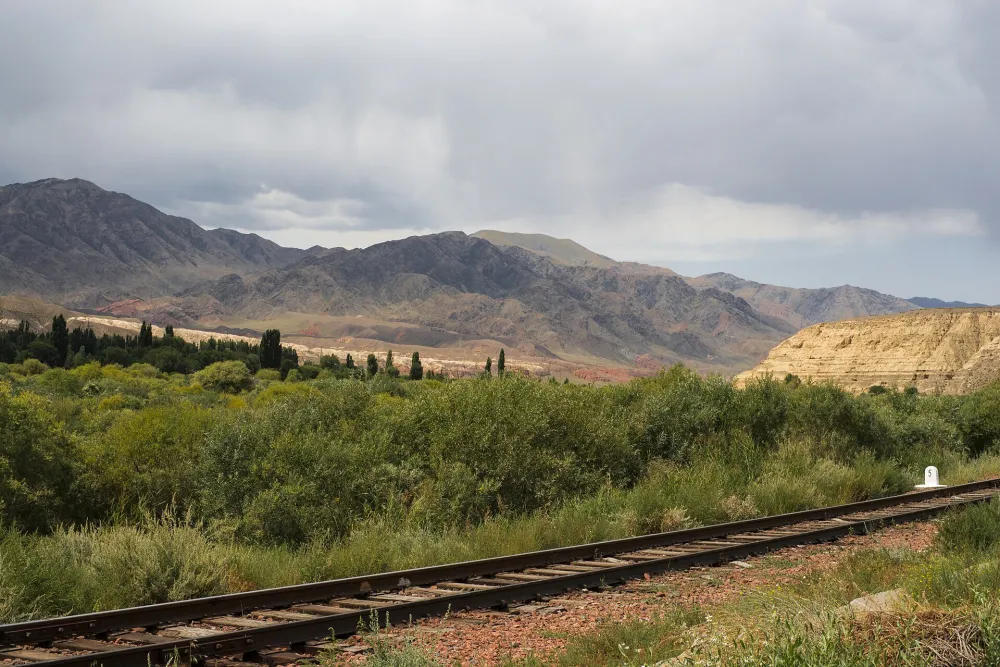 Railway in Boom Gorge: infrastructure connects markets, but mountain terrain makes it expensive to build. Photo: Vilya Shoni, Wikimedia Commons, CC BY 4.0; edited for this site.
Tourism and small business
Tourism is larger than the hotel category. A traveller’s spending reaches drivers, guesthouses, cafés, guides, horse owners, craftspeople, markets and mobile operators. Many of those businesses are small, seasonal and serve residents as well as visitors.
Issyk-Kul peaks in summer; winter visitors support Karakol’s ski season; trekking areas revive when passes open. Seasonality affects more than prices. At other times there may be fewer buses, closed restaurants and little daily demand for excursions.
Eating locally, staying in a family guesthouse and using a legitimate local guide keep more spending in the district. It is still worth asking where an item was made: a souvenir sold at a bazaar may come from another region or be imported. The guides to Kyrgyzstan’s food and souvenirs offer practical examples.
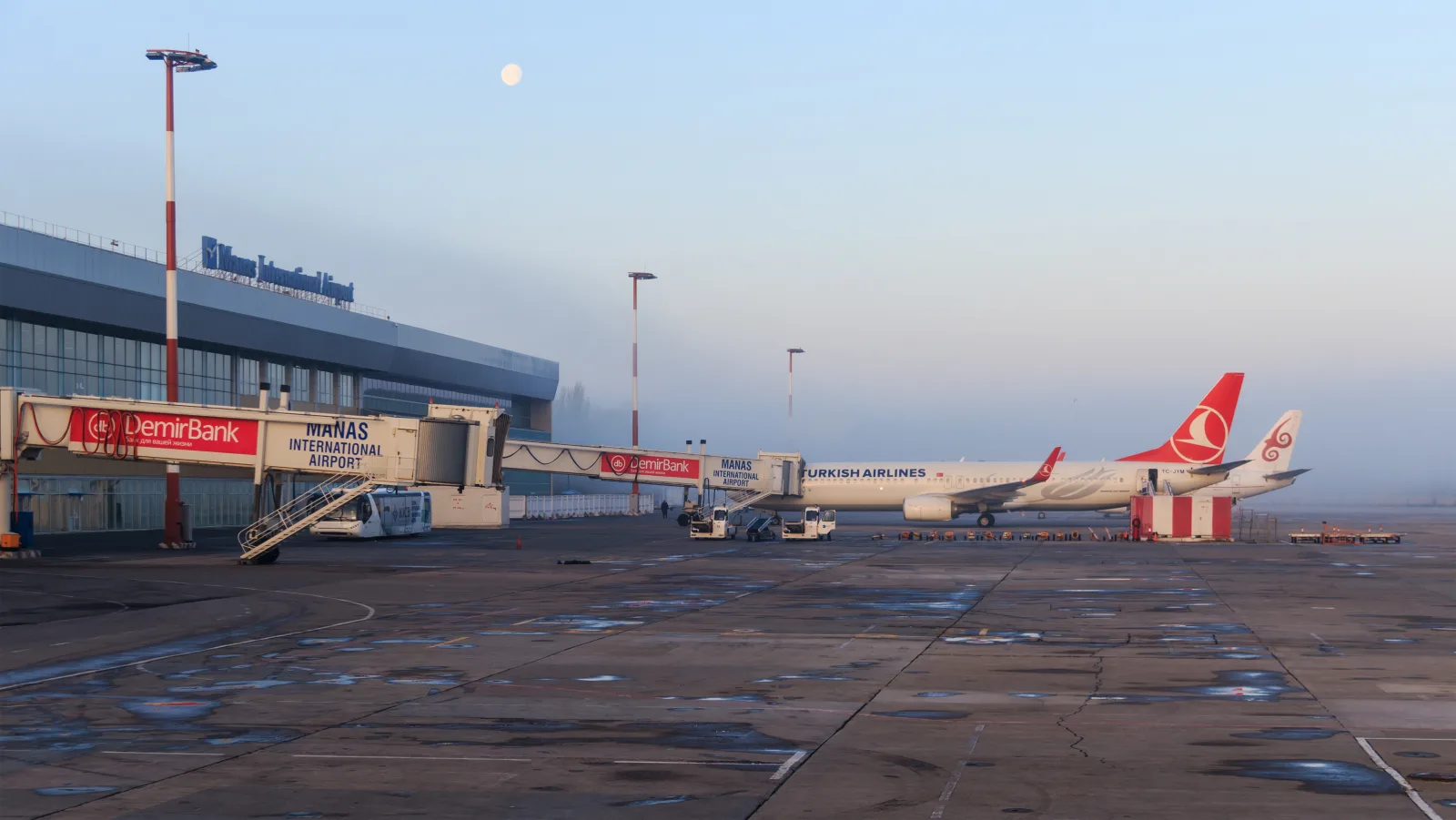 Manas Airport connects tourism and business travel with transport and local services. Photo: A.Savin, Wikipedia, Free Art License; edited for this site.
What a visitor notices without opening a spreadsheet
Cash and QR payments coexist. A hotel may take your card, a café may prefer a local QR code and a bazaar seller may need cash. Foreign visitors still need som; the money guide explains how to plan the mix.
Logistics affect prices. A product, fuel or building material may cross a border and a mountain pass. Weather, roadworks and exchange rates can reach the price tag faster than the map distance suggests.
Seasons change supply. Lakeside accommodation, transport and stalls multiply in summer. Some close in winter, when ski areas become busier instead. Grazing, haymaking and harvests add another calendar in rural districts.
Bishkek is not the entire country. The capital concentrates banks, offices, services and construction. Employers, prices and seasonal patterns look different in Naryn, Batken or Talas.
How to read economic figures without falling into traps
Start with the year and the type of figure. Nominal GDP rises with prices, real growth attempts to remove inflation, and an industry share locates one activity within the total. A preliminary estimate may be revised later.
Then consider scale. Rapid growth in a small sector can contribute less than modest growth in large-scale trade. A single gold shipment can change one month’s export total without saying much about the rest of the economy.
Finally, separate results from forecasts. The IMF and World Bank projected real growth of 6.1% for the whole of 2026. The National Statistical Committee's preliminary estimate for January-July was 11.1% compared with the same period of 2025. Seven months and a full year are different periods and cannot be compared directly. In its 2026 country review, the IMF expects growth to moderate as trade-related gains normalise, but later data may change that scenario.
Frequently asked questions
What drives Kyrgyzstan’s economy?
Trade and services, manufacturing, construction, farming, gold mining, transport and remittances all matter. Their importance varies substantially by region.
Does Kyrgyzstan depend only on gold?
No. Gold is important for exports and reserves, but trade was the largest individual activity in the 2025 GDP breakdown. Manufacturing, construction, agriculture, services and remittances also shape incomes and demand.
Why do remittances not appear as a GDP sector?
Earnings produced in another country are not goods or services made inside Kyrgyzstan. The money still affects the economy when a family spends it, builds a home or pays a local business.
Is tourism one of the country’s main industries?
Tourism matters greatly to certain regions and many small businesses, but it does not describe the whole economy. Visitor spending is spread across transport, accommodation, food, retail, crafts and other services.
Why does fast GDP growth not mean equal income growth?
GDP measures total production. It does not show how income is shared across regions, businesses and households or how inflation has changed purchasing power.
Share on social media
If you found this guide useful, share it on social media. It takes a moment and helps more travellers discover the project. Thank you!
Anything to add?
Share your experience, leave a comment or suggest an improvement.