Contents:
Checked on 25 August 2026. The line is in active construction but does not yet carry freight or passengers. Official documents give different completion dates.
What is happening on the construction sites
The project was formally launched on 27 December 2024, and full-scale work on the Kyrgyz section expanded in 2025. By August 2026, the Ministry of Transport reported underground work in all 29 tunnels, along with earthworks and formation work on parts of the alignment.
Contractors have built 192.323 km of temporary access roads. Construction power includes four transformer substations, 2,095 poles and 259 km of temporary lines. These figures show the scale of mobilisation; they are not a percentage-complete measure for the railway as a whole.
29 tunnels
- Underground work has begun in every tunnel in the current design.
- Together they extend for 104.83 km.
- Eight tunnels are longer than 5 km.
About 304 km
- The route runs from Torugart to Manas, formerly Jalal-Abad.
- The design includes 50 bridges.
- Tunnels and bridge structures account for almost 40% of the line.
No service yet
- No freight or passenger timetable has been published.
- Design speed is not the same as a future journey time.
- Construction roads are not tourist access routes.
The route: Kashgar, Torugart, Arpa, Makmal and Manas
The complete international corridor will link Kashgar in China with Andijan in Uzbekistan. In Kyrgyzstan, it will enter at Torugart, cross the Arpa Valley through Kosh-Dobo and Makmal, and reach the existing southern railway network at Manas. Some project documents and older maps still use the city’s former name, Jalal-Abad.
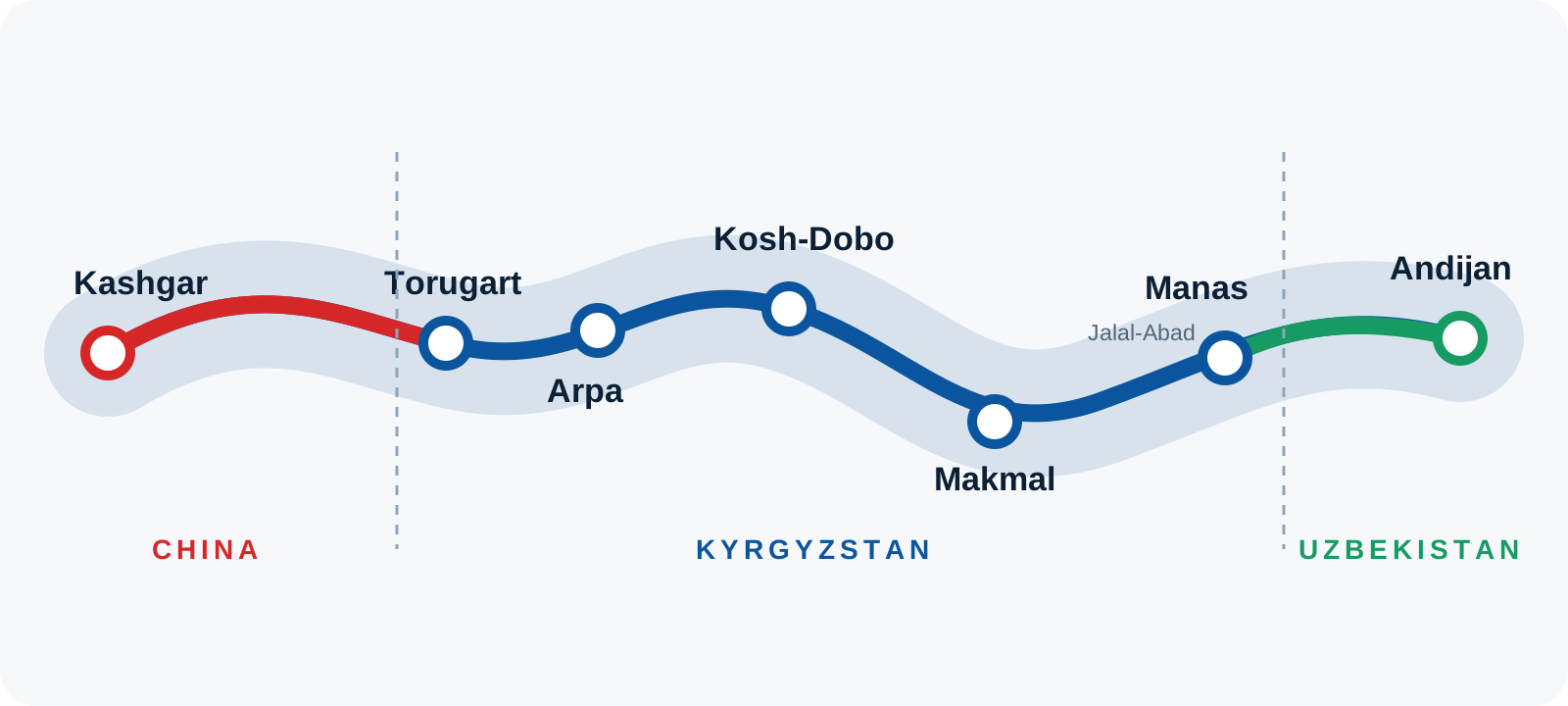 Schematic of the international corridor. Points and curves are not shown to scale. Image: I Love KG.
The alignment does not pass through Bishkek, Naryn city or Osh. Naryn is the nearest major city to the eastern portion, but the project runs farther south through Arpa. In the west, it reaches Manas and then connects towards Andijan through the Uzbek network.
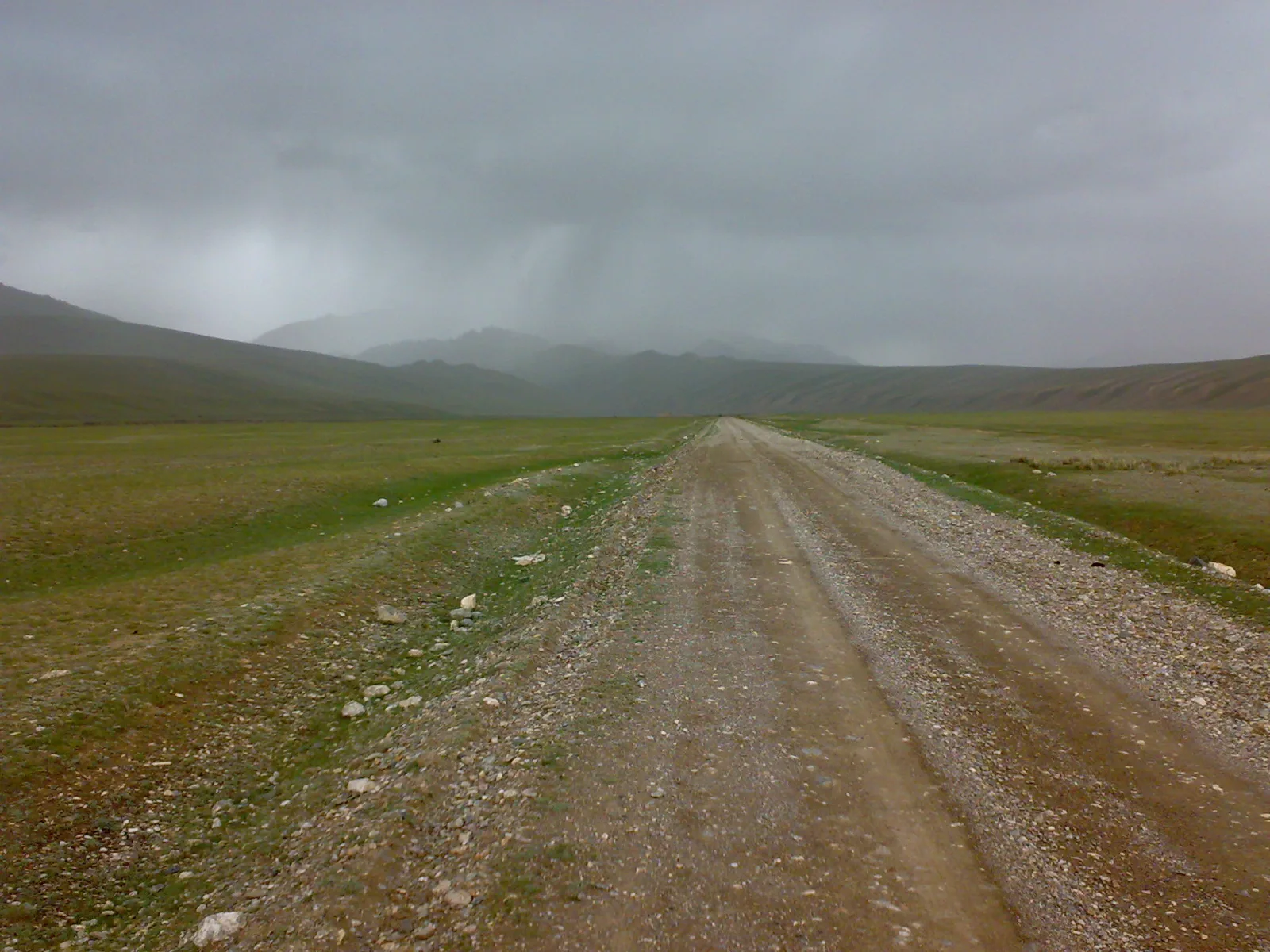 High-altitude terrain on the approach to Torugart. The photograph shows the region, not a railway construction site. Photo: Nurdjen, Wikimedia Commons, public domain; edited for this site.
Why Makmal needs a transfer terminal
The Torugart to Makmal section will use China’s 1,435 mm standard gauge. From Makmal to Manas, the design changes to the 1,520 mm gauge used by the railway networks of Kyrgyzstan and Uzbekistan. A transfer station and logistics terminal are therefore planned at Makmal.
A conventional wagon cannot simply continue across a break of gauge. Freight must be transferred between trains or handled with a specialised rolling-stock solution. The method will depend on the cargo and future operating rules. The project confirms the terminal, but no final public handling procedure or tariff is available yet.
The Makmal to Manas section also creates a new rail connection within southern Kyrgyzstan. It will not, however, directly join the northern network around Bishkek and Balykchy to the southern network; the gap between them remains.
Why 304 kilometres take years to build
Mountain terrain is the central engineering challenge. The 29 tunnels in the current design total 104.83 km. The three longest, Naryn No. 1, Kosh-Dobo and Fergana, each exceed 12 km. The project also includes 50 bridges, formation, culverts, stations, communications and power infrastructure.
The single-track line is designed initially for diesel traction, with provision for later electrification. The approved feasibility study specifies a design speed of up to 120 km/h and 20 stations. Those are engineering parameters, not a promise of a two-and-a-half-hour journey across Kyrgyzstan: stops, the Makmal transfer, gradients and traffic control will determine the real timetable.
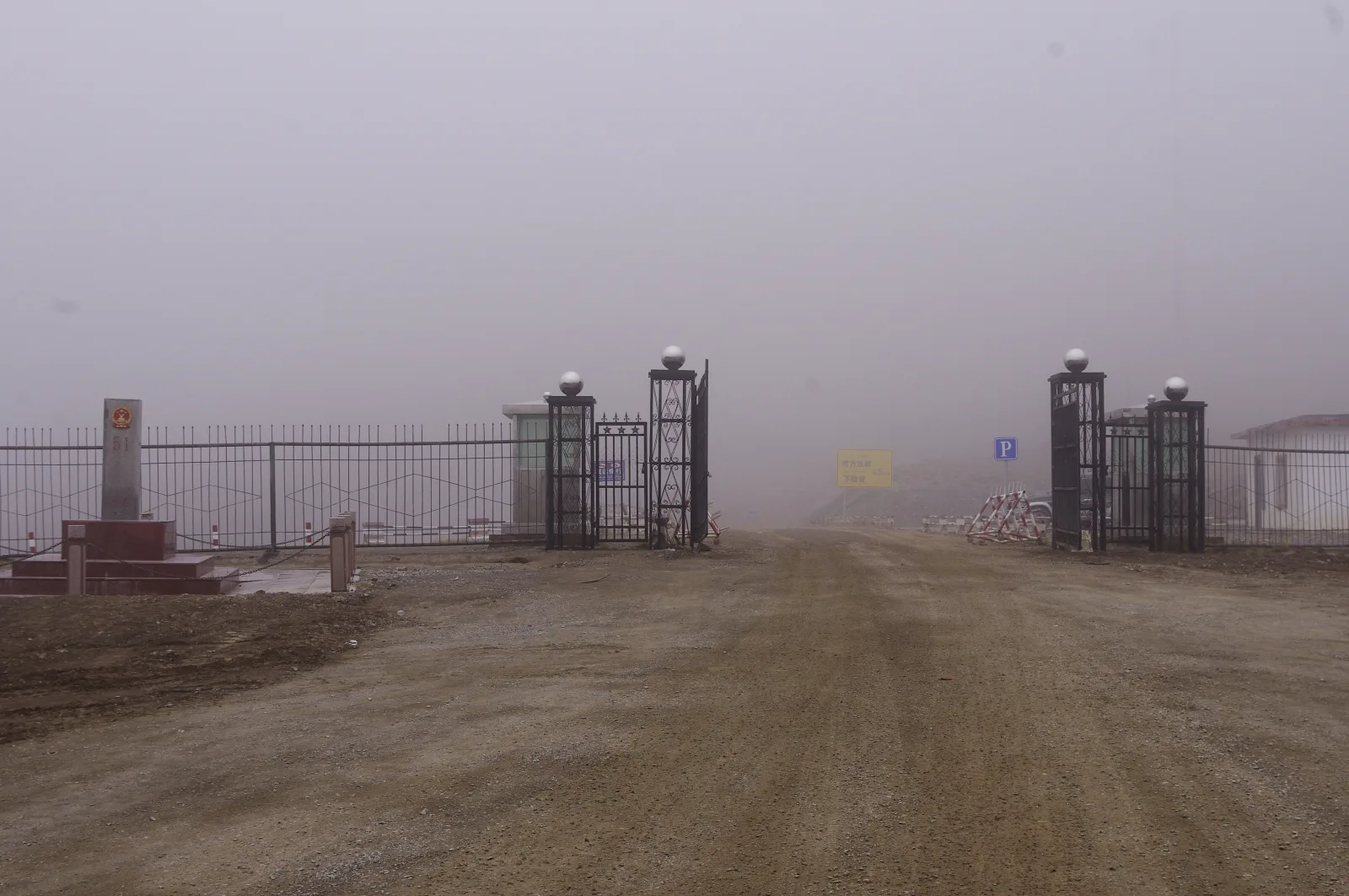 Torugart on the China-Kyrgyzstan border. The new rail corridor will cross the frontier in this high-altitude area. Photo: w0zny, Wikimedia Commons, CC BY-SA 3.0; edited for this site.
A $4.7 billion project and its joint company
In December 2025, Kyrgyzstan’s Cabinet of Ministers announced the financing structure for a project valued at about $4.7 billion. Roughly half, around $2.3 billion, is a 35-year loan to the joint project company from a syndicate led by China Development Bank and the Export-Import Bank of China. The company is responsible for repayment.
The rest is equity contributed by the three countries. The joint company is held 51% by China, 24.5% by Kyrgyzstan and 24.5% by Uzbekistan. These are ownership shares; they do not mean that Kyrgyzstan pays for exactly one quarter of every tunnel or automatically receives one quarter of future revenue.
The joint company finances, builds and will operate the Kyrgyz section. China is building its domestic section, while Uzbekistan is upgrading infrastructure on its side. The Cabinet’s financing announcement sets out the confirmed structure.
When will the railway open?
There is no single confirmed opening date. At the launch, the Chinese side referred to six years of construction from July 2025. The Kyrgyz government action plan places completion and commissioning in the fourth quarter of 2030, while the official construction passport gives 30 May 2031.
A difference of several months is unsurprising for a project of this scale, but it makes a specific day or quarter impossible to promise. The honest planning window is the turn of 2030 and 2031, provided financing, tunnels, bridges, tracklaying, systems and tests remain on programme.
Useful milestones are the sequence of completed excavation, tunnel and bridge structures, finished formation, tracklaying, signalling, testing and formal acceptance. The Kyrgyz Ministry of Transport publishes current tunnel and infrastructure updates.
Will passenger trains use the line?
Official documents frame the railway primarily as a freight and transit corridor, opening access towards China, Central Asia and onward routes. The feasibility study includes stations and a passenger-compatible design speed, but as of August 2026 there is no published passenger operator, timetable, fare or confirmed calling pattern.
Passenger service is technically possible, but it is not yet a confirmed product. A direct Kashgar to Andijan train, a mountain sightseeing service or a stop at every one of the 20 stations should not be assumed until railway and border operators publish the details.
Kyrgyzstan’s existing passenger trains run on other lines. For travel now, use our guide to the Bishkek to Balykchy train and the official ticket search rather than news about the future corridor.
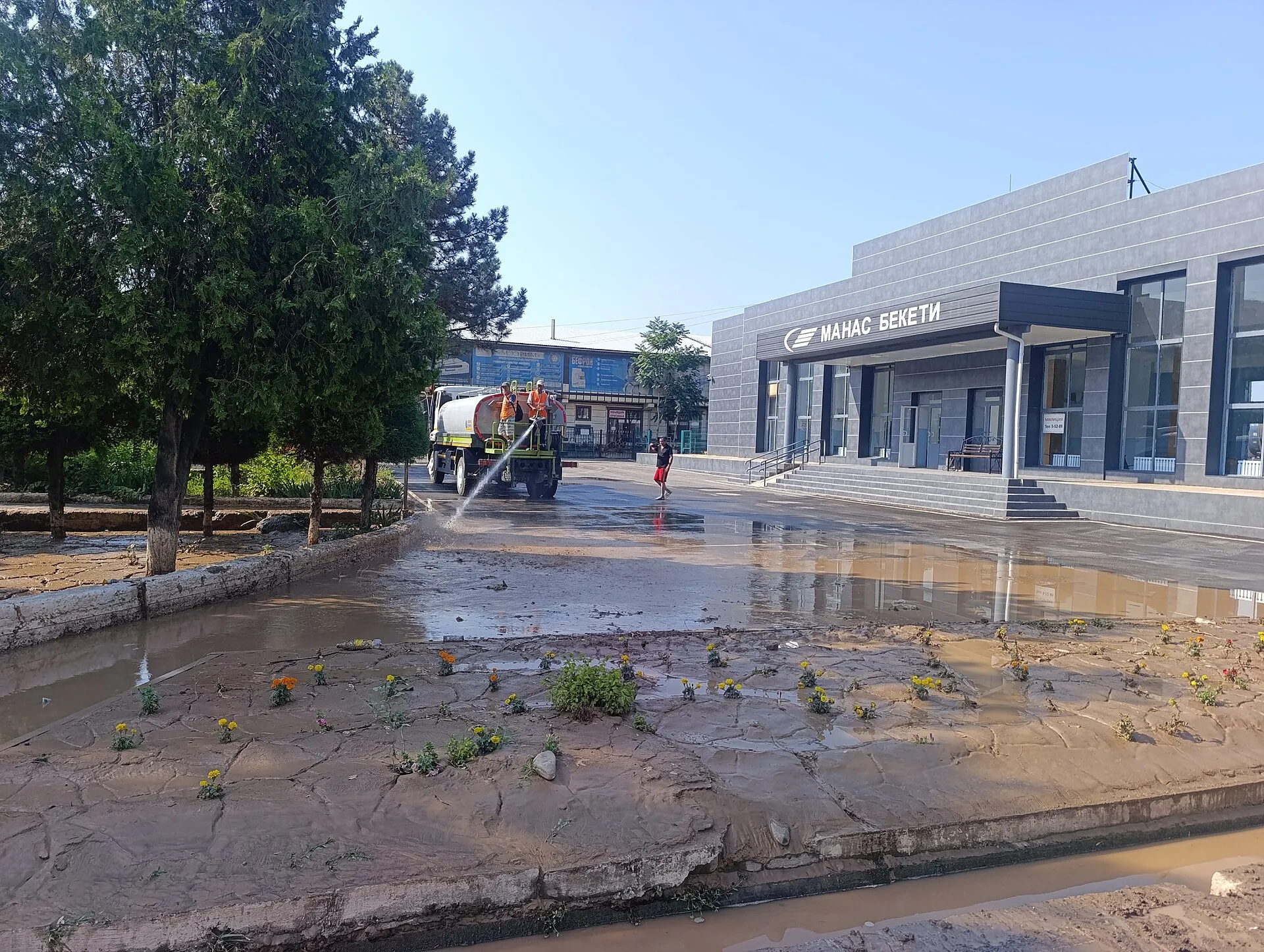 Manas station on the existing southern network. The new corridor is intended to reach this city, but the photograph does not show its future project terminal. Photo: Mirzoulugʻbek, Wikimedia Commons, CC0 1.0; edited for this site.
What the project means for travellers today
The railway is not yet a way to cross Kyrgyzstan. There are no tourist stations, tickets or public access to the tunnels. Work sites, portals, camps and temporary roads are controlled infrastructure. Do not drive in for a photograph or treat a satellite-map marker as an invitation.
Travel towards Torugart is governed by the existing border-zone and road-crossing rules, not future railway arrangements. Plan a Naryn Region itinerary around current roads and permits. Our Naryn guide and main Kyrgyzstan transport guide cover the options available now.
After opening, the line could change freight logistics, the roles of Manas and Makmal, and demand for warehousing and haulage. Those effects unfold differently during construction and operation. Our guide to Kyrgyzstan’s economy explains that distinction, while the 2026 infrastructure overview sets the railway alongside the country’s other major projects.
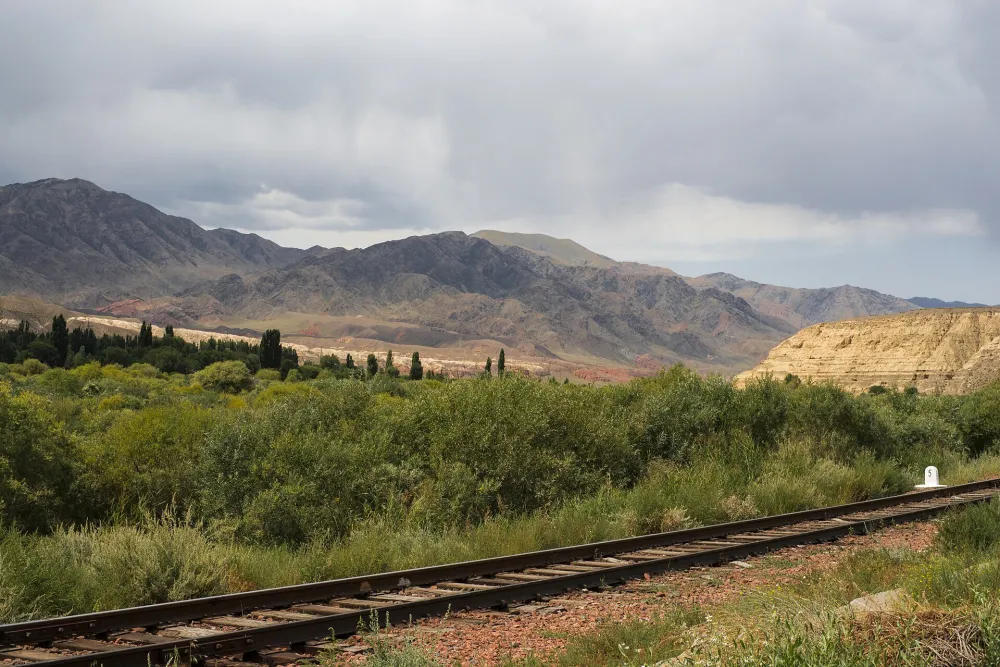 The operating railway in Boom Gorge belongs to a different network. It illustrates the challenge of building railways in Kyrgyz mountain terrain. Photo: Vilya Shoni, Wikimedia Commons, CC BY 4.0; edited for this site.
Frequently asked questions
Is the China-Kyrgyzstan-Uzbekistan railway under construction?
Yes. Tunnel, earthworks and infrastructure work is under way on the Kyrgyz section. The Ministry of Transport reports underground work in all 29 tunnels, but the line is not open.
Which cities will the railway pass through?
The Kyrgyz route runs from Torugart through Arpa, Kosh-Dobo and Makmal to Manas, formerly Jalal-Abad. It does not pass through Bishkek, Naryn city or Osh.
Why will freight be transferred at Makmal?
The line uses 1,435 mm gauge from Torugart to Makmal and 1,520 mm from Makmal to Manas. The terminal transfers cargo between trains built for the two railway standards.
When will the railway open?
Official milestones differ: the Kyrgyz government plan points to late 2030, while the construction passport gives May 2031. No exact opening date has been announced.
Will there be passenger trains?
Passenger service has not been confirmed. The design includes stations and can accommodate trains, but no operator, timetable, stops or fares have been published.
Share on social media
If you found this guide useful, share it on social media. It takes a moment and helps more travellers discover the project. Thank you!
Anything to add?
Share your experience, leave a comment or suggest an improvement.