Contents:
Rules checked on 28 August 2026. Before paying, ask the rental company to confirm in writing that your driving documents, planned roads, insurance and every named driver are accepted. A verbal promise does not amend the contract.
When a rental car makes sense
A car is useful when a journey combines several remote stops, requires an early start for a natural site or uses accommodation away from regular transport. It works particularly well for a circuit around Issyk-Kul and for itineraries that would otherwise need a separate transfer on every leg.
Within Bishkek or Osh, or for a direct transfer between two large towns, driving may not save energy. City traffic, parking, a long day at the wheel and the return procedure all count. The Bishkek-Osh road, for example, takes a full day and crosses high passes. After an overnight flight, a plane, bus or car with a driver can be the safer choice.
Compare the whole arrangement, not the daily rate alone: delivery and collection, fuel, parking, washing, an additional driver, a child seat, a one-way return, the insurance excess and any deposit hold. This guide does not list companies or prices because those details change much faster than the principles behind a sound choice.
Choosing the right vehicle
Choose the car for the hardest permitted section of the itinerary. An SUV badge is no substitute for genuine ground clearance, season-appropriate tyres and a working spare wheel, while four-wheel drive does not shorten the braking distance on ice.
A standard passenger car
- Works on the principal highways in dry weather when intercity travel is permitted by the contract.
- Check the brakes, cooling system, tyres and how to select a lower gear for a descent.
- On this kind of route, mechanical condition usually matters more than four-wheel drive.
Extra ground clearance
- Useful where tarmac ends but the road remains passable and explicitly allowed by the contract.
- A full-size spare is more useful than a sealant kit when a tyre sidewall is cut.
- Confirm permission for unsealed roads before booking, not at a barrier or fork in the road.
Four-wheel drive or a local driver
- 4WD can help a car move on loose ground, but it cannot make a closed or washed-out road safe.
- River crossings, deep ruts and self-recovery are often excluded from insurance.
- For an expedition road, a vehicle with a driver who has travelled it recently is usually the better plan.
The final approach to Tash Rabat illustrates the difference between a tarmac transfer and a gravel access road. The road to Enilchek is expedition logistics: a normal hire car and a line on a navigation app do not turn it into a routine self-drive route.
Documents for a foreign driver
A temporary visitor from a country that is party to the Vienna Convention may drive with a valid national licence if that licence complies with the Convention. If it does not comply, the official rules require an international driving permit together with the national licence. The international permit does not replace the original document.
Do not judge eligibility from the language printed on the card or an old forum post. Before paying, send the rental company the issuing country, permitted categories, expiry date and images of both sides. Ask for written confirmation, and obtain an international permit in the country that issued your national licence.
The car must carry the documents required by the current Kyrgyz traffic rules: a driving licence, vehicle registration documents and compulsory insurance. For a rental, also keep the agreement naming you and every authorised driver, your identity document and the rental company's contact details. Our guide to entering Kyrgyzstan covers the general entry and registration requirements.
What to check in the contract, insurance and deposit
Read the restrictions first. The contract should state the permitted territory and roads, mileage, one-way travel, state borders, border zones, minimum age and experience, additional drivers, smoking, animals and the breakdown procedure. The exclusions matter more than the marketing name of the package.
Do not confuse compulsory third-party insurance with cover for the rental car. OSAGO covers civil liability to other people within the statutory limits. Damage to, theft of or recovery of the hired vehicle depends on separate contract terms. Check the excess and exclusions for glass, tyres, wheels, underbody, roof, interior, keys, single-vehicle incidents, animals, water and travel beyond a permitted road.
Understand the deposit before paying. Record its amount and currency, how it is held, the conditions for deductions, the release period and the evidence the company must provide for damage or a fine. Obtain a receipt for a cash deposit; for a card deposit, establish whether the transaction is a hold or an actual charge.
Agree how assistance works. Ask whom to call at any hour, who pays for recovery, whether you may change a wheel or battery yourself and where a replacement car is available. The phrase “full insurance” explains nothing unless the limits and exclusions appear in the document.
How to collect the car without inheriting old damage
Inspect the vehicle in daylight before signing the condition report. Record one continuous video around the car, then photograph scratches, windscreen chips, wheels, roof, interior, mileage and fuel level separately. Add every mark to the report even if the employee describes it as insignificant.
- match the registration number, VIN and fuel type against the documents;
- inspect the tread and sidewalls on every tyre, including the spare;
- check the jack, wheel wrench, warning triangle and first-aid kit;
- test the headlights, brake lights, indicators, wipers, heater and air conditioning;
- make sure every occupied seat has a working belt and that the child seat fits the child and can be secured in this car;
- check that warning lights go out after starting and agree what to do if one appears later.
A short drive around the block can reveal steering pull, vibration, weak brakes or an unfamiliar transmission. If the car causes concern before departure, ask for another one. A long mountain leg is the wrong place to test a vehicle by trial and error.
Essential driving rules
Traffic keeps to the right. Under the rules in force on the date of this review, the default maximum for a passenger car is 60 km/h in a built-up area, 90 km/h on an ordinary road outside a built-up area and 110 km/h on a motorway. The limit is 20 km/h in a residential zone, while a driver with less than two years' experience may not exceed 70 km/h on any road. A sign may impose another limit, and road conditions can require a much lower speed.
The driver and adult passengers must use the fitted seat belts. A separate rule applies to children under 12: they need a special restraint when travelling in the front seat. Regardless of that legal minimum, we recommend a restraint appropriate to the child's height and weight in any seating position, confirmed before collection.
Driving under the influence of alcohol, drugs or any other intoxicating substance is prohibited. Do not calculate a “permitted drink”: the practical rule for a driving day is zero alcohol. Do not drive when severely tired or after medicine that impairs attention.
What changes on a mountain road
Dry city streets do not reveal conditions on a pass. Snow, ice, avalanche control, roadworks or rockfall can temporarily restrict traffic. Before departure, read the latest Ministry of Transport road access bulletins, check the forecast for the highest section and ask your accommodation or a local driver about the most recent passage.
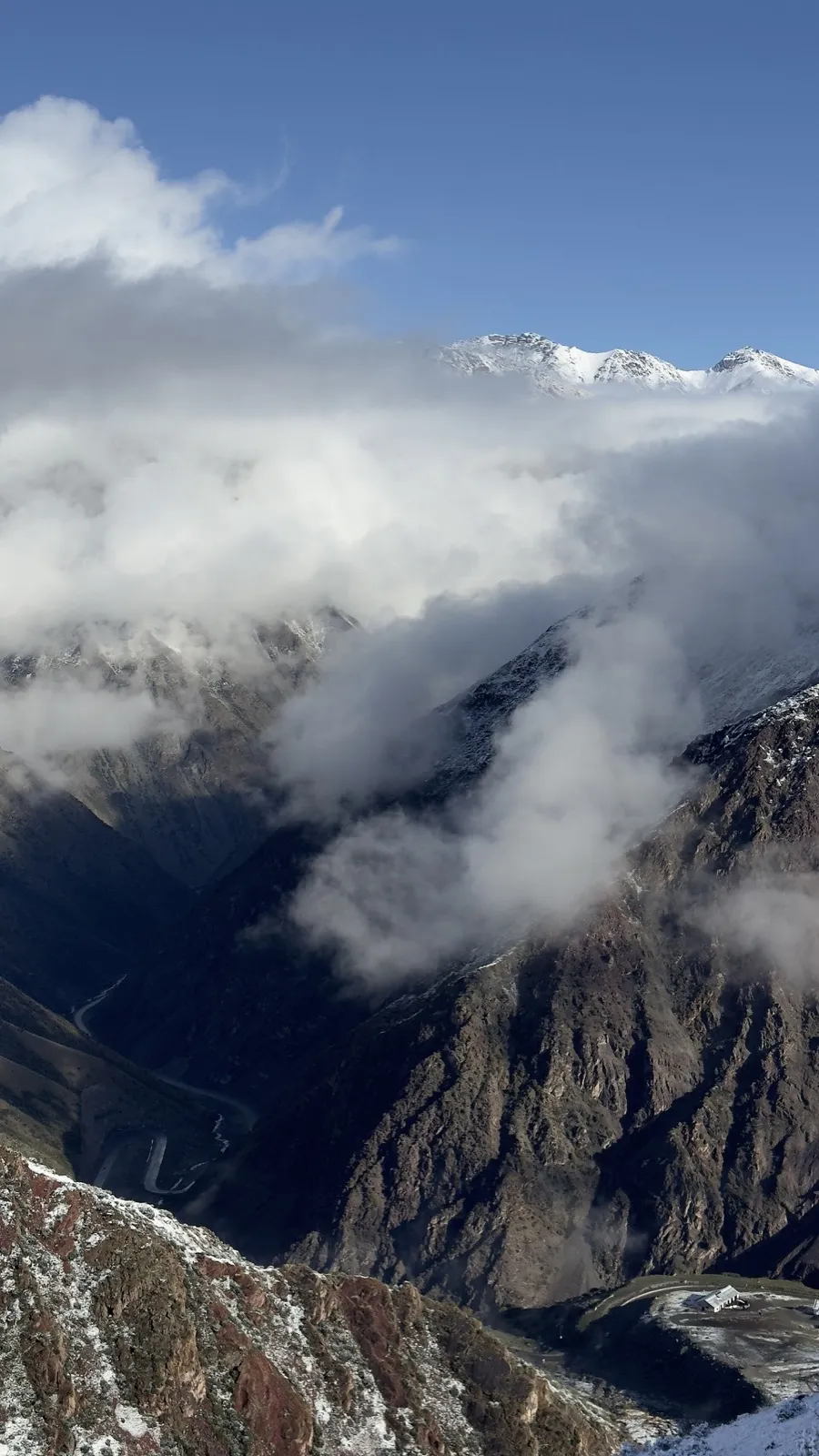 Mountain road near Too-Ashuu Pass. Photo: Azika20, Wikimedia Commons, CC BY-SA 4.0; edited for this site.
Use a lower gear on a long descent instead of riding the brake pedal. Do not overtake unless you can see the whole opposing section. After rain, an ordinary gravel road can become a slippery set of ruts, and water across the road can be deeper than it appears from the bank. Turning back is a valid decision.
Do not schedule a first journey over an unfamiliar mountain section after dark. People, animals, potholes, machinery and the road edge become visible later without lighting. Add stops, roadworks and time to turn around to the navigation estimate, not just driving minutes.
Fuel, phone coverage and supplies for a delay
Confirm the fuel type against both the contract and the label by the filler cap, then use a recognisable station in a substantial settlement. On a remote leg, do not wait for the reserve light or build the plan around a single roadside pump. Carry spare fuel only if the contract permits it and you have a sealed container designed for fuel.
Download an offline map, save the accommodation coordinates and rental assistance number, and carry a car charger. Signal can disappear in a gorge, so give someone your route and a check-in time. Water, food for one delay, a warm layer, a torch and necessary medicine belong in the car rather than in a plan for the next café.
Before a remote road, check the spare, tools and tyre pressures. Sealant cannot repair a torn sidewall. Do not add roof cargo or use towing equipment unless the contract permits it and the vehicle is designed for it.
State borders, border zones and unsealed roads
Your right to cross a border does not give you the right to export a rented car. Such a journey requires the owner's written permission, suitable registration documents, insurance for the neighbouring country and compliance with exit and re-entry rules. If the rental company has not confirmed the whole set in writing, keep the car in Kyrgyzstan.
Some destinations inside Kyrgyzstan lie in a controlled border zone and require a separate permit. Check the regime before booking the car: the rental contract can exclude the area even when you hold a personal permit. Preparation steps and emergency contacts are covered in our travel safety guide.
The contract must also define “unsealed road”. One company may allow a maintained gravel road, while another treats every surface without tarmac as excluded off-road travel. Ask for named roads or destinations to be approved. Four-wheel drive does not override a territorial exclusion or restore insurance cover.
What to do after a breakdown or collision
Stop in a safe place, switch on the hazard lights and place the warning triangle if you can do so without creating another risk. Call 112 for injuries, fire or immediate danger. Then contact the rental company on the number in the agreement and follow the required police and insurer notification procedure.
Photograph the position of the vehicles, number plates, damage, road and the other parties' documents. Do not agree to an informal cash settlement or sign wording you do not understand. Do not order an expensive repair or recovery without approval, except for action needed to save life or prevent an immediate danger.
Returning the car and closing the deposit
- Allow time. Return the car when an employee can inspect it with you, not a few minutes before a flight.
- Follow the fuel policy. Keep the final fuel receipt and photograph the gauge together with the mileage.
- Repeat the recording. Capture the body, glass, wheels, interior, keys, return time and location.
- Obtain a closing document. It should state that the car was accepted and either list every new charge or confirm that there is none.
- Record the deposit outcome. Obtain a receipt for returned cash or confirmation of the card hold release and its stated timescale.
A sound rental begins with the route and contract, not the make of the car. If the permitted roads, documents or insurance exclusions remain unclear, change the arrangement before payment. That takes a few messages at the start and can save a lost day and a serious dispute in the mountains.
Share on social media
If you found this guide useful, share it on social media. It takes a moment and helps more travellers discover the project. Thank you!
Anything to add?
Share your experience, leave a comment or suggest an improvement.