Contents:
How long does the drive from Bishkek to Osh take?
The official Bishkek-Osh highway is 664 kilometres long. Allow 12-15 hours with short breaks. This planning range does not guarantee an arrival time: roadworks, lorries, pass weather and a temporary traffic hold can easily add several hours.
A single driver should attempt the whole route in one day only after proper sleep and in settled conditions. Split it over two days if you have just arrived on a night flight, dislike long mountain roads or need to reach Osh at a fixed time. A night beside Toktogul Reservoir turns the drive into two manageable stages.
Travellers starting at Issyk-Kul or in the central Tian Shan have another option in 2026. The alternative North-South road runs from Balykchy via Kazarman to Manas, but currently operates in a temporary daytime regime. Compare the complete journeys, not just the lengths of the two corridors.
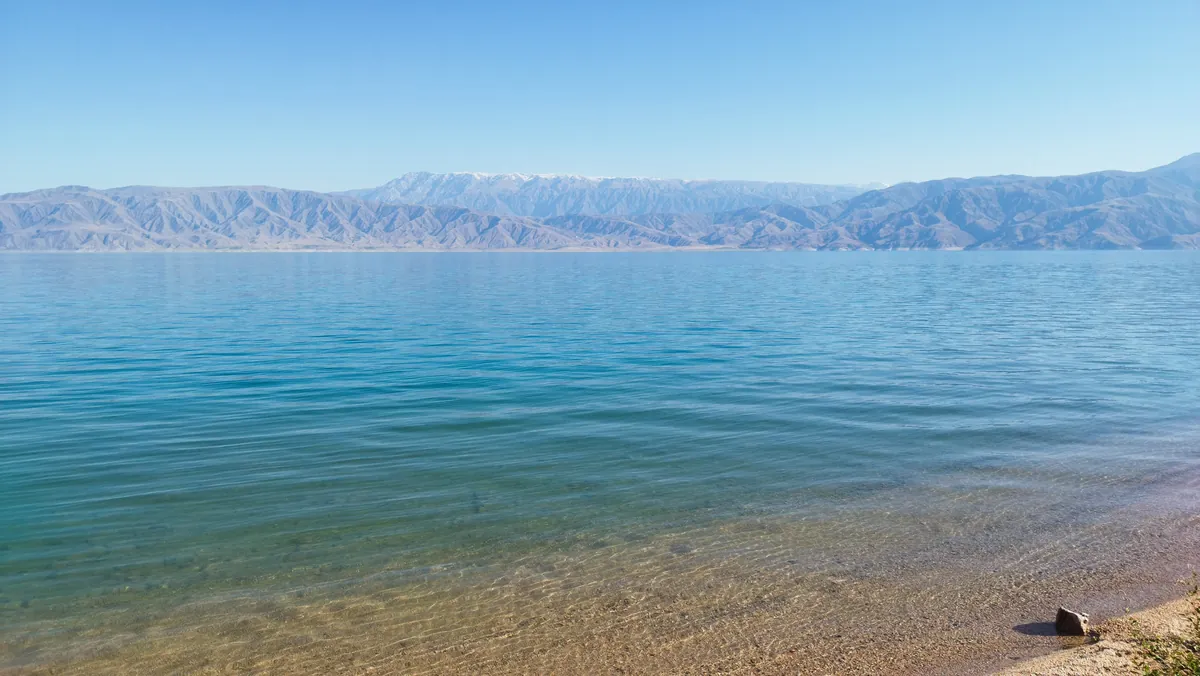 1/3. Toktogul Reservoir halfway along the route Photo: Arthur Dolchenko, Wikimedia Commons, CC BY-SA 4.0; edited for this site.
 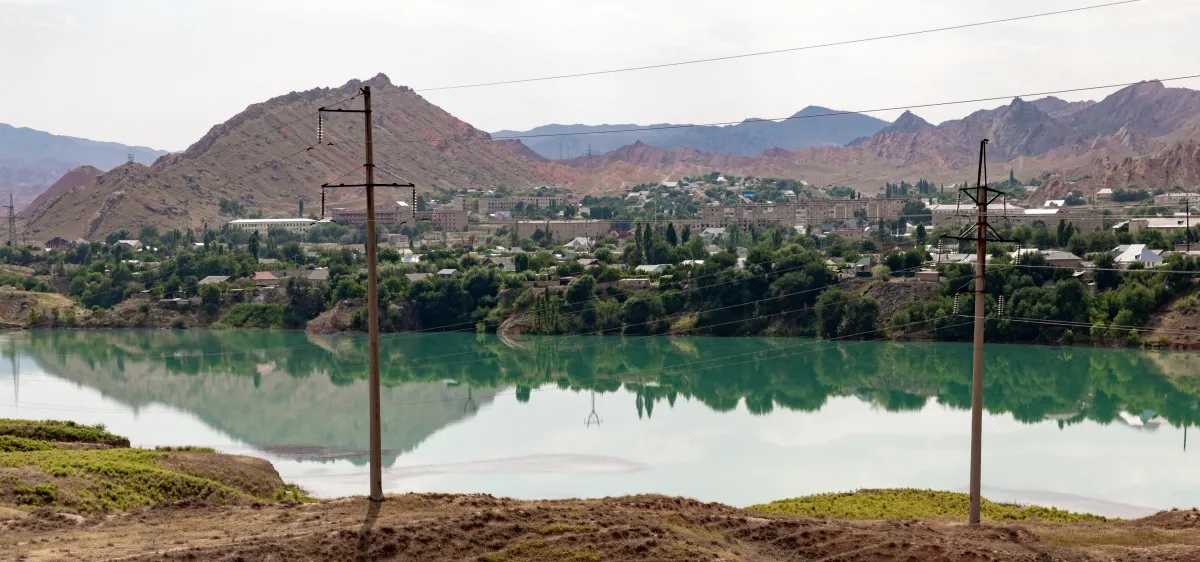 2/3. The Naryn corridor at Tash-Kumyr Photo: Ninara, Wikimedia Commons, CC BY 2.0; edited for this site.
 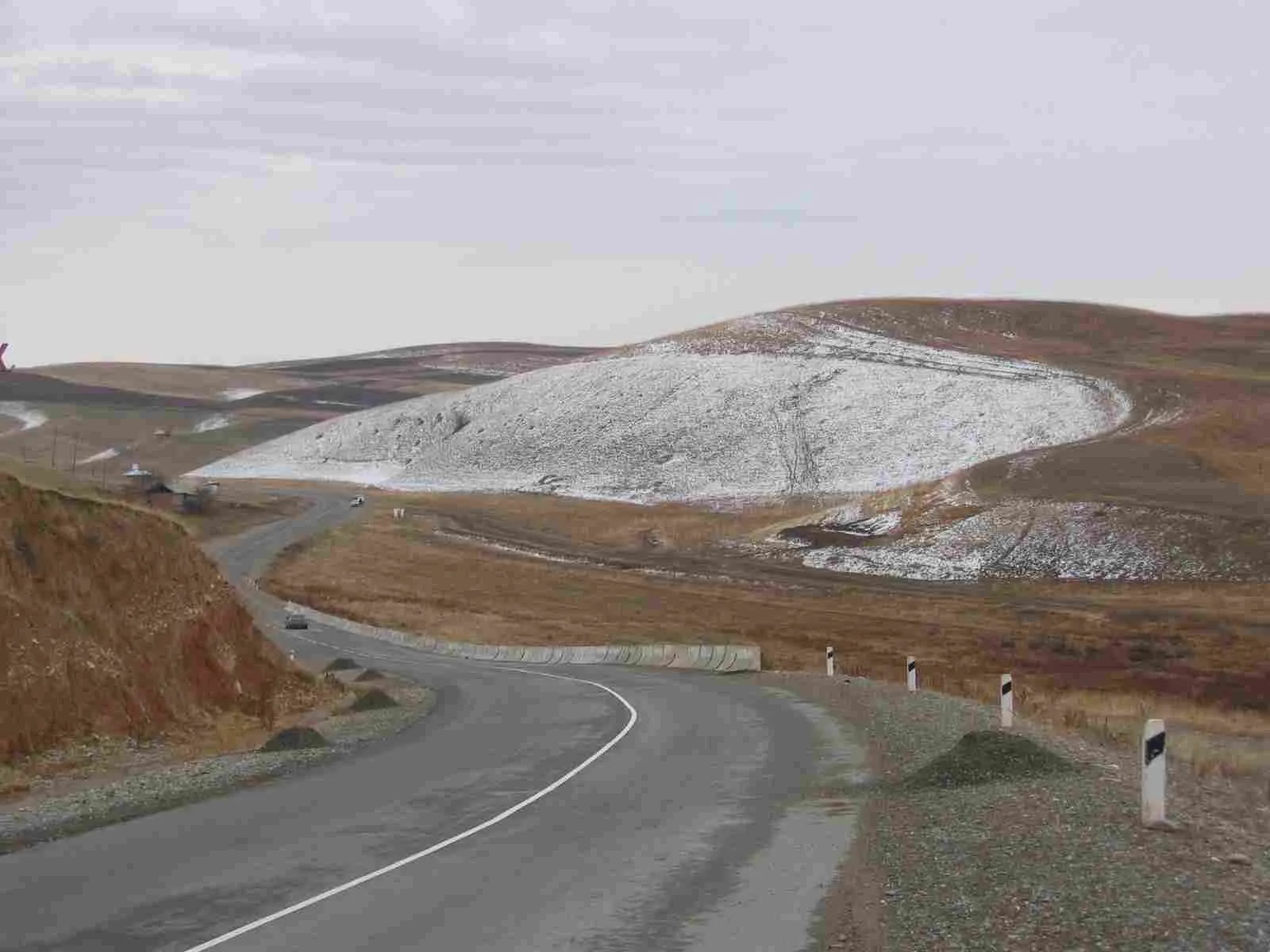 3/3. A winter section in southern Kyrgyzstan Photo: celichowster, Wikimedia Commons, CC BY-SA 2.0; edited for this site.
 How the Bishkek-Osh route is divided
Bishkek - Too-Ashuu
- Road: Chüy Valley, Kara-Balta, the climb and tunnel
- Allow time for: traffic, roadworks, snow and queues at the tunnel
Suusamyr - Chychkan
- Road: high valley, Ala-Bel Pass and a narrow gorge
- Allow time for: weather, avalanche work and few safe stopping places
Toktogul - Tash-Kumyr
- Road: reservoir, Kara-Kul, the Naryn and Kok-Bel
- Allow time for: bends, lorries and long stretches without a useful shoulder
Manas - Osh
- Road: Fergana Valley, towns and heavier local traffic
- Allow time for: roadworks, settlements and end-of-day fatigue
From Bishkek, the highway runs through Kara-Balta to the K. Kolbaev Tunnel below Too-Ashuu. It descends into Suusamyr Valley, the birthplace of Kozhomkul Kaba Uulu, climbs to Ala-Bel and enters Chychkan Gorge. Beyond Toktogul, it follows the reservoir through Kara-Kul and Tash-Kumyr before reaching Manas and continuing to Osh.
A historical connection. The direct high-mountain road between Frunze and Osh was promoted and developed during Iskhak Razzakov's leadership. The modern highway has been rebuilt repeatedly, so its present tunnels and surface should not all be attributed to the 1950s project.
Choosing a car, planning fuel and staying connected
The main highway does not require four-wheel drive in normal dry conditions. Sound brakes, seasonal tyres, a healthy cooling system, a spare wheel and a driver who knows how to control speed on long descents matter far more. Before hiring a car, confirm that the agreement permits intercity travel and explains what help is available after a breakdown outside a town.
Fill the tank before the climb to Too-Ashuu and top up again in Toktogul or another major town. Do not make a plan around an isolated filling station or wait for the warning light. Carry water, food for one delay, a warm layer, first-aid kit, torch, jack, tow rope and enough screenwash.
Mobile data is useful in towns but drops out in gorges and between base stations. Download an offline map, save the full address of your accommodation and tell someone when you expect to have a signal again. Cash helps at a small café, toilet or guesthouse whose card terminal depends on mobile coverage.
Two names on the road. Jalal-Abad was renamed Manas in 2025. The region kept its former name, while older maps and signs may still show Jalal-Abad.
What to check at Too-Ashuu and Ala-Bel
The high sections have their own weather. Sunshine in Bishkek and Osh says little about the surface on the passes. Snow, ice, avalanche work and temporary restrictions at the Sosnovka and Aral control points are possible in winter and spring. If road crews halt traffic, do not look for an unpaved way around the barrier.
For the 2026 construction season, the Ministry of Transport scheduled resurfacing between kilometres 130 and 146 near Too-Ashuu and replacement of barriers between Sosnovka and the pass. Machinery, dust, narrow lanes and temporary one-way working are therefore possible. The ministry described the work in a notice dated 31 March 2026.
Check the road on the morning you leave. Search the Ministry of Transport's latest Bishkek-Osh notices, then compare forecasts for Too-Ashuu and Ala-Bel. An older report saying that the road is open describes only the moment when it was published.
Where to stop and whether to stay overnight
Use a town, a café with a parking area or a broad marked lay-by for short breaks. Do not stop in the tunnel, on a hairpin, below an unstable slope or in a narrow part of Chychkan Gorge. A fine view through the windscreen does not make the shoulder safe: the whole car must clear the lane and remain visible from both directions.
Toktogul is the most useful overnight stop. It divides the journey roughly in half and lets you tackle both demanding mountain sections in daylight. Before booking, confirm heating or air conditioning, hot water, parking and late arrival. Do not follow a random track towards the reservoir after dark.
If you are leaving Osh late, stop sooner in Manas, Kara-Kul or Tash-Kumyr. Use the night to avoid Kok-Bel, Chychkan Gorge and the higher passes when you are tired and visibility is poor. Equal stages on the map matter less.
Can you travel without your own car?
Shared taxis and other intercity vehicles run between Bishkek and Osh, but departure points, fares and times change. Confirm them on the day and ask whether the journey includes proper breaks. Do not choose an overloaded car, a driver who has not rested or tyres unsuited to the season simply because that vehicle is leaving first.
A private car with a driver gives you more control over breaks and makes an overnight stop in Toktogul easier. Write down the full fare, waiting time included, drop-off point and the plan if a pass closes before you pay. A replacement vehicle or another paying passenger on the highway is never guaranteed.
Flying is the better choice when a predictable arrival and enough energy for the following day matter. Flights still need checking, but they avoid turning the road into an endurance test. Our Kyrgyzstan transport guide covers flights, taxis and intercity travel.
Morning checklist before departure
- the latest notices for Too-Ashuu, Ala-Bel, Chychkan, Sosnovka and Aral;
- pass forecasts, not only weather for Bishkek and Osh;
- tyres, brakes, lights, cooling, spare wheel and fuel;
- offline map, charged phone, cash, water and warm clothing;
- a daylight turn-around point or an overnight stop if the drive slips behind schedule.
Leave after dawn and change drivers before drowsiness begins. If you are already well behind schedule at Toktogul, stay the night. On this road, spare time lets you see the country instead of fighting it.
Share on social media
If you found this guide useful, share it on social media. It takes a moment and helps more travellers discover the project. Thank you!
Anything to add?
Share your experience, leave a comment or suggest an improvement.