Contents:
- Why Abdrakhmanov matters
- Issyk-Kul, Urkun and the Red Guard
- From the Komsomol to autonomy
- How Kyrgyz autonomy emerged
- Head of government at 26
- The economy, language and local expertise
- The famine of 1932-1933
- Letters to Stalin and a private diary
- Dismissal, arrest and execution
- Rehabilitation and public memory
- Where to encounter his story
- Frequently asked questions
Why Yusup Abdrakhmanov matters
Abdrakhmanov is remembered as one of the founders of modern Kyrgyz statehood because he campaigned for a distinct Kyrgyz territorial autonomy and later led the first government of the Kyrgyz ASSR. He did not create that state alone. Abdykerim Sydykov, Imanaly Aidarbekov, Abdykadyr Orozbekov, Kasym Tynystanov, Ishenaly Arabaev and many others took part in the same difficult process.
Three strands define his political career. He wanted northern and southern Kyrgyz territories to develop within one administrative unit. He argued that the autonomy needed a fairer economic position inside the Russian republic and the Soviet Union. When compulsory grain and livestock procurements threatened livelihoods in the early 1930s, he also tried to limit their damage.
Issyk-Kul, Urkun and the Red Guard
Yusup, whose name is now normally written Zhusup in Kyrgyz, was born in December 1901 at the Chirkay winter settlement in Przhevalsk district. Official sources commonly give 28 December; some biographies give 21 December. The year and place are secure, but the precise day remains disputed.
Between 1911 and 1916 he attended a Russian-native school in Sazanovka, now Ananyevo, and then the higher primary school in Karakol. The Urkun of 1916 ended his education. After the imperial army crushed the uprising, his family joined thousands of Issyk-Kul residents fleeing across the mountains into China. He returned in 1917 after losing parents and close relatives in the upheaval.
At seventeen, Abdrakhmanov joined the Red Guard. He later studied on military command courses in Verny, present-day Almaty. The journey from schoolboy and refugee to armed revolutionary was a product of civil war: the new administration promoted young men who spoke Russian and were willing to work inside institutions that barely existed.
From the Komsomol to the project of autonomy
In 1919 and 1920 Abdrakhmanov entered the leadership of Komsomol organisations in Semirechye and Turkestan. By his early twenties he had held responsible party posts in Almaty, Taldykorgan, Karakol and Pishpek. In 1924 he became a member of the presidium and executive secretary of the Central Executive Committee of the Turkestan ASSR.
This rapid career did not make him an independent statesman. The Communist Party controlled appointments, while plans for autonomy passed through the institutions of Turkestan, Soviet Russia and the union centre. Yet local leaders still fought over borders, budgets, status and administrative control. Abdrakhmanov consistently argued for a separate Kyrgyz territorial unit.
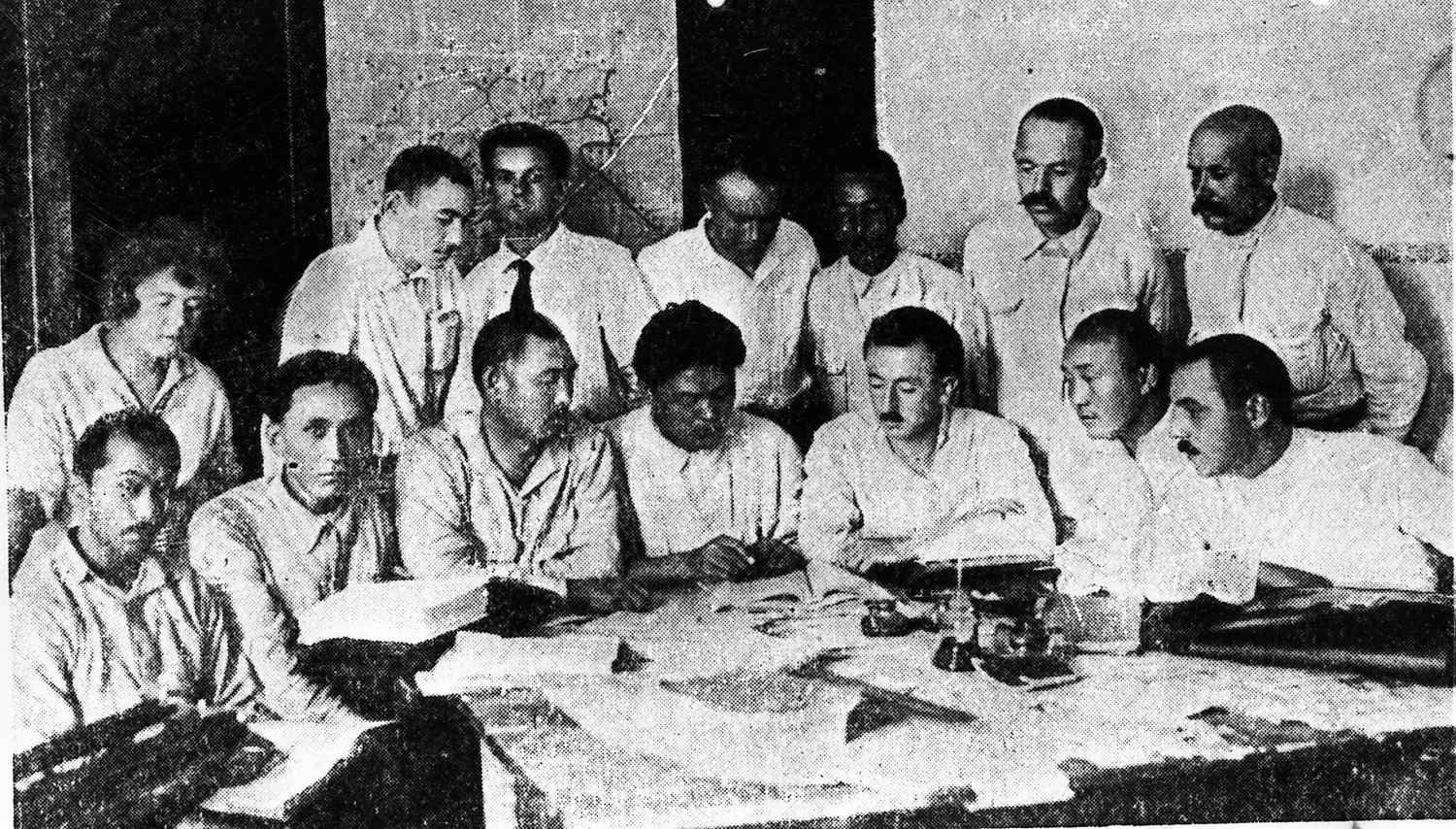
The 1924 archive photograph shows the Kyrgyz Bureau of the commission for national-territorial delimitation. Such commissions converted former Russian Turkestan into a new system of Soviet republics and autonomous territories. The lines they drew governed access to towns, pasture, water, roads and future administrative centres.
How Kyrgyz autonomy emerged
An early proposal for a Mountain Kyrgyz Region failed in the early 1920s. The next opening came with the national-territorial delimitation of Central Asia. On 14 October 1924, the All-Russian Central Executive Committee approved the Kara-Kyrgyz Autonomous Region within Soviet Russia. The qualifier “Kara” was dropped in 1925, and in February 1926 the region became the Kyrgyz Autonomous Soviet Socialist Republic.
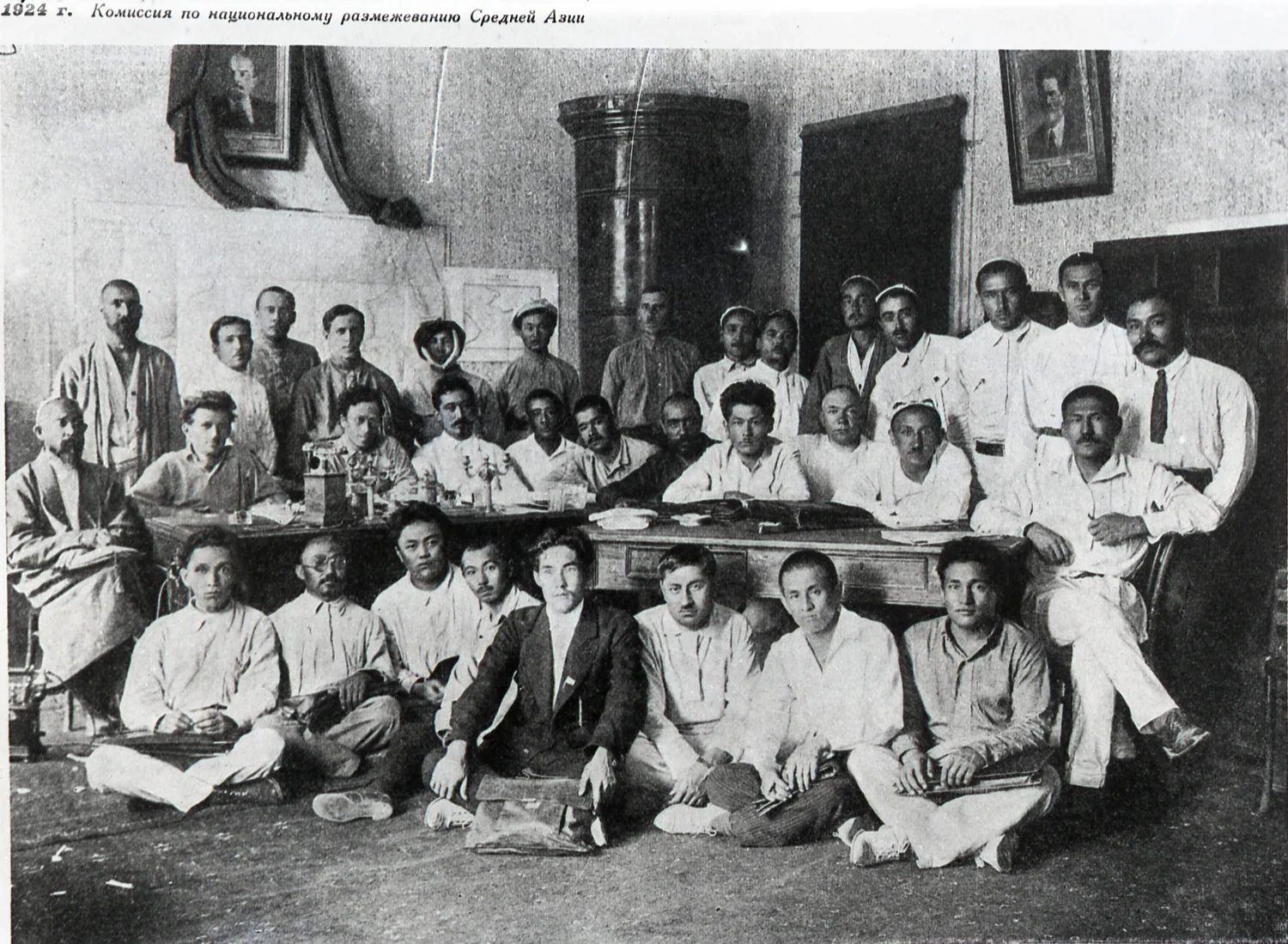
This was not yet a union republic, let alone an independent country. The autonomy remained part of Soviet Russia and subject to central party authority. It nevertheless acquired its own administrative institutions and territorial framework. In 1936 that framework became the Kirghiz Soviet Socialist Republic.
Head of government at 26
On 12 March 1927, the first session of the Central Executive Committee of the Kyrgyz ASSR formed a Council of People’s Commissars. The twenty-six-year-old Abdrakhmanov became its chairman. “Head of government” is the closest modern equivalent, though authority in practice was divided among the government, the executive committee and the Communist Party leadership.
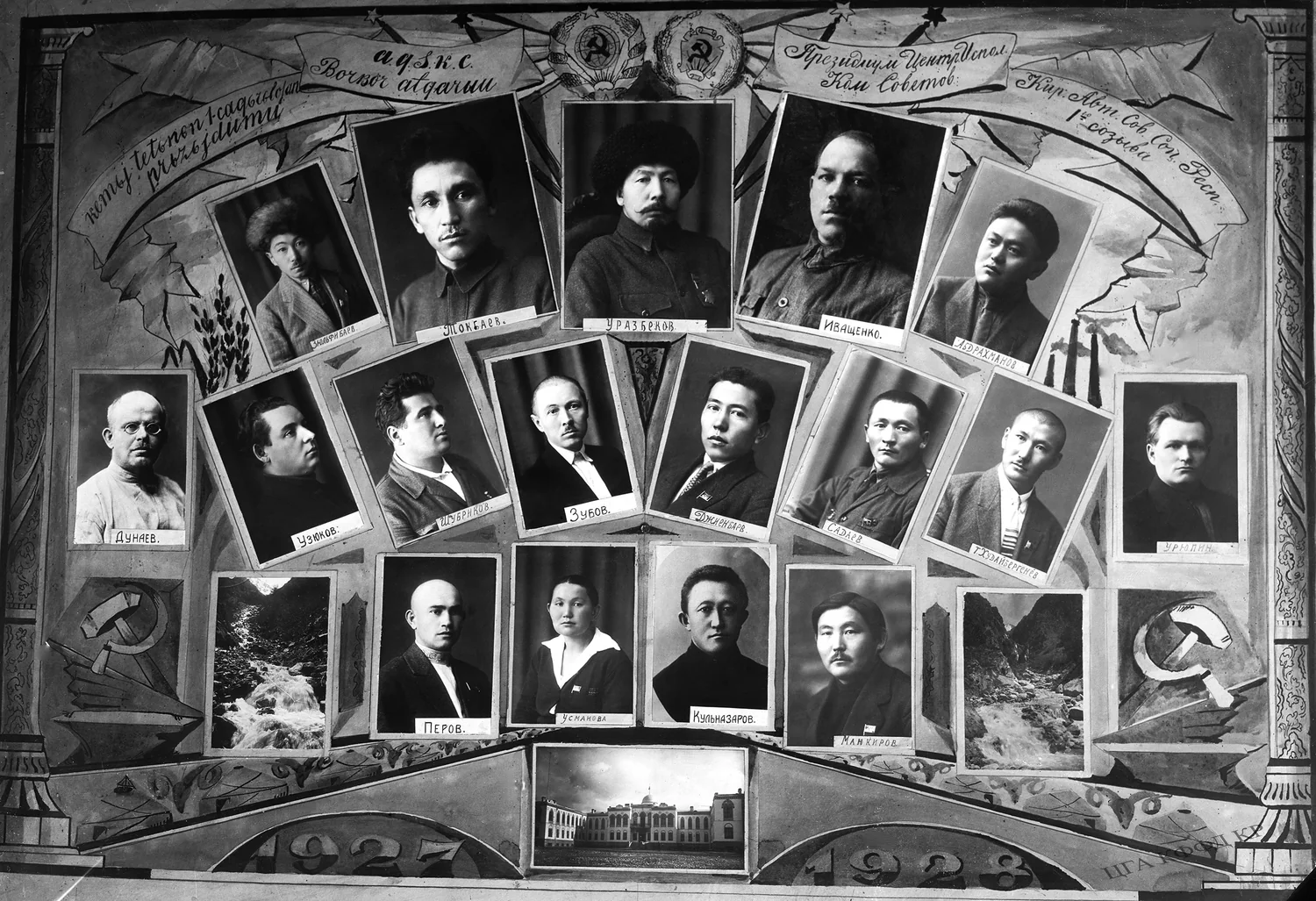
The government had to build institutions while managing immediate shortages. The republic lacked trained staff, schools, clinics, roads and communications. Much of the population followed nomadic or semi-nomadic pastoral cycles, while plans drafted in Moscow often ignored climate, grazing patterns and the distances separating the valleys.
The economy, language and local expertise
Under Abdrakhmanov, the government promoted a Pishpek-Tokmok railway with a future extension towards Issyk-Kul, a meat-processing plant in Pishpek, a sugar factory in Kant and irrigation works in the Chuy Valley. Not every proposal was completed during his tenure, and no project was the work of one official. His part lay in setting priorities, negotiating with union ministries and defending the republic’s claims to investment.
Indigenisation of the administration mattered just as much. Abdrakhmanov supported training specialists from the local population, teaching Kyrgyz to civil servants and gradually introducing the language into official work. The policy was practical as well as political. Without teachers, agronomists and officials who could speak to the public, autonomy risked becoming little more than a sign above an imported bureaucracy.
He also wrote about Kyrgyz history. His study “Kyrgyzstan” appeared in 1928, and he examined the uprising and flight of 1916. Few heads of government have tried to document the history of a people whose administrative territory was only then taking shape.
The famine of 1932-1933 and refugees from Kazakhstan
Collectivisation and extraordinary procurement campaigns shattered rural economies across the Soviet Union. Mass death and livestock loss in Kazakhstan pushed families into neighbouring republics. Kyrgyz archives record displaced Kazakh groups at Pishpek station and in rural districts, along with commissions and orders to assist children and adults.
Abdrakhmanov argued for reducing impossible procurement targets and authorised the use of part of the protected grain reserve for food relief. Later commemoration sometimes compresses this into a single heroic order that supposedly saved an entire republic. The documents show a harder reality: his government rationed scarce supplies, disputed policy with party authorities and still implemented parts of the wider procurement system.
A genuine distinction remains. Where fulfilling the target meant stripping farms of seed, grain and livestock, Abdrakhmanov placed survival and the productive base above a percentage on a report. In 1933 those choices became part of the political case against the republic’s leadership.
Letters to Stalin and a private diary
In April 1930 Abdrakhmanov sent Stalin a long memorandum on the condition of the Kyrgyz ASSR. He argued that divided bureaucratic control obstructed economic and cultural development and raised the possibility of turning the autonomy into a union republic. The letter reveals his political language more accurately than later slogans do. He challenged the centre as a Soviet official, using plans, departmental reports and the logic of the system itself.
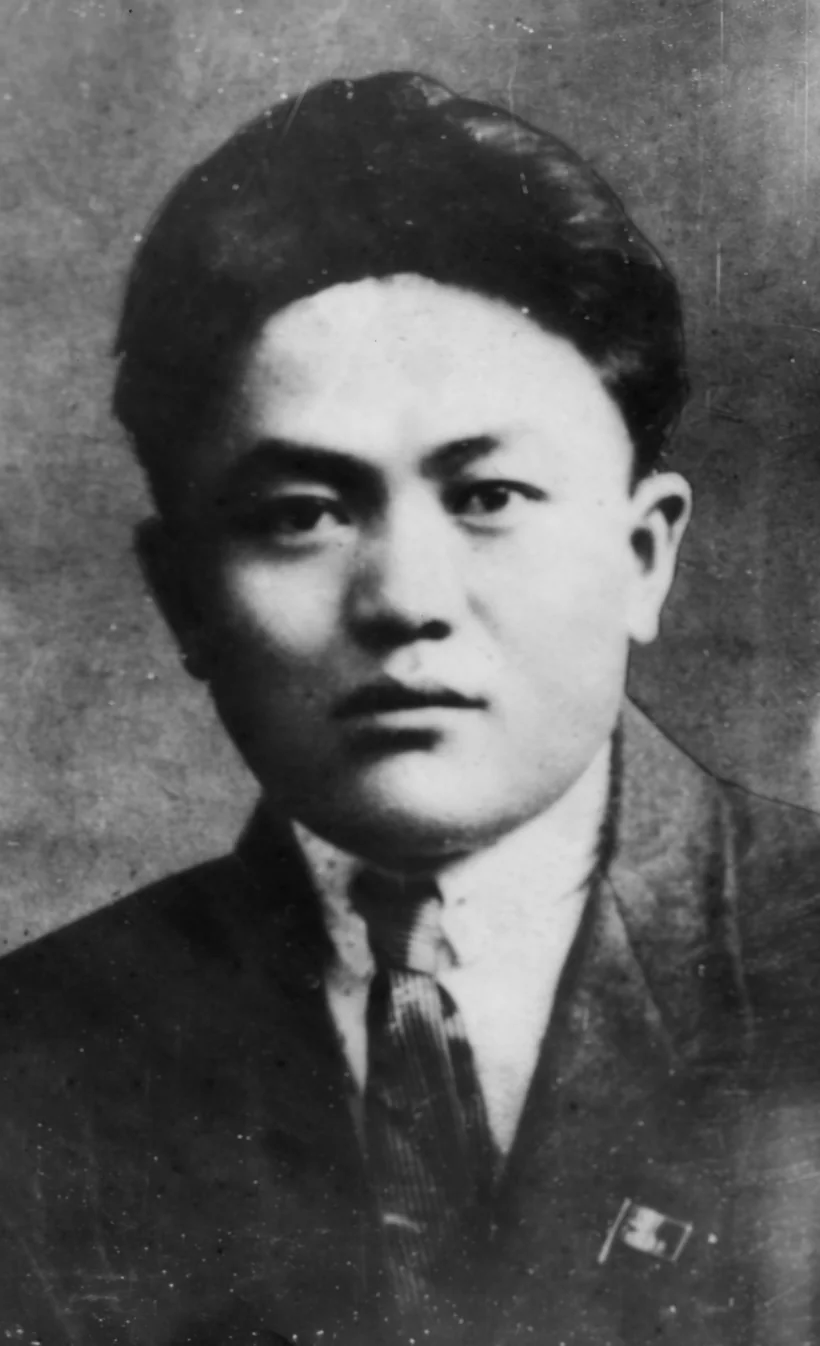
His private diary from the late 1920s and early 1930s is an even rarer source. Notes on grain, appointments and party disputes sit beside doubts about Stalin’s policies, loneliness and his feelings for the economist Maria Natanson. The diary restores a living person to a public memory that often leaves only a bronze portrait.
The manuscript reached party investigators and was used against him. Under interrogation Abdrakhmanov accepted that the diary was his, but rejected claims that he belonged to a clandestine nationalist organisation. The Kyrgyz Archive Service’s virtual exhibition brings together case documents, photographs and records from several state archives.
Dismissal, arrest and execution
In September 1933 Abdrakhmanov was removed as chairman of the Council of People’s Commissars and expelled from the party. He subsequently worked in livestock administrations in the Middle Volga region and Orenburg. Demotion did not protect him from the terror. He was arrested on 10 June 1937 and transferred to Frunze.
The investigation accused him of membership in a “Social-Turanian Party”, an anti-Soviet conspiracy and links with national political figures elsewhere in Central Asia. NKVD cases assembled such organisations from professional contacts, friendships and statements extracted under torture. Abdrakhmanov was executed with other prisoners in November 1938 and secretly buried by an old brick kiln at Chong-Tash.
The dead included Imanaly Aidarbekov, Bayaly Isakeev, Kasym Tynystanov and Torekul Aitmatov, father of Chingiz Aitmatov. The mass grave was discovered only in 1991. The victims were reburied at the Ata-Beyit memorial complex.
Rehabilitation and the return of public memory
The Military Collegium of the Supreme Court of the USSR rehabilitated Abdrakhmanov in 1958, finding the criminal case groundless. His party membership was restored posthumously in 1989. Public recognition came later still, after the discovery of the burial site returned his name to museums, streets, monuments and state commemorations.
In 2021 he was posthumously awarded the title Hero of the Kyrgyz Republic. His family then transferred the original diary to the National Historical Museum. In 2022 the Academy of Public Administration under the President of the Kyrgyz Republic was named after him.
Current official language calls Abdrakhmanov a founding father. The description is understandable in independent Kyrgyzstan, but it should not flatten his contradictions. He built a Soviet autonomy as a committed communist, challenged particular decisions of the centre and was eventually destroyed by the political system he had helped establish.
Where to encounter Yusup Abdrakhmanov’s story today
The National Historical Museum in Bishkek is the best starting point because it holds the original diary. Displays change, so check whether the manuscript is on view before visiting. Abdrakhmanov Street crosses central Bishkek and passes museums, theatres and Oak Park, but a street sign alone gives little sense of the person behind the name.
The essential memorial site is Ata-Beyit, about 30 kilometres south of Bishkek. Here Abdrakhmanov’s story sits alongside those of the other people killed in 1938. That collective view matters more than a solitary statue because it reveals how much of Kyrgyzstan’s early political and cultural elite disappeared in the purges.
For a compact chronology, consult the entry in the Kyrgyz Encyclopedia. It works best beside the archival exhibition: the encyclopedia gives dates and posts, while the documents preserve the language of decisions, doubts and accusations.
Frequently asked questions about Yusup Abdrakhmanov
Who was Yusup Abdrakhmanov?
Yusup Abdrakhmanov was a Soviet Kyrgyz statesman, one of the political figures involved in establishing Kyrgyz autonomy and the first chairman of the Council of People’s Commissars of the Kyrgyz ASSR from 1927 to 1933.
Why is he called a founder of Kyrgyz statehood?
He worked on plans for a distinct Kyrgyz territorial autonomy, helped shape its institutions in 1924-1926 and led the first government of the Kyrgyz ASSR. The process was collective, so it is more accurate to call him one of the founders.
How was Yusup Abdrakhmanov connected to the famine of the 1930s?
His government sought relief from excessive procurement targets, used part of the grain reserve for food assistance and organised support for displaced people arriving from famine-stricken Kazakhstan.
Why was Yusup Abdrakhmanov executed?
During the Great Terror the NKVD accused him of belonging to a fictitious anti-Soviet organisation and conspiracy. He was executed in November 1938 and fully rehabilitated in 1958.
Where is Yusup Abdrakhmanov buried?
His remains were found with other victims at Chong-Tash and reburied in 1991 at the Ata-Beyit historical memorial complex south of Bishkek.
Share on social media
If you found this guide useful, share it on social media. It takes a moment and helps more travellers discover the project. Thank you!
Anything to add?
Share your experience, leave a comment or suggest an improvement.