Contents:
What goes into beshbarmak?
The foundation is simple: meat is simmered until tender, an unleavened dough is mixed from flour, water and egg, and the noodles are then cooked in the meat broth. Onions are cut into rings or half-rings, briefly warmed in the hot broth and seasoned with pepper. This onion dressing is called chyk.
Beshbarmak may use lamb, beef or horse meat. One plate can combine different cuts and meat delicacies. A home version usually depends on the occasion, region and ingredients available to the family, so promises of a “strictly classic recipe” almost always simplify the real cuisine.
In Kyrgyz homes, the boiled meat is often cut fairly small and mixed with short noodles. A restaurant may serve large pieces of meat on broad sheets of dough. Both retain the essential combination of meat, dough, onion and broth.
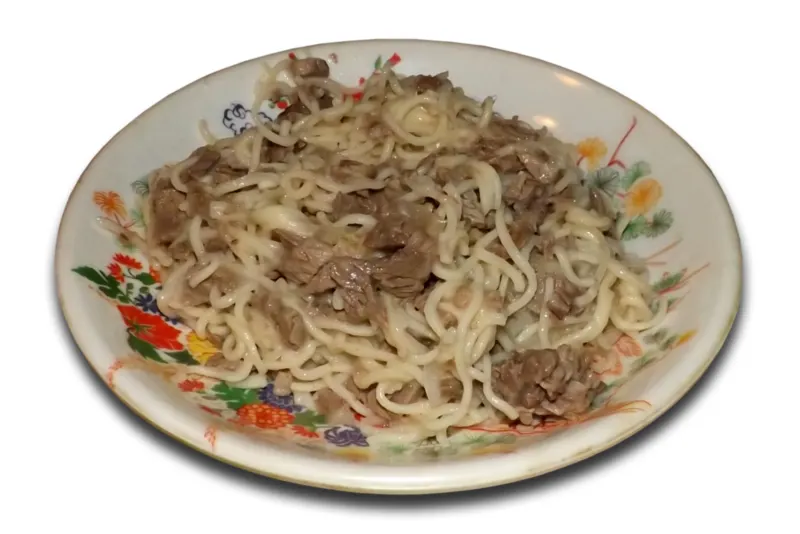 1/3. A finished plate of beshbarmak Photo: Arthoum, Wikimedia Commons, CC BY-SA 4.0; edited for this site.
 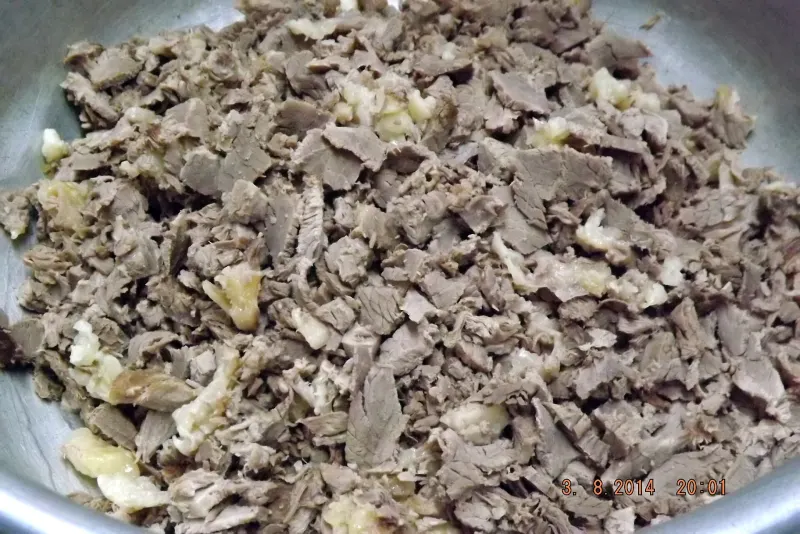 2/3. The meat is cut before serving Photo: Arthoum, Wikimedia Commons, CC BY-SA 4.0; edited for this site.
 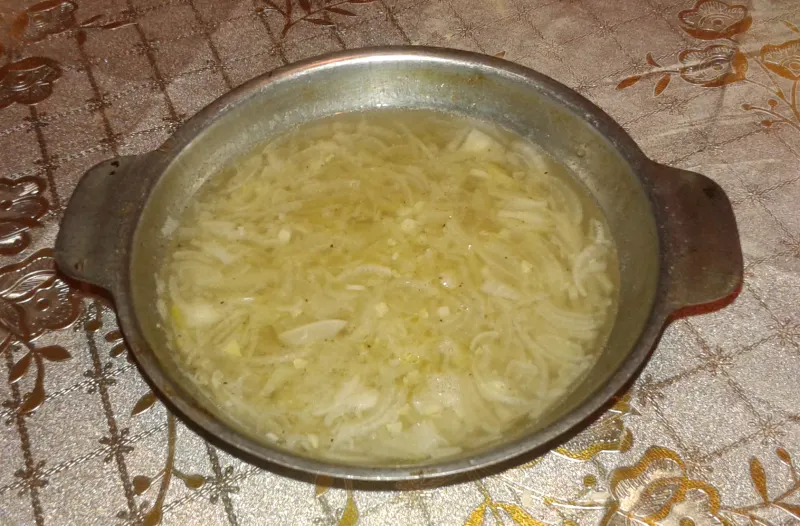 3/3. Chyk: onion in rich broth Photo: Arthoum, Wikimedia Commons, CC BY-SA 4.0; edited for this site.
 How beshbarmak is served and eaten
The meat and noodles are arranged on a large platter or divided into individual servings. Broth comes in a small bowl or deep cup. It may be drunk before the main plate, alongside it or afterwards, depending on the hosts and style of the meal.
The name is commonly translated as “five fingers” and associated with eating by hand. Using a fork in a café is perfectly normal. At a family gathering, follow your hosts rather than turning the way you eat into a test of “authenticity”.
Beshbarmak is associated with hospitality and festive meals, but a visitor does not need to understand the complex tradition of allocating cuts of meat in advance. If a host offers you a particular piece or place at the table, accept it or calmly explain any restriction.
What to ask when ordering
The word beshbarmak on a menu does not reveal the type of meat or portion size. Ask whether it contains lamb, beef or horse meat, whether chuchuk is included and whether the broth comes separately. A large shared serving may be intended for several people.
The dough contains wheat flour and sometimes egg. The broth and onion dressing are meat-based as well. Ask before ordering if allergens, halal preparation or a particular type of meat matter to you. To try other meat dishes, compare beshbarmak with kuurdak and the lighter shorpo.
Homemade beshbarmak
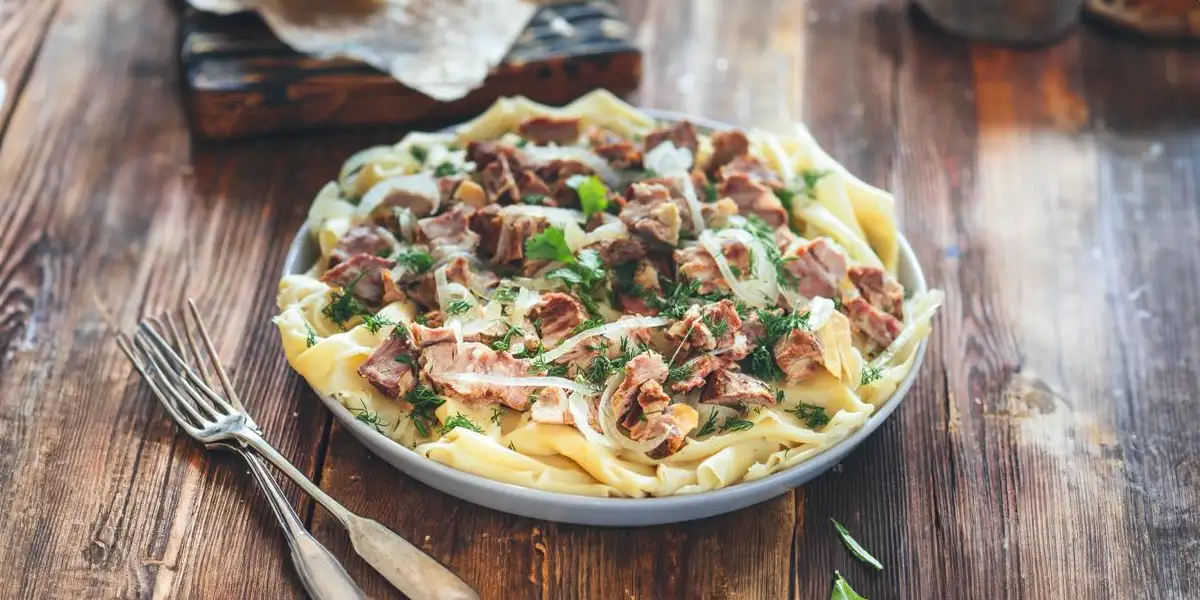
A practical home version for 5-6 servings. The meat is simmered until tender, the noodles cook in the same broth and the onions are warmed separately. The exact time depends on the cut of meat.
Cuisine: Kyrgyz. Total time: 3 hours.
Ingredients:
- 1-1.2 kg bone-in lamb or beef
- 3 litres cold water
- 2-3 onions
- salt and black pepper to taste
- 500 g wheat flour
- 2 eggs
- 150-180 ml water for the dough
- 1 tsp salt for the dough
Method:
Step 1. Put the meat into cold water and bring slowly to the boil. Skim the surface, add salt and simmer over a low heat for 2-2.5 hours until tender.
Step 2. Combine the flour, eggs, water and salt. Knead into a firm dough, cover and leave for 30 minutes.
Step 3. Remove the cooked meat. Reserve some broth for serving, strain the rest and return it to the heat.
Step 4. Slice the onions thinly, pour over two ladles of hot broth, add black pepper and warm for 3-5 minutes without boiling vigorously.
Step 5. Roll the dough to roughly 2 mm thick. Cut into short noodles or small rectangles and cook in batches in the broth until done, usually 3-5 minutes.
Step 6. Remove the meat from the bones and slice it. Arrange the noodles, meat and onions on a large platter. Serve the hot broth separately.
Share on social media
If you found this guide useful, share it on social media. It takes a moment and helps more travellers discover the project. Thank you!
Anything to add?
Share your experience, leave a comment or suggest an improvement.