Contents:
What is chuchuk?
Chuchuk is a horse-meat sausage. Long strips of meat and fat are seasoned, placed inside a prepared horse intestine and cooked at a gentle simmer. The meat does not have to be minced. A good cross-section shows separate dark and pale layers.
Knowledge of making chuchuk belongs to Kyrgyzstan's traditional meat-processing culture. The national news agency Kabar describes it as food for celebrations and honoured guests. In an ordinary restaurant, it is more likely to appear on a cold meat platter or beside boiled meat.
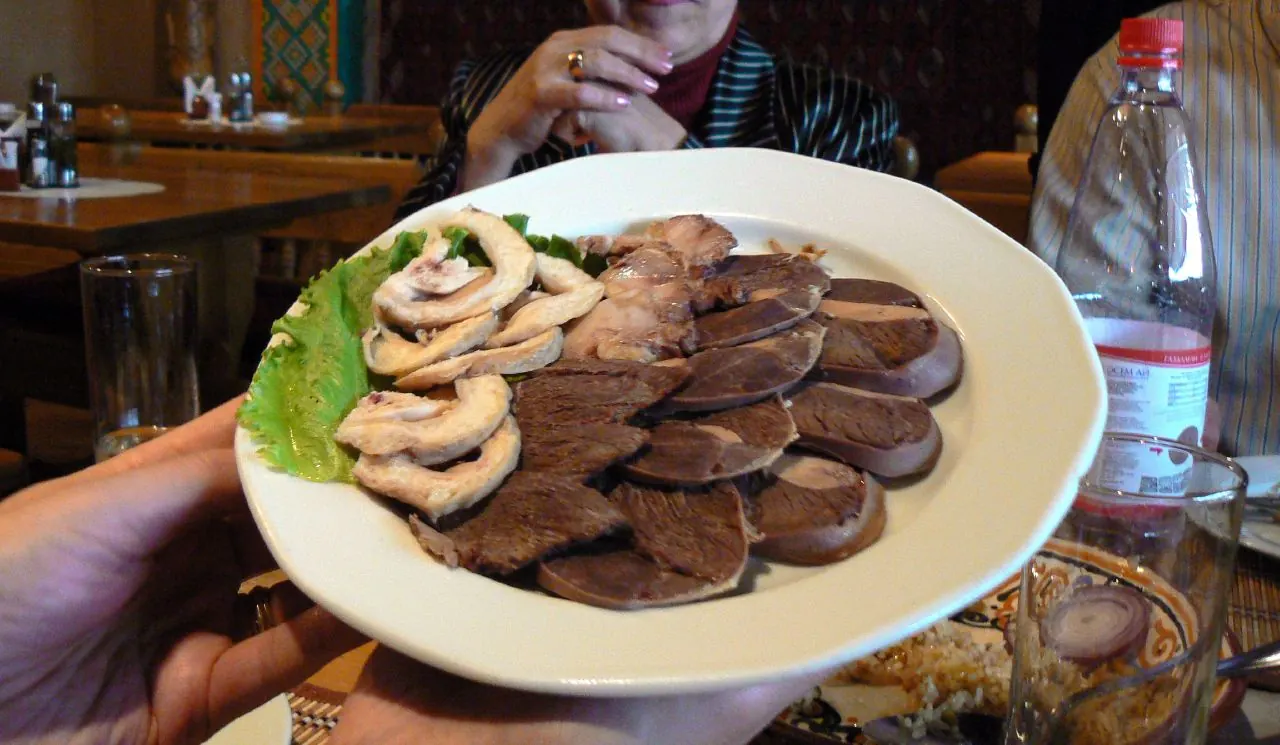 1/3. Cold horse-meat platter with kazy, Kazakhstan Photo: Sara Yeomans, Wikimedia Commons, CC BY 2.0; edited for this site.
 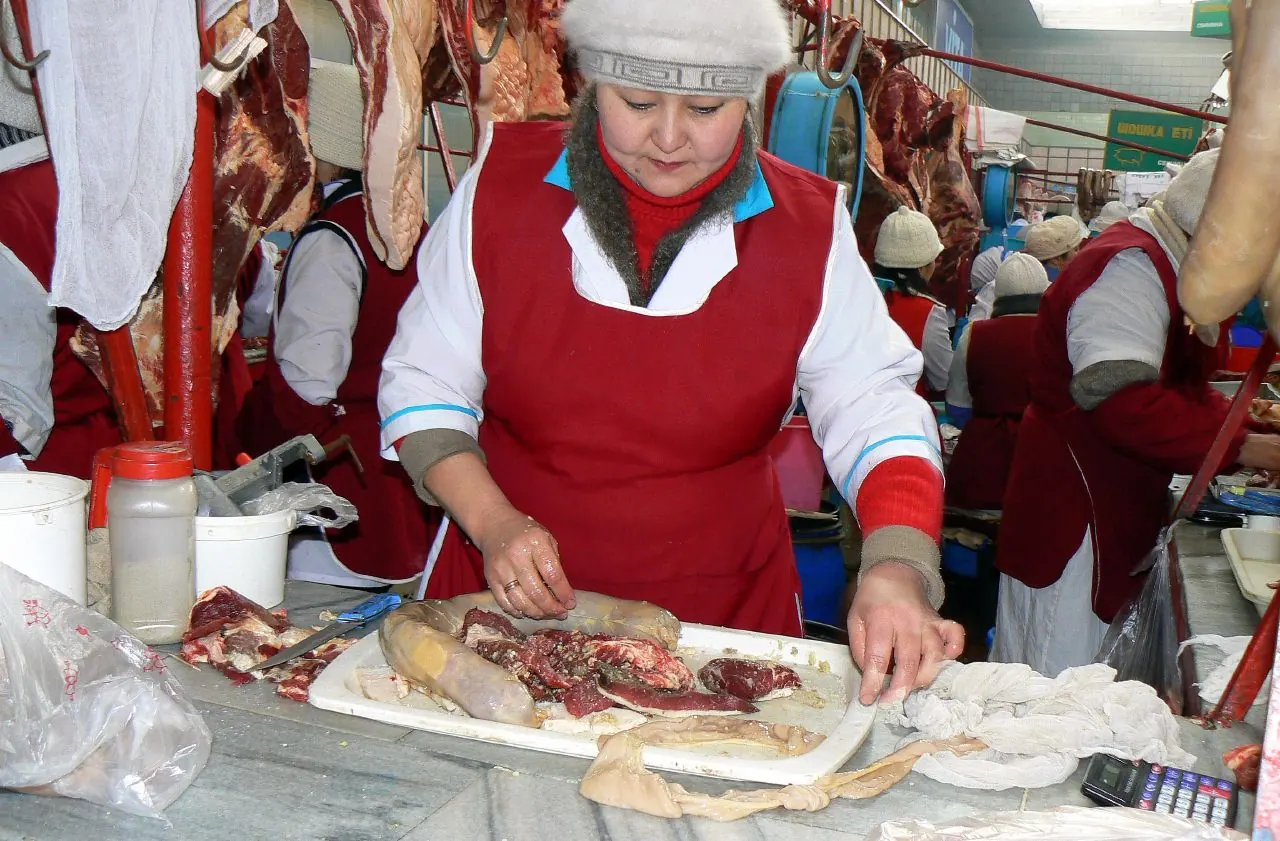 2/3. Making horse-meat sausage, Almaty Photo: Sara Yeomans, Wikimedia Commons, CC BY 2.0; edited for this site.
 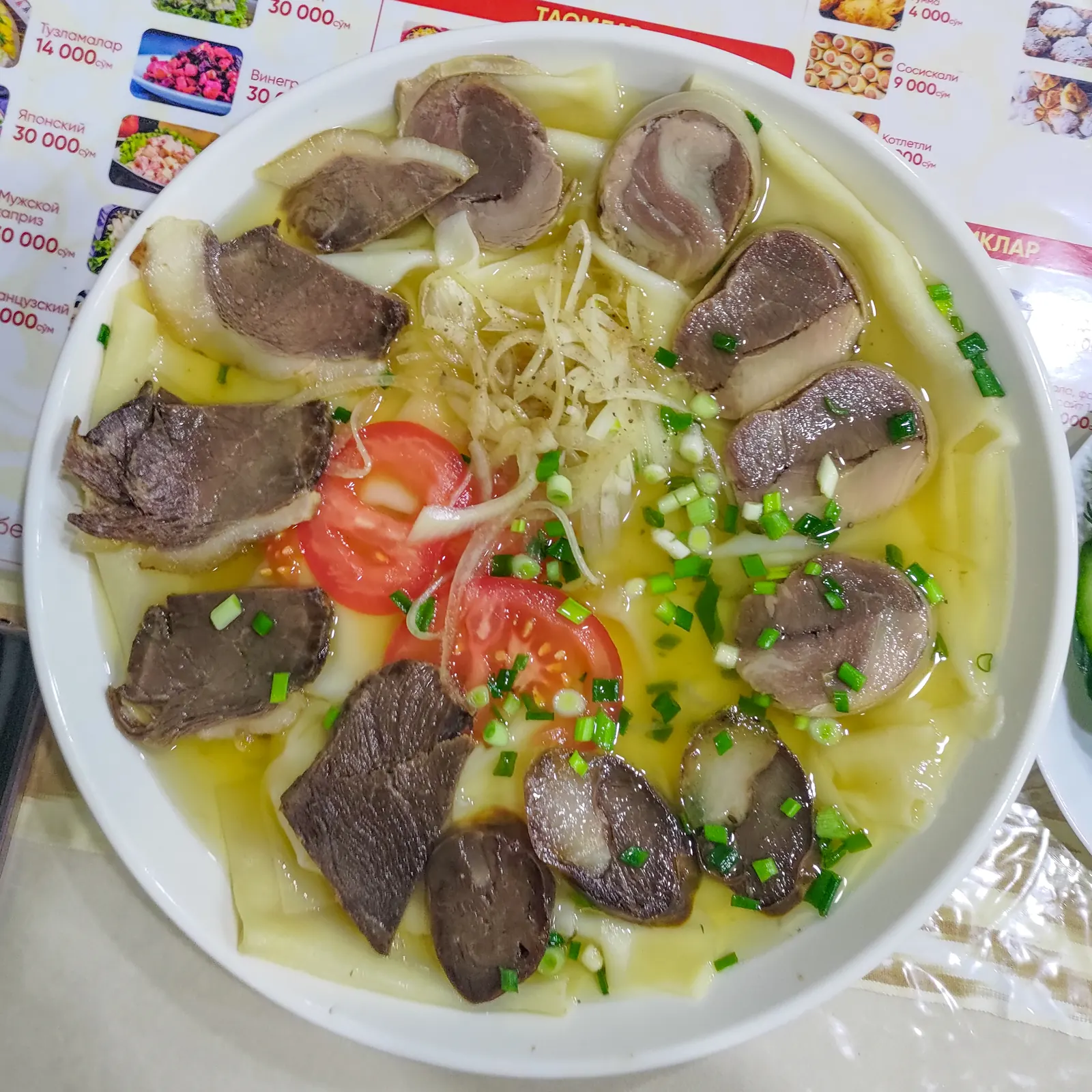 3/3. Beshbarmak with kazy, Tashkent Photo: Nikolai Bulykin, Wikimedia Commons, CC BY-SA 4.0; edited for this site.
 The flavour depends on the cut and on the balance between lean meat and fat. Garlic, black pepper, cumin and other seasonings alter the aroma, but do not define the sausage by themselves. The firm casing holds in the juices as it cooks, so chuchuk is rested and chilled before slicing.
How do chuchuk, kazy and karta differ?
Names vary between countries and families. In Kyrgyzstan, a seller may use “chuchuk” and “kazy” side by side. The ingredients of a particular sausage are more reliable than a broad display label.
In Kyrgyz tradition, chuchuk covers a horse-meat and fat sausage in a natural casing. Kazy is more closely associated with fatty meat from the horse's ribs and belly. In Kazakhstan and Uzbekistan, kazy can be the name of the finished sausage itself, which is why the neighbouring examples in these photographs are labelled as kazy.
Karta can also look like a thick ring, but its preparation is different. A cleaned section of the horse's large intestine is turned fatty side in and boiled without a meat filling. Karta, kazy and chuchuk may all appear on the same meat platter.
“Horse-meat sausage” does not reveal the method either. A factory product may be minced and moulded, while traditional chuchuk keeps whole strips of meat and fat. Ask about the ingredients and look at a cut slice if you want to try that particular texture.
How is chuchuk served and eaten?
Cooked chuchuk is chilled and sliced crosswise with the casing left on. A thin slice displays the layers and makes the richness easier to judge. Fresh onion, vegetables and flatbread all work alongside it, but there is no single compulsory garnish.
At a celebration, chuchuk may be served as a cold starter, included on a meat platter beside lamb byzhy, or placed with beshbarmak. The size of each piece and its place on a shared dish are up to the hosts. A guest can simply accept the offered portion or explain a dietary restriction calmly.
Horse meat and pronounced animal fat will not suit everyone. Begin with one thin slice, then decide whether you want more. Comparing chuchuk with kuurdak is useful because the methods are so different: one is simmered and chilled, the other fried and served hot.
How to choose ready-made chuchuk
In Bishkek and Osh, look for chuchuk at meat counters, specialist shops and restaurants serving Kyrgyz food. Stock and sellers change, so an old list of addresses soon becomes unreliable. It is more useful to ask when the sausage was cooked and how it has been stored.
A packaged product should state the producer, ingredients, date, storage temperature and shelf life after opening. For a loose product, ask which meat it contains and how it was prepared. If the answer stops at “sausage” and does not distinguish horse meat, beef and offal, you do not have enough information to choose.
At the cut surface, look for a clean casing, firm meat and pale fat without a dry outer edge. More fat does not automatically mean better quality: it changes flavour and price, but varies with the cut and recipe. An unusual sharp smell, a sticky surface or a poorly chilled counter are good reasons to pass.
Storage and food safety
Raw chuchuk needs the same discipline as other raw meat: a separate board, clean hands, cold storage and thorough cooking. For a home recipe, it is safer to buy a natural casing that has already been cleaned and prepared for food use.
The WHO's Five Keys to Safer Food advise cooking meat to at least 70°C at the centre, separating raw and cooked food, and not leaving perishable food at room temperature for more than two hours. Test a thick sausage in its widest section without touching the side of the pan.
After cooking, chill chuchuk promptly and refrigerate it. The safe storage time depends on the particular product, packaging and temperature, so one universal figure for both homemade and factory-made sausage would be false precision. Use an insulated bag for transport; a sealed commercial pack is the safer choice for a long journey.
The recipe below keeps the traditional strips of horse meat and natural casing. It makes a large batch because the measured source recipe starts with 2.5 kg of meat. We do not state the cooked weight or nutrition: neither the final yield nor the proportion of fat has been fixed.
Home-simmered horse-meat chuchuk
Photo: Sara Yeomans, Wikimedia Commons; the photograph shows the related kazy sausage, CC BY 2.0; edited for this site.
A measured version of the traditional method: about 2.7 kg of raw sausage made from strips of horse meat and fat in prepared natural casing. The number of rings depends on the casing diameter.
Cuisine: Kyrgyz. Category: Cold meat starter. Yield: about 2.7 kg raw sausage before cooking. Preparation: . Cooking: . Total time: .
Ingredients:
- 2.5 kg chilled fatty horse meat, cut as long strips of meat with rib or belly fat
- 175 g cleaned small horse intestine casing prepared for food use
- 25 g garlic
- 10 g fine salt
- 10 g freshly ground black pepper
- cold drinking water to cover the chuchuk by 3-4 cm in the pan
Method:
Step 1. Prepare a separate board, knife and container for the raw meat. Check the casing, rinse it according to the supplier instructions and keep it chilled.
Step 2. Cut the meat and fat into long strips up to 25 cm. Mince the garlic, combine it with the salt and black pepper, then season the strips evenly.
Step 3. Put the meat in a closed container and rest it in the refrigerator for 24 hours. Do not marinate it at room temperature.
Step 4. Tie one end of the casing. Fill it loosely with meat and fat, avoiding air pockets and excessive tension. Form rings or lengths no more than 50 cm long and secure the ends firmly.
Step 5. Put the chuchuk in a wide pan, add enough cold drinking water to cover it by 3-4 cm and bring it slowly to a very gentle simmer.
Step 6. As the water begins to simmer, make several small holes in the casing with a clean needle. Cook at the gentlest simmer for up to 3 hours, turning the rings carefully 2 or 3 times.
Step 7. Check the centre of the thickest section with a clean thermometer: it must reach at least 70°C. Lift out the chuchuk with clean tongs and do not return it to a surface used for raw meat.
Step 8. Let it cool, then chill it promptly in the refrigerator. Slice crosswise with the casing on and serve cold in thin slices.
Read next: beshbarmak, kuurdak, kymyz.
Share on social media
If you found this guide useful, share it on social media. It takes a moment and helps more travellers discover the project. Thank you!
Anything to add?
Share your experience, leave a comment or suggest an improvement.