Contents:
What is kymyz?
Kymyz is made from mare's milk through the combined action of lactic acid bacteria and yeast. Fermentation produces lactic acid, carbon dioxide and ethyl alcohol. Its flavour therefore combines dairy acidity, yeasty notes and the slight prickle of bubbles.
The drink is connected with pastoral livestock farming and the cultures of Central Asian peoples. For a traveller, its seasonality is more practical: mares are milked while lactating, so fresh farm kymyz is easier to find from late spring to early autumn. Exact dates depend on the weather, region and farm.
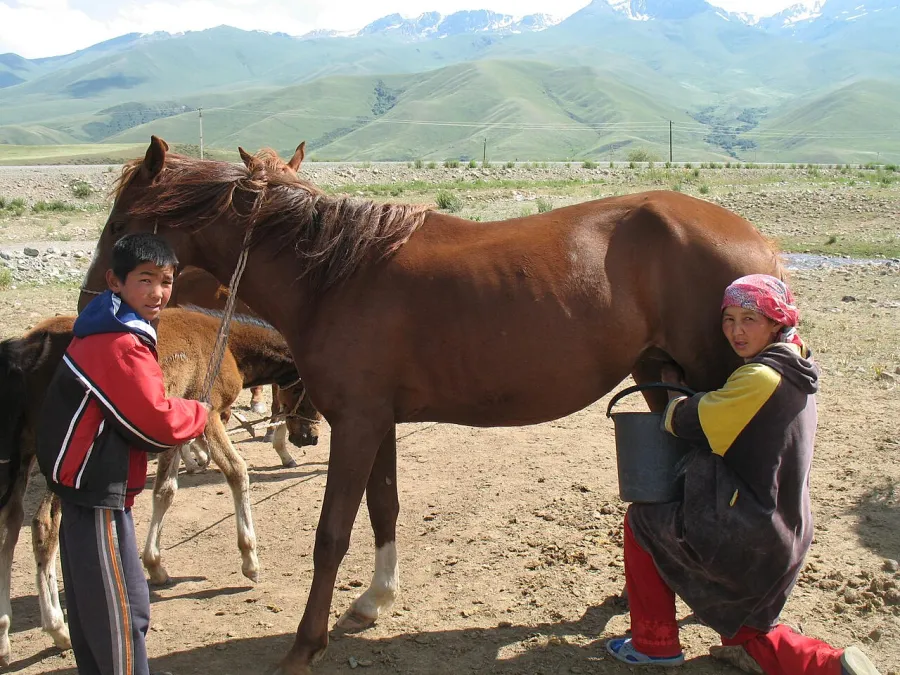 1/3. Milking a mare in Suusamyr Photo: Firespeaker, Wikimedia Commons, CC BY-SA 3.0; edited for this site.
 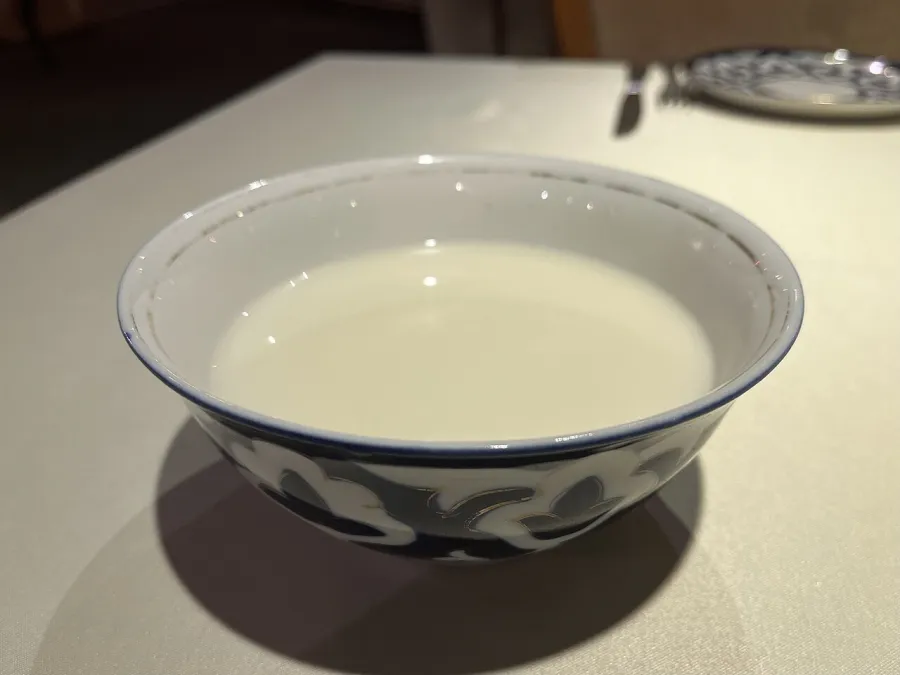 2/3. Kymyz served in a bowl Photo: Kurmanbek, Wikimedia Commons, CC BY-SA 4.0; edited for this site.
 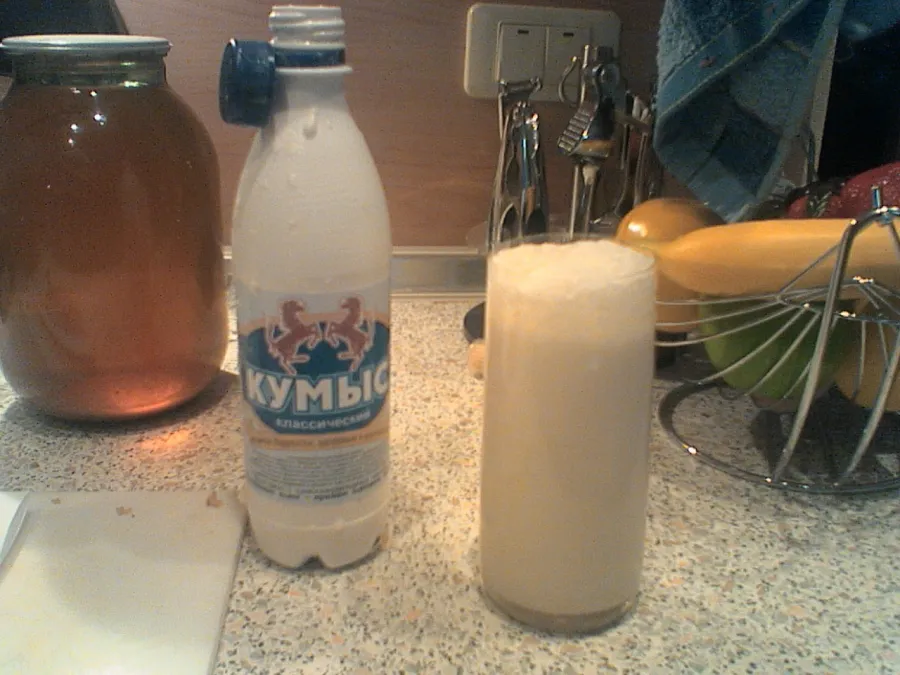 3/3. Bottled kumis Photo: Edmund Schluessel, Wikimedia Commons, Public domain; edited for this site.
 Do not confuse kymyz with saamal. Saamal is fresh mare's milk before full fermentation, not simply another name for weak kymyz. Ask which product is being offered at a market.
How it is made
Fresh portions of mare's milk are added to a starter and stirred regularly. Traditionally, this takes place in a leather vessel or wooden container with a churn. Controlled production uses a prepared culture, sanitised equipment and refrigeration of the finished drink.
Ordinary yoghurt, kefir and baker's yeast do not reproduce a kymyz culture. Recipes that mix them with sugar and seal them in a bottle at room temperature create unpredictable acidity, pressure and alcohol content. At home, it is safer to buy ready-made kymyz from a producer who states the ingredients and storage conditions.
Flavour and alcohol content
Young kymyz is generally milder and sweeter; a more mature drink is sharper, more acidic and more highly carbonated. Alcohol content rises during fermentation, but no single figure applies to every version. The culture, temperature, time, amount of milk sugar and storage all affect the result.
Treat kymyz as an alcoholic drink unless the producer proves otherwise with laboratory labelling. It is unsuitable for children, pregnant people, anyone who avoids alcohol completely and drivers before a journey. The descriptions “weak” and “homemade” do not replace information on a label.
Kymyz remains a dairy product and is unsuitable for anyone with an allergy to milk protein. Fermentation changes the sugars but does not guarantee that no lactose remains. People with dietary restrictions should ask about the raw material and begin with a small amount only after consulting a doctor.
How to choose and try kymyz
In a shop, check the date, integrity of the bottle and refrigerator temperature. Do not buy swollen packaging or leave the drink in a hot car. Use-by periods after opening and storage conditions vary between producers, so follow the label.
On a jailoo, ask when the kymyz was made, where it has been kept and whether the milk was pasteurised. Raw products demand particularly strict hygiene and continuous chilling. Decline a taste if the container has stood in the sun, the smell seems doubtful or the seller cannot explain where the drink came from.
Before your first sip, stir the drink gently in an open bowl but do not shake a closed bottle. Start with 100-150 ml: an unfamiliar acidic, carbonated dairy drink can cause discomfort. For a non-alcoholic introduction to local milk drinks, choose chalap.
Kymyz should not be described as a cure for tuberculosis, stomach conditions or a “weak immune system”. Kumis therapy has a history, but the drink is not a substitute for diagnosis and evidence-based treatment.
How to serve ready-made kymyz
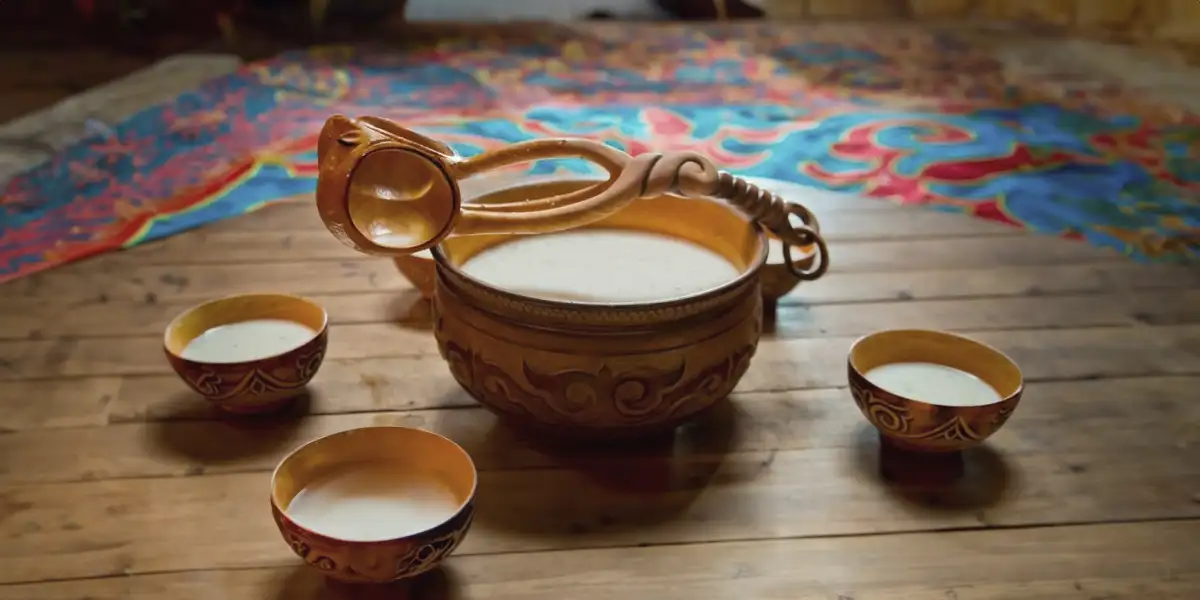
Real kymyz requires mare's milk, a suitable mixed culture and controlled fermentation. This card does not imitate the process with kefir and baker's yeast, but explains how to serve a ready-made product safely.
Cuisine: Kyrgyz. Total time: 10 minutes.
What you need:
- 500 ml chilled kymyz in intact, labelled packaging
- 2 clean bowls or small glasses
Serving method:
Step 1. Check the use-by date, alcohol content stated on the label and storage temperature. Do not use a swollen or damaged bottle.
Step 2. Chill the kymyz according to the producer's recommendation. Do not freeze it or leave it at room temperature for long.
Step 3. Do not shake the bottle. Stand it upright, loosen the cap slowly and allow excess gas to escape.
Step 4. Pour 100-150 ml into each clean bowl. Gently stir the opened drink if natural sediment has settled at the bottom.
Step 5. Serve immediately. Seal the remainder, return it to the refrigerator and use it within the period specified by the producer after opening.
Share on social media
If you found this guide useful, share it on social media. It takes a moment and helps more travellers discover the project. Thank you!
Anything to add?
Share your experience, leave a comment or suggest an improvement.