Contents:
What is chalap?
Chalap combines milky acidity, a salty taste and a light texture. The base has already undergone lactic fermentation, so the drink itself does not need long fermentation: thick suzma or ayran is diluted with drinking water to the desired consistency.
Homemade chalap may be still, while industrial versions are often carbonated. A sparkling version tastes sharper and foams more when opened. Ingredients also vary: one producer uses milk and pure cultures, another starts with a ready-made fermented milk base. The label on the particular bottle is always the most reliable guide.
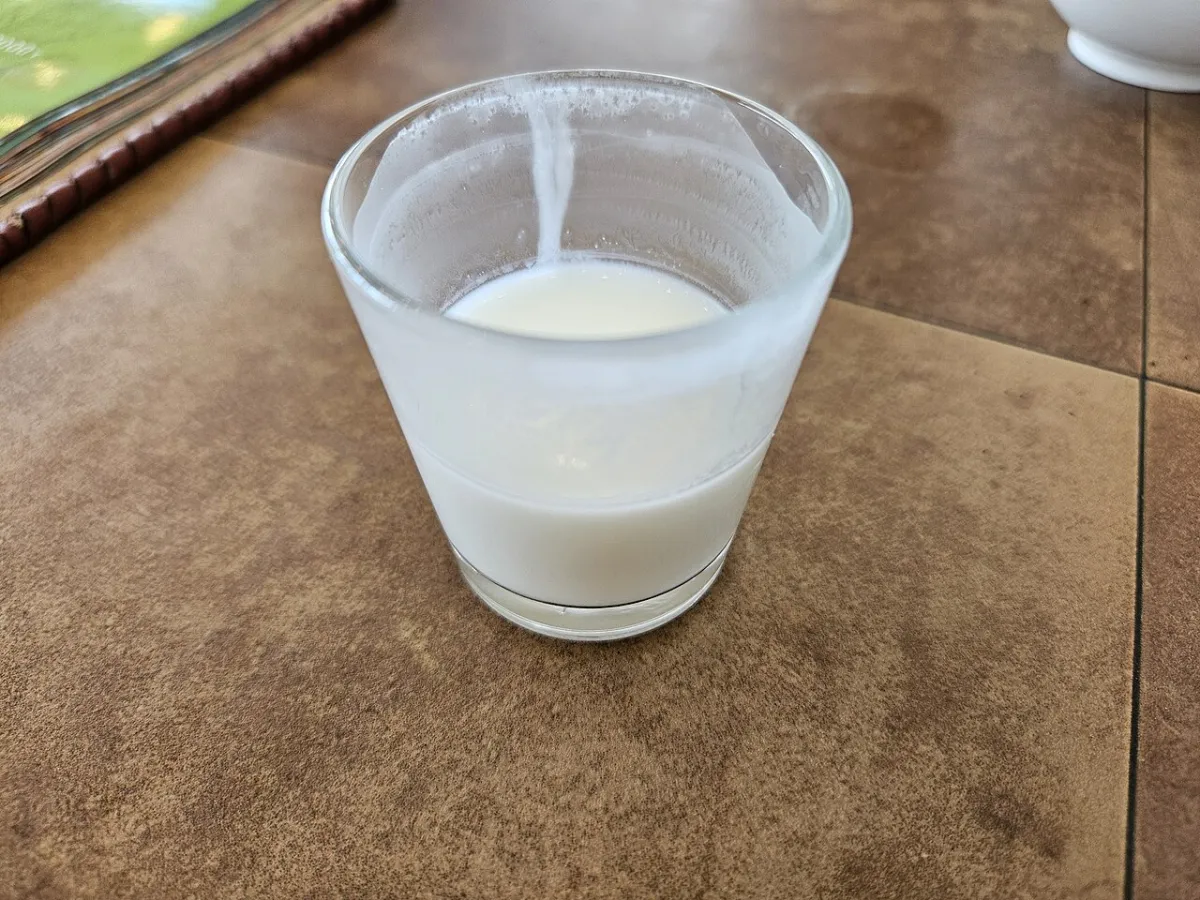 1/2. Chalap in Astana Photo: Nurken, Wikimedia Commons, CC BY-SA 4.0; edited for this site.
 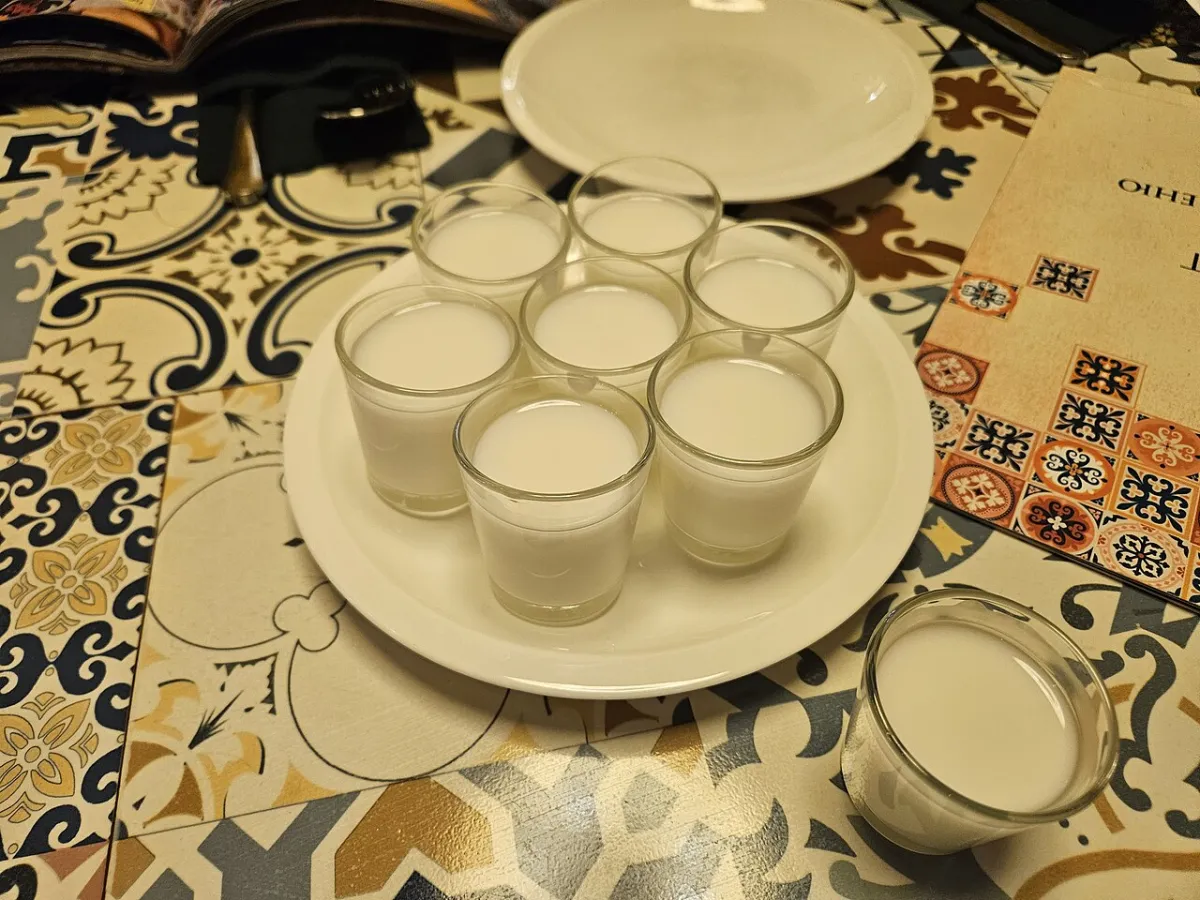 2/2. Individual servings in Almaty Photo: Nurken, Wikimedia Commons, CC BY-SA 4.0; edited for this site.
 The drink is particularly welcome in hot weather, but should not replace water completely. Chalap contains salt and dairy ingredients in amounts that vary from recipe to recipe.
What is it made from?
Süzmö, often written suzma, is the traditional base. It is made by straining ayran or another cultured milk mixture through cloth. Water turns it into a drink, and salt highlights its acidity. Chalap made directly from liquid ayran needs less water.
Herbs, cucumber and spices appear in home variations but are unnecessary for the basic flavour. Plain chalap is easier to appreciate alongside Kyrgyz food: its cool acidity contrasts well with hot manty, kuurdak and flatbread.
Nutritional content depends on the fat level of the dairy base and the proportion of water. Universal figures for “authentic chalap” are misleading. If calories, protein or salt matter to you, use the information on the packaging or calculate them from the ingredients in a home recipe.
What is the difference between chalap and tan?
In Kyrgyzstan, the words chalap and tan may refer to very similar drinks. Both use a fermented milk base, water and salt, and both may be carbonated. On a shop shelf, the distinction often comes from the culture, thickness and producer's chosen name rather than a strict recipe boundary.
Kyrgyz descriptions more often associate chalap with suzma or ayran. Tan belongs to a wider family of diluted fermented milk drinks from the Caucasus and Central Asia and is often made from matsoni. Do not judge a product solely by the word on the bottle. Compare the ingredients and try both.
How to choose and drink chalap
The bottle should be refrigerated, intact and not swollen. Check the use-by date and storage temperature. Open sparkling chalap slowly and do not shake it, as pressure can build considerably inside.
Buy draught chalap where the container is chilled, the tap and cups look clean and the seller can name the producer. A cool metal barrel alone does not prove that the correct temperature has been maintained all day.
Chalap contains milk protein and is unsuitable for anyone with a milk allergy. Fermentation does not necessarily remove all lactose. If you restrict salt, choose a labelled product or make the drink yourself, starting with the smallest amount.
Homemade chalap with suzma
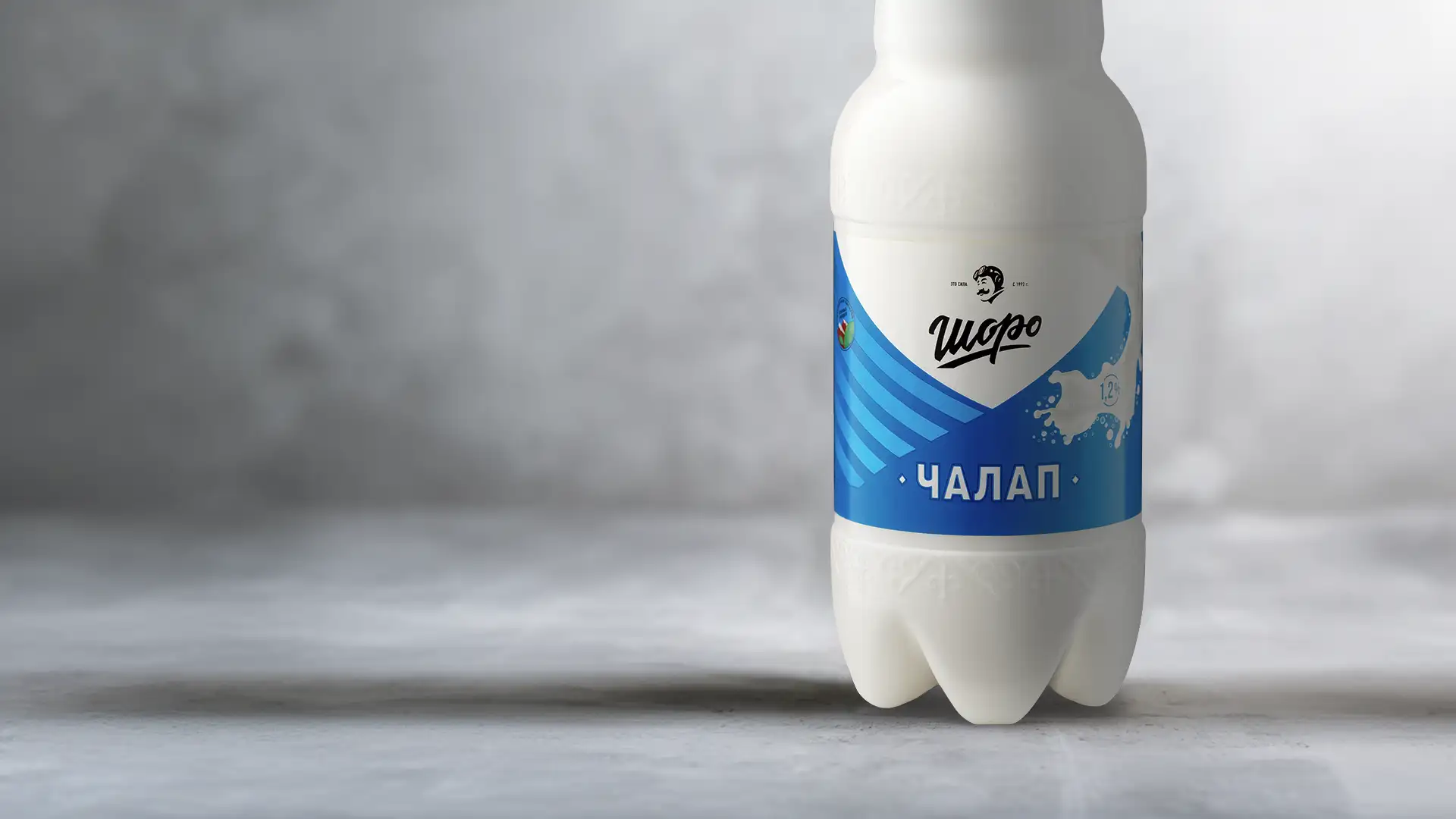
A simple chalap with no additional fermentation. Use ready-made suzma from pasteurised milk and cold drinking water, adding the salt gradually.
Cuisine: Kyrgyz. Total time: 10 minutes.
Ingredients:
- 300 g plain suzma with no sugar or additives
- 700 ml cold still drinking water
- 1/4 tsp salt, then more to taste
Method:
Step 1. Check the suzma's use-by date and chill all the ingredients in advance.
Step 2. Put the suzma in a jug and add about one third of the water. Whisk until smooth.
Step 3. Add the remaining water in stages. Stop earlier if you prefer a thicker drink.
Step 4. Add 1/4 teaspoon of salt, stir and taste. Increase the amount in small pinches.
Step 5. Serve immediately. Do not leave chalap at room temperature; refrigerate any remainder and use it the same day.
Share on social media
If you found this guide useful, share it on social media. It takes a moment and helps more travellers discover the project. Thank you!
Anything to add?
Share your experience, leave a comment or suggest an improvement.