Contents:
The difference at a glance
Kaymak begins with cream. It tastes mild, milky and rich, with a texture that can range from spoonable to dense and layered. Süzmö begins with cultured milk. Once whey has drained away, it is thicker than ordinary ayran or yogurt and keeps a distinct tang.
Their jobs at the table differ too. A little kaymak goes well with hot boorsok, flatbread, honey or preserves. Süzmö can be served as a fresh cultured-milk side, mixed with salt and herbs, thinned into chalap or dried to make kurut.
A quick clue: a sweet, cream-forward flavour and high fat point to kaymak; a tangy, evenly dense mass left after draining points to süzmö.
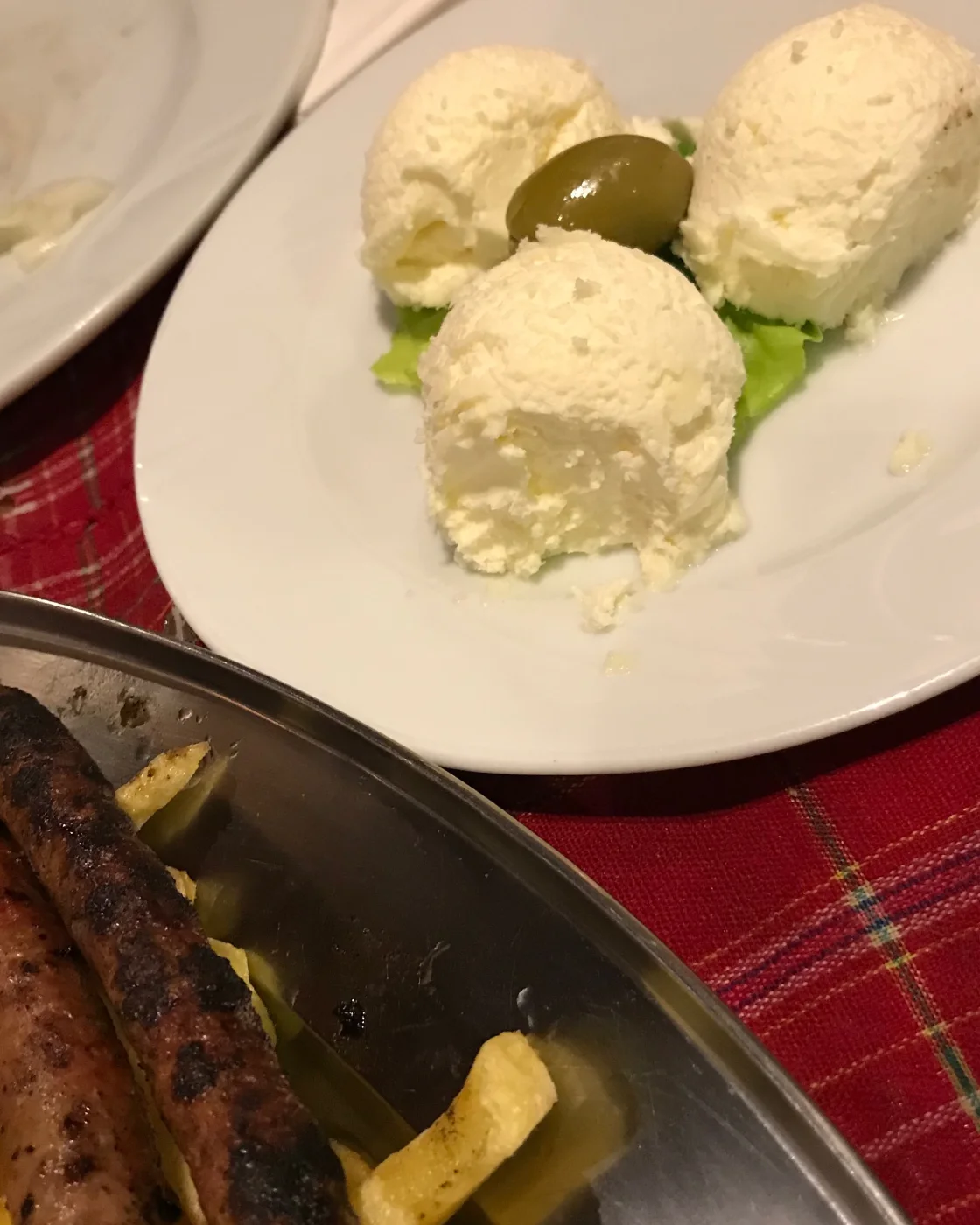 1/3. A regional example: Balkan kaymak is firmer than many Kyrgyz home versions Photo: Dag Terje Filip Endresen, Wikimedia Commons, CC BY 2.0; edited for this site.
 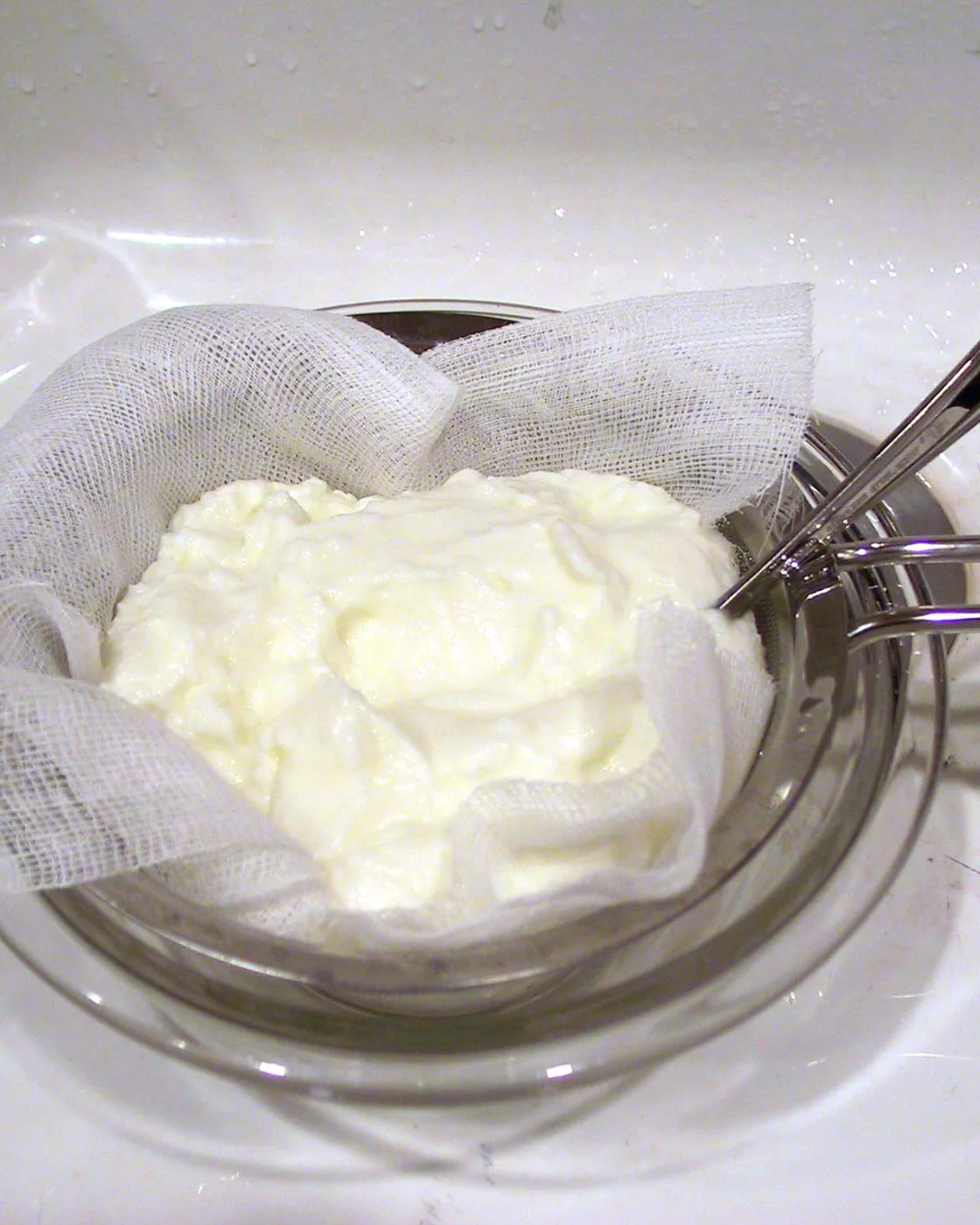 2/3. Draining removes part of the whey and makes cultured milk thicker Photo: Kris Miller, Wikimedia Commons, CC BY 2.0; edited for this site.
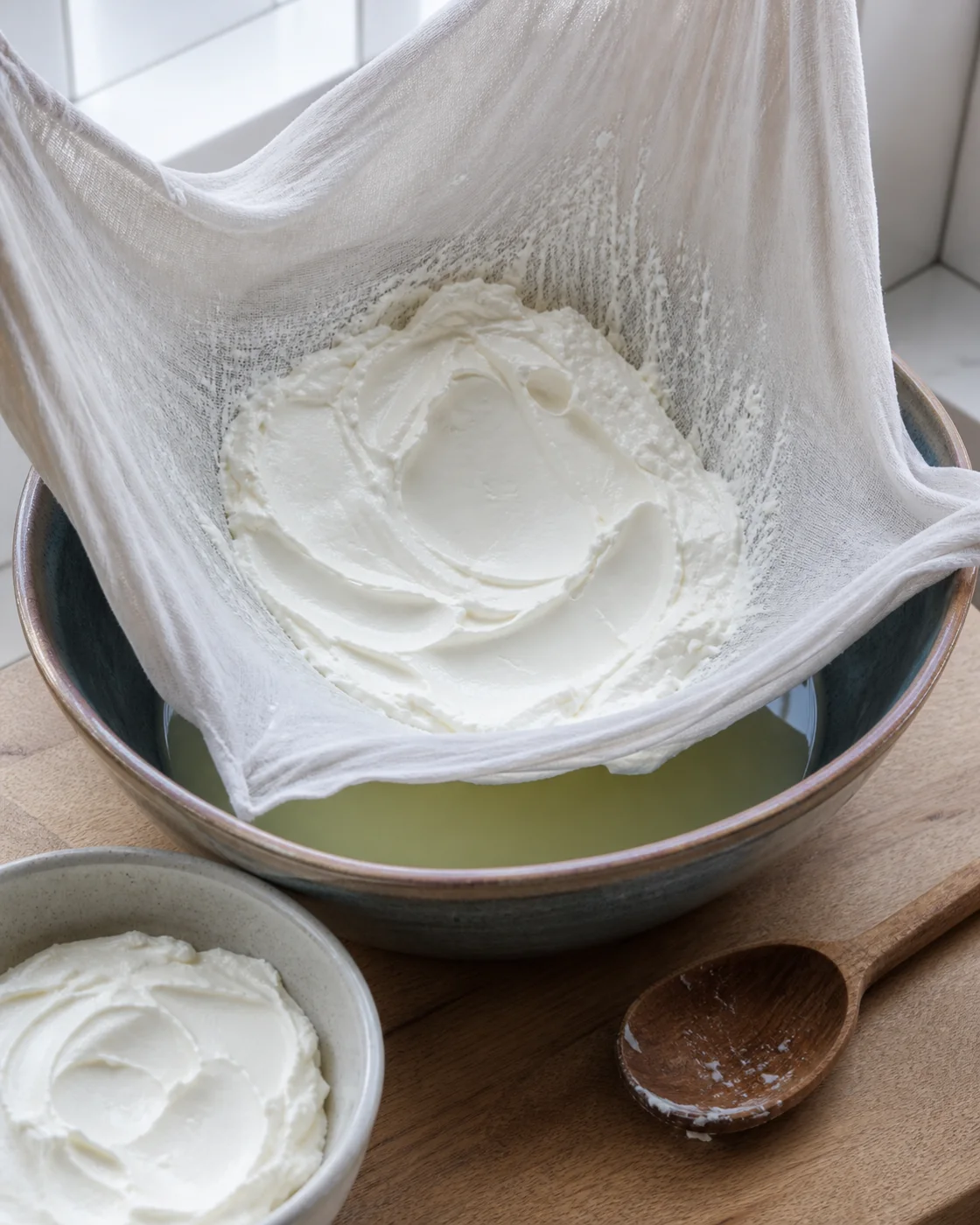
 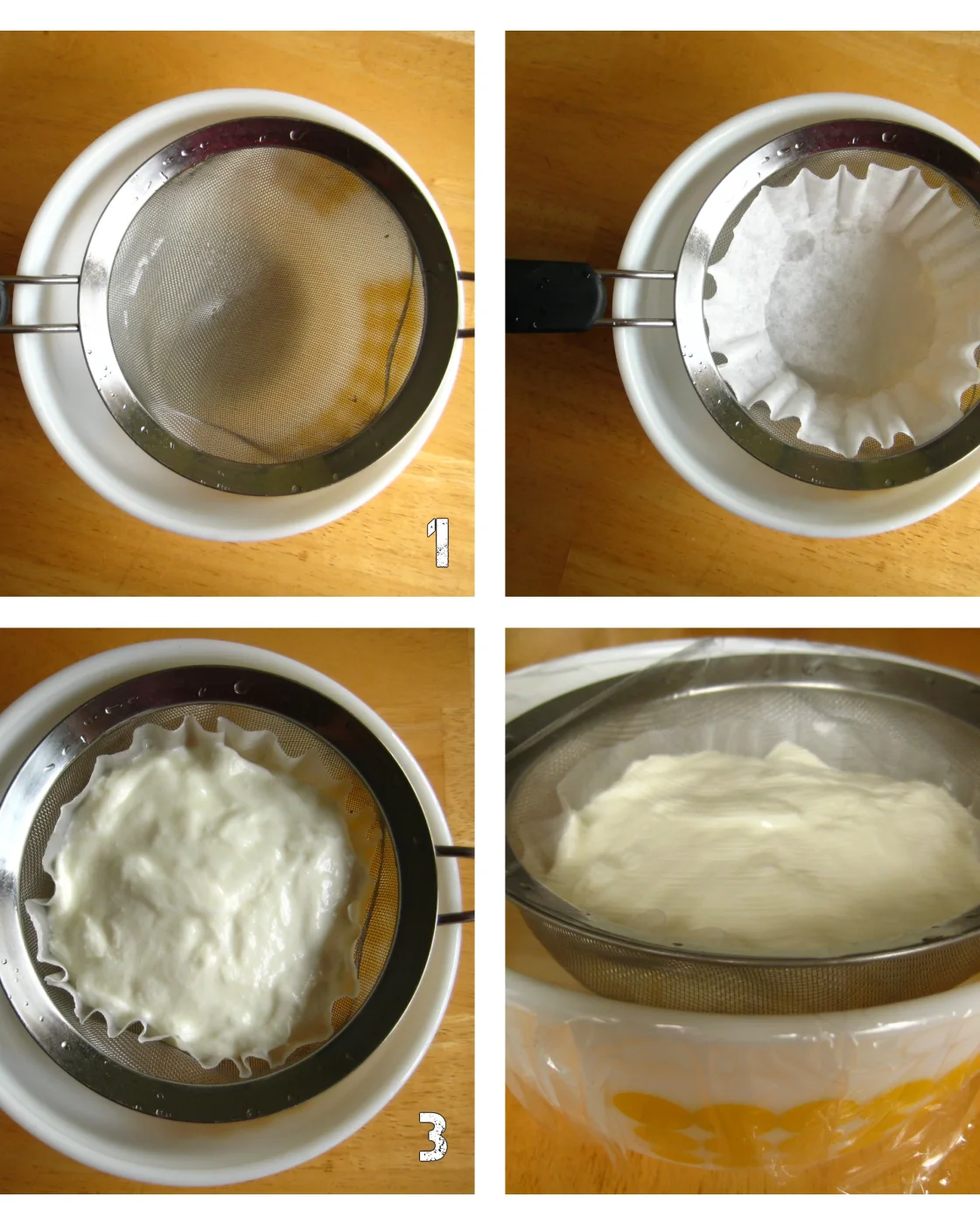 3/3. A clean cloth or filter holds the yogurt while whey drains below Photo: 鹧鸪天, Wikimedia Commons, CC BY-SA 3.0; edited for this site.
 What kaymak means in Kyrgyzstan
In a Kyrgyz household, kaymak means the fat-rich cream portion of milk. It may be skimmed after the milk stands or after it has been heated; denser versions come from gently heating cream for a long time and chilling the surface layer. A village bowl, a factory tub and layered kaymak from another country can therefore look quite different.
Kyrgyzstan sets a clear boundary for the industrial product. The country's technical regulation on milk safety defines kaymak as a product made from high-fat cream with at least 40% milk fat. That definition is useful when reading a label, but it does not capture every family method.
Fresh kaymak need not be sour. Its flavour is closer to concentrated cream, sometimes with a gentle cooked-milk note. If a packaged product lists a starter culture, it follows a different process and will taste more acidic.
How süzmö is made
Süzmö starts with milk that has already fermented. Thick ayran, katyk or plain yogurt is placed in a clean cloth or fine filter and allowed to drain. Whey runs out; the cultured curd becomes denser and more concentrated in flavour.
Time controls the texture. After a few hours, the mass remains soft enough for a spoon or sauce. Overnight draining makes it firmer and able to hold its shape. More drying, usually with salt, moves the process towards kurut.
It helps to think of süzmö as a state of cultured milk after some whey has been removed, rather than as one specific starter culture. Milk, culture, incubation temperature and draining time all shape a home batch.
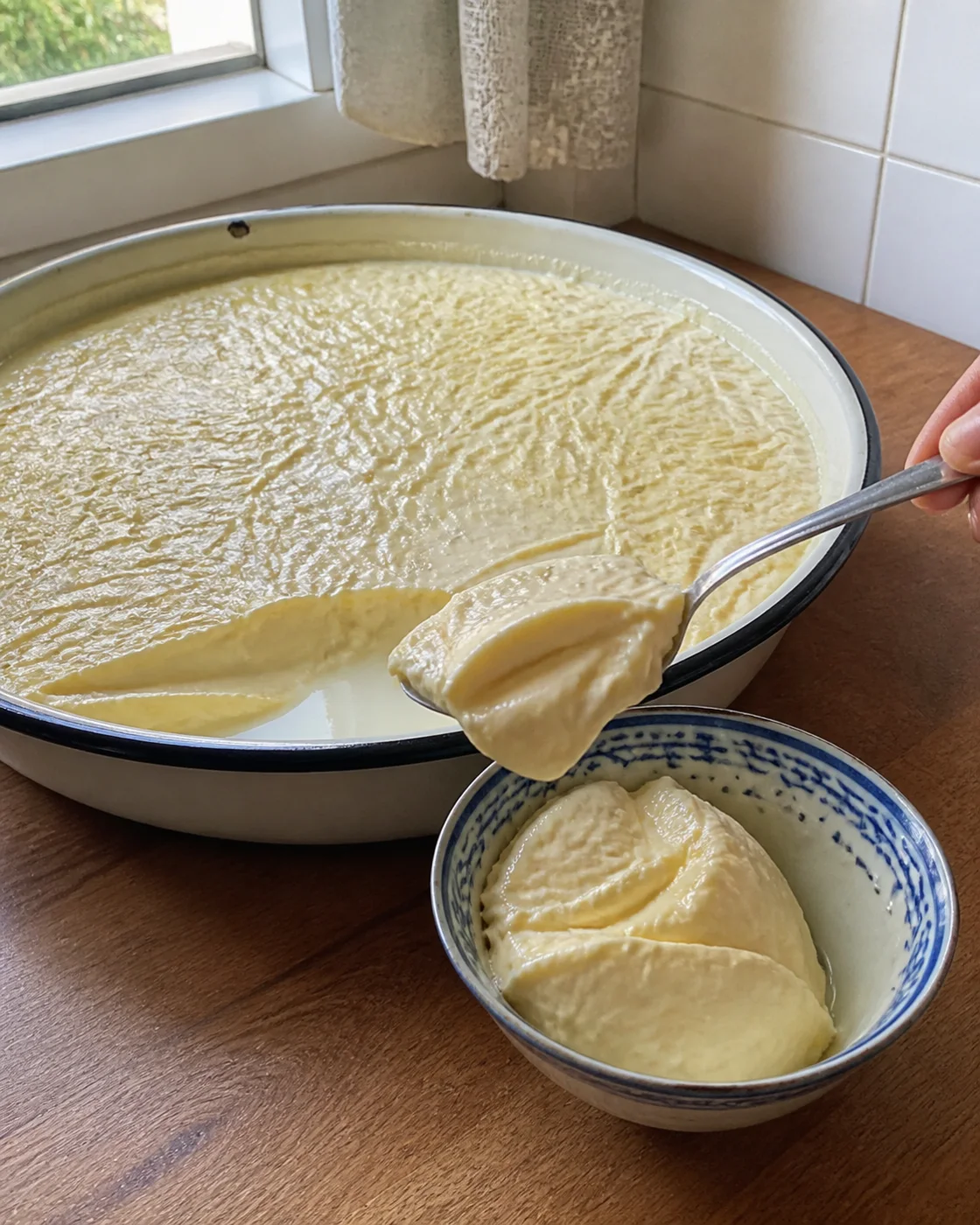 1/2. Editorial illustration: a kaymak layer after long, gentle heating Image: I Love KG, created with AI.
  2/2. Editorial illustration: süzmö draining over a bowl Image: I Love KG, created with AI.
 How to choose and serve them
For packaged kaymak, check the fat percentage and ingredients first. Milk or cream should head the list, and both the production date and storage instructions should be easy to read. With süzmö, look for the milk base, culture and salt, and avoid added flavouring when you want a neutral product for cooking or chalap.
At a bazaar, ask what milk was used, when the batch was made and how it has been kept cold. A closed, clean container and a properly chilled counter matter more than claims that something is completely homemade. Skip dairy that has been standing in the sun or is repeatedly served with the same spoon for every customer.
Kaymak comes into its own with hot bread: tandoor flatbread, kattama or boorsok. Serve süzmö with herbs and cucumber, spoon it beside hot potatoes or meat, thin it with water, or use it as a tart base for a sauce. Begin with a small serving: kaymak is exceptionally rich, while süzmö can be quite sour or salty.
Storage and food safety
Use pasteurised milk for homemade cultured dairy, or pasteurise raw milk before adding a starter. Washington State University's home-yogurt guide also calls for clean, scalded equipment, controlled incubation and refrigerator draining.
Do not leave süzmö draining on a warm worktop overnight. Set the strainer over a deep bowl, cover it and place the entire setup in the refrigerator. After heating kaymak, cool it promptly rather than leaving the dish at room temperature for hours, then keep it covered.
A homemade batch has no automatic use-by period. Date the container, use a clean spoon, and discard the whole product if you see mould or coloured patches, notice gas or smell anything off. Scraping the surface is not enough for soft dairy.
The two recipes below fix repeatable home versions without presenting either as the only traditional method. Nutrition figures are omitted because weighing the finished yield and accounting for the whey are necessary for a defensible value per 100 g.
Homemade layered kaymak with milk and cream
Image: I Love KG, created with AI.
A gentle home version made with pasteurised milk and cream: the mixture heats slowly in a wide dish, then chills so the fat-rich top layer can firm up.
Cuisine: Kyrgyz home cooking, editorial adaptation. Category: Dairy product. Yield: about 400-500 g. Preparation: . Cooking: . Total time: .
Ingredients:
- 1.5 litres pasteurised whole milk, at least 3.2% fat
- 500 ml pasteurised cream, 30-35% fat
Method:
Step 1. Wash a wide ovenproof dish, saucepan, spoon and storage container. Scald everything that will touch the finished product and leave it to dry.
Step 2. Combine the milk and cream in the saucepan. Heat slowly to 85°C, stirring along the bottom and avoiding a rolling boil.
Step 3. Pour into the wide dish to a depth of 3-4 cm. Place in an oven at 80-85°C for 8 hours. Do not stir: an unbroken, wrinkled skin should gather on top.
Step 4. Take out the dish and leave it on a rack for 30 minutes. Cover without touching the surface, then refrigerate for at least 8 hours.
Step 5. Use a clean, broad spatula to lift the firm top layer into the scalded container. The remaining milk base can go into porridge, dough or soup after it has been reheated.
Step 6. Keep the kaymak covered in the refrigerator. Use a separate clean spoon for serving and do not return leftovers from the table to the main container.
Homemade süzmö from two litres of milk
Image: I Love KG, created with AI.
Pasteurised milk is cultured with plain yogurt, then drains slowly in the refrigerator to make a smooth, dense dairy mass.
Cuisine: Kyrgyz home cooking. Category: Cultured dairy product. Yield: about 900-1,100 g. Preparation: . Cooking: . Total time: .
Ingredients:
- 2 litres pasteurised whole milk
- 120 g fresh plain yogurt with live cultures, with no sugar or flavouring
- up to 4 g salt, optional and added only after draining
Method:
Step 1. Wash the saucepan, thermometer, whisk, jar, strainer and bowl. Boil the draining cloth for 5 minutes or use a new food-safe filter.
Step 2. Heat the milk to 90°C and hold it close to that temperature for 10 minutes, stirring from time to time. This helps the final curd set firmly.
Step 3. Cool the milk to 43°C. In a separate cup, whisk the yogurt with 150 ml of the warm milk until smooth, then stir it back into the saucepan.
Step 4. Transfer to the clean container, cover and incubate for 6-8 hours at 40-43°C. Do not shake it. The finished curd should hold and taste gently tart.
Step 5. Set the strainer over a deep bowl and line it with clean damp cloth. Spoon in the curd, cover and put the entire setup straight into the refrigerator for 8-10 hours.
Step 6. Check the texture. Stop when the süzmö holds on a spoon, or leave it for another 2 hours for a firmer result. Stir in salt only after draining.
Step 7. Transfer to a scalded container. You can use the whey in dough on the same day if it smells clean and has remained cold throughout.
Frequently asked questions about kaymak and süzmö
What is the difference between kaymak and süzmö?
Kaymak comes from the fat-rich cream portion of milk, so it is mild, creamy and very rich. Süzmö starts as cultured milk; draining removes whey and leaves a dense, tangy dairy mass.
Is kaymak the same as sour cream?
They may fill a similar place at the table, but their ingredients and flavour differ. Kaymak is cream-based and need not taste sour. Sour cream is cultured and usually has a clearer acidity. Check the ingredients on the particular tub.
Is süzmö the same as Greek yogurt?
Both become thick after some whey is removed. The culture, fat content, acidity and length of draining vary between producers and households, so the two names do not promise an identical product.
Can I make chalap with süzmö?
Yes. Whisk süzmö with cold drinking water and a little salt. Adjust the ratio to the thickness you prefer; our separate chalap guide gives a measured version.
Can I use UHT milk?
It works for süzmö if the starter is fresh and contains live cultures. UHT and heavily homogenised dairy often develops a less distinct skin in layered homemade kaymak, though it is still a safe base.
Why does the page omit nutrition figures?
Draining sends water, lactose and other dissolved material into the whey, while the kaymak method changes how much fat-rich layer is recovered. Without weighing the finished batch, figures per 100 g would suggest accuracy the recipe does not have.
How should homemade kaymak and süzmö be stored?
Keep both in clean covered containers in the refrigerator and use a clean spoon every time. Discard the whole batch if you see mould or coloured spots, notice gas or smell anything unpleasant.
Share on social media
If you found this guide useful, share it on social media. It takes a moment and helps more travellers discover the project. Thank you!
Anything to add?
Share your experience, leave a comment or suggest an improvement.