Contents:
What is tan?
Tan belongs to a large family of salty fermented milk drinks found from the Caucasus to Central Asia. The cultured milk base is diluted with water and chilled, producing a light drink with noticeable acidity. Some versions are also carbonated.
There is no single international recipe. In Armenia the base is often matsoni, while commercial products in Kyrgyzstan use other cultures and proportions. Mint, herbs and cucumber are possible flavourings but not essential.
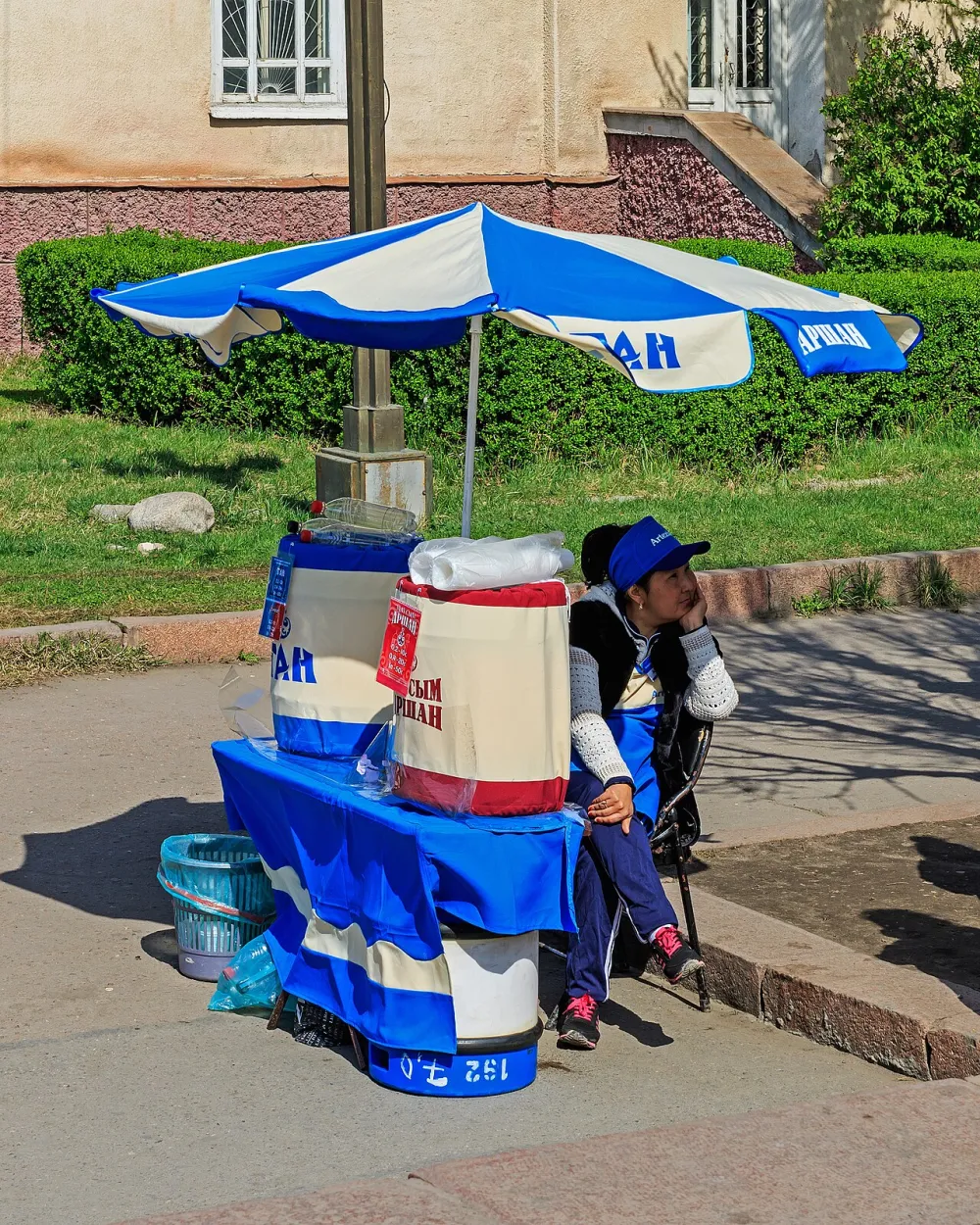 A street stand selling tan and maksym in Bishkek. Photo: A.Savin, Wikimedia Commons, Free Art License; edited for this site.
Stories about one exact etymology, an “ancient secret” or a special medicinal composition do not help you choose a drink. Practical information is on the label: the dairy ingredients, salt, carbonation, nutritional content and storage conditions.
What is tan made from?
Milk is first cultured with a suitable culture, then the finished base is mixed with drinking water and salt. A safe home method starts with pasteurised matsoni, plain yoghurt or ayran. There is no need to ferment raw milk together with water and random yeast.
Texture depends on the proportions. Thick tan is closer to drinking yoghurt, while a highly diluted version resembles salty whey. Carbon dioxide heightens the perception of acidity, so sparkling and still versions with the same ingredients taste different.
The name does not determine the calories. They change with the fat content of the base and amount of water. Salt content is not standardised across every homemade and market version either.
Tan, chalap and ayran
Ayran may mean a prepared cultured milk base or an already diluted drink, depending on local tradition and the producer. In Kyrgyzstan, chalap is more often described as a mixture of suzma or ayran with water and salt. Tan follows the same logic, so the names overlap partly in the local market.
Look beyond the name. For a fuller dairy flavour, choose less water and a richer base. A diluted version provides lighter acidity. Check the ingredients for carbonation, herbs and salt instead of guessing from the bottle's colour.
How to choose and drink tan
Tan is served cold in a glass or small bowl. It works with rich and spicy foods, but its flavour is easy to assess by itself. Do not shake a carbonated bottle before opening; stir natural milk sediment only after excess gas has escaped.
In a shop, check the refrigerator, date and packaging. Choose draught tan from a tidy stall with continuous chilling and clean disposable containers. An acidic taste is normal; a yeasty or rotten smell and unusually coloured flakes are not.
Tan is unsuitable for anyone with a milk-protein allergy. Reactions to lactose intolerance are individual because fermentation does not guarantee its complete breakdown. Its salt content also means it should not become your only source of liquid in hot weather.
Homemade tan with matsoni
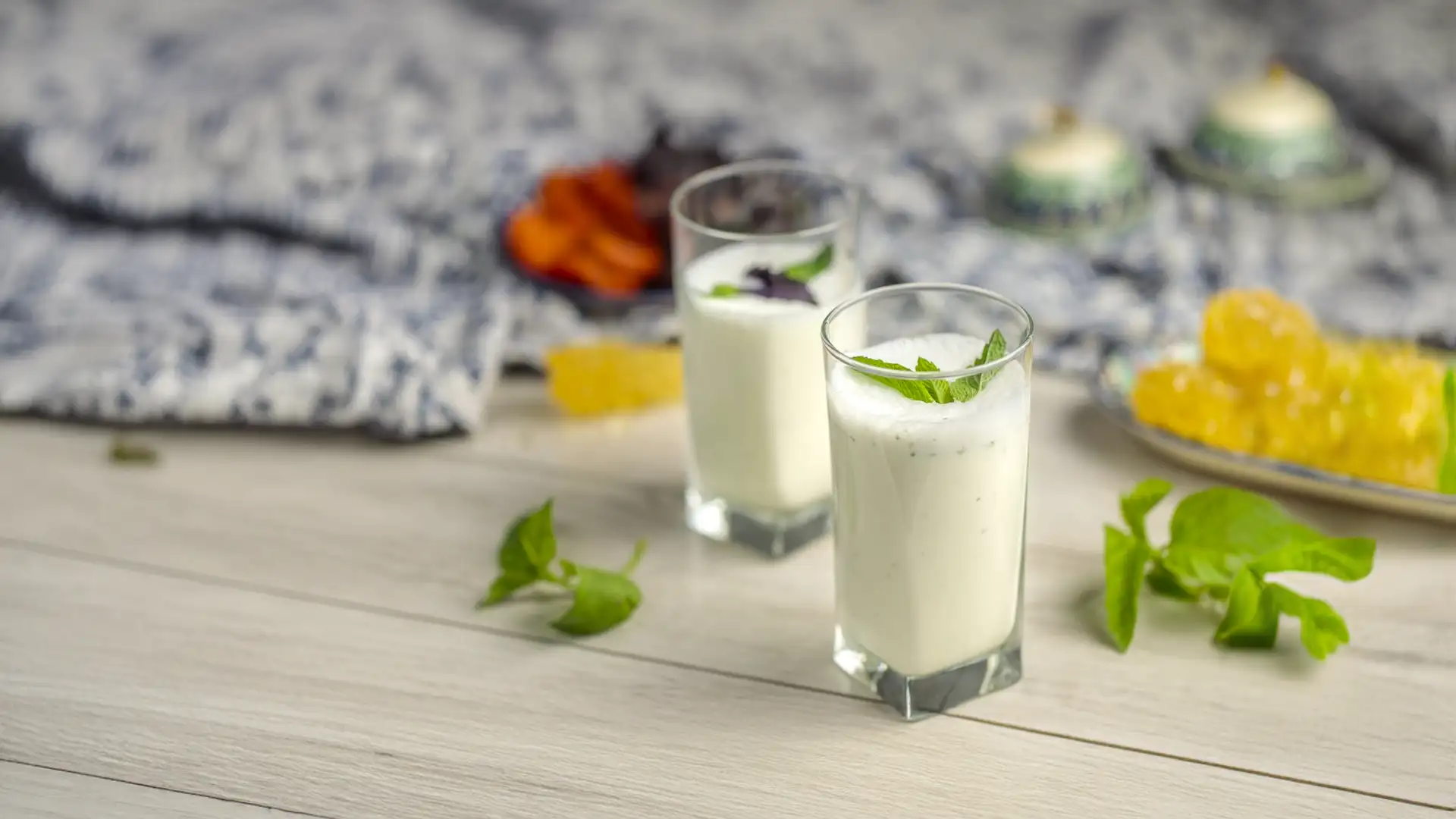
A quick tan made from a ready-made pasteurised fermented milk base. It requires no further fermentation and is prepared immediately before serving.
Cuisine: Caucasian and Central Asian. Total time: 10 minutes.
Ingredients:
- 500 g plain matsoni or yoghurt with no sugar
- 500 ml cold still drinking water
- 1/4 tsp salt, then more to taste
- a few mint leaves, optional
Method:
Step 1. Chill the matsoni and water. Check that the cultured base was made from pasteurised milk.
Step 2. Whisk the matsoni until smooth. Add the water in stages, continuing to whisk.
Step 3. Add 1/4 teaspoon of salt and taste. Add more in small pinches if needed.
Step 4. For fragrance, rub the mint leaves between your fingers and add them to the jug. Omit the mint to taste the drink on its own.
Step 5. Pour into glasses and serve immediately. Refrigerate any remainder and use it the same day.
Share on social media
If you found this guide useful, share it on social media. It takes a moment and helps more travellers discover the project. Thank you!
Anything to add?
Share your experience, leave a comment or suggest an improvement.